A guide to Italy’s lesser‑known grapes—pronunciation encouraged, confusion forgiven.
Italy is not a single wine language. It is a chorus of dialects, whispered in mountain valleys, shouted from sun‑baked coasts, and stubbornly preserved by families who never bothered to translate for outsiders. To learn Italian wine is not to memorize a list—it is to learn how words change when they cross a hill, how the same grape answers to multiple names, and how geography shapes accent, structure, and soul.
This is your language lesson. We are not starting with ciao (Sangiovese) or grazie (Nebbiolo). Instead, we’re learning the phrases that make you sound fluent—the lesser‑known varietals that do make it outside of Italy if you know how (and where) to look.
Think of this as conversational Italian for wine lovers.
Italian Is a Regional Language
Before vocabulary, a rule: Italy does not speak one Italian wine dialect. Grapes change names as they cross borders. Sometimes they change personality. Sometimes they pretend to be something else entirely.
So when you see multiple names in parentheses, don’t panic. That’s not confusion—it’s fluency.

False Friends & Familiar Strangers
Turbiana (a.k.a. Trebbiano di Lugana)
Pronunciation: tur‑BEE‑ah‑nah
Let’s clear the fog immediately.
Turbiana is not the watery Trebbiano you’re thinking of. Grown around Lake Garda in Lugana DOC, this grape produces wines with texture, salinity, and surprising age‑worthiness.
How it speaks: lemon oil, almond skin, white flowers, wet stone
Why it matters: It teaches an essential Italian lesson—same family, different personality.
Where to find it: Lugana DOC bottlings from Ca’ dei Frati, Zenato, Ottella
Sangiovese Grosso (Brunello’s Real Name)
Pronunciation: san‑joe‑VAY‑zeh GROSS‑oh
Not lesser‑known, but deeply misunderstood.
Sangiovese Grosso is not a different grape—it’s a biotype, thicker‑skinned and slower‑ripening than Chianti’s Sangiovese. Italians care about this distinction. You should too.
How it speaks: sour cherry, dried rose, tea leaf, savory earth
Why it matters: Italian wine often hinges on clones, not varietals.
Where to find it: Brunello di Montalcino (widely exported)
Northern Accents (Alpine & Adriatic)
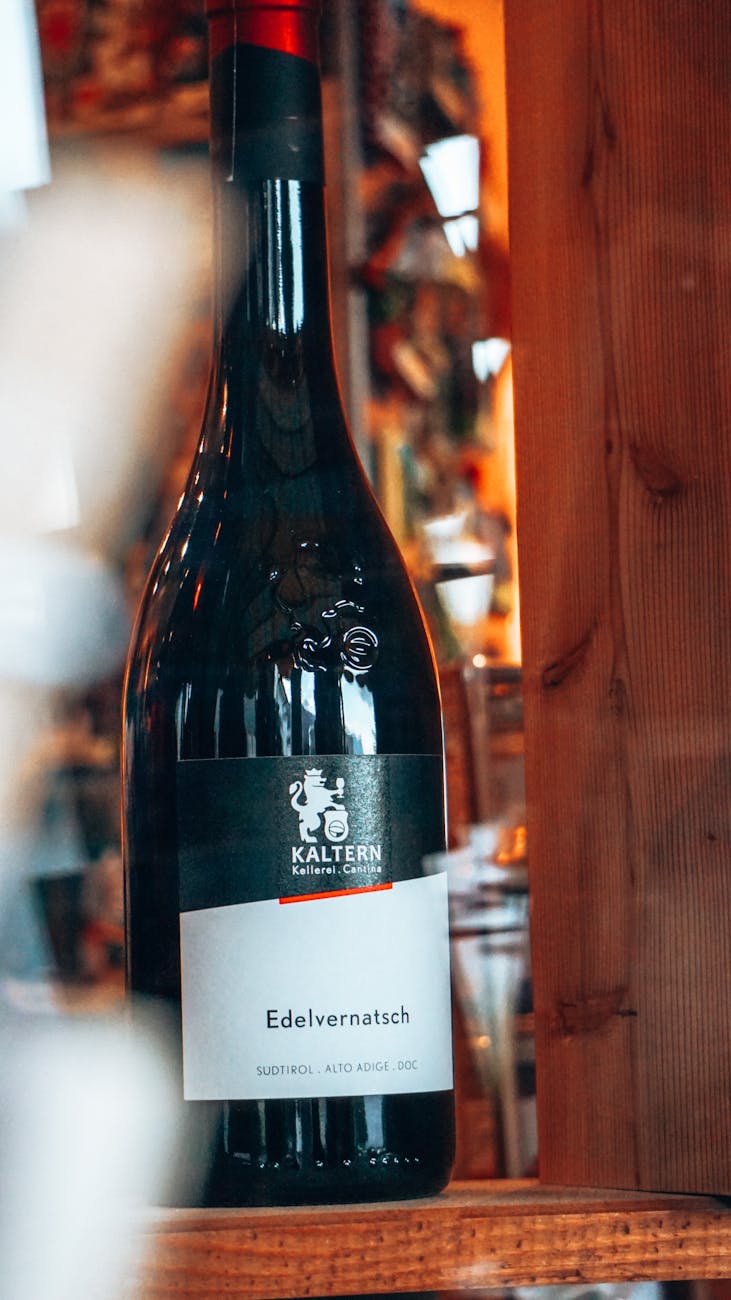
Schiava (a.k.a. Vernatsch)
Pronunciation: SKYA‑vah
This is the grape everyone underestimates.
From Alto Adige, Schiava produces pale‑colored reds with fragrance over power. Chill it slightly and it becomes irresistible.
How it speaks: strawberry, alpine herbs, almond, fresh mountain air
Why it matters: It breaks the myth that Italian reds must be heavy.
Where to find it: Alto Adige DOC imports (Elena Walch, Cantina Tramin)
Lagrein
Pronunciation: lah‑GRAIN
If Schiava whispers, Lagrein growls.
Also from Alto Adige, Lagrein is deeply colored, muscular, and structured—yet retains alpine freshness.
How it speaks: blackberry, cocoa, iron, violets
Why it matters: Italy does bold without abandoning balance.
Where to find it: Alto Adige Lagrein Rosso or Riserva
Refosco dal Peduncolo Rosso
Pronunciation: reh‑FOSS‑koh dal peh‑DOON‑koh ROSS‑oh
Yes, the full name matters.
This Friulian grape is dark, wild, and feral in the best way—high acidity, grippy tannin, and savory depth.
How it speaks: sour cherry, forest floor, black olive, iron
Why it matters: Friuli is not just Pinot Grigio country.
Where to find it: Friuli‑Venezia Giulia specialists
Central Italy’s Secret Vocabulary
Ciliegiolo
Pronunciation: chee‑leh‑JYO‑loh
Long thought to be a clone of Sangiovese (it isn’t), Ciliegiolo is softer, rounder, and more openly fruited.
How it speaks: ripe cherry, red plum, spice, soft herbs
Why it matters: Tuscany has more voices than Chianti.
Where to find it: Tuscany IGT bottlings
Pecorino (Yes, Like the Cheese)
Pronunciation: peh‑koh‑REE‑noh
No sheep involved—just mountain acidity and structure.
From Abruzzo and Marche, Pecorino delivers aromatic intensity with surprising weight.
How it speaks: citrus zest, sage, stone fruit, salinity
Why it matters: Italian whites can age.
Where to find it: Abruzzo & Marche imports (Valentini if you’re lucky)
Southern Dialects (Sun, Salt & Structure)
Nero d’Avola
Pronunciation: NEH‑roh DAH‑voh‑lah
Often simplified as “Sicilian Shiraz,” Nero d’Avola deserves better.
How it speaks: black cherry, licorice, dried herbs, warm earth
Why it matters: Sicily balances heat with restraint.
Where to find it: Widely exported—look for single‑vineyard expressions
Frappato
Pronunciation: frah‑PAH‑toh
If Nero d’Avola is Sicily’s bass line, Frappato is its melody.
Light‑bodied, floral, and joyful—especially in Cerasuolo di Vittoria blends.
How it speaks: raspberry, rose petal, pink peppercorn
Why it matters: Southern Italy isn’t all power.
Where to find it: Sicily DOC and Cerasuolo di Vittoria (Sicily’s only DOCG)
Aglianico
Pronunciation: ah‑LYAH‑nee‑koh
Often called the “Barolo of the South,” though it doesn’t need the comparison.
How it speaks: black fruit, smoke, leather, volcanic minerality
Why it matters: Structure is not exclusive to the north.
Where to find it: Taurasi DOCG, Aglianico del Vulture
Fluency Comes From Curiosity
Learning to speak Italian wine is not about perfection—it’s about participation. Pronounce boldly. Ask questions. Follow the parentheses.
Italy rewards effort.
Because once you stop asking “Why is this so confusing?” and start saying “Ah… this is just another dialect,” you’re no longer translating.
You’re conversing.
Salute 🍷
Cover Photo by Andrea Mosti on Pexels.com

 SOMM&SOMM
We welcome feedback…