
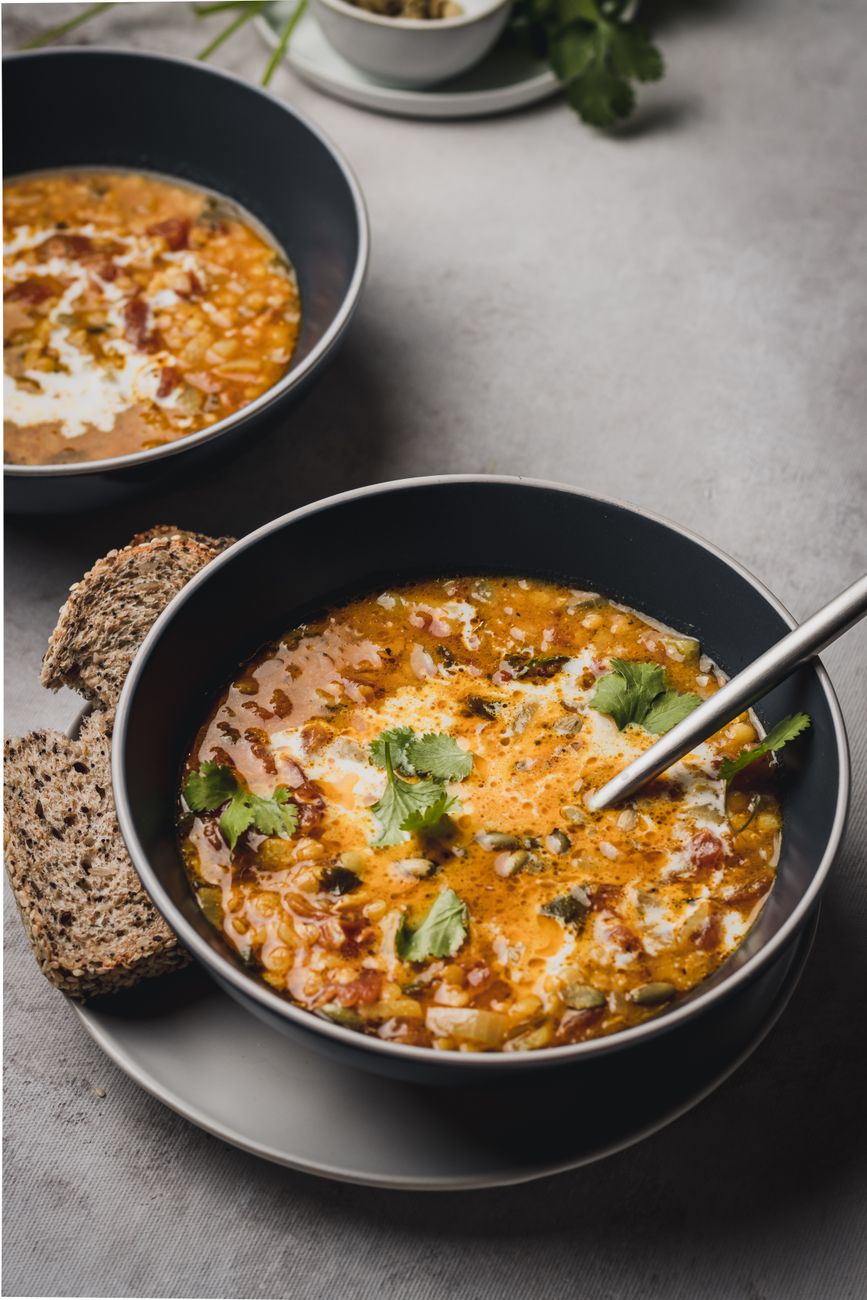
Wine Pairings for Soups, Stews & Chili.
There is something about the first cool evening of autumn that changes the way we eat.
Suddenly, salads seem a little less interesting. Grilling gives way to simmering. The Dutch oven comes out of hiding. The kitchen fills with the aromas of onions, garlic, herbs and something that has been bubbling away for hours.
And then comes the bowl.
Soup. Stew. Chili. Braised everything.
These are among the most comforting foods of the season—and some of the most difficult foods to pair with wine.
Why? Because a bowl can contain an entire ecosystem of flavors. Fat, salt, acid, spice, sweetness, umami and texture can all show up in the same spoonful. The wine has to find a way into that conversation without shouting over it.
When the pairing works, though, something wonderful happens.
The wine doesn’t simply accompany the food.
It becomes part of the dish.

The Golden Rule of Bowl Pairing
Forget the idea that every hearty dish needs a big, powerful red.
Sometimes it does. Sometimes it absolutely doesn’t.
The better approach is to consider the dominant personality of the dish.
Is it rich and meaty? Tomato-driven? Spicy? Earthy? Creamy? Smoky? Herbaceous?
Then look for a wine that either complements that personality or provides a little contrast.
A rich stew may love the acidity of a Cabernet Sauvignon. A spicy chili might actually prefer something fruitier and softer. A creamy soup can become magical with a crisp white wine.
And here’s the secret many people overlook:
Acidity is your friend.
Soups and stews can be rich, salty and intensely savory. A wine with good acidity refreshes the palate between bites and keeps the meal from becoming heavy.
Think of it as the reset button.

The Classic Beef Stew
Few dishes say fall quite like a traditional beef stew.
Slow-cooked beef. Carrots. Potatoes. Onions. Celery. Garlic. Herbs. A rich broth, perhaps fortified with a little red wine.
The flavors are deep, savory and earthy.
The Bowl
Classic Beef Stew
- 2 lbs. beef chuck, cut into 1½-inch pieces
- 3 tbsp olive oil
- 1 large onion, chopped
- 3 carrots, sliced
- 3 celery stalks, sliced
- 3 cloves garlic, minced
- 2 tbsp tomato paste
- 2 cups beef stock
- 1 cup dry red wine
- 1 lb. Yukon Gold potatoes, cubed
- 2 sprigs thyme
- 1 bay leaf
- Salt and black pepper
Brown the beef in batches. Sauté the vegetables, add the garlic and tomato paste, then return the beef to the pot.
Add the stock and wine, tuck in the herbs and let everything simmer gently for about two hours. Add the potatoes during the final 30–40 minutes.
The goal isn’t simply tender beef.
It’s concentration.
The Glass
Cabernet Sauvignon
Cabernet’s structure has enough backbone to stand alongside beef, while its acidity keeps the richness in check. Look for a Cabernet with ripe fruit and moderate oak rather than one dominated by tannin.
Try instead: Cabernet Franc, Merlot or a Southern Rhône blend.
And if you cooked the stew with red wine, serving that same wine alongside dinner can create a particularly seamless pairing.
SOMM&SOMM TIP: Don’t automatically reach for the biggest Cabernet on the shelf. A stew doesn’t need a wine that overwhelms it. It needs one that can keep pace.

Chili: The Great Fall Debate
Beans or no beans?
Beef or turkey?
Tomatoes or no tomatoes?
Heat level?
Every family seems to have an opinion.
Fortunately, wine doesn’t have to take sides.
The Bowl
Classic Beef & Bean Chili
- 1½ lbs. ground beef
- 1 large onion, diced
- 1 bell pepper, diced
- 3 cloves garlic, minced
- 2 tbsp chili powder
- 1 tsp cumin
- 1 tsp smoked paprika
- 1 can crushed tomatoes
- 1 can kidney beans
- 1 can black beans
- 1 cup beef stock
- Salt and black pepper
- Optional: cayenne or chipotle for additional heat
Brown the beef and drain excess fat. Add the onion and pepper, followed by garlic and spices.
Add the tomatoes, beans and stock.
Then comes the hardest part:
Wait.
Let it simmer for at least 30 minutes. An hour is even better.
Chili rewards patience.
The Glass
Zinfandel
This is where things get interesting.
Zinfandel’s ripe berry character and generous fruit can work beautifully with chili’s tomato, smoke and spice. Its relatively moderate tannin also makes it more forgiving with spicy foods than many highly structured reds.
For a smoky chili, look for a Zinfandel with dark fruit and a touch of spice.
Try instead: Syrah, Grenache or a juicy Malbec.
What about the heat?
Here’s where wine pairing gets really interesting.
Capsaicin—the compound responsible for chili pepper heat—can make high-alcohol, heavily tannic wines feel hotter.
So if your chili is bringing serious fire, consider a wine with:
more fruit + less tannin + moderate alcohol.
A slightly chilled red can also be surprisingly refreshing.
Yes.
Put the red wine in the refrigerator.
Just for a little while.
Your sommelier friends will survive.

French Onion Soup
Sometimes the most beautiful pairing begins with the simplest ingredients.
Onions. Butter. Stock. Bread. Cheese.
That’s it.
Well… almost.
The Bowl
French Onion Soup
Slowly caramelize 4–5 large yellow onions in butter and olive oil until deeply golden. Add thyme and garlic, then deglaze with about a cup of dry white wine.
Add 6 cups of beef stock and simmer for 30 minutes.
Ladle into oven-safe bowls, top with toasted baguette and Gruyère, then broil until the cheese is bubbling and golden.
The key word here is caramelization.
The onions bring sweetness and umami. The cheese adds fat and salt. The broth brings depth.
The Glass
Chardonnay
But not just any Chardonnay.
Look for one with bright acidity and restrained oak.
A Burgundy-style Chardonnay can be especially lovely here. The wine’s acidity cuts through the cheese while its subtle richness echoes the texture of the soup.
Try instead: Sauvignon Blanc or a dry Chenin Blanc.
And this is one of those occasions when white wine absolutely deserves a place at the fall table.

The Hearty Mushroom Soup
Mushrooms are autumn in edible form.
Earthy. Forest-like. Savory. Almost mysterious.
A creamy mushroom soup can be one of the most rewarding fall-and-wine combinations.
The Bowl
Creamy Wild Mushroom Soup
Sauté a mixture of mushrooms—cremini, shiitake, oyster or whatever looks good at the market—with butter, shallots and garlic.
Add thyme and a splash of dry white wine.
Pour in chicken or vegetable stock and simmer until the mushrooms are tender. Blend part of the soup while leaving some mushrooms whole for texture.
Finish with a little cream.
The Glass
Pinot Noir
Mushrooms and Pinot Noir have a long-standing relationship for good reason.
Pinot’s red-fruit character, earthy notes and relatively delicate tannins complement rather than overpower the mushrooms.
The pairing feels almost intuitive.
Try instead: Chardonnay, Gamay or a lighter-bodied Rhône red.
SOMM&SOMM TIP: This is another example of why “hearty food = big red wine” doesn’t always work. Mushroom soup has plenty of flavor, but its texture and earthiness call for finesse rather than brute force.

Chicken & Sausage Gumbo
Fall doesn’t belong exclusively to Europe.
Some of the best cold-weather bowls come from Louisiana.
Gumbo brings layers upon layers of flavor: sausage, chicken, vegetables, stock, spices and that unmistakable depth created by a properly developed roux.
The Bowl
Chicken & Sausage Gumbo
Make a dark roux with equal parts flour and oil, stirring patiently until it reaches a deep brown color.
Add onion, celery and bell pepper—the Louisiana holy trinity—followed by garlic, smoked sausage, chicken stock, chicken and Creole seasoning.
Simmer until everything comes together.
Serve over rice.
And keep the hot sauce nearby.
The Glass
Grenache
Grenache can be a surprisingly good companion for gumbo. Its ripe red fruit handles the spice while its softer tannins avoid fighting with the sausage and seasoning.
A Southern Rhône blend can add additional savory and herbal character.
Try instead: Zinfandel or a dry rosé if the gumbo isn’t particularly hot.

The Wine-Pairing Cheat Sheet
When standing over a simmering pot wondering what to open, start here:
| If the bowl is… | Reach for… |
|---|---|
| Beefy & rich | Cabernet Sauvignon |
| Tomato-based | Zinfandel or Sangiovese |
| Spicy & smoky | Grenache or Zinfandel |
| Creamy | Chardonnay |
| Mushroom-heavy | Pinot Noir |
| Herb-driven | Sauvignon Blanc |
| Sausage-rich | Rhône red blend |
| Very spicy | Fruit-forward, lower-tannin red |
| Rich but not spicy | High-acid red or white |
| Cheese-heavy | Chardonnay or Pinot Noir |
But remember: these aren’t rules.
They’re starting points.

The Real Secret to Fall Pairing
The best wine isn’t necessarily the most expensive bottle in the cellar.
It is the bottle that makes you take another bite.
Then another sip.
Then another bite.
That is the moment when pairing stops being an exercise in matching flavors and becomes something much more interesting.
The wine changes the food.
The food changes the wine.
And suddenly that humble bowl of stew you’ve made a hundred times tastes a little different.
Maybe even a little better.
That’s the magic of pairing.
And perhaps that’s what autumn is really about.
Taking familiar things—cool evenings, a simmering pot, crusty bread, a good bottle of wine—and discovering that they can still surprise you.
Pour generously. Simmer slowly.
And whatever you do…
don’t forget the bread 🍷
Photo by Anna Pyshniuk on Pexels.com









You must be logged in to post a comment.