St-Émilion and the Grande Classe ‘A’ Quandary.
Ah, the joys of being a sommelier. You walk into a tasting event, confident in your knowledge, fully armed with years of wine education. You’ve mastered the intricacies of the Médoc’s growths, can identify a Bordeaux blend just by its nose, and could recite, in order, the prestigious First Growths of the Left Bank even after a few glasses. But then, the moment strikes—a fellow wine lover looks you square in the eye and asks: “What are the remaining Grande Classe ‘A’ wineries of Saint-Émilion?”
Cue blank stare. The mental Rolodex is spinning, searching for answers, but all that comes up is a faint memory of Château Pavie and Château Angélus. Then… nothing. Not a flicker. Suddenly, the mind is playing tricks, and you’re left wondering if your years of dedication to wine knowledge have been vanquished by a mere swirl and sniff.
It happens to the best of us—especially when wine is involved 😉
Even if your memory temporarily betrays you, there’s always the glass in hand to bring you back to the essence of it all—experiencing the beauty of wine.
Gregory Dean, SOMM&SOMM
When the Mind Goes Blank
Being a sommelier means juggling a lot of information—appellations, classifications, grape varieties, winemaking methods, soil types, vintages, and wine laws from every nook and cranny of the world’s great wine regions. We pride ourselves on our expertise, yet sometimes, in the haze of swirling glasses and gentle tannins, the simplest facts can elude us.
Now, this wouldn’t be so embarrassing if it was something arcane, like obscure subregions in Uruguay, but Saint-Émilion? Grande Classe ‘A’? One of the most celebrated and debated regions of Bordeaux? This is common knowledge!
The truth is, even the most seasoned professionals can falter. Whether it’s the excitement of the moment, the friendly banter, or perhaps a few sips too many, our brains are prone to the occasional misfire. In this particular case, Saint-Émilion’s classification system does have a habit of making things slightly more complicated than other Bordeaux regions.
Saint-Émilion’s Ever-Changing Landscape
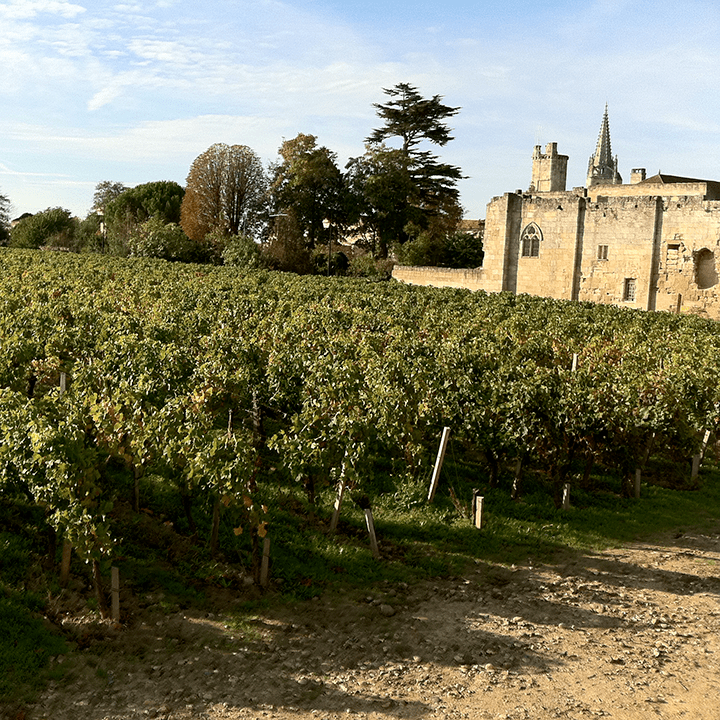
Unlike the Left Bank’s rigid 1855 classification, Saint-Émilion’s system is… a bit of a moving target. Every 10 years or so, the classification is revised. This sounds great on paper—wineries are rewarded for their efforts to improve their wines. However, in practice, this has led to quite a bit of controversy.
Wineries move up, others move down, and lawsuits abound. To top it off, some châteaux have even started rejecting their rankings altogether! For example, in the most recent shuffle, both Château Angélus and Château Ausone bowed out of the classification system after years of disputes, leaving only Château Pavie and Château Figeac as the remaining Grande Classe ‘A’ wineries.
It’s no wonder I had a momentary lapse! Keeping track of the shifting players in this drama can be like trying to navigate a maze.
The Current State of Saint-Émilion’s Classifications
Let’s take a moment to redeem ourselves. Saint-Émilion’s classification was first introduced in 1955, with the goal of providing more dynamism and rewarding quality improvements over time. It’s revised approximately every decade, a factor that keeps things both interesting and, well, confusing.
The classification has three main tiers:
- Premier Grand Cru Classé A (the top tier)
- Premier Grand Cru Classé B
- Grand Cru Classé
The 2022 classification, which stirred up a bit of controversy, left us with only two Premier Grand Cru Classé A wines: Château Pavie and Château Figeac—a reduction from four, following the voluntary withdrawal of Château Angélus and Château Ausone from the ranking system.
At the next level, Premier Grand Cru Classé B, you’ll find well-respected names such as:
- Château Troplong Mondot
- Château Canon
- Château La Gaffelière
- Château Beau-Séjour Bécot
These producers consistently create wines of incredible depth, structure, and aging potential.
Then, there’s the broader Grand Cru Classé category, with over 60 producers representing a wide spectrum of styles. These wines are celebrated for their quality, but they don’t quite reach the lofty heights of the Premier Grand Cru Classé estates.
When In Doubt, Enjoy the Moment
Saint-Émilion is not just about the status or classifications, it’s about a love of the vine and the passion that goes into each bottle. The wines from this region, especially the Merlot-dominant blends, express a deep sense of place.
So next time someone asks about Saint-Émilion’s Grande Classe ‘A’ estates and your mind draws a blank, take comfort in knowing that even a sommelier’s brain can be clouded by the grape. Just don’t forget to refill your glass and enjoy the journey back through the vineyards of Bordeaux. Cheers🍷
 SOMM&SOMM
We welcome feedback…