
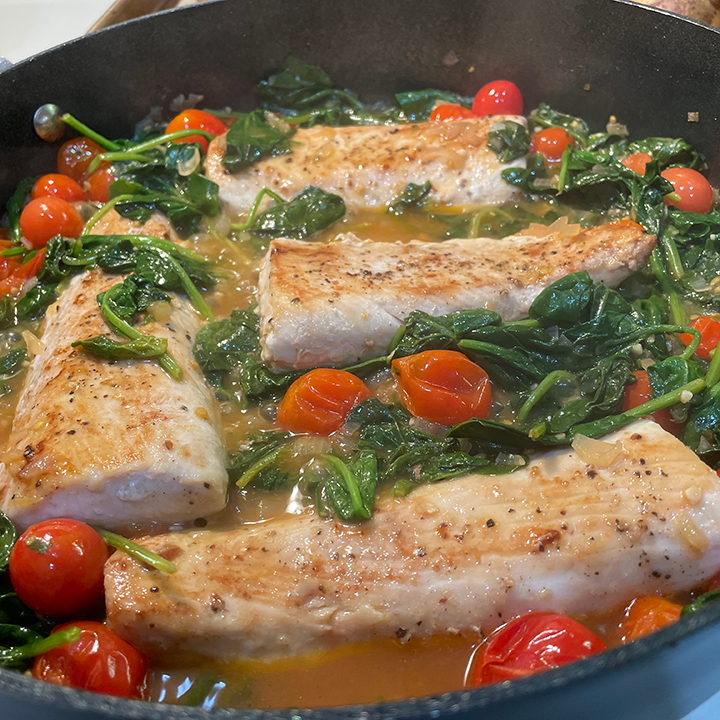
As a sommelier and wine educator, one of the greatest joys is the process of finding that perfect wine pairing—a marriage of flavors that elevates both the dish and the wine to new heights. Recently, I found myself in the SOMM&SOMM kitchen creating a Mediterranean-inspired Mahi Mahi dish, a vibrant, refreshing plate that marries the richness of seared Mahi with the brightness of tomatoes, garlic, lemon, and herbs. While the dish itself was flawless, it lacked one key component—a wine pairing to complete the culinary experience.
Finding a wine that compliments the complex flavor profile of Mediterranean-inspired Mahi is no small task. The challenge is to enhance the delicate yet meaty texture of the fish while balancing the brightness of lemon, the earthiness of spinach, and the slight tang from the rice wine vinegar. Here’s the approach I took in seeking the perfect wine, with emphasis on harmony and contrast.

Understanding the Flavor Profile of Mahi Mahi
Mahi Mahi is a mild, firm-textured fish, often compared to swordfish, but with a slightly sweeter note. When seared, it develops a wonderful crust that lends a subtle richness without overpowering its delicate natural flavor. In this recipe, the Mahi is complemented by fresh Mediterranean elements like spinach, cherry tomatoes, and basil. A burst of acidity from the lemon juice and rice wine vinegar adds brightness, while garlic and shallots contribute a subtle, savory depth.
The key to this dish lies in the balance between the buttery, seared fish and the fresh, acidic sauce. The spinach, with its earthy notes, also adds a slight bitterness to round out the dish. When thinking about wine, we want to match this profile with something that has enough acidity to complement the lemon and vinegar while being gentle enough not to overpower the delicate fish.
Choosing the Wine Based on Structure
To find the perfect wine pairing, I first considered the structural elements of the dish:
- Acidity: The lemon juice, rice wine vinegar, and tomatoes introduce a vibrant acidity that brightens the dish. A wine with similar or higher acidity is crucial for balance. This eliminates wines that are too rich or too low in acid, such as heavily oaked Chardonnays or some New World reds.
- Body: Mahi Mahi is meaty but not overly fatty. A light- to medium-bodied wine would pair best, ensuring the fish remains the star. This points toward white wines or light reds that offer structure without overwhelming the plate.
- Flavor Intensity: The mild flavors of the fish and the herbaceous, savory notes from the basil, garlic, and shallots call for a wine that mirrors these flavors. We want herbal or citrus-forward whites, or even rosés, that will enhance these elements rather than compete with them.
Considering Specific Pairings
Based on the structure and flavors, the wine shortlist becomes more focused. Let’s explore some options.
1. Vermentino – The Ideal Mediterranean Match
Vermentino, a grape found in Italy’s Liguria and Sardinia as well as southern France (where it’s called Rolle), is an exceptional choice for this Mahi dish. It naturally offers bright acidity and minerality, which mirrors the fresh, coastal nature of the Mediterranean. With notes of citrus, herbs, and sometimes even a hint of salinity, Vermentino would enhance the lemon, basil, and garlic in the sauce. Its zippy acidity keeps it refreshing, while its medium body holds up to the richness of the seared fish.
In particular, a Sardinian Vermentino, with its slight salinity and bracing minerality, would create a seamless connection with the coastal roots of the dish.
SOMM&SOMM Recommends: 2022 Deperu Holler Fria Vermentino di Gallura Superiore
2. Assyrtiko – A Greek Twist
For those looking to explore less common wines, Assyrtiko from Santorini is another stellar option. This Greek varietal is known for its high acidity, crispness, and mineral-driven flavors. With notes of citrus, green apple, and a slight smokiness, it would harmonize beautifully with the acidity in the dish while offering enough backbone to stand up to the Mahi’s meaty texture.
The volcanic soils of Santorini lend Assyrtiko an unmistakable minerality, reminiscent of the ocean breeze, which would echo the subtle salinity of the fish itself.
SOMM&SOMM Recommends: 2023 Sigalas Santorini Assyrtiko
3. Sauvignon Blanc – For a Herbaceous Touch
A classic pairing for dishes with green, herb-driven elements, Sauvignon Blanc, particularly from the Loire Valley, offers both crisp acidity and aromatic complexity. The grassy, citrus-driven profile of Sauvignon Blanc would play beautifully with the basil, parsley, and spinach in the dish, while its clean, bright finish cuts through the butter and oil in the seared fish.
Sancerre, from the Loire, with its precise minerality and racy acidity, would be a top pick in this category, although a New Zealand Sauvignon Blanc would offer a more tropical, fruit-forward option for those who enjoy more pronounced flavors.
SOMM&SOMM Recommends: 2023 Pascal Jolivet Sancerre
4. Dry Rosé – A Fresh, Versatile Option
For a more playful, yet equally complementary pairing, a dry Provençal rosé would be an excellent choice. With a balance of red fruit, herbal notes, and crisp acidity, rosé offers a bridge between the freshness of the tomatoes and the heartier elements of the fish and spinach. Its versatility makes it an approachable option, especially for a more casual date night setting.
A rosé with hints of citrus, melon, and herbs would bring out the complexity of the dish without overwhelming its delicate balance.
SOMM&SOMM Recommends: 2022 Domaines Ott Chateau Romassan Bandol Rose
5. Albariño – A Spanish Take on Seafood
Known for its seafood-friendly nature, Albariño from Spain’s Rías Baixas region is another ideal partner. With vibrant acidity, floral aromas, and flavors of lemon, green apple, and stone fruits, Albariño would heighten the citrusy elements in the dish while offering enough minerality to keep the palate refreshed. Its subtle salinity would also complement the fish’s natural flavor, creating a seamless blend of flavors from the sea and land.
SOMM&SOMM Recommends: 2023 Bodegas Fillaboa Rias Baixas Albarino
Experimenting with Contrasts
While matching the wine to the dish’s flavor profile is the most common approach, contrasting pairings can also be quite rewarding. For this Mediterranean Mahi, a lightly chilled, red Pinot Noir or Gamay from Beaujolais could work surprisingly well. These wines are light-bodied enough not to overpower the fish but offer red fruit and earthy notes that would contrast and enhance the sweetness of the cherry tomatoes and the earthiness of the spinach. The low tannin structure in both wines would ensure that they don’t clash with the delicate fish, but the slight chill adds freshness and lift to the pairing.
The Art of the Perfect Pairing
At its core, pairing wine with food is an art, an ever-evolving exploration of flavors, textures, and sensations. The Mediterranean-inspired Mahi dish presents a beautiful canvas, one that can be enhanced by a range of wines depending on the mood of the evening or the personal preferences of the diner. Whether you opt for the crisp minerality of Vermentino, the herbal elegance of Sauvignon Blanc, or the versatility of rosé, the key lies in understanding the balance of acidity, body, and flavor intensity.
For your next date-night meal, take the time to savor the exploration. Whether you choose a wine that mirrors the flavors of the dish or one that introduces a delightful contrast, the joy is in the discovery—an experience that, as a sommelier, I find endlessly rewarding. Cheers 🍷
Want the recipe for this dish? Drop me a line greg@sommandsomm.com
 SOMM&SOMM
We welcome feedback…