
The Legends of Champagne, Bordeaux, and Barolo.
Wine is not just a drink; it’s a tapestry of history, geography, and culture, woven through the lives of the people who have cultivated the vines, crafted the blends, and shaped the traditions that define them. Among the countless wines across the globe, some stand out not only for their quality but for the stories they carry within each bottle. Let’s journey through the histories and legends of three of the world’s most iconic wines: Champagne, Bordeaux, and Barolo.
The Wine of Celebration
Few wines are as synonymous with celebration and luxury as Champagne. Nestled in the cool, chalky soils of the Champagne region in northern France, this sparkling wine has a history filled with intrigue, innovation, and a touch of myth.

Born of Monks and Mistakes
The story of Champagne begins with the ancient Romans, who first planted vineyards in this region. But it wasn’t until the Middle Ages that Champagne began to develop its unique identity. In the 17th century, Dom Pérignon, a Benedictine monk, is often (and somewhat inaccurately) credited with inventing sparkling wine. While he didn’t create it, his efforts to refine the production methods were instrumental in developing the modern Champagne we know today.
The cold climate of the Champagne region caused fermentation to pause during winter, only to restart in the spring as temperatures rose. This unintended second fermentation produced bubbles in the bottles, which were often considered a fault. Dom Pérignon worked tirelessly to eliminate the bubbles, believing still wine was superior. However, with the advent of stronger glass and corks from England, the sparkle could finally be controlled, and by the 18th century, bubbly Champagne became a sensation across European courts.
The Myth and the Magic: Dom Pérignon’s Revelation
One of the most enduring legends of Champagne involves Dom Pérignon’s supposed exclamation upon tasting the newly sparkling wine: “Come quickly, I am tasting the stars!” While there is no historical evidence to support this claim, the romantic story has captured imaginations for centuries. In reality, it was the marketing genius of the Champagne houses in the 19th century—such as Veuve Clicquot, Moët & Chandon, and Pommery—that established Champagne’s reputation as the drink of royalty, celebration, and sophistication.
Evolution: From Aristocratic Courts to Everyday Celebrations

By the 19th century, Champagne had established itself in the aristocratic courts of Europe, and its association with luxury began to grow. Madame Clicquot, known as the “Grande Dame of Champagne,” invented the riddling rack, a method that allowed for clearer, more consistent Champagne by efficiently removing the yeast sediment that forms during secondary fermentation. This innovation, along with others, enabled Champagne to be produced on a larger scale while maintaining its quality.
Champagne’s evolution continued into the 20th century, solidifying its place as a global symbol of celebration and refinement. From the roaring parties of the 1920s to the Formula 1 podium, Champagne has become an icon of joy, luxury, and accomplishment.
The Blend That Built Empires
Bordeaux is not just a wine; it is a legacy. Situated along the banks of the Garonne, Dordogne, and Gironde rivers in southwestern France, Bordeaux has been a thriving hub of viticulture for over two millennia. Its story is one of conquests, political alliances, and the rise of a global wine empire.

Origins: The Rise of the Claret
The Bordeaux wine region began to gain prominence in the Middle Ages. In 1152, the marriage of Eleanor of Aquitaine to Henry Plantagenet, the future King Henry II of England, brought Bordeaux under English rule. This political alliance provided Bordeaux with access to the English market, where the wines became immensely popular under the name “claret”—a term still used in England to describe red Bordeaux wines.
Bordeaux’s success owes much to its unique terroir, which varies greatly across the region’s appellations. From the gravelly soils of the Médoc, perfect for Cabernet Sauvignon, to the clay and limestone terroirs of the Right Bank, ideal for Merlot, Bordeaux produces a diverse range of wines that are complex, age-worthy, and immensely varied.
The 1855 Classification: Codifying Greatness
One of the most pivotal moments in Bordeaux’s history came in 1855 when Napoleon III requested a classification of Bordeaux wines for the Paris Exposition Universelle. The result was the famous 1855 Classification, which ranked the top producers (known as “Châteaux”) in the Médoc into five crus, or growths. This classification, which remains largely unchanged today, established Bordeaux’s hierarchy and affirmed its place in the pantheon of great wines.
The 1855 Classification became a defining moment, setting Bordeaux apart from other wine regions with its institutionalized system of prestige and quality. While only the Left Bank châteaux were classified, Bordeaux as a whole reaped the benefits of the newfound status and global acclaim.

Myths and Legends: Château Margaux’s Revolutionary Roots
Bordeaux is not without its share of myths and legends. One of the most intriguing stories involves Château Margaux, which was saved from destruction during the French Revolution by its steward, Laure de Fumel, who placed a large “National Property” sign at the château’s entrance to protect it from revolutionary mobs. Today, Château Margaux (my personal favorite) remains one of the most revered estates in Bordeaux, known for its opulent, velvety wines.
The King of Wines and the Wine of Kings
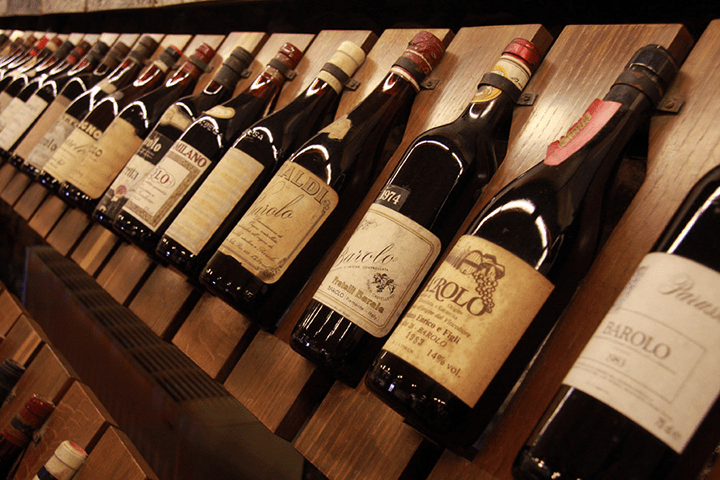
Barolo, the iconic red wine from Italy’s Piedmont region, has earned its reputation as “The King of Wines and the Wine of Kings.” Made exclusively from the Nebbiolo grape, Barolo is a wine that speaks of patience, perseverance, and place. Its story is deeply intertwined with the history and culture of Piedmont, a region nestled at the foot of the Alps.
Origins: From Sweetness to Strength
In the early 19th century, Barolo was quite different from the wine we know today. It was a sweet, lightly sparkling wine. The transformation of Barolo into a dry, powerful red wine is often attributed to the Marquise Juliette Colbert de Maulévrier, a French noblewoman who married into the Falletti family, one of the great landowning families of Piedmont. With the help of a French enologist, she redefined Barolo, turning it into the robust, dry wine that became the favorite of the House of Savoy, the ruling family of the Kingdom of Piedmont-Sardinia.
Evolution: The Rise of the Modernist and Traditionalist Movements
Barolo’s evolution took another turn in the late 20th century when a group of innovative producers, led by Elio Altare, Paolo Scavino, and others, sought to modernize Barolo’s production methods. They introduced shorter maceration times and the use of new French oak barrels, resulting in wines that were softer, more accessible, and could be enjoyed younger.

This sparked a division between the “Modernists” and “Traditionalists.” The traditionalists, like Bartolo Mascarello and Giuseppe Rinaldi, believed in long maceration periods and aging in large Slovenian oak casks (botti) to produce tannic, structured wines that required years to mature. This “Barolo Wars” debate continues to shape Barolo today, creating a diverse spectrum of styles within the region.
Myths and Legends: The Mysterious Fog of Nebbiolo
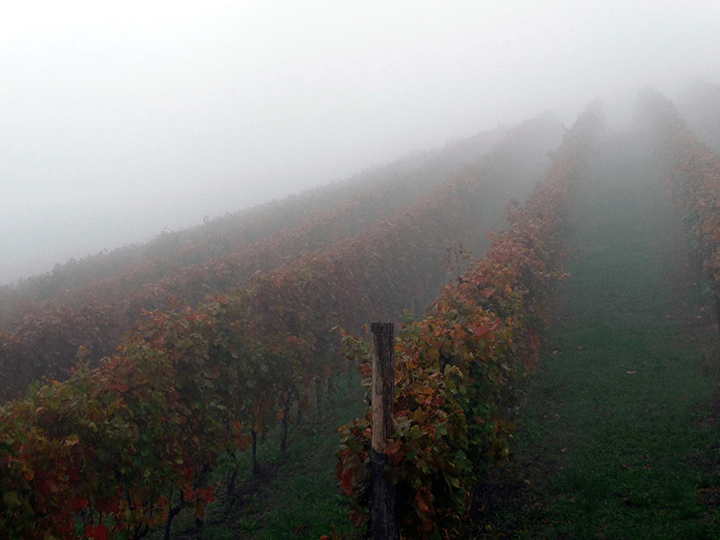
The name “Nebbiolo” itself is derived from the Italian word “nebbia,” meaning fog. Legend has it that this fog, which blankets the vineyards during the harvest season, gives Nebbiolo its haunting complexity and ethereal character. Some believe this mist contributes to the grape’s slow ripening and distinctive aromas, which range from rose petals to tar.
Barolo’s reputation as the “King of Wines” is tied to its ability to age. With its formidable tannic structure and high acidity, a well-made Barolo can age gracefully for decades, developing complex tertiary flavors of dried fruits, leather, tobacco, and truffles—an aromatic journey that only a few wines in the world can match.
A Sip of History in Every Glass
Champagne, Bordeaux, and Barolo are more than just wines; they are liquid histories, each with its own unique narrative of passion, innovation, and resilience. They tell stories of monks and mistresses, kings and rebels, and the generations of winemakers who have shaped their evolution. The next time you raise a glass of one of these iconic wines, remember you’re not just tasting fermented grapes—you’re tasting the essence of a region, the legacy of centuries, and the spirit of its people.
Whether you’re drawn to the effervescence of Champagne, the aristocratic pedigree of Bordeaux, or the regal intensity of Barolo, each offers a portal to a different time, place, and story. Cheers to that 🍷
Cover photo credit: © European Union, 2024, CC BY 4.0 via Wikimedia Commons
 SOMM&SOMM
We welcome feedback…