The Canvas of the Winemaker.
Few grape varieties offer as much versatility and expressive potential as Chardonnay. Within the Vitis vinifera family, it stands as one of the most adaptable varietals—capable of producing everything from zesty, mineral-driven wines to rich, barrel-aged expressions. Winemakers often call it the “blank canvas” grape, not because it lacks character, but because it reflects the sum of choices made in the cellar: oak or stainless steel, malolactic conversion or crisp acidity, extended lees aging or youthful freshness. Chardonnay mirrors technique—and that is precisely why professionals revere it.
A Brief History of a Global Classic
The name Chardonnay originates from a small village in the Mâconnais subregion of Burgundy, France. While legends once traced its ancestry to medieval crusades or poetic tales from Cyprus, modern science has provided a far clearer understanding.
Thanks to genetic research—most notably by Dr. Carole Meredith of the University of California—we now know that Chardonnay is a natural cross between Pinot Noir and Gouais Blanc. That lineage is meaningful: Pinot Noir has long been considered the noble grape of Burgundy, while Gouais Blanc was historically grown for everyday table wine. Their close proximity in vineyards centuries ago allowed for cross-pollination that ultimately produced the varietal we recognize today.
Interestingly, Gouais Blanc has been known by more than 140 different names—proof of its widespread cultivation—and yet it has all but disappeared today. Chardonnay, on the other hand, has become one of the most celebrated and widely planted grapes in the world.
Chardonnay and Terroir: A Natural Translator
Chardonnay is uniquely sensitive to terroir—the combination of soil, climate, altitude, water access, and topography that shape a wine’s character. For this reason, many Old World labels emphasize geographic origin more than grape variety.
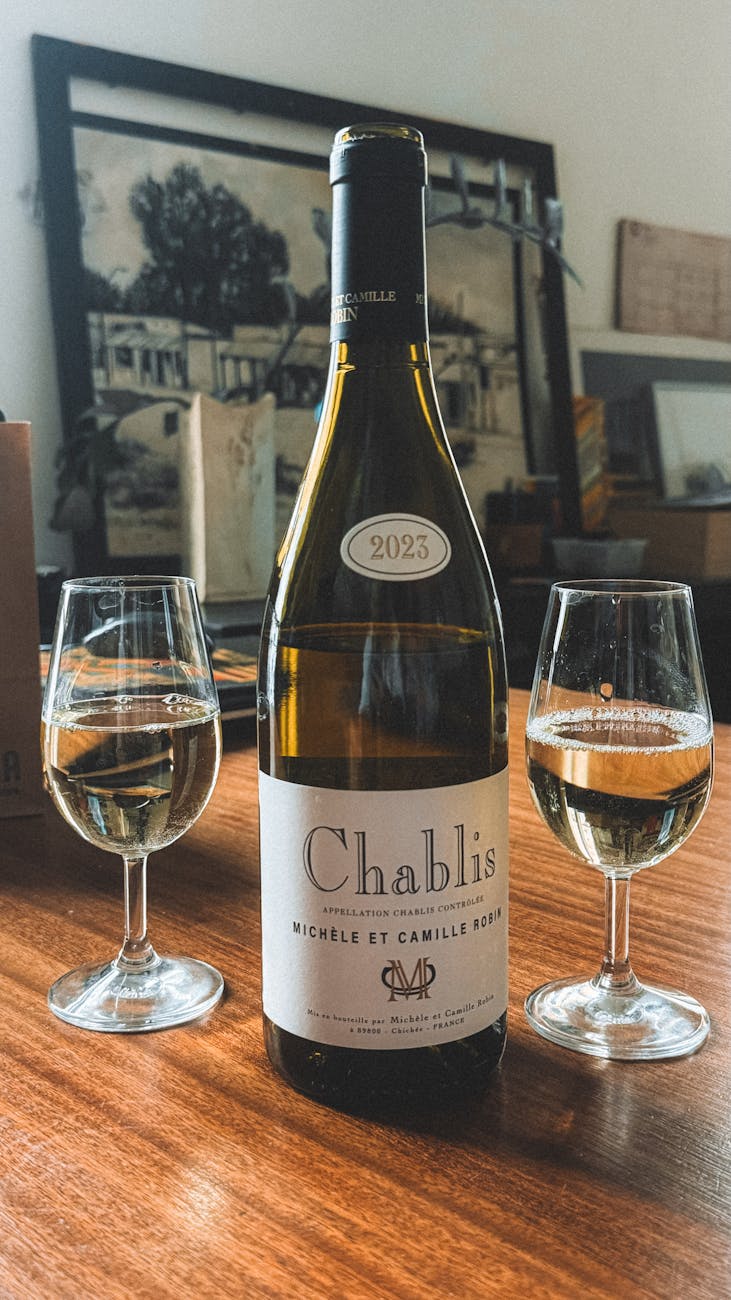
Take Chablis, for example. It is not a synonym for Chardonnay, yet every wine labeled Chablis must be made from Chardonnay. The region’s cool climate and Kimmeridgian limestone soils produce wines that are lean, flinty, and mineral-driven—quite different from the fuller styles of, say, Sonoma or Margaret River. Thus:
All Chablis are Chardonnay, but not all Chardonnays are Chablis.
Gregory Dean, SOMM&SOMM
In Burgundy’s Côte de Beaune, names like Montrachet (pronounced “Mon-ra-shay”) represent some of the most prestigious—and expensive—Chardonnays on earth. Further south, Pouilly-Fuissé in the Mâconnais region is known for producing ripe, elegant Chardonnays that balance fruit with structure. Nearly every Old World country—France, Italy, Spain, Germany, Austria, Portugal, Greece, Hungary, Croatia, and others—produces unique expressions shaped by specific terroir.
Old World generally refers to European, Middle Eastern, and North African wine-producing countries.
New World Chardonnay: Sunshine in the Glass
In contrast, New World regions such as California, Australia, South Africa, Chile, and Argentina typically experience warmer growing conditions. More sunlight means longer hang time, which increases sugar levels in the grapes. Higher sugar translates into higher alcohol during fermentation—one reason New World Chardonnays tend to be richer, fuller-bodied, and more fruit-forward.

Serving temperature matters:
- Unoaked, youthful styles: 48–50°F (9–10°C)
- Oaked or older vintages: 52–54°F (11–12°C)
These subtle temperature differences allow either the fruit or the influence of oak and lees to take the spotlight.
What About ‘Buttery’ Chardonnay?
The often-discussed buttery texture comes from malolactic conversion—a natural process where sharper malic acid (like that in green apples) is transformed into softer lactic acid (found in milk and cream). This adds texture and roundness while reducing acidity. Not all winemakers choose this technique; some prefer the crisp purity of a non-malo Chardonnay. Again—the grape simply mirrors the choice.

Chardonnay in Champagne
Chardonnay is also one of only three permitted grapes in Champagne—the sole white varietal allowed. In fact, when you see Blanc de Blancs on a Champagne label, it indicates the wine is made from 100% Chardonnay. Its elegance and aging potential make it highly prized in sparkling wine production around the world.
Stylistic Tools of the Winemaker
Chardonnay can express a wide range of styles depending on the methods used:
- Stainless steel fermentation – preserves freshness and acidity
- Oak aging – adds spice, texture, and complexity
- Concrete eggs – enhance mouthfeel without imparting flavor
- Malolactic conversion – softens acidity and adds creaminess
- Lees stirring (bâtonnage) – contributes body and aromatic depth
Chardonnay, perhaps more than any other grape, tells the story of the cellar.
SOMM&SOMM Recommendations
A few standout examples worth exploring:
- 2021 Domaine Drouhin Vaudon Chablis – mineral and precise
- 2020 Louis Latour Pouilly-Fuissé – elegant and expressive
- 2017 Pellet Estate Chardonnay – Napa richness with restraint
- 2020 Vasse Felix Chardonnay – a benchmark from Margaret River
- 2019 Catena Alta Chardonnay – high-altitude brilliance from Argentina
Too many to list—but each one showcases a different voice of the same grape.
A Final Thought
The best way to understand Chardonnay is to taste it across regions, styles, and techniques. In a gallery, we use our eyes to interpret a painting. With wine, we have the luxury of using three senses instead of one—sight, smell, and taste. Each glass reveals the winemaker’s intention and the land’s identity.
Next time you pour a Chardonnay, ask yourself:
What story is the winemaker telling… and what is the vineyard whispering in the background? Cheers ❤️
Edited: Original post was written and published 2/18/2023. Refreshed and updated 11/29/2025


We welcome feedback…