
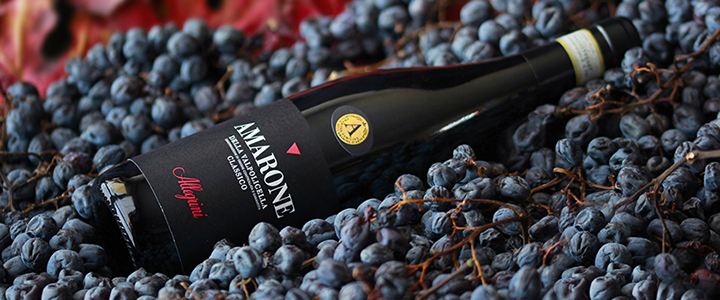
Amarone (pronounced aa-muh-row-nay) is one of the most intriguing and mystic wines you’ll ever experience. It hails from the Valpolicella, Veneto region in north-east Italy, and is deeply steeped in tradition. No… Amarone is not a grape variety. It is a specific style of wine unique to this region. The three main grape varieties used to produce Amarone include Corvina, Rondinella and Molinara (up to 15%). Most Amarone produced today use between 60% and 80% Corvina as the primary grape in the blend–contributing to its signature flavor. Other varietals are used alongside Covina, Rondinella and Molinara for basic Valpolicella wines. These include: Pelara, Negrara, Forsellina and Oseleta.
There are actually four (4) styles of distinct wines that come from the Valpolicella region. Recioto, Valpolicella, Ripasso and Amarone. Each uses a different blend of the local grape varietals mentioned earlier. The basic Valpolicella is light bodied and typically served slightly chilled. Some compare this wine to a traditional Beaujolais. I am yet to make this connection 😉 The remaining three styles, Amarone, Ripasso and Recioto all have something in common… dried grapes. That’s right, dried grapes! While according to legend, Amarone is a fairly recent discovery (1936), it has been around and vastly under appreciated for centuries.
To appreciate Amarone, we need to understand its connection to Recioto. Fashionable early Romans preferred their wines sweet. Very sweet. Recioto wines (or at least variations of) date back to 234 BC. Immediately following harvest, grapes are placed in racks to dry. This method, called Appassimento (grape drying), allows time for the water to mostly evaporate and sugars become concentrated. The resulting must (grape juice) is fermented into this hyper-sweet nectar of the Gods we call Recioto. The winemaker determined the level of sweetness by stopping fermentation before the yeast converts all the sugar to alcohol.
In the early days of Recioto production, the yeast sometimes remained active and continued to feed off the sugars. As a result, the wines were no longer sweet and much higher in alcohol. This style of wine did not resonate with the Romans, and was sold for cheap and used for cooking. Tastes changed over the years, and bitter recioto became Amarone–one of the most famous (albeit misunderstood) expensive wines in the world. Today Amarone wine is made through a deliberate process, not a result of unintentional extended fermentation.
Amarone della Valpolicella is now a recognized DOCG (Denominazione di Origine Controllata e Garantita). This is the certification bestowed on regions of Italy indicating wines produced with the highest level of quality. Amarone wine begins as a garnet color with a ruby red rim (slight variation). Over time, the color of the wine gets lighter with reddish-brown brick tones. Every young red wine expresses fruit. The signature black cherry nose and palate of young Amarone takes on spicy notes as well as leather, old wood and even violet potpourri as it ages. Regardless, it is an amazing wine to serve with braised meats and mature cheeses. The biggest challenge with pairing this wine is understanding the impact a 15% alcohol wine can have on a particular dish.
If this sounds intimidating, perhaps you would rather start with a “Baby Amarone.” Ripasso, as it turns out, is made from the same grapes as its big brother–Amarone. And while the initial wine isn’t made from dried grapes (yes, I mentioned Ripasso and dried grapes above), it goes through a second fermentation with used Amarone dried grapes. This process produces an amazing wine with all of the pure characteristics of the ripe Covina, Rondinella and Molinara grapes with the added intensity of the previously used Amarone grapes. This is certainly a wine worth seeking out!
Cheers!
Next article in the series: Enthusiast to Sommelier: Final Countdown
First article in this series: Enthusiast to Sommelier: Getting Started
Leave a Reply