Category: Wine Seasons

  • The Calm Before the Crush

    The Calm Before the Crush

    Why August May Be the Most Important Month in the Vineyard.

    Long before the first grape is harvested, before the fermenters come alive and before a vintage receives its first score, there is a season of remarkable stillness. For those who know where to look, it is also the season when the story of the wine is quietly being written.

    A Vineyard Holding Its Breath

    Visit a vineyard in early August and you may wonder why harvest is spoken of with such anticipation.

    There are no tractors weaving between the rows. No crews filling bins with fruit. The cellar remains quiet, and the vines appear content beneath another warm summer afternoon. To the casual observer, little seems to be happening.

    Yet this is one of the busiest times of the year.

    Not with movement, but with attention.

    Every sunrise brings subtle changes to the fruit. Sugar continues to accumulate as the vine transforms sunlight into energy. Acidity begins its gradual decline. Aromatic compounds emerge almost imperceptibly, while tannins slowly mature within the skins and seeds. None of these changes announce themselves in dramatic fashion, yet together they determine whether the coming vintage will be merely good or truly memorable.

    August is often described as the calm before the crush, but calm should never be mistaken for inactivity. It is a month defined by patience, observation, and countless small decisions that rarely receive the recognition they deserve.

    colorful bunch of grapes in sunlight
    Photo by MEHMET KAYNAR on Pexels.com

    When the Vineyard Changes Color

    Weeks before harvest, vineyards undergo one of their most beautiful transformations.

    Known as veraison, this stage marks the beginning of ripening. Red varieties gradually exchange bright green berries for shades of crimson, violet, and deep blue, while white grapes soften into translucent hues of gold and amber.

    The change is visually striking, but what occurs beneath the skin is even more remarkable.

    Photosynthesis fuels the steady accumulation of sugar while organic acids begin to recede. The seeds, once soft and green, mature and darken. Tannins lose their aggressive bitterness, preparing to contribute texture rather than astringency. At the same time, the compounds responsible for aroma and flavor begin expressing the character we later recognize in the finished wine.

    The vineyard is no longer focused on growing fruit.

    It is refining it.

    Photo by User:Kandschwar, CC BY-SA 2.0 DE, via Wikimedia Commons

    Beyond the Brix

    One of the most common misconceptions about harvest is that it begins when grapes become sweet enough.

    Sweetness certainly matters. Winemakers routinely measure sugar using degrees Brix to estimate potential alcohol after fermentation, and those measurements provide valuable guidance throughout the season. Yet experienced growers know that chemistry alone rarely determines the harvest date.

    A vineyard can produce fruit with ideal sugar levels while the tannins remain coarse or the flavors surprisingly undeveloped. Another block may show exceptional aromatic complexity while still retaining acidity that promises greater balance with another week on the vine.

    For that reason, August is filled with quiet routines that have changed remarkably little over generations. Growers walk the rows carrying notebooks instead of baskets, tasting berries from different sections of the vineyard, comparing sun-exposed clusters with those shaded beneath the canopy, breaking open seeds, feeling the texture of the skins, and noting how each vine responds to its own small piece of the landscape.

    Laboratory analyses provide certainty about numbers.

    Walking the vineyard provides confidence in the decision.

    The finest wines require both.

    Decisions That Cannot Be Automated

    Modern viticulture has embraced extraordinary technology. Satellites reveal differences in vine vigor across entire estates. Drones detect water stress long before it becomes visible from the ground. Weather stations monitor temperature, humidity, and disease pressure almost continuously, while laboratory instruments measure sugar, acidity, and pH with remarkable precision.

    These tools have transformed vineyard management, yet they have not replaced experience.

    man holding grapes in garden
    Photo by BOOM 💥 Photography on Pexels.com

    A veteran grower notices how one corner of a vineyard consistently ripens a few days later because cool evening air settles across the slope. Another recognizes that a particular block responds differently after a dry winter than it does following abundant spring rainfall. Years of observation create a familiarity that cannot be downloaded into software or captured on a satellite image.

    The decisions made during August often reflect this combination of science and intuition. Should irrigation continue for another few days to support the vine, or should mild water stress encourage greater concentration in the fruit? Would opening the canopy improve airflow and reduce disease pressure, or would exposing the clusters to intense afternoon sun do more harm than good? Is the forecasted rain significant enough to justify harvesting earlier than planned, or does the vineyard still have time to develop greater complexity?

    Every vintage asks these questions differently.

    The answers are never found in a single measurement.

    vibrant grapes on vine in georgian vineyard
    Photo by Mariam Sharia on Pexels.com

    Nature Always Has the Final Word

    No agricultural product reflects the growing season quite like wine.

    A warm summer followed by cool nights may preserve brilliant acidity while allowing flavors to develop slowly. A prolonged heatwave can accelerate ripening, compressing decisions that growers expected to make over several weeks into only a few days. Unexpected rain near harvest may swell the berries and dilute concentration, while drought can produce smaller fruit with remarkable intensity.

    Even neighboring vineyards planted with the same grape variety may tell different stories. A slight difference in elevation, a change in soil composition, or a prevailing afternoon breeze can influence how the fruit matures from one property to the next.

    This is why wine is identified not only by producer or grape variety, but by vintage.

    Each year becomes a permanent record of the season that created it.

    The Discipline of Patience

    Perhaps the greatest challenge in August is resisting the temptation to mistake readiness for ripeness.

    As sugar rises, the fruit begins to look complete. The clusters are beautifully colored, the berries taste increasingly sweet, and harvest feels tantalizingly close. Yet flavor often continues evolving after appearance suggests otherwise.

    Phenolic ripeness—the maturity of tannins, skins, and seeds—develops at its own pace. The subtle floral notes that distinguish one vineyard from another, the spice that adds complexity to Syrah, or the layered black fruit that defines exceptional Cabernet Sauvignon may all depend upon days that seem insignificant on a calendar.

    Those days are rarely insignificant.

    Choosing to wait requires confidence, because patience carries its own risks. Birds become increasingly interested in the fruit. Storm systems grow more unpredictable. Heat can intensify unexpectedly, and disease pressure may rise almost overnight.

    Harvest is not a search for perfection.

    It is the art of recognizing the moment when balance has been achieved and accepting that nature will not wait forever.

    photo of a vineyard at sunset
    Photo by Chris F on Pexels.com

    A Living Vineyard

    Stand quietly in a vineyard during August and it is easy to believe that little is changing. The rows appear still beneath the afternoon sun, broken only by the movement of leaves in a gentle breeze.

    The reality is far more dynamic.

    Within every vine, water continues its journey from root to leaf. Photosynthesis quietly powers the development of each cluster. Beneath the soil, an astonishing community of microorganisms interacts with the roots, influencing nutrient availability and the overall health of the vineyard. Native yeasts settle naturally on the grape skins, becoming part of the invisible ecosystem that has accompanied winemaking for centuries.

    A vineyard is not simply a collection of grapevines.

    It is a living environment whose countless relationships ultimately shape the character of the wine.

    Understanding that complexity is one of the reasons great growers spend so much time walking their vineyards rather than merely managing them.

    close up of hand cutting grapes with pruners
    Photo by Corentin HENRY on Pexels.com

    The Vintage Begins Here

    Months from now, harvest photographs will fill social media. Fermentation will command attention inside the cellar. Barrels will quietly transform young wine into something more refined, and eventually a bottle will find its way onto someone’s table.

    By then, August will have been largely forgotten.

    Yet every swirl in the glass will carry the memory of these quiet weeks. It will reflect mornings spent tasting berries before the heat of the day. It will reveal the patience to wait when waiting felt uncertain and the wisdom to act when the vineyard had finally spoken.

    The harvest may be the most visible chapter in the life of a wine, but it is rarely the chapter that determines its character.

    That story begins earlier, during a season when little appears to be happening at all.

    It begins in the calm before the crush.

    From the SOMM&SOMM Table

    The next time you pour a glass of wine, pause for a moment before taking the first sip. Consider the vineyard weeks before harvest, when the fruit hung quietly beneath the summer sun and every important decision remained a conversation between the grower, the land, and the season.

    The bottle in your hand is not simply the product of harvest.

    It is the result of patience 🍷

    Cover photo by M. Rohana on Pexels.com

  • Where Wine Belongs

    Where Wine Belongs

    The Enduring Pleasure of Drinking Wine Outdoors.

    Some of the most memorable bottles are not opened beneath chandeliers or beside polished tables. They are poured where conversation competes with birdsong, where the evening breeze carries the scent of fresh-cut grass, and where the setting becomes as much a part of the wine as the vineyard that produced it.

    wine glasses and bread on a table
    Photo by Anastasia Lashkevich on Pexels.com

    A Glass Without Walls

    Wine has always found its way outdoors.

    Long before tasting rooms, temperature-controlled cellars, and elaborate stemware collections, wine was carried into vineyards, village squares, fishing boats, and family gardens. It accompanied harvest celebrations beneath open skies and traveled with merchants across continents. It was shared beneath olive trees, beside rivers, and around campfires long before anyone debated the proper shape of a Bordeaux glass.

    Perhaps that is why wine feels so comfortable outside.

    Removing walls changes more than the scenery. It changes the experience itself. The pace slows. Conversations become less formal. Meals linger. A bottle that might have seemed ordinary at the dining room table suddenly becomes unforgettable simply because it was opened beneath a canopy of live oaks as the sun disappeared below the horizon.

    The wine has not changed.

    Everything around it has.

    hand holding glass of white wine
    Photo by George Frewat on Pexels.com

    The Vineyard Never Had a Ceiling

    It is easy to forget that every bottle begins outdoors.

    Before a cork is pulled or a corkscrew ever touches the capsule, the wine has already spent months exposed to changing weather, shifting sunlight, cool mornings, and warm afternoons. Every vintage is shaped by the open sky.

    The vines respond to rainfall, not irrigation schedules alone. They rely upon breezes that dry the canopy after summer storms. They benefit from cool nights that preserve acidity and warm days that encourage ripening. Even subtle differences in elevation or the direction a hillside faces can influence how a wine ultimately tastes.

    Perhaps enjoying wine outdoors creates an unspoken connection to that origin.

    For a brief moment, the bottle returns to the environment where its story first began.

    man and woman sitting on gray concrete pavement
    Photo by cottonbro studio on Pexels.com

    A Different Pace

    Dining indoors often follows a schedule. The meal arrives, courses progress, and eventually the evening comes to a close.

    Outside, time seems less interested in the clock.

    A conversation pauses as someone notices the changing colors of the sky. Another glass is poured without anyone suggesting it. Children chase fireflies while friends debate whether the wine shows more citrus or stone fruit as it slowly warms in the glass.

    The gathering becomes less about tasting notes and more about shared experience.

    That has always been one of wine’s greatest gifts.

    Unlike many beverages, wine encourages lingering. It rewards curiosity but never demands it. A bottle may inspire thoughtful discussion, yet it is equally content becoming part of the background while laughter carries the evening forward.

    Let the Season Choose the Wine

    Summer often encourages us to reach automatically for crisp whites or refreshing rosés, and for good reason. Bright acidity and lower serving temperatures complement warm afternoons beautifully.

    Yet drinking outdoors invites greater flexibility than many people realize.

    A lightly chilled Pinot Noir can be every bit as refreshing as a Sauvignon Blanc when paired with grilled salmon or roasted vegetables. Cru Beaujolais often reveals remarkable freshness after spending twenty minutes in an ice bucket. Dry Riesling offers enough acidity to accompany everything from seafood to spicy cuisine, while a well-made sparkling wine rarely feels out of place regardless of what appears on the table.

    Rather than asking which wines belong outdoors, it may be better to ask which wines encourage another conversation.

    Those are usually the right bottles to bring.

    chilled champagne bottles in ice bucket outdoors
    Photo by Bruno Mattos on Pexels.com

    Temperature Matters More Than We Think

    One of the greatest misconceptions about outdoor wine service is that colder is always better.

    Serving temperature influences aroma as much as flavor.

    A white wine that is ice cold may appear refreshing at first, but excessive chilling suppresses many of the delicate aromas that give it personality. Likewise, a red wine left in the summer heat can quickly lose its balance as alcohol becomes more prominent and fresh fruit gives way to heaviness.

    The goal is not perfection.

    It is moderation.

    A simple ice bucket with equal parts ice and water cools a bottle far more efficiently than ice alone. Keeping opened bottles shaded from direct sunlight preserves freshness, while allowing a chilled red to warm slightly in the glass often reveals layers that would otherwise remain hidden.

    Wine rewards small acts of attention.

    Choosing the Right Glass

    Outdoor gatherings often inspire practicality. Acrylic stemware, sturdy tumblers, and reusable cups all have their place, particularly where broken glass presents a concern.

    Yet when circumstances allow, proper stemware quietly enhances the experience.

    The bowl concentrates aromas while the stem keeps warm hands from raising the wine’s temperature too quickly. The difference may seem subtle until two glasses of the same wine are compared side by side.

    Fortunately, enjoying wine outdoors has become easier than ever. Modern outdoor stemware is remarkably well designed, allowing many of the advantages of traditional glasses while offering the durability that picnics, patios, and boats often require.

    The finest glass is ultimately the one that allows everyone to relax.

    After all, no one remembers an evening because the stemware was perfect.

    They remember the people gathered around it.

    Pair the Place Before the Plate

    Traditional food pairing begins with the meal.

    Outdoor entertaining suggests another approach.

    Consider the setting first.

    A shaded garden invites wines that are aromatic and graceful. A breezy afternoon beside the coast naturally complements wines with bright acidity and mineral character. An evening around a fire pit welcomes reds with gentle spice and moderate structure, while a picnic beneath towering oaks often calls for bottles that ask little of the drinker beyond another sip.

    The surroundings influence our perception more than we realize.

    The sound of waves, the scent of charcoal, the warmth of fading sunlight, even the texture of the air all become quiet companions to the wine.

    Great pairings are not always between food and bottle.

    Sometimes they exist between wine and place.

    wine bottles and glasses on bar counter
    Photo by Helena Lopes on Pexels.com

    The Beauty of Imperfection

    Outdoor entertaining rarely unfolds exactly as planned.

    A breeze scatters napkins across the lawn. Someone forgets the corkscrew and improvises. The cheese becomes warmer than expected. A passing summer shower sends everyone scrambling toward the porch with glasses in hand, laughing more than hurrying.

    Oddly enough, these are often the evenings we remember most clearly.

    Wine has never required flawless conditions.

    Some of history’s most celebrated wine regions have produced extraordinary bottles while enduring unpredictable weather, challenging terrain, and generations of uncertainty. A little wind at the picnic table is hardly cause for concern.

    The pursuit of perfection has never been wine’s greatest virtue.

    Hospitality has.

    A Bottle Worth Sharing

    By the end of July, summer has settled into a comfortable rhythm. The long evenings have become familiar, gardens are thriving, and outdoor tables carry the gentle signs of a season well enjoyed.

    It is a fitting time to remember that wine has never been intended as a performance.

    It is not measured by the rarity of the vintage, the height of the score, or the complexity of the tasting note.

    It is measured by the conversations it encourages, the meals it accompanies, and the memories it quietly helps create.

    Perhaps that is why some bottles seem impossible to forget.

    Not because they were extraordinary wines.

    But because they were opened outdoors, shared generously, and allowed to become part of an evening that no one wanted to end.

    From the SOMM&SOMM Table

    As July gives way to August, resist the temptation to save your favorite bottle for a special occasion. Carry it onto the porch, into the garden, beside the water, or beneath the shade of a favorite tree. Pour a glass before the sun begins to set, invite someone to join you, and let the evening unfold at its own pace.

    The finest place to enjoy a bottle of wine may not be where the table is set most elegantly.

    It may simply be wherever the sky becomes your ceiling 🍷

    Cover photo by Pixabay on Pexels.com

  • Spring Uncorked

    Spring Uncorked

    A Sommelier’s Guide to the Season of Renewal.

    Spring does not arrive all at once—it lingers, hesitates, and then, almost without warning, transforms everything around us. The same can be said for the wines we reach for. One moment, we are still clinging to the comfort of winter—structured reds, slow braises, and fireside pours—and the next, we find ourselves craving brightness, freshness, and lift.

    At SOMM&SOMM, we don’t view spring as a single season, but rather as a graceful evolution. It is a journey of the palate, one that mirrors nature itself. Understanding this progression allows us to make more intentional choices—pairing not just wine with food, but wine with time, temperature, and emotion.

    Let’s walk through the season as it was meant to be experienced—one glass at a time.

    Photo by Alena Koval on Pexels.com

    The Thaw: Where Winter Lets Go

    Early spring still carries the weight of winter. There’s a chill in the air, and comfort remains a quiet necessity. But something subtle begins to shift. The palate, like the landscape, starts to awaken.

    This is where we begin to move away from the dense and the heavy—not abruptly, but thoughtfully. Wines in this stage should retain enough structure to complement heartier dishes, yet offer a lift of acidity and freshness that signals change.

    Photo by Andrew Patrick Photo on Pexels.com

    A beautifully balanced Pinot Noir becomes the perfect companion here. Its earthy undertones still resonate with winter’s flavors—mushrooms, roasted meats, herbs—while its natural acidity brings a sense of brightness. Likewise, a lightly oaked Chardonnay offers a similar bridge, holding onto its roundness while introducing notes of citrus and orchard fruit.

    Imagine a roast chicken emerging from the oven, its skin golden and crisp, perfumed with lemon, garlic, and fresh thyme. It is a dish that belongs equally to two seasons. Paired with a Pinot Noir, the wine mirrors the savory depth while refreshing the palate with each sip. A Chardonnay, on the other hand, leans into the dish’s richness, its subtle oak and creamy texture harmonizing with the roasted flavors while the citrus notes echo the lemon.

    This is the quiet conversation between seasons—the moment where winter loosens its grip, and spring begins to whisper.

    SOMM&SOMM Recommended Wines – The Thaw

    • Willamette Valley Pinot Noir
    • Sonoma Coast Pinot Noir
    • Bourgogne Blanc (lightly oaked Chardonnay)
    • Dry German Riesling (Kabinett or Trocken)
    • Cru Beaujolais (Gamay)
    Photo by Erik Karits on Pexels.com

    The Bloom: When Freshness Takes Center Stage

    By mid-spring, the transformation is undeniable. Markets begin to fill with vibrant greens, herbs, and the first delicate vegetables of the season. The air feels lighter, and so too should the wines.

    This is where acidity becomes the star.

    Sauvignon Blanc, in all its expressive glory, feels almost tailor-made for this moment. Whether from the Loire Valley or New Zealand, its bright citrus, herbal notes, and energetic structure align seamlessly with the flavors of the season. Grüner Veltliner offers a slightly more textured experience, with its signature white pepper note adding intrigue to fresh, green dishes.

    A spring pea and mint risotto captures this phase perfectly. Creamy and comforting, yet undeniably fresh, it reflects the balance we seek in both food and wine. The sweetness of the peas, the aromatic lift of mint, and the richness of the risotto create a dynamic canvas.

    Photo by Pixabay on Pexels.com

    With Sauvignon Blanc, the pairing becomes electric. The wine’s acidity cuts through the creaminess while its herbal character mirrors the mint and peas, creating a seamless connection. Grüner Veltliner takes a slightly different approach, adding a layer of spice that elevates the dish in unexpected ways.

    This is the season of contrast—where richness meets brightness, and where wine begins to dance rather than simply accompany.

    A simple salad of goat cheese, citrus, and fresh greens tells a similar story. Here, wine is no longer just a complement—it becomes an essential ingredient in the experience, heightening the vibrancy of every bite.

    SOMM&SOMM Recommended Wines – The Bloom

    • Loire Valley Sauvignon Blanc (Sancerre, Pouilly-Fumé)
    • New Zealand Sauvignon Blanc
    • Grüner Veltliner (Austria)
    • Albariño (Rías Baixas)
    • Dry Rosé (early releases)
    Photo by Rino Adamo on Pexels.com

    The Radiance: Spring in Full Expression

    As late spring settles in, the days grow longer and warmer. Meals move outdoors, and the mood shifts from introspective to celebratory. This is where spring begins to flirt with summer, and the wines reflect that sense of ease and joy.

    Rosé takes center stage here—not as a trend, but as a philosophy. Dry, crisp, and endlessly versatile, it captures the essence of the season in a single glass. Alongside it, wines like Albariño and Vermentino bring a coastal freshness, their natural salinity and citrus-driven profiles making them ideal companions for lighter fare.

    Grilled shrimp with garlic and lemon is a dish that feels almost inevitable in this stage of spring. It is simple, vibrant, and deeply satisfying. Paired with Albariño, the experience becomes transportive—the wine’s subtle salinity echoing the ocean, its acidity enhancing the brightness of the lemon and the sweetness of the shrimp.

    Photo by Maria Orlova on Pexels.com

    Rosé offers a different expression, introducing a gentle fruitiness that plays beautifully against the char from the grill. It’s a pairing that doesn’t demand attention—it invites it.

    Even something as unassuming as a strawberry and burrata salad becomes extraordinary in this context. The sweetness of the fruit, the creaminess of the cheese, and the aromatic lift of fresh basil create a harmony that feels effortless. Add a glass of sparkling wine, and the entire experience is elevated. The bubbles cleanse the palate, amplify the flavors, and bring a sense of celebration to even the simplest of dishes.

    SOMM&SOMM Recommended Wines – The Radiance

    • Provence Rosé
    • Tavel Rosé (for a fuller style)
    • Albariño (Spain)
    • Vermentino (Italy, Sardinia)
    • Brut Sparkling Wine (Champagne, Cava, or domestic)

    The Seasonal Mindset

    What makes spring so compelling is not just the food or the wine—it’s the transition itself. It reminds us that enjoyment is not static. Our preferences shift, our surroundings influence us, and our connection to what’s in the glass evolves.

    The true art of seasonal pairing lies in awareness. It’s in recognizing when to let go of the bold and embrace the bright. It’s in understanding that a wine’s role is not fixed, but fluid—just like the season it accompanies.

    Photo by Pixabay on Pexels.com

    Spring teaches us patience. It teaches us to savor the in-between moments—the gentle shift from one expression to another. And in doing so, it invites us to experience wine not just as a beverage, but as a reflection of time, place, and feeling.

    So as the season unfolds, let your palate follow. Start where you are, move with intention, and most importantly—enjoy the journey.

    Because the best pairing this spring isn’t just what’s on your plate or in your glass.

    It’s the moment you choose to savor it 🍷

    Lemon Herb Grilled Chicken with Spring Vegetables

    Perfect Pairing: Sauvignon Blanc (Loire Valley)

    Ingredients

    • 2 boneless chicken breasts
    • Olive oil
    • Zest and juice of 1 lemon
    • 2 cloves garlic, minced
    • Fresh thyme, parsley, and basil (chopped)
    • Salt and pepper
    • Asparagus, snap peas, and baby carrots

    Preparation

    Marinate the chicken in olive oil, lemon juice, garlic, and herbs for at least 30 minutes. Grill over medium heat until cooked through, allowing a slight char to develop.

    Toss the vegetables in olive oil, salt, and pepper, then grill or roast until just tender—still vibrant, still alive.

    Finish with a touch of lemon zest and fresh herbs.

    Cover Photo by Elina Fairytale on Pexels.com

  • The Space Between the Seasons

    The Space Between the Seasons

    What to Drink in Late Winter, When Spring is Still a Promise.

    Late February is a quiet moment.

    The holidays are behind us. Valentine’s Day has packed up its chocolate and expectations. Winter is still very much present, but something has shifted. The light lingers. The cold feels less aggressive. You open the window for a minute, not because it’s warm, but because you want to remember what warm feels like.

    This is not the season for showstoppers. It’s a time for balance. For wines and cocktails that know how to sit comfortably between comfort and freshness, warmth and lift. The space between the seasons rewards subtlety.

    Photo by Polina Tankilevitch on Pexels.com

    Wines That Feel at Home Right Now

    Some bottles just make sense in late winter. They still work with roasted dishes and cool evenings, but they don’t feel like they’re clinging to the season on the way out.

    A good Chenin Blanc from the Loire is a perfect place to start. Dry styles from Vouvray, Savennieres, or Montlouis carry bright acidity and minerality, but there’s often a quiet honeyed depth underneath. It feels refreshing without being sharp, textured without being heavy. Pour it with roasted chicken finished with lemon and thyme, pork with apples, or a wedge of soft, slightly funky cheese, and it feels exactly right for this moment.

    Northern Rhône Syrah is another late-winter staple. Not the plush, fruit-driven versions you find in warmer climates, but the peppery, savory expressions from places like Crozes-Hermitage or Saint-Joseph. These wines lean into olive, smoke, and black pepper, giving you structure and warmth without weight. They are especially good with roasted mushrooms, duck breast, or pork seasoned with herbs rather than spice.

    Rioja also shines this time of year, particularly Crianza or Reserva. There’s something comforting about a wine that has already done a bit of waiting. The fruit feels settled, the oak is integrated, and everything moves a little slower in the glass. Rioja pairs beautifully with sausages, paprika-spiced dishes, or a tray of roasted root vegetables pulled straight from the oven (Tammy’s favorite).

    And then there’s dry Riesling. Late winter is when Riesling reminds you how versatile it really is. High acid keeps things lively, but there’s enough texture to stand up to richer dishes. German Trocken styles, Alsace bottlings, or dry examples from Washington or the Finger Lakes work effortlessly with pork, roasted carrots with cumin, or dishes that bring ginger and citrus into the mix.

    Related SOMM&SOMM Article: The Noble Grapes of Alsace

    If winter wines had a sweet spot, this would be it. Nothing too heavy. Nothing too lean. Just bottles that know how to meet you where you are.

    Photo by cottonbro studio on Pexels.com

    Cocktails for Evenings That Still Get Dark Early

    Cocktails in late February should feel like a gentle exhale. Warming, yes, but not overwhelming. Structured, but open enough to hint at what’s ahead.

    An Armagnac highball is a perfect example. Armagnac tends to be a little more rustic and expressive than Cognac, and when stretched with soda and citrus, it becomes surprisingly elegant. It keeps its warmth, but gains lift and freshness.

    Armagnac Citrus Highball

    • 2 oz Armagnac
    • 4 to 5 oz chilled soda water
    • Lemon or orange peel

    Build over ice in a tall glass, stir gently, and finish with expressed citrus peel.

    A rosemary Old Fashioned still nods to winter, but the herbal note starts pulling the drink forward. It’s familiar, but greener, softer, and less about sweetness.

    Rosemary Old Fashioned

    • 2 oz bourbon or rye
    • 0.25 oz rosemary simple syrup (recipe below)
    • 2 dashes aromatic bitters

    Stir with ice, strain over a large cube, and garnish with a rosemary sprig.

    Rosemary Simple Syrup (Keep This One Around)

    Fresh rosemary brings a soft piney note that feels right at home in late winter. To make the syrup, combine equal parts sugar and water in a small saucepan, add a few sprigs of fresh rosemary, and bring it just to a gentle simmer. Turn off the heat, let it steep until fragrant, then strain and cool.

    It keeps in the refrigerator for about two weeks and works just as well in a whiskey sour, a gin cocktail, or even stirred into hot tea on a cold night.

    For nights when you want something lighter altogether, a sherry and tonic is hard to beat. Dry Fino or Manzanilla sherry brings salinity and brightness, tonic adds lift, and the whole drink feels refreshingly grown-up without demanding commitment.

    Sherry and Tonic

    • 3 oz dry sherry
    • 3 oz tonic water
    • Lemon twist or green olive

    Build over ice and stir gently.

    This is the kind of drink you reach for when winter fatigue sets in, but you are not quite ready to let go of structure.

    Photo by AnimGraph Lab on Pexels.com

    Food That Knows the Season Is Changing

    Late winter cooking doesn’t abandon comfort, it just lightens its grip.

    Roasted vegetables finished with citrus. Braised dishes brightened with herbs. Creamy sauces traded for olive oil and stock. These small shifts make meals feel fresher without losing their grounding.

    Think roasted cauliflower with lemon and tahini, herb-marinated chicken thighs, lentils dressed with good olive oil and vinegar, or charred greens with garlic and anchovy. These dishes live happily alongside the wines and cocktails that define this in-between moment.

    Photo by Breakingpic on Pexels.com

    The Final Pour

    Late February doesn’t need a reason to drink well.

    It’s a season without a headline, and that’s exactly the point. Winter is still here. Spring is close enough to feel. The best pours right now don’t rush either one.

    Open something thoughtful. Pour something balanced. Let the season unfold at its own pace 🍷

    Cover Photo by Nothing Ahead on Pexels.com

  • The 12 Wines of Christmas

    The 12 Wines of Christmas

    A Guide to Sipping Through the Season.

    The air is crisp, the carols are floating through grocery store speakers with unmistakable cheer, and your inner wine geek is itching for a holiday-themed deep dive. And right in the heart of December, there’s no better time to revisit one of the season’s most enduring traditions: The Twelve Days of Christmas.

    But where did this curious list of gifts—from partridges to leaping lords—actually come from? And how did it inspire our very own 12 Wines of Christmas, a tasting journey designed to guide your holiday sips from the first day straight through Epiphany?

    These traditions get mixed up like holiday ribbons, so let’s untangle them.

    Photo by Douglas Mendes on Pexels.com

    Where Did the 12 Days of Christmas Come From?

    Long before it was a catchy (and increasingly absurd) carol, The Twelve Days of Christmas was a meaningful Christian observance marking the timeframe between the birth of Christ (December 25th) and the arrival of the Magi (January 6th).

    These were days of celebration—feasts, merriment, reflection, and in some regions, gift-giving. The number twelve wasn’t random; it symbolized completeness, renewal, and spiritual wholeness. Each day carried its own significance, depending on cultural and religious tradition, and it all culminated with Epiphany, often considered the true finale of the holiday season.

    The song itself?
    It first appeared in print in England in 1780 as part of a children’s memory-and-forfeit game. No music. Just a chant-like verse meant to test how well you could recall the list in order. Over time, composers set it to the tune we know today—building a festive crescendo of gifts that get stranger and more lavish with each passing day.

    Photo by Pavel Danilyuk on Pexels.com

    12 Days of Christmas vs. the Advent Calendar

    Before we pour ahead, let’s clear up a classic Christmas confusion.

    Advent is the period before Christmas—a countdown of preparation, beginning on the fourth Sunday before December 25th. Advent calendars, whether filled with chocolates, toys, skincare samples, or tiny bottles of spirits (a favorite around here), are meant to help you anticipate the big day.

    The 12 Days of Christmas, on the other hand, begin on Christmas Day. It’s not a countdown. It’s a celebration.

    Think of Advent as the slow build-up…
    …and the Twelve Days as the extended after-party.

    Photo by Vladimir Konoplev on Pexels.com

    Introducing the 12 Wines of Christmas

    A Sommelier’s Day-by-Day Guide to Sipping Through the Season

    🎁 Day 1 (Dec 25) – A Partridge in a Pear Tree

    Wine: Vouvray Demi-Sec (Chenin Blanc)
    Why: Orchard fruit, honey, and that holiday-friendly acidity.
    Optional Cocktail: Pear French 75 – gin, lemon, pear liqueur, topped with sparkling Vouvray.

    🎁 Day 2 – Two Turtle Doves

    Wine: Côtes du Rhône Rouge
    Why: A blend built on harmony—two grapes (Grenache + Syrah) leading the dance.
    Optional Cocktail: Winter Kir Royale with crème de cassis and Rhône rosé bubbles.

    🎁 Day 3 – Three French Hens

    Wine: Beaujolais Cru (Morgon or Moulin-à-Vent)
    Why: French, festive, and an ideal pairing for leftover turkey sandwiches.

    🎁 Day 4 – Four Calling Birds

    Wine: Oaked Chardonnay from Sonoma or Burgundy
    Why: A nod to the “calling”—big flavors, toasty oak, buttered brioche vibes.
    Optional Cocktail: Chardonnay Hot Toddy (trust me, it works—gentle heat + spice).

    Chardonnay Hot Toddy

    • 4 oz lightly oaked Chardonnay (Sonoma Coast, Mâconnais, or similar)
    • ½ oz honey syrup (1:1 honey + water)
    • ½ oz fresh lemon juice
    • 1 cinnamon stick
    • 1 clove
    • Thin lemon wheel

    Instructions

    1. Warm the Chardonnay on low heat with the cinnamon stick and clove—do not boil.
    2. Remove from heat and stir in honey syrup and lemon juice.
    3. Pour into a heatproof mug.
    4. Garnish with a lemon wheel and the cinnamon stick.

    Flavor Profile: Gentle spice, soft oak, plush citrus, and comforting warmth.

    🎁 Day 5 – Five Golden Rings

    Wine: Champagne
    Why: Golden bubbles for the most iconic line in the song.
    Optional Cocktail: Gold Rush Royale – bourbon, lemon, honey, topped with brut Champagne.

    Gold Rush Royale

    • 1 oz bourbon
    • ¾ oz fresh lemon juice
    • ¾ oz honey syrup
    • 3 oz brut Champagne (or dry sparkling wine)
    • Lemon twist for garnish

    Instructions

    1. Shake bourbon, lemon juice, and honey syrup with ice.
    2. Strain into a chilled coupe.
    3. Top with Champagne.
    4. Express a lemon twist over the glass and drop it in.

    Flavor Profile: Bright, honeyed, gently herbal, and celebration-ready.

    🎁 Day 6 – Six Geese a-Laying

    Wine: Gewürztraminer
    Why: A playful nod to the aromas—rose, lychee, spice—perfect with rich holiday brunches.

    🎁 Day 7 – Seven Swans a-Swimming

    Wine: Albariño
    Why: Aquatic theme + saline, refreshing acidity = a perfect mid-festivity reset.

    🎁 Day 8 – Eight Maids a-Milking

    Wine: Cream Sherry (Amontillado or Medium)
    Why: Nutty, silky, slightly creamy—holiday perfection.
    Optional Cocktail: Sherry Flip – elegant, old-school, and oh-so-seasonal.

    🎁 Day 9 – Nine Ladies Dancing

    Wine: Lambrusco (Dry)
    Why: Effervescence + vibrant fruit = a wine that practically twirls in your glass.

    🎁 Day 10 – Ten Lords a-Leaping

    Wine: Brunello di Montalcino
    Why: Structured, noble, full of energy—this wine leaps with aristocratic swagger.

    🎁 Day 11 – Eleven Pipers Piping

    Wine: Islay Scotch-Cask Finished Red Wine (or simply: enjoy the Scotch!)
    Why: Smoky, spicy, bold—perfect for the pipers’ dramatic flair.
    Optional Cocktail: Smoked New York Sour – red wine float + peated whisky.

    Smoked New York Sour

    • 2 oz peated Scotch (lightly peated works best)
    • 1 oz fresh lemon juice
    • ¾ oz simple syrup
    • ½ oz dry red wine (Malbec or Syrah works beautifully)
    • Lemon peel

    Instructions

    1. Shake Scotch, lemon juice, and simple syrup with ice.
    2. Strain into a rocks glass over fresh ice.
    3. Gently float the red wine over the back of a spoon.
    4. Garnish with lemon peel.

    Flavor Profile: Smoky, tart, layered, and visually stunning.

    🎁 Day 12 – Twelve Drummers Drumming

    Wine: Port (Vintage or LBV)
    Why: Big, bold, booming flavor—an appropriate finale to the holiday symphony.
    Optional Cocktail: Ruby Port Espresso Martini – a surprisingly spectacular twist.

    Ruby Port Espresso Martini

    • 1 oz Ruby Port
    • 1 oz vodka
    • 1 oz fresh espresso (or cold brew concentrate)
    • ½ oz coffee liqueur
    • Optional: ¼ oz simple syrup for sweetness
    • Coffee beans for garnish

    Instructions

    1. Shake all liquid ingredients vigorously with ice.
    2. Strain into a chilled martini glass.
    3. Garnish with three coffee beans.

    Flavor Profile: Balanced between fruity and roasty, with a velvety richness

    Photo by Nadin Sh on Pexels.com

    A Festive Finale

    As the last notes of the carol fade and the final drops in each glass give way to a new year, the 12 Wines of Christmas remind us that the joy of the season isn’t found in extravagance—it’s found in the small, thoughtful rituals we savor along the way.

    Whether you follow the list sip by sip, swap in your own favorites, or shake up a festive cocktail instead, each day offers a moment to pause, celebrate, and connect.

    Here’s to raising a glass to tradition, to curiosity, and to the simple magic that happens when wine, story, and season all come together.

    May your holidays be bright, your cellar well-stocked, and your spirit joyfully lifted—one delicious day at a time. Cheers 🍷

    Cover Photo by Arjunn. la on Pexels.com

  • A Spirited Christmas Carol

    A Spirited Christmas Carol

    Cocktails of the past, present, and future.

    There is no season so rich with memory, merriment, and hope as December. Dickens knew it well. In fact, he didn’t just write a moral tale—he wrote the greatest cocktail metaphor ever told (though he may not have realized it while scribbling with ink-stained fingers and a stiff glass of gin beside him).

    Marley’s Ghost – John Leech, Public domain, via Wikimedia Commons

    Because like the spirits that visit Ebenezer Scrooge, our holiday cocktail traditions exist in three forms: the drinks we cherishthe drinks we celebrate with now, and the creations that hint at where mixology is headed next.

    Photo by picjumbo.com on Pexels.com

    So, slip into your warmest chair, cue the carolers in your imagination, and raise a glass to the spectral trio that defines the season.

    Mr. Fezziwig’s Ball – John Leech, CC0, via Wikimedia Commons

    The Ghost of Christmas Past — The Classic Spirit

    Before fancy garnishes and smoky showmanship, there were fireside ladles, communal mugs, and spirits strong enough to thaw London’s winter chill. The Ghost of Christmas Past isn’t showy. It favors warmth, depth, and a touch of history, inviting us to sip slowly and remember.

    Photo by George Dolgikh on Pexels.com

    Featured Cocktail: Hot Gin Punch

    A Victorian winter staple, Hot Gin Punch was ladled out at holiday gatherings and revelrous parties much like Fezziwig’s grand affair. Imagine citrus oils mingling with warming spices, dark sugars melting into juniper heat… it’s Dickens in a glass.

    Ingredients

    • London Dry Gin
    • Earl Grey tea
    • Brown sugar
    • Fresh lemon & orange slices
    • Clove, cinnamon, nutmeg
    • Dash of red wine (optional, but historically delightful)

    Method
    Warm all ingredients gently in a pot (never boiling—Scrooge would approve of restraint). Ladle into teacups or punch glasses, garnish with citrus studded with clove.

    Sip Story
    This is the drink that would have warmed Scrooge’s frozen heart long before Jacob Marley’s chains rattled through the door.

    Perfect Pairing: Roasted chestnuts or fig-pudding brownie bites.

    Ghost of Christmas Present – John Leech (1843), Public domain, via Wikimedia Commons

    The Ghost of Christmas Present — The Festive Spirit

    This spirit bursts through the door with food in one hand and a goblet in the other. It laughs loudly. It believes in seconds—of dessert and cocktails. It delights in fresh cranberries, bright citrus, warm spices, and joyful excess. It’s the embodiment of Fezziwig, twirling until ribbons fly.

    Photo by Augustin Mazaud on Pexels.com

    Featured Cocktail: Spiced Cranberry Rum Sour

    A modern crowd-pleaser built for laughter, clinking glasses, and impromptu toasts from your favorite overly emotional uncle.

    Ingredients

    • Dark rum
    • Fresh lemon juice
    • Spiced cranberry syrup (cranberries + clove + orange peel + cinnamon)
    • Egg white (or aquafaba for a lighter, plant-based foam)
    • Orange bitters

    Method
    Shake all ingredients vigorously (the proper holiday shake is an elbow workout). Strain into a coupe and top with a dot or swirl of cranberry syrup.

    Sip Story
    This glass invites singing, dancing, and the sort of cheer that even Bob Cratchit wouldn’t dare water down.

    Perfect Pairing: Cranberry-orange baked brie crostini or candied pecans.

    The Ghost of Christmas Yet-to-Come — The Innovative Spirit

    Minimalist, mysterious, and a little thrilling—this ghost doesn’t reveal much. But its presence hints at the direction of cocktail culture: sustainability, global botanicals, unexpected flavor pairings, and dramatic presentation. Its message? The future is bold and intentional.

    Photo by Nestor Luis on Pexels.com

    Featured Cocktail: Smoked Herbal Aquavit Martini

    Aquavit, a caraway- and dill-driven spirit with centuries of Nordic heritage, is stepping into the modern spotlight. It speaks of a world where gin isn’t the only botanically expressive star in town.

    Ingredients

    • Aquavit
    • Dry vermouth
    • Dash of absinthe
    • Optional: smoked glass or rosemary smoke bubble

    Method
    Stir over ice until chilled and silky. Strain into a chilled martini glass. Add smoke theatrics if you feel like the Ghost is watching.

    Sip Story
    A drink that whispers more than it speaks—inviting curiosity about what cocktails we’ll be sharing a decade from now.

    Perfect Pairing: Sea-salt rye crisps with dill-cucumber cheese spread.

    A Small Pour for Scrooge

    When writing about spirits, we can’t ignore the man who changed his ways. He deserves a dessert cocktail to mark his redemption.

    Scrooge’s Walnut Flip

    Rich, velvety, nutty, and lightly sweet—proving that anyone, even a miser, can soften with enough holiday warmth.

    Key Notes

    • Amontillado sherry
    • Toasted walnut liqueur
    • Cream & egg yolk
    • Nutmeg finish

    A drink that starts stern and ends sweet. Sound familiar?

    Photo by ROMAN ODINTSOV on Pexels.com

    Raise a Glass to the Spirits That Visit Us

    We drink not just to celebrate, but to remember, and to imagine. The holidays deliver all three, wrapped like Scrooge’s journey—from memory, to gratitude, to possibility.

    So this season, sip the past with reverence, drink the present with joy, and toast to the future with curiosity.

    Cheers to the spirits who visit us—and the ones we pour. 🥂

    Inspired by Charles Dickens’ A Christmas Carol (1843). This article offers educational and interpretive commentary on classic literature through the lens of wine and spirits.

  • The Black Friday Wine Gift Survival Guide

    The Black Friday Wine Gift Survival Guide

    For the enthusiasts who already have everything—and know it.

    Black Friday doesn’t just test your patience—it challenges your creativity, especially when you’re buying for wine lovers. These are the people who swirl with intention, own three different styles of decanters “for specific varietals,” and somehow pronounce Gewürztraminer with complete confidence.

    Some drink casually, some study tannins like theology, and others already have far more stemware than cupboard space—but all of them have one thing in common: they’re notoriously difficult to shop for. That’s where this guide comes in—to help you navigate the chaos, avoid the generic, and choose gifts that feel personal, intentional, and worthy of their palate.

    Photo by Yelena from Pexels on Pexels.com

    Emotional Triage

    Ask yourself: Who are you shopping for… and what are they like after two glasses?

    Wine PersonalityRelationship ExampleDo Not BuyGreat Gift
    The Casual SipperNeighbor, coworkerGeneric “wine set” from aisle 9Small producer wine or fun cocktail kit
    The CollectorParent, boss, mentorOver-marketed “luxury” brandsLibrary vintage, French cork key, wine history book
    The Hobby SommelierFriend, siblingBottle they can get at TargetBlind tasting kit / map of terroirs
    The Champagne LoyalistPartner, best friendFlutes with sayings on themGrower Champagne / sabering knife
    The Wine + Food RomanticSignificant otherInstant potWine-pairing cookbook & artisan spices
    The Tech LoverBrother-in-lawGeneric wine openerBlue-tooth temp monitor / Coravin system
    The Secret Box Wine DefenderAunt, neighborFancy BordeauxHigh-end boxed wine / aeration tool
    Photo by MEUM MARE on Pexels.com

    Understand Their Psyche


    The “Wine Is My Therapy” Drinker

    They uncork feelings.
    Gift: Luxe bath salts + soft Pinot Noir from Oregon.
    Why: They want rituals, not gadgets.


    The Wine Scholar

    They say “malolactic fermentation” at dinner.
    Gift: Atlas of wine regions / MasterClass subscription / vineyard journal.
    Pair it with: A rare book or tasting grid.


    The Cellar Guardian

    They own a label printer and refer to vintages as “children.”
    Gift: Digital cellar tracker, professional wine racking system, or limited library release.
    Reminder: NEVER guess their favorite region. Ask. Casually.


    The Celebration Purist

    Every bottle is for an occasion. Every occasion becomes a bottle.
    Gift: Grower Champagne (RM), Champagne stopper, sabering knife.
    Bonus: Add a handwritten “To Be Opened When…” note.

    SOMM&SOMM tip: RM stands for Récoltant-Manipulant — a classification given to grower Champagnes, meaning the same estate grows the grapes and produces the wine themselves.


    The Food & Wine Romantic

    They cook with jazz and pour with soul.
    Gift Ideas:

    • Chef collab spices + wine pairing guide
    • Ceramic olive dish & Sicilian Nero d’Avola
    • PDF of pairing suggestions you wrote yourself

    Photo by Pavel Danilyuk on Pexels.com

    Match Gift to Relationship

    RelationshipBest AngleWhat Works
    CoworkerEffort without intimacyLocal bottle + tear-off food pairing list
    SiblingPlayful competitionBlind tasting kit or “challenge bottle”
    PartnerThoughtful + sensoryDual tasting night kit / engraved stemware
    BossRespect & subtle luxurySingle-vineyard magnum OR Coravin
    NeighborCasual gratitudeWine flight pack / wine & cheese night invite
    ParentsExperience over stuffWinery tour voucher / vintage video message
    Photo by ROMAN ODINTSOV on Pexels.com

    EXPERIENCES > THINGS

    Wine lovers treasure moments, stories, and good company. Consider these:

    Gift TypeExamples
    Wine AdventureLocal tasting tour / vineyard Airbnb escape
    Handwritten Pairing MenuCreate a 3-course menu w/ wine pairings for them
    SubscriptionBoutique wine club, curated by sommelier
    The “Open When” Wine Kit3 bottles w/ envelopes: “Open when you succeed,” “Open when it’s raining,” “Open when you doubt.”
    Photo by Nasty Fotografia on Pexels.com

    GEAR GIFT IDEAS (That Won’t Collect Dust)

    Price PointSurefire Winners
    Under $50Wine glass polishing cloths, Chilean Carménère, tasting journal
    $50–$100Electric cellar thermometer, aerator, region-focused wine flights
    $100–$250Coravin Pivot, Champagne gift pack, vineyard map wall art
    $250+Sommelier courses, cellar design consultation, vintage allocation
    Photo by The OurWhisky Foundation ud83eudd43 on Pexels.com

    Remember This

    Black Friday isn’t about the rush. It’s about the reveal.
    When the wrapping paper drops, what wine lovers really want is a gift that says:

    “I see you. I know how you feel. I chose this for a reason.”

    Cheers 🍷

    🍂 Don’t miss out — shop now, save big, and let’s make this holiday season a little more “grape” together! 🍂

    👉 Visit our SOMM&SOMM merch shop today and sip in style!

    For the Cocktail Enthusiasts in Your Life!

    SIPS & STORIES – Twists on the Classics (Amazon)

    SIPS & STORIES – Botanical Wonders (Amazon)

    Cover Photo by cottonbro studio on Pexels.com

  • A Toast to the Cold Season

    A Toast to the Cold Season

    The assumption that winter is exclusively for red wines and summer for whites and rosés is a notion best left to those who haven’t yet discovered the joys of year-round wine exploration. While it’s true that a robust red feels like a warm hug on a cold evening, there’s a world of winter-worthy whites and even a few rosés that can stand up to hearty fare and frosty nights.

    Photo by Elina Sazonova on Pexels.com

    Red Wines – Warming the Soul

    Winter fare calls for reds with structure, depth, and a bit of spice to match rich and slow-cooked meals. Here are some of the best reds to savor during the colder months:

    Barolo & Barbaresco (Piedmont, Italy) – These Nebbiolo-based wines bring a balance of tannin, acidity, and earthy depth, perfect for braised short ribs or wild mushroom risotto.

    Cabernet Sauvignon (Napa Valley, California) – The classic choice for grilled steak or prime rib, its bold fruit and firm tannins stand up to even the richest dishes.

    Syrah/Shiraz (Rhône Valley, France & Barossa Valley, Australia) – Rhône Syrah’s peppery, smoky notes enhance dishes like coq au vin, while Barossa Shiraz pairs wonderfully with smoky BBQ ribs.

    Zinfandel (California) – Spicy and fruit-forward, it’s a match made in heaven for hearty stews, lamb shanks, or even a winter chili.

    Malbec (Mendoza, Argentina) – With its velvety dark fruit flavors, it pairs exceptionally well with grilled sausages or a hearty beef bourguignon.

    A winter without red wine is like a fireplace without wood—technically possible, but why would you?

    Gregory Dean, SOMM&SOMM
    Photo by Kenneth on Pexels.com

    White Wines – Brightening Winter’s Depths

    The best winter whites have enough body and acidity to complement richer dishes and hold their own against the chill.

    Chardonnay (Burgundy, France & California) – Buttery, oak-aged versions are perfect with roasted chicken, creamy pastas, or lobster bisque.

    Riesling (Germany & Alsace, France) – Aged Rieslings with their honeyed, petrol notes pair beautifully with duck, pork belly, or spicy Thai curries.

    Viognier (Rhône Valley, France & California) – Rich and floral, it complements roasted root vegetables and creamy cheeses.

    Gewürztraminer (Alsace, France) – Spicy and aromatic, it’s a delightful pairing with hearty winter fare like sausage and sauerkraut or Moroccan tagines.

    Savagnin (Jura, France) – For the adventurous, this oxidized white is spectacular with fondue or roast chicken.

    What good is the warmth of summer, without the cold of winter to give it sweetness? (and we’d argue, what good is summer wine without a winter contrast?)

    John Steinbeck
    Photo by Anastasia Shuraeva on Pexels.com

    Rosé – Not Just for Sunshine

    While rosé is often pigeonholed as a summer sipper, certain styles shine in the winter months.

    Tavel (Rhône Valley, France) – This deep, robust rosé stands up to roasted meats, winter greens, and even cassoulet.

    Bandol Rosé (Provence, France) – Mourvèdre-based, it pairs wonderfully with roasted duck or bouillabaisse.

    Sparkling Rosé (Champagne, France & Crémant d’Alsace) – Bubbles bring brightness to rich winter dishes, from truffle risotto to baked brie.

    Snow falls, wine pours, and suddenly, winter isn’t so bad

    Gregory Dean, SOMM&SOMM

    Winter Wine Rituals

    • Temperature Matters – Reds should be served slightly cooler than room temperature (60-65°F), and whites should not be ice-cold (50-55°F). A slight chill brings out complexity.
    • Glassware Counts – Use larger glasses for bold reds to allow them to breathe, and smaller glasses for high-acid whites to focus aromas.
    • Decanting is Key – Many winter reds benefit from decanting to soften tannins and enhance aromas.
    • Pair with Cozy Moments – Enjoy a glass by the fire, with a book, or paired with hearty, slow-cooked meals.
    Photo by Pavel Danilyuk on Pexels.com

    Surviving the Cold in Style

    To those who embrace the chill with a full glass, warm food, and good company, we raise our glasses to you. Winter may be long, but with the right wine, it’s a season of rich flavors, cozy nights, and joyful toasts.

    Greg and Tammy Dean, SOMM&SOMM

    Cheers to winter wines and the warmth they bring! 🍷

    Cover Photo Credit: Photo by Mirek Kielar on Pexels.com

  • Wines for Late Autumn and Early Winter

    Wines for Late Autumn and Early Winter

    Sipping Through the Seasons–The Holidays and Beyond.

    As the vibrant hues of autumn leaves fade into the frost-kissed landscapes of early winter, it’s time to embrace wines that embody the coziness of the season. From family gatherings to fireside chats, this time of year calls for rich, warming wines that bring people together. Here’s a lighthearted guide to selecting wines perfectly suited to late autumn and early winter vibes.

    Photo by Taryn Elliott on Pexels.com

    The Cozy Corner: Reds That Warm the Soul

    The cooler months are synonymous with robust red wines that feel like a warm hug. These wines pair effortlessly with hearty dishes, wool blankets, and crackling fires.

    Cabernet Sauvignon

    • Perfect for: Slow-cooked roasts, braised short ribs, or a rich lasagna.
    • With its bold tannins and dark fruit notes, Cabernet Sauvignon feels right at home during chilly nights. Try one from Napa Valley for a classic experience or experiment with South American options for an earthy twist.

    Syrah/Shiraz

    • Perfect for: Grilled lamb, smoked brisket, or venison stew.
    • Bursting with black pepper, plum, and smoky undertones, Syrah matches the rugged charm of late autumn.

    Zinfandel

    • Perfect for: BBQ meats, spicy chili, or glazed ham.
    • Its jammy fruit flavors and spicy kick make Zinfandel a crowd-pleaser for festive gatherings.
    No machine-readable author provided. Hoffkar assumed (based on copyright claims)., CC BY-SA 3.0, via Wikimedia Commons

    Florida’s Early Winter: Tropical Hints with Holiday Cheer

    For those basking in the mild 70°F “winters” of Florida (or similar climates), lighter wines with tropical vibes but seasonal depth strike the right balance.

    Viognier

    • Perfect for: Shrimp scampi, citrus-glazed chicken, or mango salsa.
    • This aromatic white wine bridges the gap between summery zest and cozy richness, perfect for coastal holiday parties.

    Chenin Blanc

    • Perfect for: A poolside turkey sandwich or a festive charcuterie board.
    • Opt for a South African Chenin Blanc for a slightly off-dry profile that suits Florida’s seasonal flair.

    Light Pinot Noir

    • Perfect for: Cedar-plank salmon or grilled turkey legs.
    • Bright red fruit with a touch of spice makes Pinot Noir versatile enough for Florida’s unique winter vibe.

    Fireside Chats & Relaxed Evenings: The Best Sippers

    Nothing beats a glass of something special when unwinding by the fire. Here are top picks for contemplative sipping:

    Port – Rich, sweet, and warming, a ruby or tawny Port is the ultimate fireside companion. Pair it with blue cheese or toasted nuts for a cozy treat.

    Madeira – With its caramelized nuttiness, Madeira feels luxurious. Opt for a medium-sweet Bual style, paired with roasted chestnuts or gingerbread cookies.

    Amarone della Valpolicella – This velvety Italian red has dried fruit flavors and a hint of cocoa, making it an indulgent pairing for dark chocolate or aged Parmesan.

    Family Gatherings: Classic Pairings for Festive Feasts

    Holiday tables brimming with traditional dishes demand wines that enhance the flavors without overpowering them.

    Turkey and Trimmings

    • Go for a Chardonnay (try a buttery Sonoma option) or Riesling (a semi-dry German Riesling for balance).
    • For reds, a Beaujolais Cru or Pinot Noir adds enough complexity without stealing the spotlight.

    Ham or Pork Roast

    • A fruity Grenache or a full-bodied Malbec pairs beautifully with the sweet and savory nature of ham.
    • For whites, try a bold Gewürztraminer, especially if there’s a honey glaze involved.

    Vegetarian Delights

    • Mushroom dishes and roasted root vegetables pair exquisitely with Barbera or Tempranillo.
    • For whites, a nutty Roussanne or White Burgundy elevates earthy flavors.
    Photo by Photo By: Kaboompics.com on Pexels.com

    Seasonal Activities & Their Perfect Pairings

    Every seasonal pastime has a wine that fits like a glove. Here’s a list to inspire your next bottle:

    • Tree Trimming: Prosecco or Cava. Light, fizzy, and celebratory, these sparkling wines keep spirits bright.
    • Pumpkin Pie Baking: Moscato d’Asti. Its sweetness and citrusy zing make pie-prepping festive.
    • Holiday Movie Marathons: Mulled wine or a spiced Glühwein. Curl up with a steaming mug of wine infused with cinnamon, cloves, and orange zest.

    Choose What Feels Right

    Whether you’re embracing early winter in Florida with a chilled Chenin Blanc or braving the Northeast cold with a bold Cabernet Sauvignon, the season is about warmth, comfort, and connection. Raise a glass to the season’s charm, and remember: the best wine is the one you enjoy most with the people you love. Cheers! 🥂

    Cover Photo Credit: Reinhold Möller, CC BY-SA 4.0, via Wikimedia Commons

  • Thanksgiving: A Holiday of Tradition, Tolerance, and Tannins

    Thanksgiving: A Holiday of Tradition, Tolerance, and Tannins

    Warning: The following article may cause unexpected feelings of warmth, nostalgia, and a case of “something in my eye.” Proceed with tissues at the ready, and a glass of wine close by—it pairs well with heartfelt moments and a touch of holiday magic!

    Thanksgiving has long been a holiday that pulls us into the comforting embrace of tradition, with the tantalizing aroma of roast turkey and the cozy chaos of family dynamics. But if you look back at the origins of Thanksgiving, you’ll notice a curious inconsistency—the date itself isn’t set in stone. Let’s uncork the history of this holiday, savor its flavors, and reflect on how to navigate the complexities of a family gathering while ensuring the wine flows smoothly.

    The Original Thanksgiving: A Shifting Feast

    The first Thanksgiving wasn’t quite the yearly autumnal celebration we know today. The “original” Thanksgiving dates back to 1621, when the Pilgrims and the Wampanoag shared a three-day feast, celebrating the harvest and giving thanks for survival. This wasn’t an annual event but rather a one-time gathering. The notion of Thanksgiving as a regular holiday took shape much later, morphing through various proclamations and dates until 1863, when President Abraham Lincoln declared the final Thursday of November a national day of “Thanksgiving and Praise.”

    However, it wasn’t until 1941 that the U.S. Congress officially settled on the fourth Thursday of November as the official holiday—ensuring Thanksgiving would always fall on a Thursday but allowing for the exact date to shift year by year. This decision had practical roots, allowing more time for Christmas shopping (and what better excuse for an extra bottle of wine at dinner?).

    Traditions with a Side of Turkey

    Thanksgiving traditions revolve around food—bountiful platters of turkey, stuffing, sweet potatoes, and pies. But the true core of the holiday lies in its purpose: to gather, reflect, and give thanks. Every family has its unique customs, from passing heirloom dishes to debating the best way to prepare the cranberry sauce (whole berries or smooth jelly?). The table itself, set with the finest (or most festive) tableware, symbolizes more than just a meal; it’s about unity, continuity, and sharing the bounty of the year.

    Photo by RDNE Stock project on Pexels.com

    When it comes to the wines that elevate this annual feast, a sommelier’s advice is to let the meal be your guide. Start with a sparkling wine, like a refreshing Prosecco or a fuller-bodied Franciacorta, to cleanse the palate and set a festive tone. For the turkey, nothing beats a Pinot Noir—its light body and cherry notes complement both white and dark meat without overpowering the sides. If you’re craving a white, Viognier or Chardonnay are fantastic companions, with the former offering floral notes that enhance herb stuffing and the latter providing a buttery richness that pairs wonderfully with mashed potatoes and gravy.

    SOMM&SOMM Related Article: Old World Regions: Burgundy

    As the dessert course arrives—laden with pumpkin pie, pecan pie, or apple crisp—consider a luscious Late Harvest Riesling or a Tawny Port to bring out the sweetness and toast the end of the meal.

    Family, Feasts, and Finding Harmony

    The food and wine are easy enough to handle—it’s the family dynamics that tend to complicate things. We’ve all heard the jokes about Thanksgiving dinners devolving into debates over politics, decades-old grievances resurfacing, or the inevitable tension that follows someone’s ill-timed comment. While these moments have become a lighthearted cliché, the reality is often far less amusing. For some families, these conflicts run so deep that they create divides too wide to bridge, leaving loved ones dining in separate corners instead of coming together around the same table.

    There’s a delicate balance between grieving and celebrating, honoring traditions and embracing change, connecting with family and respecting the distance we sometimes need.

    GREGORY DEAN, SOMM&SOMM

    The irony is that Thanksgiving, a day meant to celebrate gratitude and togetherness, often becomes a reflection of what’s missing. Petty disputes and stubborn pride can overshadow shared memories and accomplishments, turning what could be a time of joy into a painful reminder of fractured relationships. But what if we shifted the focus? What if, instead of rehashing old arguments, we used this day to honor those we’ve lost and to strengthen the bonds with those still here? There’s a delicate balance between grieving and celebrating, honoring traditions and embracing change, connecting with family and respecting the distance we sometimes need.

    Photo by RDNE Stock project on Pexels.com

    Here’s where tolerance, empathy, and perhaps a well-timed glass of wine come into play. Over the years, I’ve found that the right pairing of patience and perspective—much like the perfect wine with a meal—can be a bridge to reconciliation. After all, isn’t the heart of Thanksgiving about putting aside differences, pulling up a chair, and reflecting on the things that truly matter?

    Start with Gratitude, Literally
    Begin the meal with a toast to something positive. It doesn’t need to be a grand gesture, but a simple “cheers” to good food, shared moments, or a fond memory can set a warm tone. Choose a gentle, crowd-pleasing wine like a Sauvignon Blanc—light, crisp, and unlikely to provoke strong reactions.

    Pace Yourself and the Pourings
    Wine is meant to be enjoyed, not used as a shield or sword in family disputes. Encourage moderate consumption by serving in smaller glasses and offering water breaks between courses. A light-bodied red like Beaujolais Nouveau, which is released just in time for Thanksgiving, is a friendly choice that keeps things bright without going overboard.

    Be the Buffer, Not the Barrel
    If you see a conversation heading toward dangerous territory, redirect with something lighthearted or anecdotal—ideally something wine-related. “Did you know that wine pairing was practically invented to solve disputes? Imagine the 19th-century French debating terroir over a bottle!” A little humor goes a long way, especially if paired with a versatile crowd-pleaser like Zinfandel or Merlot.

    Acknowledge Losses Gently
    Thanksgiving is a time when empty chairs at the table are more intensely felt. If the subject arises, don’t shy away—acknowledge the grief. Raising a glass to absent friends and family with a rich and contemplative wine like a Cabernet Sauvignon can turn a potentially somber moment into a collective act of remembrance, binding everyone together in a quiet, shared reflection.

    Here’s to the chairs that are filled, and to those that are empty. To the laughter we’ve shared and the tears we’ve shed. For the moments we hold close and the loved ones who couldn’t be here tonight, but remain forever in our hearts. May we cherish each other a little more, forgive a little quicker, and never take for granted the time we have. Let’s raise a glass to the beauty of this moment—imperfect, fleeting, and exactly enough. To family, to friends, to memories, and to love that endures. Cheers!

    Gregory Dean, SOMM&SOMM

    Let the Wine Lead to Conversations, Not Arguments
    Use wine as a talking point. Discuss the meal’s pairing choices, reminisce about past holiday gatherings, or share a funny story involving a cork mishap (e.g. the time Tammy hit a pedestrian with a Champagne cork). Engaging your guests in a shared experience of tasting encourages connection, whether they’re aficionados or casual drinkers. A dessert wine like a Port or Sauternes is a delightful way to close the evening, accompanied by nostalgic stories rather than heated debates.

    Pouring Gratitude and Grace

    Thanksgiving is more than just a day—it’s a dance of old traditions and new experiences, food and family, joy and loss. It’s a reminder that even the most challenging gatherings can be softened by the simple act of sharing a meal and raising a glass. The wine you choose can enhance the flavors of the day, but more importantly, it can offer moments of pause, connection, and understanding.

    This year, as you plan your feast, remember that the date may shift, the menu may change, and the faces around the table may not be the same as years past. But the spirit of Thanksgiving—much like a well-aged bottle—is enduring, resilient, and best enjoyed with a little patience, a lot of love, and the perfect glass of wine. Cheers 🍷

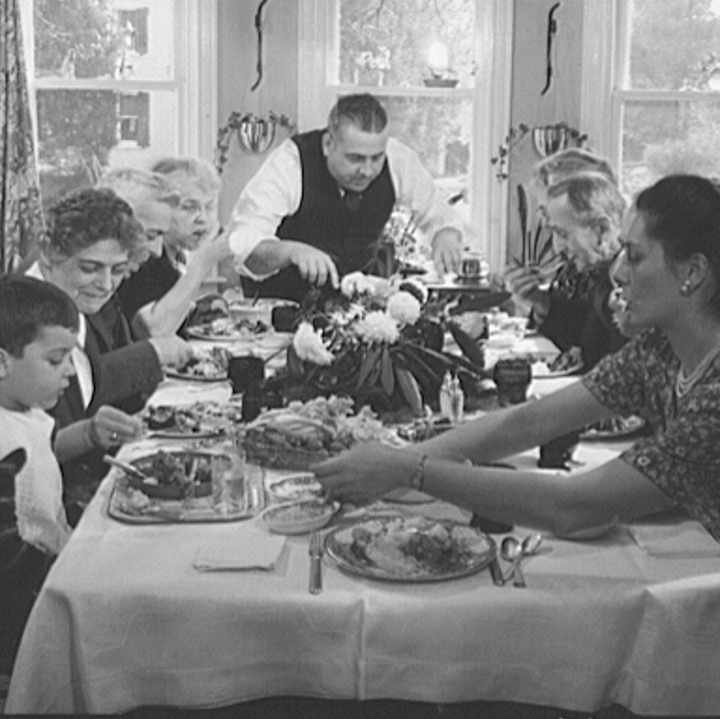
    Cover Photo Credit: Marjory Collins, Public domain, via Wikimedia Commons