Revised 4/20/2025.
In eastern France, where rolling hills meet ancient limestone escarpments, Burgundy unfolds like a living manuscript of wine history—written in vine rows and aged in cellars carved by monks. Here, winemaking is not merely a craft; it’s a centuries-old dialogue between land, grape, and soul. Burgundy’s greatness is etched into its terroir, refined by monastic hands, and immortalized through Pinot Noir and Chardonnay.
Burgundy’s Historical Tapestry
Though the Romans first planted vines here, it was the devotion of medieval monks—particularly the Cistercians and Benedictines—that truly shaped Burgundy’s wine culture. These devoted stewards mapped the land like viticultural cartographers, identifying climats (individual vineyard sites) and meticulously observing how every slope and soil nuance altered the wine. Their legacy gave birth to Burgundy’s intricate classification system, still revered today.
By the 15th century, Burgundy had become liquid royalty. The wines of the Dukes of Burgundy graced the courts of Europe, their reputation carried by whispers of elegance and depth.
Chablis
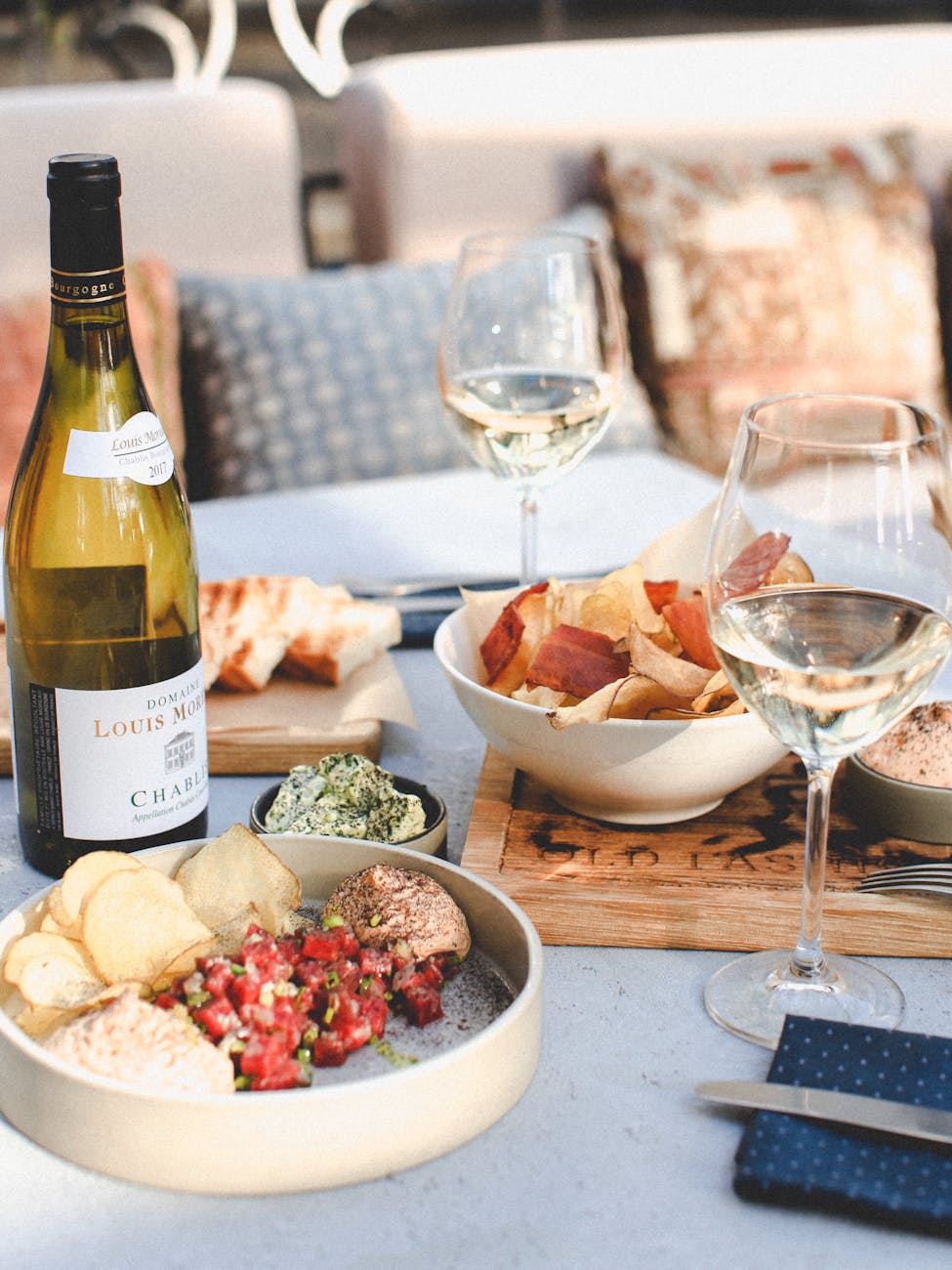
In Burgundy’s northern reaches lies Chablis, a land where Chardonnay sheds its oaky costume and reveals its truest self—tense, mineral, and vibrantly alive. The town’s quiet charm belies its global renown for producing wines of razor-sharp clarity and poise.
What gives Chablis its unmistakable signature?
- Kimmeridgian Soil: Layers of ancient limestone laced with fossilized oyster shells create a mineral core that defines the wine. You can almost taste the prehistoric sea.
- Cool Continental Climate: Slow ripening preserves acidity and finesse, crafting wines that are bright, steely, and bracing.
- The Serein River: This quiet ribbon of water softens spring frosts and helps moderate the region’s microclimate.
Appellations of Chablis:
- Chablis AOC: Crisp and direct, with citrus, green apple, and that flinty edge that defines the region.
- Premier Cru: More complex, with structure and elegance. Forty designated climats bring subtlety and layered depth.
- Grand Cru: Just seven vineyard sites, perched on the sunniest slopes above the town. These wines are dense, refined, and age-worthy, showing a Chardonnay of regal stature.
Chablis producers typically avoid overt oak influence. Stainless steel or neutral oak lets terroir take center stage. Grapes are often hand-harvested, a nod to the region’s reverence for precision.
Côte d’Or
Divided into Côte de Nuits and Côte de Beaune, the Côte d’Or is Burgundy’s vinous heartland—a golden slope of vines that has birthed some of the most sought-after wines on Earth. Here, the word “climat” holds power, denoting micro-plots of land so revered that UNESCO granted them World Heritage status.
Côte de Nuits
Running south from Dijon, this slender ribbon of vineyards is hallowed ground for Pinot Noir. It’s where the grape achieves its most ethereal expressions—silken yet structured, earthy yet floral.
- Gevrey-Chambertin: Bold and muscular, with dark fruit and spice. A favorite of Napoleon.
- Vosne-Romanée: Perfumed, haunting, and impossibly elegant. Home to Romanée-Conti, the holy grail of Pinot.
- Chambolle-Musigny: Ethereal and silky, like satin laced with violets.
The land is a mosaic of limestone, marl, and clay, with east-facing slopes catching the gentle morning sun. Each vineyard has its own personality—its own voice in the Pinot Noir choir.
Côte de Beaune
Head further south, and the reds soften while the whites begin to shine with crystalline brilliance. Côte de Beaune is the birthplace of iconic Chardonnay—wines that dance between richness and elegance, lifted by acidity and grounded by mineral depth.
- Meursault: Creamy and nutty, with golden orchard fruit and a whisper of oak.
- Puligny-Montrachet: Precision and grace. Citrus, chalk, and white flowers.
- Chassagne-Montrachet: Fuller-bodied, sometimes smoky, always refined.
For reds, Volnay offers delicate and floral Pinot Noir with a silk-threaded structure, while Pommard brings a more muscular edge.
Côte Chalonnaise
South of the Côte d’Or, the Côte Chalonnaise is often overlooked—and unfairly so. This region offers authenticity, value, and wines with character that punches well above their appellation status.
The landscape opens up, the climate warms slightly, and the diversity of soils (limestone, marl, and clay) creates ideal conditions for both Chardonnay and Pinot Noir.
- Rully & Montagny: Vibrant whites with citrus zest, white peach, and a touch of saline minerality.
- Mercurey & Givry: Energetic reds with red fruit, spice, and subtle earthy undertones.
These are wines that reflect place, not prestige—and that’s exactly their magic. For sommeliers and seekers, it’s a playground of discovery.
Mâconnais
Traveling further south, the Mâconnais greets you with warmth—in both climate and character. This is where Chardonnay loosens its collar a bit, showing a rounder, riper side that’s no less expressive.
Sun-drenched slopes and varied soils—from granite to limestone—produce wines that are generous and fruit-driven yet still rooted in mineral elegance.
- Mâcon-Villages: An approachable, floral, and fruit-forward introduction to the region.
- Saint-Véran & Viré-Clessé: Elegant, fresh, and subtly creamy Chardonnays with a whisper of stone fruit.
- Pouilly-Fuissé: The star of the south. Rich but focused, often aged in oak, delivering finesse and depth without losing its Burgundian soul.
Burgundy as a State of Mind
To study Burgundy is to embrace complexity, patience, and nuance. It is not a region that gives up its secrets easily. But for those willing to walk its vineyard paths, taste its terroir, and listen to its whispering vines, Burgundy offers more than just wine—it offers a deeper understanding of harmony between man, grape, and earth.
Cheers 🍷


Leave a reply to The Organoleptic Process – SOMM&SOMM Cancel reply