
Every two months or so we join four other couples in a themed event centered around wine, food and fun. The pandemic has impacted the frequency of these events, making the anticipation between gatherings nearly unbearable. It is usually (by design) an informal soirée filled with amazing wines and cuisine. This particular event–hosted by Dima and Oksana–exposed us to the amazing and under appreciated world of Pinot Noir wines of Oregon.
From past personal experiences, I was convinced that all pinots from Oregon were mediocre at best. Every now and again we would run across a wine that would make us sit up and take notice. This evening, however, we were introduced to a suite of wines deserving of our full undivided attention. Our impression of Pinot Noir wines from Oregon changed from ordinary to extraordinary in a few short hours. Here is how it happened.
The rules are simple for this group of ten–aptly named Club 10. Typically each couple brings two bottles of wine to discuss, debate, and most importantly–share. For this event, Dima and Oksana decided to limit each couple to one bottle, while providing lots of wine themselves as part of their themed event. Our hosts, Dima and Oksana, had the opportunity to visit several wineries in and around the Willamette Valley during a recent trip. One particular (and very memorable) experience centers around a very special winery in the Chehalem Mountains. Adelsheim is Chehalem Mountains’ first winery, and the center of this evening’s theme.
We arrived at the home of Dima and Oksana at 4:30pm, and were immediately introduced to one of the wines of the evening. An Adelsheim 2015 Sparkling Brut Cuvee was served and we all began sharing stories (and opinions) of wines from Oregon. I remember how our collective skepticism receded with each sip of this wine. We had not yet officially started the tasting, and everyone was intrigued and very excited about what was to come–a personalized guided tasting.

Dima and Oksana arranged for our Club 10 to experience a virtual online tasting with Adelsheim’s own Elizabeth Clark, Director of Education and Experience. At promptly 5:00pm, with a few clicks of the mouse, we were connected via Zoom and ready to learn more about the first winery of the Chehalem Mountains. By this time, the hosts had filled the table with an unbelievable assortment of specialty meats, cheeses, roasted vegetables, grilled calamari, fresh-baked bread and more. The stage is set… let’s go 😉
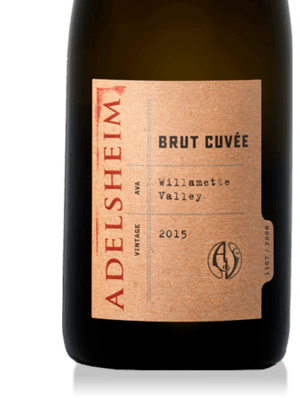
The Adelsheim 2015 Sparkling Brut Cuvee served earlier was reintroduced as the first pour for this six-wine journey through the wines of Adelsheim. This sparkler was a pleasant surprise. Being huge fans of Champagne, it was refreshing (no pun intended) to experience a sparkling wine produced with the same meticulous painstaking traditional method as Champagne.
The 2015 vintage is a blend of 55% Pinot Noir and 45% Chardonnay. It had a crisp, clean nose with bright citrus notes. As expected, the bread and yeast notes–a characteristic of sur lie aging–added the right amount of complexity to this sparkling wine. Amazing!
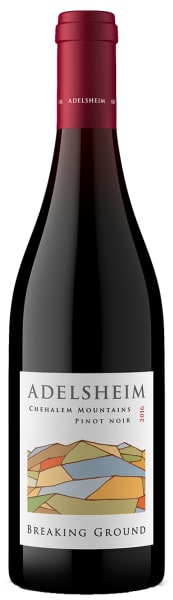
Our second pour was the first of four wines chosen to showcase the diversity of terroir in the Willamette Valley. The 2016 Breaking Ground Pinot Noir represents the best of the Chehalem Mountains AVA. The loam soil brings a rich quality to this wine.
Black cherry, black raspberry and a plethora of exotic spices dance playfully on the pallet. This wine reminds me of the pinots from Côte Chalonnaise. Both have distinct fruit alongside a very rustic earthy edginess. This wine was noticeably lighter in color than the reds of Côte Chalonnaise.

Next up was the very juicy 2017 Ribbon Springs Pinot Noir. At this point in our virtual tasting, we had completely disregarded the 2500 miles between our location and Adelsheim Vineyard. Elizabeth’s detailed explanation of the soils, climates and unique characteristics of each vineyard transformed us to the Willamette Valley.
This wine had a very distinct cherry nose. It was less earthy than the previous wine, but still had spice notes and noticeable tannins. As it turns out, this wine was aged for 10 months in French oak barrels (32% new).

The fourth wine brought us to an entirely new level. I remember looking at my personal carafe of 2017 Quarter Mile Pinot Noir and comparing the color to a Côte de Nuits pinot. It was noticeably lighter in color, but had a similar hue. The nose, unlike the previous wines, had distinct floral notes. The color and nose led me to believe this would be a sweeter wine–something along the line of a Beaujolais Nouveau (yes, I know the difference between Gamay and Pinot Noir 😉
I am convinced that hand-planting, hand-picking, sorting and processing of grapes create a noticeable difference in the final wine. This wine supported my theory, and really showcased the winemaking prowess of Adelsheim’s Gina Hennen. She describes this wine as a “study in grace and structure.” I could not agree more. From the first taste, I was hooked. The 2017 Quarter Mile Pinot Noir from Adelsheim is a masterpiece. The color is deceiving. There was nothing light, weak and pale about this wine. In fact, it was bold and at the same time elegant.

On to the 2017 Grand Oak Pinot Noir. Similar to our second wine, the 2016 Breaking Ground Pinot Noir, this wine was produced from vines planted in loam soil. This would be, however, the only common characteristic between these two wines. It’s the remaining contributors of the terroir–such as microclimate and orientation of the vineyard–that give this wine its unique characteristics.
This wine starts timid and shy, but soon after the wine hits your palette it begins to reveal a much deeper complexity and structure. From the delicate floral and faint fruit nose, to the evolving flavors of exotic berries and spices, this wine had a lot to offer. Loved it!
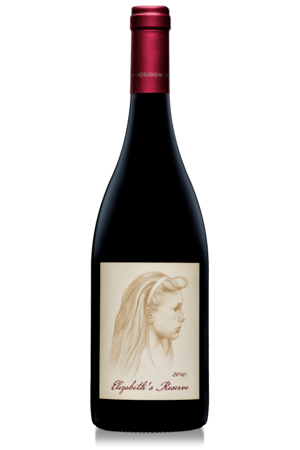
We rounded out our virtual tour and tasting of Adelsheim with the 2010 Elizabeth’s Reserve Pinot Noir. One of the best parts of discovering new wine is learning the history and/or inspiration behind the label.
As the story goes… Elizabeth’s Reserve Pinot Noir is named after the daughter of founders David and Ginny Adelsheim–Lizzie. Lizzie represents a new generation, and in turn Elizabeth’s Reserve exemplifies the spirit and vision of Adelsheim Vineyard. Read the entire story here.
The moment this wine hit my glass I knew it was special. It was older than the previous wines, and had a very noticeable aging ruby color. We expect red wines to become lighter in color and less dense (more transparent) as they age. Sometimes we can gauge the vintage by the color of a wine. After swirling and admiring this wine… it was time to involve the other senses–smell and taste.
The moment this wine hit my glass, I knew it was special…
-Gregory Dean
For me, this wine is more closely aligned with the wines of Côte de Beaune. It reminds me of more recent Pommard vintages. The nose is very aromatic and concentrated, with florals, fruit and earthy notes. Leather and chocolate seemed to be more pronounced after each swirl of the glass, but would dissipate quickly. I took my first sip thinking how fun it would be to participate in a one-decade vertical of Elizabeth’s Reserve 😉
At first, it was full-bodied with fresh, bright cherries (I’m looking at you Pommard). Then the true personality of this wine emerges on my palette. It only took a few seconds for my tastebuds to experience intense red and dark fruit, rustic tannins, and velvety smoothness. My tongue was on a Tilt-a-Whirl 😉 Amazing!
The evening was a lot of fun. It had the perfect amount of discovery and education. We enjoyed every moment alongside great friends, incredible wines, boundless dishes, and the perfect hosts. Thanks Dima and Oksana!


Leave a reply to Varietal Spotlight: Pinot Noir – SOMM&SOMM Cancel reply