Tag: Wine Blog

  • Winemaking in Spring: From Bud Break to Flowering

    Winemaking in Spring: From Bud Break to Flowering

    First article in the series–The Seasons of Winemaking.

    Spring is a crucial season for winemaking, as it marks the beginning of the annual growth cycle of the grapevines. During this time, the vines awaken from their winter dormancy and start to produce new shoots, leaves, and flowers. The viticulturists and winemakers have to monitor and manage the vineyard carefully to ensure the health and quality of the grapes that will be harvested in the fall.

    Bud break at Jordan Winery, Alexander Valley

    Bud Break

    Bud break is the first visible sign of growth in the vineyard, usually occurring in March or April in the Northern Hemisphere, and September or October in the Southern Hemisphere. It happens when the buds on the dormant canes swell and burst, revealing tiny green shoots that will eventually become branches. Bud break is influenced by several factors, such as the grape variety, the climate, the soil, and the pruning method. Some varieties, such as Chardonnay and Pinot Noir, tend to bud earlier than others, such as Cabernet Sauvignon and Syrah. This means that they are more susceptible to frost damage, which can kill the young shoots and reduce the yield.

    To prevent frost damage, viticulturists may use various techniques, such as heaters, wind machines, sprinklers, or helicopters, to circulate warm air or water around the vines. They may also delay pruning until late winter or early spring, to avoid stimulating early bud break. Pruning is an essential task that involves cutting off excess or unwanted wood from the previous year, to shape the vine and control its vigor. Pruning also determines the number and position of the buds that will produce the grapes, and thus affects the quantity and quality of the harvest.

    Bud break is celebrated in different ways around the world, often with religious or spiritual ceremonies. For example, in Burgundy, France, the monks of the Clos de Vougeot monastery used to bless the vines and pray for a good harvest on the day of bud break. In Chile, the Fiesta de la Vendimia (Harvest Festival) begins with a mass and a blessing of the first must (grape juice) by the local priest. In Napa Valley, California, some wineries host bud break parties and tastings for their club members and guests.

    Shoot Growth

    After bud break, the shoots grow rapidly, reaching up to a meter in length by the end of spring. They develop leaves, tendrils, and lateral branches, forming the canopy of the vine. The leaves are the main source of energy for the vine, as they capture sunlight and perform photosynthesis, converting carbon dioxide and water into sugars and oxygen. The sugars are stored in the roots, trunk, and canes, and are used for growth and ripening. The tendrils are curly structures that help the vine cling to the trellis or support system, and maintain its vertical position. The lateral branches are secondary shoots that emerge from the leaf axils, and may produce additional clusters of grapes.

    The viticulturists and winemakers have to manage the canopy carefully, to balance the amount of sunlight, air, and moisture that reaches the grapes. Too much shade can reduce the sugar and flavor development, and increase the risk of fungal diseases. Too much sun can cause sunburn or dehydration, and affect the color and aroma of the grapes. To achieve the optimal canopy, they may use various techniques, such as:

    – Tying or tucking the shoots to the trellis wires, to keep them upright and organized.

    – Thinning or removing excess shoots, leaves, or lateral branches, to reduce overcrowding and improve ventilation.

    – Topping or trimming the tips of the shoots, to limit their growth and redirect the energy to the grapes.

    – Spraying or dusting the vines with organic or synthetic substances, to protect them from pests and diseases.

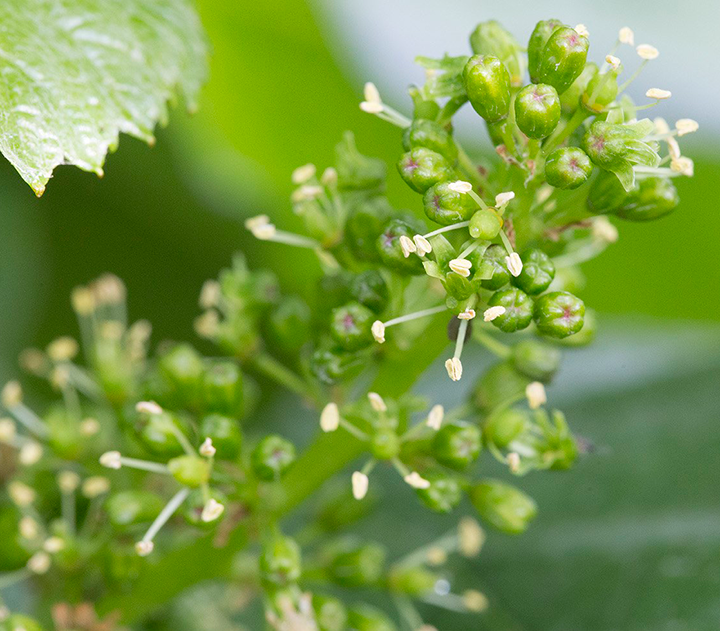
    Flowering stage of the grapevine

    Flowering

    Flowering is the next major stage in the vineyard, usually occurring in May or June in the Northern Hemisphere, and November or December in the Southern Hemisphere. It happens when the tiny green clusters of flowers on the shoots open and release pollen. The flowers are hermaphroditic, meaning that they have both male and female parts, and can self-pollinate. However, they may also rely on wind or insects to transfer pollen from one flower to another. The pollination process leads to fertilization, which results in the formation of seeds and berries. The berries are initially hard and green, and contain high levels of acidity and tannins.

    Flowering is celebrated in various ways around the world, often with music and dancing. For example, in Germany, the Blütenfest (Flower Festival) is held in several wine regions, featuring parades, concerts, and wine tastings. In Italy, the Festa dei Fiori (Flower Festival) is celebrated in many towns and villages, with floral decorations, folk performances, and local delicacies. In Argentina, the Fiesta Nacional de la Flor (National Flower Festival) is held in Escobar, a town known for its flower production and nurseries. The festival includes a flower parade, a queen contest, and a display of regional wines.

    Flowering is a critical and delicate phase, as it determines the potential crop size and quality. The number of flowers that successfully pollinate and set fruit is called the fruit set, and it can vary from 30% to 70% depending on the grape variety and the weather conditions. Warm, dry, and calm weather is ideal for flowering, as it facilitates pollination and prevents shattering or falling off of the flowers. Cold, wet, or windy weather can hinder flowering, and cause poor fruit set, uneven ripening, or coulure (the failure of the berries to develop after fertilization).

    Important fruit set stage in the growth cycle

    To ensure a good fruit set, viticulturists and winemakers may use various techniques, such as:

    – Choosing grape varieties that are suited to the climate and soil of the region, and that have consistent and reliable flowering behavior.

    – Adjusting the pruning and canopy management practices, to influence the timing and duration of flowering, and to expose the flowers to optimal sunlight and air circulation.

    – Applying plant hormones or biostimulants, to enhance the flowering and fruit set process, and to correct any deficiencies or imbalances in the vine.

    In summary, spring is a vital season for winemaking, as it marks the start of the grapevine’s growth cycle. From bud break to flowering, the viticulturists and winemakers have to monitor and manage the vineyard carefully, to ensure the health and quality of the grapes. They have to deal with various challenges, such as frost, pests, diseases, and weather fluctuations, and use various techniques, such as pruning, canopy management, and plant hormones, to influence the flowering and fruit set process.

    This article is the first in a series of four articles that dives into the seasons and stages of winemaking, from blossom to bottle and everything in between. In the next article, we will explore the summer season, when the grapes undergo veraison and ripening, and the viticulturists and winemakers prepare for the harvest. Stay tuned for more insights into the fascinating world of winemaking. 🍇🍷

  • Crafting a Romantic Food and Wine Experience for Valentine’s Day

    Crafting a Romantic Food and Wine Experience for Valentine’s Day

    As Valentine’s Day approaches, love is in the air, and what better way to celebrate romance than with a carefully curated food and wine experience? As a sommelier deeply passionate about creating memorable moments through the art of pairing, I invite you on a journey to tantalize your taste buds and ignite your senses with a selection of wines that complement intimate dishes and decadent desserts.

    Sparkling Wine Says Romance on Valentine’s Day

    While sparkling wines often take the spotlight during romantic occasions, there’s a plethora of red and white wines waiting to enhance the culinary symphony of your evening. Let’s delve into the heart of romance with classic pairings and venture into uncharted territory with some unconventional options to keep the sparks flying.

    Disclosure: This post includes some affiliate links. Should you click an affiliate link and make a purchase, we may receive a small commission at no extra cost to you.

    Classic Pairings

    Red Wine and Chocolate – A timeless duo, red wine and chocolate evoke feelings of indulgence and passion. Opt for a velvety smooth Merlot or a bold Cabernet Sauvignon to accompany rich dark chocolate desserts. The interplay of fruity notes and tannins creates a symphony of flavors that dance on the palate, leaving a lingering sensation of warmth and satisfaction.

    Cafe Delites Shrimp Scampi

    White Wine and Seafood – For a lighter yet equally enchanting pairing, consider a crisp Chardonnay or a vibrant Sauvignon Blanc with seafood dishes. Whether it’s succulent lobster tails drizzled with butter or delicate shrimp scampi, the refreshing acidity of these white wines balances the brininess of the sea, elevating each bite into a celestial experience.

    SOMM&SOMM Recommends: Cafe Delites Shrimp Scampi Recipe

    Rosé and Cheese – Rosé wines, with their delicate blush hues and refreshing acidity, harmonize beautifully with an array of cheeses. From creamy brie to tangy goat cheese, the versatility of rosé allows for a playful exploration of flavors. Let the soft, fruity notes of a Provencal rosé entwine with the creamy texture of cheese, creating a delightful contrast that tantalizes the senses.

    Orange WIne

    Out-of-the-Box Options

    Orange Wine and Spicy Cuisine – Step outside the conventional and embrace the bold flavors of spicy cuisine with an unexpected partner – orange wine. Crafted from white grapes with extended skin contact, orange wine boasts complex aromas and a rich, textured palate. Pair it with fiery dishes like Thai curry or Mexican mole for a fiery fusion of flavors that ignites passion and adventure.

    Lambrusco and Charcuterie – Break away from tradition and embrace the effervescent charm of Lambrusco paired with a rustic charcuterie board. This Italian sparkling red wine, with its vibrant red fruit flavors and lively bubbles, complements the salty richness of cured meats and the earthy notes of aged cheeses. Let the symphony of flavors unfold as you explore the diverse textures and aromas, creating a tapestry of indulgence.

    Westgarth Wines

    Spotlight: Westgarth Wines is a great source for hard-to-find varietals and vintages. Whether building your wine portfolio or planning a special evening, check out Westgarth Wines Extensive Fine Wine Collection.

    Romantically-Inspired Wines and Foods

    In the realm of romantically-inspired wines, few evoke the passion of love stories like Amarone della Valpolicella. Crafted in the Veneto region of Italy, this full-bodied red wine is made from dried grapes, resulting in a luxurious elixir bursting with flavors of dried fruit, spice, and dark chocolate. Pair it with a decadent chocolate fondue for an unforgettable finale to your Valentine’s Day feast, indulging in the timeless allure of love and indulgence.

    Perfect Valentine’s Day Atmosphere

    As the evening unfolds and glasses clink in celebration of love, remember that the true magic lies in the connection shared over a table adorned with exquisite food and wine. Whether you choose to embrace classic pairings or embark on a culinary adventure with unconventional choices, let each sip and bite be a testament to the romance that blossoms when flavors intertwine, creating moments that linger in the heart long after the last drop is savored. And… speaking of blossoms, don’t forget the flowers!

    SOMM&SOMM Recommends: 1-800-FLORALS – ‘Say I Love You‘ bouquet

    In the world of food and wine, every pairing is a love story waiting to be told, and on Valentine’s Day, let your palate be the narrator of a tale woven with passion, indulgence, and the timeless allure of romance.

    Cheers to love, laughter, and unforgettable moments shared over a table set for two. 🥂

  • What is a Sommelier Anyway?

    What is a Sommelier Anyway?

    When you hear the term “sommelier,” you might picture a poised individual in a fine dining restaurant, expertly swirling a glass of wine while offering sophisticated descriptions of its aroma and taste. But what exactly is a sommelier, and what role do they play in the world of wine? Let’s embark on a delightful journey through the history, meaning, certifications, skills, and traditions associated with this esteemed profession.

    Origin and History

    The term “sommelier” originates from the Old French word “sommier,” which referred to a pack animal driver. However, in the context of wine, the meaning evolved to denote the person in charge of transporting and managing the precious wine supplies of medieval kings and nobility. Over time, the role expanded to include wine tasting and selection, leading to the modern-day definition of a wine steward or expert. Here are a few famous sommeliers from history and the reasons their legacy lives on:

    André Tchelistcheff (December 7, 1901 – April 5, 1994)

    André Tchelistcheff

    Known as the “Dean of American Winemakers,” André Tchelistcheff was a pioneering figure in the American wine industry. Born in Russia in 1901, he moved to the United States and revolutionized winemaking techniques, particularly in California.

    Tchelistcheff’s expertise in viticulture and enology helped establish California wines on the global stage, earning him widespread recognition and admiration.

    Tchelistcheff’s legacy lives on through his groundbreaking work in improving winemaking practices, particularly in the Napa Valley region. His emphasis on quality, innovation, and attention to detail set the standard for generations of winemakers to come, shaping the trajectory of American wine culture.

    Jancis Robinson (April 22, 1950 – )

    Jancis Robinson

    Jancis Robinson is a renowned British wine critic, journalist, and Master of Wine. Her influential career spans decades and has had a profound impact on the world of wine appreciation and education.

    Robinson is celebrated for her comprehensive wine knowledge, eloquent writing style, and commitment to promoting wine appreciation among enthusiasts of all levels.

    Robinson’s continues to build a legacy through her extensive body of work, including books, articles, and television programs, which have demystified the world of wine and made it more accessible to a wider audience. Her contributions to wine education and criticism continue to inspire aspiring sommeliers and wine enthusiasts worldwide.

    Georges-Auguste Escoffier (October 28, 1846 – February 12, 1935)

    Georges-Auguste Escoffier

    Georges-Auguste Escoffier, often referred to as the “Emperor of Chefs” and the “King of Chefs,” was a legendary French chef and restaurateur. While not solely a sommelier, Escoffier’s influence on modern gastronomy and dining culture is undeniable.

    He revolutionized French cuisine and restaurant service, introducing innovative culinary techniques and standards of excellence that continue to shape the hospitality industry.

    Escoffier’s legacy lives on through his timeless culinary principles, including his emphasis on precision, quality ingredients, and meticulous attention to detail. While he may not have been a sommelier in the traditional sense, his influence on fine dining and the art of hospitality has had a lasting impact on the role of wine service in restaurants around the world.

    These sommeliers and culinary luminaries have left indelible marks on the world of wine and dining, shaping its evolution and inspiring future generations of enthusiasts and professionals alike. Their legacies endure through their contributions to wine education, innovation, and the elevation of the dining experience.

    Certifications and Levels of Knowledge

    Becoming a certified sommelier involves rigorous training and examination. Various organizations, such as the Court of Master Sommeliers, the Wine & Spirit Education Trust (WSET), and the International Sommelier Guild, offer structured programs and exams to assess candidates’ knowledge and tasting abilities.

    The Court of Master Sommeliers, for instance, offers four levels of certification: Introductory, Certified, Advanced, and Master Sommelier. Each level requires a deeper understanding of wine regions, grape varieties, wine production techniques, and impeccable tasting skills.

    Skills Displayed During Wine Service

    A sommelier’s role during wine service extends beyond merely pouring wine into a glass. They are tasked with enhancing the dining experience through their knowledge, recommendations, and impeccable service. Specific skills displayed during wine service include:

    • Wine Pairing: Matching wines with food to complement flavors and enhance the overall dining experience.

    Decanting: Aerating wine to soften tannins and release aromas, particularly for older red wines.

    • Temperature Control: Ensuring wines are served at the appropriate temperature to preserve their flavors.

    • Glassware Selection: Choosing the right type of glassware to showcase the wine’s characteristics.

    • Cork Handling: Opening and presenting wine bottles with finesse, especially for aged or rare wines.

    Hosting a Wine-pairing Dinner at The Blue Flame

    Enhancing the Dining Experience

    A skilled sommelier can elevate a dining experience from enjoyable to extraordinary. By guiding guests through the wine selection process, sharing stories about vineyards and winemakers, and offering personalized recommendations based on individual preferences, sommeliers create memorable moments that linger long after the last sip.

    Tasting and Evaluation Skills

    Becoming a sommelier requires honing exceptional tasting and evaluation skills. Sommeliers must be able to assess wine qualities such as appearance, aroma, taste, body, acidity, and finish accurately. They undergo rigorous training to develop their palates, often participating in blind tastings to sharpen their ability to identify grape varieties, regions, and quality levels.

    Serving Champagne Properly is an Art

    Most Difficult Wine to Serve Properly

    While every wine presents its unique challenges, one of the most difficult wines to serve properly is Champagne or sparkling wine. Its effervescence requires precise handling to prevent excessive foaming and preserve the bubbles. Additionally, serving Champagne at the correct temperature is crucial to maintaining its freshness and liveliness.

    A sommelier is much more than a wine expert in a fancy restaurant. They are guardians of wine culture, storytellers of vineyard landscapes, and orchestrators of unforgettable dining experiences. Through their extensive knowledge, impeccable service, and passion for wine, sommeliers enhance our enjoyment and appreciation of one of life’s greatest pleasures. So, the next time you raise a glass of wine, remember to toast to the dedicated sommeliers who make each sip a moment to savor.

    Greg and Tammy Dean – SOMM&SOMM

    Cheers! 🥂

  • Exploring Wine Enclosures: Cork, Screw Cap, and Beyond

    Exploring Wine Enclosures: Cork, Screw Cap, and Beyond

    In the world of wine, the choice of enclosure is often a topic of debate among enthusiasts, professionals, and consumers alike. Traditionally, cork has been the enclosure of choice for wine bottles, but in recent years, the rise of screw caps has challenged this longstanding tradition. This article aims to delve into the characteristics, benefits, and drawbacks of both cork and screw cap enclosures, debunking myths and misconceptions along the way. Additionally, we will explore the history of cork usage, the current state of cork shortages, and highlight specific wines or styles that may benefit from one enclosure over the other.

    Cover photo credit: Photo by SevenStorm JUHASZIMRUS on Pexels.com

    Cork Enclosures: A Tradition Steeped in History

    Cork, derived from the bark of the cork oak tree (Quercus suber), has been used as a wine enclosure for centuries. Its unique cellular structure, comprised of millions of tiny air pockets, allows it to compress and create a tight seal when inserted into a bottle. This natural elasticity makes cork an ideal choice for aging wines, as it allows for a small amount of oxygen to interact with the wine, aiding in its development over time.

    Benefits of Cork Enclosures

    • Tradition and Prestige: Cork has a long-standing tradition in the wine industry and is often associated with higher-end wines, lending an air of prestige and tradition to the bottle.

    • Breathability: Cork’s natural properties allow for micro-oxygenation, which can enhance the aging process of certain wines, particularly those intended for long-term cellaring.

    • Sensory Experience: Many wine enthusiasts appreciate the ritual of uncorking a bottle, as it adds to the overall sensory experience of enjoying wine.

    Pitfalls of Cork Enclosures

    • Cork Taint: One of the most significant drawbacks associated with cork enclosures is the potential for cork taint, caused by the presence of trichloroanisole (TCA). This compound can impart undesirable aromas and flavors, often described as musty or moldy, ruining the wine.

    • Variability: Natural cork can exhibit variability in quality, leading to inconsistencies in sealing and potential oxidation of the wine.

    • Environmental Concerns: Harvesting cork oak trees for their bark can have environmental implications, although sustainably managed cork forests mitigate this impact to some extent.

    Stelvin Capsules (Screw Caps)

    Screw Cap Enclosures: Modern Convenience Meets Functionality

    Screw caps, also known as Stelvin closures, offer a convenient alternative to traditional cork enclosures. Initially introduced in the 1960s, screw caps have gained popularity, particularly for wines intended for early consumption or those that do not require extended aging. Wine purists would be surprised to learn that the Stelvin closure was invented in Burgundy, France 🙂

    Benefits of Screw Cap Enclosures

    • Consistency: Screw caps provide a consistent and reliable seal, virtually eliminating the risk of cork taint and oxidation.

    • Convenience: Screw caps are easy to open and reseal, making them ideal for wines meant to be consumed shortly after bottling.

    • Preservation of Freshness: Screw caps minimize oxygen exposure, preserving the wine’s freshness and fruit-forward characteristics, especially in aromatic white wines and light-bodied reds.

    Pitfalls of Screw Cap Enclosures

    • Perceived Quality: Despite their practical advantages, screw caps are sometimes associated with lower-quality wines or perceived as lacking the prestige of cork closures, particularly in certain traditional wine regions.

    • Limited Aging Potential: While suitable for early consumption wines, screw caps may not be ideal for wines intended for long-term aging, as they limit oxygen ingress, which can impede the wine’s development.

    • Environmental Impact: While screw caps themselves are recyclable, the production and disposal of plastic liners within the caps can have environmental implications.

    Debunking Myths and Addressing Misconceptions

    Myth: Screw caps are only suitable for inexpensive wines.

    Fact: While screw caps are commonly used for more affordable wines, many premium producers around the world are opting for screw caps to preserve the integrity and freshness of their wines.

    Myth: Cork closures are superior for aging wine.

    Fact: While cork closures have traditionally been associated with aging potential, screw caps have demonstrated effectiveness in preserving wine quality over time, particularly for wines meant for early consumption.

    Myth: All cork closures lead to cork taint.

    Fact: While cork taint is a legitimate concern with natural cork closures, advancements in cork production, such as agglomerated corks and technical corks, have reduced the incidence of cork taint significantly.

    The Current State of Cork Shortages

    In recent years, the wine industry has faced challenges related to cork shortages due to factors such as climate change, disease affecting cork oak trees, and increased competition for cork resources from other industries. As a result, alternative closures like screw caps have become more attractive to wineries seeking consistent and reliable enclosures for their wines.

    While cork and screw caps are the most widely recognized wine enclosures, there are several other alternatives that have gained traction in the industry. These alternatives offer unique benefits and cater to specific needs within the wine market. Let’s explore a few of them:

    1. Synthetic Corks:

    Synthetic corks are made from materials such as plastic or composite materials designed to mimic the properties of natural cork. They offer consistency in performance and eliminate the risk of cork taint. Synthetic corks are often used for wines that are intended for early consumption but may lack the prestige associated with natural cork.

    2. Glass Stoppers:

    Glass stoppers provide an elegant and aesthetically pleasing alternative to traditional closures. They create a secure seal and offer excellent oxygen barrier properties, preserving the wine’s freshness. Glass stoppers are favored for premium wines and limited editions, enhancing the overall packaging experience for consumers.

    3. Zork Closure:

    The Zork closure is a hybrid closure combining the convenience of a screw cap with the aesthetic appeal of cork. It features a plastic cap with a resealable cork-like insert, offering the benefits of both closures. Zork closures are popular for sparkling wines and still wines intended for immediate consumption.

    4. Crown Caps:

    Crown caps, similar to those used on beer bottles, are occasionally used for wine bottles, particularly for sparkling wines and wines meant for early consumption. While not as traditional as cork or as convenient as screw caps, crown caps provide a secure seal and are easy to open.

    5. Diam Corks:

    Diam corks are a type of technical cork made from natural cork particles that are treated to remove impurities and eliminate the risk of cork taint. They offer the sensory experience of natural cork with the consistency and reliability of synthetic closures. Diam corks are gaining popularity among wineries seeking alternatives to traditional cork closures.

    6. Vinolok:

    Vinolok closures are glass closures with a metal or plastic cap that provides an airtight seal. They offer a visually striking alternative to traditional closures and are often used for premium wines and limited editions. Vinolok closures are reusable and can be customized to enhance branding and aesthetics.

    These alternative closures offer wineries and consumers a diverse range of options beyond cork and screw caps, catering to different preferences, packaging requirements, and market segments within the wine industry. Whether it’s the convenience of screw caps, the tradition of cork, or the innovation of alternative closures, each enclosure plays a crucial role in preserving and presenting wines to consumers around the world.

    Choosing the Right Enclosure for Different Wine Styles

    While both cork and screw cap enclosures offer distinct advantages, certain wine styles may benefit from one enclosure over the other:

    – Wines for Aging: Complex red wines intended for long-term cellaring may benefit from the slight oxygen exchange facilitated by cork closures, allowing for gradual development and integration of flavors.

    – Fresh and Aromatic Wines: White wines, particularly those prized for their aromatic profiles and vibrant fruit character, often thrive under screw cap closures, preserving their freshness and intensity.

    – Everyday Drinking Wines: For wines meant to be enjoyed in their youth, regardless of style, screw cap closures provide convenience and assurance of freshness without the need for additional aging.

    In the ongoing debate between cork and screw cap enclosures, it’s essential to recognize that both options have their place in the wine industry. While cork closures carry a sense of tradition and romance, screw caps offer practicality and reliability, particularly for wines intended for early consumption. As technology and sustainability practices evolve, both closures continue to play vital roles in preserving and enhancing the enjoyment of wine, debunking myths and misconceptions along the way. Ultimately, the choice of enclosure depends on factors such as wine style, intended aging potential, and individual preferences, ensuring a diverse and dynamic landscape in the world of wine packaging. Cheers 🍷
  • Exploring Italy’s IGT Wines: A Journey into History, Innovation, and Flavor

    Exploring Italy’s IGT Wines: A Journey into History, Innovation, and Flavor

    Italy’s rich winemaking tradition is celebrate globally, and its diverse classifications reflect the unique terroirs and grape varieties that define each region. Among these classifications, IGT, or Indicazione Geografica Tipica, stands as a symbol of innovation, blending tradition with modernity in the world of Italian wine.

    History of IGT

    The IGT classification was introduced in 1992 as a response to the rigid regulations of DOC (Denominazione di Origine Controllata) and DOCG (Denominazione di Origine Controllata e Garantita). While DOC and DOCG focus on preserving traditional winemaking practices and specific grape varieties, IGT provides winemakers with more flexibility, allowing for experimentation and the use of non-traditional grape varieties.

    Italian Wine Classifications

    Alignment With Other Classifications

    IGT wines fall between DOC and Vino da Tavola (table wine) in terms of regulations. While DOC and DOCG wines adhere to strict geographical and varietal guidelines, IGT wines offer a more expansive canvas for winemakers, allowing them to explore new grape varieties and winemaking techniques.

    Disclosure: This post includes some affiliate links. Should you click an affiliate link and make a purchase, we may receive a small commission at no extra cost to you.

    Super Tuscans from the Wine Cellar of BOCCANEGRA

    Super Tuscan Wines within the IGT Category

    One of the most famous innovations within the IGT classification is the creation of “Super Tuscan” wines. These wines challenged the traditional norms by blending indigenous and international grape varieties, often using Cabernet Sauvignon, Merlot, or Syrah alongside Sangiovese. Some leading-edge Super Tuscans within the IGT classification include:

    • Sassicaia: Hailing from the Bolgheri region, Sassicaia is a pioneer in the Super Tuscan movement. This Cabernet Sauvignon-dominant wine boasts intense black fruit, elegant tannins, and a long, lingering finish.
    • Ornellaia: A blend of Cabernet Sauvignon, Merlot, and Cabernet Franc, Ornellaia showcases a harmonious marriage of power and finesse. Notes of dark berries, spice, and a velvety texture make it a standout IGT wine.
    • Tignanello: Produced by Antinori, Tignanello is a groundbreaking Super Tuscan featuring Sangiovese, Cabernet Sauvignon, and Cabernet Franc. It exudes ripe red fruit, supple tannins, and a well-balanced structure.

    SOMM&SOMM Recommends: 2012 Bolgheri Sassicaia

    SOMM&SOMM Recommends: 2012 Ornellaia

    Westgarth Wines

    Tasting Notes and Evaluation

    Super Tuscan IGT wines are known for their bold and complex profiles. Expect aromas of dark fruits, such as blackberry and cherry, intertwined with nuances of spice, leather, and tobacco. The palate often reveals a robust body, firm tannins, and a persistent finish.

    Wild Boar Ragu over Pappardelle

    Food Pairing Recommendations

    Pairing IGT wines with the right dishes enhances the overall dining experience. Given their robust nature, Super Tuscan IGT wines complement rich and flavorful dishes, such as:

     – Grilled T-bone steak with rosemary-infused olive oil

    Wild boar ragu served over pappardelle pasta

    – Aged Pecorino cheese with truffle honey

    Photo by Alex Staudinger on Pexels.com

    Italy’s IGT classification has not only allowed winemakers to push boundaries but has also given birth to iconic Super Tuscan wines. Embracing a fusion of tradition and innovation, these wines continue to captivate wine enthusiasts worldwide, offering a taste of the rich diversity and creativity that defines Italian winemaking.

    Salute! 🍷
  • Crafting the Perfect Wine Tasting Experience

    Crafting the Perfect Wine Tasting Experience

    A well-curated wine tasting event is an exquisite journey that engages the senses and allows participants to appreciate the complexities of different varietals. Having hosted (and participated in) a few tasting events, SOMM&SOMM is here to guide you through the science behind choosing the order in which wines should be served to enhance the overall tasting experience.

    Disclosure: This post includes some affiliate links. Should you click an affiliate link and make a purchase, we may receive a small commission at no extra cost to you.

    Photo by liis piirmets on Pexels.com

    The basic principles (3 rules)

    Sommelier Rule : Start with Whites before Reds – The general rule of thumb is to begin with white wines before moving on to reds. White wines are typically lighter and crisper, allowing the palate to acclimate to the subtleties of flavors without overwhelming it with bold tannins and robust characteristics. This progression ensures a smooth transition from lighter to fuller-bodied wines.

    Sommelier Rule : Consider Alcohol Content – When selecting the order of wines, it is essential to take alcohol content into account. Starting with lower alcohol wines helps prevent palate fatigue, allowing participants to fully appreciate the nuances of each wine. Gradually progressing towards higher alcohol wines ensures a balanced tasting experience.

    Sommelier Rule : Sweet vs. Dry – Another factor to consider is the sweetness level of the wines. Begin with dry wines and progress towards sweeter ones. Sweet wines can leave a lingering impression on the palate, making it challenging to appreciate the subtleties of drier varietals if served later in the lineup.

    Best Practices for Creating a Proper Lineup

    • Light to Full-Bodied – Arrange the wines from light to full-bodied. This helps participants ease into the tasting, preventing palate fatigue and ensuring that the more delicate characteristics of lighter wines are not overshadowed by bolder counterparts.

    • Consider Regional Variations – If you have a selection of wines from different regions, consider the traditional order of service for that region. For example, if showcasing French wines, follow the classic progression of Champagne, white Burgundy, red Burgundy, Bordeaux, and so on.

    • Mind the Oak Influence – If your selection includes oaked and unoaked wines, start with unoaked varieties. Oak can leave a lasting impression on the palate, and beginning with unoaked wines allows for a more nuanced tasting experience.

    Westgarth Wines

    Spotlight: Westgarth Wines is a great source for hard-to-find varietals and vintages. Whether building your wine portfolio or planning a themed wine tasting, check out Westgarth Wines Extensive Fine Wine Collection.

    Adjusting for Food and Wine Dinners

    When planning a food and wine dinner, the dynamics change slightly. Consider the following:

    1. Pairing Dynamics: Align the wine lineup with the progression of the courses. Lighter wines work well with appetizers and delicate dishes, while fuller-bodied wines complement heartier mains.
    2. Consider the Dominant Flavors: If a specific dish has dominant flavors, choose a wine that compliments or balances those flavors. For example, a buttery Chardonnay pairs well with creamy pasta dishes (Coquillettes Ham Tartufata).
    Photo by Pavel Danilyuk on Pexels.com

    Proper Etiquette for a Tasting

    Sip, don’t swallow. Encourage participants to take small sips and savor the flavors without swallowing immediately. This allows for a more comprehensive tasting experience. Use the right glassware. Provide appropriate glassware for each wine. The shape and size of the glass can significantly impact the perception of aromas and flavors. Provide water and neutral snacks. Have water available to cleanse the palate between tastings. Neutral snacks like crackers or bread can also help reset the palate.

    In conclusion, crafting the perfect wine tasting experience involves a thoughtful consideration of the order in which wines are served. By understanding the science behind this process and incorporating best practices, you can elevate any tasting event to a memorable and enjoyable occasion.

    Cheers 🥂

  • Unlocking the Secrets of Wine Storage

    Unlocking the Secrets of Wine Storage

    Wine, a timeless elixir that has captivated civilizations for centuries, is a complex beverage that evolves over time. As a wine enthusiast or professional wine educator, understanding the intricacies of wine storage is crucial for preserving the nuances and flavors of different styles of wine. In this article, we will delve into the various styles of wine, the factors influencing a wine’s ability to age, and how winemaking techniques can play a pivotal role in determining a wine’s longevity.

    Different Styles of Wine

    Red Wines known for their rich and robust flavors, typically have a higher tannin content. Tannins act as natural preservatives, contributing to the aging potential of red wines. Varieties such as Cabernet Sauvignon, Merlot, and Shiraz are renowned for their ability to evolve gracefully over time.

    White Wines with their crisp and refreshing profiles, are generally consumed in their youth. However, certain white wines, such as oaked Chardonnay or high-quality Rieslings, can benefit from aging. The key is to strike a balance between acidity, sweetness, and structure.

    Sparkling Wines like Champagne, are celebrated for their effervescence and vibrancy. These wines are best consumed within a few years of release, as their freshness and bubbles diminish with time. Proper storage is crucial to prevent premature aging and ensure the sparkling quality is maintained.

    Sparkling Wine Storage

    Factors Influencing Wine Aging

    Temperature and Humidity – Maintaining a consistent temperature is paramount for proper wine storage. Ideally, wines should be stored between 55-65°F (13-18°C). Fluctuations in temperature can lead to premature aging or spoilage. Additionally, a humidity level of 60-70% prevents corks from drying out, ensuring a proper seal.

    Light and Vibration – Exposure to light, especially ultraviolet (UV) rays, can cause chemical reactions in wine, resulting in off-putting aromas and flavors. Vibrations, such as those from appliances or foot traffic, can disturb sediment in aging wines. A serene and dimly lit storage environment is optimal.

    Corks and Seals – The type of closure used in a bottle can significantly impact aging. Natural cork allows for a small amount of oxygen exchange, aiding in the development of complex flavors. Synthetic corks and screw caps provide a more airtight seal, slowing down the aging process. However, each closure has its advantages and drawbacks.

    Winemaking Techniques and Preservation

    Tannin Management – Winemakers can influence the aging potential of red wines by managing tannins during the production process. Gentle pressing, careful selection of oak barrels, and proper maceration techniques contribute to a wine’s structure and longevity.

    Acidity and pH Levels – White wines with higher acidity and lower pH levels generally have a better chance of aging gracefully. Winemakers can adjust acidity levels during production to enhance a wine’s longevity.

    Photo by Tugay Kocatu00fcrk on Pexels.com

    Oak Aging – The choice of oak barrels and the duration of oak aging impact a wine’s flavor, structure, and aging potential. Well-integrated oak can contribute to a wine’s complexity, while excessive oak influence may overpower the natural characteristics.

    Filtration and Stabilization – Winemakers employ filtration and stabilization techniques to remove unwanted particles and microbes. While these processes ensure wine stability, they may also strip the wine of some elements that contribute to aging potential.

    Wine storage is a delicate art that requires a deep understanding of the diverse styles of wine, the science behind aging, and the impact of winemaking techniques. By paying attention to temperature, light, and other storage conditions, enthusiasts and professionals alike can unlock the full potential of their prized bottles. Let us raise a glass to the magic that unfolds within each carefully preserved bottle. Cheers!

  • Discovering the Rich Tapestry of Austrian Wines

    Discovering the Rich Tapestry of Austrian Wines

    Austria, a country nestled in the heart of Europe, boasts a winemaking history that dates back centuries. With its diverse terroir, unique grape varieties, and a commitment to quality, Austrian wines have been gaining international acclaim. In this exploration, we will delve into the main wine regions, native varietals, distinctive styles, and noteworthy vintages that make Austria a captivating destination for wine enthusiasts.

    Wine Regions of Austria

    Austria is divided into four primary wine regions, each characterized by its distinct terroir and grape varieties:

    Grüner Veltliner

    Niederösterreich (Lower Austria): This expansive region along the Danube River is home to renowned sub-regions like Wachau, Kamptal, and Kremstal. Grüner Veltliner and Riesling are the stars here, thriving in the cool climate and diverse soils, from loess to primary rock.

    Burgenland: Located in the eastern part of Austria, Burgenland is known for its red wines, particularly those produced from the indigenous grape variety Blaufränkisch. Neusiedlersee, a large lake in the region, influences the climate, creating ideal conditions for sweet wines like Trockenbeerenauslese.

    Steiermark (Styria): This southern region is recognized for its Sauvignon Blanc and Morillon (Chardonnay). The landscape is diverse, with vineyards ranging from steep slopes to rolling hills. Steiermark’s wines are often characterized by a vibrant acidity and minerality.

    Gemischter Satz – Photo by Lois Lammerhuber, Weintourismus

    Wien (Vienna): The Austrian capital, Vienna, has its own unique wine region within the city limits. The local Gemischter Satz, a field blend of different grape varieties, is a traditional Viennese wine style that reflects the city’s multicultural history.

    Sankt Laurent

    Native Varietals

    Austria takes pride in its native grape varieties, which contribute to the country’s distinctive wine identity. The most notable include:

    Grüner Veltliner: Often considered Austria’s flagship white grape, Grüner Veltliner produces crisp, aromatic wines with flavors ranging from green apple to white pepper. It is the most widely planted grape variety in the country.

    Riesling: Known for its elegance and age-worthiness, Austrian Riesling showcases a beautiful balance of acidity and fruitiness. The Wachau region, in particular, is celebrated for its Riesling expressions.

    Blaufränkisch: A red grape variety that thrives in Burgenland, Blaufränkisch produces wines with dark fruit flavors, spice, and a distinctive earthy character. It is the backbone of many of the region’s powerful red blends.

    Sankt Laurent: Another red variety, Sankt Laurent, is valued for its velvety texture and red fruit notes. It is often used to create elegant, age-worthy red wines.

    Sankt Laurent was named after St. Lawrence’s Day – the 10th of August – the day on which the grapes begin to change color

    http://www.austrianwine.com

    A Taste of Austria’s Diversity

    Austria offers a wide range of wine styles, from dry whites to luscious sweet wines. Some unique styles to explore include:

    Gelber Muskateller (Yellow Muscat): This aromatic grape variety produces floral and perfumed wines with a captivating bouquet. It is often vinified into dry, aromatic whites.

    Eiswein (Ice Wine): In exceptional years, Austrian winemakers craft Eiswein from grapes naturally frozen on the vine. These sweet wines are a true delicacy, balancing intense sweetness with acidity.

    Gemischter Satz: As mentioned earlier, this traditional Viennese style involves planting and harvesting different grape varieties together. The resulting wines are complex, reflecting the diversity of the vineyard.

    When it comes to vintages, Austrian wines are known for their consistency and age-worthiness. However, the standout years, such as 2015, 2017, and 2019, have produced wines with exceptional balance and concentration.

    Sacher-Torte

    Austrian Wine and Culinary Pairings

    Pairing Austrian wines with local dishes is a delightful experience that enhances the flavors of both the food and the wine. Here are some recommendations:

    Grüner Veltliner with Wiener Schnitzel: The crisp acidity and citrus notes of Grüner Veltliner complement the fried goodness of Wiener Schnitzel, Austria’s iconic breaded veal cutlet.

    Blaufränkisch with Game Meat: The robust and spicy character of Blaufränkisch pairs wonderfully with game dishes, bringing out the rich flavors of venison or wild boar.

    Sankt Laurent with Duck: The velvety texture and red fruit profile of Sankt Laurent harmonize beautifully with the succulence of roasted duck.

    Eiswein with Desserts: The intense sweetness and acidity of Eiswein make it a perfect match for desserts like Sacher-Torte or apple strudel.

    Austria’s Winemaking Heritage

    Austria’s winemaking history dates back to Roman times, with monasteries playing a crucial role in preserving and advancing viticultural practices. In recent decades, Austrian winemakers have embraced modern techniques while maintaining a deep respect for tradition. This balance has contributed to the country’s success on the international stage.

    South Styrian Wine Road in Austria. Image Credit: Julius Silver/Courtesy of Austrian Tourism

    A Unique Wine Landscape

    Surrounded by wine-producing heavyweights like Germany, Italy, and France, Austria holds its own with its distinctive terroir and grape varieties. The country’s commitment to quality, sustainable viticulture, and expressive winemaking have earned it a respected place among its European counterparts.

    Austria’s wines are a treasure trove of diversity, offering something for every palate. Whether you are drawn to the zesty Grüner Veltliners of Niederösterreich, the robust reds of Burgenland, or the unique Gemischter Satz of Vienna, Austrian wines are sure to captivate and leave a lasting impression. So, embark on a journey through the vineyards of Austria and savor the terroir, tradition, and innovation that define this remarkable wine-producing nation. Prost!

  • Unveiling the Art of Post-Opening Wine Storage: Prolonging the Pleasure

    Unveiling the Art of Post-Opening Wine Storage: Prolonging the Pleasure

    While properly storing unopened bottles is crucial, the care and attention given to opened bottles can be equally significant. In this article, we will explore the intricacies of post-opening wine storage, addressing questions about refrigeration, air evacuation, and the factors that influence the longevity of opened bottles.

    Refrigeration

    The general consensus among wine enthusiasts is that refrigeration is essential for preserving the freshness of opened wine. Once a bottle is opened, exposure to oxygen accelerates the aging process, and refrigeration helps to slow this down. White wines, rosés, and sparkling wines, which are often enjoyed at cooler temperatures, benefit particularly from being stored in the refrigerator.

    However, it’s important to note that red wines can also benefit from refrigeration if they are not going to be consumed within a day or two. Serving temperatures can always be adjusted by allowing the wine to come to room temperature before serving.

    Air Evacuation

    Minimizing oxygen exposure is a key factor in preserving the quality of an opened bottle. Several tools, such as vacuum pumps and inert gas systems, are available to remove excess air from the bottle.

    Vacuum pumps work by extracting the air from the bottle, creating a partial vacuum. While this method can help slow down oxidation, it may not eliminate all the oxygen, and the effectiveness can vary depending on the wine and closure type.

    Inert gas systems, using argon or nitrogen, create a protective layer above the wine, preventing oxygen from coming into contact with the liquid. These systems are generally more effective than vacuum pumps and are recommended for preserving the flavors and aromas of delicate wines.

    SOMM&SOMM Recommends: Coravin Pivot Plus Wine Preservation System

    Factors Influencing Longevity

    Wine Variety and Style: Different wine styles have varying levels of susceptibility to oxidation. Lighter wines, such as Pinot Noir or young reds, are more sensitive, while robust reds and dessert wines tend to hold up better.

    Residual Sugar and Acidity: Wines with higher residual sugar and acidity are generally more resistant to oxidation. Sweet and acidic elements act as natural preservatives, slowing down the chemical reactions that lead to deterioration.

    Cork vs. Screw Cap: The closure type used in the original bottle can influence how well a wine withstands oxidation. Screw caps provide a more airtight seal compared to natural corks, offering better protection against oxygen.

    Root Cause of Oxidation

    Oxidation is the primary culprit behind the degradation of wine once it’s opened. When wine comes into contact with air, especially if there’s a large volume of empty space in the bottle, oxygen reacts with various components in the wine, causing it to lose its vibrant flavors and aromas.

    The process is accelerated by higher temperatures, which is why refrigeration is crucial. Oxidation manifests as a loss of fruitiness, the emergence of nutty or sherry-like aromas, and a change in color – often turning whites darker and reds browner.

    What about decanted wine?

    Not finishing an opened wine that has been decanted presents several challenges, primarily centered around preserving the wine’s optimal flavor and aroma. Decanting is often done to enhance a wine’s exposure to air, allowing it to breathe and develop its full potential. When a decanted wine is not consumed promptly, exposure to air can lead to oxidation, resulting in the wine losing its freshness and vibrancy.

    The delicate balance of flavors and aromas that the decanting process aims to achieve can be disrupted, leading to a less enjoyable drinking experience. Additionally, the extended contact with oxygen can accelerate the aging process, especially for more delicate wines, potentially diminishing the overall quality. To mitigate these challenges, we recommend transferring the wine back into the bottle. The Recanter Wine Breather Decanter from Wine Enthusiast helps manage this challenging task.

    Recanter Wine Breather Decanter from Wine Enthusiast

    Properly managing opened wine is a nuanced dance between refrigeration, air evacuation, and understanding the intrinsic characteristics of the wine itself. By employing these techniques and recognizing the unique qualities of each bottle, enthusiasts can savor the pleasure of an opened bottle over an extended period, ensuring that every drop is as delightful as the first.

    Cheers to the art of preservation and the joy of prolonged indulgence! 🍷

  • A Toast to Tradition: New Year’s Celebrations Around the World

    A Toast to Tradition: New Year’s Celebrations Around the World

    As the clock strikes midnight, ushering in a new year, people around the world come together to celebrate in unique and diverse ways. New Year’s Eve is a time for reflection, anticipation, and of course, revelry. Join me on a global journey as we explore the origins of New Year’s celebrations and the rich tapestry of customs that make this occasion so special. And, true to my oenophile roots, we’ll delve into the fascinating world of wine and food, discovering how different cultures incorporate these elements into their festivities.

    Scottish Hogmanay Celebration

    Auld Lang Syne and the Scottish Hogmanay

    Our journey begins in the misty hills of Scotland, where the tradition of Hogmanay takes center stage. Derived from the Norse celebration of the winter solstice, Hogmanay has evolved into a three-day extravaganza. Scots embrace the opportunity to share good cheer, and no celebration is complete without the traditional “first-footing.” The first person to enter a home after midnight is believed to bring luck for the upcoming year.

    As bagpipes fill the air and kilts swirl on the dance floor, Scots indulge in a feast of haggis, neeps, and tatties. Complementing these savory delights are robust Scotch whiskies and hearty red wines like a spicy Shiraz or a bold Cabernet Sauvignon.

    SOMM&SOMM Recommends: 2019 Laurent Fayolle Crozes-Hermitage Clos les Cornirets

    Las Doce Uvas de la Suerte

    Eating 12 Grapes in Spain

    In Spain, the clock striking twelve marks a unique and flavorful tradition. As the last bell tolls, Spaniards pop twelve grapes into their mouths, one for each stroke of midnight, symbolizing good luck for each month of the coming year. This custom, known as “Las Doce Uvas de la Suerte,” is a delightful and slightly challenging way to welcome the new year.

    The Spanish New Year’s table overflows with tapas, from gambas al ajillo (garlic shrimp) to patatas bravas (spicy potatoes). To complement the diverse flavors, a sparkling Cava or a crisp Albariño is the wine of choice, effervescently capturing the festive spirit.

    SOMM&SOMM Recommends: Bagoa Do Mino Albarino Rias Baixas

    Osechi-Ryori

    Japanese Osechi-Ryori and Sake

    Across the globe in Japan, New Year’s is celebrated with the elegant tradition of Osechi-Ryori. This multi-tiered bento box features an array of symbolic dishes, each carrying wishes for health, happiness, and prosperity. Delicacies such as kazunoko (herring roe) and kuromame (sweet black soybeans) are meticulously prepared to bring good fortune.

    In Japan, sake takes center stage, with the first sips of the year known as “Toso.” This special spiced sake is believed to ward off evil spirits and promote good health. The delicate and nuanced flavors of a Junmai Daiginjo or a Ginjo sake complement the subtleties of Osechi-Ryori, creating a harmonious start to the new year.

    SOMM&SOMM Recommends: Kyodai Daiginjo Sake

    Fireworks and Feasts in Sydney, Australia

    As the Southern Hemisphere welcomes the new year amidst the summer sun, Sydney, Australia, stands out for its iconic New Year’s Eve fireworks display. Against the backdrop of the Sydney Harbour Bridge, explosions of color light up the night sky, creating a breathtaking spectacle.

    Aussies celebrate with barbecues and seafood feasts, accompanied by refreshing glasses of Australian sparkling wine or a crisp Sauvignon Blanc. The laid-back atmosphere and stunning views make Sydney a unique destination for those who prefer to ring in the new year with a warm breeze and a glass of cool wine.

    SOMM&SOMM Recommends: 2019 Vintage Longbottom H Sauvignon Blanc

    Ball Drop at Times Square in New York City

    Many American’s look forward each year to watching eagerly as the countdown commences in Times Square, New York City. With a drink in hand, and someone close by, we watch the famous ball drop. The Ball is a geodesic sphere covered with 2688 Waterford Crystal triangles, and provides the perfect backdrop to a Champagne toast.

    New Year’s celebrations span the globe, each culture contributing its unique blend of tradition, festivity, and culinary delights. As we raise our glasses to welcome the dawn of a new year, let’s savor the richness of these global customs and the diverse flavors that accompany them. May your New Year be filled with joy, prosperity, and, of course, the perfect pairing of wine and food! 

    Cheers to a flavorful and fulfilling year ahead!