Category: Wine Blog

  • Demystifying Wine: Amarone della Valpolicella

    Demystifying Wine: Amarone della Valpolicella

    Amarone (pronounced aa-muh-row-nay) is one of the most intriguing and mystic wines you’ll ever experience. It hails from the Valpolicella, Veneto region in north-east Italy, and is deeply steeped in tradition. No… Amarone is not a grape variety. It is a specific style of wine unique to this region. The three main grape varieties used to produce Amarone include Corvina, Rondinella and Molinara (up to 15%). Most Amarone produced today use between 60% and 80% Corvina as the primary grape in the blend–contributing to its signature flavor. Other varietals are used alongside Covina, Rondinella and Molinara for basic Valpolicella wines. These include: Pelara, Negrara, Forsellina and Oseleta.

    There are actually four (4) styles of distinct wines that come from the Valpolicella region. Recioto, Valpolicella, Ripasso and Amarone. Each uses a different blend of the local grape varietals mentioned earlier. The basic Valpolicella is light bodied and typically served slightly chilled. Some compare this wine to a traditional Beaujolais. I am yet to make this connection 😉 The remaining three styles, Amarone, Ripasso and Recioto all have something in common… dried grapes. That’s right, dried grapes! While according to legend, Amarone is a fairly recent discovery (1936), it has been around and vastly under appreciated for centuries.

    To appreciate Amarone, we need to understand its connection to Recioto. Fashionable early Romans preferred their wines sweet. Very sweet. Recioto wines (or at least variations of) date back to 234 BC. Immediately following harvest, grapes are placed in racks to dry. This method, called Appassimento (grape drying), allows time for the water to mostly evaporate and sugars become concentrated. The resulting must (grape juice) is fermented into this hyper-sweet nectar of the Gods we call Recioto. The winemaker determined the level of sweetness by stopping fermentation before the yeast converts all the sugar to alcohol.

    In the early days of Recioto production, the yeast sometimes remained active and continued to feed off the sugars. As a result, the wines were no longer sweet and much higher in alcohol. This style of wine did not resonate with the Romans, and was sold for cheap and used for cooking. Tastes changed over the years, and bitter recioto became Amarone–one of the most famous (albeit misunderstood) expensive wines in the world. Today Amarone wine is made through a deliberate process, not a result of unintentional extended fermentation.

    Amarone della Valpolicella is now a recognized DOCG (Denominazione di Origine Controllata e Garantita). This is the certification bestowed on regions of Italy indicating wines produced with the highest level of quality. Amarone wine begins as a garnet color with a ruby red rim (slight variation). Over time, the color of the wine gets lighter with reddish-brown brick tones. Every young red wine expresses fruit. The signature black cherry nose and palate of young Amarone takes on spicy notes as well as leather, old wood and even violet potpourri as it ages. Regardless, it is an amazing wine to serve with braised meats and mature cheeses. The biggest challenge with pairing this wine is understanding the impact a 15% alcohol wine can have on a particular dish.

    If this sounds intimidating, perhaps you would rather start with a “Baby Amarone.” Ripasso, as it turns out, is made from the same grapes as its big brother–Amarone. And while the initial wine isn’t made from dried grapes (yes, I mentioned Ripasso and dried grapes above), it goes through a second fermentation with used Amarone dried grapes. This process produces an amazing wine with all of the pure characteristics of the ripe Covina, Rondinella and Molinara grapes with the added intensity of the previously used Amarone grapes. This is certainly a wine worth seeking out!

    Cheers!

    Next article in the series: Enthusiast to Sommelier: Final Countdown

    First article in this series: Enthusiast to Sommelier: Getting Started
  • Enthusiast to Sommelier: World Class Classes

    Enthusiast to Sommelier: World Class Classes

    Absolutely love, love, love the new online classes offered by The Court of Master Sommeliers. The online Introductory Sommelier Course & Examination is broken down by sections, and closely aligns with the Introductory Sommelier Course 2019 Workbook. Every video lecture is presented by a master sommelier. All of the information given during the lectures reenforce the learning materials, but also dives much deeper into the details. Each master sommelier provides brilliant insight into their own experiences while inspiring you to continue the path through Certified Sommelier, Advanced Sommelier and finally—Master Sommelier 😉

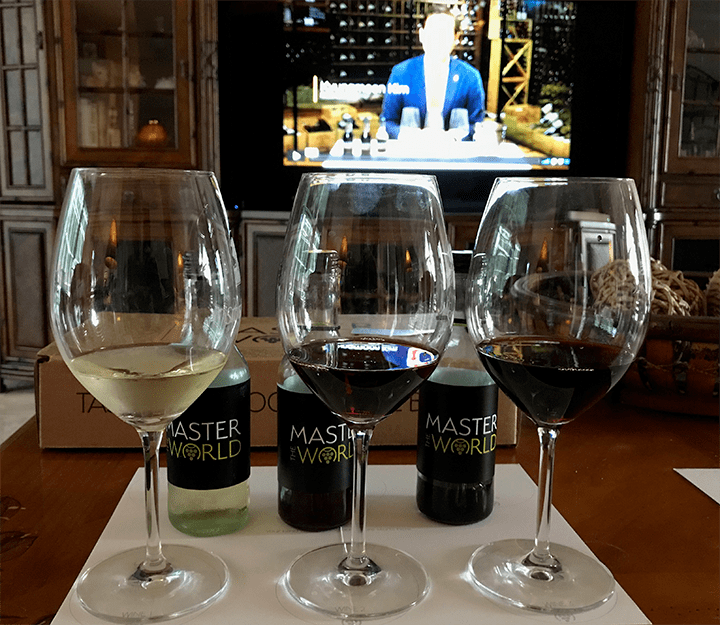
    It was hard to imagine how CMS would be able to maintain the same level of high standards and differentiation in the on-line environment as in the in-person classes. They absolutely nailed it! These classes are world class. The tasting portion of the classes fall strategically throughout the course, and features 18 different wines for honing your skills in using the CMS Deductive Tasting Method. Even though the classes are self-paced… it is very difficult to not ‘binge watch’ all 30 sections. We have, after all, grown accustomed to binging.

    I wanted to make sure we were well into the online courses and curriculum before providing feedback. As of this blog post, Tammy and I have read and re-read everything prescribed by The Court of Master Sommeliers in anticipation of the two-day in-person course in October 2020. Due to the challenges associated with the pandemic, our course was moved several times… and eventually postponed indefinitely. It has been nearly one year since we started this journey, and it finally feels like there is an end in sight 😉

    We have until November 2021 (six months) to traverse the lectures, learn the CMS Deductive Tasting Method, and take the exam. Given the fact that we’ve been in pursuit of this milestone for nearly a year, we decided to schedule the exam as early as we’d feel comfortable–August 2021. The lectures are designed to build upon what we’ve learned in the course reading materials. The master sommeliers move at a quick pace, but explain things in a way to help provide clarity to some of the vague and confusing areas in the curriculum. And while we certainly miss the interaction of an in-person classroom setting, the on-demand on-line experience has some good advantages.

    As mentioned earlier, you have six months to complete the on-line course. Unlike the 2-day in-person Introductory Sommelier Course & Examination, you have unlimited access to the videos. If something was confusing, watch it again. Personally, I enjoy having a conversation about wine during a tasting. The online (self-paced) experience doesn’t offer the opportunity to stand up and present your impression and analysis of the wines. This is an important skill, and a big part of the #sommlife

    I would encourage anyone seeking to expand their basic knowledge wine and related topics–such as viticulture and vinification practices, wine laws, major wine regions, grape varietals, and more–to enroll in this course. Knowledge is a good thing.

    First article in this series: Enthusiast to Sommelier: Getting Started
  • Enthusiast to Sommelier: We’re Back! Again.

    Enthusiast to Sommelier: We’re Back! Again.

    After several months of hiatus (not really), we are back on-track to participate in the Introductory Sommelier Course & Examination. It has been nearly one year since this journey began. Over the past six months, we have experienced three reschedules and several shifts in direction by The Court of Master Sommeliers brought on by the challenges of the pandemic. They have done an amazing job in proactively communicating with the CMS community, and adjusting the programs to accommodate safely and social-distancing guidelines.

    As promised, The Court of Master Sommeliers developed an on-line solution for the Introductory Sommelier Course & Examination. Individuals who previously enrolled in one of the canceled live courses have the opportunity to transfer their registration to the online learning courses. The CMS team has even worked out details surrounding the Deductive Tasting Methodology exercises in the course. For each registration, Master the World wines will provide a wine kit specific to the program.

    We are looking forward to being part of the initial launch, and continuing our goals through the new online learning environment. We’ll miss the face-to-face experience and live interaction in the classroom, but I believe this approach will still lead us to the desired outcome–completion of the first step of our journey. This means, of course, passing the exam 😉

    The Court of Master Sommeliers has partnered with ProctorU for administering the exams. There is an extensive list of technology, connectivity and workspace environment that must be followed during the proctored exam. And rightly so. Our online courses will begin on May 3, and the exams are scheduled in August. Looks like another few months of heads down in the books, and we will finally celebrate!

    Feeling re-energized!

    Next article in this series: Enthusiast to Sommelier: World Class Classes

    First article in this series: Enthusiast to Sommelier: Getting Started

  • Enthusiast to Sommelier: Holding Pattern

    Enthusiast to Sommelier: Holding Pattern

    Who knew that our sprint to sommelier-hood would eventually become a marathon filled with rescheduled classes, delayed exams and overall uncertainty. We are now just over ten months deep into the curriculum for the Introductory Sommelier Course & Examination without an end in sight. Due to unforeseen challenges caused by the COVID-19 pandemic, our scheduled course and examination has been postponed–indefinitely.

    The Court of Master Sommeliers has been completely transparent in communicating changes to their programs and plans to adopt safety protocols once the in-person courses resume. As of now (mid-March 2021), all brick-and-mortar courses have been postponed through the end of June 2021. This gauntlet of challenges has inspired CMS to develop and launch a suite of online courses. The first is slated for release in April 2021.

    Given the complexity of the Certified Sommelier Examination and Advanced Sommelier Course & Examination, I would imagine that only the Introductory Sommelier Course & Examination will be available online. Some of the self-paced training videos have been posted on the The Court of Master Sommeliers website.

    I am a fan of online learning, and I’m anxious to see how CMS curriculum developers handle teaching the Deductive Tasting Method in an online environment. Regardless, we are ready to resume our quest. Meanwhile… keep studying 😉

    Might need a new corkscrew before it’s over!

    First article in this series: Enthusiast to Sommelier: Getting Started

    Next article in this series: Enthusiast to Sommelier: We’re Back! Again.

  • Enthusiast to Sommelier: Parallel Studies

    Enthusiast to Sommelier: Parallel Studies

    Our quest to join the ranks of sommelier-hood has certainly been riddled with challenges. We became serious with our studies in the early summer of 2020. As you probably know–because you were also affected by the pandemic–most public events were either scaled back, made virtual, or cancelled. The Introductory Sommelier Course & Examination was no exception. At first, it was rescheduled to a later date. Then cancelled. We are in a holding pattern while we wait for the in-person courses to resume (or go virtual).

    Meanwhile… to keep the momentum, we’ve toyed with the idea of parallel studies. And, why not? After multiple passes through the study materials prescribed by The Court of Master Sommeliers, information is beginning to stick. So, why not study curriculum from another reputable wine education and professional advancement organization–such as the Wine & Spirit Education Trust (WSET)? Is too much knowledge really a concern? I don’t think so 😉

    At first glance it looks as if the knowledge and skills required to pass each level of The Court of Master Sommeliers tests and certifications are not aligned with WSET levels. The biggest difference is with the service-centric aspects of the highly regarded Court of Master Sommeliers program. Specifically, it is imperative to understand (and be able to perform) the proper techniques for serving wine. This includes the ritualistic approach to decanting, as well as the formal serving of Champagne (to name a few). The WSET programs do not focus on service, but instead allows students the opportunity to specialize in a specific area.

    It’s about to get intense 😉

    Next article in this series: Enthusiast to Sommelier: Holding Pattern

    First article in this series: Enthusiast to Sommelier: Getting Started
  • Perfect Pairings: Gewürztraminer w/Sweet and Sour Chicken

    Perfect Pairings: Gewürztraminer w/Sweet and Sour Chicken

    With so many variations of Asian cuisine, there isn’t a one-glass-fits-all wine. In fact, there are several perfect pairings within this gastro-genre. Alsace Gewürztraminer and the westernized Cantonese Sweet and Sour Chicken dish breaks the “if it grows together, it goes together” basic rule of food and wine pairing. It is important to note that not all Gewürztraminer wines will work in this scenario.

    Gewürztraminer from Alsace, France

    The Gewürztraminer wines of Alsace tend to be off-dry. Gewürztraminer from other regions can be sweeter with Riesling-like characteristics.

    No, I am not really comparing Riesling to Gewürztraminer 😉 There are, however, certain characteristics unique to Alsace Gewürztraminer making it the right choice for this dish.

    So… why does this pairing work so well? Dry, fruity and spicy version of this varietal stand up perfectly to the bold intense flavors of this dish.

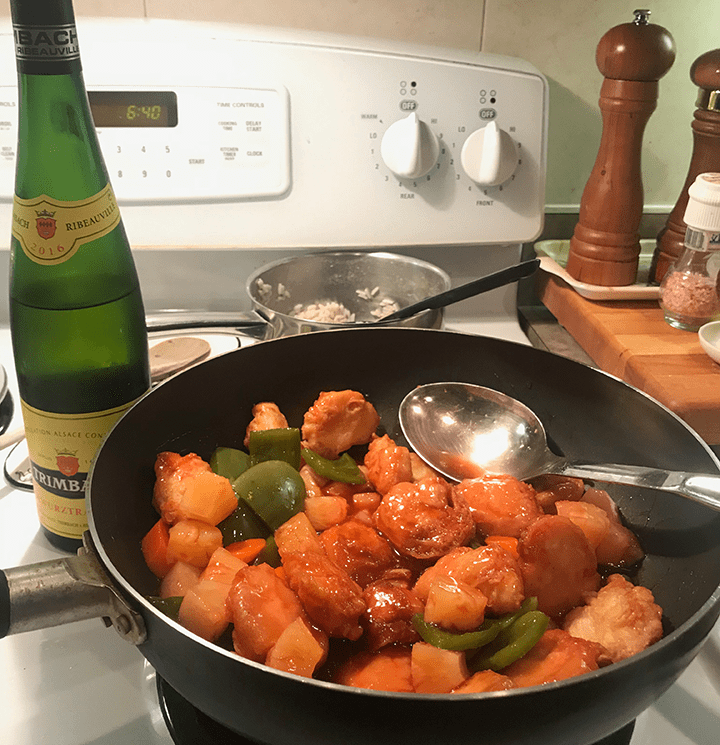
    Trimbach Gewürztraminer 2016 – Alsace, France

    Heat up the wok, chill the wine, and lets get started…

    Tammy’s Sweet and Sour Chicken

    2 Green Peppers

    2 Tomatoes

    2 Carrots

    Chicken Breasts (1 per person)

    3-4 Green Onions

    1 Small Can of Pineapple Chunks

    Prepare the batter (ingredients and instructions below). Cut the chicken breasts into small bite-size pieces. Cut vegetables and tomatoes (technically not a vegetable) into bite-size chunks. Blanch the carrots and green peppers and set aside for later. Batter the chicken pieces and deep fry in hot oil until golden brown. Prepare the sauce (ingredients and instructions below).

    Add blanched vegetables, tomatoes, and golden-fried chicken to the thickened sauce (make sure to add the chicken last). Heat thoroughly and serve.

    Open the wine and enjoy! 

    Batter

    1 Egg

    1 Cup Flour

    1/2 Cup Cornstarch

    6 tbsp Cooking Oil

    1 Cup + 2 tbsp Very Cold Water

    1 tsp Baking Powder

    1/2 tsp Salt

    Dash of Pepper

    Mix all of the dry ingredients, and add the liquids. Optional: Add a few drops of yellow food coloring.

    Sauce

    3/4 Cup Water

    1/4 Cup Pineapple Juice

    5 tbsp Sugar

    3 tbsp Vinegar

    1 tbsp Soy Sauce

    1 tbsp Ketchup

    3 tsp Cornstarch + 2 tbsp Water (Mixed into a Paste)

    In a saucepan, whisk all of the ingredients together except the cornstarch paste. Bring to a boil. Add cornstarch paste to thicken.

  • Enthusiast to Sommelier: Study Fatigue

    Enthusiast to Sommelier: Study Fatigue

    With the unexpected rescheduling of our Introductory Sommelier Course & Examination event hosted by The Court of Master Sommeliers, we are finding ourselves spending less time in the books and other study materials. And while it is nice to take a break (along with a few deep breaths), it is becoming more and more difficult to stay focused. One thing I’ve noticed, however, is how easily the information we’ve acquired over the past five (5) months is retrieved. Even the most obscure information seems to be available on-demand 😉

    Perhaps it’s because our brains aren’t busy calculating all the ways we could fail. With the new test date moved back four (4) months, we can slowly ingest and mentally absorb the information as opposed to cramming for a final exam. It doesn’t mean that the curriculum is any less difficult. It does prove how pressure and stress can affect learning. Removing pressure, as in this case, relieved our learning and cognition related stress… but also introduced a new challenge. Study fatigue.

    To put it into perspective… imagine running a short sprint that suddenly becomes a marathon. As a result, the finish line (achievable at your current pace) has moved very far away. Would you have the stamina to keep pace and cross the new finish line? Perhaps. Given the fact that you didn’t train for a marathon… would you question your ability? Definitely. So what’s the solution? Since everyone’s approach to learning is different, there isn’t a single remedy for all. For us… we’ve temporarily slowed the pace and intensity of our studying.

    The trick is to not lose focus on the end result or goals, but to become more immersed in the journey. Instead of memorizing all of the necessary facts about viticulture, vinification, the art (and science) of food and wine pairing, and the seamlessly infinite wine regions of the world, dive into the details. Question why oak is used in barriques or how some white grapes along with certain winemaking techniques can produce very dark wines–such as Pedro Ximenez Sherry.

    Above all… stay focused!

    Next article in the series: Enthusiast to Sommelier: ‘Tis the Season

    First article in this series: Enthusiast to Sommelier: Getting Started

  • Perfect Pairings: Melon de Bourgogne w/Fettuccini With Clams and Dill

    Perfect Pairings: Melon de Bourgogne w/Fettuccini With Clams and Dill

    Every now and then you run across a food and wine pairing that is so perfect, you can’t imagine anything better. This is one of those rare instances when the wine ‘contrasts’ and at the same time ‘compliments’ the dish. Coastal region wines naturally pair with seafood. This is no exception. Melon de Bourgogne is the most widely planted grape in the Loire Valley, and the best comes from the AOP Muscadet Sèvre et Maine. After first tasting this wine, I thought how amazing it would be with a plate of fresh oysters. But that would be cliché 😉

    Domaine Claude Branger Muscadet Sevré et Maine
    Sur Lie Terroir Les Gras Moutons 2018

    Why is this a perfect pairing?

    The natural saltiness of the clams provide great contrast to the acidity of this wine. There are crisp spice and citrus zest notes in the wine that compliments the fresh creamy sauce in the dish.

    This wine spends a minimum of 24 months on the lees (sur lie), bringing a welcome yeasty aroma and flavor to the wine.

    Domaine Claude Branger Muscadet Sevre-et-Maine Sur Lie Terroir Les Gras Moutons 2018 – Melon de Bourgogne from Pays Nantais, Loire, France

    We first purchased the wine as part of our ongoing commitment to immerse ourselves in the various countries and regions during our sommelier studies. I was fortunate to discover this recipe in a 2014 online article by J. Gwendolynne Berry in the Palm Beach Post, while searching for others’ experiences and recommendation of food to pair with this specific wine.

    Fettuccini With Clams and Dill

    Original Recipe: FOOD & WINE Annual Cookbook 2012

    2 1/2 Pounds Clams

    1/2 Cup Dry White Wine

    2 Dill Sprigs (plus 1 tablespoon chopped dill (garnish))

    1/4 Cup Dry Vermouth

    3/4 Cup Sour Cream

    1 Small Clove Garlic

    1/4 Cup Chopped Onion

    1 Teaspoon Finely Grated Lemon Zest

    1 Teaspoon Finely Grated Grapefruit Zest

    1 Pound Fresh Fettuccine

    Freshly ground pepper

    The first step is to cook the clams. Make sure to rinse them well to remove any sand and dirt from the shells. Place the wine, clams, dill, and a few splashes of dry vermouth (approx. 2 tablespoons) in a large sauce pot. Bring to a boil. Cover and steam the clams until they open. Remove the clams, and place them into a bowl. Be sure to toss out any unopened clams. Strain the liquid and rinse out the pot. Return the liquid to the sauce pot.

    Simmer to reduce the liquid to about 1 cup. This should take between 8-10 minutes. Remove from heat add onions, garlic, citrus zest (lemon and grapefruit), and sour cream.

    Cook the pasta in a large pot of boiling and salted water. Be careful not to overcook the pasta. Just before the pasta reaches al dente, strain the water and add the pasta to the sauce pot. Add the remaining vermouth. Cook until the sauce is creamy. This should take about 6-8 minutes.

    Serve the pasta topped with clams.

    Enjoy!

    References

    Berry, J. (2014, June 11). Amid summer whites, a surprisingly creamy Vinho Verde. Retrieved October 06, 2020, from https://www.palmbeachpost.com/article/20140610/ENTERTAINMENT/812033625

  • Enthusiast to Sommelier: Pandemic Impact

    Enthusiast to Sommelier: Pandemic Impact

    As the COVID-19 pandemic continues to wreak havoc on the world, it was simply a matter of time before it impacted our quest for sommelier-hood. The format and schedule of the Introductory Sommelier Course & Examination and other events hosted by The Court of Master Sommeliers have been at risk since the beginning of the pandemic. Recently, we were notified of changes to the scheduled events necessary to ensure everyone’s safety. Our much anticipated course and examination was rescheduled for mid-February 2021.

    I know the decisions made by The Court of Master Sommeliers are well thought out and in everyone’s best interest. They did an amazing job keeping us informed of format changes to the course, and eventually decided to reschedule the event. That being said, our study habits have shifted into a lower gear. With an additional four (4) months to prepare, it is tempting to set the books aside and relax for a while. At the same time, however, we run the risk of losing all of this great momentum gained over the past three (3) months.

    The news of rescheduling our course and exam brought contradicting emotions of relief and frustration. A sigh of relief was unavoidable as the fear of not enough preparation was lifted. Frustration was also apparent as the anticipation for this event was suddenly thwarted. Emotions aside… this was absolutely the right call, and we will continue pursuing our goals. This gives us time to expand into the Sommelier Level 2 curriculum 😉

    Back to the books!

    Next article in the series: Enthusiast to Sommelier: Study Fatigue

    First article in this series: Enthusiast to Sommelier: Getting Started

  • Enthusiast to Sommelier: Take a Pass

    Enthusiast to Sommelier: Take a Pass

    Don’t be fooled by the title of this blog post. While it has crossed our minds on more than one occasion to drop out of the wine knowledge race, we are staying the course. With only three short weeks remaining, it would be easy to succumb to the pressure and throw in the serviette. Instead, we are ‘taking a pass’ (several passes actually) through the various learning materials. Every pass through the materials reveals another piece of information crucial to our success.

    Part of our due diligence includes reading stories and first-hand experiences of others who have made the journey. And while there are a number of similarities in everyone’s account of the Court of Master Sommeliers Introductory Course & Examination, no one (at the time of this blog post) has written about his or her experience during the COVID-19 pandemic. We get a pretty good picture of the format and flow of the 2-day course, but really have no idea what to expect in the classroom.

    The challenge of learning new things coupled with the anticipation of the final exam could be just enough to justify ‘taking a pass.’ With three weeks remaining, however, it seems we’ve come too far to give up. Still much to learn, and revisiting the same information just makes sense. I don’t think you can over prepare. Even if the information you learn is more advanced than the curriculum covered in the level 1 courses, it will definitely be required for the Certified Sommelier Examination. So… go ahead and ‘take a pass.’

    Back to the books 😉

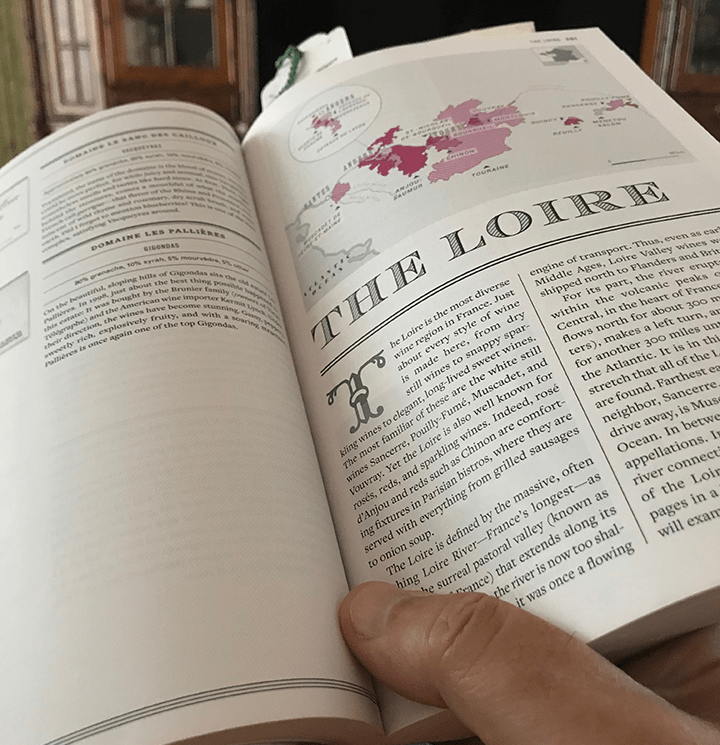
    Note: The image (above) shows me ‘taking a pass’ through The Wine Bible by Karen MacNeil.

    Next article in the series: Enthusiast to Sommelier: Pandemic Impact

    First article in this series: Enthusiast to Sommelier: Getting Started