Category: Varietal Spotlight

  • Discovering the Rich Tapestry of Austrian Wines

    Discovering the Rich Tapestry of Austrian Wines

    Austria, a country nestled in the heart of Europe, boasts a winemaking history that dates back centuries. With its diverse terroir, unique grape varieties, and a commitment to quality, Austrian wines have been gaining international acclaim. In this exploration, we will delve into the main wine regions, native varietals, distinctive styles, and noteworthy vintages that make Austria a captivating destination for wine enthusiasts.

    Wine Regions of Austria

    Austria is divided into four primary wine regions, each characterized by its distinct terroir and grape varieties:

    Grüner Veltliner

    Niederösterreich (Lower Austria): This expansive region along the Danube River is home to renowned sub-regions like Wachau, Kamptal, and Kremstal. Grüner Veltliner and Riesling are the stars here, thriving in the cool climate and diverse soils, from loess to primary rock.

    Burgenland: Located in the eastern part of Austria, Burgenland is known for its red wines, particularly those produced from the indigenous grape variety Blaufränkisch. Neusiedlersee, a large lake in the region, influences the climate, creating ideal conditions for sweet wines like Trockenbeerenauslese.

    Steiermark (Styria): This southern region is recognized for its Sauvignon Blanc and Morillon (Chardonnay). The landscape is diverse, with vineyards ranging from steep slopes to rolling hills. Steiermark’s wines are often characterized by a vibrant acidity and minerality.

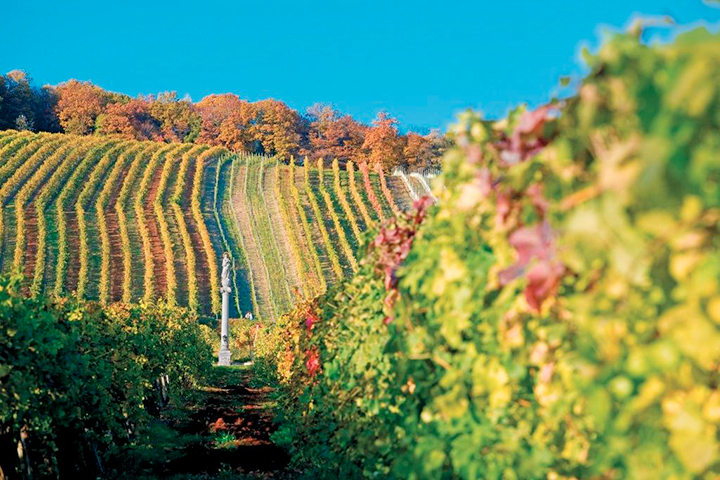
    Gemischter Satz – Photo by Lois Lammerhuber, Weintourismus

    Wien (Vienna): The Austrian capital, Vienna, has its own unique wine region within the city limits. The local Gemischter Satz, a field blend of different grape varieties, is a traditional Viennese wine style that reflects the city’s multicultural history.

    Sankt Laurent

    Native Varietals

    Austria takes pride in its native grape varieties, which contribute to the country’s distinctive wine identity. The most notable include:

    Grüner Veltliner: Often considered Austria’s flagship white grape, Grüner Veltliner produces crisp, aromatic wines with flavors ranging from green apple to white pepper. It is the most widely planted grape variety in the country.

    Riesling: Known for its elegance and age-worthiness, Austrian Riesling showcases a beautiful balance of acidity and fruitiness. The Wachau region, in particular, is celebrated for its Riesling expressions.

    Blaufränkisch: A red grape variety that thrives in Burgenland, Blaufränkisch produces wines with dark fruit flavors, spice, and a distinctive earthy character. It is the backbone of many of the region’s powerful red blends.

    Sankt Laurent: Another red variety, Sankt Laurent, is valued for its velvety texture and red fruit notes. It is often used to create elegant, age-worthy red wines.

    Sankt Laurent was named after St. Lawrence’s Day – the 10th of August – the day on which the grapes begin to change color

    http://www.austrianwine.com

    A Taste of Austria’s Diversity

    Austria offers a wide range of wine styles, from dry whites to luscious sweet wines. Some unique styles to explore include:

    Gelber Muskateller (Yellow Muscat): This aromatic grape variety produces floral and perfumed wines with a captivating bouquet. It is often vinified into dry, aromatic whites.

    Eiswein (Ice Wine): In exceptional years, Austrian winemakers craft Eiswein from grapes naturally frozen on the vine. These sweet wines are a true delicacy, balancing intense sweetness with acidity.

    Gemischter Satz: As mentioned earlier, this traditional Viennese style involves planting and harvesting different grape varieties together. The resulting wines are complex, reflecting the diversity of the vineyard.

    When it comes to vintages, Austrian wines are known for their consistency and age-worthiness. However, the standout years, such as 2015, 2017, and 2019, have produced wines with exceptional balance and concentration.

    Sacher-Torte

    Austrian Wine and Culinary Pairings

    Pairing Austrian wines with local dishes is a delightful experience that enhances the flavors of both the food and the wine. Here are some recommendations:

    Grüner Veltliner with Wiener Schnitzel: The crisp acidity and citrus notes of Grüner Veltliner complement the fried goodness of Wiener Schnitzel, Austria’s iconic breaded veal cutlet.

    Blaufränkisch with Game Meat: The robust and spicy character of Blaufränkisch pairs wonderfully with game dishes, bringing out the rich flavors of venison or wild boar.

    Sankt Laurent with Duck: The velvety texture and red fruit profile of Sankt Laurent harmonize beautifully with the succulence of roasted duck.

    Eiswein with Desserts: The intense sweetness and acidity of Eiswein make it a perfect match for desserts like Sacher-Torte or apple strudel.

    Austria’s Winemaking Heritage

    Austria’s winemaking history dates back to Roman times, with monasteries playing a crucial role in preserving and advancing viticultural practices. In recent decades, Austrian winemakers have embraced modern techniques while maintaining a deep respect for tradition. This balance has contributed to the country’s success on the international stage.

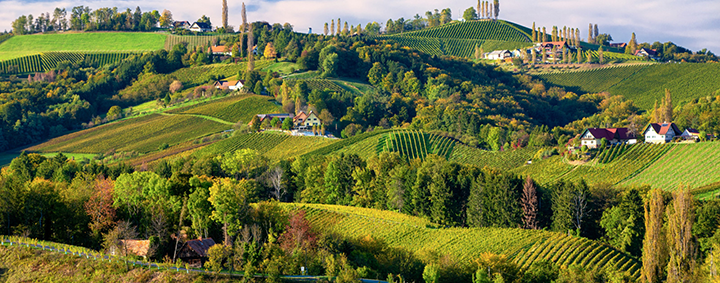
    South Styrian Wine Road in Austria. Image Credit: Julius Silver/Courtesy of Austrian Tourism

    A Unique Wine Landscape

    Surrounded by wine-producing heavyweights like Germany, Italy, and France, Austria holds its own with its distinctive terroir and grape varieties. The country’s commitment to quality, sustainable viticulture, and expressive winemaking have earned it a respected place among its European counterparts.

    Austria’s wines are a treasure trove of diversity, offering something for every palate. Whether you are drawn to the zesty Grüner Veltliners of Niederösterreich, the robust reds of Burgenland, or the unique Gemischter Satz of Vienna, Austrian wines are sure to captivate and leave a lasting impression. So, embark on a journey through the vineyards of Austria and savor the terroir, tradition, and innovation that define this remarkable wine-producing nation. Prost!

  • Varietal Spotlight: Gamay

    Varietal Spotlight: Gamay

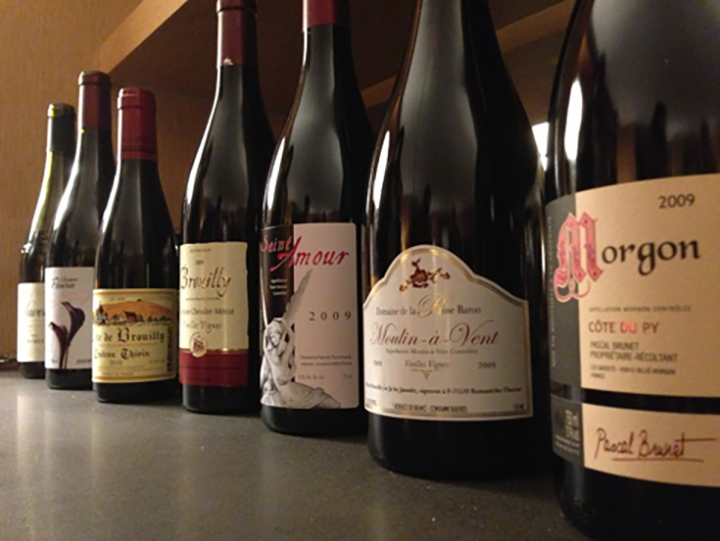
    Gamay made the iniquitous journey from Burgundy’s past to Beaujolais’ future. Burgundy, renowned for its exquisite Pinot Noir and Chardonnay wines, has a lesser-known grape variety in its history that once played a prominent role but was ultimately removed from the region’s vineyards. This grape is none other than Gamay, which found a new home and a fresh lease on life in the neighboring Beaujolais region. I’ve always been fascinated with the history of Gamay and specifically why it was expelled from Burgundy.

    A Complicated Love Affair

    Gamay’s presence in Burgundy dates back to the 14th century. It was planted widely in the region, particularly in the southern part of Burgundy, known as the Mâconnais. Gamay quickly gained popularity for its ease of cultivation, generous yields, and fruity, approachable character.

    However, Gamay’s success came with its share of controversies. The grape’s prolific nature often led to overproduction, diluting the quality of Burgundy wines. Winemakers in the heart of Burgundy, particularly in the Côte d’Or, where Pinot Noir was the star, viewed Gamay with disdain. They believed that its presence threatened the reputation and potential of their beloved Pinot Noir.

    we solemnly command you…all who have said vines of Gameez to cut them down or have them cut down, wherever they may be in our country, within five months.

    Duke Philip the Bold – July 31, 1395

    The 1395 Edict

    In 1395, Duke Philip the Bold of Burgundy (apparently, a relentless wine critic) issued an edict that essentially banished Gamay from the region. This decree prohibited the cultivation of Gamay in the Côte d’Or, the heartland of Burgundy’s wine production. The Duke’s motivations were multifaceted. He aimed to protect the image of Burgundy wines, emphasizing Pinot Noir and Chardonnay as the region’s noble grapes. Additionally, he sought to curb overproduction and maintain quality control.

    Wines of Beaujolias – featuring the Gamay Grape

    A Resilient Grape Finds a New Home

    While Gamay faced exile from Burgundy, it found a welcoming home in the neighboring region of Beaujolais. Beaujolais embraced Gamay and developed its own distinct style of wine, characterized by bright red fruit flavors and an emphasis on freshness. The region even created a unique winemaking technique called carbonic maceration, which enhances Gamay’s fruity and floral qualities.

    Today, Beaujolais is celebrated for its diverse range of Gamay wines, including Beaujolais Nouveau, Beaujolais-Villages, and the ten Crus of Beaujolais, each showcasing the grape’s potential in various terroirs.

    A Grape’s Journey and Redemption

    Gamay’s expulsion from Burgundy might have seemed like a tragic ending, but it led to a remarkable rebirth in Beaujolais. The grape’s history is a testament to the dynamic and ever-evolving world of wine. Today, Gamay wines from Beaujolais are beloved for their charming, fruit-forward character, offering a delightful contrast to the more serious and complex Pinot Noirs and Chardonnays of Burgundy.

    While Gamay’s presence may have been erased from Burgundy’s vineyards, its legacy endures as a symbol of resilience and adaptability in the world of viticulture, reminding us that sometimes, a change of scenery can lead to a grape’s true potential being fully realized. Gamay is currently allowed to be grown in Côte d’Or. Confusingly, however, Gamay is not allowed in wines produced within its namesake region ‘Saint Aubin sur Gamay’ 😉

    Give this peasant varietal a try. It pairs perfectly with roast chicken, garlicky sausages, or soft cheeses!

  • Varietal Spotlight: Chardonnay

    Varietal Spotlight: Chardonnay

    The Canvas of the Winemaker.

    Few grape varieties offer as much versatility and expressive potential as Chardonnay. Within the Vitis vinifera family, it stands as one of the most adaptable varietals—capable of producing everything from zesty, mineral-driven wines to rich, barrel-aged expressions. Winemakers often call it the “blank canvas” grape, not because it lacks character, but because it reflects the sum of choices made in the cellar: oak or stainless steel, malolactic conversion or crisp acidity, extended lees aging or youthful freshness. Chardonnay mirrors technique—and that is precisely why professionals revere it.

    Photo by Nadin Sh on Pexels.com

    A Brief History of a Global Classic

    The name Chardonnay originates from a small village in the Mâconnais subregion of Burgundy, France. While legends once traced its ancestry to medieval crusades or poetic tales from Cyprus, modern science has provided a far clearer understanding.

    Thanks to genetic research—most notably by Dr. Carole Meredith of the University of California—we now know that Chardonnay is a natural cross between Pinot Noir and Gouais Blanc. That lineage is meaningful: Pinot Noir has long been considered the noble grape of Burgundy, while Gouais Blanc was historically grown for everyday table wine. Their close proximity in vineyards centuries ago allowed for cross-pollination that ultimately produced the varietal we recognize today.

    Interestingly, Gouais Blanc has been known by more than 140 different names—proof of its widespread cultivation—and yet it has all but disappeared today. Chardonnay, on the other hand, has become one of the most celebrated and widely planted grapes in the world.

    Chardonnay and Terroir: A Natural Translator

    Chardonnay is uniquely sensitive to terroir—the combination of soil, climate, altitude, water access, and topography that shape a wine’s character. For this reason, many Old World labels emphasize geographic origin more than grape variety.

    Photo by Kate Filatova on Pexels.com

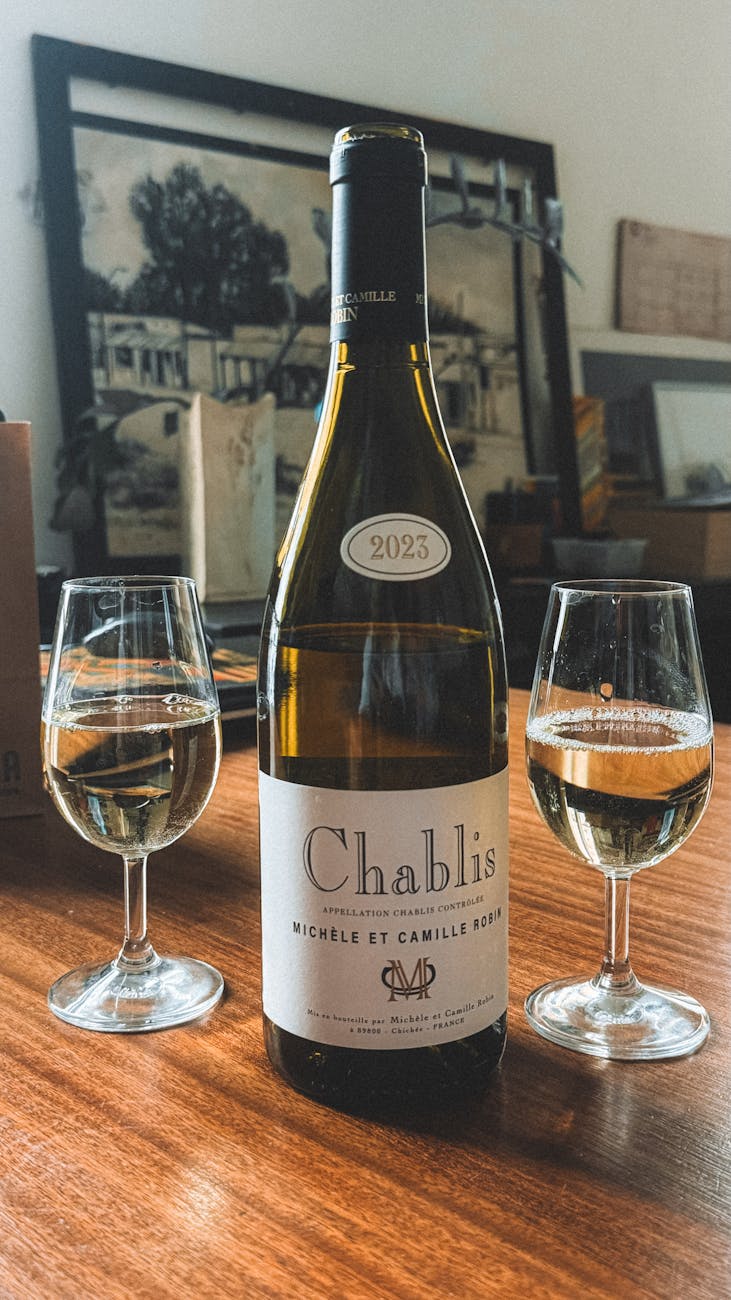
    Take Chablis, for example. It is not a synonym for Chardonnay, yet every wine labeled Chablis must be made from Chardonnay. The region’s cool climate and Kimmeridgian limestone soils produce wines that are lean, flinty, and mineral-driven—quite different from the fuller styles of, say, Sonoma or Margaret River. Thus:

    All Chablis are Chardonnay, but not all Chardonnays are Chablis.

    Gregory Dean, SOMM&SOMM

    In Burgundy’s Côte de Beaune, names like Montrachet (pronounced “Mon-ra-shay”) represent some of the most prestigious—and expensive—Chardonnays on earth. Further south, Pouilly-Fuissé in the Mâconnais region is known for producing ripe, elegant Chardonnays that balance fruit with structure. Nearly every Old World country—France, Italy, Spain, Germany, Austria, Portugal, Greece, Hungary, Croatia, and others—produces unique expressions shaped by specific terroir.

    Old World generally refers to European, Middle Eastern, and North African wine-producing countries.

    New World Chardonnay: Sunshine in the Glass

    In contrast, New World regions such as California, Australia, South Africa, Chile, and Argentina typically experience warmer growing conditions. More sunlight means longer hang time, which increases sugar levels in the grapes. Higher sugar translates into higher alcohol during fermentation—one reason New World Chardonnays tend to be richer, fuller-bodied, and more fruit-forward.

    Photo by Manuel Muu00f1oz on Pexels.com

    Serving temperature matters:

    • Unoaked, youthful styles: 48–50°F (9–10°C)
    • Oaked or older vintages: 52–54°F (11–12°C)

    These subtle temperature differences allow either the fruit or the influence of oak and lees to take the spotlight.

    What About ‘Buttery’ Chardonnay?

    The often-discussed buttery texture comes from malolactic conversion—a natural process where sharper malic acid (like that in green apples) is transformed into softer lactic acid (found in milk and cream). This adds texture and roundness while reducing acidity. Not all winemakers choose this technique; some prefer the crisp purity of a non-malo Chardonnay. Again—the grape simply mirrors the choice.

    Photo by Heather Smith on Pexels.com

    Chardonnay in Champagne

    Chardonnay is also one of only three permitted grapes in Champagne—the sole white varietal allowed. In fact, when you see Blanc de Blancs on a Champagne label, it indicates the wine is made from 100% Chardonnay. Its elegance and aging potential make it highly prized in sparkling wine production around the world.

    Stylistic Tools of the Winemaker

    Chardonnay can express a wide range of styles depending on the methods used:

    • Stainless steel fermentation – preserves freshness and acidity
    • Oak aging – adds spice, texture, and complexity
    • Concrete eggs – enhance mouthfeel without imparting flavor
    • Malolactic conversion – softens acidity and adds creaminess
    • Lees stirring (bâtonnage) – contributes body and aromatic depth

    Chardonnay, perhaps more than any other grape, tells the story of the cellar.

    SOMM&SOMM Recommendations

    A few standout examples worth exploring:

    Too many to list—but each one showcases a different voice of the same grape.

    A Final Thought

    The best way to understand Chardonnay is to taste it across regions, styles, and techniques. In a gallery, we use our eyes to interpret a painting. With wine, we have the luxury of using three senses instead of one—sight, smell, and taste. Each glass reveals the winemaker’s intention and the land’s identity.

    Next time you pour a Chardonnay, ask yourself:
    What story is the winemaker telling… and what is the vineyard whispering in the background? Cheers ❤️

    Edited: Original post was written and published 2/18/2023. Refreshed and updated 11/29/2025