Category: Tasting Insights

  • Love, Legends, and a Proper Glass of Wine

    Love, Legends, and a Proper Glass of Wine

    Valentine’s Day has somehow become a collision of romance, chocolate, prix-fixe menus, and mild panic. But long before heart-shaped boxes and awkward reservations at 7:15 pm, this holiday had a much stranger and more interesting backstory.

    A Brief and Slightly Unhinged History of Valentine’s Day

    The origins of Valentine’s Day are tangled, like a box of old love letters tied with questionable ribbon.

    Some trace it back to Lupercalia, an ancient Roman fertility festival involving feasting, matchmaking lotteries, and rituals best left in history books. Later, the Church attempted to clean things up by honoring St. Valentine, or possibly several Valentines, because history couldn’t settle on just one.

    The most romantic legend? Valentine secretly married couples against the wishes of Emperor Claudius II, who believed single men made better soldiers. When Valentine was imprisoned, he allegedly sent a note signed, “From your Valentine.” That line stuck. The beheadings, thankfully, did not.
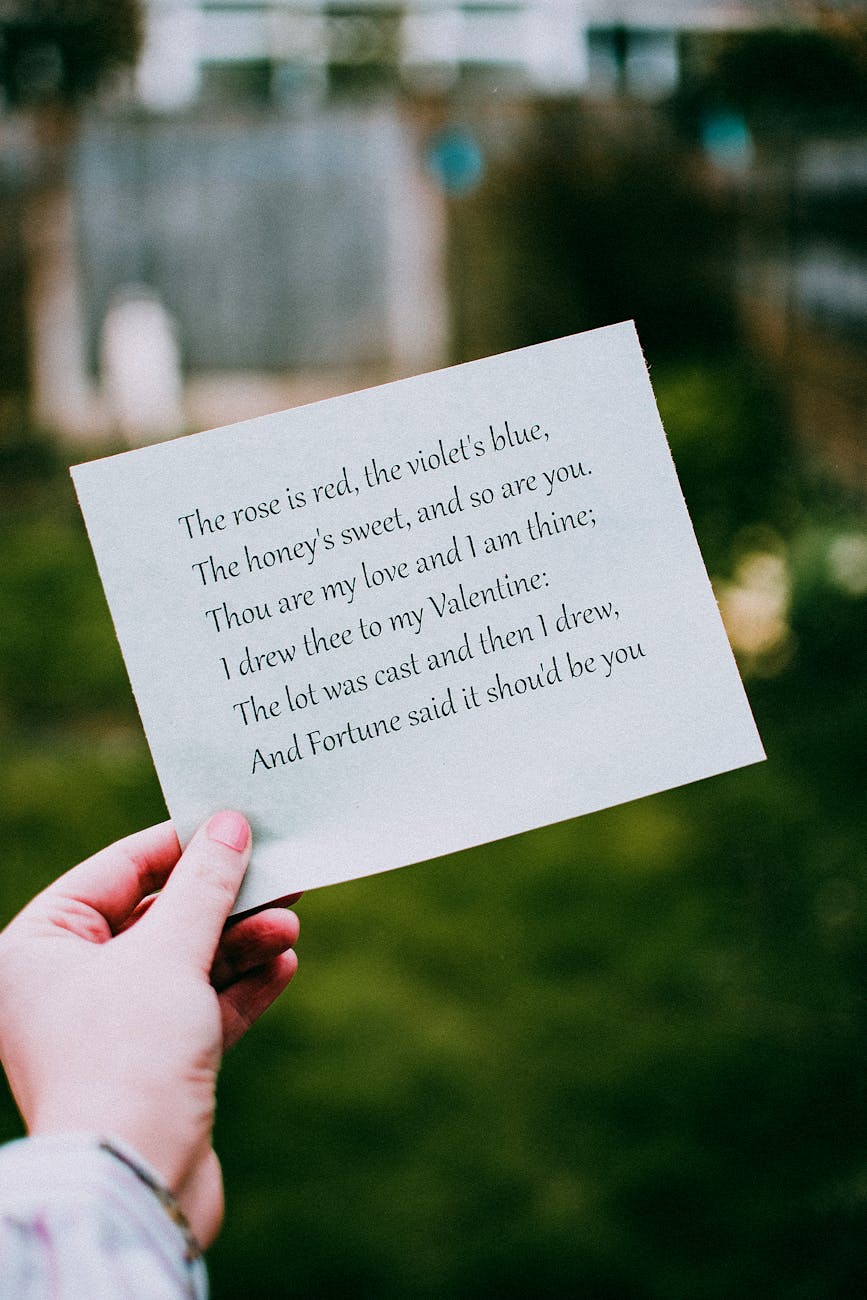
    Photo by Lisa from Pexels on Pexels.com

    By the Middle Ages, Valentine’s Day was associated with courtly love, handwritten poetry, and exchanging small tokens of affection. Somewhere along the way, wine became involved, which may be the most important evolution of all.

    Wine Pairings for Love in All Its Forms

    Valentine’s Day wine should be romantic without trying too hard. No one wants a wine that feels like it’s wearing too much cologne.
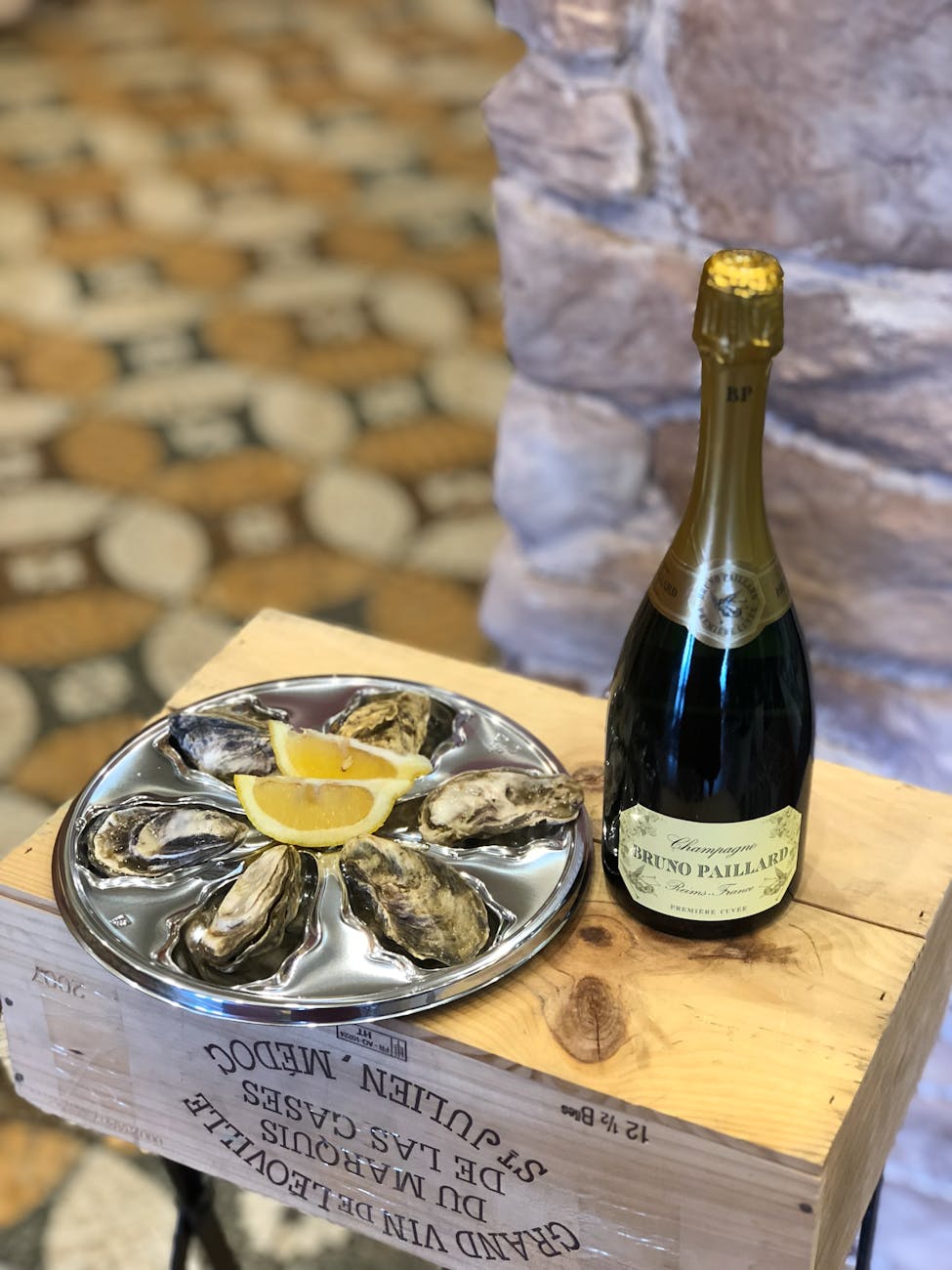
    Photo by Anna Galimova on Pexels.com

    Oysters and Sparkling Wine

    Classic for a reason. Oysters have long been considered an aphrodisiac, likely because they pair so beautifully with sparkling wine.

    In the glass: Champagne, Crémant, or a Brut sparkling wine
    Why it sings: Bright acidity, saline minerality, and bubbles that keep things lively

    If oysters feel intimidating, shrimp cocktail or scallop crudo works just as well. Romance should never feel like homework.

    Steak, Mushroom Risotto, or Truffle Pasta

    This is where Valentine’s dinners usually land, and honestly, it’s a good place to be.

    What to drink: Pinot Noir, Nebbiolo, or a softer style of Syrah
    Why it’s magic: These wines balance earthiness and elegance without overpowering the dish or the moment

    Cabernet Sauvignon can work, but only if it’s not trying to dominate the conversation.

    Chocolate and Berries

    Chocolate is a trap for wine if you choose poorly. Dry reds rarely survive it.

    Reach for: Ruby Port, Brachetto d’Acqui, Banyuls, or a lightly sweet Lambrusco
    Why it fits: Sweetness meets sweetness, fruit stays vibrant, and no one feels betrayed

    If you insist on dark chocolate, fortified wines are your safest love language.

    The Cozy Night In

    Sometimes Valentine’s Day is pajamas, takeout, and not leaving the couch.

    Pour this: Off-dry Riesling, Beaujolais, or a chillable red
    Why it makes sense: Low pressure, high comfort, and endlessly food-friendly

    This is the wine equivalent of saying, “I like you exactly as you are.”

    A Valentine’s Day Cocktail: Love Letters at Dusk

    This cocktail is floral, lightly bitter, gently sweet, and just complex enough to feel intentional without being overwrought.

    Love Letters at Dusk

    1.5 oz gin
    0.75 oz Aperol
    0.5 oz elderflower liqueur
    0.75 oz fresh lemon juice
    2 dashes rose water
    Sparkling wine to top

    Add gin, Aperol, elderflower liqueur, lemon juice, and rose water to a shaker with ice. Shake briefly. Strain into a chilled coupe or wine glass. Top with sparkling wine.

    Garnish with a lemon twist or an edible flower if you’re feeling poetic.

    Tasting note: The gin brings structure, Aperol adds a gentle bitterness, elderflower softens the edges, and the bubbles keep things playful. It’s romantic without being cloying, much like a good relationship.

    Photo by Anna Tarazevich on Pexels.com

    Final Thoughts on Love, Wine, and Not Overthinking It

    Valentine’s Day doesn’t need to be perfect. It just needs to be thoughtful. A good bottle of wine, a shared meal, and a moment of genuine connection will always outshine fixed menus and forced romance.

    Whether you’re celebrating decades together, a brand-new spark, or simply your love of good food and drink, raise a glass to love in all its forms.

    Because at the end of the day, wine has always been about bringing people closer. And if that isn’t romantic, nothing is. 🍷❤️

    Cover Photo by Katerina Holmes on Pexels.com
  • Tokaji: Hungary’s Golden Secret

    Tokaji: Hungary’s Golden Secret

    …and why you should stop being afraid of it 😉

    Tokaji is one of the world’s most misunderstood wines—and frankly, one of its most rewarding. Tiny bottles, unfamiliar words, strange numbers, and labels that look like they were designed by a medieval scribe… no wonder most people reach for Sauternes instead. Safer. Familiar. French.

    But Tokaji is older, deeper, more versatile, and—dare I say—more soulful.

    If you’re a wine lover with even a passing interest in history, sweetness balanced by acid, or hidden gems that reward curiosity, Tokaji isn’t intimidating at all. It’s an invitation.

    Related SOMM&SOMM article: Wine Styles: Late Harvest Wines

    A Little History & Lore (Because Tokaji Has Plenty)

    Tokaji comes from northeastern Hungary, in the Tokaj-Hegyalja region, near the borders of Slovakia and Ukraine. This is not a “new discovery” wine. Tokaji Aszú was being made centuries before Sauternes—with documented production as early as the mid-1600s.

    In fact:

    • Tokaj was the first classified wine region in the world (1737)—nearly 120 years before Bordeaux.
    • Louis XIV famously called Tokaji “Vinum Regum, Rex Vinorum”The Wine of Kings, the King of Wines.
    • It was a favorite at royal courts across Europe, from the Habsburgs to the Russian Tsars.

    And yes, there’s lore: monks, misty autumn mornings, noble rot creeping slowly across vineyards as the Bodrog and Tisza rivers create the perfect fog-and-sun rhythm. Tokaji didn’t stumble into greatness—it was engineered by nature and refined by time.

    The Grapes Behind the Magic

    Tokaji is not a single-varietal wine in spirit, even if one grape dominates.

    Furmint (the star)

    • High acid (crucial for balance)
    • Neutral to apple-pear-citrus when dry
    • Transforms beautifully with botrytis
    • Think: green apple, quince, citrus peel, honeycomb, wet stone

    Hárslevelű

    • Softer acidity
    • Floral, herbal, linden blossom notes
    • Adds perfume and roundness

    Supporting Cast (used in smaller amounts)

    • Sárgamuskotály (Yellow Muscat) – aromatics and spice
    • Zéta – botrytis-prone, boosts sweetness
    • Kövérszőlő – richness and texture

    Furmint provides the spine. Everything else adds flesh, fragrance, and intrigue.

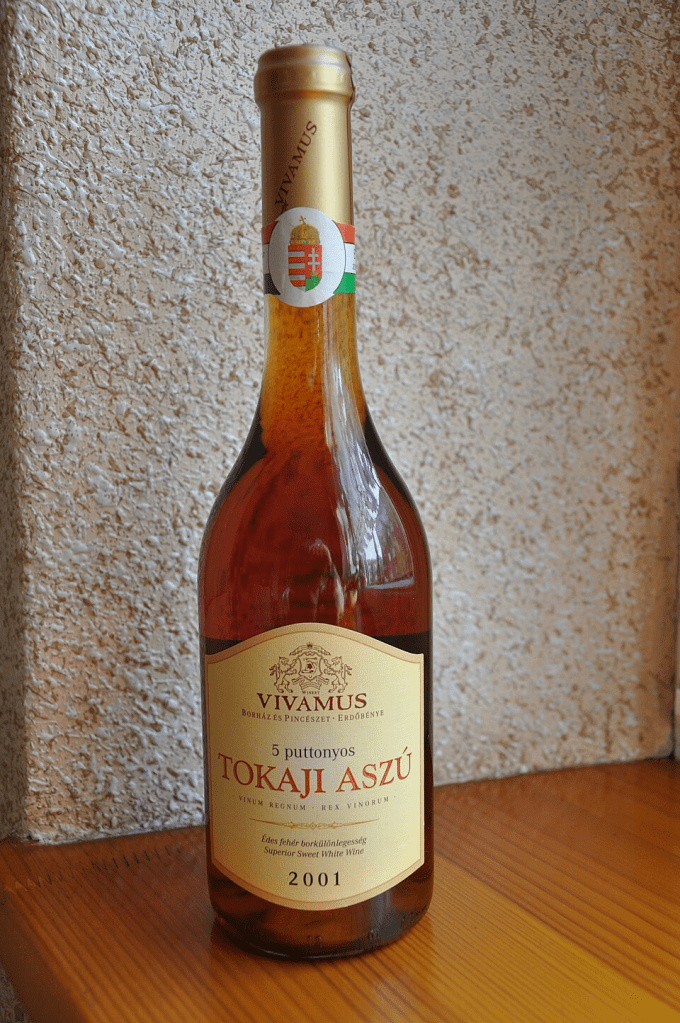
    Tokaji Aszú – Beemwej, CC BY-SA 3.0, via Wikimedia Commons

    Tokaji Styles: More Than Just Sweet Wine

    Here’s where Tokaji really starts to surprise people.

    1. Tokaji Aszú (The Icon)

    Made from individually harvested botrytized berries (aszú berries), traditionally added to a base wine.

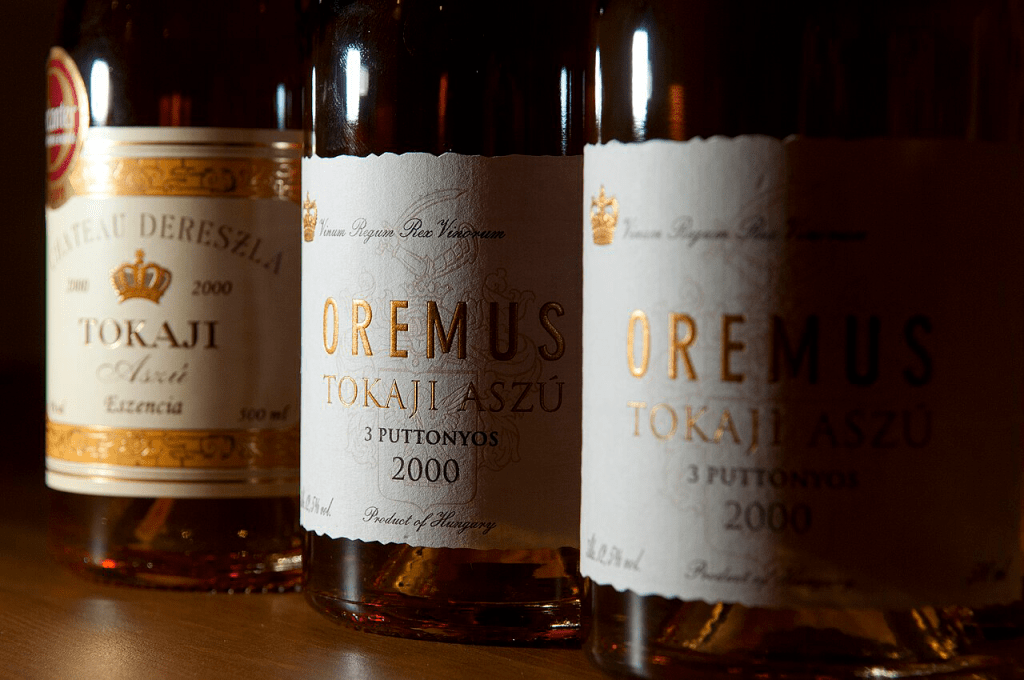
    Sweetness used to be measured in Puttonyos (the number of baskets of aszú berries added):

    • 3–6 Puttonyos (historically)
    • Today, most producers focus on 5 or 6 Puttonyos-level richness or simply label sweetness in grams

    Flavor profile:

    • Apricot jam
    • Orange marmalade
    • Honey
    • Ginger
    • Saffron
    • Toasted nuts
    • Laser-bright acidity holding it all together

    This is where Tokaji earns its crown.

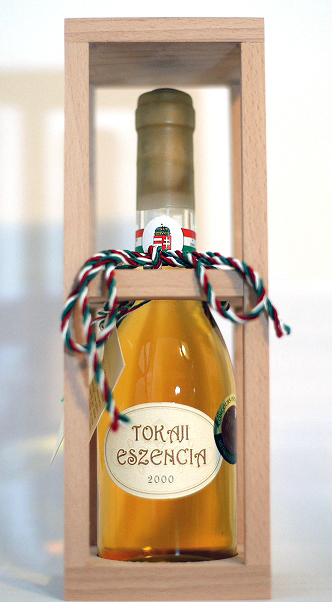
    Tokaji Eszencia: Emdee, CC BY-SA 3.0, via Wikimedia Commons

    2. Tokaji Eszencia (Liquid Myth)

    Not really wine in the traditional sense.

    • Free-run juice from aszú berries
    • Ferments extremely slowly
    • Often 1–3% alcohol
    • Astronomical sugar
    • Tiny production

    Think:

    • Nectar
    • Honeyed citrus oil
    • Dried tropical fruit
    • Eternal finish

    This is something you sip by the teaspoon and contemplate your life choices.

    3. Szamorodni (The Insider’s Favorite)

    Made from whole bunches—some botrytized, some not.

    Two styles:

    • Édes (Sweet) – oxidative, nutty, honeyed
    • Száraz (Dry) – sherry-like, savory, saline, almond-driven

    If you love Jura, aged Fino Sherry, or oxidative whites… dry Szamorodni will blow your mind.

    4. Late Harvest Tokaji

    • Made from overripe grapes
    • Often labeled Késői Szüret
    • Lusher and more approachable
    • Excellent gateway Tokaji

    5. Dry Tokaji (Dry Furmint)

    Yes—Tokaji can be bone dry.

    • Crisp
    • Mineral
    • Apple, pear, citrus, volcanic stone
    • Think Chablis meets Grüner meets something unmistakably Hungarian

    These wines are phenomenal with food and criminally underrated.

    Decoding the Label (Without Panicking)

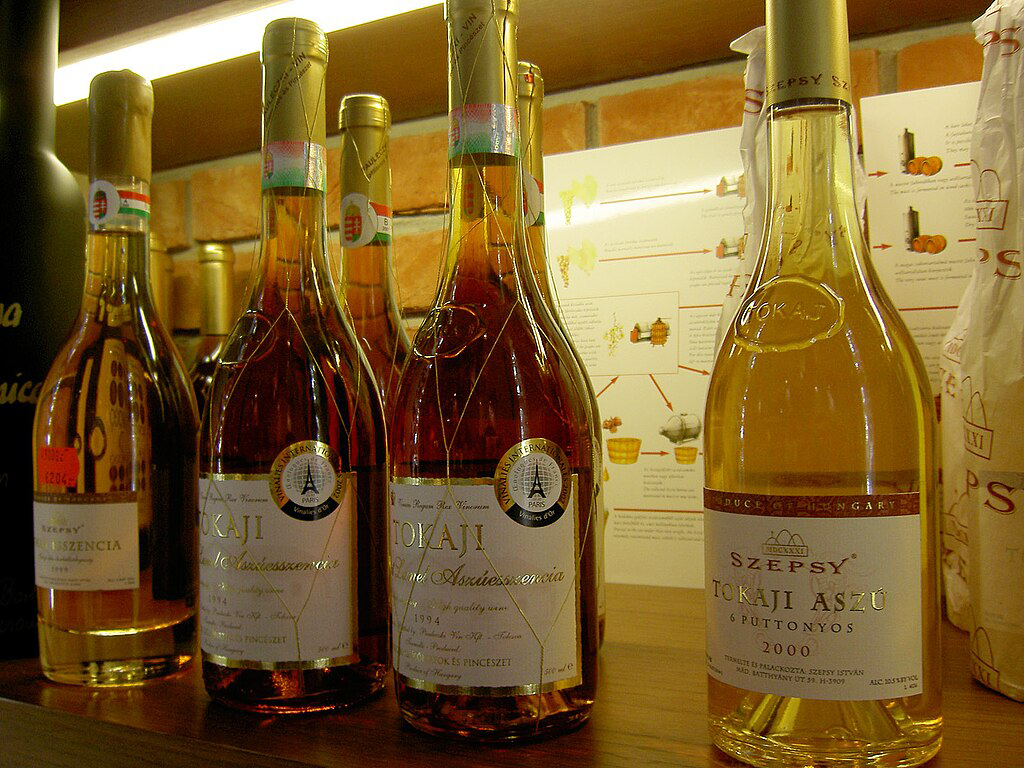
    Here’s your Tokaji cheat sheet:

    • Aszú – made from botrytized berries
    • Puttonyos – traditional sweetness level (less common today)
    • Édes – sweet
    • Száraz – dry
    • Szamorodni – whole-cluster style
    • Eszencia – ultra-concentrated nectar
    • Furmint / Hárslevelű – grape varieties
    • Dűlő – vineyard (single-site quality cue)

    If you can read a German Riesling label, you can conquer Tokaji.

    Pairings (This Is Where Tokaji Shines)

    Tokaji is not just a dessert wine. That’s the biggest misconception of all.

    Classic Pairings

    • Foie gras (legendary for a reason)
    • Blue cheese (Roquefort, Stilton, Gorgonzola)
    • Apricot tart
    • Almond pastries

    Unexpected & Brilliant

    • Spicy Thai or Szechuan dishes
    • Indian curries with ginger and turmeric
    • Moroccan tagines
    • Roast pork with stone fruit
    • Duck with orange or cherry glaze

    Dry Tokaji Pairings

    • Roast chicken
    • Pork schnitzel
    • Mushroom dishes
    • Alpine cheeses
    • Seafood with beurre blanc

    Szamorodni Pairings

    • Aged cheeses
    • Salted nuts
    • Mushroom risotto
    • Anything umami-forward

    Eszencia Pairing

    • Silence
    • A quiet room
    • One small spoon
    • Awe
    Bottles of Tokaji – takato marui, CC BY-SA 2.0, via Wikimedia Commons

    Why Tokaji Matters

    Tokaji isn’t just a wine—it’s a bridge between:

    • Sweet and savory
    • History and modernity
    • Intellectual curiosity and pure pleasure

    It rewards patience, but it doesn’t demand pretension. And for sommeliers and wine lovers with a passion for the obscure, Tokaji is the kind of bottle that reminds us why we fell in love with wine in the first place.

    So next time you’re tempted to grab the Sauternes because it feels easier…

    Don’t.

    Reach for Tokaji.
    Your palate will thank you—and your wine stories will be better for it. 🍷

    Cover Photo: Michal Osmenda, CC BY-SA 2.0, via Wikimedia Commons

  • Finding the Sweet Spot

    Finding the Sweet Spot

    When to Hold Wine–and When to Open It.

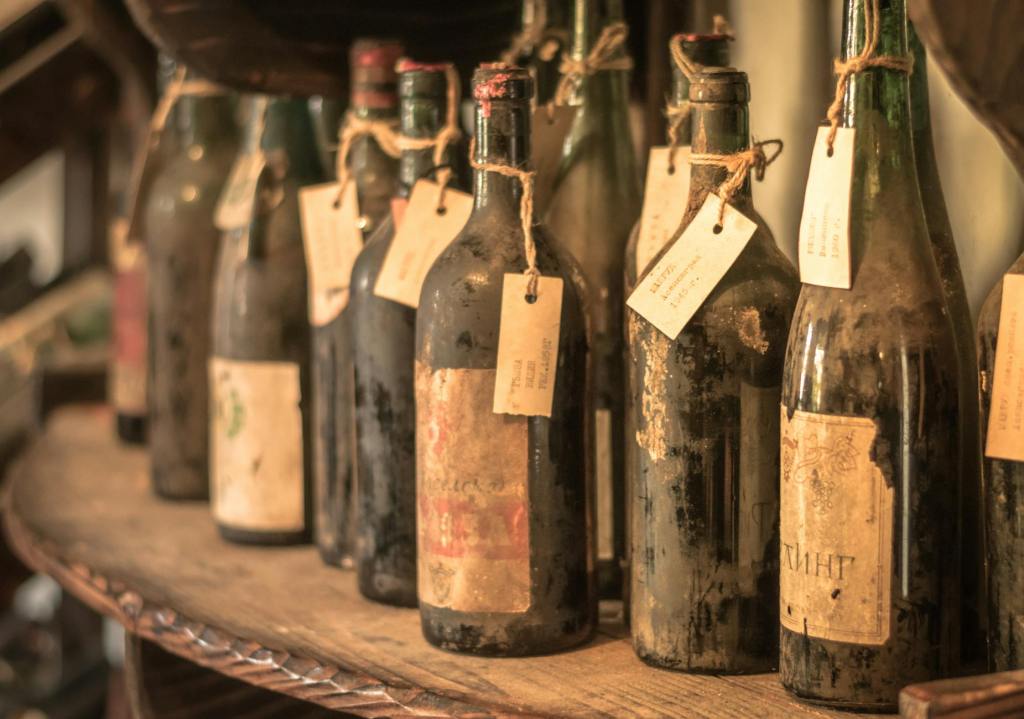
    There’s a romantic notion in the wine world that older is always better. Cellars lined with dusty bottles, handwritten tags dangling from necks, and the quiet confidence that someday—someday—each bottle will reach a transcendent peak.

    Sometimes that’s true.

    Often, it’s not.

    As serious oenophiles, we spend far less time preaching patience and far more time chasing something subtler and more rewarding: a wine’s sweet spot—that fleeting, glorious window when a wine tastes exactly as it should. Balanced. Expressive. Alive.

    Understanding when to hold and when to open is one of the most misunderstood aspects of wine enjoyment. Let’s uncork the myths, mistakes, and realities of aging wine—and have a little fun along the way.

    Photo by Ayberk Mirza on Pexels.com

    What Does “Aging Wine” Really Mean?

    Aging wine isn’t about hoarding bottles for decades just to prove restraint. It’s about chemical evolution.

    Over time, wine changes as:

    • Tannins polymerize, becoming smoother and silkier
    • Primary fruit flavors (fresh fruit) give way to secondary (oak, spice) and tertiary notes (leather, mushroom, earth, dried fruit)
    • Acidity integrates, creating harmony rather than sharpness

    But here’s the critical truth:

    Every wine has a sweet spot—open it before and it’s still forming, open it after and the magic has already passed.

    And that peak is not universal.

    Photo by cottonbro studio on Pexels.com

    The Winemaker’s Intent

    Many people assume that aging a wine is about achieving the winemaker’s intended tasting experience.

    Sometimes that intent includes aging potential.
    Sometimes it does not.

    Most wines on the market today—especially under $30—are crafted to be approachable upon release. The winemaker expects you to drink them within a few years, not babysit them through your next mortgage cycle.

    Winemakers design wines based on:

    • Grape variety
    • Structure (tannin, acid, alcohol)
    • Region and climate
    • Oak usage
    • Market expectations

    A Napa Cabernet and a Beaujolais Nouveau may both be red wines—but they are built for entirely different lifespans.

    Photo by Cup of Couple on Pexels.com

    The Sweet Spot (Our Favorite Moment)

    The sweet spot is when:

    • Fruit is still present, but not dominant
    • Tannins are resolved, not stripped
    • Acidity lifts the wine instead of biting
    • Complexity feels layered, not muddled

    Miss it on either side and you lose something.

    Too young:

    • Harsh tannins
    • Disjointed flavors
    • Oak overpowering fruit

    Too old:

    • Faded fruit
    • Flat acidity
    • Oxidation and bitterness

    The tragedy? Many wines are opened after their sweet spot—not before.

    Photo by Jana Ohajdova on Pexels.com

    The Biggest Myth We Hear Every Day: “All Wine Gets Better with Age”

    Let’s put a cork in this right now:

    The vast majority of wine does NOT improve with age.

    Estimates vary, but roughly 90% of wine produced globally is meant to be consumed within 1–3 years of release.

    That includes:

    • Most Sauvignon Blanc
    • Pinot Grigio
    • Prosecco
    • Rosé
    • Everyday Chardonnay
    • Entry-level reds

    Aging these wines doesn’t make them better.
    It makes them older.

    And old is not a tasting note.

    Photo by Hobi Photography on Pexels.com

    Wines That Do Benefit from Aging (When Stored Properly—and Thoughtfully)

    Certain wines are structurally built to evolve:

    Reds with Aging Potential

    • Cabernet Sauvignon
    • Nebbiolo (Barolo, Barbaresco)
    • Syrah/Shiraz (especially Rhône)
    • Tempranillo (Rioja, Ribera del Duero)
    • Sangiovese (Brunello di Montalcino)

    Whites That Can Age Beautifully

    • Riesling (especially German and Alsatian)
    • Chenin Blanc (Loire)
    • High-quality Chardonnay (Burgundy, select New World)
    • White Rhône blends

    Fortified & Sweet Wines

    • Vintage Port
    • Madeira
    • Sauternes
    • Tokaji

    Even then, aging is not guaranteed. Structure matters more than reputation.

    When Aging Goes Too Far

    Every wine eventually declines.

    Signs you’ve missed the sweet spot:

    • Muted aromas
    • Brownish color in whites
    • Brick-orange edges in reds (not always bad—but telling)
    • Sourness without freshness
    • Bitter or hollow finishes

    This doesn’t mean the wine is “bad.”

    It means it’s past its moment.

    Wine is alive—just like us. And just like us, it doesn’t peak forever.

    Photo by u041du0430u0442u0430u043bu044cu044f u041cu0430u0440u043au0438u043du0430 on Pexels.com

    Storage Mistakes We See All the Time (That Kill Wine Dreams)

    1. Overestimating Home Storage

    A kitchen rack is décor—not a cellar.

    Wine hates:

    • Heat
    • Light
    • Temperature swings

    That “I’ll just keep it in the closet” plan? Risky at best.

    2. Saving Wine for the Wrong Occasion

    “I’ll open this someday.”

    Someday becomes never.

    Wine is meant to be shared—not inherited.

    3. Confusing Price with Aging Ability

    An expensive wine can still be meant for early drinking.

    Structure—not price tag—determines longevity.

    4. Blind Faith in Vintage Charts

    Vintage charts are guidelines, not gospel.

    Bottle variation, storage conditions, and personal taste all matter.

    Is Finding the Sweet Spot an Exact Science? (Of Course Not.)

    Absolutely not.

    It’s a blend of:

    • Knowledge
    • Experience
    • Storage conditions
    • Personal preference
    • A little luck

    Two identical bottles stored differently can taste worlds apart.

    That uncertainty isn’t a flaw—it’s part of wine’s magic.

    Photo by Pavel Danilyuk on Pexels.com

    Drink with Curiosity, Not Fear

    We don’t chase perfection—we chase connection.

    We open wines young to understand their promise.
    We open them aged to appreciate their journey.

    And sometimes we open them simply because the moment feels right.

    The true sweet spot isn’t just in the bottle.

    It’s at the table.

    So if you’re ever wondering whether to hold or open, remember:

    Wine enjoyed slightly early is a lesson.
    Wine opened too late is a regret.

    Choose the lesson.

    Pop the cork.

    Cheers 🍷

    Cover Photo by Hunt on Photos Studio on Pexels.com

  • Sips of the Season: Christmas Songs & Wines That Share Their Soul

    Sips of the Season: Christmas Songs & Wines That Share Their Soul

    Because some memories need both lyrics and a glass.

    We’ve survived Black Friday. We’ve outsmarted Cyber Monday. The wrapping paper is still in the closet—but the spirit? The spirit has arrived.

    It’s time to dust off the classic Christmas records (or fine—open the streaming app), lower the lights, and pour something worthy of the season. Somewhere between the sip and the song… a truth emerges:

    Every classic Christmas song tastes like a different wine.
    Each holds a memory.
    Each deserves the right pour.

    So this year—don’t just listen. Pair.

    Photo by Street Donkey on Pexels.com

    🎵 “White Christmas” – Bing Crosby

    Wine Pairing: Chablis (Burgundy, France – Unoaked Chardonnay)

    The Vibe in the Glass

    Crisp. Elegant. Pure as freshly fallen snow. This wine doesn’t perform—it remembers. Like the song, it carries nostalgia with quiet grace.

    Set the Scene

    Dim lighting. A white candle. A slow sip in hand. The kind of evening where you begin to remember things you didn’t realize you forgot.

    Pair With:

    Photo by Frans van Heerden on Pexels.com

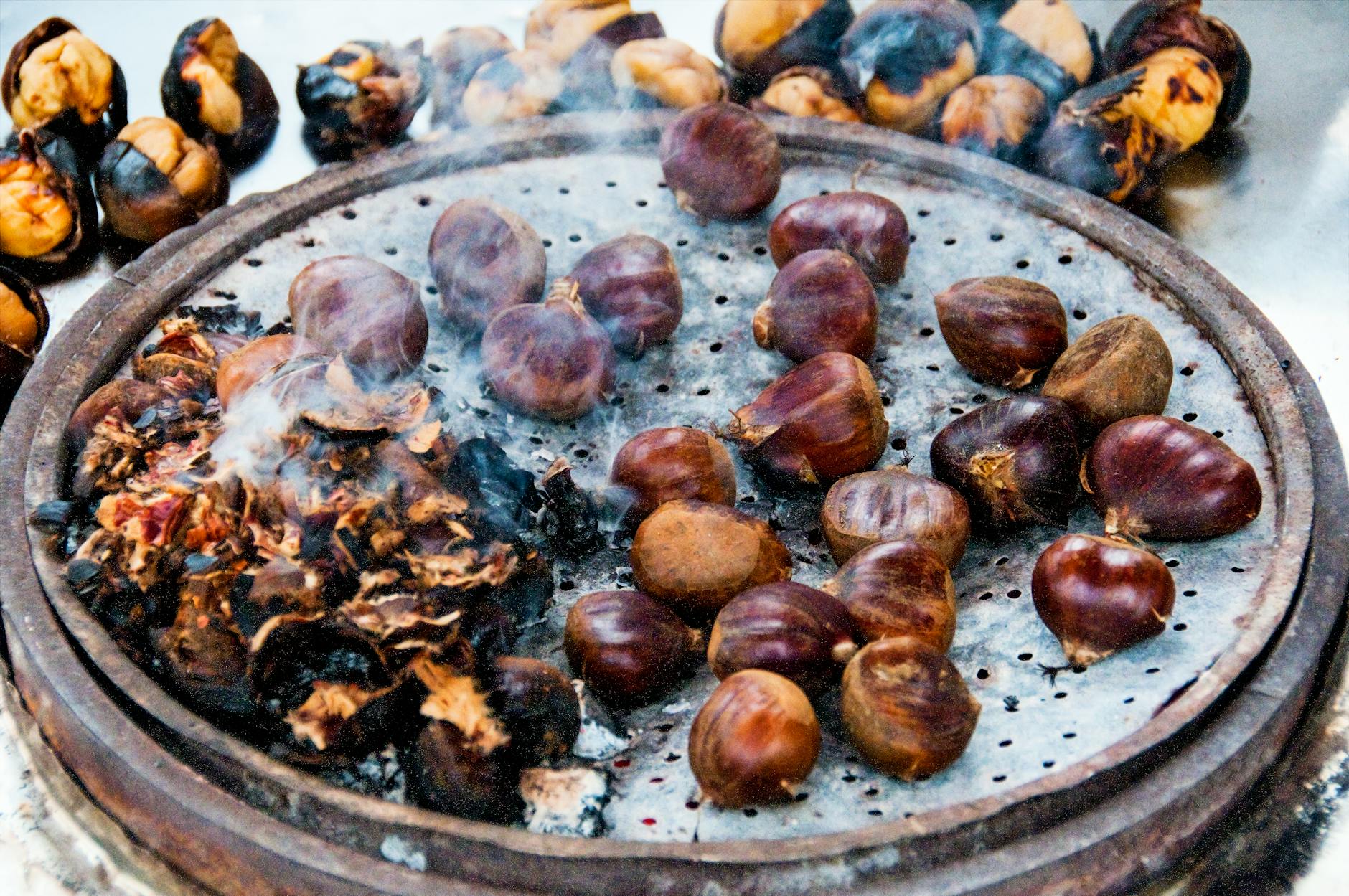
    🎵 “The Christmas Song (Chestnuts Roasting)” – Nat King Cole

    Wine Pairing: Aged Tawny Port

    The Story in the Sip

    This is the sound of slowing down. Toasted nuts, caramel warmth, soft edges—everything about this wine feels like turning the final page of a good year.

    Press Play, Close Your Eyes

    Fireplace optional. Reflection required. Let one memory find you tonight.

    Pair With:

    • Roasted chestnuts
    • Pecan pie or walnut tart
    • Blue cheese & fig jam
    • A journal and a pen 😉
    Photo by lil artsy on Pexels.com

    🎵 “All I Want for Christmas Is You” – Mariah Carey

    Wine Pairing: Prosecco Rosé (Veneto, Italy)

    This Pour Hits the Same Notes

    Fun. Flirty. Impossible to ignore. It’s the holiday anthem that arrives every year whether we ask for it or not—and secretly, we’re glad it does.

    Let the Moment Unfold

    Best with friends. Best with laughter. Volume high. Guilt low.

    Pair With:

    • Goat cheese & cranberry crostini
    • Spicy shrimp cocktail
    • Prosciutto-wrapped melon
    • The holiday playlist on shuffle 😉
    Photo by Alena Yanovich on Pexels.com

    🎵 “Silent Night” – Traditional

    Wine Pairing: German Riesling (Kabinett or Spätlese)

    Memory in a Bottle

    Soft sweetness. Reverent acidity. A hush in every sip. This wine isn’t just flavor—it’s peace, poured slowly.

    Sip Slowly Here

    Tree lights only. Maybe snowfall outside. This glass belongs to the quiet hour.

    Pair With:

    • Honey-baked ham
    • Baked brie
    • Apple tart
    • Instrumental carols (Yes, please)
    Photo by Syed Qaarif Andrabi on Pexels.com

    🎵 “Rockin’ Around the Christmas Tree” – Brenda Lee

    Wine Pairing: Beaujolais Nouveau

    Where This Wine Takes You

    Straight to the party. Bright fruit, lively acidity, and a touch of mischief—just like the song.

    Pour This When…

    The first guest arrives. The dancing begins. Or the kitchen becomes the dance floor.

    Pair With:

    Photo by Burak The Weekender on Pexels.com

    🎵 “Have Yourself a Merry Little Christmas” – Judy Garland

    Wine Pairing: Burgundy Pinot Noir

    The Story in the Sip

    Soft melancholy wrapped in warmth. Cherry, earth, and memory. A wine that listens while you speak.

    Your Christmas Slow-Motion Moment

    A blanket. A quiet room. A moment to admit this year meant something.

    Pair With:

    Photo by Karola G on Pexels.com

    🎵 “Feliz Navidad” – José Feliciano

    Wine Pairing: Albariño (Rías Baixas, Spain)

    The Vibe in the Glass

    Sunshine in December. Citrus, zest, laughter. It reminds us: not all Christmases are white—and joy comes in many languages.

    Press Play, Close Your Eyes

    Best enjoyed while cooking with people you love. Kitchen dancing encouraged.

    Pair With:

    Photo by Guilman on Pexels.com

    🎵 “O Holy Night” – Classic Choral or Celine Dion

    Wine Pairing: Vintage Blanc de Blancs Champagne

    Memory in a Bottle

    This wine awakens stillness. Fine bubbles, sacred silence, and a swell of emotion. A spiritual pour for a spiritual song.

    Set the Scene

    Stand. Face the tree. Let the final note linger.

    Pair With:

    Photo by Anna Shvets on Pexels.com

    🎵 “Jingle Bell Rock” – Bobby Helms

    Wine Pairing: California Zinfandel

    This Pour Hits the Same Notes

    Bold. Spicy. A little wild. This wine walks into the kitchen like it owns the place—and we love it for that.

    Let the Moment Unfold

    Turn the lights up. Turn the music louder. Cook with flair.

    Pair With:

    • BBQ wings
    • Black pepper steak
    • Bold cheddar
    • Cinnamon-spiced anything (Woo hoo)

    To the songs we grew up with,
    to the wines that help us remember,
    and to the quiet moments in between—
    cheers to Christmas in every sip. 🎄🍷

    Gregory Dean, SOMM&SOMM
    Photo by cottonbro studio on Pexels.com

    The Encore

    One final pairing—
    No lyrics.
    No melody.
    Just the sound of the season…
    and the last sip in your glass.

    That’s when the season really begins. Cheers 🍷

    If You Enjoyed This Pairing of Music & Wine…

    Pour another glass and explore how the senses connect across other art forms. These featured articles invite you to listen, read, and see wine in new ways:

    • Sipping the Notes — a jazz-inspired journey where saxophones, bass lines, and swing rhythms find their match in the glass.
    • An Intricate Dance Between Poetry & Wine — a lyrical exploration of how verses and varietals intertwine, revealing emotion through structure.
    • The Artistry of Wine — paint strokes, palettes, and regional expressions come together—an ode to the canvas found within a vineyard.

    Each article honors the same belief:
    Wine doesn’t just pair with food.
    It pairs with moments, movements, music, and meaning.

    Let your senses wander. Something memorable might be waiting in the next glass. 🍷🎷📜🖼️

    Cover Photo by Jill Wellington on Pexels.com

  • Part III: The Feast

    Part III: The Feast

    A Thanksgiving Table Worth Toasting.

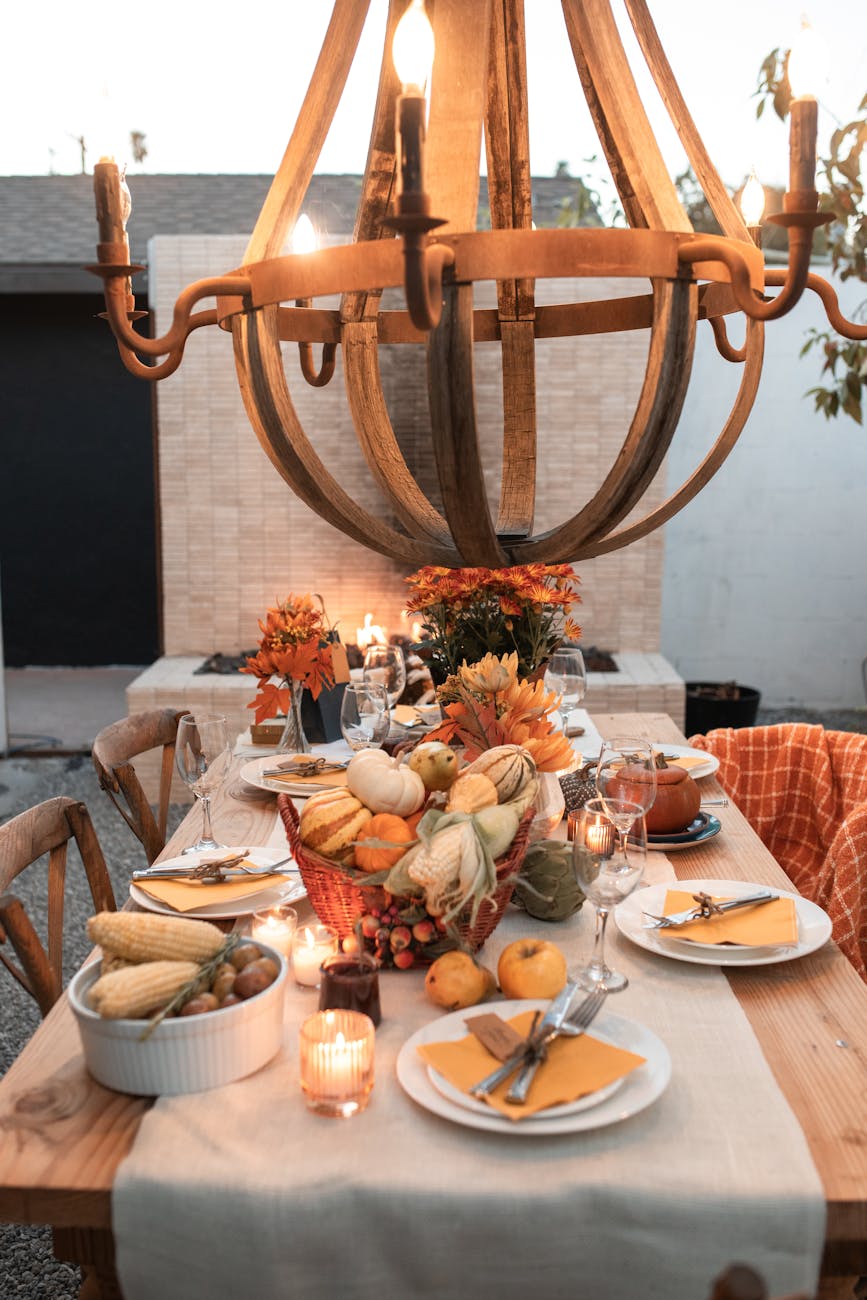
    Thanksgiving isn’t a performance — it’s a gathering. A coming together of stories, laughter, imperfections, and flavors that somehow always seem to fit. It’s the moment the whole season has been building toward, the quiet gratitude of the early November days giving way to the joyful noise of family and friends.

    And if you’ve savored the prelude — the week of reflection, cooking, and slow anticipation — you already know that Thanksgiving isn’t about rushing. It’s about tasting every note of the day, just as you would a well-crafted wine.

    Photo by RDNE Stock project on Pexels.com

    The Spirit of the Feast

    At its heart, Thanksgiving is an act of gratitude — a tradition born from the idea of sharing abundance and giving thanks for another year’s harvest. Before grocery stores and gadgets, before recipes were measured in cups and teaspoons, it was simply a meal shared between people who depended on one another.

    In that sense, the Thanksgiving table isn’t just a feast — it’s a reminder that community and generosity are timeless. Every dish tells a story. Every bottle uncorked is an offering. Every toast is a small, shimmering act of appreciation.

    Photo by RDNE Stock project on Pexels.com

    The Wines of the Table

    Thanksgiving is famously one of the most wine-friendly meals of the year, but it’s also one of the most challenging. Sweet meets savory, spice meets butter, and no two plates look the same. The secret isn’t to find one perfect pairing — it’s to fill the table with wines that invite conversation and complement the diversity of flavors on every fork.

    Here’s how to think about the day, course by course.

    The Welcome Toast — Light and Lively

    The first pour sets the tone. Keep it bright, crisp, and full of energy — a gentle awakening for the palate and a nod to celebration itself.

    SOMM&SOMM Recommends:

    Pair with: Light bites — spiced nuts, baked brie, stuffed mushrooms, or shrimp cocktail.
    Sommelier’s notes: The bubbles cut through salt and richness, preparing the palate for the meal ahead while lifting spirits from the very first sip.

    The Starters — Texture and Warmth

    As the first plates appear — roasted squash soup, cranberry salads, caramelized root vegetables — it’s time for wines that echo autumn itself.

    SOMM&SOMM Recommends:

    • Riesling (off-dry from Mosel or Finger Lakes)
    • Chenin Blanc from Vouvray or South Africa

    Pair with: Sweet-savory starters like glazed carrots, roasted apples, or savory tarts.
    Sommelier’s notes: A touch of sweetness complements early-course flavors and balances any spice or tartness.

    The Main Event — Harmony Over Dominance

    Turkey is the canvas; the sides are the art. Between gravy, herbs, and stuffing, you’ll want wines that harmonize rather than compete.

    SOMM&SOMM Recommends:

    • Pinot Noir (Oregon, Burgundy, or Santa Barbara)
    • Grenache or GSM blends from the Rhône or Paso Robles
    • Chardonnay (unoaked for brightness, lightly oaked for comfort)

    Pair with: Turkey, stuffing, mashed potatoes, and all the trimmings.
    Sommelier’s notes: Pinot Noir’s bright acidity and soft tannins play well with almost every dish. Chardonnay, when balanced, provides the creamy bridge between rich and delicate flavors.

    The Unexpected Pairings — For the Adventurous

    Thanksgiving is also the perfect excuse to open something surprising.

    SOMM&SOMM Recommendations:

    • Dry Rosé from Provence or Bandol
    • Lambrusco (dry or off-dry)
    • Zinfandel from Lodi or Dry Creek Valley

    Pair with: Hearty sides, smoked meats, or sweet-savory stuffing.
    Sommelier’s notes: Rosé bridges red and white worlds beautifully. Lambrusco’s bubbles and berry notes bring fun to the table, while Zinfandel amplifies the warmth of holiday spices.

    Photo by Pixabay on Pexels.com

    The Sweet Finish — Grace in the Glass

    Dessert deserves its own quiet moment — the table calm, candles low, and the laughter softer now.

    SOMM&SOMM Recommends:

    Pair with: Pumpkin pie, pecan tart, apple crisp, or cheese boards with dried fruit.
    Sommelier’s notes: These wines mirror the season’s sweetness, adding depth to desserts without overwhelming them.

    Tammy’s Pumpkin Pie

    PASTRY FOR SINGLE-CRUST PIE

    • 1 ¼ cups All-Purpose Flour
    • ¼ tsp Salt
    • ½ cup (1 stick) Cold Unsalted Butter, cut into ½ inch pieces
    • 3 to 4 tablespoons Cold Water, as needed

    Combine flour, salt and butter in bowl.  Rub butter into flour mixture to resemble cornmeal. Add 3 tablespoons cold water and stir using fork or electric mixer, adding more water as needed, until dough is just hydrated and comes together. Shape the dough into a ball and flatten slightly. Wrap in wax paper and chill for 30 minutes. Roll dough into a circle about 1/8 inch thick. Lightly grease the pan. Place the rolled dough in the pan and crimp the edges. No need to pre-bake this crust.

    FILLING

    • 2 cups Mashed Cooked Pumpkin
    • 1 12 oz can Evaporated Milk
    • 2 Eggs
    • ¾ cup Packed Brown Sugar
    • ½ tsp Ground Cinnamon
    • ½ tsp Fresh Grated Nutmeg
    • ½ tsp Ground Ginger
    • ½ tsp Salt

    Preheat oven to 400 degrees

    Separate eggs and beat whites until soft peaks form.

    Beat the pumpkin, egg yolks, evaporated milk, eggs, brown sugar, and spices with an electric mixer until well blended. Fold in the beaten egg whites. Pour into the pie crust and bake for 40 minutes or until knife inserted comes out clean.

    Wine Beyond the Glass

    As the plates empty and the conversation lingers, you start to realize: Thanksgiving isn’t really about the food or the wine. It’s about the shared space between them — the way stories unfold between sips, how laughter softens over dessert, and how gratitude seems to fill every empty glass.

    Wine simply becomes the language of connection — a way to express joy, generosity, and the beauty of being together.

    Thanksgiving isn’t about getting to what’s next — it’s about honoring what’s now.

    Gregory Dean, SOMM&SOMM

    A Toast to What Matters

    In a world that moves too fast, Thanksgiving reminds us to slow down. It’s not the opening act of Christmas or the final note of fall. It’s its own moment — rich, deliberate, and full of heart.

    So pour the good bottle. Use the nice glasses. Light the candles and let the meal stretch long into the evening. Because Thanksgiving isn’t about getting to what’s next — it’s about honoring what’s now.

    Here’s to the people who fill your table, the stories that flavor your meal, and the wines that remind you why gratitude is best served slow.

    SOMM&SOMM Thanksgiving Series

    Photo by Craig Adderley on Pexels.com

    A Closing Note from SOMM&SOMM

    As we raise our glasses this Thanksgiving, it’s worth remembering that not every chair at the table will be filled. Some seats will stay empty — for loved ones who’ve passed, for those too far away, or for relationships still finding their way back to warmth.

    It’s in those quiet spaces — the pauses between laughter, the flicker of a candle beside an untouched plate — that Thanksgiving reveals its deeper meaning. Gratitude isn’t about perfection. It’s about presence. It’s about honoring both the joy and the ache, the abundance and the absence, and still finding reason to give thanks.

    Perhaps that’s why this holiday can feel overlooked or even avoided. It asks us to slow down, to feel, to remember. It doesn’t glitter like Christmas or thrill like Halloween — it simply invites us to be human. To gather, to share, to forgive, and to savor the fleeting beauty of now.

    So wherever you find yourself this season — whether surrounded by a crowd or holding close to a single memory — may your glass be full, your heart be open, and your gratitude unhurried.

    – With love and thanks,
    Greg & Tammy Dean, SOMM&SOMM

    Cover Photo by Monstera Production on Pexels.com

  • The World of Sake

    The World of Sake

    History, Styles, and Pairings Beyond Rice.

    Sake is one of those beverages that sparks curiosity the moment it’s poured. Often described as “rice wine,” it sits in a category all its own—neither wine, beer, nor spirit, but a unique fermented drink with an ancient heritage. For sommeliers, wine educators, and enthusiasts alike, sake offers an opportunity to explore tradition, craftsmanship, and unexpected food pairings.

    The Origins of Sake

    The story of sake begins over 2,000 years ago in Japan. Early rice cultivation techniques—likely borrowed from China—allowed rice to be grown in abundance, and fermentation soon followed.

    The earliest forms of sake were very different from what we know today. One of the oldest methods was kuchikami-no-sake, literally “mouth-chewed sake,” in which villagers chewed rice and nuts, then spit the mash into communal vessels. The enzymes in saliva helped convert starches into sugars, and natural yeast performed the fermentation. (Thankfully, brewing techniques evolved.)

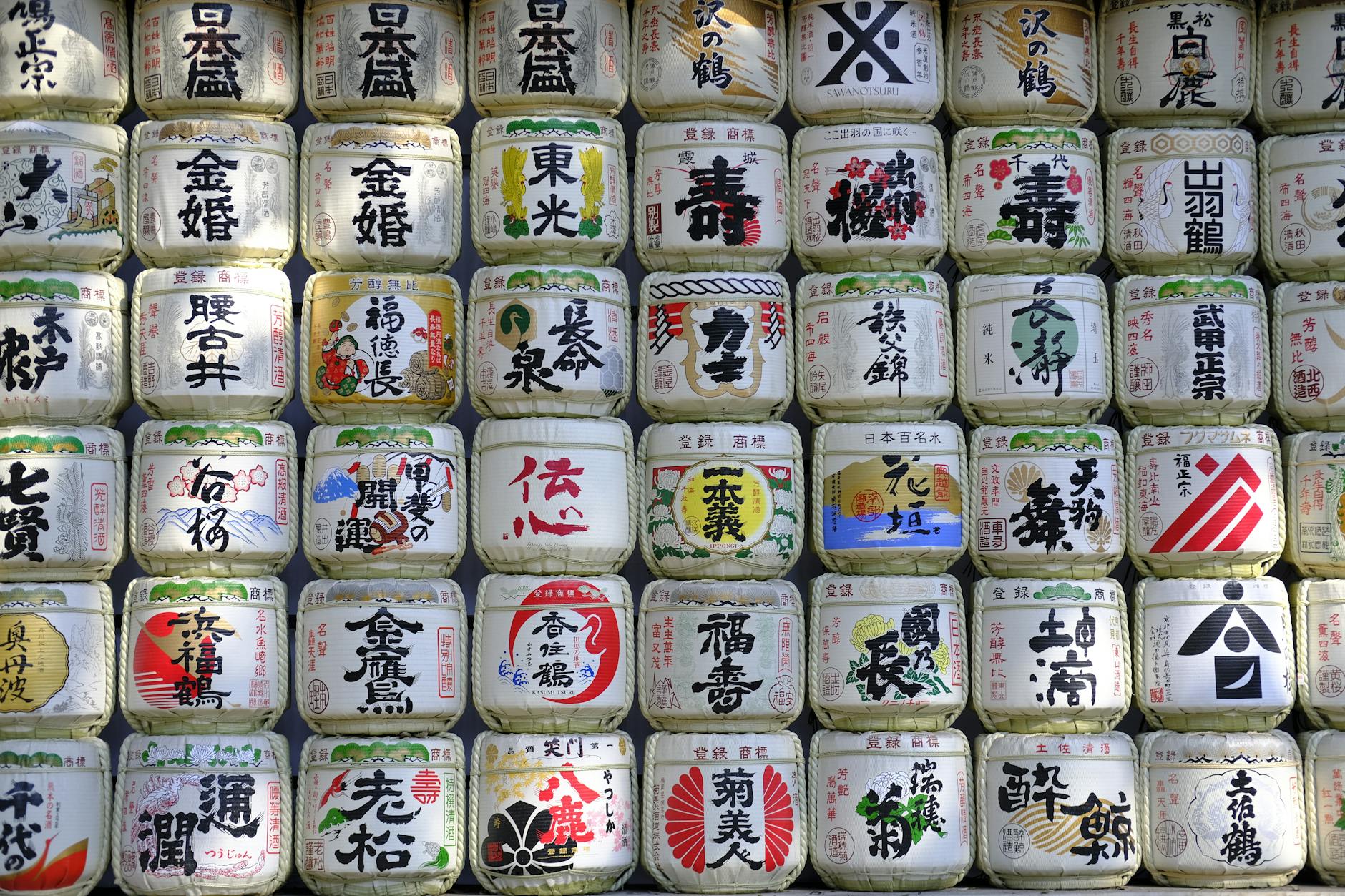
    By the 8th century, sake had become a central part of Shinto rituals and court ceremonies. Shrines brewed sake as offerings to the gods, and it became a symbol of purity and community. In fact, even today, sake is still deeply tied to spiritual traditions—shared at weddings, festivals, and new year celebrations as a blessing for harmony and prosperity.

    The artistry lies in the brewer’s choices: how much rice to polish, what yeast strain to use, whether to pasteurize, and how to balance purity with umami.

    Photo by Mike Gonzu00e1lez on Pexels.com

    The Art of Brewing Sake

    Though often called a rice wine, sake production is actually closer to brewing beer, since starch must be converted into sugar before fermentation. The process is meticulous, and every step influences the final flavor:

    1. Rice polishing (Seimai-buai) – Special sake rice (shuzō-kōtekimai) is milled to remove outer layers of protein and fat, leaving a starchy core. The more the rice is polished, the cleaner and more delicate the flavor.
      • Example: Ginjo and Daiginjo styles require at least 40–50% of the rice to be milled away.
    2. Washing, soaking, steaming – The polished rice is carefully hydrated and steamed, ensuring the right texture for fermentation.
    3. Koji-making – The soul of sake. A portion of rice is inoculated with Aspergillus oryzae mold, which produces enzymes to break starch into sugar. This process is done in a hot, humid room, with brewers tending the rice around the clock.

    Beyond Sake: Aspergillus oryzae and the Magic of Soy Sauce

    The same humble mold that transforms rice into the foundation for sake—Aspergillus oryzae—also plays a starring role in one of Japan’s most iconic seasonings: soy sauce. In soy sauce production, A. oryzae is cultivated on a mixture of steamed soybeans and roasted wheat, creating what’s known as koji. The enzymes produced by the mold break down proteins into amino acids and starches into simple sugars.

    This enzymatic alchemy is what gives soy sauce its deep savory quality, rich umami, and characteristic complexity. After koji preparation, the mixture ferments slowly in brine for months or even years, developing the layered flavors that make soy sauce a cornerstone of Japanese cuisine—and an indispensable partner to sake at the dinner table.

    Just as with sake, the artistry lies in balancing time, fermentation, and microbial activity to coax out flavors both bold and nuanced. The presence of A. oryzae in both beverages and condiments highlights Japan’s centuries-long mastery of fermentation as a way of elevating simple grains and beans into cultural treasures.

    1. Shubo (starter culture) – Koji rice, water, yeast, and more steamed rice form the fermentation starter, which builds yeast strength and flavor precursors.
    2. Moromi (main mash) – Over four days, rice, water, and koji are added in stages. This results in a simultaneous saccharification and fermentation—unique to sake.
    3. Pressing, filtering, pasteurization, aging – Once fermentation is complete, sake is pressed to separate the liquid, filtered, pasteurized, and aged (typically for 6–12 months).
    Photo by Tianwang Xiao on Pexels.com

    Types of Sake

    The classification of sake often comes down to rice polishing and whether alcohol is added. Here are the key categories:

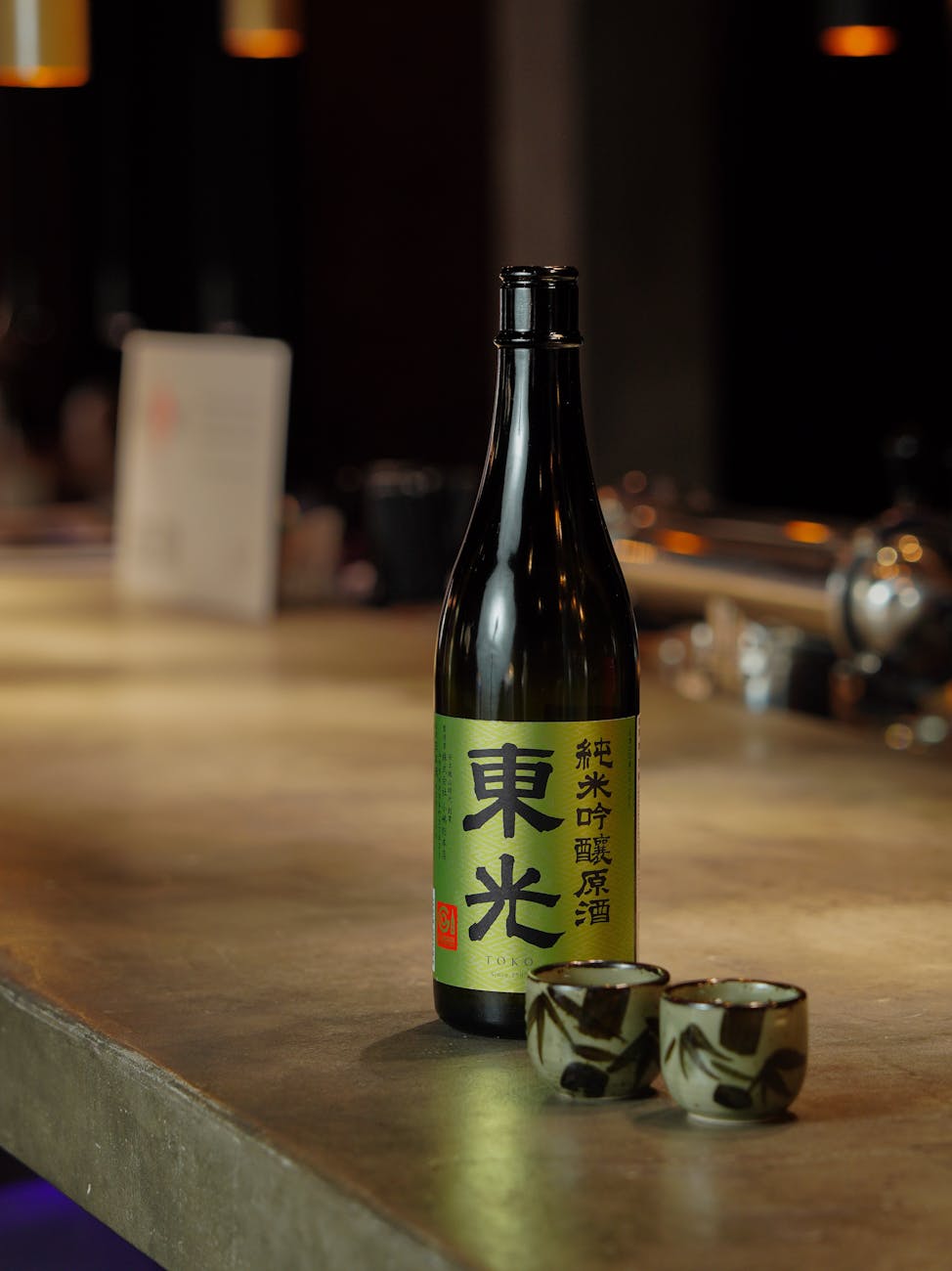
    • Junmai – Pure rice sake (no distilled alcohol added). Bold, savory, often higher in umami.
    • Honjozo – A touch of distilled alcohol is added to enhance aroma and texture. Lighter and more fragrant.
    • Ginjo – Rice polished to at least 60%. Aromatic, elegant, fruit-driven.
    • Daiginjo – Rice polished to at least 50%. Luxurious, delicate, highly aromatic.
    • Tokubetsu (“special”) – Indicates a special brewing technique or higher-than-required polishing.
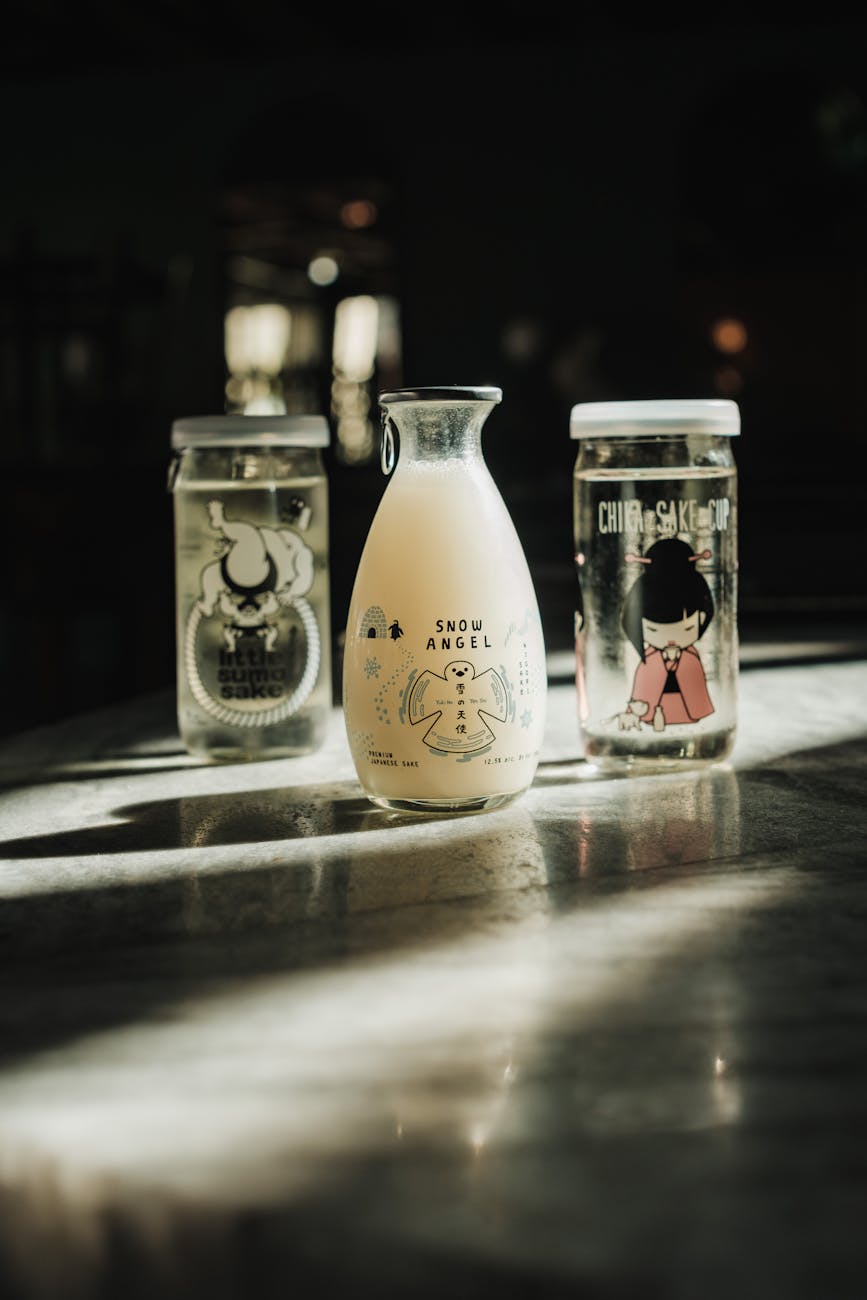
    • Nigori – Cloudy, unfiltered sake with a creamy texture and hint of sweetness.
    • Namazake – Unpasteurized sake. Fresh, lively, must be kept refrigerated.
    • Koshu – Aged sake. Amber-hued with oxidative notes like sherry or Madeira.
    • Sparkling sake – Carbonated, refreshing, often slightly sweet.
    Photo by Nadin Sh on Pexels.com

    Terminology on a Bottle

    When choosing sake, a few key terms help decode what’s inside:

    • Seimai-buai – Rice polishing ratio (% of rice remaining after milling).
    • Nihonshu-do – Sake meter value (SMV). Indicates sweetness or dryness: negative = sweeter, positive = drier.
    • Acidity (San-do) – Higher acidity makes sake crisp and food-friendly.
    • Nama – Unpasteurized. Must be chilled.
    • Genshu – Undiluted. Higher alcohol, often rich and bold.

    Temperature and Glassware

    One of the joys of sake is its versatility in temperature:

    • Chilled (5–10°C / 40–50°F) – Best for delicate, aromatic styles (Ginjo, Daiginjo, Namazake).
    • Room temperature – Junmai and Honjozo shine here, showing full flavor and umami.
    • Warm (40–55°C / 104–131°F) – Brings comfort and amplifies savory notes in robust Junmai or Honjozo. Avoid heating aromatic Ginjo/Daiginjo—heat will mute their elegance.
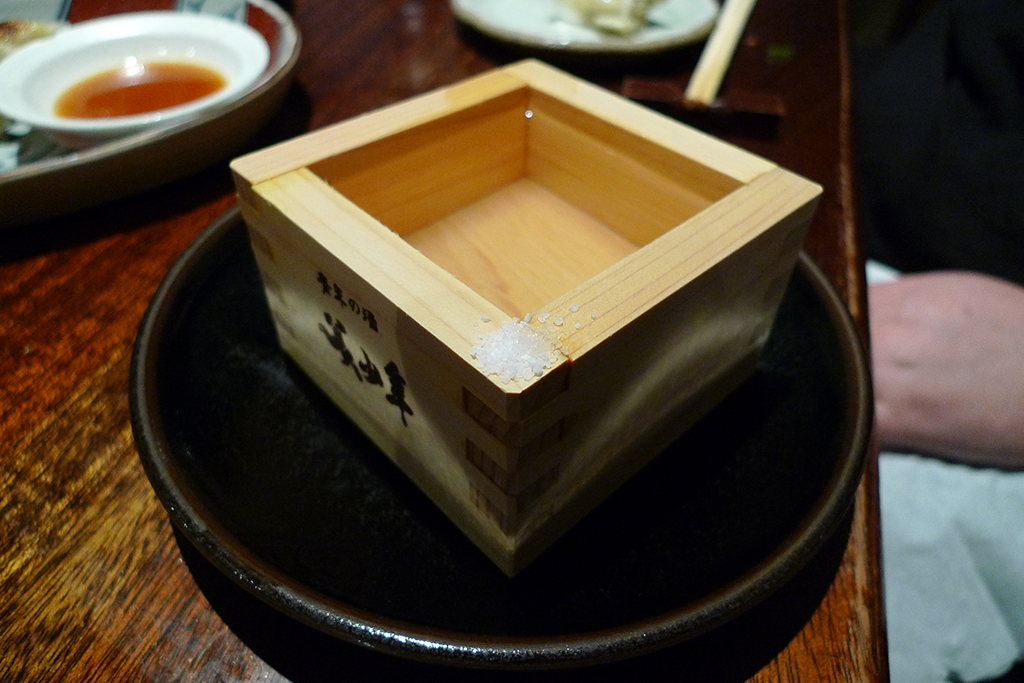
    Masu box – Ewan Munro from London, UK, CC BY-SA 2.0, via Wikimedia Commons

    Glassware also plays a role:

    • Traditional: small ceramic ochoko cups or wooden masu boxes.
    • Modern: wine glasses, which allow aromatic styles to blossom. Sommeliers often recommend using white wine glasses for premium Ginjo/Daiginjo.

    Classic Pairings

    Sake is famously versatile with food—its low acidity and umami-friendly profile make it shine where wine can struggle.

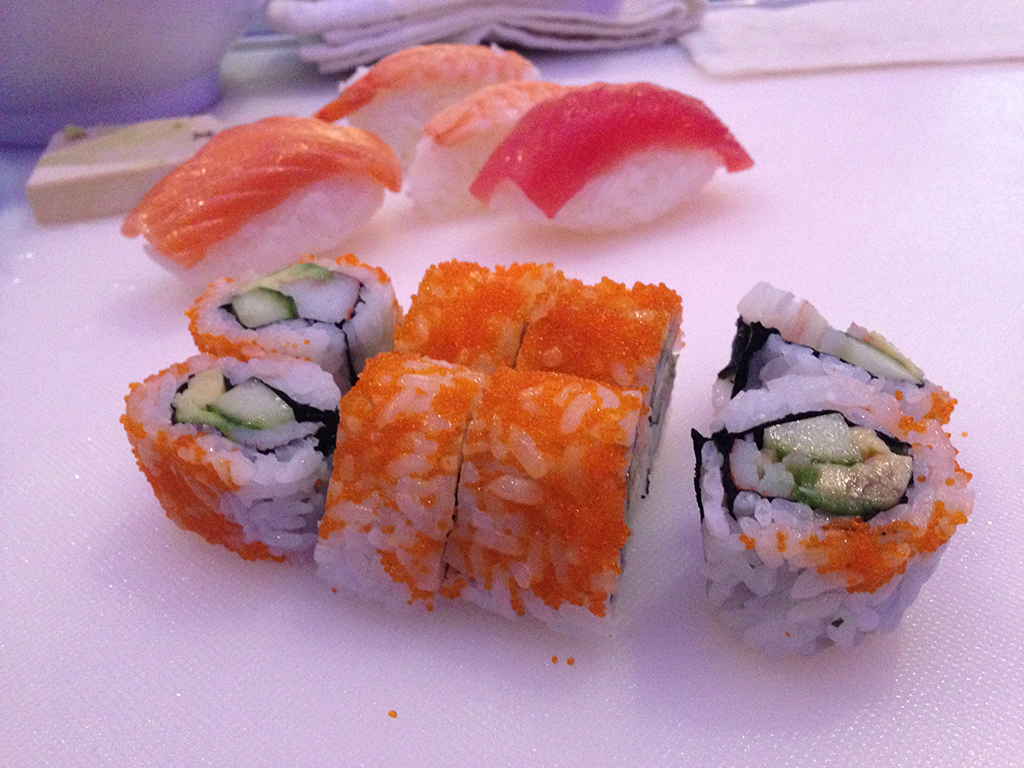
    • Sushi and sashimi (classic)
    • Tempura (light, crisp styles)
    • Grilled yakitori (umami-rich Junmai)
    • Hot pot dishes (nabe)

    Surprise Pairings

    Sake doesn’t stop at Japanese cuisine. With its balance of umami, sweetness, and subtle acidity, it pairs beautifully with international dishes:

    • Cheese – Creamy Brie with Daiginjo, blue cheese with aged Koshu.
    • Steak – Rich Junmai or Genshu cuts through the fat as well as Cabernet.
    • Spicy Thai or Indian – Nigori or lightly sweet sake balances heat.
    • BBQ – Smoky grilled pork or brisket with Honjozo or Koshu.
    • Chocolate desserts – Nigori sake works as a sweet complement.
    Original and flavored Soju – Photo by Nguyu1ec5n Mu1eabn on Pexels.com

    Soju vs. Sake: What’s the Difference?

    It’s easy to confuse sake with soju, but they’re distinct:

    • Sake – Japanese, brewed, 12–16% ABV, made from rice and water, enjoyed like wine.
    • Soju – Korean, distilled, 16–25% ABV (sometimes higher), traditionally made from rice, sweet potato, or barley. Similar to vodka but softer and often lightly sweet.

    Think of sake as closer to wine/beer, and soju as a spirit. Both, however, share cultural importance and are designed for communal enjoyment.

    Photo by Josu00e9 luis Rivera correa on Pexels.com

    Final Pour

    Sake is more than an exotic curiosity—it’s a reflection of Japan’s culture, history, and artistry. From the precision of rice polishing to the warmth of shared rituals, sake continues to evolve while staying deeply rooted in tradition.

    For sommeliers and enthusiasts alike, sake is an essential part of the conversation when guiding guests through beverage choices. Whether served chilled in a wine glass with sushi, warmed in an ochoko with grilled meats, or poured alongside cheese and chocolate, sake has earned its place on the global table.

    Kanpai! 🍶

    Worth Mentioning: Sake in the Sommelier’s Journey

    One of the distinctions in wine education is how different organizations approach beverages beyond wine. The Court of Master Sommeliers (CMS) places strong emphasis on a broad understanding of not only wine, but also beer, spirits, and sake. This reflects the reality of the dining room, where guests often seek diverse options. By contrast, programs such as the WSET or Society of Wine Educators remain more wine-centric, with limited exploration of sake.

    We were fortunate to dive deep into the world of sake during our CMS studies—learning not just its history and classifications, but how to serve, pair, and present it with confidence. That education continues to enrich our work today, allowing us to share sake’s beauty and versatility with guests who might otherwise overlook this extraordinary beverage.

    Cover photo by Airam Dato-on on Pexels.com

  • How One Hotel Restaurant Made Our 44th Anniversary Unforgettable

    How One Hotel Restaurant Made Our 44th Anniversary Unforgettable

    Tammy and I travel for food and drink the way others chase sunsets — with an agenda, a notebook, and an appetite for the unexpected. On a three-day jaunt to St. Augustine to celebrate our 44th wedding anniversary we found plenty to love, but one evening at Castillo Craft Bar + Kitchen quietly rearranged the star chart: this was not simply a nice hotel meal. It was a masterclass in what service, craft cocktails, and properly thought-out cooking can do when they cooperate.

    The Prosecco Welcome — and a Thoughtful Surprise

    Earlier that afternoon, we discovered a chilled bottle of Prosecco waiting in our room’s refrigerator — a quiet gesture from the team that set the tone before we even stepped into the restaurant. When we did arrive (an hour ahead of our reservation), we were greeted with a fresh glass of Prosecco, introduced to the staff, and seated by the window.

    Then came the moment that sealed Castillo’s reputation in our minds: shortly after we were seated, a lively family of 13 or 14 adults and children was placed nearby. The children, understandably, vied for attention while the adults settled into animated conversation. Within minutes, the restaurant manager, Daniel, intervened with effortless class. He moved us to a private dining room with a single table for twelve — effectively giving us the most private, romantic setting in the house. It was an astute and gracious move, and one we will never forget.

    Cocktails with Gravitas

    We decided to begin with classics: Tammy ordered an Aviation, I a Paper Plane. Both were mixed with respect for tradition. The Aviation balanced lemon’s tart brightness with the nutty-cherry note of maraschino and a whisper of crème de violette — floral but never perfumey. The Paper Plane, a test of proportion, was taut and bittersweet, bourbon’s warmth underpinning Aperol’s orange bitterness and amaro’s herbal pull. Two classics rendered with conviction.

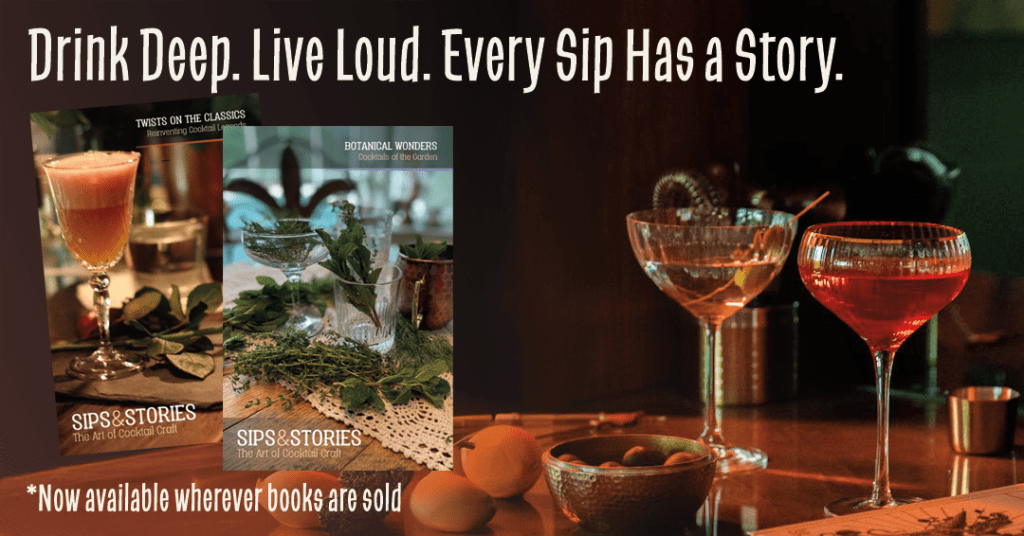
    Quick Sidebar… you know we love craft cocktails! Our books are now available on Amazon

    Amazon: SIPS & STORIES: Twists on the Classics

    Amazon: SIPS & STORIES: Botanical Wonders

    Starters with Intention

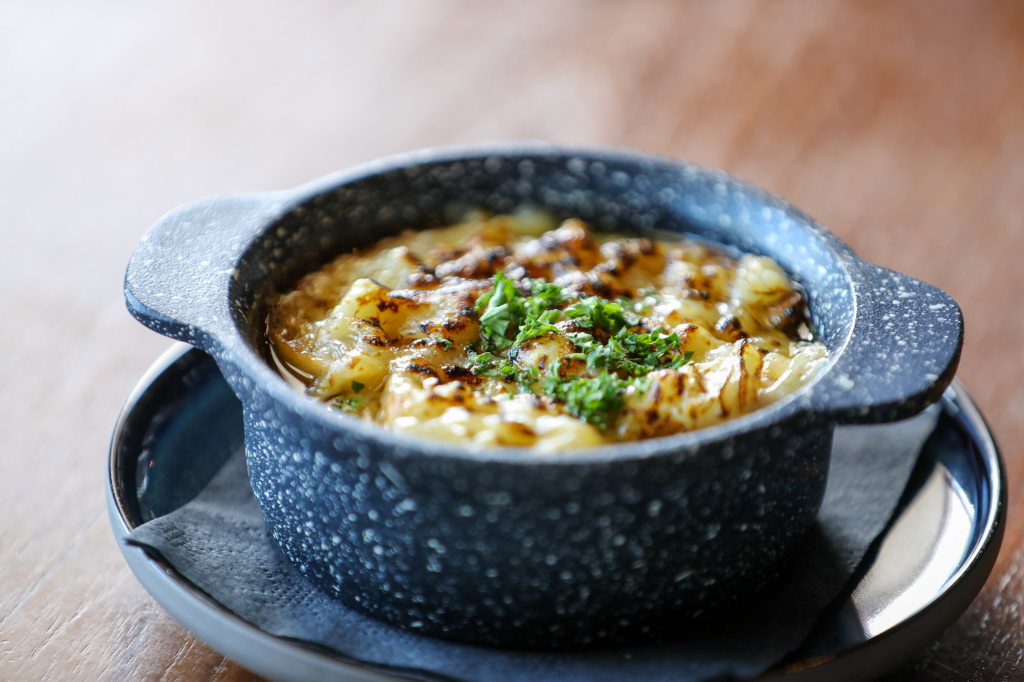
    • Spanish Onion Soup (Castillo’s twist): Dry sherry lifted the base of caramelized onions, Manchego added a salty sheep’s-milk edge, and Gruyère brought nutty depth. The bread held texture rather than sinking into soggy oblivion. Purposeful, not gimmicky.
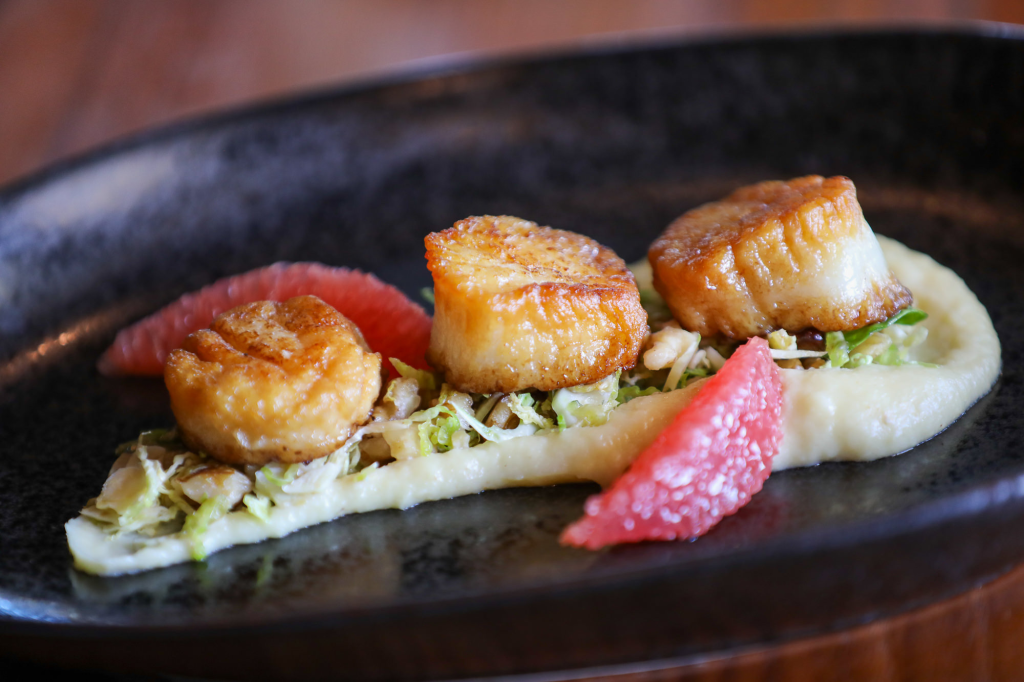
    • Pan-Seared Scallops: Golden exterior, luminous center — textbook scallops. Grapefruit and Brussels slaw delivered acid and bitterness; toasted walnuts brought texture and a subtle caramelized edge; parsnip purée offered a sweet earthiness. A dish of balance and contrast.

    The Mains — Precision and Poise

    We ordered separately and shared:

    • Dry-Aged Duck Breast — with confit, potato purée, seared tomato and mushrooms, and a cherry-coffee demi-glace. The duck was properly seared and the fat rendered cleanly. The demi-glace married classic cherry with a clever roasted coffee bitterness that harmonized with the mushrooms. A modern, inventive take that never felt like a stunt.
    • 6-oz Filet Mignon — with potato purée, root vegetables, charred mushrooms, and a blackberry-port demi. Filet is mild by nature; the demi provided fruit depth without over-reduction. Charred mushrooms contributed savory grounding.

    The Wine Choice

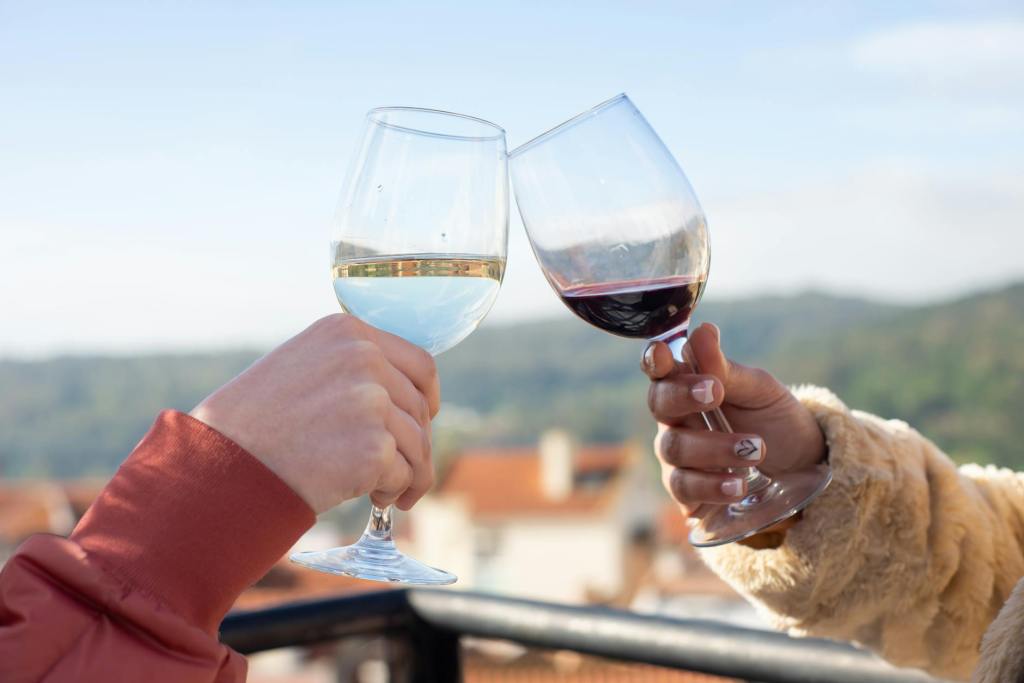
    We chose a Burgundy Pinot Noir. Its red cherry and earthy underbrush notes paired seamlessly with the duck’s cherry-coffee sauce, while its acidity and gentle tannins refreshed each bite of filet and demi. A Cabernet would have bullied the plates; Pinot offered conversation instead of domination.

    Sweet Farewell and Spirited Encore

    Dessert arrived in the form of raspberry-filled chocolate truffles — tartness wrapped in richness, a refined way to close. But the evening wasn’t over. Daniel and his team drew us into conversation about mixology, inviting us to sample cocktails destined for the next menu. To be trusted with in-progress creations, to taste and talk shop with equal enthusiasm, was the rarest gift of all: inclusion.

    A Recommendation from a Picky Pair

    Castillo Craft Bar + Kitchen may technically be a hotel restaurant, but that label undersells it. Here, cocktails are crafted with reverence, dishes are built on contrasts and precision, and service is the invisible framework that allows it all to shine. The thoughtful surprise of Prosecco, Angelica’s professional warmth, Daniel’s extraordinary attentiveness in relocating us to a private space, and the invitation to taste what’s to come all combined to turn our 44th anniversary into a celebration of craft and care.

    For those who care about detail, timing, and the artistry behind both food and drink, Castillo Craft Bar + Kitchen is not just a place to dine — it’s a destination to remember. Cheers 🥂

    Note on images: We were so engaged with the staff and enamored by the experience that we didn’t stop to take photos during our anniversary dinner. Fortunately, the images featured throughout this article are sourced from Castillo Craft Bar + Kitchen’s website, which offers up-to-date visuals that accurately reflect the atmosphere, cuisine, and presentation we enjoyed.

  • Portugal Uncorked

    Portugal Uncorked

    Exploring the Heart and Soul of Portuguese Wines.

    When people hear “Portugal,” their minds often jump to Port—those rich, fortified wines enjoyed by candlelight or at the end of a decadent meal. But to focus solely on Port is to miss the vast and vibrant wine world that Portugal offers. From crisp whites kissed by the Atlantic breeze to sultry reds born from sun-drenched valleys, Portugal is one of Europe’s most exciting, diverse, and underrated wine-producing countries.

    A Glimpse Into Portugal’s Wine Legacy

    Portugal’s winemaking history stretches back over 4,000 years. The Phoenicians, Romans, Moors, and even the Knights Templar played a part in shaping the country’s viticultural heritage. Unlike many European countries that focus heavily on international varietals, Portugal leans proudly into its indigenous grapes—with over 250 native varieties cultivated across a tapestry of microclimates and terroirs.

    The result? Wines that are authentically Portuguese—flavorful, food-friendly, and full of character.

    Key Portuguese Wine Regions & Their Distinctive Wines

    Photo by Olga Shenderova on Pexels.com

    Vinho Verde (Minho) – Crisp, Zesty, Youthful Whites

    Located in the lush, green northwest, Vinho Verde literally means “green wine,” but the name refers to the wine’s youthfulness rather than its color.

    • Signature Grapes: Alvarinho (Albariño in Spain), Loureiro, Arinto
    • Style: Light-bodied, often slightly effervescent with high acidity
    • Tasting Notes: Lime, green apple, melon, fresh herbs
    • Perfect Pairing: Grilled sardines, shrimp ceviche, Vietnamese spring rolls

    Recipe Pairing: Portuguese Shrimp Rice (Arroz de Marisco)
    A tomato-based seafood rice dish brimming with clams, mussels, and prawns. Vinho Verde cuts through the richness with zippy freshness.

    Douro Valley – Rugged Reds & Legendary Ports

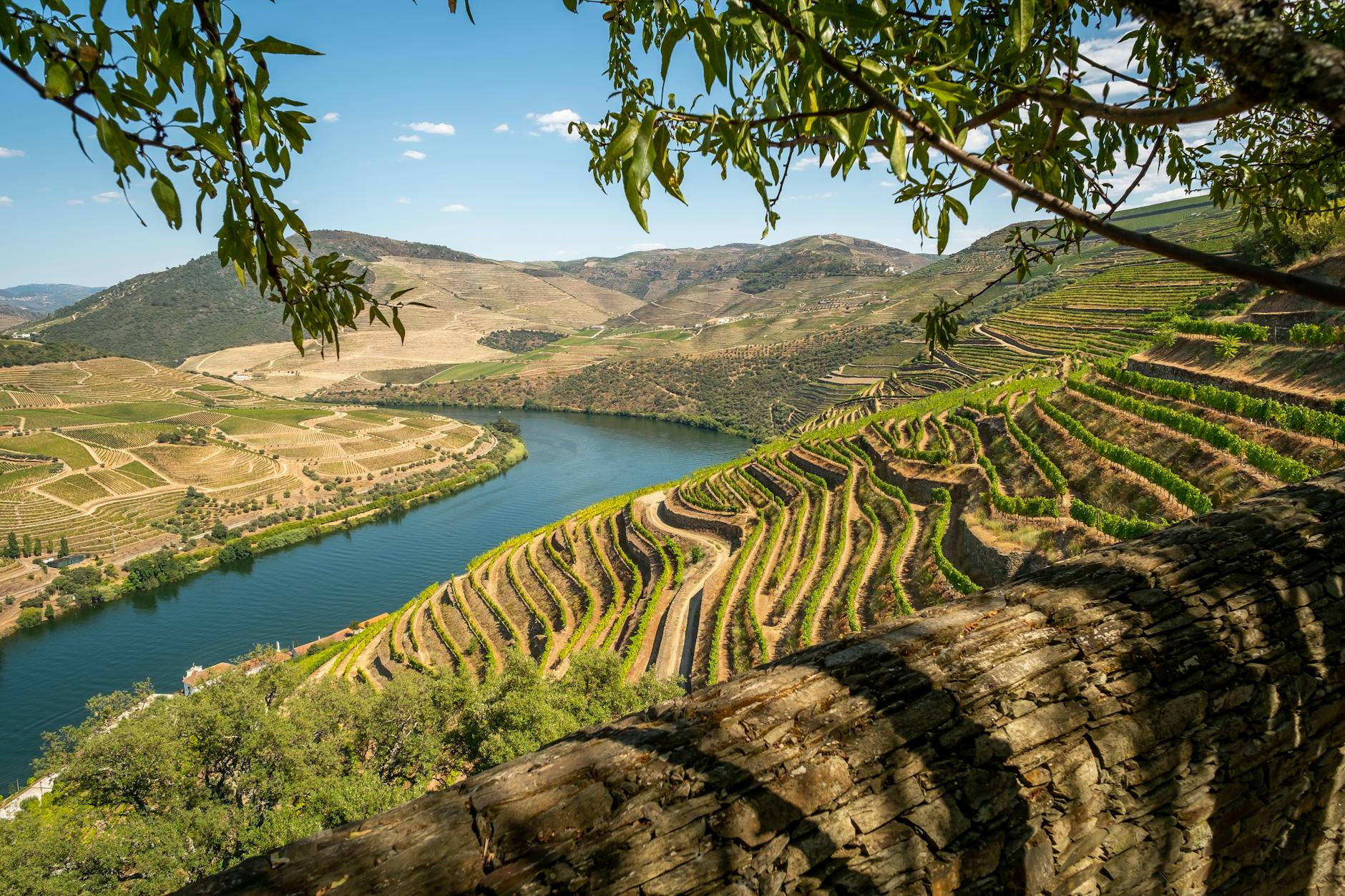
    One of the oldest demarcated wine regions in the world (est. 1756), the Douro is home to breathtaking terraced vineyards carved into steep schist hillsides. Though known for Port, it also produces powerful dry red wines.

    • Signature Grapes: Touriga Nacional, Tinta Roriz (Tempranillo), Touriga Franca
    • Style: Bold, structured reds with dark fruit and floral elegance
    • Tasting Notes: Black cherry, violet, slate, cocoa
    • Perfect Pairing: Lamb stew, grilled ribeye, mushroom risotto
    Photo by Andrew McLeod on Pexels.com

    Recipe Pairing: Portuguese Lamb Stew (Ensopado de Borrego)
    Slow-cooked lamb with garlic, red wine, and bay leaves. A Douro red complements the intensity with grace and power.

    Dão – Elegant, Age-Worthy Reds

    Tucked inland, the Dão region is often dubbed the “Burgundy of Portugal” for its finesse and structure.

    • Signature Grapes: Touriga Nacional, Alfrocheiro, Jaen (Mencía)
    • Style: Earthy, medium- to full-bodied reds with freshness and ageability
    • Tasting Notes: Raspberry, leather, dried herbs, mineral
    • Perfect Pairing: Duck breast, truffle pasta, mushroom-lentil burgers

    Alentejo – Warm, Generous, Sun-Kissed Wines

    Covering nearly a third of the country, Alentejo’s sun-baked plains yield juicy, approachable reds and ripe whites. Often the gateway region for those new to Portuguese wines.

    • Signature Grapes: Antão Vaz, Aragonês (Tempranillo), Trincadeira
    • Style: Plush reds and full-bodied whites
    • Tasting Notes: Baked plum, vanilla, almond, honeysuckle
    • Perfect Pairing: BBQ chicken, pork tenderloin, creamy polenta

    Bairrada – Sparkling Gems and Baga’s Boldness

    Coastal Bairrada is the land of sparkling wines and the quirky red grape Baga, which produces tannic, high-acid reds that age magnificently.

    • Signature Grapes: Baga (red), Maria Gomes, Bical (white)
    • Style: Lean sparkling wines, and tannic, age-worthy reds
    • Tasting Notes: Cranberry, tobacco, tart cherry, wet earth
    • Perfect Pairing: Duck confit, aged Manchego (my favorite), Portuguese suckling pig (Leitão)

    Setúbal Peninsula – Fortified Muscat Magic

    Known for Moscatel de Setúbal, a fortified sweet wine made from Muscat of Alexandria.

    • Tasting Notes: Orange blossom, caramelized fig, spice
    • Pairing Tip: Enjoy with blue cheese, orange tart, or cinnamon custard pastries

    The Undiscovered Whites of Portugal

    Beyond Vinho Verde, Portugal’s white wines are fascinating and food-loving. Look for:

    • Encruzado (Dão): Balanced and age-worthy, similar to white Burgundy.
    • Antão Vaz (Alentejo): Rich, creamy whites with citrus and stone fruit.
    • Arinto (all over): High-acid, lemony whites with aging potential.

    These whites shine with shellfish, creamy cheeses, roast chicken, or herbed pork.

    Photo by Charlotte May on Pexels.com

    Sangria Portuguesa: A Rustic & Robust Red Sangria

    A summer favorite—this recipe puts a Portuguese twist on sangria by using a bold red from the Douro or Alentejo, and infusing it with the flavors of the Iberian countryside.

    Sangria do Douro

    • 1 bottle Douro Red Wine (Touriga Nacional blend)
    • 1/4 cup Aguardente (or brandy)
    • 1/4 cup orange liqueur (like Licor Beirão or Cointreau)
    • 1/4 cup fresh orange juice
    • 2 tablespoons brown sugar
    • 1 cinnamon stick
    • 1 sliced orange
    • 1 sliced apple
    • 1/2 cup sliced red grapes
    • 1/2 cup sparkling water (or tonic) for a refreshing fizz
    • Optional: fresh mint sprigs
    1. In a large pitcher, combine sugar, fruit, cinnamon, and juice. Muddle lightly.
    2. Add red wine, aguardente, and orange liqueur. Stir well.
    3. Chill for 4+ hours or overnight.
    4. Just before serving, add sparkling water and stir gently.
    5. Garnish with mint and serve over ice.

    Pair with:

    • Spicy grilled chorizo
    • Tapas-style cheeses and olives
    • Roast chicken with peri-peri seasoning

    Related Article: Sangria: A Storied Sip Through Time, Terroir, and Tradition

    Portuguese Cheese & Wine: A Match Made in the Douro

    • Queijo da Serra + Dão Red: Creamy, nutty sheep’s milk cheese with earthy reds.
    • Azeitão + Arinto: A rich, buttery cheese offset by citrusy freshness.
    • São Jorge + Alentejo Red: Hard cow’s milk cheese with meaty, bold reds.
    Photo by Maria das Dores on Pexels.com

    Why Portugal Deserves Your Glass

    Portuguese wines offer unmatched value, diversity, and authenticity. They bridge old-world charm with fresh energy, and speak proudly of their roots. Whether you’re sipping a chilled glass of Vinho Verde on the porch or pairing a brooding Douro red with grilled lamb, you’re experiencing centuries of history in a single glass.

    So the next time you’re exploring a wine shop, skip the predictable and say “sim” to Portugal. Saúde! 🍷

    SOMM&SOMM Recommended Wines to Try:

    Cover Photo by Kampus Production on Pexels.com
  • How to Enjoy White Wines After Labor Day

    How to Enjoy White Wines After Labor Day

    There’s an old saying in fashion that you shouldn’t wear white after Labor Day. Somewhere along the line, people got it into their heads that wine followed the same rule. As if a glass of Sauvignon Blanc had to be packed away with the linen pants and straw hats, waiting patiently in the cellar until Memorial Day gave it permission to come back out.

    The truth is far simpler: wine doesn’t read calendars. White wines, in particular, have far too much personality, versatility, and downright charm to be relegated to a single season. If anything, they may be at their most interesting in the cooler months, when the foods on the table get heartier, the evenings stretch longer, and we start looking for comfort in every sip.

    Sidebar: The Origins of the “No White After Labor Day” Rule

    This curious rule wasn’t really about fashion at all. In the late 1800s and early 1900s, America’s old-money elite used it as a sneaky way to separate themselves from the newly wealthy. White clothing was linked to summer vacations and leisure, and the social code dictated that once Labor Day passed, you swapped white linen for darker fabrics. It was less about “style” and more about “status.”

    Fast-forward to today, and nobody cares if you wear white jeans in November—but somehow poor Chardonnay got lumped in with linen suits, as if it too had to go into storage. The good news? Wine never signed that contract.

    Photo by cottonbro studio on Pexels.com
    Whites That Warm the Soul

    The crisp, chilled whites of summer can feel like a plunge into the pool, refreshing but fleeting. After Labor Day, our palates start to crave something more grounding. Enter the fuller-bodied whites—think oaked Chardonnay, Viognier, and white Rhône blends—that carry a little more weight, a little more texture, and just enough richness to match heartier seasonal meals.

    Sommelier’s Note: Temperature Matters

    When the weather cools, let your whites warm up too. Serve that Chardonnay at 50–55°F instead of a frosty 40°F—you’ll notice the texture broadens, the oak shows more finesse, and the wine feels downright cozy.

    Pairing Whites with Fall Flavors

    The real fun of white wines in autumn is discovering how beautifully they play with fall’s pantry: roasted squashes, sage-laced stuffing, buttery mashed potatoes, and slow-braised poultry. While red wines often steal the stage, whites bring a freshness and aromatic lift that can make rich dishes feel balanced instead of heavy.

    Think Gewürztraminer with spiced pumpkin soup, or Riesling with roast pork and apples. A Chenin Blanc’s gentle orchard fruit notes practically beg for roasted root vegetables.

    Sommelier’s Note: Why It Works

    Acidity in white wine is your secret seasoning. Just as a squeeze of lemon brightens roasted chicken, a sip of Riesling or Chenin cuts through richness and lifts the entire dish.

    Related article on wine pairing: Demystifying Wine+Food for Real-Life Moments

    Photo by Pavel Danilyuk on Pexels.com
    White Wines by the Fireside

    Imagine a glass of oaked California Chardonnay or an Alsatian Pinot Gris alongside a crackling fireplace. These wines carry subtle notes of vanilla, baking spice, and roasted nuts—flavors that feel at home in a wool blanket as much as at a dinner table. Unlike summer’s poolside pours, these whites encourage you to linger, sip slowly, and enjoy the warmth of their depth.

    Sommelier’s Note: Glassware Swap

    Don’t be afraid to serve richer whites in a Burgundy bowl (the same glass you’d use for Pinot Noir). The wide bowl lets the wine breathe and amplifies those toasty, autumnal aromatics.

    Holiday Whites Worth Celebrating

    From Thanksgiving to New Year’s Eve, white wines bring an elegance to the table that reds sometimes bulldoze. A white Burgundy can dance with turkey and gravy; a sparkling Chenin or Blanc de Blancs can carry a celebration from appetizers through dessert.

    The beauty of whites during the holidays is their ability to flex—they’re bright enough to cut through decadent dishes, but sophisticated enough to hold court in a room full of reds.

    Sommelier’s Note: A Thanksgiving Trick

    Skip the Cabernet with turkey—it’s too tannic and dries out the bird. Instead, reach for Gewürztraminer, Viognier, or Chenin Blanc. Their aromatics and round texture echo the herbs and savory sides, making them symphonic with the meal.

    Photo by Cup of Couple on Pexels.com
    A Toast Beyond the Calendar

    So here’s the secret every sommelier knows: white wine doesn’t care what month it is, and neither should you. A glass of Chenin Blanc can be as cozy as a knitted sweater when paired with roasted squash. A golden, honeyed Sauternes can feel like a holiday carol in liquid form. And yes, a crisp Sauvignon Blanc can cut through the richness of Thanksgiving turkey just as neatly as it slices through a summer salad.

    If anything, cooler months invite us to lean into whites more deeply—to serve them a little warmer, pair them a little bolder, and let them shine against the hearty, savory dishes of autumn and winter. The next time someone wrinkles their nose at your glass of Riesling in October, just smile and remind them: the old “rules” were made for clothes, not for cellars.

    Raise your glass, lean into the season, and enjoy whites all year long. After all, wine is meant to be shared, savored, and celebrated—not shelved with the summer wardrobe.

    Cheers 🍷

    Sommelier’s Final Note: The best rule in wine is this: drink what you love, when you love it. Pair with heart, pour with joy, and you’ll always be in season.

    You might also like this article: Celebrating Labor Day

  • Beyond Bordeaux

    Beyond Bordeaux

    Emerging Regions and Grapes to Know.

    Bordeaux, Napa, Tuscany—we love them, we know them, we celebrate them. But what if I told you that some of the most exhilarating wines today are coming from volcanic islands, foggy valleys, or vineyards nestled between deserts and ocean? And what if I told you that grapes you’ve barely heard of are producing wines that rival—and in some cases outperform—the greats?

    Welcome to the vinous underworld of Assyrtiko, Chenin Blanc, and a global constellation of rising stars. This isn’t wine snobbery. This is wine discovery. This is beyond Bordeaux.

    Photo by gravity cut on Pexels.com

    Assyrtiko – Greece’s Salty, Sun-Kissed Secret

    Origin: Santorini, Greece
    Style: Bone-dry, citrus-driven white with volcanic minerality and thrilling acidity

    How to Pronounce Assyrtiko (Without Spitting Your Spanakopita):
    It’s Ah-SEER-tee-koh, not “A-sir-tick-oh,” “Ass-er-what-now,” or “A-sushi-taco” (yes, we’ve heard it all).

    Just remember:
    It’s crisp, not cryptic.
    Greek to you? Not anymore!

    Say it right and the bottle just might pour itself. 😄

    The Story

    Born on the sun-drenched, wind-scoured island of Santorini, Assyrtiko is a survivor. These ancient vines, many over 70 years old and ungrafted due to phylloxera-free volcanic soil, are trained in a unique “kouloura” (basket) shape to protect the grapes from fierce Aegean winds.

    In the Glass

    Imagine squeezing a lemon over a pile of wet rocks while standing on a Mediterranean cliffside 😂. That’s Assyrtiko. It’s bracing. Salty. Electric. A wine that doesn’t ask for your opinion—it commands your attention.

    Flavors: Lemon peel, flint, saline, white peach
    Pairings: Grilled octopus (I’m looking at you, Dima), oysters, feta-stuffed peppers, lemon chicken, or sushi with a citrus ponzu

    Where Else to Find It

    • Drama & Macedonia (Northern Greece): Rounder, fruitier expressions
    • Australia (Clare Valley, McLaren Vale): New World spice and texture
    • California (Paso Robles, Lodi): Experimental vineyards are testing the grape’s heat tolerance

    SOMM&SOMM Tip: Want to impress at your next seafood dinner? Bring an Assyrtiko. It’s the Chablis-lover’s Greek cousin.

    Agne27, CC BY-SA 3.0, via Wikimedia Commons

    Chenin Blanc – The Shape-Shifter from the Loire (and Beyond)

    Origin: Loire Valley, France
    Style: Anything from bone-dry to unctuously sweet to méthode traditionnelle sparkling

    The Story

    Once dismissed as a workhorse white in bulk wine, Chenin Blanc is having a renaissance. It’s the ultimate chameleon—able to take on almost any style and terroir. In the Loire, it’s noble and restrained. In South Africa, it’s exuberant and tropical. In California, it’s quietly staking its claim as the “next big thing.”

    In the Glass

    Chenin Blanc offers an orchestra of orchard fruit, flowers, acidity, and a waxy texture that makes sommeliers swoon. Dry or sweet, still or sparkling, there’s a Chenin for every mood.

    Flavors: Green apple, quince, lanolin, honeysuckle, citrus zest
    Pairings: Thai curry, pork chops with apples, roast duck, spicy ramen, goat cheese, or peach cobbler (for off-dry versions)

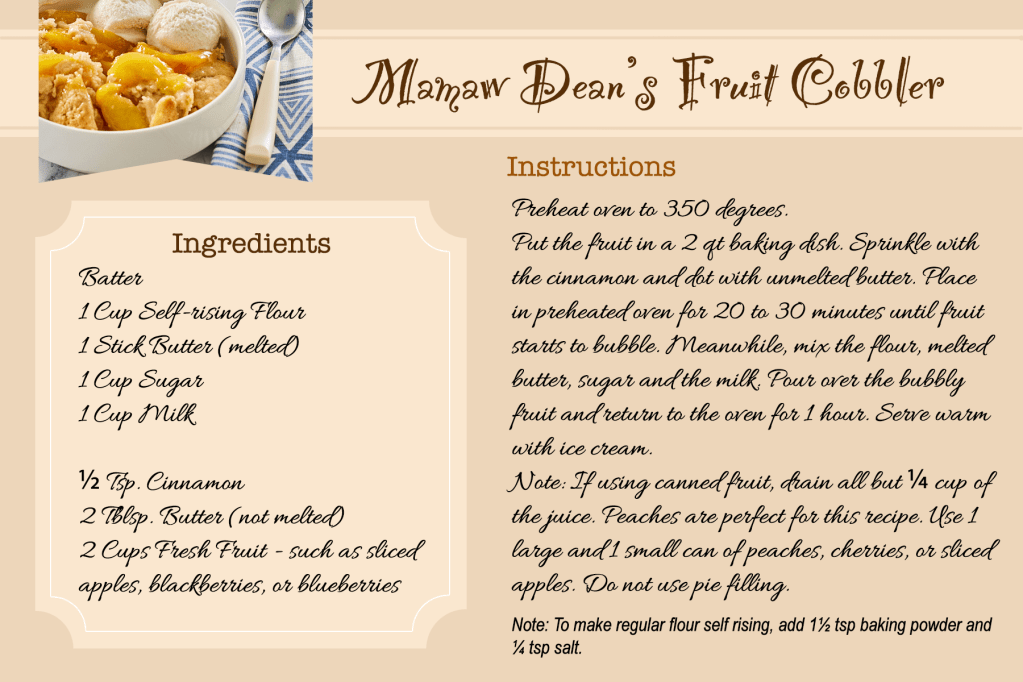
    Dean Family Recipe 😉

    Where It Shines

    • Loire Valley (Vouvray, Savennières): Regal and layered
    • South Africa (Stellenbosch, Swartland): Zesty, tropical, and textural
    • California (Clarksburg, Mendocino): Bright with honeysuckle and stone fruit
    • India (Nasik Valley): Light-bodied and floral, perfect with spicy dishes

    SOMM&SOMM Tip: Always check the label for sweetness level. A dry Savennières and a demi-sec Vouvray are two very different animals—but equally delicious in their own way.

    Beyond the Grapes – Global Terroirs You Need to Know

    Let’s go even further beyond the usual suspects. Here are four emerging wine regions—and their must-try grapes—that should be on every wine lover’s radar:

    Valle de Guadalupe, Mexico

    Signature Grapes: Nebbiolo, Tempranillo, Chenin Blanc
    Style: Bold reds and zesty whites with desert-meets-ocean personality
    Why It Matters: Baja California’s Valle de Guadalupe is like Napa in the 1970s—experimental, passionate, and still defining itself. Hot days, cool nights, and ocean breezes create a perfect storm of ripeness and elegance.

    Try: Monte Xanic Chenin Colombard blend – refreshing, floral, and great with fish tacos.

    Tokaj, Hungary (but Not Just for Sweet Wines!)

    Signature Grapes: Furmint, Hárslevelű
    Style: Bone-dry, mineral whites that can age for decades
    Why It Matters: While famous for its dessert wines, Tokaj is finally getting recognition for its dry styles—Furmint especially, which offers Riesling-like acidity with the texture of white Burgundy.

    Try: Dry Furmint with roast chicken or miso-glazed cod.

    Uruguay

    Signature Grapes: Tannat, Albariño
    Style: Structured reds, salty whites
    Why It Matters: This small South American country is quietly producing elegant Tannat (yes, the beastly grape from Madiran) with softer tannins, plus gorgeous coastal Albariño that rivals Galicia’s best.

    Try: Garzón Albariño with ceviche or grilled shrimp.

    England

    Signature Grapes: Chardonnay, Pinot Noir (Sparkling Wine)
    Style: Traditional method sparkling with high acidity and chalky minerality
    Why It Matters: English sparkling wine is no longer a joke—it’s a juggernaut. With chalk soils like Champagne and a warming climate, producers in Sussex and Kent are now winning international blind tastings.

    Photo by Petra Ryan on Pexels.com
    Try: Nyetimber or Gusbourne Brut with fish and chips (seriously).

    Why You Should Drink Beyond Bordeaux

    We’re not saying give up your Bordeaux blends, your Brunellos, or your Barolos. We’re saying your palate deserves a passport. There’s never been a better time to explore terroirs that aren’t bound by tradition. These regions and grapes—Assyrtiko, Chenin Blanc, Furmint, Tannat, Albariño, and beyond—are writing a new chapter in the world of wine. One where the map is still being drawn.

    Photo by cottonbro studio on Pexels.com
    So next time you shop or dine, go off the grid. Ask for something weird. Order something unpronounceable. And raise a glass to the next great classic.

    Cheers to the future of wine 🍷

    Gregory and Tammy Dean are sommeliers, wine educators, and co-creators of the SIPS & STORIES book series. When they’re not exploring emerging wine regions or debating whether Assyrtiko is better than Chablis (spoiler: sometimes it is), they’re helping wine lovers drink better, bolder, and beyond the expected.

    Cover photo by ongchinonn, CC0, via Wikimedia Commons