Category: Sommelier Studies

  • Decoding the Truth Behind 10, 20, 30 & 40 Year Tawny Ports

    Decoding the Truth Behind 10, 20, 30 & 40 Year Tawny Ports

    In the world of fortified wines, few categories are as quietly revered—and as frequently misunderstood—as Tawny Port.

    Among collectors and sommeliers, Tawny occupies a fascinating space. Those who know it tend to adore it. Those who don’t often dismiss it as simply “old sweet Port.” And hovering over the entire category are those deceptively simple age statements: 10, 20, 30, and 40 Years.

    They look straightforward.
    They sound definitive.

    Yet they are neither.

    Which leads to the question I hear more than almost any other when discussing Port in tastings or seminars:

    Is there really that much difference between a 10-, 20-, 30-, and 40-Year Tawny… or is it mostly marketing?

    The short answer is yes, the differences are real.

    The longer—and far more interesting—answer is that the greatest leap in character does not occur early in the aging spectrum. It occurs late. Specifically, between 30 and 40 years, where Tawny Port undergoes something closer to transformation than gradual development.

    To understand why, we need to begin with a small but crucial clarification.
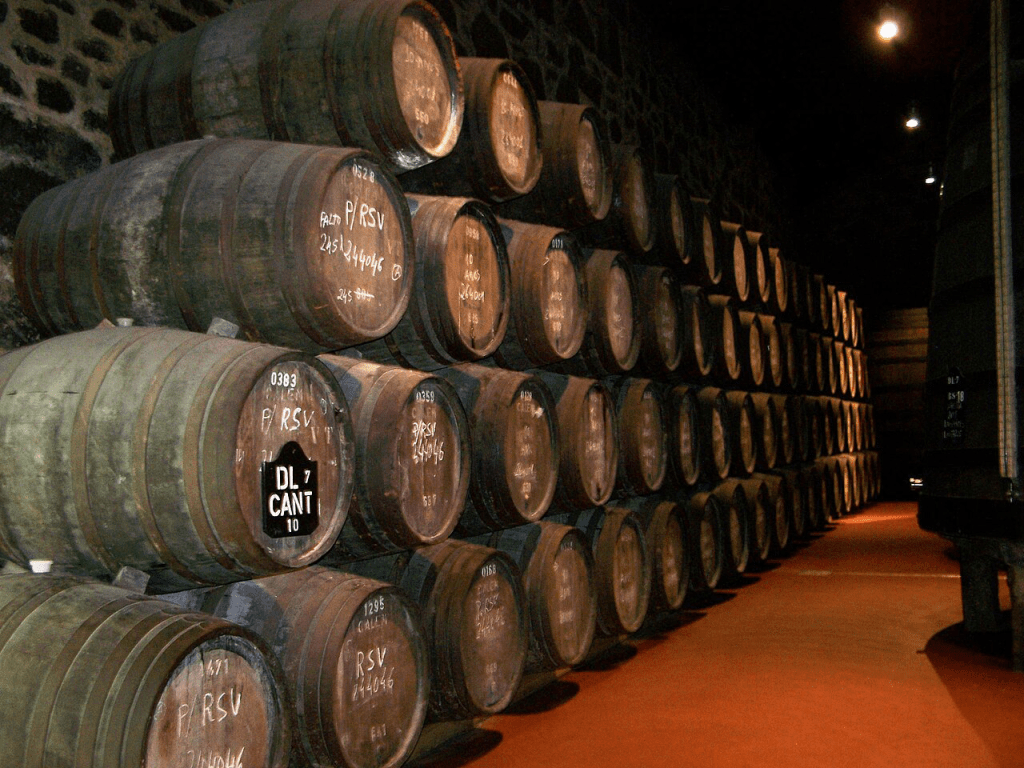
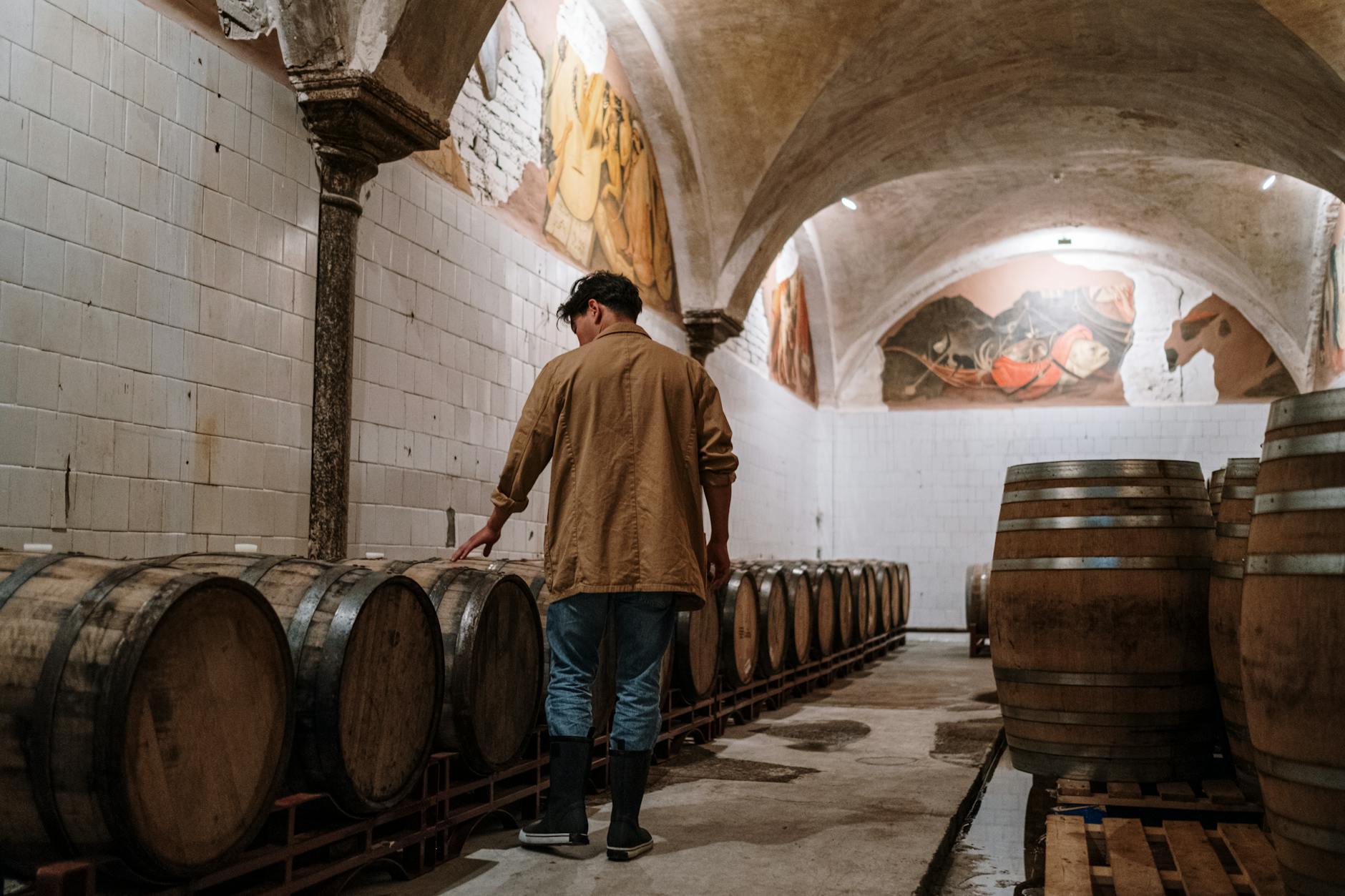
    Calém wine cellars – Cornelius from Berlin, Germany, CC BY-SA 2.0, via Wikimedia Commons

    What the Age Statement Actually Means

    When a bottle reads “20 Year Tawny”, it does not mean the wine inside is twenty years old.

    Instead, Tawny Port age designations represent a blending style, not a literal age.

    Producers blend multiple barrels of wine of different ages in order to create a final wine whose aromatic profile, structure, and overall impression resemble what a wine of that age should taste like.

    Think of the age statement less like a birth certificate and more like a time capsule.

    The style must meet sensory benchmarks approved by the Instituto dos Vinhos do Douro e do Porto (IVDP), the regulatory authority that oversees Port production.

    The blender’s task is not merely technical—it is interpretive. They must create a wine that feels like a 10-year Tawny, or a 30-year Tawny, even if the actual components span several decades.

    Related SOMM&SOMM article: The Organoleptic Process

    Understanding this distinction is essential, because it shifts our focus away from the number on the bottle and toward the true driver of Tawny Port’s evolution:

    time in wood.
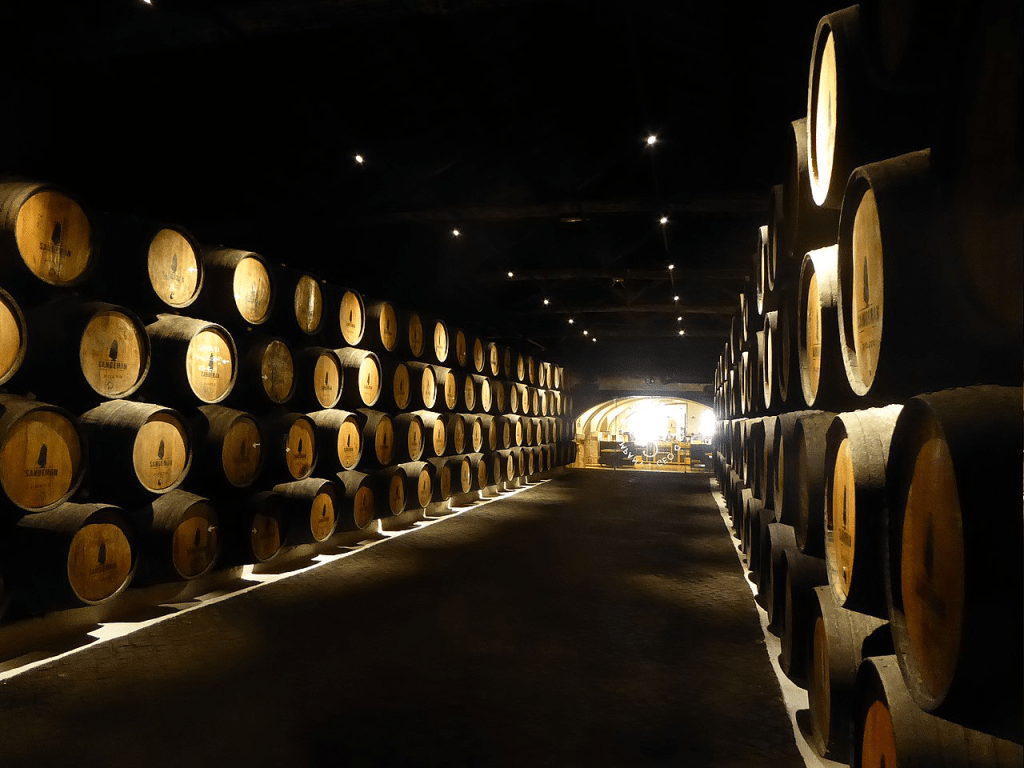
    Sandeman Cellar – Hans Birger Nilsen, CC BY-SA 2.0, via Wikimedia Commons

    Time, Oxygen, and the Alchemy of the Barrel

    Unlike Vintage Port, which spends most of its life aging slowly in bottle, Tawny Port lives almost entirely in barrel.

    And barrel aging introduces three powerful forces that shape the wine over decades.

    Oxidation

    Wood is porous. Over time, small amounts of oxygen enter the barrel, slowly transforming the wine’s fruit character. Fresh berries begin to evolve into dried fruits, nuts, caramel, and spice.

    Evaporation

    Known romantically as the angel’s share, a portion of the wine slowly evaporates through the wood.

    As the years pass, the volume decreases while flavor compounds become more concentrated.

    Integration

    Acids, sugars, tannins, and aromatics gradually knit together. What once felt separate becomes seamless.

    These processes do not progress evenly over time. Early changes are dramatic and fruit-driven. Later changes affect the structure and perception of the wine itself.

    Which is why the differences between age categories are not linear.

    They unfold in stages.

    10-Year Tawny: The Invitation

    For many drinkers, the 10-Year Tawny is their first encounter with oxidative Port.

    At this stage, the wine still carries a strong memory of its youthful fruit.

    Expect aromas of dried cherry, fig, toasted almond, and orange peel, with a palate that remains lively and moderately sweet. The texture is smooth, but the wine still feels fruit-driven rather than fully evolved.

    This category serves as a bridge between Ruby-style Ports and the more oxidative Tawny world.

    It tends to resonate particularly well with drinkers who appreciate freshness and approachability—people who enjoy balanced dessert wines but may not yet be ready for deeply oxidative complexity.

    When moving from 10 to 20 years, the shift is noticeable, but still evolutionary rather than revolutionary.

    The wine becomes more polished. More composed.
    But the language of the wine remains familiar.
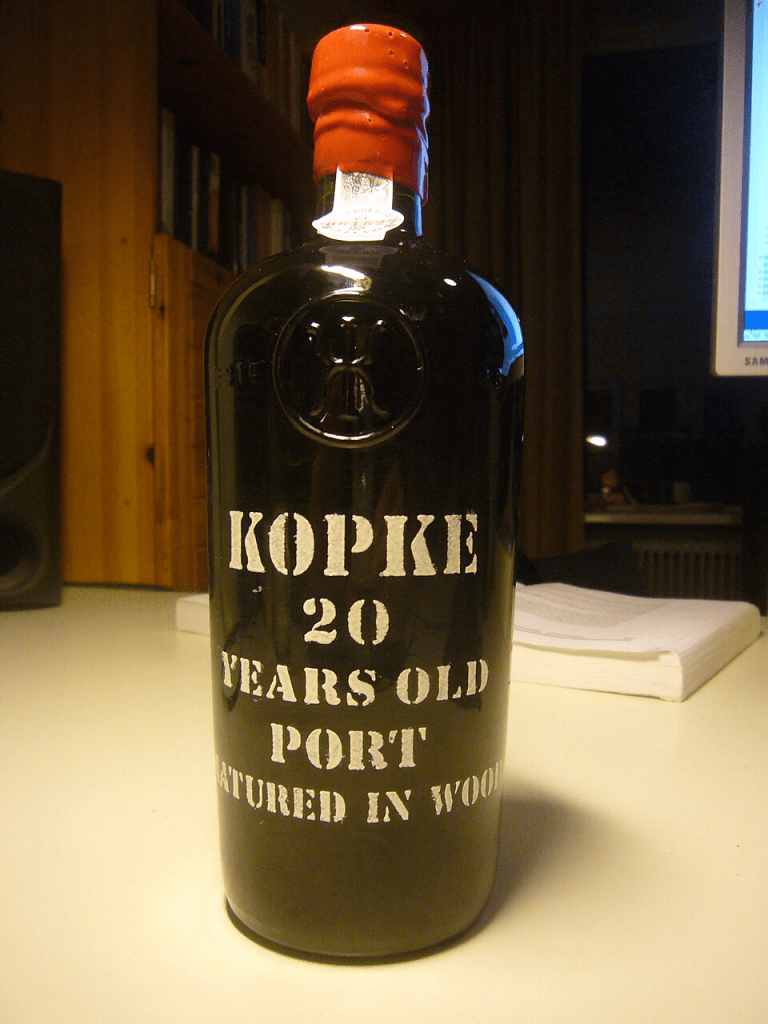
    20-Year Tawny: The Sweet Spot

    Many Port lovers eventually settle on 20-Year Tawny as their personal favorite—and it’s easy to understand why.

    This is where Tawny Port finds equilibrium.

    The fruit steps gracefully into the background, allowing aromas like hazelnut, caramel, dried apricot, and baking spiceto take center stage. The palate becomes more harmonious, sweetness feels less pronounced, and the texture develops a silkier, more confident character.

    At this stage, Tawny begins to attract drinkers outside traditional dessert wine circles.

    Fans of aged spirits such as Cognac or well-matured Scotch whisky often connect with the nutty complexity and long finish of a 20-Year Tawny.

    The jump from 20 to 30 years, however, is quieter than many people expect.

    Instead of a dramatic shift in flavor, the wine simply becomes more refined.

    Freshness gives way to depth.
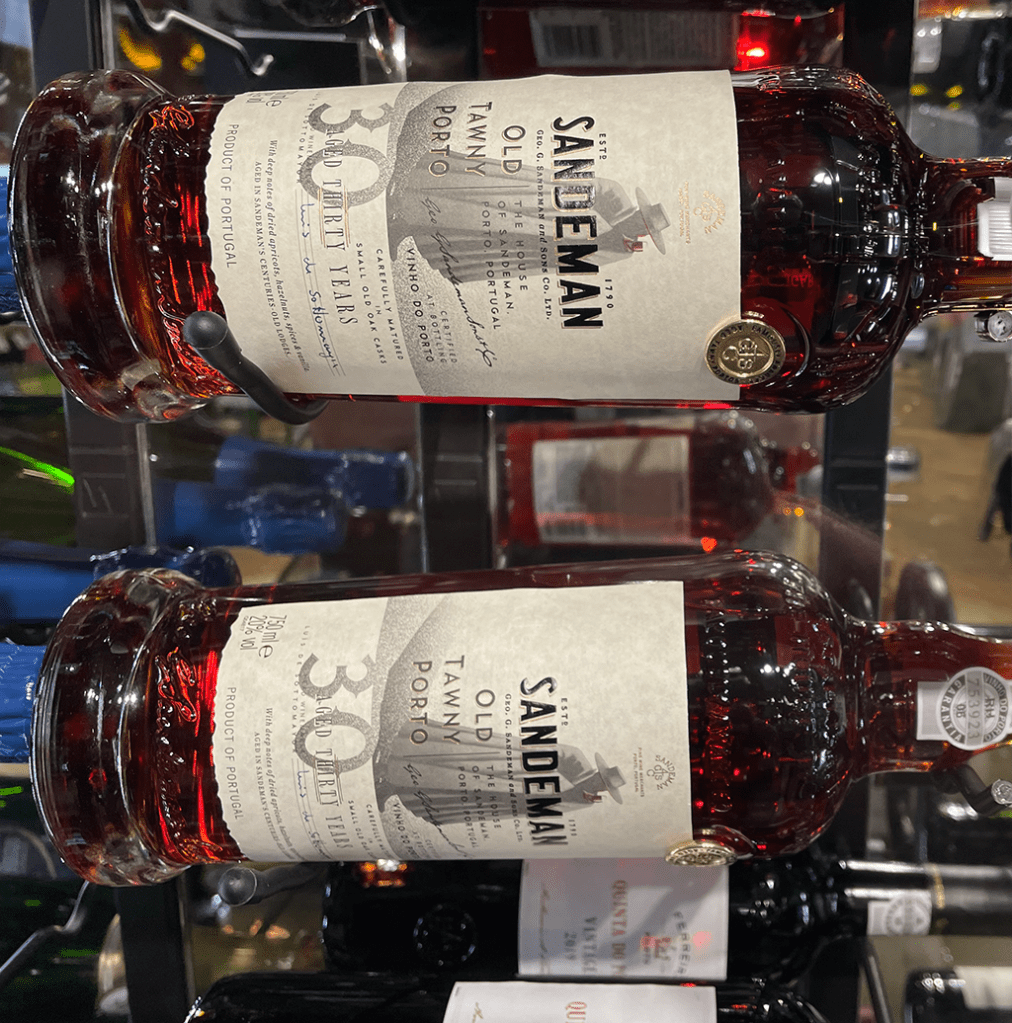
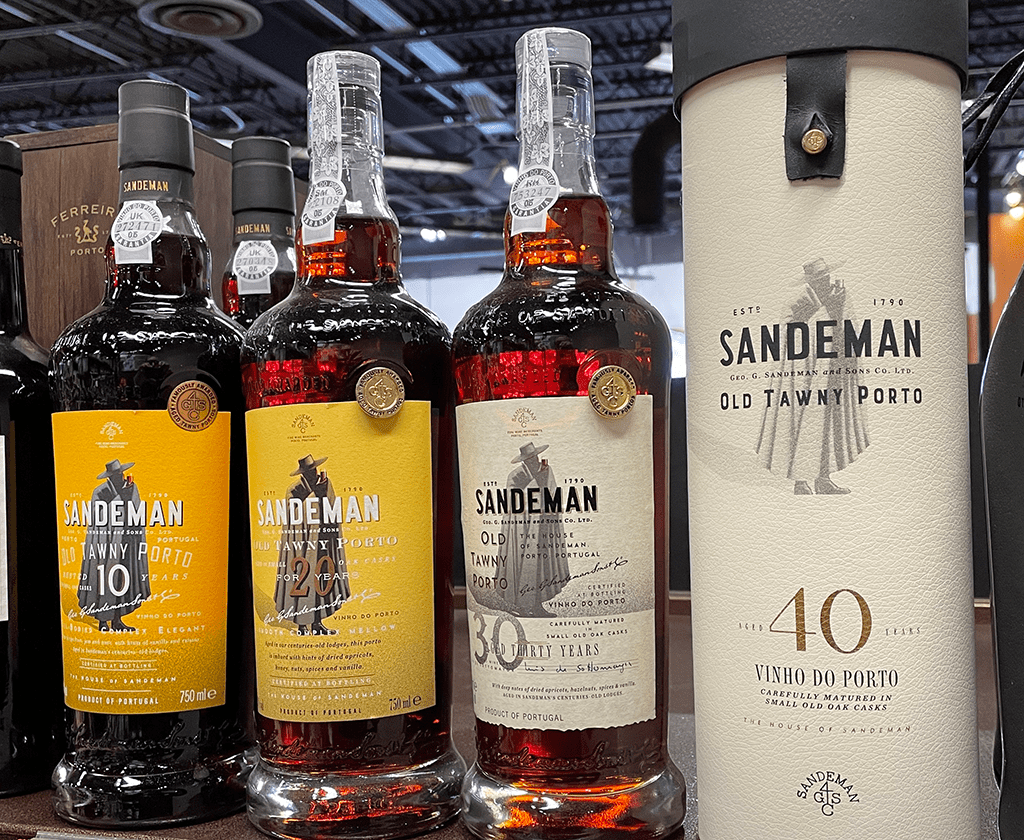
    Sandeman 30yr Tawny Port

    30-Year Tawny: The Contemplative Stage

    A 30-Year Tawny is a wine that invites reflection.

    By this point, fruit has largely receded into memory. What emerges instead is a tapestry of tertiary aromas—walnut oil, dried citrus peel, molasses, antique wood, and sometimes even the evocative scent of old library books.

    The palate often leans drier than younger Tawny expressions, though the sugar remains. What has changed is the balance: acidity now plays a more prominent role.

    Texturally, the wine can feel both viscous and lifted, a paradox that experienced tasters find endlessly compelling.

    This is the stage where Tawny Port begins to transcend its reputation as merely a dessert wine. It becomes something contemplative—something that invites slow appreciation rather than casual sipping.

    Yet despite all this development, the leap from 30 to 40 years is still ahead.

    And that is where Tawny Port reveals its most profound transformation.

    40-Year Tawny: Where Time Becomes the Flavor

    A 40-Year Tawny does not simply taste like an older version of a 30-Year Tawny.

    It tastes like an entirely different category of wine.

    At this age, evaporation has removed a significant portion of the original liquid from the barrel. What remains is extraordinarily concentrated.

    Yet paradoxically, the wine often feels lighter.

    The sweetness fades into the background while acidity becomes the structural backbone. Aromas move beyond recognizable foods toward something more abstract: mahogany, citrus oils, iodine, antique furniture, and burnt sugar.

    The finish stretches seemingly without end.

    In these wines, you are no longer tasting fruit transformed by oxidation.

    You are tasting time distilled.

    The wine sheds weight and gains clarity. Flavor gives way to sensation. The experience becomes less about identifying notes and more about interpreting the wine’s evolving texture and length.

    This is why the gap between 30 and 40 years feels so dramatic.

    Not because the wine becomes louder—but because it becomes more precise.

    Why the Largest Leap Occurs Late

    If we look at the progression of Tawny Port aging, a pattern emerges.

    Between 10 and 20 years, fruit begins evolving toward nuts and caramel, while sweetness integrates more smoothly.

    Between 20 and 30 years, refinement takes over. The wine deepens structurally and texturally.

    But between 30 and 40 years, the transformation becomes structural rather than merely aromatic.

    Sweetness becomes an accent rather than the centerpiece.
    Acidity becomes the dominant structural element.
    And aromas move beyond food references into something more atmospheric.

    At this stage, the wine has crossed a threshold where oxidation, evaporation, and concentration have reshaped its very identity.

    This isn’t marketing hype.

    It’s chemistry—and a little bit of physics.
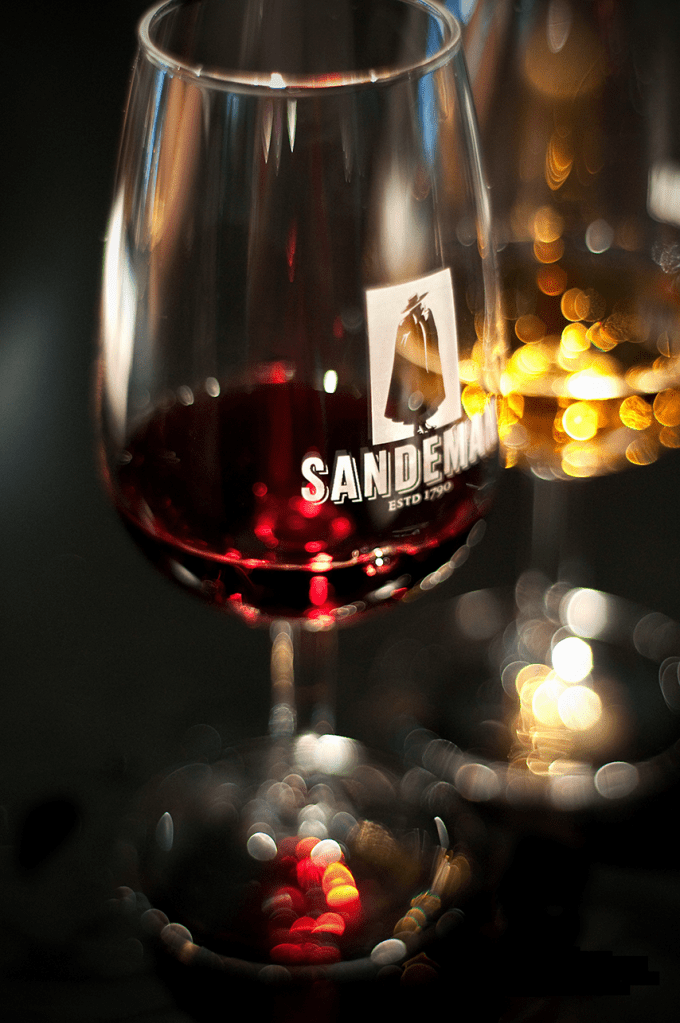
    Sandeman Port – Alex Ristea from Vancouver, Canada, CC BY-SA 2.0, via Wikimedia Commons

    Is a 40-Year Tawny Worth the Price?

    The honest answer depends less on the wine than on the drinker.

    If you love sweetness and richness, 20-Year Tawny will likely provide the most pleasure.

    If you enjoy layered complexity and evolving textures, 30-Year Tawny may feel like the ideal balance.

    But if you are drawn to nuance, tension, and extraordinary length—if you enjoy wines that whisper rather than shout—then a 40-Year Tawny can be worth every penny.

    These wines are not impressive in a flashy way.

    They are impressive in a quiet, contemplative way.

    And quiet luxury is not for everyone.

    Tawny Port Is Ultimately About Awareness

    One of the most fascinating things about Tawny Port is that it changes not only the wine—but the drinker.

    10-Year Tawny welcomes you into the category.

    20-Year Tawny charms you with balance.

    30-Year Tawny challenges you to pay attention.

    And a 40-Year Tawny has the power to change the way you think about aged wine entirely.

    Not because it is louder.

    But because it is older, wiser, and more patient.

    And that patience—decades of quiet transformation in wood—is the real story behind every glass.

    Cheers. 🍷

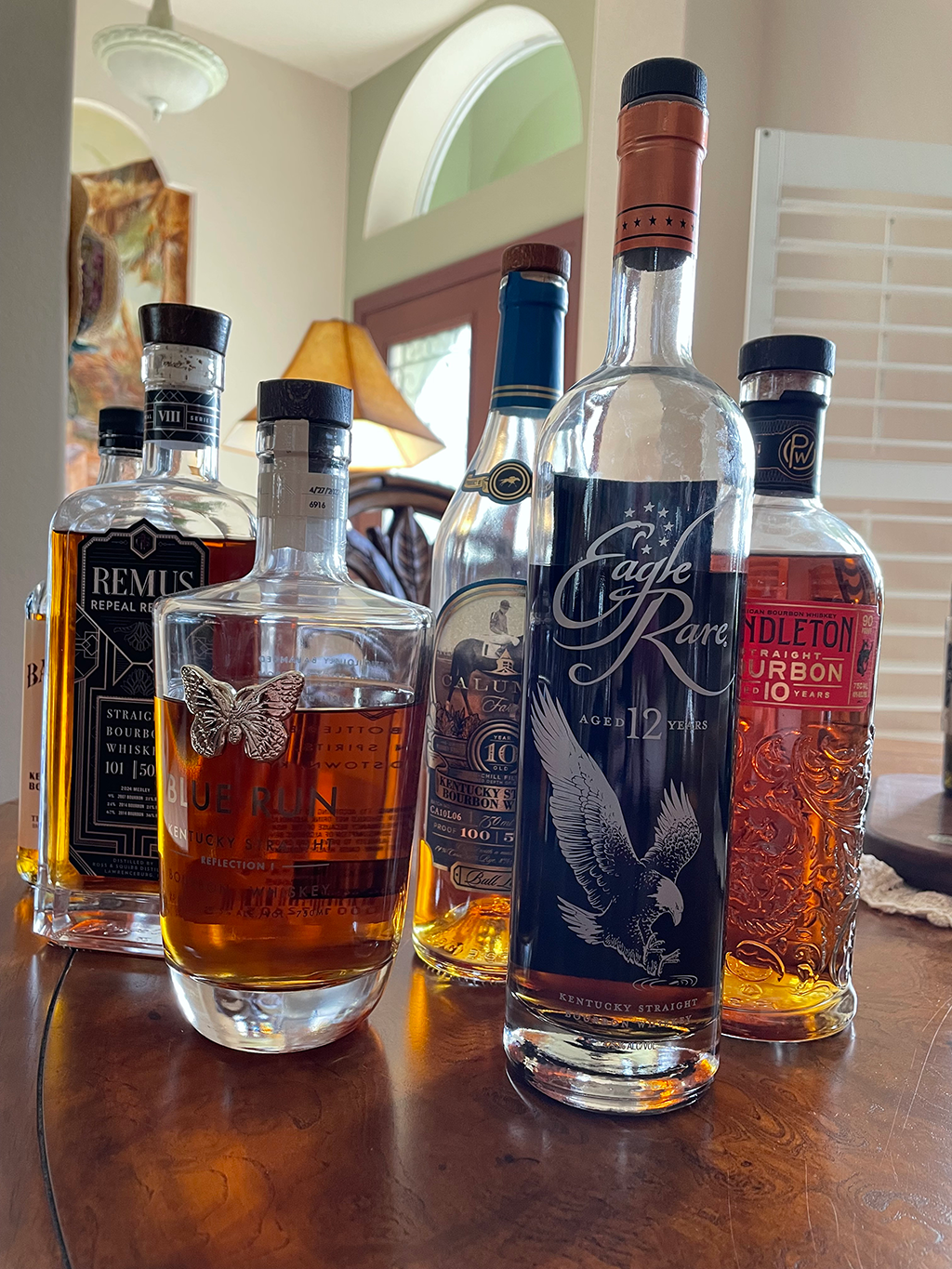
  • Bourbon: Fire, Corn, and the American Barrel

    Bourbon: Fire, Corn, and the American Barrel

    There are spirits that whisper of old monasteries and windswept Scottish coasts. Bourbon does not whisper. It crackles.

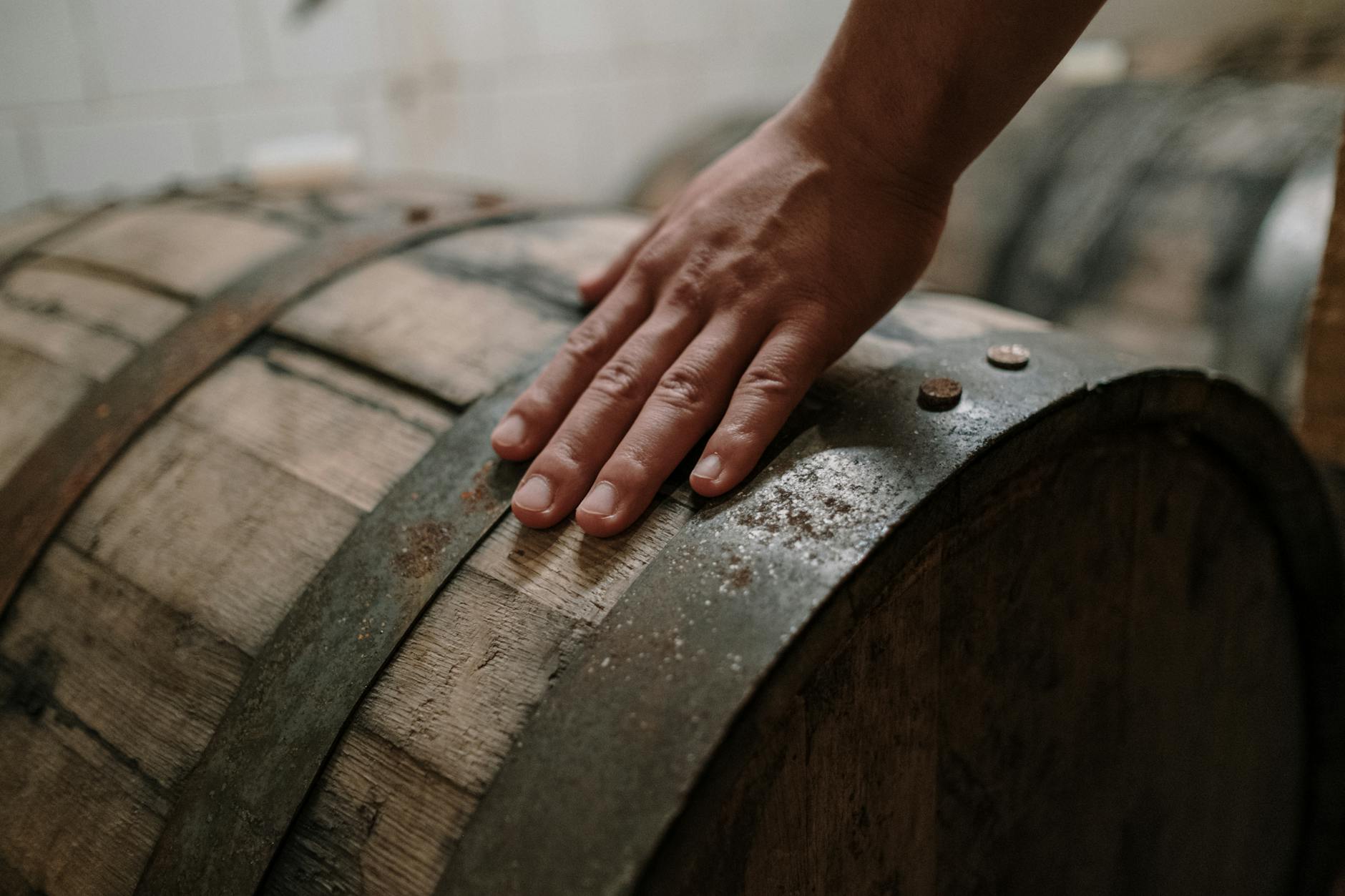
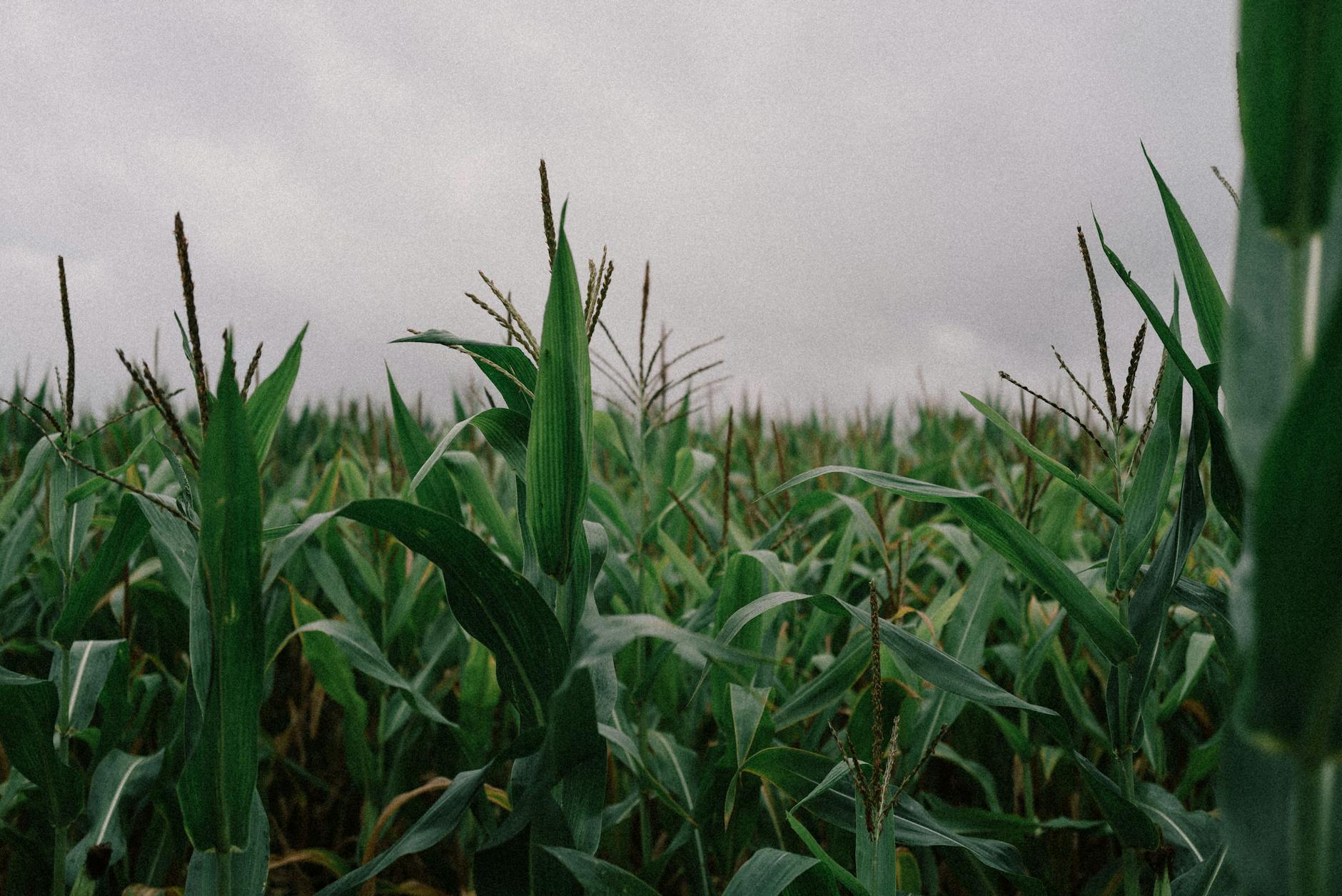
    It begins in a cornfield under a Midwestern sun. It moves through copper stills and into a brand-new oak barrel that has quite literally been set on fire. It rests through humid summers and brittle winters, expanding and contracting with the rhythm of the seasons until wood and spirit can no longer be separated in conversation.

    Bourbon is not simply America’s native spirit. It is America’s study in transformation.

    And like wine, it deserves more than a quick pour and a passing note of “caramel and vanilla.”

    Let’s sit with it.

    Photo by cottonbro studio on Pexels.com

    Law as Flavor

    Bourbon’s regulations are not bureaucratic fine print — they are its recipe for identity.

    To carry the name, it must be made in the United States and composed of at least 51% corn. It cannot be distilled above 160 proof. It must enter the barrel at no more than 125 proof. And it must mature in brand-new, charred oak containers. No coloring. No flavoring. Nothing added but water to reduce proof.

    Those new barrels are not incidental. They are the defining choice.

    When oak is charred, the interior blackens and cracks, caramelizing wood sugars and forming a charcoal layer that filters and transforms the spirit. Beneath that char lies a layer of toasted wood where lignin and hemicellulose break down into vanillin, baking spice, caramel, and subtle smoke.

    Every barrel begins as a blank slate. Every batch begins again.

    Unlike Scotch, which often relies on used casks, bourbon’s relationship with oak is intense and immediate — a first dance with no rehearsal.

    Photo by Lina Kivaka on Pexels.com

    The Beginning of Personality

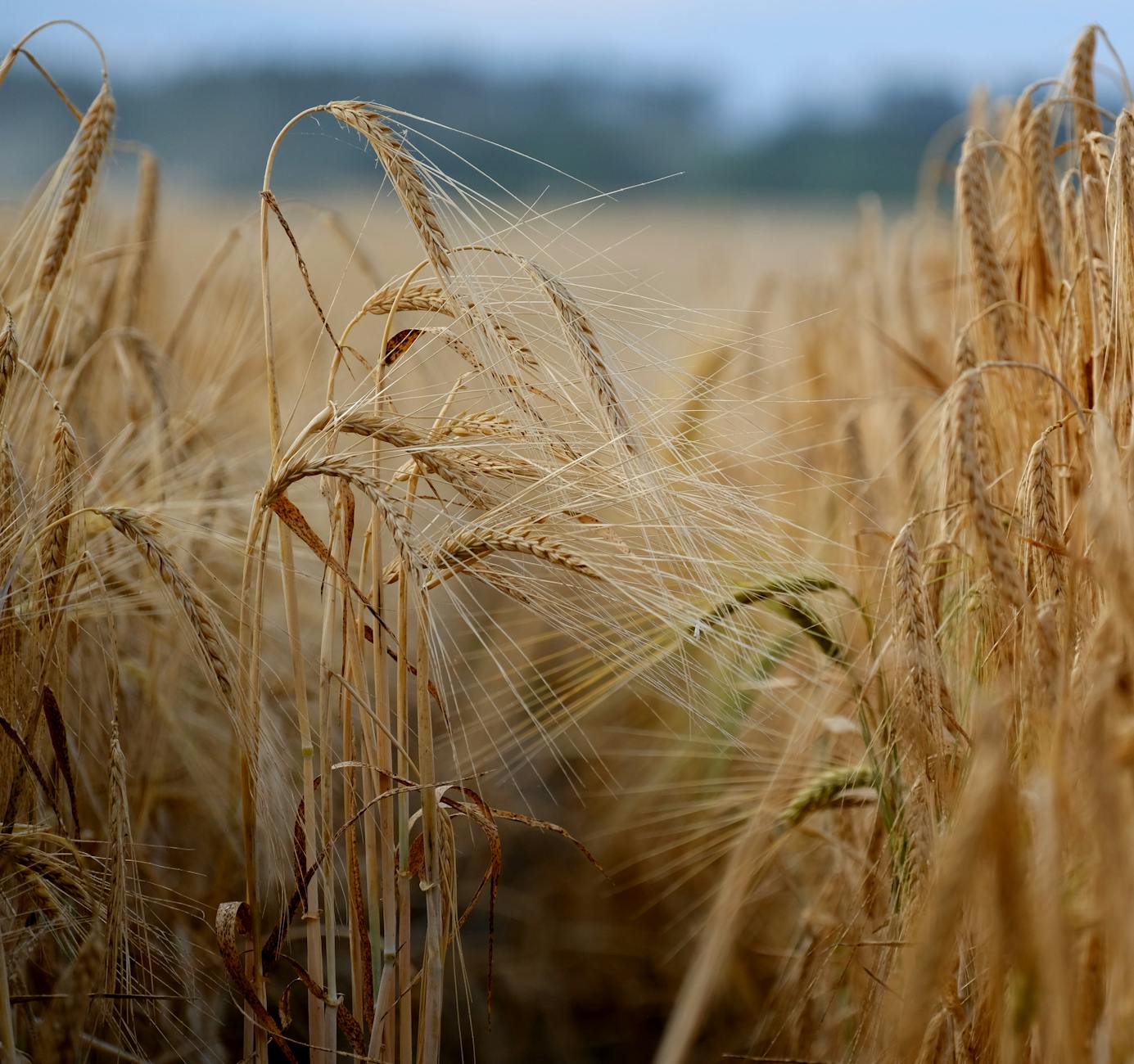
    Before the barrel, before the fire, there is grain.

    Corn must dominate. It gives bourbon its softness and sweetness — honeyed, rounded, generous. That creamy entry on the palate? Corn.

    Then comes the secondary grain, which shapes structure.

    Photo by Chris F on Pexels.com

    When rye is used, spice emerges. Black pepper, cinnamon bark, clove — a liveliness that lifts the sweetness and sharpens the finish. These bourbons feel energetic and structured, often brilliant in cocktails.

    Photo by Roman Biernacki on Pexels.com

    When wheat replaces rye, the texture shifts. The edges soften. Think fresh bread, light toffee, vanilla custard. Wheated bourbons feel plush, almost pastry-like, often charming in their approachability.

    A small portion of malted barley usually rounds out the mash bill, assisting fermentation and quietly adding nutty undertones.

    A few percentage points one way or another can change the entire posture of the spirit. Just as a winemaker adjusts Cabernet and Merlot, the distiller balances grain to sculpt personality.

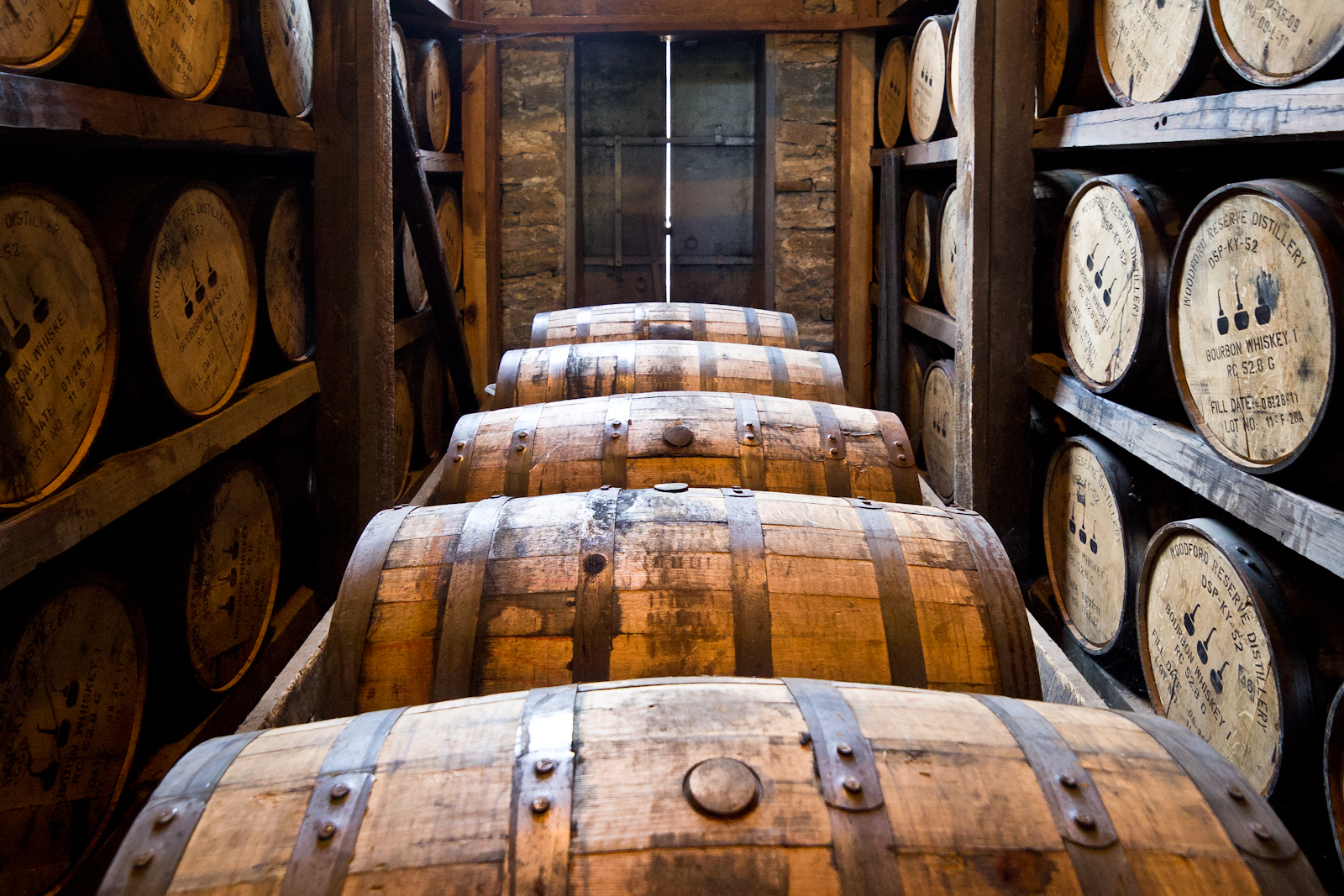
    Woodford Reserve Distillery – Ken Thomas, Public domain, via Wikimedia Commons

    The Invisible Hand

    Kentucky’s weather is not gentle.

    Summers are hot and humid; winters are sharp and cold. Inside rickhouses — those towering wooden warehouses — barrels breathe with txhe seasons. In heat, the spirit expands deep into the wood. In cold, it retreats. Each cycle extracts more flavor, more color, more texture.

    This push and pull is bourbon’s quiet alchemy.

    Evaporation — the “angel’s share” — slowly reduces volume while concentrating flavor. Barrels on higher floors age faster in the heat; lower floors mature more slowly. Master distillers taste through these warehouses like sommeliers walking vineyard rows, selecting barrels for balance and character.

    Time does not simply pass in bourbon. It works.

    At six to eight years, balance often emerges — caramel woven into oak, sweetness anchored by structure. At ten to twelve, depth can become profound: dark toffee, tobacco leaf, polished wood. Beyond that, the line between complexity and over-oaking becomes razor thin.

    Older is not always better. Integrated is better.

    Photo by Ray Suarez on Pexels.com

    Structure in Liquid Form

    Proof is frequently misunderstood as machismo. In truth, it is architecture.

    Lower-proof bourbons feel gentle and accessible. Around 100 proof — historically the “Bottled-in-Bond” standard — the spirit gains tension and clarity. Barrel-proof expressions, often north of 120 proof, deliver intensity, viscosity, and remarkable aromatic lift.

    Higher proof carries more volatile compounds. Add a few drops of water and something magical happens: fruit emerges, florals bloom, hidden sweetness surfaces. The alcohol no longer dominates; it frames.

    It is the equivalent of decanting a young Barolo — not dilution, but revelation.

    Innovation with Restraint

    For generations, bourbon’s identity was simple: new oak and time. But modern producers have begun exploring secondary maturation in barrels that once held other wines or spirits.

    A bourbon finished in port barrels may develop notes of blackberry compote and dark chocolate. Sherry casks can introduce dried fig, toasted walnut, and oxidative depth. Madeira might lend caramelized citrus brightness. Brazilian Amburana wood barrels release waves of cinnamon, clove, and exotic spice.

    When finishing is heavy-handed, it masks. When it is thoughtful, it layers.

    The base spirit must be strong enough to carry the additional influence. When successful, finishing feels like seasoning in a refined kitchen — not an attempt to hide flaws, but to elevate nuance.

    Photo by Riccardo Nora on Pexels.com

    Bourbon at the Table

    As sommeliers, we cannot help ourselves. Bourbon is not merely a nightcap. It belongs at the table.

    Its sweetness and oak make it a natural partner for smoke and caramelization.

    Imagine slow-smoked brisket, the bark echoing charred oak. Picture pork ribs glazed in molasses barbecue sauce, the sauce mirroring bourbon’s caramel tones. A ribeye with a hard sear finds harmony in higher-proof expressions that cut through fat.

    Cheese pairings reveal contrast and echo. Aged cheddar reflects bourbon’s nutty depth. Smoked gouda amplifies its sweetness. Blue cheese offers tension against sweeter styles.

    And dessert? Pecan pie is almost inevitable. Bread pudding with caramel sauce feels ordained. Dark chocolate above 70% cacao creates a bittersweet conversation with oak tannin.

    For something less obvious, consider roasted duck with cherry reduction, or even maple-glazed salmon. Bourbon’s corn sweetness loves subtle sweetness on the plate.

    The guiding principle is simple: mirror caramelization, contrast sweetness, respect texture.

    Bourbon in Motion

    Though contemplative neat, bourbon thrives in structure.

    An Old Fashioned remains the gold standard — two ounces of bourbon, a whisper of sugar, aromatic bitters, and expressed orange peel. It is restraint in liquid form.

    The Manhattan introduces vermouth’s herbal sweetness and creates a dialogue between grain and fortified wine. Served chilled and silken in a coupe, it is timeless.

    The Whiskey Sour, properly made with fresh lemon and egg white, balances sweetness, acidity, and texture — bright yet anchored.

    And the Mint Julep, crushed ice shimmering against polished silver, turns bourbon into summer itself.

    Bourbon does not disappear in cocktails. It defines them.

    Icons of the Category

    While countless producers contribute to bourbon’s evolving narrative, several distilleries have shaped its modern identity:

    • Buffalo Trace Distillery
    • Maker’s Mark
    • Woodford Reserve
    • Wild Turkey
    • Four Roses
    • Heaven Hill

    Each interprets grain ratio, yeast, barrel selection, and proof through its own lens — proving that even within strict legal definition, stylistic diversity thrives.

    The Invitation

    Bourbon is often consumed quickly. It should not be.

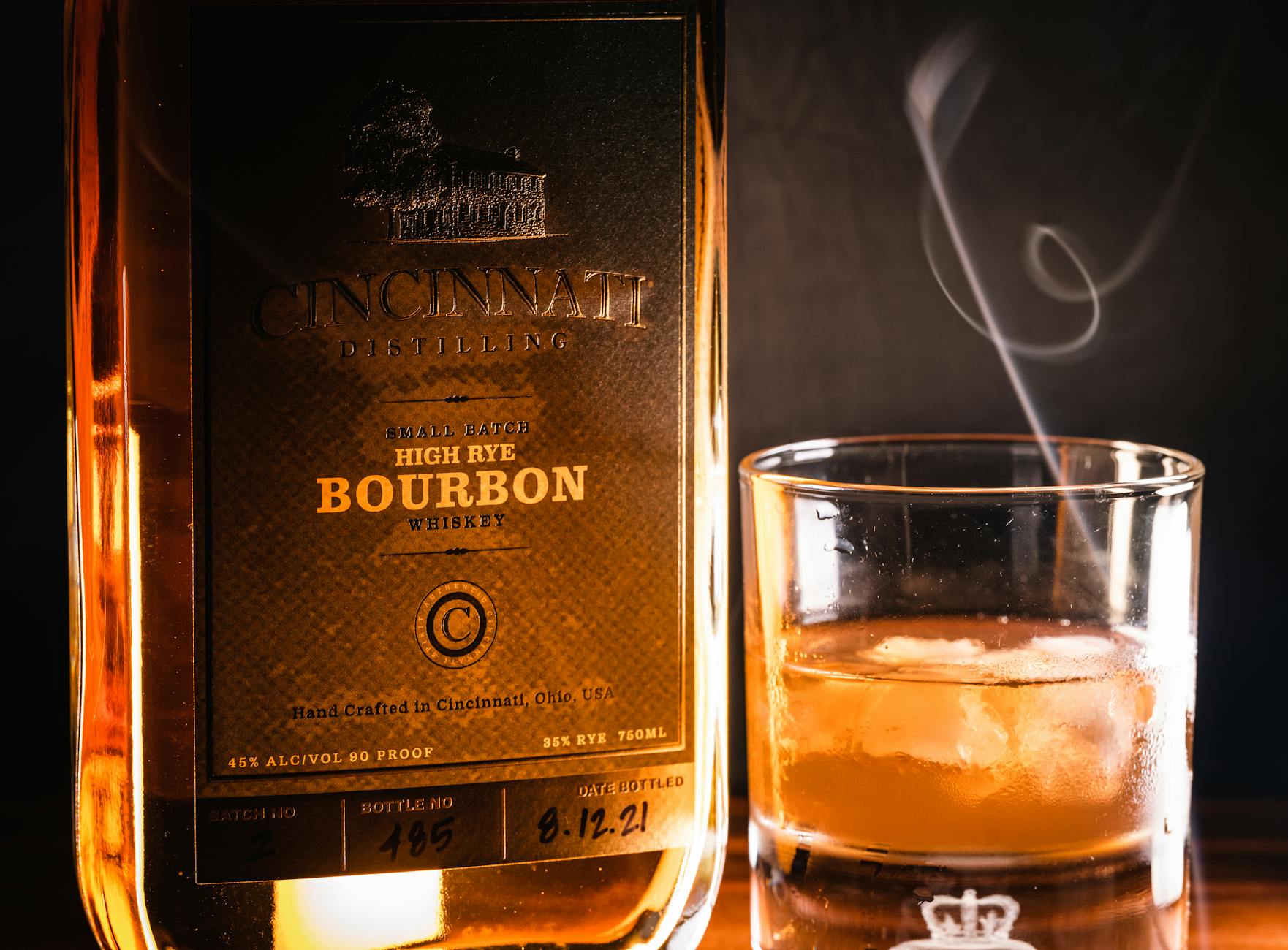
    Pour it neat. Let it rest for a few minutes. Observe the legs in the glass. Inhale gently — caramel, vanilla, perhaps orange peel, perhaps toasted almond. Take a small sip and let it coat the palate. Notice texture before flavor. Then add a few drops of water and watch it evolve.

    Bourbon rewards patience. It rewards attention.

    It is corn made contemplative.
    Fire made graceful.
    Time made tangible.

    And when approached not as a trophy, but as a conversation, bourbon reveals itself as one of the most expressive spirits in the world.

    Not loud.
    Not flashy.
    Just deeply, confidently American — and endlessly worth exploring.

    Cheers 🥃

  • The Art, Science, and Law of Pressing Grapes

    The Art, Science, and Law of Pressing Grapes

    Winter is when vineyards sleep and cellars hum. Fermentations have finished, barrels are topped, and winemakers finally have the quiet space to obsess over the decisions that matter most. And few decisions matter more than what happens between harvest and fermentation—that brief, beautiful, dangerous moment when grapes are pressed.

    Photo by lebu0259u02c8 nu0113z on Pexels.com

    Pressing is where juice becomes wine’s first draft. It is also where texture, structure, aromatics, bitterness, elegance, and even legality begin to take shape.

    If fermentation is the soul of wine, pressing is its bone structure.

    Gregory Dean, SOMM&SOMM
    So pour something contemplative, lean back, and let’s get delightfully nerdy.

    Why Pressing Matters More Than You Think

    At its simplest, pressing extracts juice from grapes. But at its most nuanced, pressing determines:

    • Phenolic load (tannins, bitterness, texture)
    • Aromatic purity vs. rusticity
    • Color extraction
    • Acid balance
    • Ageability
    • Style, classification, and sometimes legal eligibility

    Every press decision answers one quiet question:
    What do we want this wine to feel like?

    The Anatomy of a Grape (Because This Matters)

    Before we talk presses, let’s talk parts:

    • Pulp: Mostly water, sugar, acids. This is the good stuff.
    • Skins: Color, tannins, aroma compounds.
    • Seeds: Bitter tannins, harsh phenolics.
    • Stems: Green, vegetal tannins if included.

    Pressing determines how much of each ends up in the juice. Gentle pressure favors pulp. Aggressive pressure starts dragging skins, seeds, and bitterness into the party.

    Photo by Jean-Paul Wettstein on Pexels.com

    Tools of Texture

    1. Basket Press (The Romantic Traditionalist)

    How it works:
    Grapes are loaded into a cylindrical basket. Pressure is applied from the top via a plate.

    Why winemakers love it:

    • Extremely gentle
    • Low shear forces
    • Minimal seed breakage
    • Exceptional clarity and texture

    Downside:

    • Labor-intensive
    • Lower juice yield
    • Slower

    Best for:

    • High-end Pinot Noir
    • Artisan Chardonnay
    • Skin-contact whites
    • Small-lot, texture-driven wines

    Cork dork note: Basket presses extract juice in layers, allowing winemakers to separate fractions with surgical precision.

    2. Pneumatic (Bladder) Press (The Modern Maestro)

    How it works:
    A rubber bladder inflates inside a closed drum, gently pressing grapes against perforated walls.

    Why it dominates modern winemaking:

    • Precise pressure control
    • Programmable press cycles
    • Inert gas options (oxygen control)
    • Fractionated juice collection

    Downside:

    • Expensive
    • Less romantic

    Best for:

    • Champagne
    • Premium whites
    • Rosé
    • Any wine where elegance matters

    This is the press of choice when purity and finesse outrank brute force.

    Photo by Nico Becker on Pexels.com

    3. Continuous / Screw Press (The Industrial Workhorse)

    How it works:
    A rotating screw pushes grapes through a narrowing chamber.

    Why it exists:

    • High volume
    • Fast
    • Efficient

    Why fine winemakers avoid it:

    • Aggressive extraction
    • Crushed seeds
    • Elevated bitterness
    • Oxidation risk

    Best for:

    • Bulk wine
    • Distillation
    • Juice production

    If basket presses whisper and pneumatic presses speak calmly, screw presses shout.

    A Class of Its Own

    Champagne is not just wine made with bubbles. It is wine made under strict legal and philosophical discipline, and pressing sits at the center.

    Why Champagne Pressing Is Different

    Champagne grapes (primarily Pinot Noir, Meunier, and Chardonnay) are:

    • Picked early
    • High in acid
    • Low in sugar
    • Extremely sensitive to phenolic extraction

    The goal is white juice from black grapes without bitterness or color.

    Photo by Rene Terp on Pexels.com

    The Coquard Press (Champagne’s Crown Jewel)

    Traditional Champagne houses used the Coquard press, a shallow basket press designed to:

    • Minimize skin contact
    • Apply ultra-gentle pressure
    • Extract juice evenly

    Modern Champagne often uses pneumatic presses, but the philosophy remains unchanged.

    The Coquard Press

    If Champagne has a soul, the Coquard press is where it learned restraint.

    Developed specifically for the region, the Coquard is a shallow, wide basket press designed to extract juice slowly, evenly, and with almost monk-like discipline. Its low fill height prevents the crushing weight that darker, more aggressive presses impose on grapes, reducing skin rupture, seed breakage, and unwanted phenolic extraction.

    Why does that matter? Because Champagne grapes are picked early, packed with acid, and incredibly sensitive. The goal is crystal-clear juice from black grapes without dragging color, bitterness, or texture along for the ride. The Coquard excels at producing pristine cuvée juice, the fraction reserved for the finest wines and longest aging.

    Modern pneumatic presses may now dominate the region, but they still follow the Coquard’s philosophy:
    gentle pressure, fractionated juice, and elegance over efficiency.

    In Champagne, pressing isn’t about how much juice you get. It’s about knowing exactly when to stop.

    The Sacred Fractions of Champagne Pressing

    By law, Champagne pressing is fractionated:

    1. Cuvée (The First Press)

    • ~20.5 hL from 4,000 kg of grapes
    • Purest juice
    • Highest acid
    • Lowest phenolics
    • Longest aging potential

    This is the backbone of great Champagne.

    2. Taille (The Second Press)

    • ~5 hL
    • Slightly more color
    • More phenolics
    • Less finesse

    Still usable, but handled carefully.

    Anything Beyond?

    Illegal for Champagne AOC.

    That juice must be sold off, distilled, or declassified.

    Juice Has a Timeline

    Regardless of region, pressing typically unfolds in stages:

    Free Run Juice

    • Flows without pressure
    • Aromatic
    • Low phenolics
    • Often kept separate

    Light Press

    • Gentle pressure
    • Balanced structure
    • Prime real estate for quality wine

    Hard Press

    • Higher pressure
    • Increased bitterness
    • More solids
    • Used sparingly or blended cautiously

    Press Wine

    • Darker
    • Tannic
    • Powerful
    • Sometimes used for structure in reds

    Is one pressing better?
    Not inherently. The magic lies in how and when they are blended.

    Same Press, Different Goals

    White Wine

    • Pressed before fermentation
    • Goal: clarity, acidity, aromatic purity
    • Oxygen exposure is tightly controlled

    Red Wine

    • Pressed after fermentation
    • Alcohol increases extraction
    • Press wine can be bold, structured, and useful

    Many winemakers treat press wine like spice: too much ruins the dish, but a touch adds depth.

    When Nature Holds Back, Craft Steps Forward

    Low-yield vintages have a way of revealing who the true artists are.

    Frost, hail, drought, poor fruit set—when the vines give less, the cellar feels it immediately. Tanks look emptier. Press cycles feel longer. And every decision carries more weight. In these years, the temptation to chase volume is real, but the finest winemakers know that pressing harder is rarely the answer.

    Instead, artistry shows up in how pressure is applied, not how much.

    Rather than increasing press force, experienced hands often extend press cycles, allowing juice to release slowly and naturally. More time between press steps lets gravity do the work, coaxing additional juice without tearing seeds apart or dragging bitterness into the must. It’s a quieter extraction, but a smarter one.

    Low-yield years also bring a finer lens to fractionation. Where generous vintages allow for easy discard of late press juice, lean years invite careful evaluation. Free run, early press, mid press, late press—each fraction is tasted, assessed, and trialed independently. Nothing is assumed. Nothing is wasted. Some lots may find their way into second wines, others into earlier-drinking cuvées, and some never make the final blend at all.

    For red wines, press wine becomes a more prominent conversation. Its structure and density can be invaluable in a year where natural concentration is high but volume is low. Used judiciously, it adds backbone. Used carelessly, it overwhelms. The difference lies not in machinery, but in judgment.

    Nowhere is restraint more codified than in Champagne. Even in punishing vintages, the laws remain unmoved. The cuvée and taille fractions are fixed, and juice beyond the legal yield simply cannot become Champagne. The response is never to force extraction, but to lean harder on reserve wines, blending skill, and patience. In Champagne, scarcity does not justify compromise—it demands mastery.

    Ironically, low yields often require less aggression, not more. Smaller berries mean higher skin-to-juice ratios, faster phenolic pickup, and a narrower margin for error. The press becomes a scalpel, not a hammer.

    This is where true winemakers separate themselves from technicians. Anyone can extract more juice. Only artists know when another drop costs too much.

    Pressing, at its highest level, is not about efficiency. It is about listening—
    to the fruit, to the vintage, and to the long arc of the wine yet to come.

    When Physics Meets Bureaucracy

    Pressing is not just technical—it’s legal.

    Examples:

    • Champagne: Strict yield and fraction limits
    • PDOs in Europe: Juice yield caps per hectare
    • Prosecco DOCG: Pressing methods influence classification
    • Germany: Press fractions affect Prädikat eligibility
    • Rosé regulations: Skin contact time and pressing method define legal style

    Wine laws exist to protect typicity, but they also enforce restraint. You can’t press your way into greatness if the law won’t let you.

    Pressing Is a Philosophy

    Pressing is where restraint reveals itself.

    It’s where great winemakers prove they understand that more extraction is rarely better, that elegance is coaxed, not forced, and that the finest wines are often born from what was not taken.

    So next time you sip a crystalline Blanc de Blancs or a silken Pinot Noir, remember:
    that wine’s finesse was decided long before yeast ever showed up.

    And that, dear friends, is why pressing grapes is one of the quietest flexes in all of winemaking. 🍷

    Cover Photo by Pedro Rebelo Pereira on Pexels.com

  • Coming Back to the Glass

    Coming Back to the Glass

    Reintroducing Wine & Cocktails After Dry January.

    Dry January asks us to pause. Not just from drinking, but from routine. From habit. From the automatic pour at the end of the day. Whether you completed all thirty-one days or simply drank far less than usual, taking a break from alcohol is a meaningful act of self-awareness. It gives your body time to reset and your mind a chance to notice how alcohol fits into your life.

    As January comes to a close, many people are ready to welcome wine and cocktails back into social gatherings. The key is remembering that your tolerance has changed, and that change is a positive thing.

    Photo by cottonbro studio on Pexels.com

    What a Break Gives You

    Most people notice tangible benefits after a few weeks without alcohol. Better sleep. Clearer mornings. Improved focus. Less inflammation. There is also a subtler shift that matters just as much: a renewed sense of intention.

    When you step away, you realize how often drinking can be automatic rather than deliberate. Coming back with awareness allows wine and cocktails to return to their proper place, not as background noise, but as part of an experience.

    That awareness is something worth keeping.

    Photo by cottonbro studio on Pexels.com

    Ease Back In

    After a month off, it takes fewer sips to feel the effects. That surprises people, and sometimes catches them off guard. The solution is simple and enjoyable.

    Pour a smaller glass. Sip more slowly. Drink water alongside your wine or cocktail. Focus on how the drink tastes rather than how quickly it disappears. One well-chosen glass often delivers more pleasure than several poured without thought.

    This approach does not diminish enjoyment. It heightens it.

    Let Flavor Lead

    With a refreshed palate, subtlety becomes more noticeable. This is a great time to lean toward wines and cocktails that emphasize balance and character over power.

    In wine, this might mean crisp whites, fresh sparkling wines, or reds that favor elegance and lift. In cocktails, it can mean lower-proof options, classic recipes made well, or spirit-forward drinks enjoyed slowly rather than aggressively.

    When flavor leads, moderation follows naturally.

    Responsibility Is Part of Hospitality

    Drinking responsibly is not a disclaimer. It is a cornerstone of good hospitality and good living.

    Knowing your limits, respecting how alcohol affects you now, and choosing when to stop are all signs of confidence, not restriction. Dry January does not end in February; its lessons carry forward into how and why you drink the rest of the year.

    Wine and spirits should enhance moments, not overwhelm them.

    Photo by Any Lane on Pexels.com

    Why Wine Still Matters

    Wine has always been more than what’s in the glass. It invites conversation. It encourages people to linger. It gives strangers something in common and friends something to share. In a world that feels increasingly divided, wine still brings people to the same table.

    A bottle opened with intention creates space for listening, laughter, and connection. Those moments matter.

    Cocktails and the Social Table

    Cocktails play a similar role. They mark occasions. They signal welcome. Even one thoughtfully prepared drink can change the energy of a gathering. The ritual of ice, glassware, and balance creates a shared experience before the first sip is taken.

    Cocktails work best when they are part of the evening, not the focus of it.

    A Thoughtful Return

    Reintroducing wine and spirits after Dry January is not about returning to old habits. It is about choosing new ones with clarity. Drink a little less. Enjoy a little more. Pay attention to how you feel. Share good bottles with good people.

    That balance is where wine and cocktails belong.

    And that is where they shine. Cheers 🍷

    Photo by MART PRODUCTION on Pexels.com

    Important Tip: Water Is the Quiet MVP

    One of the most valuable habits people carry forward after Dry January is drinking more water, and it remains just as important once wine and cocktails return. Alcohol is dehydrating by nature, and after a break, your body feels that effect more quickly.

    Drinking water alongside alcohol slows consumption, sharpens your awareness, and helps your body process what you are enjoying. It keeps your palate fresh, reduces fatigue, and supports better sleep later in the evening. From a social standpoint, it also extends the experience. You stay present longer, engage more clearly in conversation, and wake up the next morning without regret.

    A simple rule works well: one glass of water for every drink, enjoyed at your own pace. It is not a restriction. It is a form of care.

    Good hydration allows wine and cocktails to remain what they are meant to be: companions to connection, not competitors for attention.

    Cover Photo by Jayant Kulkarni on Pexels.com

  • Tokaji: Hungary’s Golden Secret

    Tokaji: Hungary’s Golden Secret

    …and why you should stop being afraid of it 😉

    Tokaji is one of the world’s most misunderstood wines—and frankly, one of its most rewarding. Tiny bottles, unfamiliar words, strange numbers, and labels that look like they were designed by a medieval scribe… no wonder most people reach for Sauternes instead. Safer. Familiar. French.

    But Tokaji is older, deeper, more versatile, and—dare I say—more soulful.

    If you’re a wine lover with even a passing interest in history, sweetness balanced by acid, or hidden gems that reward curiosity, Tokaji isn’t intimidating at all. It’s an invitation.

    Related SOMM&SOMM article: Wine Styles: Late Harvest Wines
    A Little History & Lore (Because Tokaji Has Plenty)

    Tokaji comes from northeastern Hungary, in the Tokaj-Hegyalja region, near the borders of Slovakia and Ukraine. This is not a “new discovery” wine. Tokaji Aszú was being made centuries before Sauternes—with documented production as early as the mid-1600s.

    In fact:

    • Tokaj was the first classified wine region in the world (1737)—nearly 120 years before Bordeaux.
    • Louis XIV famously called Tokaji “Vinum Regum, Rex Vinorum”The Wine of Kings, the King of Wines.
    • It was a favorite at royal courts across Europe, from the Habsburgs to the Russian Tsars.

    And yes, there’s lore: monks, misty autumn mornings, noble rot creeping slowly across vineyards as the Bodrog and Tisza rivers create the perfect fog-and-sun rhythm. Tokaji didn’t stumble into greatness—it was engineered by nature and refined by time.

    The Grapes Behind the Magic

    Tokaji is not a single-varietal wine in spirit, even if one grape dominates.

    Furmint (the star)

    • High acid (crucial for balance)
    • Neutral to apple-pear-citrus when dry
    • Transforms beautifully with botrytis
    • Think: green apple, quince, citrus peel, honeycomb, wet stone

    Hárslevelű

    • Softer acidity
    • Floral, herbal, linden blossom notes
    • Adds perfume and roundness

    Supporting Cast (used in smaller amounts)

    • Sárgamuskotály (Yellow Muscat) – aromatics and spice
    • Zéta – botrytis-prone, boosts sweetness
    • Kövérszőlő – richness and texture

    Furmint provides the spine. Everything else adds flesh, fragrance, and intrigue.

    Tokaji Aszú – Beemwej, CC BY-SA 3.0, via Wikimedia Commons

    Tokaji Styles: More Than Just Sweet Wine

    Here’s where Tokaji really starts to surprise people.

    1. Tokaji Aszú (The Icon)

    Made from individually harvested botrytized berries (aszú berries), traditionally added to a base wine.

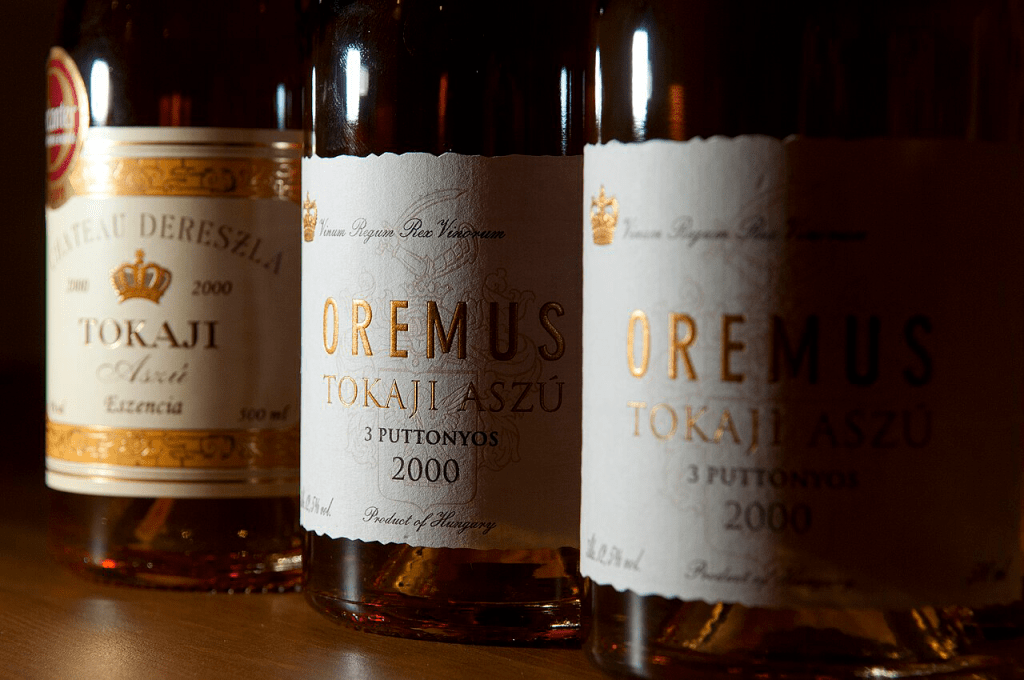
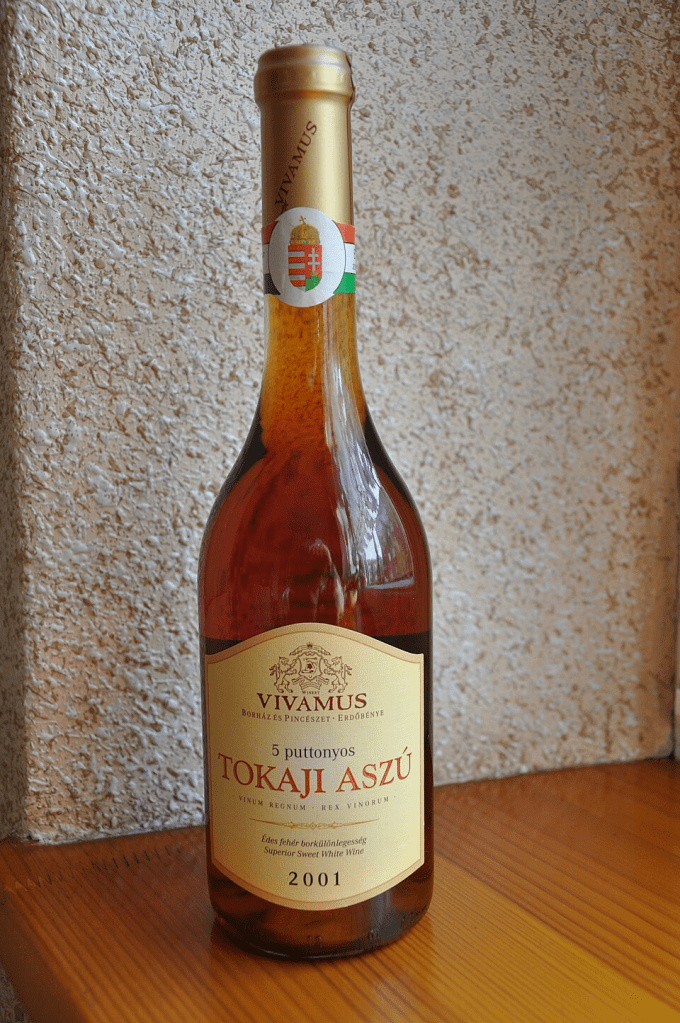
    Sweetness used to be measured in Puttonyos (the number of baskets of aszú berries added):

    • 3–6 Puttonyos (historically)
    • Today, most producers focus on 5 or 6 Puttonyos-level richness or simply label sweetness in grams

    Flavor profile:

    • Apricot jam
    • Orange marmalade
    • Honey
    • Ginger
    • Saffron
    • Toasted nuts
    • Laser-bright acidity holding it all together

    This is where Tokaji earns its crown.

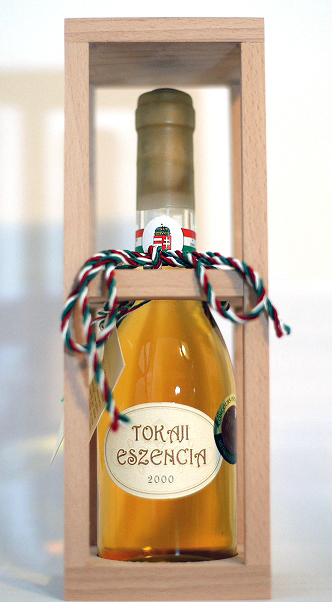
    Tokaji Eszencia: Emdee, CC BY-SA 3.0, via Wikimedia Commons

    2. Tokaji Eszencia (Liquid Myth)

    Not really wine in the traditional sense.

    • Free-run juice from aszú berries
    • Ferments extremely slowly
    • Often 1–3% alcohol
    • Astronomical sugar
    • Tiny production

    Think:

    • Nectar
    • Honeyed citrus oil
    • Dried tropical fruit
    • Eternal finish

    This is something you sip by the teaspoon and contemplate your life choices.

    3. Szamorodni (The Insider’s Favorite)

    Made from whole bunches—some botrytized, some not.

    Two styles:

    • Édes (Sweet) – oxidative, nutty, honeyed
    • Száraz (Dry) – sherry-like, savory, saline, almond-driven

    If you love Jura, aged Fino Sherry, or oxidative whites… dry Szamorodni will blow your mind.

    4. Late Harvest Tokaji

    • Made from overripe grapes
    • Often labeled Késői Szüret
    • Lusher and more approachable
    • Excellent gateway Tokaji

    5. Dry Tokaji (Dry Furmint)

    Yes—Tokaji can be bone dry.

    • Crisp
    • Mineral
    • Apple, pear, citrus, volcanic stone
    • Think Chablis meets Grüner meets something unmistakably Hungarian

    These wines are phenomenal with food and criminally underrated.

    Decoding the Label (Without Panicking)

    Here’s your Tokaji cheat sheet:

    • Aszú – made from botrytized berries
    • Puttonyos – traditional sweetness level (less common today)
    • Édes – sweet
    • Száraz – dry
    • Szamorodni – whole-cluster style
    • Eszencia – ultra-concentrated nectar
    • Furmint / Hárslevelű – grape varieties
    • Dűlő – vineyard (single-site quality cue)

    If you can read a German Riesling label, you can conquer Tokaji.

    Pairings (This Is Where Tokaji Shines)

    Tokaji is not just a dessert wine. That’s the biggest misconception of all.

    Classic Pairings

    • Foie gras (legendary for a reason)
    • Blue cheese (Roquefort, Stilton, Gorgonzola)
    • Apricot tart
    • Almond pastries

    Unexpected & Brilliant

    • Spicy Thai or Szechuan dishes
    • Indian curries with ginger and turmeric
    • Moroccan tagines
    • Roast pork with stone fruit
    • Duck with orange or cherry glaze

    Dry Tokaji Pairings

    • Roast chicken
    • Pork schnitzel
    • Mushroom dishes
    • Alpine cheeses
    • Seafood with beurre blanc

    Szamorodni Pairings

    • Aged cheeses
    • Salted nuts
    • Mushroom risotto
    • Anything umami-forward

    Eszencia Pairing

    • Silence
    • A quiet room
    • One small spoon
    • Awe
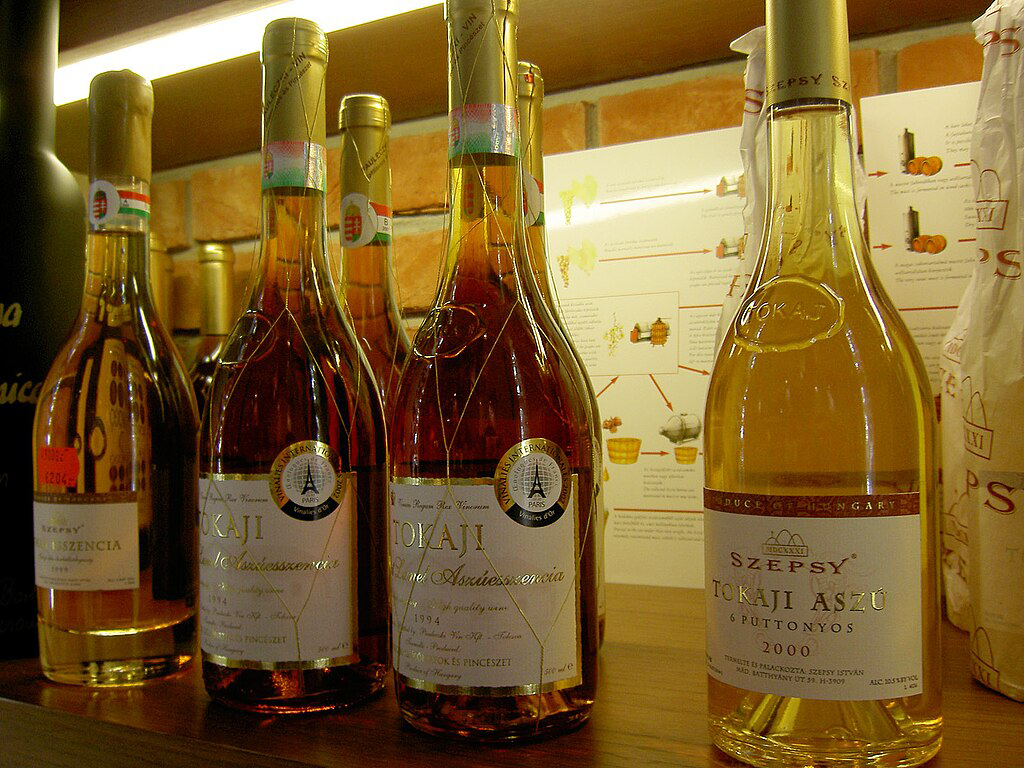
    Bottles of Tokaji – takato marui, CC BY-SA 2.0, via Wikimedia Commons

    Why Tokaji Matters

    Tokaji isn’t just a wine—it’s a bridge between:

    • Sweet and savory
    • History and modernity
    • Intellectual curiosity and pure pleasure

    It rewards patience, but it doesn’t demand pretension. And for sommeliers and wine lovers with a passion for the obscure, Tokaji is the kind of bottle that reminds us why we fell in love with wine in the first place.

    So next time you’re tempted to grab the Sauternes because it feels easier…

    Don’t.

    Reach for Tokaji.
    Your palate will thank you—and your wine stories will be better for it. 🍷

    Cover Photo: Michal Osmenda, CC BY-SA 2.0, via Wikimedia Commons

  • Finding the Sweet Spot

    Finding the Sweet Spot

    When to Hold Wine–and When to Open It.

    There’s a romantic notion in the wine world that older is always better. Cellars lined with dusty bottles, handwritten tags dangling from necks, and the quiet confidence that someday—someday—each bottle will reach a transcendent peak.

    Sometimes that’s true.

    Often, it’s not.

    As serious oenophiles, we spend far less time preaching patience and far more time chasing something subtler and more rewarding: a wine’s sweet spot—that fleeting, glorious window when a wine tastes exactly as it should. Balanced. Expressive. Alive.

    Understanding when to hold and when to open is one of the most misunderstood aspects of wine enjoyment. Let’s uncork the myths, mistakes, and realities of aging wine—and have a little fun along the way.

    Photo by Ayberk Mirza on Pexels.com

    What Does “Aging Wine” Really Mean?

    Aging wine isn’t about hoarding bottles for decades just to prove restraint. It’s about chemical evolution.

    Over time, wine changes as:

    • Tannins polymerize, becoming smoother and silkier
    • Primary fruit flavors (fresh fruit) give way to secondary (oak, spice) and tertiary notes (leather, mushroom, earth, dried fruit)
    • Acidity integrates, creating harmony rather than sharpness

    But here’s the critical truth:

    Every wine has a sweet spot—open it before and it’s still forming, open it after and the magic has already passed.

    And that peak is not universal.

    Photo by cottonbro studio on Pexels.com

    The Winemaker’s Intent

    Many people assume that aging a wine is about achieving the winemaker’s intended tasting experience.

    Sometimes that intent includes aging potential.
    Sometimes it does not.

    Most wines on the market today—especially under $30—are crafted to be approachable upon release. The winemaker expects you to drink them within a few years, not babysit them through your next mortgage cycle.

    Winemakers design wines based on:

    • Grape variety
    • Structure (tannin, acid, alcohol)
    • Region and climate
    • Oak usage
    • Market expectations

    A Napa Cabernet and a Beaujolais Nouveau may both be red wines—but they are built for entirely different lifespans.

    Photo by Cup of Couple on Pexels.com

    The Sweet Spot (Our Favorite Moment)

    The sweet spot is when:

    • Fruit is still present, but not dominant
    • Tannins are resolved, not stripped
    • Acidity lifts the wine instead of biting
    • Complexity feels layered, not muddled

    Miss it on either side and you lose something.

    Too young:

    • Harsh tannins
    • Disjointed flavors
    • Oak overpowering fruit

    Too old:

    • Faded fruit
    • Flat acidity
    • Oxidation and bitterness

    The tragedy? Many wines are opened after their sweet spot—not before.

    Photo by Jana Ohajdova on Pexels.com

    The Biggest Myth We Hear Every Day: “All Wine Gets Better with Age”

    Let’s put a cork in this right now:

    The vast majority of wine does NOT improve with age.

    Estimates vary, but roughly 90% of wine produced globally is meant to be consumed within 1–3 years of release.

    That includes:

    • Most Sauvignon Blanc
    • Pinot Grigio
    • Prosecco
    • Rosé
    • Everyday Chardonnay
    • Entry-level reds

    Aging these wines doesn’t make them better.
    It makes them older.

    And old is not a tasting note.

    Photo by Hobi Photography on Pexels.com

    Wines That Do Benefit from Aging (When Stored Properly—and Thoughtfully)

    Certain wines are structurally built to evolve:

    Reds with Aging Potential

    • Cabernet Sauvignon
    • Nebbiolo (Barolo, Barbaresco)
    • Syrah/Shiraz (especially Rhône)
    • Tempranillo (Rioja, Ribera del Duero)
    • Sangiovese (Brunello di Montalcino)

    Whites That Can Age Beautifully

    • Riesling (especially German and Alsatian)
    • Chenin Blanc (Loire)
    • High-quality Chardonnay (Burgundy, select New World)
    • White Rhône blends

    Fortified & Sweet Wines

    • Vintage Port
    • Madeira
    • Sauternes
    • Tokaji

    Even then, aging is not guaranteed. Structure matters more than reputation.

    When Aging Goes Too Far

    Every wine eventually declines.

    Signs you’ve missed the sweet spot:

    • Muted aromas
    • Brownish color in whites
    • Brick-orange edges in reds (not always bad—but telling)
    • Sourness without freshness
    • Bitter or hollow finishes

    This doesn’t mean the wine is “bad.”

    It means it’s past its moment.

    Wine is alive—just like us. And just like us, it doesn’t peak forever.

    Photo by u041du0430u0442u0430u043bu044cu044f u041cu0430u0440u043au0438u043du0430 on Pexels.com

    Storage Mistakes We See All the Time (That Kill Wine Dreams)

    1. Overestimating Home Storage

    A kitchen rack is décor—not a cellar.

    Wine hates:

    • Heat
    • Light
    • Temperature swings

    That “I’ll just keep it in the closet” plan? Risky at best.

    2. Saving Wine for the Wrong Occasion

    “I’ll open this someday.”

    Someday becomes never.

    Wine is meant to be shared—not inherited.

    3. Confusing Price with Aging Ability

    An expensive wine can still be meant for early drinking.

    Structure—not price tag—determines longevity.

    4. Blind Faith in Vintage Charts

    Vintage charts are guidelines, not gospel.

    Bottle variation, storage conditions, and personal taste all matter.

    Is Finding the Sweet Spot an Exact Science? (Of Course Not.)

    Absolutely not.

    It’s a blend of:

    • Knowledge
    • Experience
    • Storage conditions
    • Personal preference
    • A little luck

    Two identical bottles stored differently can taste worlds apart.

    That uncertainty isn’t a flaw—it’s part of wine’s magic.

    Photo by Pavel Danilyuk on Pexels.com

    Drink with Curiosity, Not Fear

    We don’t chase perfection—we chase connection.

    We open wines young to understand their promise.
    We open them aged to appreciate their journey.

    And sometimes we open them simply because the moment feels right.

    The true sweet spot isn’t just in the bottle.

    It’s at the table.

    So if you’re ever wondering whether to hold or open, remember:

    Wine enjoyed slightly early is a lesson.
    Wine opened too late is a regret.

    Choose the lesson.

    Pop the cork.

    Cheers 🍷

    Cover Photo by Hunt on Photos Studio on Pexels.com

  • Learning to Speak Italian (Wine)

    Learning to Speak Italian (Wine)

    A guide to Italy’s lesser‑known grapes—pronunciation encouraged, confusion forgiven.

    Italy is not a single wine language. It is a chorus of dialects, whispered in mountain valleys, shouted from sun‑baked coasts, and stubbornly preserved by families who never bothered to translate for outsiders. To learn Italian wine is not to memorize a list—it is to learn how words change when they cross a hill, how the same grape answers to multiple names, and how geography shapes accent, structure, and soul.

    Photo by Fabrizio Velez on Pexels.com

    This is your language lesson. We are not starting with ciao (Sangiovese) or grazie (Nebbiolo). Instead, we’re learning the phrases that make you sound fluent—the lesser‑known varietals that do make it outside of Italy if you know how (and where) to look.

    Think of this as conversational Italian for wine lovers.

    Photo by Andrea Mosti on Pexels.com

    Italian Is a Regional Language

    Before vocabulary, a rule: Italy does not speak one Italian wine dialect. Grapes change names as they cross borders. Sometimes they change personality. Sometimes they pretend to be something else entirely.

    So when you see multiple names in parentheses, don’t panic. That’s not confusion—it’s fluency.

    Photo by Toni Canaj on Pexels.com

    False Friends & Familiar Strangers

    Turbiana (a.k.a. Trebbiano di Lugana)

    Pronunciation: tur‑BEE‑ah‑nah

    Let’s clear the fog immediately.

    Turbiana is not the watery Trebbiano you’re thinking of. Grown around Lake Garda in Lugana DOC, this grape produces wines with texture, salinity, and surprising age‑worthiness.

    How it speaks: lemon oil, almond skin, white flowers, wet stone

    Why it matters: It teaches an essential Italian lesson—same family, different personality.

    Where to find it: Lugana DOC bottlings from Ca’ dei Frati, Zenato, Ottella

    Sangiovese Grosso (Brunello’s Real Name)

    Pronunciation: san‑joe‑VAY‑zeh GROSS‑oh

    Not lesser‑known, but deeply misunderstood.

    Sangiovese Grosso is not a different grape—it’s a biotype, thicker‑skinned and slower‑ripening than Chianti’s Sangiovese. Italians care about this distinction. You should too.

    How it speaks: sour cherry, dried rose, tea leaf, savory earth

    Why it matters: Italian wine often hinges on clones, not varietals.

    Where to find it: Brunello di Montalcino (widely exported)

    Photo by Leon Kohle on Pexels.com

    Northern Accents (Alpine & Adriatic)

    Schiava (a.k.a. Vernatsch)

    Pronunciation: SKYA‑vah

    This is the grape everyone underestimates.

    From Alto Adige, Schiava produces pale‑colored reds with fragrance over power. Chill it slightly and it becomes irresistible.

    How it speaks: strawberry, alpine herbs, almond, fresh mountain air

    Why it matters: It breaks the myth that Italian reds must be heavy.

    Where to find it: Alto Adige DOC imports (Elena Walch, Cantina Tramin)

    Lagrein

    Pronunciation: lah‑GRAIN

    If Schiava whispers, Lagrein growls.

    Also from Alto Adige, Lagrein is deeply colored, muscular, and structured—yet retains alpine freshness.

    How it speaks: blackberry, cocoa, iron, violets

    Why it matters: Italy does bold without abandoning balance.

    Where to find it: Alto Adige Lagrein Rosso or Riserva

    Refosco dal Peduncolo Rosso

    Pronunciation: reh‑FOSS‑koh dal peh‑DOON‑koh ROSS‑oh

    Yes, the full name matters.

    This Friulian grape is dark, wild, and feral in the best way—high acidity, grippy tannin, and savory depth.

    How it speaks: sour cherry, forest floor, black olive, iron

    Why it matters: Friuli is not just Pinot Grigio country.

    Where to find it: Friuli‑Venezia Giulia specialists

    Central Italy’s Secret Vocabulary

    Ciliegiolo

    Pronunciation: chee‑leh‑JYO‑loh

    Long thought to be a clone of Sangiovese (it isn’t), Ciliegiolo is softer, rounder, and more openly fruited.

    How it speaks: ripe cherry, red plum, spice, soft herbs

    Why it matters: Tuscany has more voices than Chianti.

    Where to find it: Tuscany IGT bottlings

    Pecorino (Yes, Like the Cheese)

    Pronunciation: peh‑koh‑REE‑noh

    No sheep involved—just mountain acidity and structure.

    From Abruzzo and Marche, Pecorino delivers aromatic intensity with surprising weight.

    How it speaks: citrus zest, sage, stone fruit, salinity

    Why it matters: Italian whites can age.

    Where to find it: Abruzzo & Marche imports (Valentini if you’re lucky)

    Photo by Elijah Cobb on Pexels.com

    Southern Dialects (Sun, Salt & Structure)

    Nero d’Avola

    Pronunciation: NEH‑roh DAH‑voh‑lah

    Often simplified as “Sicilian Shiraz,” Nero d’Avola deserves better.

    How it speaks: black cherry, licorice, dried herbs, warm earth

    Why it matters: Sicily balances heat with restraint.

    Where to find it: Widely exported—look for single‑vineyard expressions

    Frappato

    Pronunciation: frah‑PAH‑toh

    If Nero d’Avola is Sicily’s bass line, Frappato is its melody.

    Light‑bodied, floral, and joyful—especially in Cerasuolo di Vittoria blends.

    How it speaks: raspberry, rose petal, pink peppercorn

    Why it matters: Southern Italy isn’t all power.

    Where to find it: Sicily DOC and Cerasuolo di Vittoria (Sicily’s only DOCG)

    Aglianico

    Pronunciation: ah‑LYAH‑nee‑koh

    Often called the “Barolo of the South,” though it doesn’t need the comparison.

    How it speaks: black fruit, smoke, leather, volcanic minerality

    Why it matters: Structure is not exclusive to the north.

    Where to find it: Taurasi DOCG, Aglianico del Vulture

    Photo by Andrea Mosti on Pexels.com

    Fluency Comes From Curiosity

    Learning to speak Italian wine is not about perfection—it’s about participation. Pronounce boldly. Ask questions. Follow the parentheses.

    Italy rewards effort.

    Because once you stop asking “Why is this so confusing?” and start saying “Ah… this is just another dialect,” you’re no longer translating.

    You’re conversing.

    Salute 🍷

    Cover Photo by Andrea Mosti on Pexels.com

  • Old World Regions: Veneto

    Old World Regions: Veneto

    Italy’s Northern Powerhouse of Wine, Culture & Quiet Brilliance.

    December is a reflective month — the harvest is done, cellars are buzzing with fermentations, and wine lovers around the world begin to ask a beautiful question: What did this year give us to drink?

    If there’s any region in Italy that deserves our attention during this season of pause and appreciation… it’s Veneto — a land where misty hills meet ancient canals, and where wine isn’t simply grown… it’s lived.

    Veneto isn’t a “wine region” — it’s twenty lifetimes of wine styles packed into one territory. From joyful Prosecco to profound Amarone. From crisp Soave to salty Lugana. From unknown grapes to international classics. Veneto is northern Italy’s quiet giant — and the more you explore it, the more it rewards you.

    Photo by Lizzie Prokhorova on Pexels.com

    A Glass-Shaped Map of Veneto

    Think of Veneto as three wine landscapes:

    AreaCharacterSignature Styles
    The Plains (Venice, Verona surroundings)Fresh, easy-drinkingProsecco, Pinot Grigio, Bardolino
    The Hills (Valpolicella, Soave, Conegliano)**Mineral-driven, structuredSoave, Valpolicella, Amarone, Recioto
    The Lakes (Garda area)**Saline, floral, softLugana, Chiaretto Rosé

    Veneto alone produces more wine than any other region in Italy — over 25% of the nation’s total production. But here’s the secret: quantity doesn’t overshadow quality. Some of the world’s most loved and most profound wines are born here.

    Classics of Veneto (Must-Know Wines)

    1. Prosecco DOC / DOCG — Italy’s Sparkling Smile

    • Grape: Glera
    • Profile: Pear, green apple, floral, light, friendly
    • Best With: Fried seafood, sushi, popcorn with truffle salt
    • Elevated Cocktail:
      Sgroppino — Prosecco + lemon sorbet + vodka. Yes… dreamy.

    2. Soave DOC / Soave Classico DOC — The Renaissance White

    • Grape: Garganega
    • Profile: Almonds, lemon zest, white peach, minerals
    • Why Sommeliers Love It: With age, it can taste like white Burgundy at a fraction of the price.
    • Pairing Idea:

    Try Soave Superiore if you want depth. Try Recioto di Soave if you want sweet bliss with blue cheese.

    3. Valpolicella Family — The Beating Heart of Veneto Reds

    Valpolicella isn’t a single wine — it is a ladder of complexity:

    StyleTechniqueFlavor Profile
    Valpolicella ClassicoFreshCherry, herbs
    Ripasso“Passed over” Amarone skinsDark fruit + spice
    Amarone della ValpolicellaDried grapesPowerful, intense
    Recioto della ValpolicellaSweet versionLuscious, velvety

    Somm Tip: This region invented appassimento — drying grapes to concentrate sugars & flavors. Amarone is an opus: raisins, chocolate, smoke, black cherry, licorice, leather. A winter fireplace wine.

    Food Pairings:

    Featured Wine Cocktail:
    👉 Amarone Manhattan – 1 oz Amarone, 1 oz Rye whiskey, dash of bitters, orange peel.

    4. Lugana DOC — Lake Garda’s Whisper

    • Grape: Turbiana (genetically related to Verdicchio)
    • Profile: Floral, saline, lemon curd, almond
    • Pairing Perfection:
      • Lake fish
      • Sushi
      • Caprese salad
      • Fresh mozzarella

    If you like Chablis or Pinot Grigio, try Lugana. You’ll find more flavor, more soul, and more story.

    5. Less Known… But So Worth Knowing

    RegionGrapeStyleWhy It Matters
    BreganzeVespaioloDry / sweetHidden gem. The sweet version with gorgonzola is legendary.
    Colli EuganeiMoscato GialloAromaticGreat with spicy Thai or Indian food.
    MontelloBordeaux blendsStructured redsItaly meets Bordeaux but still Italian in spirit.
    CustozaBlendCrisp whiteBetter alternative to mass Pinot Grigio.
    Photo by Enzo Iorio on Pexels.com

    The Veneto Pairing Table

    WineIdeal PairingMood
    ProseccoFried calamariCelebration or Sunday brunch
    Soave ClassicoSpring vegetablesFresh & reflective
    Valpolicella RipassoPizza or lasagnaCozy & casual
    AmaroneRoast meats, contemplationWinter fireside
    ReciotoDark chocolateDessert & decadence
    LuganaRaw seafoodCalm, lakeside evening
    Breganze TorcolatoBlue cheeseSweet & savory elegance
    Photo by Andrea Piacquadio on Pexels.com

    Wine Cocktails from Veneto

    Give your guests (or yourself) something unexpected:

    CocktailIngredientsServes With
    SgroppinoProsecco + lemon sorbet + vodkaBrunch
    Americano RosaChiaretto rosé + Campari + sodaSunset
    Amarone ManhattanAmarone + rye + bittersLate-night jazz
    Soave SpritzSoave + soda + basilGarden afternoons

    Add mint, rosemary or thyme for an aromatic lift. Veneto pairs beautifully with herbs.

    The Soul of Veneto

    Veneto doesn’t chase trends. It honors history and refines technique. From the Roman era to contemporary Michelin-starred tables, its wines remain rooted in place and focused on pleasure.

    It’s not loud. It’s not flashy. And that’s precisely why sommeliers adore it.

    👉 With every bottle from here, there’s space to pause, think, and feel.
    Perhaps, in December, that’s the kind of wine we need most.

    Wines to Try This Month

    • Pieropan Soave Classico
    • Tommasi Amarone della Valpolicella
    • Zenato Lugana
    • Masi Campofiorin (Ripasso-style)
    • Breganze Torcolato (if you can find it — worth the hunt)
    Photo by cottonbro studio on Pexels.com

    Final Pour

    The Veneto isn’t just Italy’s top producer — it is one of its most complicated and most rewarding. Familiar or obscure, sparkling or profound, its wines tell stories of mist-covered valleys, lake breezes, volcanic soils, and families who have made wine for centuries.

    The best way to understand Veneto is simple:
    Drink it slowly… and let it speak.

    Salute — to the North, and to December’s quiet reflections. 🍷✨

    Cover Photo by alleksana on Pexels.com

  • Part III: The Feast

    Part III: The Feast

    A Thanksgiving Table Worth Toasting.

    Thanksgiving isn’t a performance — it’s a gathering. A coming together of stories, laughter, imperfections, and flavors that somehow always seem to fit. It’s the moment the whole season has been building toward, the quiet gratitude of the early November days giving way to the joyful noise of family and friends.

    And if you’ve savored the prelude — the week of reflection, cooking, and slow anticipation — you already know that Thanksgiving isn’t about rushing. It’s about tasting every note of the day, just as you would a well-crafted wine.

    Photo by RDNE Stock project on Pexels.com

    The Spirit of the Feast

    At its heart, Thanksgiving is an act of gratitude — a tradition born from the idea of sharing abundance and giving thanks for another year’s harvest. Before grocery stores and gadgets, before recipes were measured in cups and teaspoons, it was simply a meal shared between people who depended on one another.

    In that sense, the Thanksgiving table isn’t just a feast — it’s a reminder that community and generosity are timeless. Every dish tells a story. Every bottle uncorked is an offering. Every toast is a small, shimmering act of appreciation.

    Photo by RDNE Stock project on Pexels.com

    The Wines of the Table

    Thanksgiving is famously one of the most wine-friendly meals of the year, but it’s also one of the most challenging. Sweet meets savory, spice meets butter, and no two plates look the same. The secret isn’t to find one perfect pairing — it’s to fill the table with wines that invite conversation and complement the diversity of flavors on every fork.

    Here’s how to think about the day, course by course.

    The Welcome Toast — Light and Lively

    The first pour sets the tone. Keep it bright, crisp, and full of energy — a gentle awakening for the palate and a nod to celebration itself.

    SOMM&SOMM Recommends:
    Pair with: Light bites — spiced nuts, baked brie, stuffed mushrooms, or shrimp cocktail.
    Sommelier’s notes: The bubbles cut through salt and richness, preparing the palate for the meal ahead while lifting spirits from the very first sip.

    The Starters — Texture and Warmth

    As the first plates appear — roasted squash soup, cranberry salads, caramelized root vegetables — it’s time for wines that echo autumn itself.

    SOMM&SOMM Recommends:
    • Riesling (off-dry from Mosel or Finger Lakes)
    • Chenin Blanc from Vouvray or South Africa

    Pair with: Sweet-savory starters like glazed carrots, roasted apples, or savory tarts.
    Sommelier’s notes: A touch of sweetness complements early-course flavors and balances any spice or tartness.

    The Main Event — Harmony Over Dominance

    Turkey is the canvas; the sides are the art. Between gravy, herbs, and stuffing, you’ll want wines that harmonize rather than compete.

    SOMM&SOMM Recommends:

    • Pinot Noir (Oregon, Burgundy, or Santa Barbara)
    • Grenache or GSM blends from the Rhône or Paso Robles
    • Chardonnay (unoaked for brightness, lightly oaked for comfort)

    Pair with: Turkey, stuffing, mashed potatoes, and all the trimmings.
    Sommelier’s notes: Pinot Noir’s bright acidity and soft tannins play well with almost every dish. Chardonnay, when balanced, provides the creamy bridge between rich and delicate flavors.

    The Unexpected Pairings — For the Adventurous

    Thanksgiving is also the perfect excuse to open something surprising.

    SOMM&SOMM Recommendations:
    • Dry Rosé from Provence or Bandol
    • Lambrusco (dry or off-dry)
    • Zinfandel from Lodi or Dry Creek Valley

    Pair with: Hearty sides, smoked meats, or sweet-savory stuffing.
    Sommelier’s notes: Rosé bridges red and white worlds beautifully. Lambrusco’s bubbles and berry notes bring fun to the table, while Zinfandel amplifies the warmth of holiday spices.

    Photo by Pixabay on Pexels.com

    The Sweet Finish — Grace in the Glass

    Dessert deserves its own quiet moment — the table calm, candles low, and the laughter softer now.

    SOMM&SOMM Recommends:
    Pair with: Pumpkin pie, pecan tart, apple crisp, or cheese boards with dried fruit.
    Sommelier’s notes: These wines mirror the season’s sweetness, adding depth to desserts without overwhelming them.

    Tammy’s Pumpkin Pie

    PASTRY FOR SINGLE-CRUST PIE

    • 1 ¼ cups All-Purpose Flour
    • ¼ tsp Salt
    • ½ cup (1 stick) Cold Unsalted Butter, cut into ½ inch pieces
    • 3 to 4 tablespoons Cold Water, as needed

    Combine flour, salt and butter in bowl.  Rub butter into flour mixture to resemble cornmeal. Add 3 tablespoons cold water and stir using fork or electric mixer, adding more water as needed, until dough is just hydrated and comes together. Shape the dough into a ball and flatten slightly. Wrap in wax paper and chill for 30 minutes. Roll dough into a circle about 1/8 inch thick. Lightly grease the pan. Place the rolled dough in the pan and crimp the edges. No need to pre-bake this crust.

    FILLING

    • 2 cups Mashed Cooked Pumpkin
    • 1 12 oz can Evaporated Milk
    • 2 Eggs
    • ¾ cup Packed Brown Sugar
    • ½ tsp Ground Cinnamon
    • ½ tsp Fresh Grated Nutmeg
    • ½ tsp Ground Ginger
    • ½ tsp Salt

    Preheat oven to 400 degrees

    Separate eggs and beat whites until soft peaks form.

    Beat the pumpkin, egg yolks, evaporated milk, eggs, brown sugar, and spices with an electric mixer until well blended. Fold in the beaten egg whites. Pour into the pie crust and bake for 40 minutes or until knife inserted comes out clean.

    Wine Beyond the Glass

    As the plates empty and the conversation lingers, you start to realize: Thanksgiving isn’t really about the food or the wine. It’s about the shared space between them — the way stories unfold between sips, how laughter softens over dessert, and how gratitude seems to fill every empty glass.

    Wine simply becomes the language of connection — a way to express joy, generosity, and the beauty of being together.

    Thanksgiving isn’t about getting to what’s next — it’s about honoring what’s now.

    Gregory Dean, SOMM&SOMM
    A Toast to What Matters

    In a world that moves too fast, Thanksgiving reminds us to slow down. It’s not the opening act of Christmas or the final note of fall. It’s its own moment — rich, deliberate, and full of heart.

    So pour the good bottle. Use the nice glasses. Light the candles and let the meal stretch long into the evening. Because Thanksgiving isn’t about getting to what’s next — it’s about honoring what’s now.

    Here’s to the people who fill your table, the stories that flavor your meal, and the wines that remind you why gratitude is best served slow.

    SOMM&SOMM Thanksgiving Series
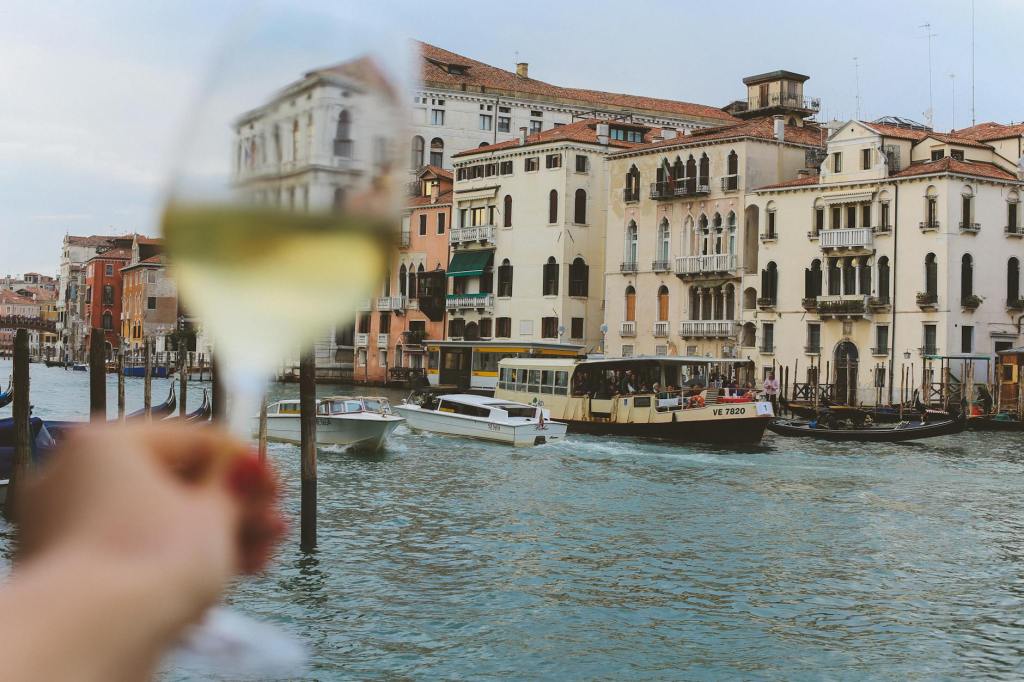
    Photo by Craig Adderley on Pexels.com

    A Closing Note from SOMM&SOMM

    As we raise our glasses this Thanksgiving, it’s worth remembering that not every chair at the table will be filled. Some seats will stay empty — for loved ones who’ve passed, for those too far away, or for relationships still finding their way back to warmth.

    It’s in those quiet spaces — the pauses between laughter, the flicker of a candle beside an untouched plate — that Thanksgiving reveals its deeper meaning. Gratitude isn’t about perfection. It’s about presence. It’s about honoring both the joy and the ache, the abundance and the absence, and still finding reason to give thanks.

    Perhaps that’s why this holiday can feel overlooked or even avoided. It asks us to slow down, to feel, to remember. It doesn’t glitter like Christmas or thrill like Halloween — it simply invites us to be human. To gather, to share, to forgive, and to savor the fleeting beauty of now.

    So wherever you find yourself this season — whether surrounded by a crowd or holding close to a single memory — may your glass be full, your heart be open, and your gratitude unhurried.

    – With love and thanks,
    Greg & Tammy Dean, SOMM&SOMM

    Cover Photo by Monstera Production on Pexels.com

  • The Noble Grapes of Alsace

    The Noble Grapes of Alsace

    A Sommelier’s Love Letter to Strasbourg.

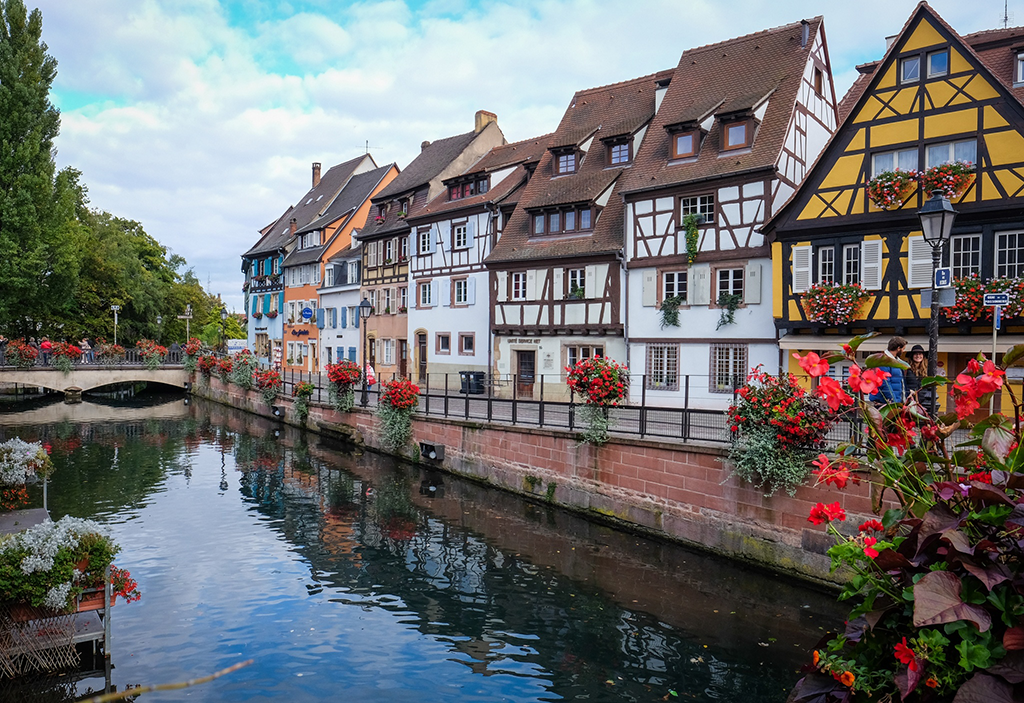
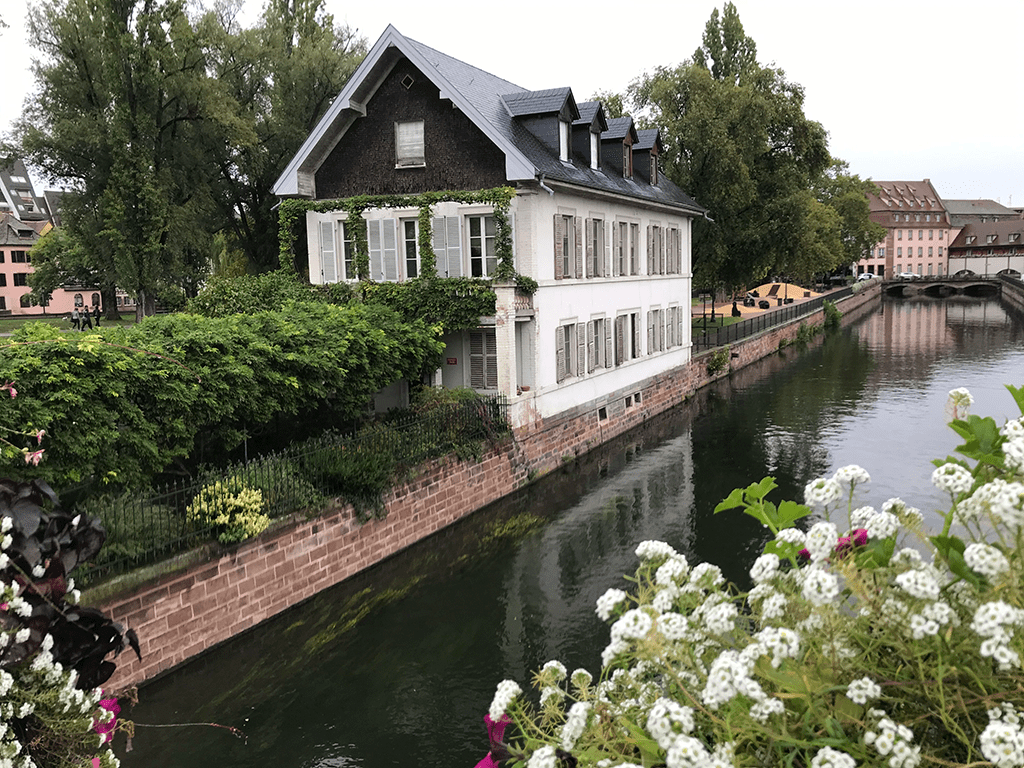
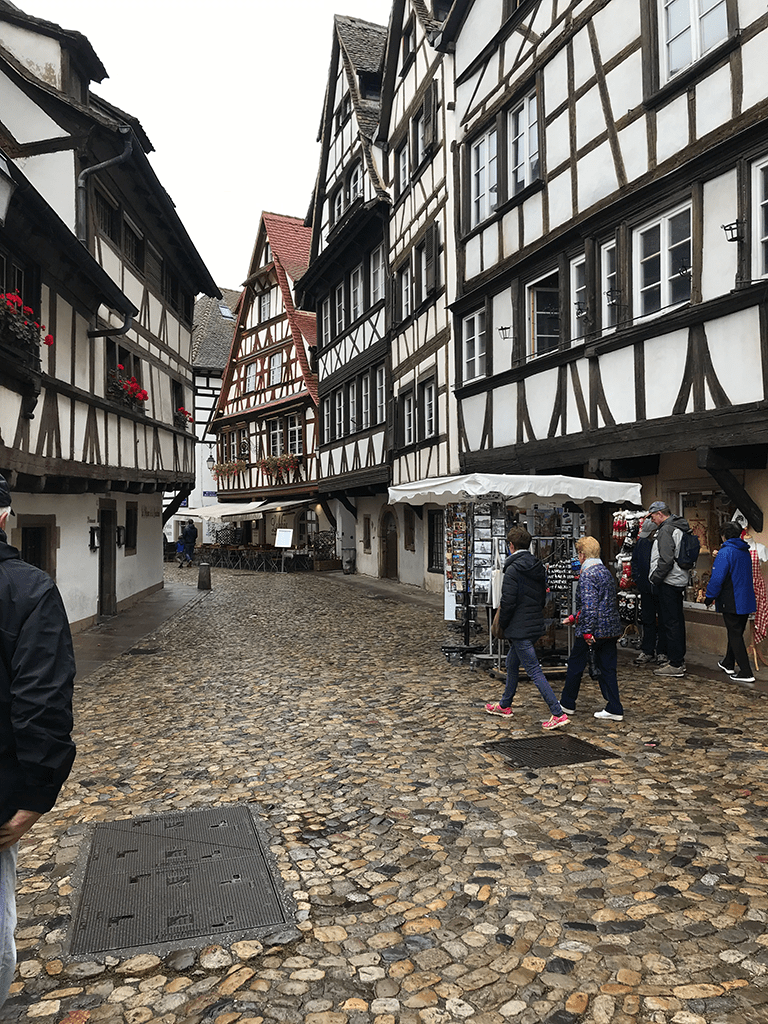
    There are places you visit, and then there are places that live inside you forever. For Tammy and me, Alsace falls firmly into the latter category. Years ago, we wandered the cobblestone streets of Strasbourg, where half-timbered houses leaned like old friends, flower boxes spilled with color, and cathedral bells echoed against the Vosges mountains. We thought we were traveling for pleasure… and wine—and oh, the wine delivered—but what we found was culture, tradition, and flavors so intertwined they seemed inseparable.

    Strasbourg, France (October 2019)

    Alsace is a region where wine is not just agriculture—it’s identity. And at the center of this identity are the four noble grapesRiesling, Gewürztraminer, Pinot Gris, and Muscat. These are not just grape varieties; they are storytellers of the land, each whispering its tale in a glass.

    Photo by Nikola Tomau0161iu0107 on Pexels.com

    Riesling – The King of Alsace

    If Alsace has a crown jewel, it’s Riesling. Unlike its German cousins, Alsatian Riesling is bone-dry, linear, and precise. Think citrus zest, green apple, crushed stone, and a thrilling minerality that seems carved straight from the Vosges slopes.

    Pairing tip: Riesling is your ultimate table diplomat. It shines alongside choucroute garnie (that glorious plate of sauerkraut, sausage, and pork), cutting through richness with refreshing acidity. It also plays beautifully with oysters, grilled fish, or even Thai cuisine if you’re in the mood to experiment.

    Gewürztraminer – The Drama Queen

    If Riesling is the king, Gewürztraminer is the diva of the court. Intensely aromatic and flamboyant, it bursts with rose petals, lychee, ginger, and exotic spice. Tammy once described it as “the perfume counter of the vineyard,” and I can’t think of a better metaphor.

    Pairing tip: Bold wines need bold partners. Try it with Munster cheese, the pungent, washed-rind treasure of Alsace. The match is unforgettable—wine and cheese meeting on equal footing, neither backing down. It’s also superb with spicy Indian curries, Moroccan tagines, or richly spiced duck.

    Try our Perfect Pairing: Gewürztraminer w/Sweet and Sour Chicken

    Pinot Gris – The Quiet Poet

    Many only know Pinot Grigio in its lighter Italian form, but Alsatian Pinot Gris is an entirely different soul—textured, smoky, and lush, with flavors of ripe pear, honey, almond, and sometimes even a whisper of truffle. It has a weight and gravitas that sneaks up on you, like a quiet poet at the edge of the party who suddenly steals the show.

    Pairing tip: This is the wine you want with foie gras, roast duck, or mushroom risotto. Its richness and depth embrace earthy, savory flavors like a long, warm evening by the fire.

    Muscat – The Trickster

    Dry Muscat from Alsace is a delightful surprise. Bursting with fresh grape, floral, and herbal notes, it tastes almost as if you’re biting into a cluster straight off the vine. Unlike Muscats from elsewhere, it’s playful but not sweet—a charming apéritif and a sommelier’s secret weapon.

    Pairing tip: Asparagus, the bane of wine pairings, finds its match in Alsace Muscat. The grape’s freshness and delicate aromatics tame the vegetal bite, making it one of the few wines I confidently pour with spring asparagus dishes.

    Related SOMM&SOMM Article: Demystifying Wine + Food for Real-Life Moments

    Why the Laws Matter in Alsace

    One of the reasons Alsace stands out in France is its unique wine laws. Unlike Burgundy or Bordeaux, where wines are labeled by village or château, Alsace bottles proudly state the grape variety—a refreshing rarity in France. If the label reads Alsace Riesling, you know it’s 100% Riesling.

    The hierarchy builds from there:

    • Alsace AOC: The broad regional designation, covering the majority of wines.
    • Alsace Grand Cru AOC: Reserved for 51 specific vineyards with stricter rules on yields, ripeness, and only noble grapes (with Zotzenberg’s historic exception allowing Sylvaner). The vineyard name is prominently displayed.
    • Vendange Tardive (VT): Late-harvest wines, rich and concentrated, often with honeyed sweetness.
    • Sélection de Grains Nobles (SGN): Botrytized dessert wines of incredible intensity, produced only in the best vintages.

    These classifications don’t just regulate—they protect the integrity of the region’s wines, ensuring that when you pour a glass of Alsace, you’re tasting a true expression of place.

    Related SOMM&SOMM Article: Understanding French Wine Laws

    Still enjoying Alsatian wines while reflecting on our time there

    Producers to Seek Out

    If you want to experience the noble grapes at their best, here are some producers that never fail to impress:

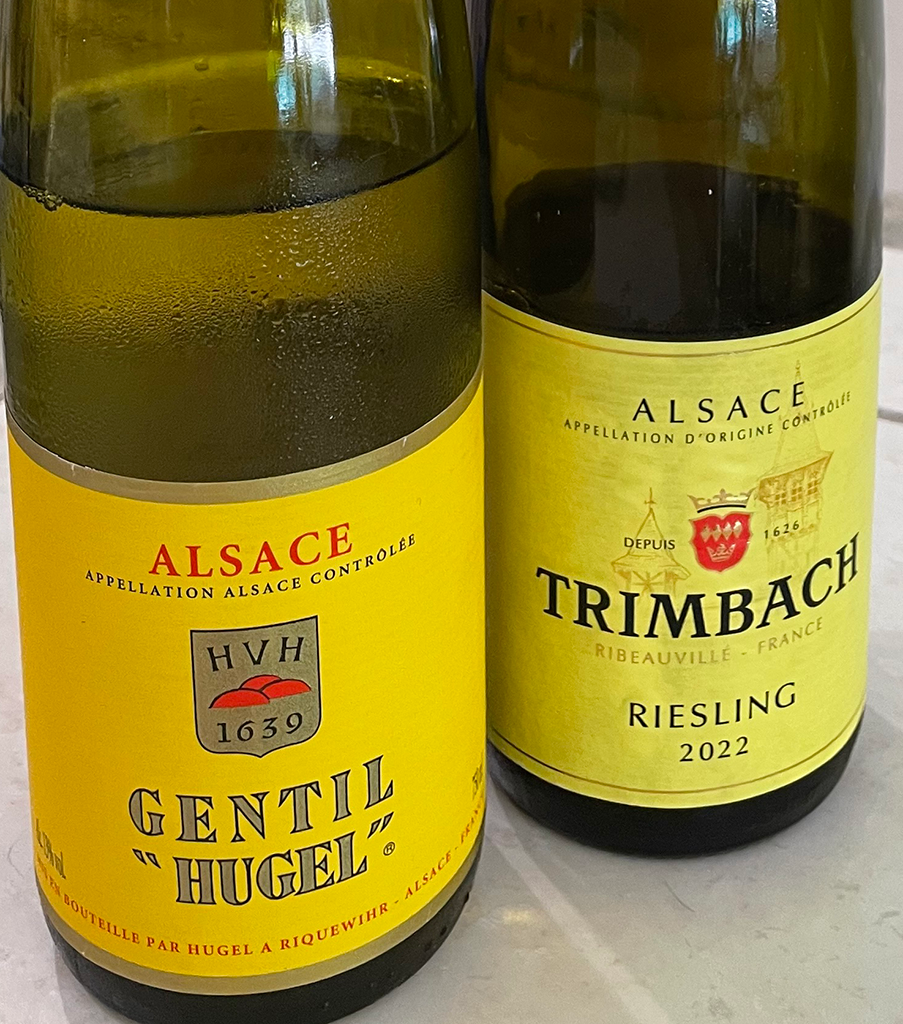
    • Trimbach – Benchmark dry Rieslings (look for Clos Ste. Hune if you want to experience one of the greatest Rieslings in the world). Their Pinot Gris and Gewürztraminer are equally classic.
    • Zind-Humbrecht – Known for intensely aromatic, powerful wines, often with a touch more ripeness and residual sugar. Their Grand Cru bottlings are legendary.
    • Domaine Weinbach – Elegant, precise wines with a poetic touch, particularly Riesling Schlossberg Grand Cru and Gewürztraminer Furstentum.
    • Hugel & Fils – Historic family estate, producing approachable yet serious wines. Their “Grossi Laüe” line highlights Alsace’s grandeur.
    • Albert Mann – A modern, biodynamic producer that balances tradition with innovation. Try their Grand Cru Rieslings and Pinot Gris.
    • Marcel Deiss – Famous for field blends (complantation) that showcase terroir rather than varietal—unique, complex wines outside the norm of Alsace labeling.

    Why Alsace Stays With Us

    When Tammy and I reminisce about Alsace, it’s not just the glasses we lifted but the way each grape embodied a piece of the region itself. Riesling was the sharpness of Strasbourg’s cathedral spire. Gewürztraminer the riot of color in every flower box. Pinot Gris the soft, golden glow of dusk on the Rhine. Muscat the laughter spilling from a tavern where beer and wine happily share the same table.

    Every time we open a bottle of Alsace, it feels like a postcard arriving from Strasbourg. And trust me, these postcards never fade. So here’s to Alsace—where Riesling sharpened our senses, Gewürztraminer stole the spotlight, Pinot Gris wrapped us in quiet warmth, and Muscat made us laugh out loud. To Strasbourg, to cobblestones and cathedral bells, and to every glass that brings us back there again—santé 🥂

    SOMM&SOMM Takeaway: The noble grapes of Alsace aren’t just wines—they’re laws, landscapes, and culture in liquid form. To drink Alsace is to taste a region where identity and glass are inseparable.

    Information on cover photo: Riesling Grapes and Leaves – No machine-readable author provided. T.o.m.~commonswiki assumed (based on copyright claims)., CC BY-SA 3.0, via Wikimedia Commons