Category: Wine Experiences

  • Coming Back to the Glass

    Coming Back to the Glass

    Reintroducing Wine & Cocktails After Dry January.

    Dry January asks us to pause. Not just from drinking, but from routine. From habit. From the automatic pour at the end of the day. Whether you completed all thirty-one days or simply drank far less than usual, taking a break from alcohol is a meaningful act of self-awareness. It gives your body time to reset and your mind a chance to notice how alcohol fits into your life.

    As January comes to a close, many people are ready to welcome wine and cocktails back into social gatherings. The key is remembering that your tolerance has changed, and that change is a positive thing.

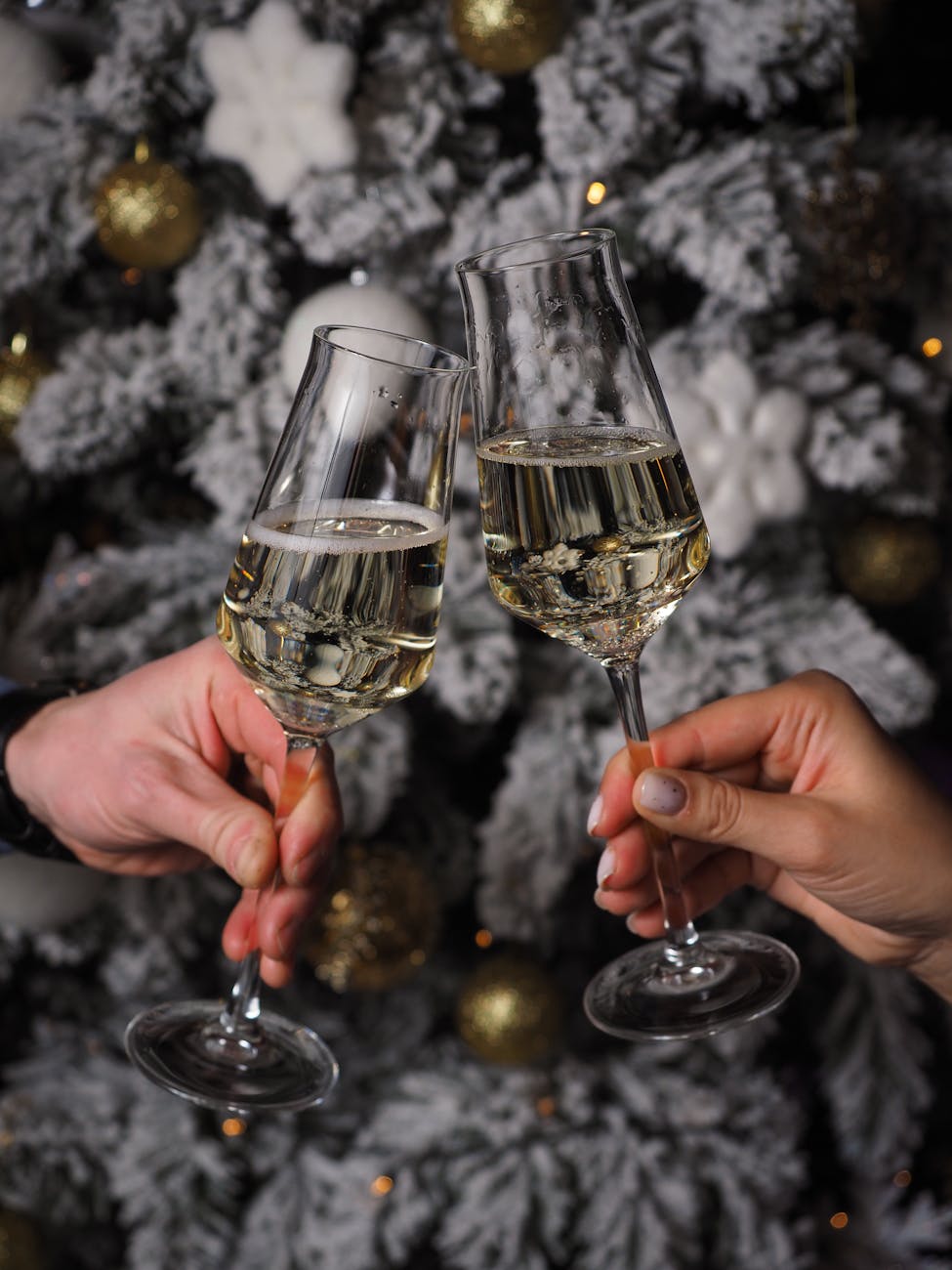
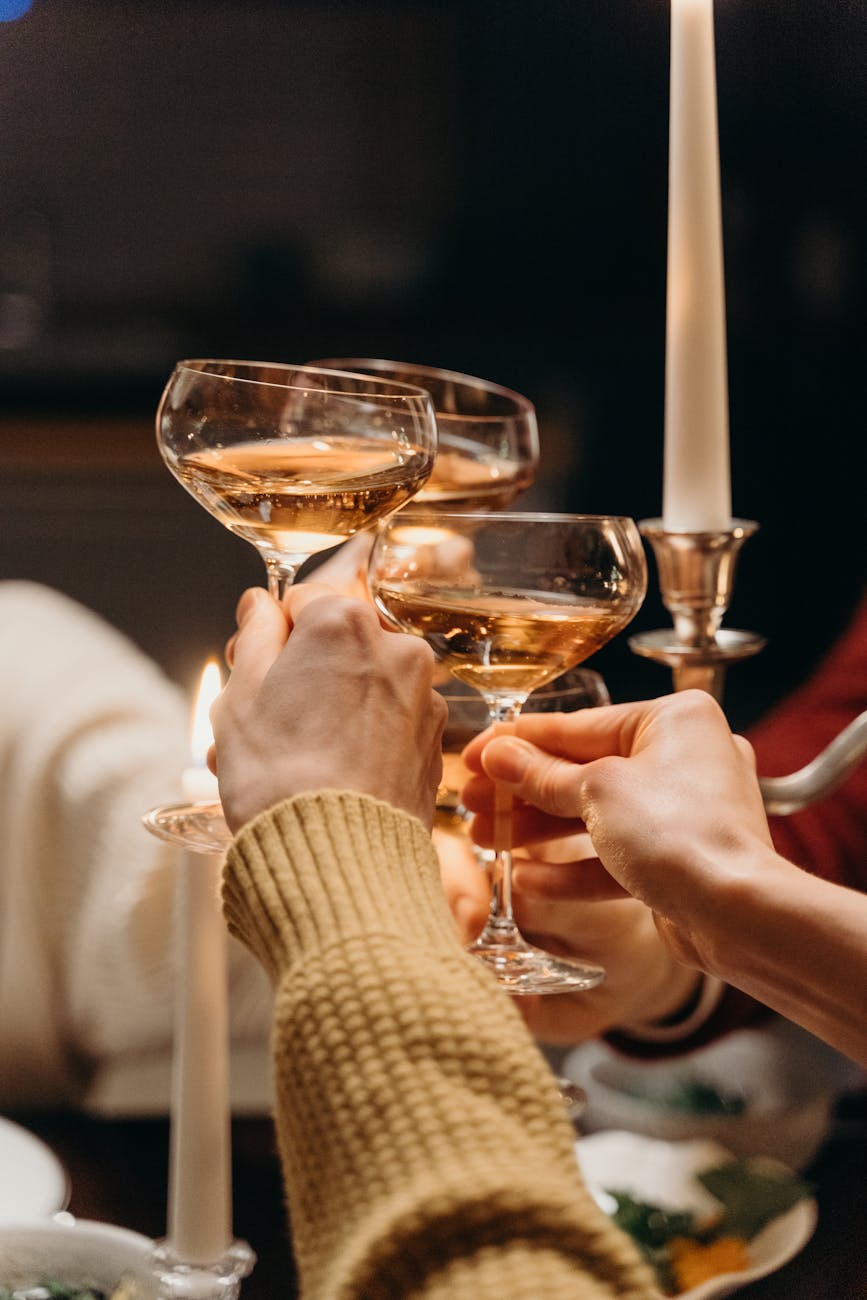
    Photo by cottonbro studio on Pexels.com

    What a Break Gives You

    Most people notice tangible benefits after a few weeks without alcohol. Better sleep. Clearer mornings. Improved focus. Less inflammation. There is also a subtler shift that matters just as much: a renewed sense of intention.

    When you step away, you realize how often drinking can be automatic rather than deliberate. Coming back with awareness allows wine and cocktails to return to their proper place, not as background noise, but as part of an experience.

    That awareness is something worth keeping.

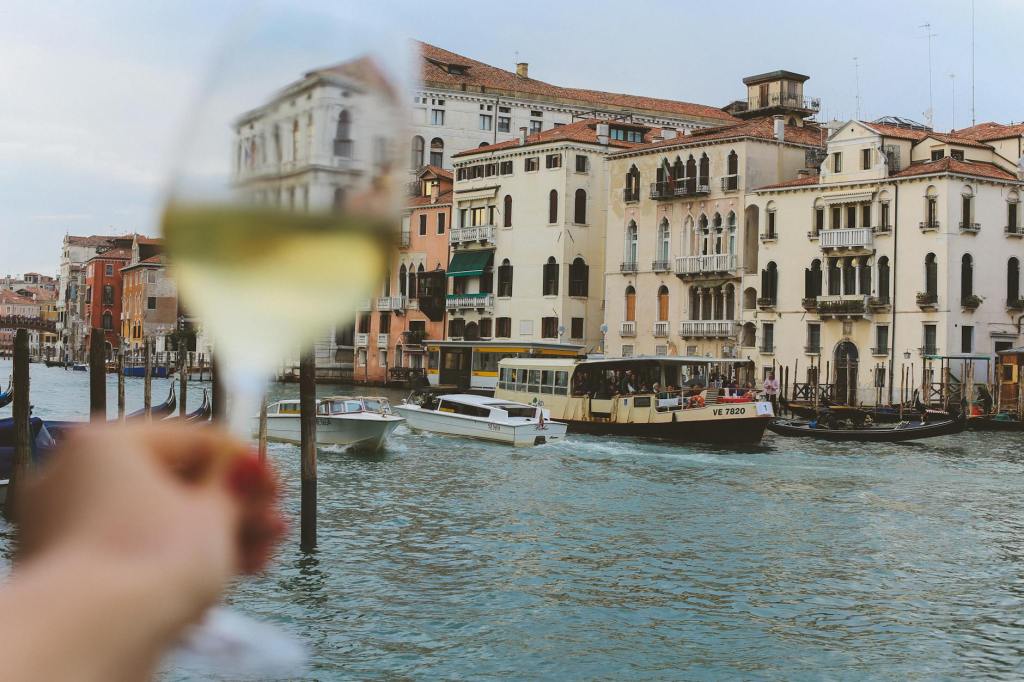
    Photo by cottonbro studio on Pexels.com

    Ease Back In

    After a month off, it takes fewer sips to feel the effects. That surprises people, and sometimes catches them off guard. The solution is simple and enjoyable.

    Pour a smaller glass. Sip more slowly. Drink water alongside your wine or cocktail. Focus on how the drink tastes rather than how quickly it disappears. One well-chosen glass often delivers more pleasure than several poured without thought.

    This approach does not diminish enjoyment. It heightens it.

    Let Flavor Lead

    With a refreshed palate, subtlety becomes more noticeable. This is a great time to lean toward wines and cocktails that emphasize balance and character over power.

    In wine, this might mean crisp whites, fresh sparkling wines, or reds that favor elegance and lift. In cocktails, it can mean lower-proof options, classic recipes made well, or spirit-forward drinks enjoyed slowly rather than aggressively.

    When flavor leads, moderation follows naturally.

    Responsibility Is Part of Hospitality

    Drinking responsibly is not a disclaimer. It is a cornerstone of good hospitality and good living.

    Knowing your limits, respecting how alcohol affects you now, and choosing when to stop are all signs of confidence, not restriction. Dry January does not end in February; its lessons carry forward into how and why you drink the rest of the year.

    Wine and spirits should enhance moments, not overwhelm them.

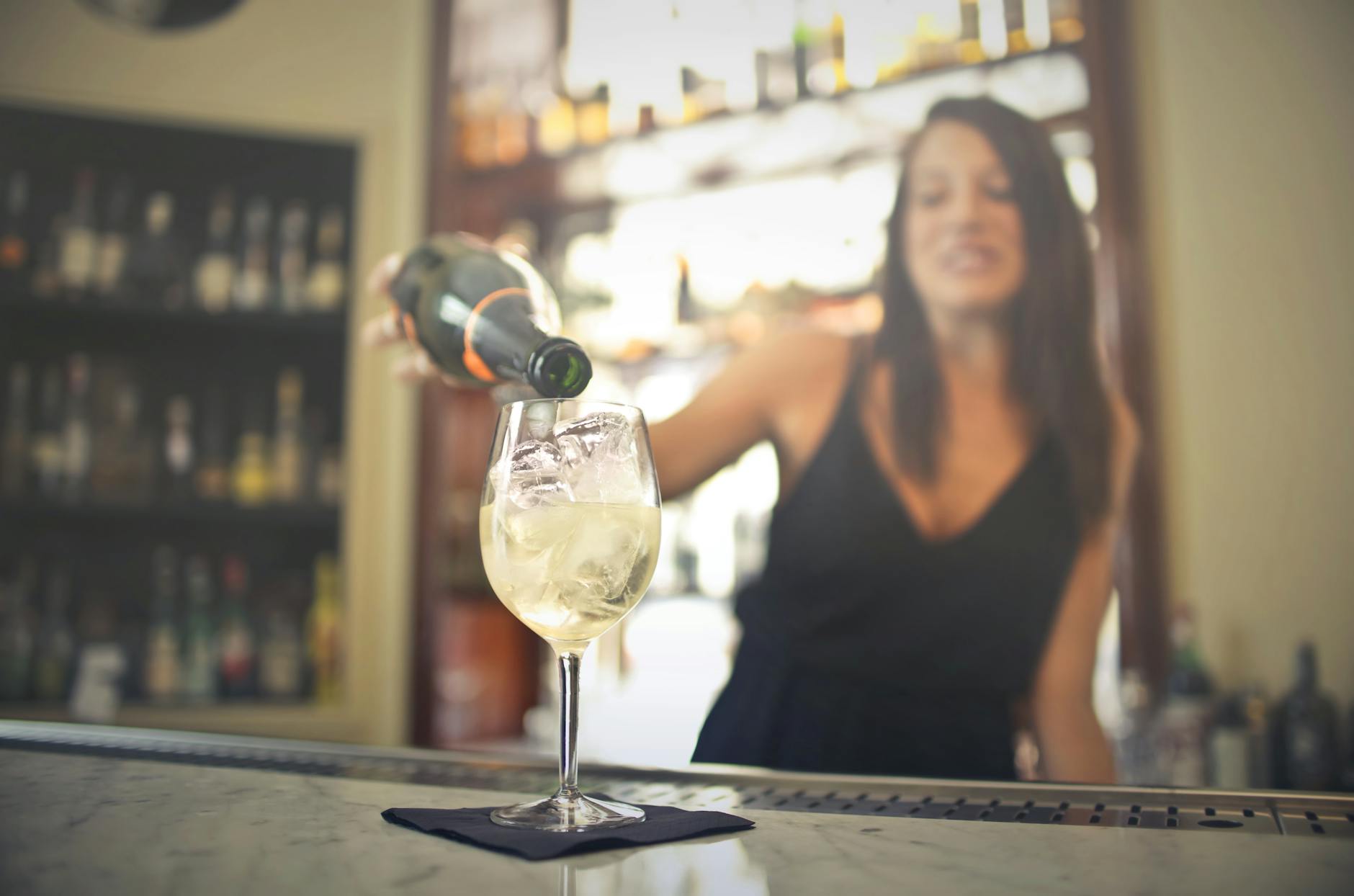
    Photo by Any Lane on Pexels.com

    Why Wine Still Matters

    Wine has always been more than what’s in the glass. It invites conversation. It encourages people to linger. It gives strangers something in common and friends something to share. In a world that feels increasingly divided, wine still brings people to the same table.

    A bottle opened with intention creates space for listening, laughter, and connection. Those moments matter.

    Cocktails and the Social Table

    Cocktails play a similar role. They mark occasions. They signal welcome. Even one thoughtfully prepared drink can change the energy of a gathering. The ritual of ice, glassware, and balance creates a shared experience before the first sip is taken.

    Cocktails work best when they are part of the evening, not the focus of it.

    A Thoughtful Return

    Reintroducing wine and spirits after Dry January is not about returning to old habits. It is about choosing new ones with clarity. Drink a little less. Enjoy a little more. Pay attention to how you feel. Share good bottles with good people.

    That balance is where wine and cocktails belong.

    And that is where they shine. Cheers 🍷

    Photo by MART PRODUCTION on Pexels.com

    Important Tip: Water Is the Quiet MVP

    One of the most valuable habits people carry forward after Dry January is drinking more water, and it remains just as important once wine and cocktails return. Alcohol is dehydrating by nature, and after a break, your body feels that effect more quickly.

    Drinking water alongside alcohol slows consumption, sharpens your awareness, and helps your body process what you are enjoying. It keeps your palate fresh, reduces fatigue, and supports better sleep later in the evening. From a social standpoint, it also extends the experience. You stay present longer, engage more clearly in conversation, and wake up the next morning without regret.

    A simple rule works well: one glass of water for every drink, enjoyed at your own pace. It is not a restriction. It is a form of care.

    Good hydration allows wine and cocktails to remain what they are meant to be: companions to connection, not competitors for attention.

    Cover Photo by Jayant Kulkarni on Pexels.com

  • Tokaji: Hungary’s Golden Secret

    Tokaji: Hungary’s Golden Secret

    …and why you should stop being afraid of it 😉

    Tokaji is one of the world’s most misunderstood wines—and frankly, one of its most rewarding. Tiny bottles, unfamiliar words, strange numbers, and labels that look like they were designed by a medieval scribe… no wonder most people reach for Sauternes instead. Safer. Familiar. French.

    But Tokaji is older, deeper, more versatile, and—dare I say—more soulful.

    If you’re a wine lover with even a passing interest in history, sweetness balanced by acid, or hidden gems that reward curiosity, Tokaji isn’t intimidating at all. It’s an invitation.

    Related SOMM&SOMM article: Wine Styles: Late Harvest Wines
    A Little History & Lore (Because Tokaji Has Plenty)

    Tokaji comes from northeastern Hungary, in the Tokaj-Hegyalja region, near the borders of Slovakia and Ukraine. This is not a “new discovery” wine. Tokaji Aszú was being made centuries before Sauternes—with documented production as early as the mid-1600s.

    In fact:

    • Tokaj was the first classified wine region in the world (1737)—nearly 120 years before Bordeaux.
    • Louis XIV famously called Tokaji “Vinum Regum, Rex Vinorum”The Wine of Kings, the King of Wines.
    • It was a favorite at royal courts across Europe, from the Habsburgs to the Russian Tsars.

    And yes, there’s lore: monks, misty autumn mornings, noble rot creeping slowly across vineyards as the Bodrog and Tisza rivers create the perfect fog-and-sun rhythm. Tokaji didn’t stumble into greatness—it was engineered by nature and refined by time.

    The Grapes Behind the Magic

    Tokaji is not a single-varietal wine in spirit, even if one grape dominates.

    Furmint (the star)

    • High acid (crucial for balance)
    • Neutral to apple-pear-citrus when dry
    • Transforms beautifully with botrytis
    • Think: green apple, quince, citrus peel, honeycomb, wet stone

    Hárslevelű

    • Softer acidity
    • Floral, herbal, linden blossom notes
    • Adds perfume and roundness

    Supporting Cast (used in smaller amounts)

    • Sárgamuskotály (Yellow Muscat) – aromatics and spice
    • Zéta – botrytis-prone, boosts sweetness
    • Kövérszőlő – richness and texture

    Furmint provides the spine. Everything else adds flesh, fragrance, and intrigue.

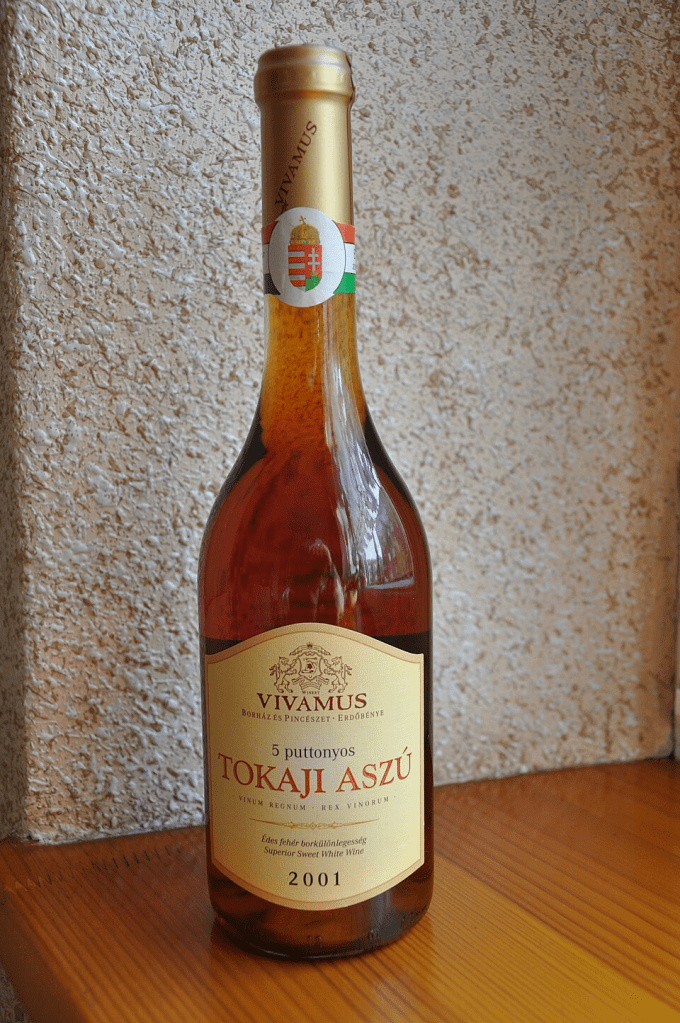
    Tokaji Aszú – Beemwej, CC BY-SA 3.0, via Wikimedia Commons

    Tokaji Styles: More Than Just Sweet Wine

    Here’s where Tokaji really starts to surprise people.

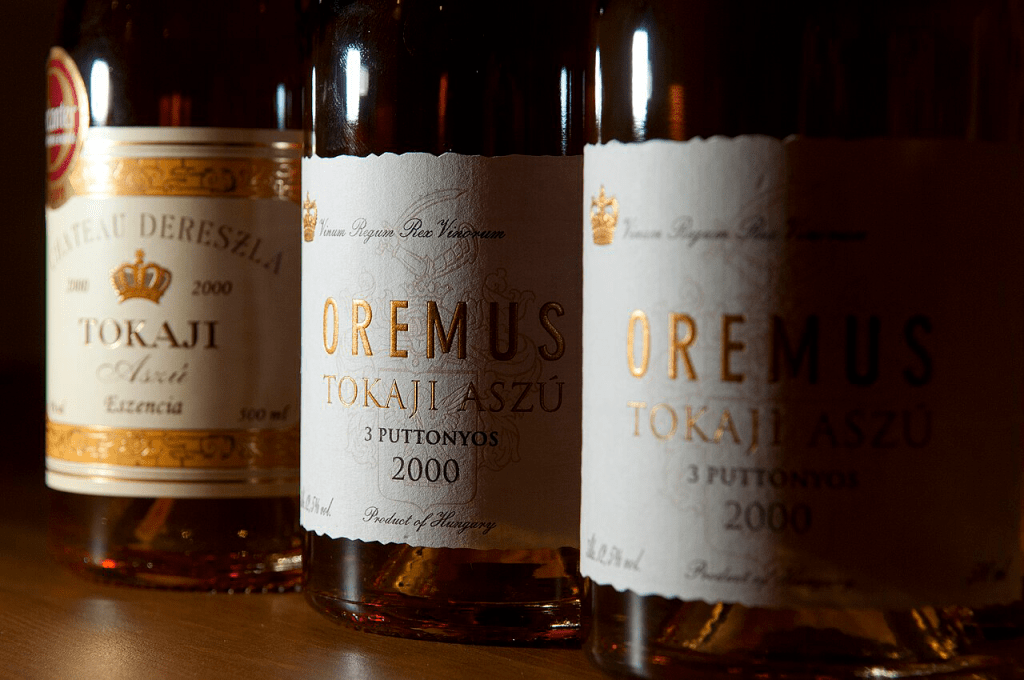
    1. Tokaji Aszú (The Icon)

    Made from individually harvested botrytized berries (aszú berries), traditionally added to a base wine.

    Sweetness used to be measured in Puttonyos (the number of baskets of aszú berries added):

    • 3–6 Puttonyos (historically)
    • Today, most producers focus on 5 or 6 Puttonyos-level richness or simply label sweetness in grams

    Flavor profile:

    • Apricot jam
    • Orange marmalade
    • Honey
    • Ginger
    • Saffron
    • Toasted nuts
    • Laser-bright acidity holding it all together

    This is where Tokaji earns its crown.

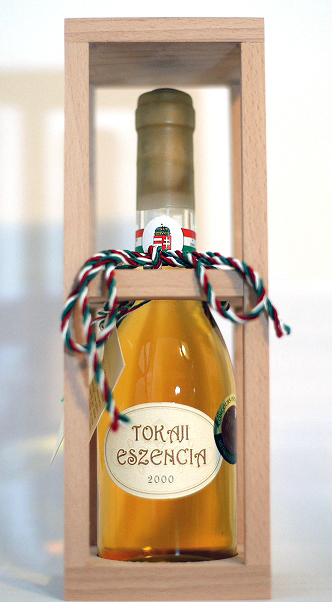
    Tokaji Eszencia: Emdee, CC BY-SA 3.0, via Wikimedia Commons

    2. Tokaji Eszencia (Liquid Myth)

    Not really wine in the traditional sense.

    • Free-run juice from aszú berries
    • Ferments extremely slowly
    • Often 1–3% alcohol
    • Astronomical sugar
    • Tiny production

    Think:

    • Nectar
    • Honeyed citrus oil
    • Dried tropical fruit
    • Eternal finish

    This is something you sip by the teaspoon and contemplate your life choices.

    3. Szamorodni (The Insider’s Favorite)

    Made from whole bunches—some botrytized, some not.

    Two styles:

    • Édes (Sweet) – oxidative, nutty, honeyed
    • Száraz (Dry) – sherry-like, savory, saline, almond-driven

    If you love Jura, aged Fino Sherry, or oxidative whites… dry Szamorodni will blow your mind.

    4. Late Harvest Tokaji

    • Made from overripe grapes
    • Often labeled Késői Szüret
    • Lusher and more approachable
    • Excellent gateway Tokaji

    5. Dry Tokaji (Dry Furmint)

    Yes—Tokaji can be bone dry.

    • Crisp
    • Mineral
    • Apple, pear, citrus, volcanic stone
    • Think Chablis meets Grüner meets something unmistakably Hungarian

    These wines are phenomenal with food and criminally underrated.

    Decoding the Label (Without Panicking)

    Here’s your Tokaji cheat sheet:

    • Aszú – made from botrytized berries
    • Puttonyos – traditional sweetness level (less common today)
    • Édes – sweet
    • Száraz – dry
    • Szamorodni – whole-cluster style
    • Eszencia – ultra-concentrated nectar
    • Furmint / Hárslevelű – grape varieties
    • Dűlő – vineyard (single-site quality cue)

    If you can read a German Riesling label, you can conquer Tokaji.

    Pairings (This Is Where Tokaji Shines)

    Tokaji is not just a dessert wine. That’s the biggest misconception of all.

    Classic Pairings

    • Foie gras (legendary for a reason)
    • Blue cheese (Roquefort, Stilton, Gorgonzola)
    • Apricot tart
    • Almond pastries

    Unexpected & Brilliant

    • Spicy Thai or Szechuan dishes
    • Indian curries with ginger and turmeric
    • Moroccan tagines
    • Roast pork with stone fruit
    • Duck with orange or cherry glaze

    Dry Tokaji Pairings

    • Roast chicken
    • Pork schnitzel
    • Mushroom dishes
    • Alpine cheeses
    • Seafood with beurre blanc

    Szamorodni Pairings

    • Aged cheeses
    • Salted nuts
    • Mushroom risotto
    • Anything umami-forward

    Eszencia Pairing

    • Silence
    • A quiet room
    • One small spoon
    • Awe
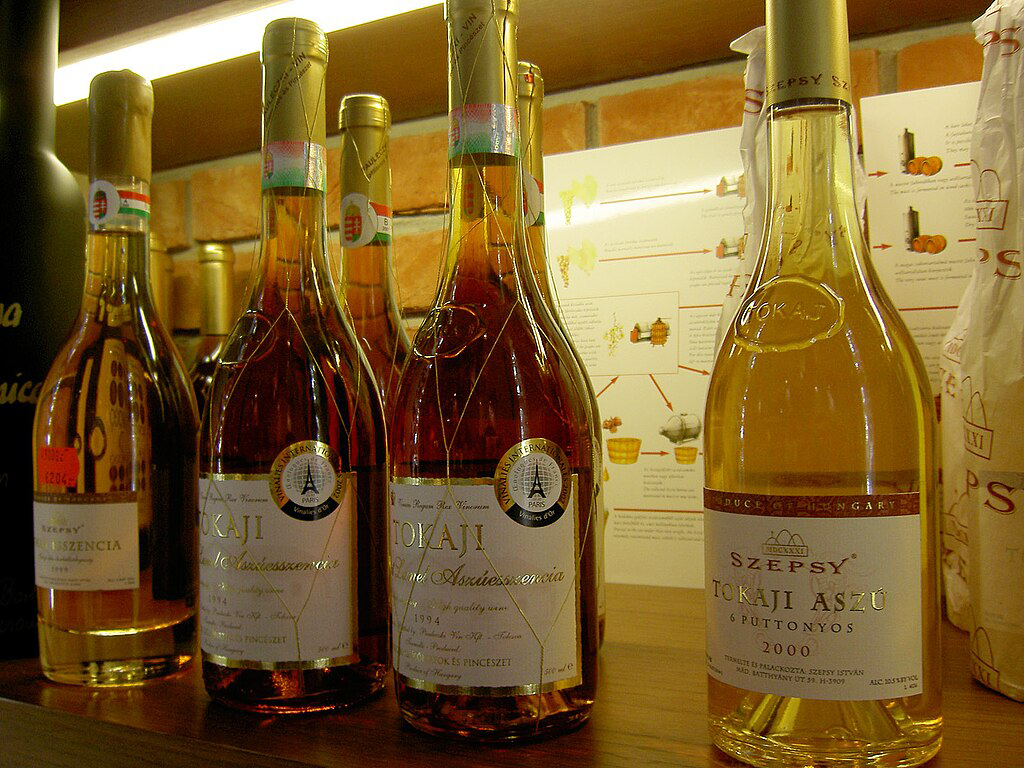
    Bottles of Tokaji – takato marui, CC BY-SA 2.0, via Wikimedia Commons

    Why Tokaji Matters

    Tokaji isn’t just a wine—it’s a bridge between:

    • Sweet and savory
    • History and modernity
    • Intellectual curiosity and pure pleasure

    It rewards patience, but it doesn’t demand pretension. And for sommeliers and wine lovers with a passion for the obscure, Tokaji is the kind of bottle that reminds us why we fell in love with wine in the first place.

    So next time you’re tempted to grab the Sauternes because it feels easier…

    Don’t.

    Reach for Tokaji.
    Your palate will thank you—and your wine stories will be better for it. 🍷

    Cover Photo: Michal Osmenda, CC BY-SA 2.0, via Wikimedia Commons

  • Tawny vs. Ruby Port

    Tawny vs. Ruby Port

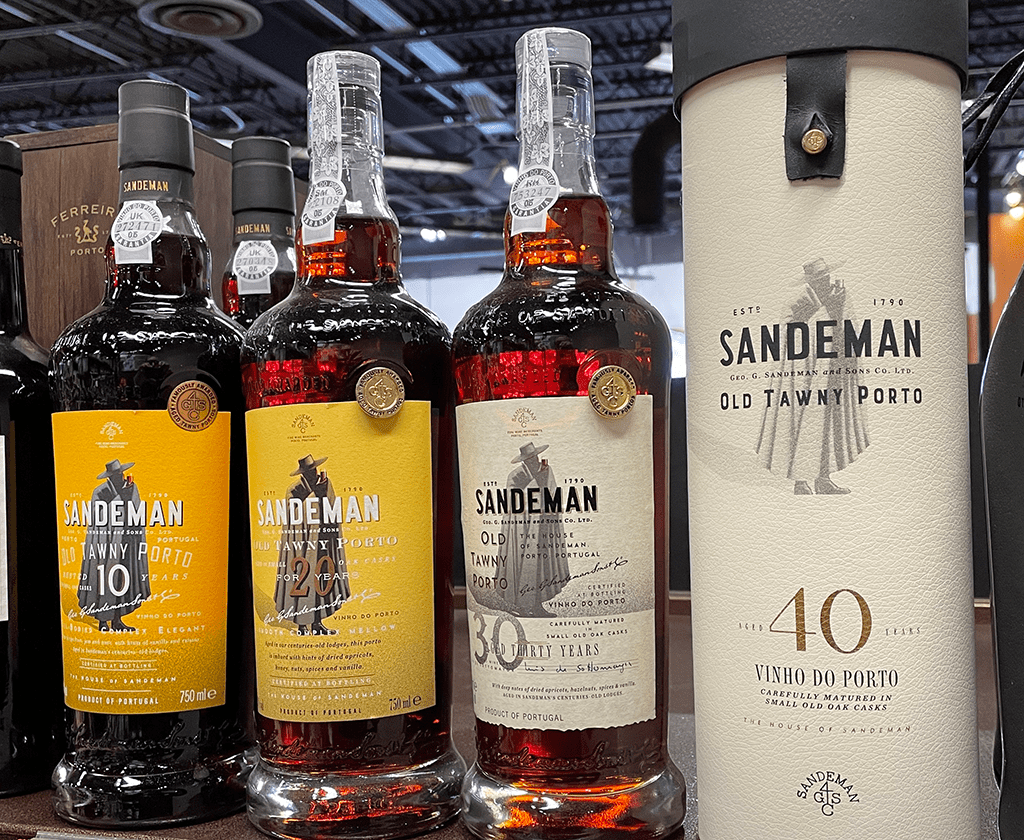
    Winter’s Warmest Debate (and How to Drink Them Both Like a Pro).

    When winter settles in and the thermostat drops a few degrees lower than comfort would prefer, fortified wines step confidently into the spotlight. They don’t whisper; they glow. And among them, Port is having another well-deserved moment. Again.

    But as bottles come off shelves and into glasses, one question reliably resurfaces fireside and at tasting tables alike:
    What’s the real difference between Ruby Port and Tawny Port—and how should I be enjoying each?

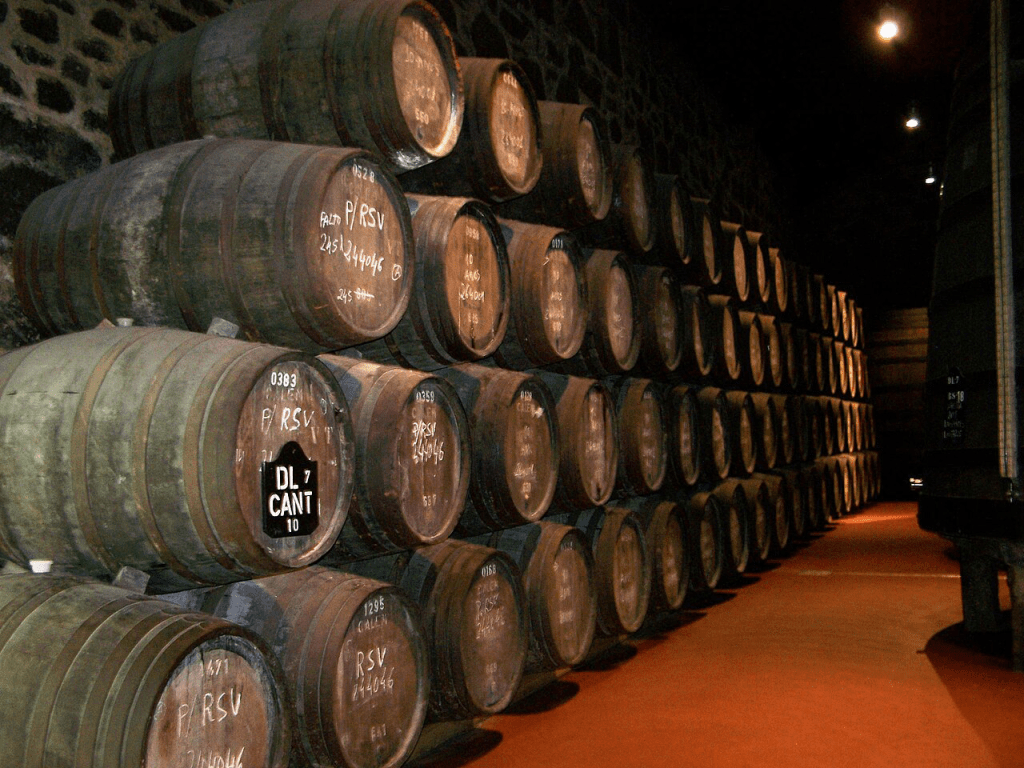
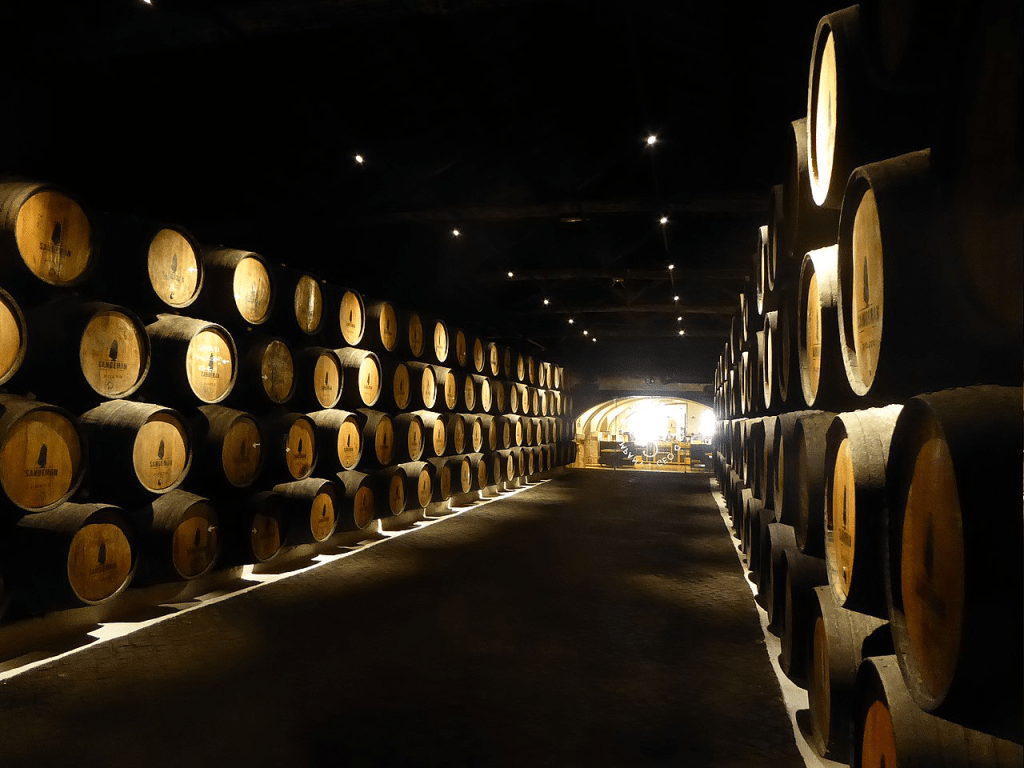
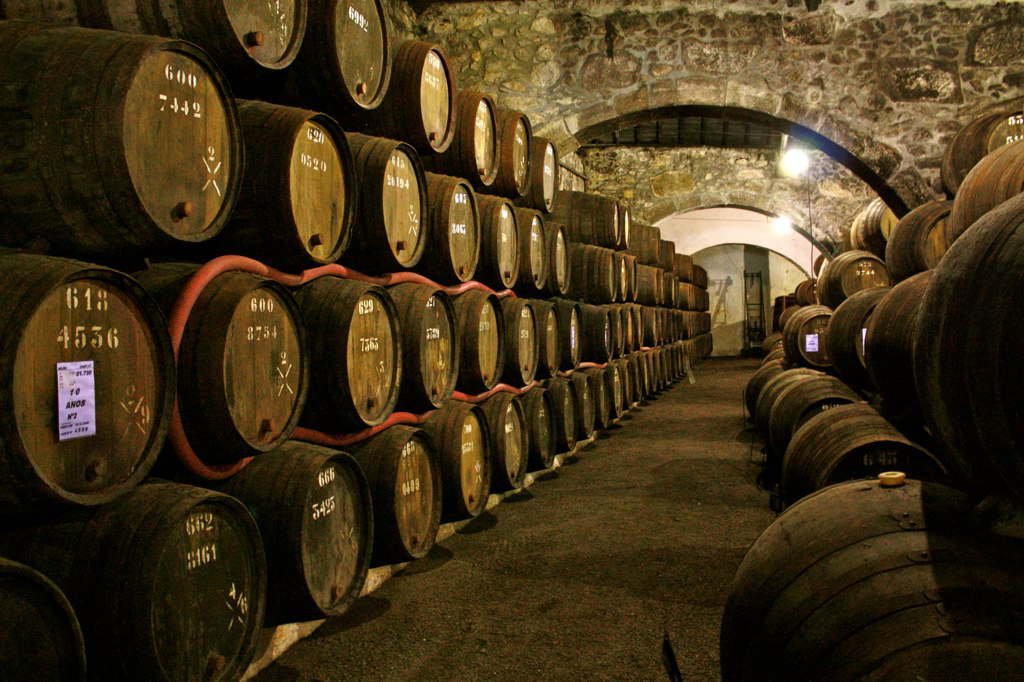
    Croft Port Wine Cellar – Ricardo Martins, CC BY 2.0, via Wikimedia Commons

    A Shared Origin, Two Very Different Journeys

    All true Port comes from Portugal’s Douro Valley and begins life much the same way:

    • Indigenous grapes
    • Fermentation halted early by the addition of grape spirit (aguardente)
    • Residual sugar preserved
    • Alcohol boosted to roughly 19–20%

    From there, aging choices—not grapes—define Ruby versus Tawny.

    Ruby Port: Youth, Power, and Primary Fruit

    Think: fireplace crackle, dark berries, and velvet curtains.

    Ruby Port is all about freshness and intensity. After fermentation, it’s aged briefly—usually 2–3 years—in large stainless steel tanks or concrete vats. These vessels limit oxygen exposure, preserving the wine’s deep color and fruit-forward personality.

    What’s in the glass?

    • Color: Deep ruby to purple-black
    • Aromas: Blackberry compote, black cherry, cassis, plum
    • Palate: Lush, sweet, bold, youthful
    • Finish: Rich, direct, fruit-driven

    Ruby Port is unapologetically exuberant. It doesn’t want to evolve quietly—it wants to perform.

    Best ways to enjoy Ruby Port

    • Slightly cool (60–65°F) to balance sweetness
    • In a classic Port glass or small wine glass
    • As a dessert wine or a decadent after-dinner sipper

    Ruby Port pairings (winter-approved)

    • Flourless chocolate cake
    • Dark chocolate truffles
    • Blue cheese (especially Stilton or Gorgonzola)
    • Chocolate-dipped dried figs
    • Black forest–style desserts

    Why it works: Sugar and fruit tame bitterness, while alcohol lifts richness off the palate.

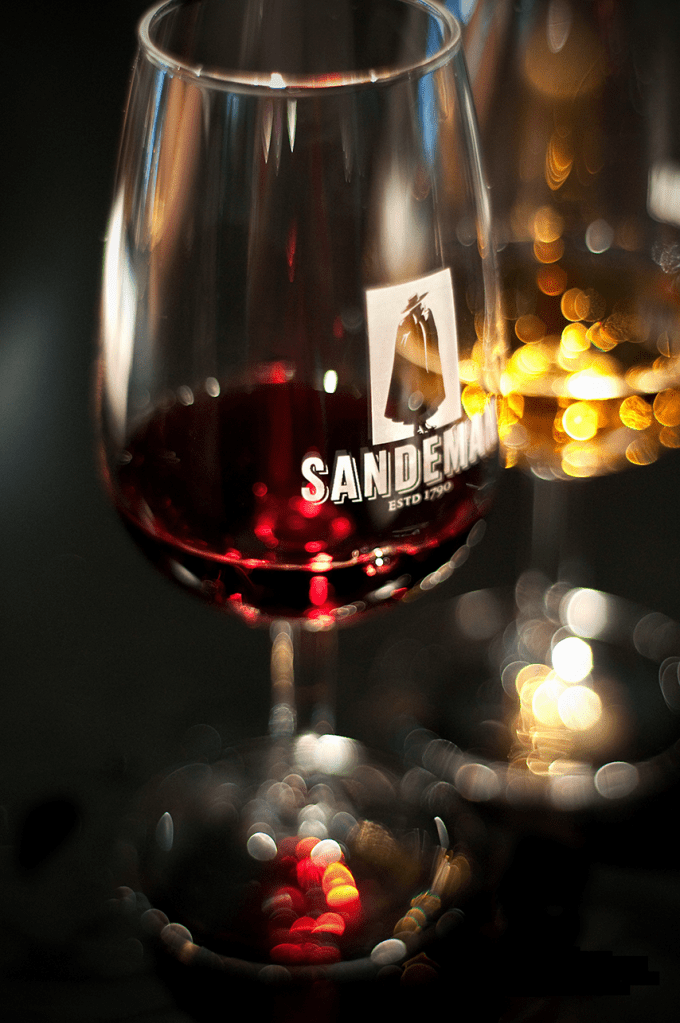
    Tawny Port – pedrik, CC BY 2.0, via Wikimedia Commons

    Tawny Port: Time, Oxidation, and Graceful Complexity

    Think: leather-bound books, toasted nuts, and candlelight.

    Tawny Port takes a slower, more contemplative path. It’s aged in small oak barrels, where gentle oxidation transforms both color and flavor. Over time, ruby hues fade to amber, mahogany, and tawny—hence the name.

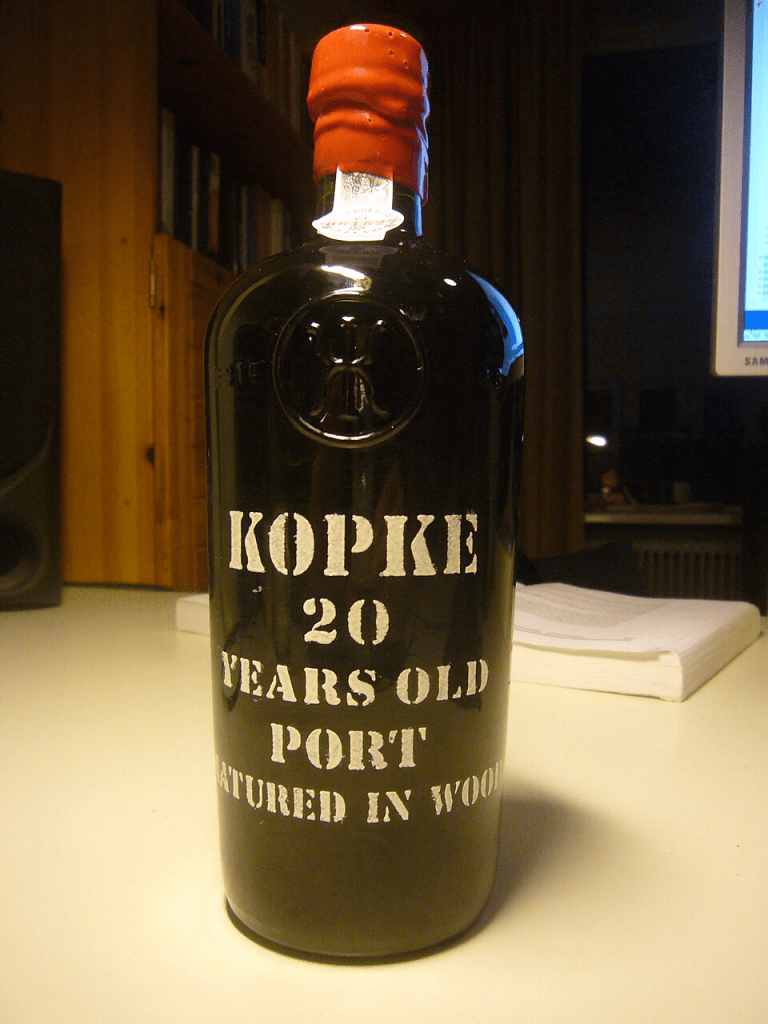
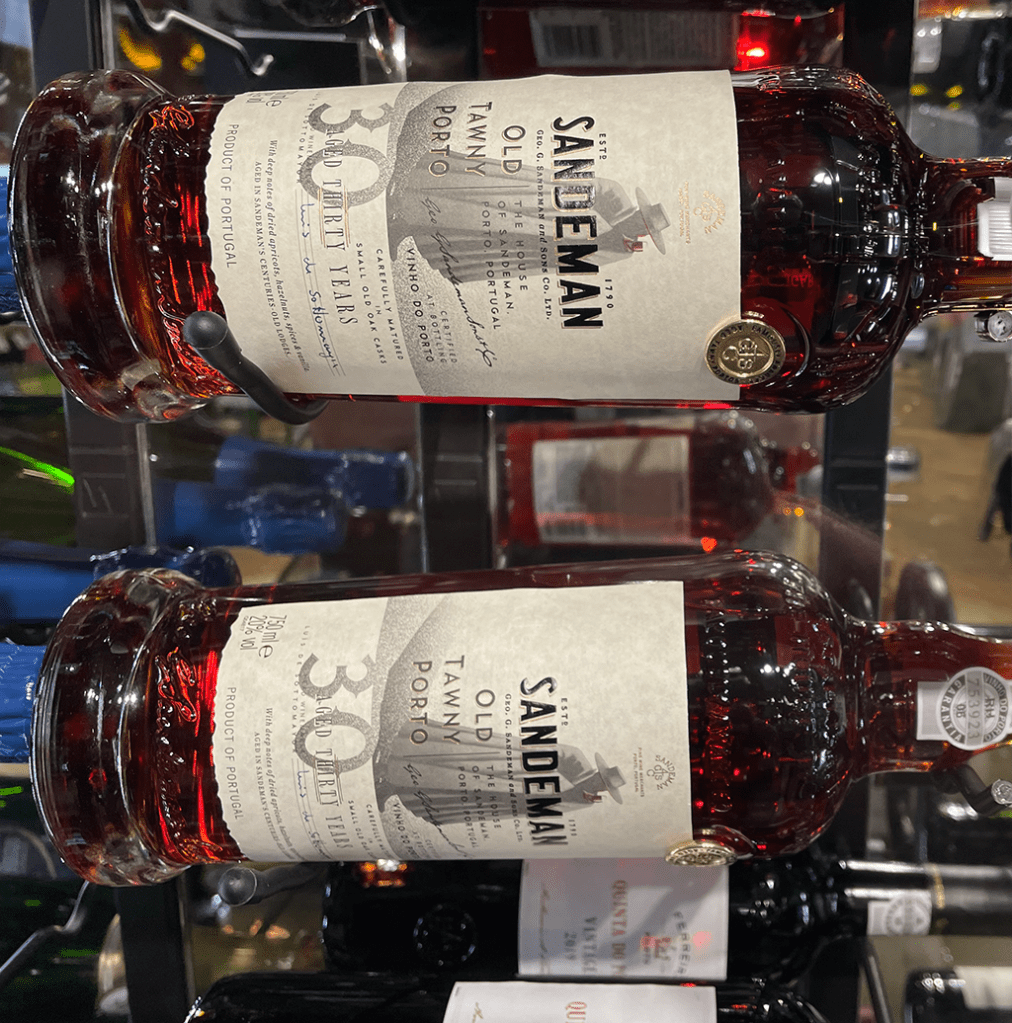
    You’ll often see age indications: 10, 20, 30, or 40 Year Tawny. These aren’t exact ages, but stylistic averages representing increasing complexity.

    Related article: The Organoleptic Process

    What’s in the glass?

    • Color: Amber, copper, tawny
    • Aromas: Toasted almond, hazelnut, caramel, dried fig, orange peel
    • Palate: Silky, layered, less sweet-seeming
    • Finish: Long, nutty, contemplative

    Tawny Port doesn’t shout. It invites you closer.

    Best ways to enjoy Tawny Port

    • Lightly chilled (55–60°F)—especially higher-aged Tawny
    • In smaller pours; complexity rewards patience
    • As a standalone meditation wine or paired thoughtfully

    Tawny Port pairings (cold-weather classics)

    • Pecan pie or walnut tart
    • Crème brûlée
    • Aged cheeses (Comté, aged Gouda, Manchego)
    • Roasted nuts with rosemary
    • Apple or pear desserts with caramel

    Why it works: Oxidative notes mirror toasted, nutty flavors while acidity keeps sweetness in check.

    Ruby vs. Tawny: The Quick Take

    Ruby PortTawny Port
    Fruit-forwardNutty & oxidative
    Aged brieflyBarrel-aged for years
    Bold & youthfulElegant & complex
    Chocolate pairingsNut, caramel & cheese pairings
    Great in cocktailsExceptional chilled or neat

    Winter-Worthy Port Cocktails (Yes, Really)

    Port is a fortified wine—but don’t underestimate its versatility behind the bar. These cocktails are cozy, refined, and dangerously easy to love.

    The Winter Port Old Fashioned (Ruby)

    • 2 oz Ruby Port
    • ¼ oz bourbon or aged rum
    • 1 barspoon maple syrup
    • 2 dashes aromatic bitters

    Stir with ice, strain over a large cube.
    Garnish with an orange peel and brandied cherry.

    Ruby Port brings fruit and sweetness; the spirit adds structure without overpowering.

    Tawny Port Manhattan (Low-Proof Elegance)

    • 2 oz Tawny Port
    • 1 oz rye whiskey
    • 2 dashes orange bitters

    Stir with ice, strain into a coupe.
    Garnish with expressed orange peel.

    Tawny’s nutty oxidation mimics aged vermouth, making this cocktail plush yet balanced.

    Photo by TomBen on Pexels.com

    Which Port Should You Choose?

    • Choose Ruby Port when you want bold fruit, indulgent desserts, or a cocktail-friendly fortified wine.
    • Choose Tawny Port when you crave nuance, quiet warmth, and something that feels like winter slowing down.

    Better yet—keep both on hand. Winter is long, evenings are cold, and Port was designed for exactly this moment 😉

    To warming what’s inside while the season cools what’s out. May your glass be small, your Port be generous, and winter feel just a little shorter. 🍷

    Gregory Dean, SOMM&SOMM

    Cover photo credit: Jon Sullivan, Public domain, via Wikimedia Commons

  • Learning to Speak Italian (Wine)

    Learning to Speak Italian (Wine)

    A guide to Italy’s lesser‑known grapes—pronunciation encouraged, confusion forgiven.

    Italy is not a single wine language. It is a chorus of dialects, whispered in mountain valleys, shouted from sun‑baked coasts, and stubbornly preserved by families who never bothered to translate for outsiders. To learn Italian wine is not to memorize a list—it is to learn how words change when they cross a hill, how the same grape answers to multiple names, and how geography shapes accent, structure, and soul.

    Photo by Fabrizio Velez on Pexels.com

    This is your language lesson. We are not starting with ciao (Sangiovese) or grazie (Nebbiolo). Instead, we’re learning the phrases that make you sound fluent—the lesser‑known varietals that do make it outside of Italy if you know how (and where) to look.

    Think of this as conversational Italian for wine lovers.

    Photo by Andrea Mosti on Pexels.com

    Italian Is a Regional Language

    Before vocabulary, a rule: Italy does not speak one Italian wine dialect. Grapes change names as they cross borders. Sometimes they change personality. Sometimes they pretend to be something else entirely.

    So when you see multiple names in parentheses, don’t panic. That’s not confusion—it’s fluency.

    Photo by Toni Canaj on Pexels.com

    False Friends & Familiar Strangers

    Turbiana (a.k.a. Trebbiano di Lugana)

    Pronunciation: tur‑BEE‑ah‑nah

    Let’s clear the fog immediately.

    Turbiana is not the watery Trebbiano you’re thinking of. Grown around Lake Garda in Lugana DOC, this grape produces wines with texture, salinity, and surprising age‑worthiness.

    How it speaks: lemon oil, almond skin, white flowers, wet stone

    Why it matters: It teaches an essential Italian lesson—same family, different personality.

    Where to find it: Lugana DOC bottlings from Ca’ dei Frati, Zenato, Ottella

    Sangiovese Grosso (Brunello’s Real Name)

    Pronunciation: san‑joe‑VAY‑zeh GROSS‑oh

    Not lesser‑known, but deeply misunderstood.

    Sangiovese Grosso is not a different grape—it’s a biotype, thicker‑skinned and slower‑ripening than Chianti’s Sangiovese. Italians care about this distinction. You should too.

    How it speaks: sour cherry, dried rose, tea leaf, savory earth

    Why it matters: Italian wine often hinges on clones, not varietals.

    Where to find it: Brunello di Montalcino (widely exported)

    Photo by Leon Kohle on Pexels.com

    Northern Accents (Alpine & Adriatic)

    Schiava (a.k.a. Vernatsch)

    Pronunciation: SKYA‑vah

    This is the grape everyone underestimates.

    From Alto Adige, Schiava produces pale‑colored reds with fragrance over power. Chill it slightly and it becomes irresistible.

    How it speaks: strawberry, alpine herbs, almond, fresh mountain air

    Why it matters: It breaks the myth that Italian reds must be heavy.

    Where to find it: Alto Adige DOC imports (Elena Walch, Cantina Tramin)

    Lagrein

    Pronunciation: lah‑GRAIN

    If Schiava whispers, Lagrein growls.

    Also from Alto Adige, Lagrein is deeply colored, muscular, and structured—yet retains alpine freshness.

    How it speaks: blackberry, cocoa, iron, violets

    Why it matters: Italy does bold without abandoning balance.

    Where to find it: Alto Adige Lagrein Rosso or Riserva

    Refosco dal Peduncolo Rosso

    Pronunciation: reh‑FOSS‑koh dal peh‑DOON‑koh ROSS‑oh

    Yes, the full name matters.

    This Friulian grape is dark, wild, and feral in the best way—high acidity, grippy tannin, and savory depth.

    How it speaks: sour cherry, forest floor, black olive, iron

    Why it matters: Friuli is not just Pinot Grigio country.

    Where to find it: Friuli‑Venezia Giulia specialists

    Central Italy’s Secret Vocabulary

    Ciliegiolo

    Pronunciation: chee‑leh‑JYO‑loh

    Long thought to be a clone of Sangiovese (it isn’t), Ciliegiolo is softer, rounder, and more openly fruited.

    How it speaks: ripe cherry, red plum, spice, soft herbs

    Why it matters: Tuscany has more voices than Chianti.

    Where to find it: Tuscany IGT bottlings

    Pecorino (Yes, Like the Cheese)

    Pronunciation: peh‑koh‑REE‑noh

    No sheep involved—just mountain acidity and structure.

    From Abruzzo and Marche, Pecorino delivers aromatic intensity with surprising weight.

    How it speaks: citrus zest, sage, stone fruit, salinity

    Why it matters: Italian whites can age.

    Where to find it: Abruzzo & Marche imports (Valentini if you’re lucky)

    Photo by Elijah Cobb on Pexels.com

    Southern Dialects (Sun, Salt & Structure)

    Nero d’Avola

    Pronunciation: NEH‑roh DAH‑voh‑lah

    Often simplified as “Sicilian Shiraz,” Nero d’Avola deserves better.

    How it speaks: black cherry, licorice, dried herbs, warm earth

    Why it matters: Sicily balances heat with restraint.

    Where to find it: Widely exported—look for single‑vineyard expressions

    Frappato

    Pronunciation: frah‑PAH‑toh

    If Nero d’Avola is Sicily’s bass line, Frappato is its melody.

    Light‑bodied, floral, and joyful—especially in Cerasuolo di Vittoria blends.

    How it speaks: raspberry, rose petal, pink peppercorn

    Why it matters: Southern Italy isn’t all power.

    Where to find it: Sicily DOC and Cerasuolo di Vittoria (Sicily’s only DOCG)

    Aglianico

    Pronunciation: ah‑LYAH‑nee‑koh

    Often called the “Barolo of the South,” though it doesn’t need the comparison.

    How it speaks: black fruit, smoke, leather, volcanic minerality

    Why it matters: Structure is not exclusive to the north.

    Where to find it: Taurasi DOCG, Aglianico del Vulture

    Photo by Andrea Mosti on Pexels.com

    Fluency Comes From Curiosity

    Learning to speak Italian wine is not about perfection—it’s about participation. Pronounce boldly. Ask questions. Follow the parentheses.

    Italy rewards effort.

    Because once you stop asking “Why is this so confusing?” and start saying “Ah… this is just another dialect,” you’re no longer translating.

    You’re conversing.

    Salute 🍷

    Cover Photo by Andrea Mosti on Pexels.com

  • New Year, New Pours

    New Year, New Pours

    A Sommelier’s Lighthearted Take on New Year’s Resolutions.

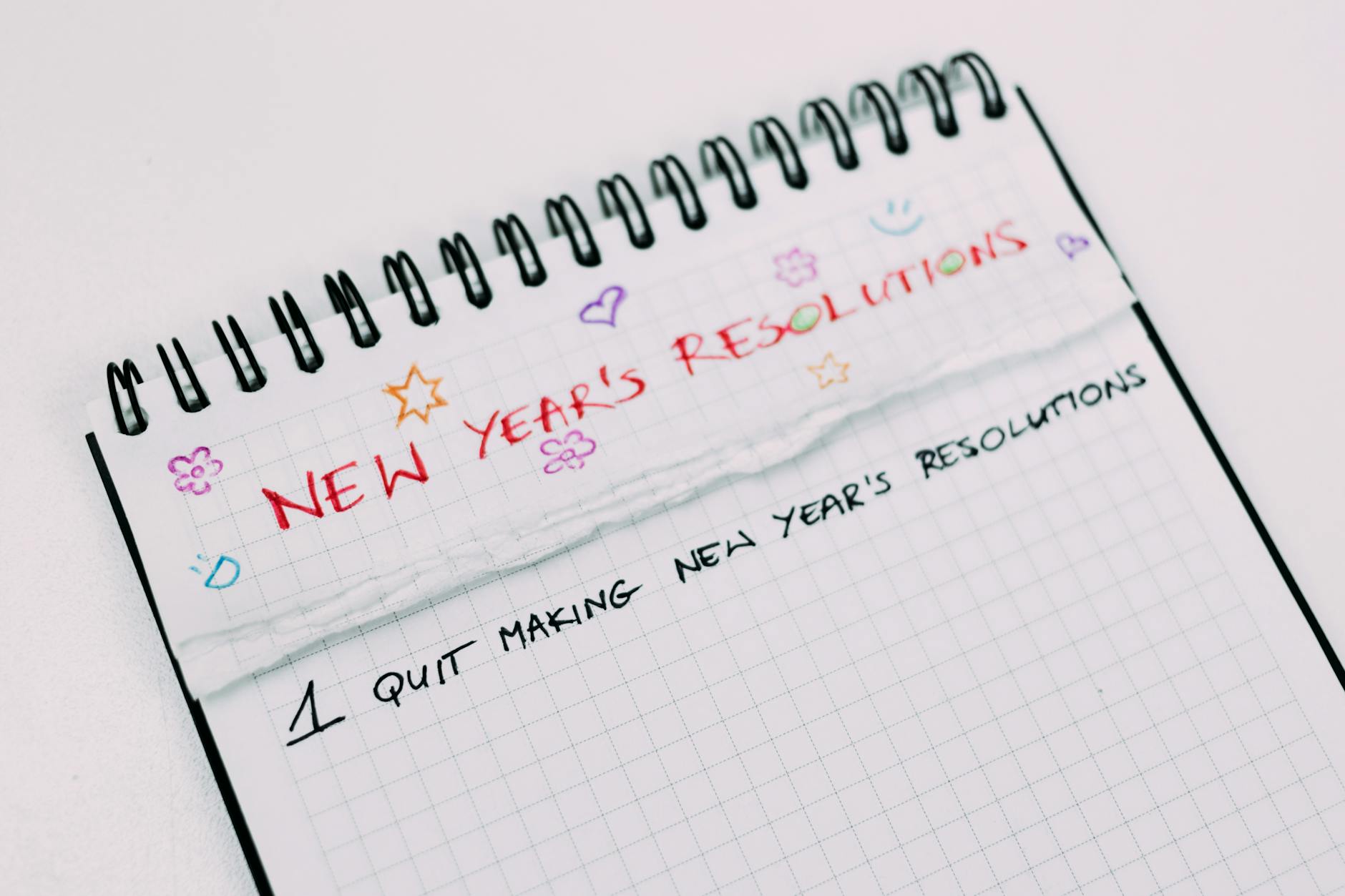
    New Year’s resolutions have a funny way of starting strong and fading fast. On January 1st, we’re full of optimism, bubbles in hand, convinced this is the year everything clicks. By mid-month, the gym bag is back in the trunk, the salad greens are suspiciously limp, and “Dry January” has quietly turned into “Well… maybe just this weekend.”

    Photo by Kseniia Lopyreva on Pexels.com

    At SOMM&SOMM, we like resolutions that feel less like chores and more like curiosity. Wine and spirits were never meant to be about guilt or restriction. They’re about discovery, conversation, and the occasional surprise. So instead of promising less, why not promise better?

    Let’s start with a little perspective.

    Photo by freestocks.org on Pexels.com

    The Bizarre Resolution Hall of Fame

    (Yes, people really committed to these.)

    “I will stop talking to my houseplants.”
    Apparently the plants asked for space.

    “I will only eat beige foods.”
    A bold year for potatoes. A rough one for joy.

    “I will learn to speak dolphin.”
    Ambitious, optimistic, and short on study materials.

    “I will stop Googling my own name.”
    Usually broken before the Champagne goes flat.

    “I will become famous without using the internet.”
    A noble idea with a questionable business plan.

    Note: Most resolutions fail because they’re either wildly unrealistic or painfully dull. Wine, thankfully, lives somewhere in between.

    Photo by Dou011fu Tuncer on Pexels.com

    Wine and Spirit Resolutions (That Aren’t Dry January)

    Dry January has its place, but it tends to dominate the conversation like an over-oaked Chardonnay at a dinner party. For those who prefer intention over abstinence, here are a few resolutions that encourage curiosity without sucking the fun out of the glass.

    The SOMM&SOMM Resolution List
    Obscure, fun, and actually doable

    🍷 One Grape You’ve Never Heard Of Each Month

    Skip Cabernet. Give Chardonnay a rest. Each month, seek out a grape you’ve probably never ordered before.

    Think Assyrtiko, Timorasso, Mencía, Grignolino, or Xinomavro. Pronunciation is optional. Enjoyment is not.

    Fun fact:
    Italy alone has more than 500 documented indigenous grape varieties. You could drink a new one every week and still barely scratch the surface.

    Start this resolution with a short toast 🍷
    “To grapes with names we confidently mispronounce.”

    🥃 Drink Older Than Your Drinking Habits

    Once a month, choose something with real history behind it.

    Armagnac instead of Cognac. Madeira instead of dessert wine. Genever instead of gin. Sherry that existed long before cocktail menus got clever.

    Fun fact:
    Madeira survived ocean voyages and tropical heat because it was intentionally heated. It’s one of the few wines that tastes better after being mistreated.

    Toast to drinking nostalgically 🍷
    “To spirits that have seen more history than we have.”

    📝 The One-Sentence Wine Journal

    Forget tasting grids and flavor wheels. Write one honest sentence per bottle.

    “This tastes like fall arguing with summer.”
    “I would absolutely drink this again, preferably outside.”
    “Perfectly fine, but not worth pretending.”

    Fun fact:
    Your brain remembers how a wine made you feel more than what it tasted like. Emotion sticks. Technical notes fade.

    Toast to echoing feelings 🍷
    “To fewer notes and better memories.”

    🍽️ Break One Pairing Rule Per Month

    Once a month, intentionally color outside the lines.

    Red wine with fish. Sherry with spicy takeout. Amaro at brunch. Sparkling wine with whatever you ordered last minute.

    Fun fact:
    Many classic pairings were discovered by accident, usually late at night and with zero planning.

    Toast to discovery 🍷
    “To wrong pairings that feel exactly right.”

    🌍 The Passport Pour

    Drink one wine or spirit from a country you’ve never explored in a glass.

    Georgia. Slovenia. Uruguay. Israel. Mexico beyond tequila.

    Fun fact:
    Georgia is home to the oldest known winemaking tradition on earth, more than 8,000 years old, using clay vessels buried in the ground.

    Toast to world travel… one glass at a time 🍷
    “To stamps in the passport we keep on the shelf.”

    ⏳ The Slow Glass

    Once a week, drink one glass only. Take 30 minutes to finish it. No phone. No TV. Just you and the glass.

    Fun fact:
    Wine changes in the glass. Aromas shift. Flavors open up. You notice things you miss when you rush.

    Toast to quiet, intentional sips 🍷
    “To slowing down enough to notice.”

    🎭 Drink Blind, Decide Honestly

    Once a month, taste something blind and commit to an opinion before you learn what it is. Wrong answers encouraged.

    Fun fact:
    Even Master Sommeliers get blind tastings wrong. Confidence comes before accuracy.

    Toast to deductive tasting conversations:
    “To being confidently wrong on the way to being right.”

    Photo by Kristina Paukshtite on Pexels.com

    A Final Thought on Resolutions

    The best resolutions don’t punish. They invite.
    They don’t restrict. They encourage.
    They don’t dry you out. They open you up.

    Wine and spirits aren’t about excess or abstinence. They’re about culture, connection, and curiosity. If you’re going to promise yourself anything this year, make it something that brings you back to the table.

    May your resolutions age gracefully, your curiosity stay uncorked, and your glass always be half full. Preferably with something obscure.

    Gregory Dean, SOMM&SOMM

    Cheers 🍷

  • The 12 Wines of Christmas

    The 12 Wines of Christmas

    A Guide to Sipping Through the Season.

    The air is crisp, the carols are floating through grocery store speakers with unmistakable cheer, and your inner wine geek is itching for a holiday-themed deep dive. And right in the heart of December, there’s no better time to revisit one of the season’s most enduring traditions: The Twelve Days of Christmas.

    But where did this curious list of gifts—from partridges to leaping lords—actually come from? And how did it inspire our very own 12 Wines of Christmas, a tasting journey designed to guide your holiday sips from the first day straight through Epiphany?

    These traditions get mixed up like holiday ribbons, so let’s untangle them.

    Photo by Douglas Mendes on Pexels.com

    Where Did the 12 Days of Christmas Come From?

    Long before it was a catchy (and increasingly absurd) carol, The Twelve Days of Christmas was a meaningful Christian observance marking the timeframe between the birth of Christ (December 25th) and the arrival of the Magi (January 6th).

    These were days of celebration—feasts, merriment, reflection, and in some regions, gift-giving. The number twelve wasn’t random; it symbolized completeness, renewal, and spiritual wholeness. Each day carried its own significance, depending on cultural and religious tradition, and it all culminated with Epiphany, often considered the true finale of the holiday season.

    The song itself?
    It first appeared in print in England in 1780 as part of a children’s memory-and-forfeit game. No music. Just a chant-like verse meant to test how well you could recall the list in order. Over time, composers set it to the tune we know today—building a festive crescendo of gifts that get stranger and more lavish with each passing day.

    Photo by Pavel Danilyuk on Pexels.com

    12 Days of Christmas vs. the Advent Calendar

    Before we pour ahead, let’s clear up a classic Christmas confusion.

    Advent is the period before Christmas—a countdown of preparation, beginning on the fourth Sunday before December 25th. Advent calendars, whether filled with chocolates, toys, skincare samples, or tiny bottles of spirits (a favorite around here), are meant to help you anticipate the big day.

    The 12 Days of Christmas, on the other hand, begin on Christmas Day. It’s not a countdown. It’s a celebration.

    Think of Advent as the slow build-up…
    …and the Twelve Days as the extended after-party.

    Photo by Vladimir Konoplev on Pexels.com

    Introducing the 12 Wines of Christmas

    A Sommelier’s Day-by-Day Guide to Sipping Through the Season

    🎁 Day 1 (Dec 25) – A Partridge in a Pear Tree

    Wine: Vouvray Demi-Sec (Chenin Blanc)
    Why: Orchard fruit, honey, and that holiday-friendly acidity.
    Optional Cocktail: Pear French 75 – gin, lemon, pear liqueur, topped with sparkling Vouvray.

    🎁 Day 2 – Two Turtle Doves

    Wine: Côtes du Rhône Rouge
    Why: A blend built on harmony—two grapes (Grenache + Syrah) leading the dance.
    Optional Cocktail: Winter Kir Royale with crème de cassis and Rhône rosé bubbles.

    🎁 Day 3 – Three French Hens

    Wine: Beaujolais Cru (Morgon or Moulin-à-Vent)
    Why: French, festive, and an ideal pairing for leftover turkey sandwiches.

    🎁 Day 4 – Four Calling Birds

    Wine: Oaked Chardonnay from Sonoma or Burgundy
    Why: A nod to the “calling”—big flavors, toasty oak, buttered brioche vibes.
    Optional Cocktail: Chardonnay Hot Toddy (trust me, it works—gentle heat + spice).

    Chardonnay Hot Toddy

    • 4 oz lightly oaked Chardonnay (Sonoma Coast, Mâconnais, or similar)
    • ½ oz honey syrup (1:1 honey + water)
    • ½ oz fresh lemon juice
    • 1 cinnamon stick
    • 1 clove
    • Thin lemon wheel

    Instructions

    1. Warm the Chardonnay on low heat with the cinnamon stick and clove—do not boil.
    2. Remove from heat and stir in honey syrup and lemon juice.
    3. Pour into a heatproof mug.
    4. Garnish with a lemon wheel and the cinnamon stick.

    Flavor Profile: Gentle spice, soft oak, plush citrus, and comforting warmth.

    🎁 Day 5 – Five Golden Rings

    Wine: Champagne
    Why: Golden bubbles for the most iconic line in the song.
    Optional Cocktail: Gold Rush Royale – bourbon, lemon, honey, topped with brut Champagne.

    Gold Rush Royale

    • 1 oz bourbon
    • ¾ oz fresh lemon juice
    • ¾ oz honey syrup
    • 3 oz brut Champagne (or dry sparkling wine)
    • Lemon twist for garnish

    Instructions

    1. Shake bourbon, lemon juice, and honey syrup with ice.
    2. Strain into a chilled coupe.
    3. Top with Champagne.
    4. Express a lemon twist over the glass and drop it in.

    Flavor Profile: Bright, honeyed, gently herbal, and celebration-ready.

    🎁 Day 6 – Six Geese a-Laying

    Wine: Gewürztraminer
    Why: A playful nod to the aromas—rose, lychee, spice—perfect with rich holiday brunches.

    🎁 Day 7 – Seven Swans a-Swimming

    Wine: Albariño
    Why: Aquatic theme + saline, refreshing acidity = a perfect mid-festivity reset.

    🎁 Day 8 – Eight Maids a-Milking

    Wine: Cream Sherry (Amontillado or Medium)
    Why: Nutty, silky, slightly creamy—holiday perfection.
    Optional Cocktail: Sherry Flip – elegant, old-school, and oh-so-seasonal.

    🎁 Day 9 – Nine Ladies Dancing

    Wine: Lambrusco (Dry)
    Why: Effervescence + vibrant fruit = a wine that practically twirls in your glass.

    🎁 Day 10 – Ten Lords a-Leaping

    Wine: Brunello di Montalcino
    Why: Structured, noble, full of energy—this wine leaps with aristocratic swagger.

    🎁 Day 11 – Eleven Pipers Piping

    Wine: Islay Scotch-Cask Finished Red Wine (or simply: enjoy the Scotch!)
    Why: Smoky, spicy, bold—perfect for the pipers’ dramatic flair.
    Optional Cocktail: Smoked New York Sour – red wine float + peated whisky.

    Smoked New York Sour

    • 2 oz peated Scotch (lightly peated works best)
    • 1 oz fresh lemon juice
    • ¾ oz simple syrup
    • ½ oz dry red wine (Malbec or Syrah works beautifully)
    • Lemon peel

    Instructions

    1. Shake Scotch, lemon juice, and simple syrup with ice.
    2. Strain into a rocks glass over fresh ice.
    3. Gently float the red wine over the back of a spoon.
    4. Garnish with lemon peel.

    Flavor Profile: Smoky, tart, layered, and visually stunning.

    🎁 Day 12 – Twelve Drummers Drumming

    Wine: Port (Vintage or LBV)
    Why: Big, bold, booming flavor—an appropriate finale to the holiday symphony.
    Optional Cocktail: Ruby Port Espresso Martini – a surprisingly spectacular twist.

    Ruby Port Espresso Martini

    • 1 oz Ruby Port
    • 1 oz vodka
    • 1 oz fresh espresso (or cold brew concentrate)
    • ½ oz coffee liqueur
    • Optional: ¼ oz simple syrup for sweetness
    • Coffee beans for garnish

    Instructions

    1. Shake all liquid ingredients vigorously with ice.
    2. Strain into a chilled martini glass.
    3. Garnish with three coffee beans.

    Flavor Profile: Balanced between fruity and roasty, with a velvety richness

    Photo by Nadin Sh on Pexels.com

    A Festive Finale

    As the last notes of the carol fade and the final drops in each glass give way to a new year, the 12 Wines of Christmas remind us that the joy of the season isn’t found in extravagance—it’s found in the small, thoughtful rituals we savor along the way.

    Whether you follow the list sip by sip, swap in your own favorites, or shake up a festive cocktail instead, each day offers a moment to pause, celebrate, and connect.

    Here’s to raising a glass to tradition, to curiosity, and to the simple magic that happens when wine, story, and season all come together.

    May your holidays be bright, your cellar well-stocked, and your spirit joyfully lifted—one delicious day at a time. Cheers 🍷

    Cover Photo by Arjunn. la on Pexels.com

  • Old World Regions: Veneto

    Old World Regions: Veneto

    Italy’s Northern Powerhouse of Wine, Culture & Quiet Brilliance.

    December is a reflective month — the harvest is done, cellars are buzzing with fermentations, and wine lovers around the world begin to ask a beautiful question: What did this year give us to drink?

    If there’s any region in Italy that deserves our attention during this season of pause and appreciation… it’s Veneto — a land where misty hills meet ancient canals, and where wine isn’t simply grown… it’s lived.

    Veneto isn’t a “wine region” — it’s twenty lifetimes of wine styles packed into one territory. From joyful Prosecco to profound Amarone. From crisp Soave to salty Lugana. From unknown grapes to international classics. Veneto is northern Italy’s quiet giant — and the more you explore it, the more it rewards you.

    Photo by Lizzie Prokhorova on Pexels.com

    A Glass-Shaped Map of Veneto

    Think of Veneto as three wine landscapes:

    AreaCharacterSignature Styles
    The Plains (Venice, Verona surroundings)Fresh, easy-drinkingProsecco, Pinot Grigio, Bardolino
    The Hills (Valpolicella, Soave, Conegliano)**Mineral-driven, structuredSoave, Valpolicella, Amarone, Recioto
    The Lakes (Garda area)**Saline, floral, softLugana, Chiaretto Rosé

    Veneto alone produces more wine than any other region in Italy — over 25% of the nation’s total production. But here’s the secret: quantity doesn’t overshadow quality. Some of the world’s most loved and most profound wines are born here.

    Classics of Veneto (Must-Know Wines)

    1. Prosecco DOC / DOCG — Italy’s Sparkling Smile

    • Grape: Glera
    • Profile: Pear, green apple, floral, light, friendly
    • Best With: Fried seafood, sushi, popcorn with truffle salt
    • Elevated Cocktail:
      Sgroppino — Prosecco + lemon sorbet + vodka. Yes… dreamy.

    2. Soave DOC / Soave Classico DOC — The Renaissance White

    • Grape: Garganega
    • Profile: Almonds, lemon zest, white peach, minerals
    • Why Sommeliers Love It: With age, it can taste like white Burgundy at a fraction of the price.
    • Pairing Idea:

    Try Soave Superiore if you want depth. Try Recioto di Soave if you want sweet bliss with blue cheese.

    3. Valpolicella Family — The Beating Heart of Veneto Reds

    Valpolicella isn’t a single wine — it is a ladder of complexity:

    StyleTechniqueFlavor Profile
    Valpolicella ClassicoFreshCherry, herbs
    Ripasso“Passed over” Amarone skinsDark fruit + spice
    Amarone della ValpolicellaDried grapesPowerful, intense
    Recioto della ValpolicellaSweet versionLuscious, velvety

    Somm Tip: This region invented appassimento — drying grapes to concentrate sugars & flavors. Amarone is an opus: raisins, chocolate, smoke, black cherry, licorice, leather. A winter fireplace wine.

    Food Pairings:

    Featured Wine Cocktail:
    👉 Amarone Manhattan – 1 oz Amarone, 1 oz Rye whiskey, dash of bitters, orange peel.

    4. Lugana DOC — Lake Garda’s Whisper

    • Grape: Turbiana (genetically related to Verdicchio)
    • Profile: Floral, saline, lemon curd, almond
    • Pairing Perfection:
      • Lake fish
      • Sushi
      • Caprese salad
      • Fresh mozzarella

    If you like Chablis or Pinot Grigio, try Lugana. You’ll find more flavor, more soul, and more story.

    5. Less Known… But So Worth Knowing

    RegionGrapeStyleWhy It Matters
    BreganzeVespaioloDry / sweetHidden gem. The sweet version with gorgonzola is legendary.
    Colli EuganeiMoscato GialloAromaticGreat with spicy Thai or Indian food.
    MontelloBordeaux blendsStructured redsItaly meets Bordeaux but still Italian in spirit.
    CustozaBlendCrisp whiteBetter alternative to mass Pinot Grigio.
    Photo by Enzo Iorio on Pexels.com

    The Veneto Pairing Table

    WineIdeal PairingMood
    ProseccoFried calamariCelebration or Sunday brunch
    Soave ClassicoSpring vegetablesFresh & reflective
    Valpolicella RipassoPizza or lasagnaCozy & casual
    AmaroneRoast meats, contemplationWinter fireside
    ReciotoDark chocolateDessert & decadence
    LuganaRaw seafoodCalm, lakeside evening
    Breganze TorcolatoBlue cheeseSweet & savory elegance
    Photo by Andrea Piacquadio on Pexels.com

    Wine Cocktails from Veneto

    Give your guests (or yourself) something unexpected:

    CocktailIngredientsServes With
    SgroppinoProsecco + lemon sorbet + vodkaBrunch
    Americano RosaChiaretto rosé + Campari + sodaSunset
    Amarone ManhattanAmarone + rye + bittersLate-night jazz
    Soave SpritzSoave + soda + basilGarden afternoons

    Add mint, rosemary or thyme for an aromatic lift. Veneto pairs beautifully with herbs.

    The Soul of Veneto

    Veneto doesn’t chase trends. It honors history and refines technique. From the Roman era to contemporary Michelin-starred tables, its wines remain rooted in place and focused on pleasure.

    It’s not loud. It’s not flashy. And that’s precisely why sommeliers adore it.

    👉 With every bottle from here, there’s space to pause, think, and feel.
    Perhaps, in December, that’s the kind of wine we need most.

    Wines to Try This Month

    • Pieropan Soave Classico
    • Tommasi Amarone della Valpolicella
    • Zenato Lugana
    • Masi Campofiorin (Ripasso-style)
    • Breganze Torcolato (if you can find it — worth the hunt)
    Photo by cottonbro studio on Pexels.com

    Final Pour

    The Veneto isn’t just Italy’s top producer — it is one of its most complicated and most rewarding. Familiar or obscure, sparkling or profound, its wines tell stories of mist-covered valleys, lake breezes, volcanic soils, and families who have made wine for centuries.

    The best way to understand Veneto is simple:
    Drink it slowly… and let it speak.

    Salute — to the North, and to December’s quiet reflections. 🍷✨

    Cover Photo by alleksana on Pexels.com

  • Sips of the Season: Christmas Songs & Wines That Share Their Soul

    Sips of the Season: Christmas Songs & Wines That Share Their Soul

    Because some memories need both lyrics and a glass.

    We’ve survived Black Friday. We’ve outsmarted Cyber Monday. The wrapping paper is still in the closet—but the spirit? The spirit has arrived.

    It’s time to dust off the classic Christmas records (or fine—open the streaming app), lower the lights, and pour something worthy of the season. Somewhere between the sip and the song… a truth emerges:

    Every classic Christmas song tastes like a different wine.
    Each holds a memory.
    Each deserves the right pour.

    So this year—don’t just listen. Pair.

    Photo by Street Donkey on Pexels.com

    🎵 “White Christmas” – Bing Crosby

    Wine Pairing: Chablis (Burgundy, France – Unoaked Chardonnay)

    The Vibe in the Glass

    Crisp. Elegant. Pure as freshly fallen snow. This wine doesn’t perform—it remembers. Like the song, it carries nostalgia with quiet grace.

    Set the Scene

    Dim lighting. A white candle. A slow sip in hand. The kind of evening where you begin to remember things you didn’t realize you forgot.

    Pair With:

    Photo by Frans van Heerden on Pexels.com

    🎵 “The Christmas Song (Chestnuts Roasting)” – Nat King Cole

    Wine Pairing: Aged Tawny Port

    The Story in the Sip

    This is the sound of slowing down. Toasted nuts, caramel warmth, soft edges—everything about this wine feels like turning the final page of a good year.

    Press Play, Close Your Eyes

    Fireplace optional. Reflection required. Let one memory find you tonight.

    Pair With:

    • Roasted chestnuts
    • Pecan pie or walnut tart
    • Blue cheese & fig jam
    • A journal and a pen 😉
    Photo by lil artsy on Pexels.com

    🎵 “All I Want for Christmas Is You” – Mariah Carey

    Wine Pairing: Prosecco Rosé (Veneto, Italy)

    This Pour Hits the Same Notes

    Fun. Flirty. Impossible to ignore. It’s the holiday anthem that arrives every year whether we ask for it or not—and secretly, we’re glad it does.

    Let the Moment Unfold

    Best with friends. Best with laughter. Volume high. Guilt low.

    Pair With:

    • Goat cheese & cranberry crostini
    • Spicy shrimp cocktail
    • Prosciutto-wrapped melon
    • The holiday playlist on shuffle 😉
    Photo by Alena Yanovich on Pexels.com

    🎵 “Silent Night” – Traditional

    Wine Pairing: German Riesling (Kabinett or Spätlese)

    Memory in a Bottle

    Soft sweetness. Reverent acidity. A hush in every sip. This wine isn’t just flavor—it’s peace, poured slowly.

    Sip Slowly Here

    Tree lights only. Maybe snowfall outside. This glass belongs to the quiet hour.

    Pair With:

    • Honey-baked ham
    • Baked brie
    • Apple tart
    • Instrumental carols (Yes, please)
    Photo by Syed Qaarif Andrabi on Pexels.com

    🎵 “Rockin’ Around the Christmas Tree” – Brenda Lee

    Wine Pairing: Beaujolais Nouveau

    Where This Wine Takes You

    Straight to the party. Bright fruit, lively acidity, and a touch of mischief—just like the song.

    Pour This When…

    The first guest arrives. The dancing begins. Or the kitchen becomes the dance floor.

    Pair With:

    Photo by Burak The Weekender on Pexels.com

    🎵 “Have Yourself a Merry Little Christmas” – Judy Garland

    Wine Pairing: Burgundy Pinot Noir

    The Story in the Sip

    Soft melancholy wrapped in warmth. Cherry, earth, and memory. A wine that listens while you speak.

    Your Christmas Slow-Motion Moment

    A blanket. A quiet room. A moment to admit this year meant something.

    Pair With:

    Photo by Karola G on Pexels.com

    🎵 “Feliz Navidad” – José Feliciano

    Wine Pairing: Albariño (Rías Baixas, Spain)

    The Vibe in the Glass

    Sunshine in December. Citrus, zest, laughter. It reminds us: not all Christmases are white—and joy comes in many languages.

    Press Play, Close Your Eyes

    Best enjoyed while cooking with people you love. Kitchen dancing encouraged.

    Pair With:

    Photo by Guilman on Pexels.com

    🎵 “O Holy Night” – Classic Choral or Celine Dion

    Wine Pairing: Vintage Blanc de Blancs Champagne

    Memory in a Bottle

    This wine awakens stillness. Fine bubbles, sacred silence, and a swell of emotion. A spiritual pour for a spiritual song.

    Set the Scene

    Stand. Face the tree. Let the final note linger.

    Pair With:

    Photo by Anna Shvets on Pexels.com

    🎵 “Jingle Bell Rock” – Bobby Helms

    Wine Pairing: California Zinfandel

    This Pour Hits the Same Notes

    Bold. Spicy. A little wild. This wine walks into the kitchen like it owns the place—and we love it for that.

    Let the Moment Unfold

    Turn the lights up. Turn the music louder. Cook with flair.

    Pair With:

    • BBQ wings
    • Black pepper steak
    • Bold cheddar
    • Cinnamon-spiced anything (Woo hoo)

    To the songs we grew up with,
    to the wines that help us remember,
    and to the quiet moments in between—
    cheers to Christmas in every sip. 🎄🍷

    Gregory Dean, SOMM&SOMM
    Photo by cottonbro studio on Pexels.com

    The Encore

    One final pairing—
    No lyrics.
    No melody.
    Just the sound of the season…
    and the last sip in your glass.

    That’s when the season really begins. Cheers 🍷

    If You Enjoyed This Pairing of Music & Wine…

    Pour another glass and explore how the senses connect across other art forms. These featured articles invite you to listen, read, and see wine in new ways:

    • Sipping the Notes — a jazz-inspired journey where saxophones, bass lines, and swing rhythms find their match in the glass.
    • An Intricate Dance Between Poetry & Wine — a lyrical exploration of how verses and varietals intertwine, revealing emotion through structure.
    • The Artistry of Wine — paint strokes, palettes, and regional expressions come together—an ode to the canvas found within a vineyard.

    Each article honors the same belief:
    Wine doesn’t just pair with food.
    It pairs with moments, movements, music, and meaning.

    Let your senses wander. Something memorable might be waiting in the next glass. 🍷🎷📜🖼️

    Cover Photo by Jill Wellington on Pexels.com

  • The Black Friday Wine Gift Survival Guide

    The Black Friday Wine Gift Survival Guide

    For the enthusiasts who already have everything—and know it.

    Black Friday doesn’t just test your patience—it challenges your creativity, especially when you’re buying for wine lovers. These are the people who swirl with intention, own three different styles of decanters “for specific varietals,” and somehow pronounce Gewürztraminer with complete confidence.

    Some drink casually, some study tannins like theology, and others already have far more stemware than cupboard space—but all of them have one thing in common: they’re notoriously difficult to shop for. That’s where this guide comes in—to help you navigate the chaos, avoid the generic, and choose gifts that feel personal, intentional, and worthy of their palate.

    Photo by Yelena from Pexels on Pexels.com

    Emotional Triage

    Ask yourself: Who are you shopping for… and what are they like after two glasses?

    Wine PersonalityRelationship ExampleDo Not BuyGreat Gift
    The Casual SipperNeighbor, coworkerGeneric “wine set” from aisle 9Small producer wine or fun cocktail kit
    The CollectorParent, boss, mentorOver-marketed “luxury” brandsLibrary vintage, French cork key, wine history book
    The Hobby SommelierFriend, siblingBottle they can get at TargetBlind tasting kit / map of terroirs
    The Champagne LoyalistPartner, best friendFlutes with sayings on themGrower Champagne / sabering knife
    The Wine + Food RomanticSignificant otherInstant potWine-pairing cookbook & artisan spices
    The Tech LoverBrother-in-lawGeneric wine openerBlue-tooth temp monitor / Coravin system
    The Secret Box Wine DefenderAunt, neighborFancy BordeauxHigh-end boxed wine / aeration tool
    Photo by MEUM MARE on Pexels.com

    Understand Their Psyche


    The “Wine Is My Therapy” Drinker

    They uncork feelings.
    Gift: Luxe bath salts + soft Pinot Noir from Oregon.
    Why: They want rituals, not gadgets.


    The Wine Scholar

    They say “malolactic fermentation” at dinner.
    Gift: Atlas of wine regions / MasterClass subscription / vineyard journal.
    Pair it with: A rare book or tasting grid.


    The Cellar Guardian

    They own a label printer and refer to vintages as “children.”
    Gift: Digital cellar tracker, professional wine racking system, or limited library release.
    Reminder: NEVER guess their favorite region. Ask. Casually.


    The Celebration Purist

    Every bottle is for an occasion. Every occasion becomes a bottle.
    Gift: Grower Champagne (RM), Champagne stopper, sabering knife.
    Bonus: Add a handwritten “To Be Opened When…” note.

    SOMM&SOMM tip: RM stands for Récoltant-Manipulant — a classification given to grower Champagnes, meaning the same estate grows the grapes and produces the wine themselves.

    The Food & Wine Romantic

    They cook with jazz and pour with soul.
    Gift Ideas:

    • Chef collab spices + wine pairing guide
    • Ceramic olive dish & Sicilian Nero d’Avola
    • PDF of pairing suggestions you wrote yourself

    Photo by Pavel Danilyuk on Pexels.com

    Match Gift to Relationship

    RelationshipBest AngleWhat Works
    CoworkerEffort without intimacyLocal bottle + tear-off food pairing list
    SiblingPlayful competitionBlind tasting kit or “challenge bottle”
    PartnerThoughtful + sensoryDual tasting night kit / engraved stemware
    BossRespect & subtle luxurySingle-vineyard magnum OR Coravin
    NeighborCasual gratitudeWine flight pack / wine & cheese night invite
    ParentsExperience over stuffWinery tour voucher / vintage video message
    Photo by ROMAN ODINTSOV on Pexels.com

    EXPERIENCES > THINGS

    Wine lovers treasure moments, stories, and good company. Consider these:

    Gift TypeExamples
    Wine AdventureLocal tasting tour / vineyard Airbnb escape
    Handwritten Pairing MenuCreate a 3-course menu w/ wine pairings for them
    SubscriptionBoutique wine club, curated by sommelier
    The “Open When” Wine Kit3 bottles w/ envelopes: “Open when you succeed,” “Open when it’s raining,” “Open when you doubt.”
    Photo by Nasty Fotografia on Pexels.com

    GEAR GIFT IDEAS (That Won’t Collect Dust)

    Price PointSurefire Winners
    Under $50Wine glass polishing cloths, Chilean Carménère, tasting journal
    $50–$100Electric cellar thermometer, aerator, region-focused wine flights
    $100–$250Coravin Pivot, Champagne gift pack, vineyard map wall art
    $250+Sommelier courses, cellar design consultation, vintage allocation
    Photo by The OurWhisky Foundation ud83eudd43 on Pexels.com

    Remember This

    Black Friday isn’t about the rush. It’s about the reveal.
    When the wrapping paper drops, what wine lovers really want is a gift that says:

    “I see you. I know how you feel. I chose this for a reason.”

    Cheers 🍷

    🍂 Don’t miss out — shop now, save big, and let’s make this holiday season a little more “grape” together! 🍂

    👉 Visit our SOMM&SOMM merch shop today and sip in style!

    For the Cocktail Enthusiasts in Your Life!

    SIPS & STORIES – Twists on the Classics (Amazon)

    SIPS & STORIES – Botanical Wonders (Amazon)

    Cover Photo by cottonbro studio on Pexels.com

  • Part II: Pouring the Prelude

    Part II: Pouring the Prelude

    The Week Before Thanksgiving.

    By the week before Thanksgiving, excitement (and maybe a little anxiety) starts to bubble up. The fridge is slowly filling, the guest list keeps shifting, and the dining table looks more like a staging area than a place to eat.

    This is when the holiday starts to feel real — the point where anticipation meets aroma. And with a little planning (and the right bottle or two), this week can be just as enjoyable as the big day itself.

    Photo by RDNE Stock project on Pexels.com

    Monday: Lists and Light Wines

    Monday is the calm before the culinary storm. The fridge still has space, your to-do list is organized, and there’s time to think.

    Wine to sip while planning: Sancerre or Grüner Veltliner
    Bright, refreshing, and focused — they keep you alert while dreaming about the feast ahead.

    Easy pairing: Goat cheese and roasted beet salad or a quick apple and cheddar plate.

    It’s not a celebration yet — it’s about easing into the rhythm of the week, with a glass that says, “I’ve got this.”

    Photo by Daria Obymaha on Pexels.com

    Tuesday: Test Kitchen Tuesday

    This is the day for trial runs — those little recipe experiments or make-ahead dishes. Invite a friend over, open a bottle, and turn testing into a mini celebration.

    Wine pick: Beaujolais-Villages or Gamay Noir
    Playful and food-friendly, these reds match almost anything you might taste-test.

    Try with: Cranberry-glazed meatballs, stuffing muffins, or baked brie with herbs.

    These are wines that remind you cooking is supposed to be fun — not stressful.

    Photo by Nataliya Vaitkevich on Pexels.com

    Wednesday: The Night Before

    By Wednesday, the kitchen’s in full swing. The turkey’s thawed, the counters are covered, and someone’s already sampling the pie filling. This is when you need something comforting, easy, and familiar.

    Wine of choice: Chardonnay (unoaked or lightly oaked)
    It’s rich enough for a cozy meal but won’t weigh you down.

    Pair with: Herbed roast chicken, creamy soup, or even just buttered popcorn and a movie while the house fills with anticipation.

    This is the night to unwind — to exhale before the big day.

    Photo by yasminizm on Pexels.com

    Thursday Morning: A Sparkling Start

    There’s nothing like waking up on Thanksgiving morning to the smell of cinnamon and coffee, with the kitchen already humming. Before the chaos begins, take ten minutes to pause. Step outside, take in the crisp air, and toast to what’s ahead.

    Wine for the moment: Sparkling Rosé or Prosecco Superiore
    Bubbles have a way of marking a moment. They remind you this is a celebration — not just a meal.

    Pair with: Pumpkin muffins, cranberry scones, or fruit and cheese for a light breakfast spread.

    It’s the small rituals that make the day memorable.

    Wine and the Art of Anticipation

    Wine has a way of slowing time — it nudges us to notice the details: the warmth of the oven, the laughter drifting from another room, the comfort of familiar aromas. This week is about those details.

    Don’t wait for the big day to open something special. Celebrate the process — the prep, the planning, the people. Thanksgiving isn’t just about what’s on the table; it’s about what happens around it.

    Photo by cottonbro studio on Pexels.com

    Coming Next: The Feast

    In our final article — Part III: “The Feast — A Thanksgiving Table Worth Toasting” — we’ll sit down at the table together. Expect classic pairings, fresh ideas, and a few surprises for every stage of the meal — from appetizers to dessert wines.

    Until then, take this week slowly. Sip something seasonal. Laugh off the chaos. And remember: gratitude isn’t just for Thursday — it’s for every moment that leads up to it 🍷

    Cover Image: Photo by RDNE Stock project on Pexels.com