

There is no better way to learn about (and appreciate) wine than to get fully immersed in its rich history, culture, and traditions. Sometimes we get so involved in studying a wine’s properties–such as nose, taste, structure, and color–that we miss out on the characteristics that make the wine unique to a particular country, region or village. This is especially true for the less traveled old-world vineyards and wineries of Eastern and Central Europe. We recently participated in a traditional Georgian supra (სუფრა) and experienced a full day of traditional dishes, wine, toasts (many toasts) and Georgian culture complete with our own tamada (თამადა).
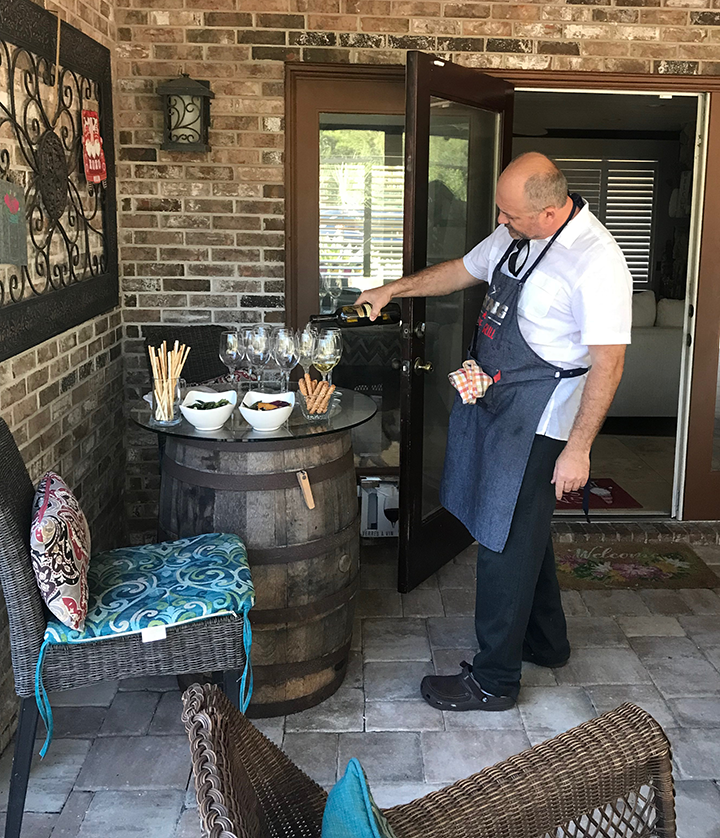
Upon arrival, we knew right away that Dima and Oksana (our hosts) had meticulously planned an afternoon of wine, food and education to challenge our minds and stimulate our senses. Other than the high-level information about viticulture and vinification from our somm-studies, we knew very little about the history and culture of Georgian wines. That was about to change 😉
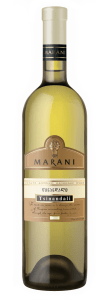
Our tamada, Dima, poured the first wine (2018 Marani Tsinandali) as we watched several very informative videos. Tsinandali is a dry white wine from the region of Kakheti. Although a blend of Rkatsiteli (80%) and Mtsvane (20%), it had a familiar nose. On the palette, the creaminess from being aged a short time in oak barrels reminded me of a Chardonnay. The tropical fruit notes, however, were reminiscent of a Pinot Grigio.
The closest match (at least to my palette) would be the Marsanne-Roussanne blends of Rhone, France–such as the Domaine Jean-Louis Chave Hermitage Blanc. While sharing a few characteristics of other dry white wines, this Tsinandali was truly unique and the perfect way to start our journey of Georgian wines.
Our wine-fueled discussions continued with a deep dive into the Country of Georgia and its long history of producing wine. Winemaking in Georgia can be traced back to the people of South Caucasus in 6,000BC. That’s right… archaeologists have uncovered clay wine vessels (called qvevris) that date back 80 centuries. With a basic understanding, and whole new appreciation for Georgia, we’re ready for our tamada-led supra–Gaumarjos!
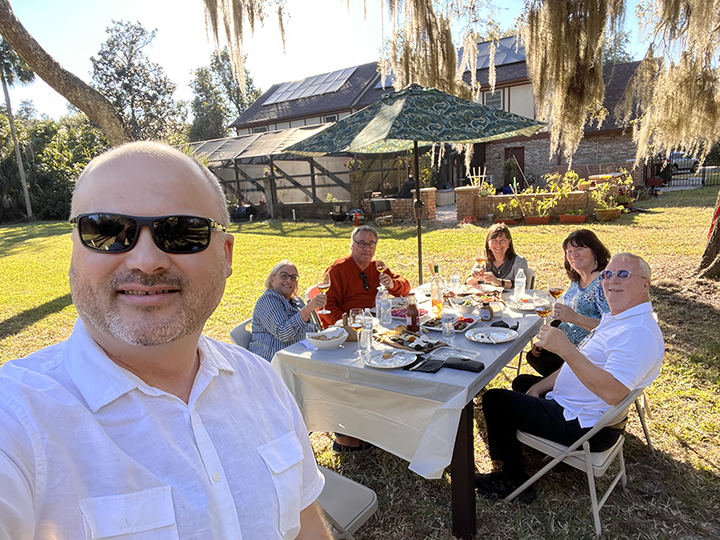
A Georgian keipi (ქეიფი) would not be authentic without a tamada to lead and lecture. Dima wasted no time in leading us through the first of many though-prevolking and purposeful toasts. Several were off-the-cuff as expected, but most followed the deep-seated tradition of the Georgian supra.
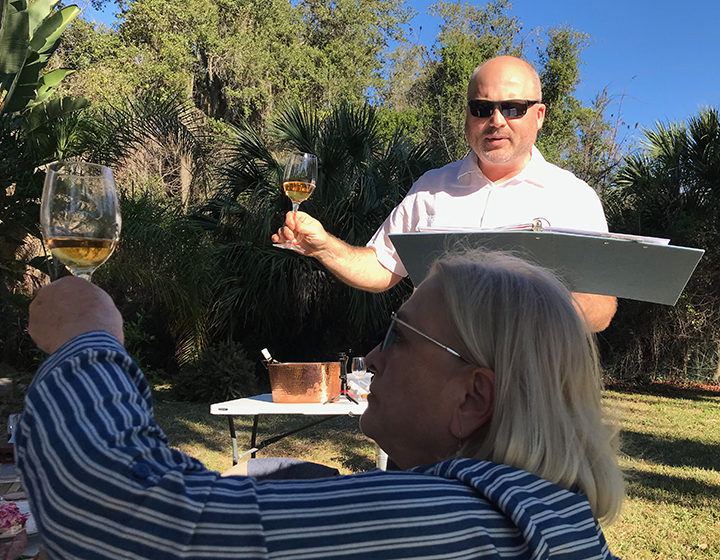


The table was covered with amazing regional-inspired dishes which paired perfectly with the Georgian wines. The second wine in the lineup was a crisp aromatic dry white Chinuri (Iago Chinuri) from the Mukhran Valley. This no-skin-contact wine had a bright acidity and subtle minerality. Awesome!
The dry white wines of Georgia are really special. As with the Iago Chinuri, the next two (2) single-varietal wines are macerated in qvevris (also spelled kvevris). This ancient method of producing Georgian wine involves burying it underground for an extended period of time. In fact, it was the early Georgians that discovered grape juice buried in the ground for the winter would turn into wine. So, is Georgia the birthplace of wine? Hard to argue otherwise.

The third wine in the lineup was a single varietal traditional qvevri dry white Rkatsiteli from the Kakheti region (2017 Marani Rkatsiteli). It was nice to taste and enjoy this varietal stand-alone, and compare it to the previous blend (2018 Marani Tsinandali). The qvevri method gives this wine a very different profile. There was a hint of orange in the color (more like amber), but certainly not glowing neon like the California white wines that spend additional time on the skins.
The nose is intense and herbaceous. On the palette, this wine is very expressive. Some minerality exists, but the herb notes really come forward. This was a very nice wine, and really opened our eyes (and minds) to the lesser-known varietals. There are an astounding 500+ varieties of indigenous grapes in Georgia. Only 40 varietals are used in commercial production.

At this point, we were are all fully committed to the supra, and our tamada has led us through many toasts. Our wine glasses were never empty, as the discussions are focused on those special clay pots and their role in subterranean winemaking 😉
The fourth wine could not have been timed better. Smoked meats, specialty cheeses, deep-fried okra (my favorite), fresh bread, and a beet salad beyond words were perfect with this 2017 Marani Mtsvane. The qvevri orange wine was beautifully elegant with a long finish. The tannins, uncharacteristic in a white wine, were soft and smooth. Gaumarjos!
The 2017 Marani Mtsvane wine has forward notes of pitted fruits, and at the same time ripe melon lurks in the distance. I detected fruit tree blossoms on the nose. Generally speaking, amber/orange wines sacrifice fruitiness for tannins by spending up to six months on the skins. This particular wine, however, had the brightness of a white and the soft tannins of a red. Perfect springboard to the Georgian red wine lineup.
The time had come for a lesson in the art (and science) of making khinkali (ხინკალი). This giant dumpling–sometimes spelled ‘hinkali’–is thought to have originated in Georgia. Regardless, it is still a mainstay. Oksana taught Tammy, Patti and Mike the proper technique for filling and forming these delicious dumplings. Dima feverishly stirred a huge pot of seasoned boiling water and cooked the khinkali to perfection.
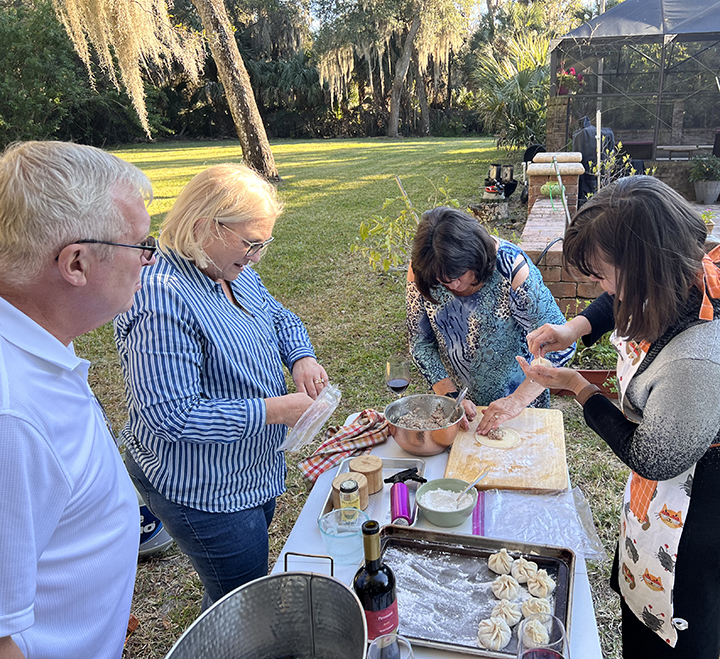
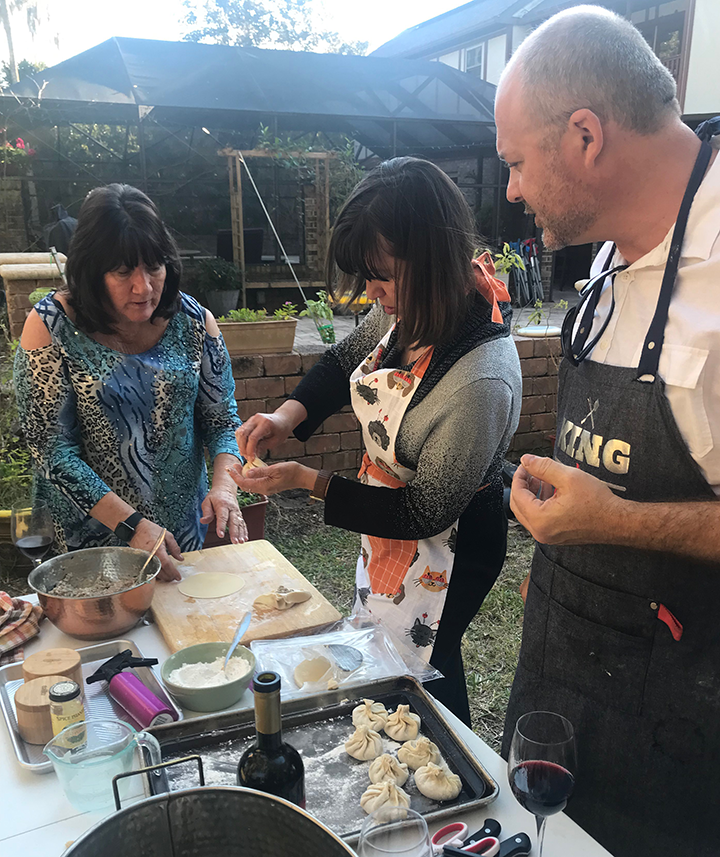
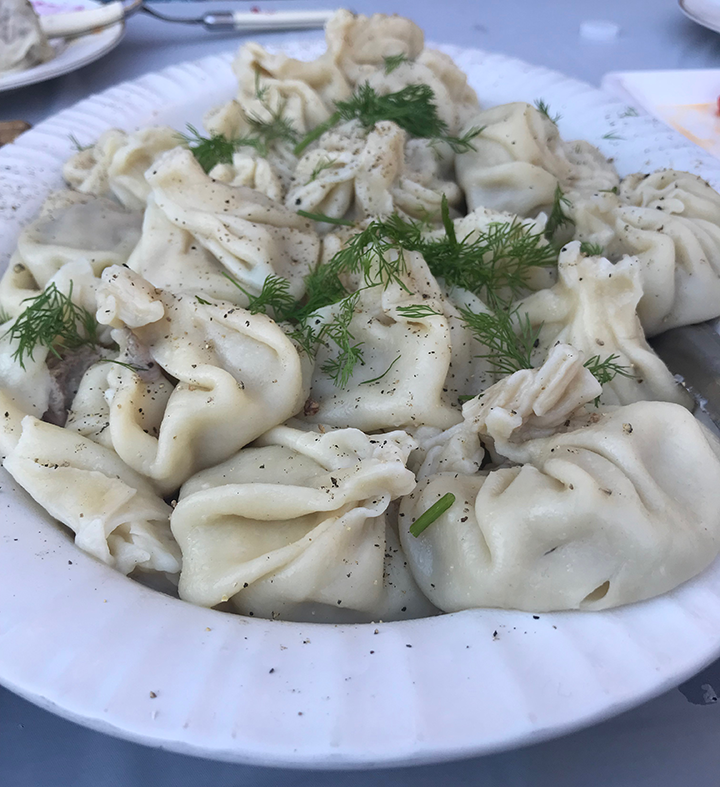
As we moved into the entrées, it was time to abandon the wonderfully intriguing white wines of Georgia and explore the world of expressive reds. The next two (2) wines were a great introduction into one of the most common varietals in Georgia–Saperavi.
First up (fifth in the lineup for those keeping score) was the 2016 Damani Saperavi. Initial impression was that this wine was faulty. It was somewhat bitter and unapproachable. After a few minutes, it began to resemble wine. Eventually the characteristics of a Saperavi varietal started to come through. Slightly smoky and light floral notes. Still a little bitter and acidic for this varietal.
This is only my third teinturier grape variety I’ve had the opportunity to taste. The other two were Gamay de Bouze and Chambourcin. Teinturier grapes have dark skins and dark flesh/pulp. Most red varietals have dark skins and clear flesh.
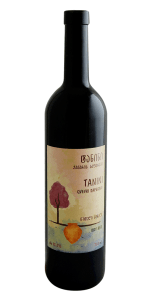
The sixth wine–also a Saperavi–was a 2019 Tanini Saperavi from the Kakheti region. This wine had an intense inky color typical of teinturier varietals. This unoaked red wine was surprisingly well-structured and balanced. The dark, ripe fruits and just the right amount of earthiness was perfect for what was next–lamb skewers.
The contrast between the 2016 Damani Saperavi and 2019 Tanini Saperavi wines was unexpected. Especially since both wines were produced in the same area (region). This cold-tolerant varietal is gaining momentum in the northeastern United States–notably in the Finger Lakes.
A few glasses into the red wines was the perfect time for the pièce de résistance. With a few bold Georgian reds next up on our journey, we were excited to try each paired with Dima’s char-grilled lamb skewers and the plethora of Oksana’s accompanying dishes. Gaumarjos!
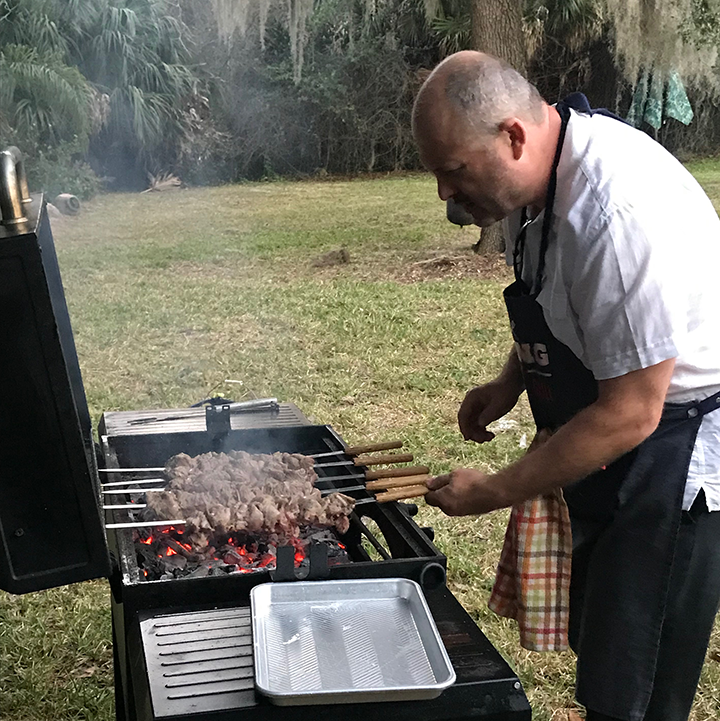
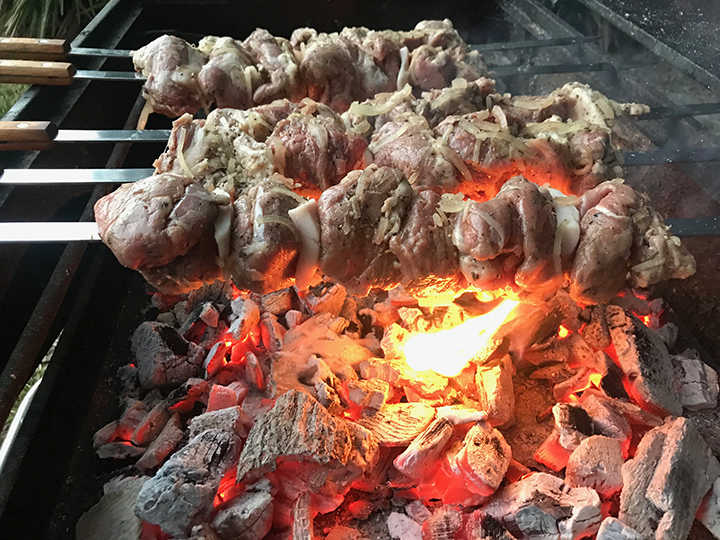

Mukuzani is an area in Kakheti where they are only allowed to make dry wines from 100% Saperavi grapes. The seventh wine in our lineup, a 2018 Marani Mukuzani, was very charismatic. The nose was chocolate-covered cherries and vanilla spice (yes… in the same glass). This wine is dry and very well balanced. Perfect with the Georgian cuisine!
Unlike the two previous Saperavi wines, this Mukuzani was characteristic of old-world reds. The oak aging combined with the use of qvevris gently coax flavors of ripe, juicy fruit and prunes from the Saperavi grapes. Qvevris are buried in dirt cellars called ‘Marani,’ so it makes sense to name a company the same 😉
Mukuzani is 1 of 24 Protected Designations of Origin (PDO) wine appellations in the Country of Georgia. Each appellation concentrates on one main wine style (dry red, semi-sweet red, dry amber, sweet amber/fortified white, dry white, semi-dry white, semi-sweet white, sparkling white).

The eighth wine (whew) of our journey was a 2019 Marani Kindzmarauli. Kindzmarauli is an appellation that produces semi-sweet red wines. The Marani Kindzmarauli was very silky, and unlike the Mukuzani had more distinct blackberry and ripe cherry notes. The wine was expressive and bright. This is undoubtedly due to the wine being finished in stainless steel tanks as opposed to oak barrels.
Kindzmarauli is considered semi-sweet and certainly would have seemed sweeter if served slightly chilled. It was perfect with the grilled meats and rich dishes of our supra. Having the opportunity to experience all of the facets of this varietal was special… and very enlightening.

The ninth wine in the lineup was another semi-sweet red from the Kindzmarauli PDO. Our tamada opened a very special 2019 Teliani Valley Kindzmarauli late harvest wine. We typically associate late harvest with dessert wines. We’ve recently discovered, however, that semi-sweet Georgian wines would be considered not-so-sweet or semi-dry in other countries.
Tannic and flavorful. Dark fruit, spices and mocha on the nose. This wine stood up to the many flavors of our feast. The most interesting thing about the semi-sweet wines of Georgia is how perfectly balanced (and very unusual) to have tannins present. It works… and it works well. Gaumarjos!
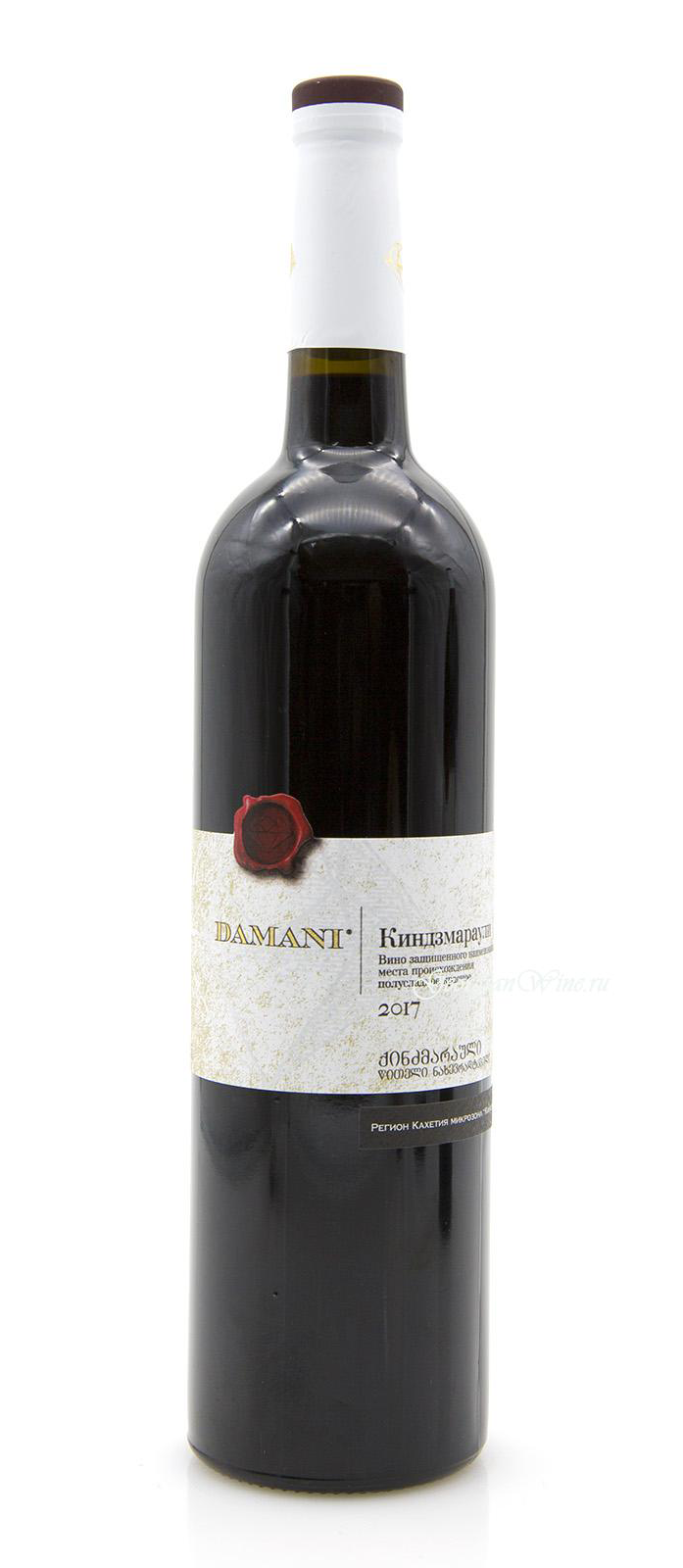
The supra was rounded out by two amazing semi-sweet Georgian wines. Wine number ten in our lineup was a 2017 Damani Kindzmarauli. This wine stood on its own, although it was right at home with the Georgian fare. It was a little different than the other Saperavi wines of the tasting. For me, at least, it reminded me of a well-balanced red blend.
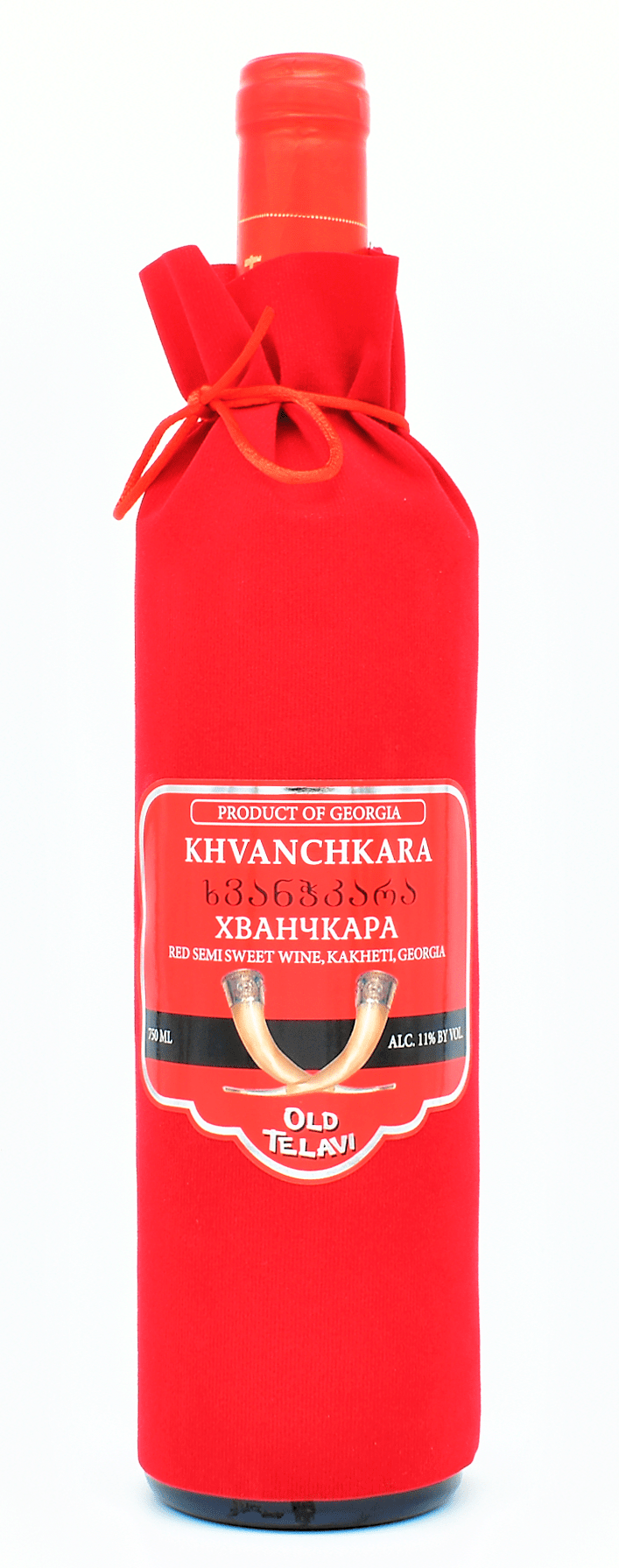
The eleventh and final wine of the supra was a perfect closer. The Old Telavi Khvanchkara red dessert wine was absolutely amazing! Made from a blend of Aleksandrouli and Mujuretuli grapes, it was lush and balanced. Filled with blackcurrant and raspberry aroma, the wine is juicy and slightly tannic. Yes, please!
This was one of the most fun and educational gatherings we’ve ever attended. We all have a new appreciation for the Georgian traditions of drinking, toasting and feasting. Dima and Oksana were incredible hosts. Their passion for wine, culture and cuisine was on full display. Dima and Oksana’s masterful creations perfectly complimented the wines of Georgia and our tamada’s artfully prepared toasts.
Gaumarjos to the tamada!


We welcome feedback…