

A Sensory and Emotional Parallel.
Wine and poetry have long been intertwined in the human experience, both reflecting the depth of our emotions, the richness of history, and the subtleties of culture. Like a well-crafted poem, wine has the ability to evoke complex feelings, conjure vivid imagery, and carry us through a journey of taste and sensation. This article explores the emotional, historical, and ideological parallels between famous works of poetry and different wine styles, illustrating how these art forms echo each other in surprising and profound ways.
Wine and poetry—two art forms that intertwine like vines in a vineyard, each sip, each verse, revealing deeper layers of beauty. One nourishes the soul, the other the spirit, both creating moments that linger like a perfect finish.
Gregory Dean, SOMM&SOMM
Romanticism and the Elegance of Pinot Noir

Poet: John Keats
Poem: “Ode to a Nightingale”
Wine: Pinot Noir from Burgundy, France
John Keats, a central figure of the Romantic movement, is known for his rich, sensory language and an obsession with transience, beauty, and nature. In his poem “Ode to a Nightingale“, Keats explores the bittersweet nature of existence, juxtaposing the fleeting beauty of life with the eternal, almost transcendent quality of the nightingale’s song. The poem, lush with imagery, oscillates between moments of intense joy and sorrow, much like the delicate balance in a fine Burgundy Pinot Noir.
Pinot Noir, particularly from Burgundy, is a wine that thrives on nuance and subtlety. Its light body and complex structure evoke an emotional complexity similar to Keats’ poem. Much like “Ode to a Nightingale“, a good Burgundy Pinot Noir captures a sense of fleeting beauty. It can be ethereal, elegant, and haunting, with its perfumed red fruit, earthy undertones, and graceful acidity. Just as Keats’ work leaves readers with a lingering sense of melancholy and beauty, a glass of Pinot Noir leaves an indelible mark on the palate, making us reflect on its ephemeral nature.
Modernism and the Complexity of Bordeaux Blends
Poet: T.S. Eliot
Poem: “The Waste Land”
Wine: Left Bank Bordeaux
T.S. Eliot’s “The Waste Land“ stands as one of the most iconic works of Modernist poetry, delving into themes of fragmentation, disillusionment, and cultural decay in the aftermath of World War I. Its complexity lies in the many layers of references, shifting voices, and intertextuality, all blending into a single tapestry of chaos and order. This is akin to the grand structure and deep complexity found in the classic Left Bank Bordeaux blends, particularly from the prestigious appellations of Médoc or Pauillac.

A Bordeaux blend, usually composed of Cabernet Sauvignon, Merlot, and other Bordeaux varietals, brings together distinct elements to create a unified whole, much like Eliot’s fragmented verses. Cabernet Sauvignon provides structure and tannic grip, akin to the poem’s harsh imagery of a decaying world. Meanwhile, Merlot brings softness and fruit, like the rare moments of warmth in “The Waste Land”. Each varietal contributes something unique to the blend, but together, they create a wine with depth, longevity, and the capacity to evolve over time.
Just as “The Waste Land“ challenges the reader with its dense allusions and structure, a fine Bordeaux challenges the drinker to find harmony in its often austere tannins, powerful fruit, and earthy complexity. The wine, like Eliot’s work, rewards patience and contemplation, revealing more with each sip or read.
Transcendentalism and the Natural Purity of Organic Orange Wine
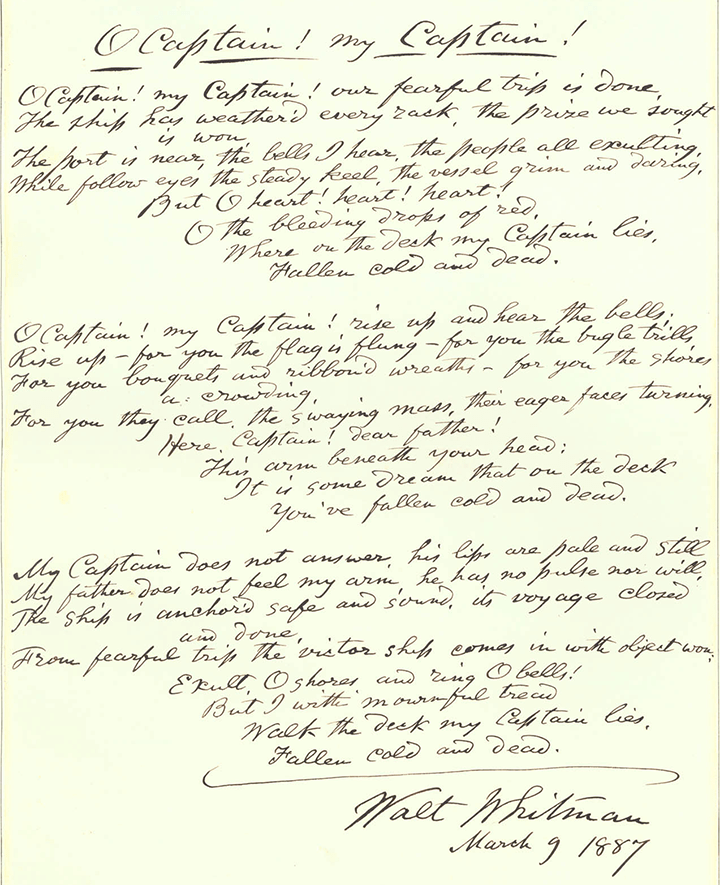
Poet: Walt Whitman
Poem: “Song of Myself”
Wine: Organic Orange Wine from Friuli, Italy
Walt Whitman’s “Song of Myself“, a cornerstone of Transcendentalist poetry, celebrates the unity of humanity and nature, the self, and the universe. Whitman’s poetry is an ode to individualism, nature, and the interconnectedness of all things. The free-verse structure of the poem, with its expansive, inclusive tone, mirrors the natural, unfiltered essence of an organic orange wine, a style known for its minimal intervention winemaking that allows nature to express itself fully.

Orange wine, made from white grapes fermented with their skins, often carries a unique oxidative quality, blending the freshness of white wine with the tannic structure typically found in reds. This ancient winemaking method, popular in regions like Friuli, Italy, speaks to a return to the land, to a more natural and authentic way of making wine. Just as Whitman sought to break down the artificial barriers between man and nature, orange wine blurs the lines between white and red, creating a harmonious blend of the two.
There is an honesty in both Whitman’s words and the profile of orange wine. The slightly wild, untamed nature of this wine, with its hazy appearance, earthy notes, and textured mouthfeel, mirrors Whitman’s free spirit and unstructured poetry. Both the poem and the wine invite you to embrace the raw, unpolished beauty of the world.
Romanticism and the Lushness of German Riesling
Poet: Johann Wolfgang von Goethe
Poem: “The Sorrows of Young Werther”
Wine: German Riesling from Mosel
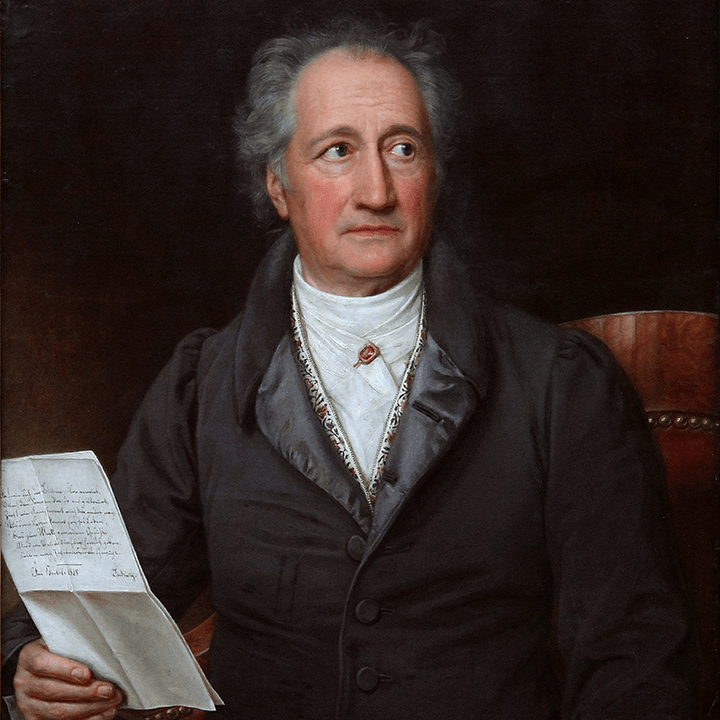
Goethe’s “The Sorrows of Young Werther”, though technically a novel, is often praised for its poetic prose and its emotional depth, which made it an important work in the Romantic literary movement. The unbridled passion, intense longing, and melancholy of young Werther’s love is mirrored in the character of Mosel Riesling—one of the most expressive and emotionally charged wines in the world.
Riesling from the steep slopes of the Mosel captures the tension between sweetness and acidity, embodying the complex emotional landscape Goethe navigates in his novel. The wine is often described as having a purity and precision that belies its rich, honeyed fruit flavors. Just as Werther’s love is overwhelming yet tinged with sadness, Mosel Riesling can be achingly beautiful, with its bright acidity cutting through lush, almost decadent notes of peach, apricot, and honey. The delicate minerality that runs through a Riesling is like the undercurrent of sorrow in Werther’s story, a reminder that beauty and pain often coexist.
Symbolism and the Mystical Nature of Champagne
Poet: Charles Baudelaire
Poem: “L’Invitation au Voyage”
Wine: Vintage Champagne
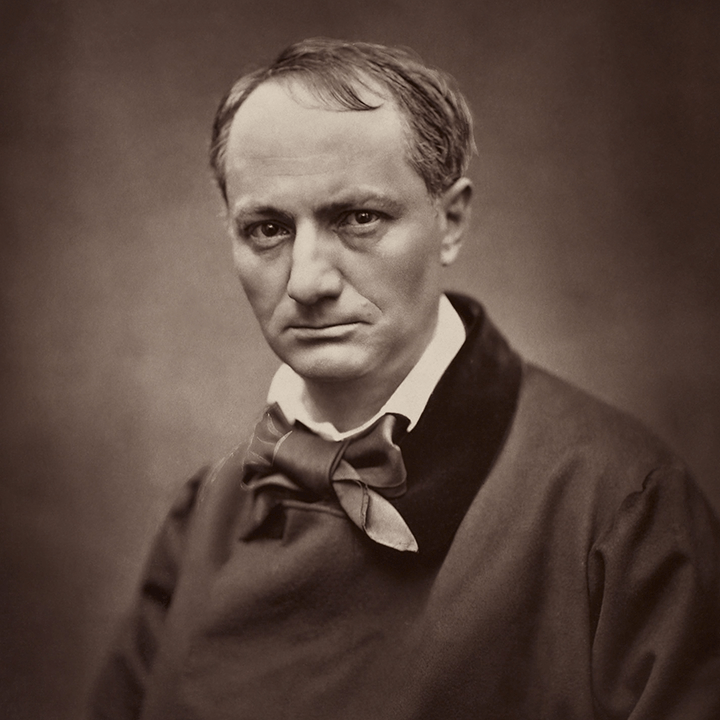
Charles Baudelaire, the enigmatic French poet, is often associated with the Symbolist movement, which emphasized the mystical, the dreamlike, and the emotive power of words. His poem “L’Invitation au Voyage” speaks of an idealized, almost otherworldly place of beauty, where everything is calm, luxurious, and sensuous. Vintage Champagne, particularly from houses like Dom Pérignon or Louis Roederer, captures this same sense of otherworldly perfection and elegance.
Champagne has long been the wine of celebration and luxury, but vintage Champagne takes that association further, offering a sense of depth, mystery, and refinement. Much like Baudelaire’s poetry, a fine vintage Champagne creates an immersive experience, transporting the drinker to a place of beauty and pleasure. Its fine bubbles, complex aromas of brioche, almonds, and citrus, and its luxurious mouthfeel make it a sensory journey, echoing the poem’s longing for a distant paradise.
Baudelaire’s poem, much like Champagne, invites indulgence in beauty, a brief escape from the mundane. But underneath the surface, both the wine and the poem carry a hint of melancholy, a recognition that such beauty is fleeting, much like the effervescence of a Champagne flute.
Here’s to the intricate dance between poetry and wine, where words and flavors meet in a symphony of expression!
Gregory Dean, SOMM&SOMM
The Shared Language of Wine and Poetry
Both wine and poetry offer us ways to express the inexpressible. They reflect the deepest corners of human emotion, from the lightest moments of joy to the most profound sorrows. In comparing famous works of poetry with various wine styles, we can see how both art forms communicate on the same emotional wavelength, providing a sensory journey that transcends mere consumption.

By exploring these correlations, we gain a richer understanding of how wine, like poetry, can evoke powerful feelings, speak to our history, and reveal the beauty of both nature and human creation. Wine, much like a well-written poem, is an invitation to slow down, to savor, and to reflect. Cheers 🍷
Cover Photo Credit: Photo by Dulce Panebra on Pexels.com




 SOMM&SOMM
You must be logged in to post a comment.