
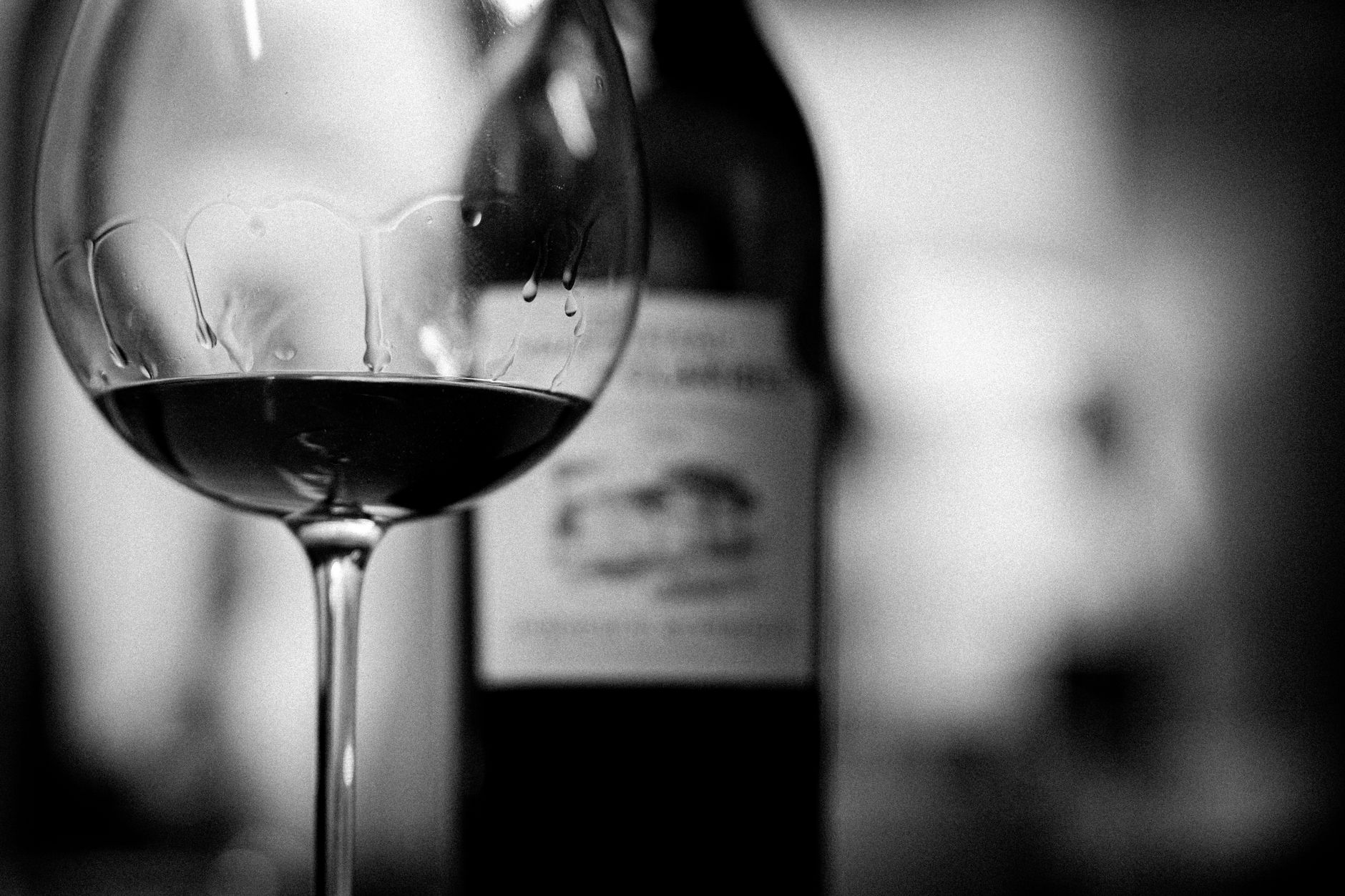
How Much Wine is Actually in Your Wine?
There is a moment every wine lover eventually experiences.
You pick up a bottle of California Cabernet Sauvignon. The label says Napa Valley. The wine looks serious. The price looks even more serious. You assume you know what is in the bottle.
Mostly Cabernet Sauvignon. From Napa Valley.
And you would be right.
Mostly.
Welcome to the wonderfully precise—and occasionally maddening—world of wine labeling laws.

The good news is that American wine-labeling regulations are not designed to deceive consumers. They are designed to establish a legal threshold for what a winery can call a wine. The slightly less comforting news is that those thresholds leave room for other grapes, other places, and other vintages to join the party.
For wine drinkers who care about what is actually in the glass, three numbers are worth remembering:
75%. 85%. 95%.
They are not arbitrary numbers. They are legal thresholds under U.S. wine-labeling regulations, and understanding them makes reading a wine label considerably more interesting.

The 75% Rule: “Cabernet Sauvignon” Doesn’t Necessarily Mean 100% Cabernet
Wait…, What?
Let’s start with the number that causes the most confusion.
Under federal regulations, a California wine—or any American wine—may generally identify a single grape variety on the label if at least 75% of the wine is derived from that grape. The qualifying portion must also come from the stated appellation of origin.
So a bottle labeled:
Cabernet Sauvignon
could legally contain:
- 75% Cabernet Sauvignon
- 15% Merlot
- 10% Cabernet Franc
And the label can still legally call the wine Cabernet Sauvignon.
Nothing nefarious happened. No sommelier needs to call the wine police.
The remaining 25% simply does not have to be disclosed as part of the mandatory varietal designation.
That distinction matters.
The law establishes what a winery may call the wine, not necessarily everything that went into the tank.
There are two exceptions to the normal 75% threshold: wines made from qualifying Vitis labrusca varieties, and wines made from varieties that TTB determines to be too strongly flavored for the 75% minimum, may use the varietal name at 51% or more. In those cases, the label must state ‘contains not less than 51% [variety].’
For most of the familiar noble varieties, however, 75% is the number to remember.

The 85% Rule: Welcome to the AVA
Now we get to the geography.
If a wine carries an American Viticultural Area—an AVA—on the label, at least 85% of the wine must be derived from grapes grown within that AVA.
That means a wine labeled:
Napa Valley Cabernet Sauvignon
is subject to two separate thresholds:
Cabernet Sauvignon: at least 75%
Napa Valley grapes: at least 85%
Those numbers address different questions.
The first tells us how much of the wine must be Cabernet Sauvignon.
The second tells us how much of the wine must come from Napa Valley.
And that creates an interesting little mathematical wine puzzle.
Imagine a Napa Valley Cabernet labeled under the federal minimums. The wine could contain 75% Cabernet Sauvignon, while 85% of the total wine comes from Napa Valley.
The regulations do not require the entire 85% Napa component to be Cabernet Sauvignon.
In other words, the label tells you something important—but not everything.
This is one reason experienced wine professionals pay attention to the combination of varietal designation and appellation, rather than treating either one as a complete ingredient list.
And there is another wrinkle: the 85% AVA requirement concerns where the grapes were grown, not that every grape in the bottle came from the named AVA. Up to 15% can come from outside the AVA while the wine retains the AVA designation, provided the other requirements are met.
That sounds like a loophole.
Legally, it isn’t.
It is the rule.

And Then There Is 95%
The 95% figure gets particularly interesting.
If a wine uses the name of a specific vineyard, orchard, farm, or ranch having geographical or viticultural significance, federal regulations generally require at least 95% of the wine to have been produced from primary winemaking material grown on that named property.
So our three numbers now look something like this:
| What the label tells you | Minimum requirement |
|---|---|
| Single grape variety | 75% |
| Named AVA | 85% |
| Named vineyard/property | 95% |
There is another important 95% rule that wine lovers should know: when a wine carries a vintage date and a viticultural-area appellation, at least 95% of the wine must come from grapes harvested in that labeled year. If the wine uses a non-viticultural-area appellation, the vintage threshold is generally 85%.
So if you see:
2023 Napa Valley Cabernet Sauvignon
you are looking at three different legal concepts:
- At least 75% Cabernet Sauvignon.
- At least 85% from Napa Valley.
- At least 95% from the 2023 harvest.
The label is telling you quite a lot.
But it still isn’t giving you the recipe.
So Could a “Cabernet Sauvignon” Contain Merlot?
Absolutely.
And this is where the rules become useful rather than alarming.
California Cabernet has a long history of blending with other Bordeaux varieties. Merlot, Cabernet Franc, Petit Verdot and Malbec can all contribute structure, aroma, color, texture or balance.
A winery could produce a wine that is 80% Cabernet Sauvignon and 20% Merlot and label it simply Cabernet Sauvignon.
That is perfectly legal.
But if the winery chooses to put Cabernet Sauvignon and Merlot on the label as the varietal designation, the rules change dramatically.
When two or more grape varieties are named as the wine’s varietal designation, 100% of the grapes must be from the listed varieties, and the percentage of each must be stated on the label, subject to a ±2% tolerance.
So:
Cabernet Sauvignon
could contain undisclosed other varieties.
But:
Cabernet Sauvignon 80%
Merlot 20%
accounts for the entire blend.
That is a very useful distinction when reading a label.
Is This Just an American Thing?
No.
Wine-producing countries around the world have developed their own systems for dealing with varietal and geographic labeling, and several use thresholds that look remarkably familiar.
The details, however, can be quite different.
European Union: Another 85% Threshold
Under EU rules, when a single wine grape variety is named on a wine label, generally at least 85% of the product must be made from that variety. When two or more grape varieties are named, 100% of the wine must be made from those varieties, and they must appear in descending order of proportion.
That means the European approach can actually provide a little more varietal specificity than the U.S. federal minimum.
But there is an important caveat.
European wines are also governed by protected designations of origin, protected geographical indications, national regulations and individual appellation rules. A Barolo, for example, is not simply subject to a generic European “85% rule.” The rules of its specific appellation matter.
In Europe, geography can be every bit as important as grape variety.
Sometimes more important.

Australia: Another Familiar Number
Australia also uses an 85% threshold for single-variety labeling. Under Australian wine regulations, a wine made from two or more varieties can be described as a single variety when at least 850 mL/L—85%—comes from that variety. If multiple varieties are named, they must be listed in descending order, and the named varieties collectively must account for at least 85% of the wine. Each named variety must also be present in greater proportion than any variety that is not named.
That last requirement is particularly interesting.
Imagine:
Cabernet Sauvignon 70%
Merlot 20%
Petit Verdot 10%
Australia’s labeling rules allow the named varieties to account for the required 85%, but the naming order matters and an omitted variety cannot exceed a named variety.
Again, the law is trying to strike a balance between practical winemaking and consumer information.
New Zealand: 85%, With an Interesting Twist
New Zealand also applies an 85% rule to variety, vintage and area-of-origin claims.
But New Zealand’s guidance makes the consumer-protection intent especially clear: if a wine makes a claim about varieties, the named varieties must collectively represent at least 85%, must be listed in descending order, and a producer cannot name two varieties while leaving out another variety that represents a greater percentage than one of the named varieties.
So a hypothetical wine containing:
75% Cabernet Sauvignon
15% Pinotage
10% Merlot
could not simply be presented as “Cabernet Sauvignon Merlot,” because Pinotage is present at a higher percentage than Merlot.
That is a fascinating contrast with the U.S. system.
Different countries are solving the same problem in different ways:
How much information does a consumer reasonably expect from a varietal name?

The Important Word Is “Minimum”
This is where wine enthusiasts can get themselves into trouble.
The legal threshold is a minimum, not an average and certainly not a target.
A Napa Valley Cabernet Sauvignon might be:
- 100% Cabernet Sauvignon
- 95% Cabernet Sauvignon
- 85% Cabernet Sauvignon
- 75% Cabernet Sauvignon
All could potentially carry the same basic varietal designation.
And the wine could taste dramatically different.
The law doesn’t tell us whether the winemaker chose to blend 5% Merlot because it improved the wine, because it corrected a difficult vintage, because it was traditional, or because the winemaker simply liked the result.
Those are winemaking decisions.
The label law merely establishes what can be printed on the bottle.
That is why “legal” and “transparent” are not necessarily synonyms.
A winery can comply completely with the law while still leaving the curious drinker wanting more information.

How Can You Find Out What Is Actually in the Bottle?
This is where things get fun.
You don’t need to become a wine detective with a trench coat and a magnifying glass.
You just need to know where to look.
1. Start With the Winery
The winery’s website is usually your best first stop.
Look for:
- Technical sheets
- Vintage notes
- Wine specifications
- Composition
- Blend percentages
- Vineyard sources
- Appellation information
- Winemaker notes
Many producers voluntarily disclose much more than the law requires.
And if you are particularly interested in a wine, send the winery an email.
Ask a simple question:
“Could you tell me the varietal composition of the current vintage?”
You might be surprised how often someone will answer.
2. Look Beyond the Front Label
The back label can contain valuable clues.
Some producers voluntarily list the blend. Others mention vineyard sources, individual blocks, cooperage, harvest dates or production details.
And remember: if multiple varieties appear as the formal varietal designation, the percentages must be disclosed.
But a marketing description of grapes on a back label can be treated differently from the formal varietal designation. TTB has specifically addressed circumstances in which wineries may voluntarily list varieties as additional information, provided the information is truthful and not misleading.
So don’t assume every grape name printed somewhere on a bottle carries exactly the same legal meaning.
3. Scan the QR Code
Increasingly, wineries are putting detailed information behind QR codes.
Sometimes that takes you to marketing material.
Sometimes it takes you to a remarkably detailed technical sheet.
When it does, look for the blend composition, not merely the tasting notes.
“Expressive aromas of blackberry, violet and graphite” tells you what the wine tastes like.
“Cabernet Sauvignon 82%, Merlot 10%, Petit Verdot 8%” tells you what it is.
Those are two very different kinds of information.
4. Ask Your Sommelier or Wine Merchant
This is perhaps the easiest method.

A good sommelier, wine educator or knowledgeable retailer will often have access to distributor sheets, winery technical information or importer documentation that never makes it onto the bottle.
And if they don’t know?
A good answer is:
“I don’t know, but I’ll find out.”
That’s better wine service than inventing an answer.
5. Search the TTB Public COLA Registry
Here is the slightly nerdier—and wonderfully useful—option.
The U.S. Alcohol and Tobacco Tax and Trade Bureau maintains a Public COLA Registry, where consumers can search approved wine labels. The database contains approved, expired, surrendered and revoked Certificates of Label Approval, and label images are generally available for approvals dating back to 1999. No registration is required.
The registry can sometimes reveal label information that isn’t immediately obvious from the bottle sitting in front of you.
There is an important limitation, however: the public COLA system does not provide the winery’s complete formula.TTB itself notes that formula information is not available publicly through the registry.
So the COLA Registry can help answer:
“What did the government approve this label to say?”
It cannot necessarily answer:
“Exactly how many gallons of Merlot went into this tank?”
For that, you still need the winery.
A Sommelier’s Trick: Read the Label as a Set of Questions
Instead of looking at a wine label and asking, “What is this?”
Try asking:
What is the grape?
If one grape is named, remember the 75% U.S. threshold.
Where is it from?
If an AVA is named, remember 85%.
Is a specific vineyard named?
Think 95%.
What vintage is it?
With an AVA on a U.S. wine, think 95% from that harvest year.
Are multiple varieties listed?
In the United States, if they are being used as the formal varietal designation, they must account for 100% of the blend and the percentages must be shown.
Then ask the most important question:
What isn’t the label telling me?
That is where wine gets interesting.

The Label Is a Map, Not a Recipe
Wine labels were never designed to be complete ingredient panels.
They are a combination of legal requirements, geographic identity, marketing, tradition and storytelling.
The law gives us useful guardrails. It tells us that a Napa Valley wine cannot contain 50% grapes from somewhere else and still casually call itself Napa Valley. It tells us that a bottle labeled Cabernet Sauvignon must contain a substantial majority of Cabernet Sauvignon. It tells us that a named vineyard has an even higher threshold.
But those numbers also remind us that a bottle labeled Cabernet Sauvignon does not necessarily mean 100% Cabernet Sauvignon.
And that is not necessarily a bad thing.
Blending is one of the great tools of the winemaker.
A few percent of Petit Verdot can deepen a Cabernet’s color and structure. Merlot can soften the edges. Cabernet Franc can add aromatic lift. A touch of another grape can turn a good wine into a great one.
The real issue isn’t that blending exists.
It’s whether we understand what the label actually promises.
So the next time you pick up a California Cabernet, don’t squint suspiciously at the bottle as though it has something to hide.
Give it a little credit.
The label is telling you the truth.
It just may not be telling you the whole story.
And in wine, as in life, that is often where the fun begins 🍷
The Fine Print: Our Sources
Wine-labeling laws are anything but casual, so we went straight to the source. The varietal, appellation, vintage, and 51% labeling thresholds discussed in this article are based on regulations and guidance published by the U.S. Alcohol and Tobacco Tax and Trade Bureau (TTB).
Primary Sources
- TTB — Grape Variety Designations on American Wine Labels
Official TTB guidance explaining the 75% varietal threshold, the 51% exceptions for qualifying Vitis labrusca and strongly flavored varieties, and applicable labeling requirements.
TTB: Grape Variety Designations on American Wine Labels - 27 CFR § 4.23 — Varietal (Grape Type) Labeling
The federal regulation governing varietal designations on American wine labels, including the 75% standard and 51% exceptions.
Electronic Code of Federal Regulations — 27 CFR § 4.23 - 27 CFR § 4.25 — Appellation of Origin
The federal regulation establishing requirements for geographic designations, including the 85% threshold for American Viticultural Areas (AVAs).
Electronic Code of Federal Regulations — 27 CFR § 4.25 - 27 CFR § 4.27 — Vintage Wine
The federal regulation governing vintage-date claims, including the 95% requirement applicable when a viticultural-area appellation accompanies the vintage date.
Electronic Code of Federal Regulations — 27 CFR § 4.27 - TTB — Public COLA Registry
The searchable database of Certificates of Label Approval, useful for examining approved American wine labels and their federally approved labeling information.
TTB Public COLA Registry
SOMM&SOMM Note: Wine laws evolve, and individual appellations may impose requirements more restrictive than federal minimums. The regulations cited above reflect the federal framework applicable to American wine labeling. When in doubt about what is actually in the bottle, ask the producer. The label may tell you what the law requires. The winemaker can tell you the rest of the story.
Cover Photo by Elijah Cobb on Pexels.com


You must be logged in to post a comment.