
There’s an old saying in fashion that you shouldn’t wear white after Labor Day. Somewhere along the line, people got it into their heads that wine followed the same rule. As if a glass of Sauvignon Blanc had to be packed away with the linen pants and straw hats, waiting patiently in the cellar until Memorial Day gave it permission to come back out.
The truth is far simpler: wine doesn’t read calendars. White wines, in particular, have far too much personality, versatility, and downright charm to be relegated to a single season. If anything, they may be at their most interesting in the cooler months, when the foods on the table get heartier, the evenings stretch longer, and we start looking for comfort in every sip.
Sidebar: The Origins of the “No White After Labor Day” Rule
This curious rule wasn’t really about fashion at all. In the late 1800s and early 1900s, America’s old-money elite used it as a sneaky way to separate themselves from the newly wealthy. White clothing was linked to summer vacations and leisure, and the social code dictated that once Labor Day passed, you swapped white linen for darker fabrics. It was less about “style” and more about “status.”
Fast-forward to today, and nobody cares if you wear white jeans in November—but somehow poor Chardonnay got lumped in with linen suits, as if it too had to go into storage. The good news? Wine never signed that contract.

Whites That Warm the Soul
The crisp, chilled whites of summer can feel like a plunge into the pool, refreshing but fleeting. After Labor Day, our palates start to crave something more grounding. Enter the fuller-bodied whites—think oaked Chardonnay, Viognier, and white Rhône blends—that carry a little more weight, a little more texture, and just enough richness to match heartier seasonal meals.
Sommelier’s Note: Temperature Matters
When the weather cools, let your whites warm up too. Serve that Chardonnay at 50–55°F instead of a frosty 40°F—you’ll notice the texture broadens, the oak shows more finesse, and the wine feels downright cozy.
Pairing Whites with Fall Flavors
The real fun of white wines in autumn is discovering how beautifully they play with fall’s pantry: roasted squashes, sage-laced stuffing, buttery mashed potatoes, and slow-braised poultry. While red wines often steal the stage, whites bring a freshness and aromatic lift that can make rich dishes feel balanced instead of heavy.
Think Gewürztraminer with spiced pumpkin soup, or Riesling with roast pork and apples. A Chenin Blanc’s gentle orchard fruit notes practically beg for roasted root vegetables.
Sommelier’s Note: Why It Works
Acidity in white wine is your secret seasoning. Just as a squeeze of lemon brightens roasted chicken, a sip of Riesling or Chenin cuts through richness and lifts the entire dish.
Related article on wine pairing: Demystifying Wine+Food for Real-Life Moments
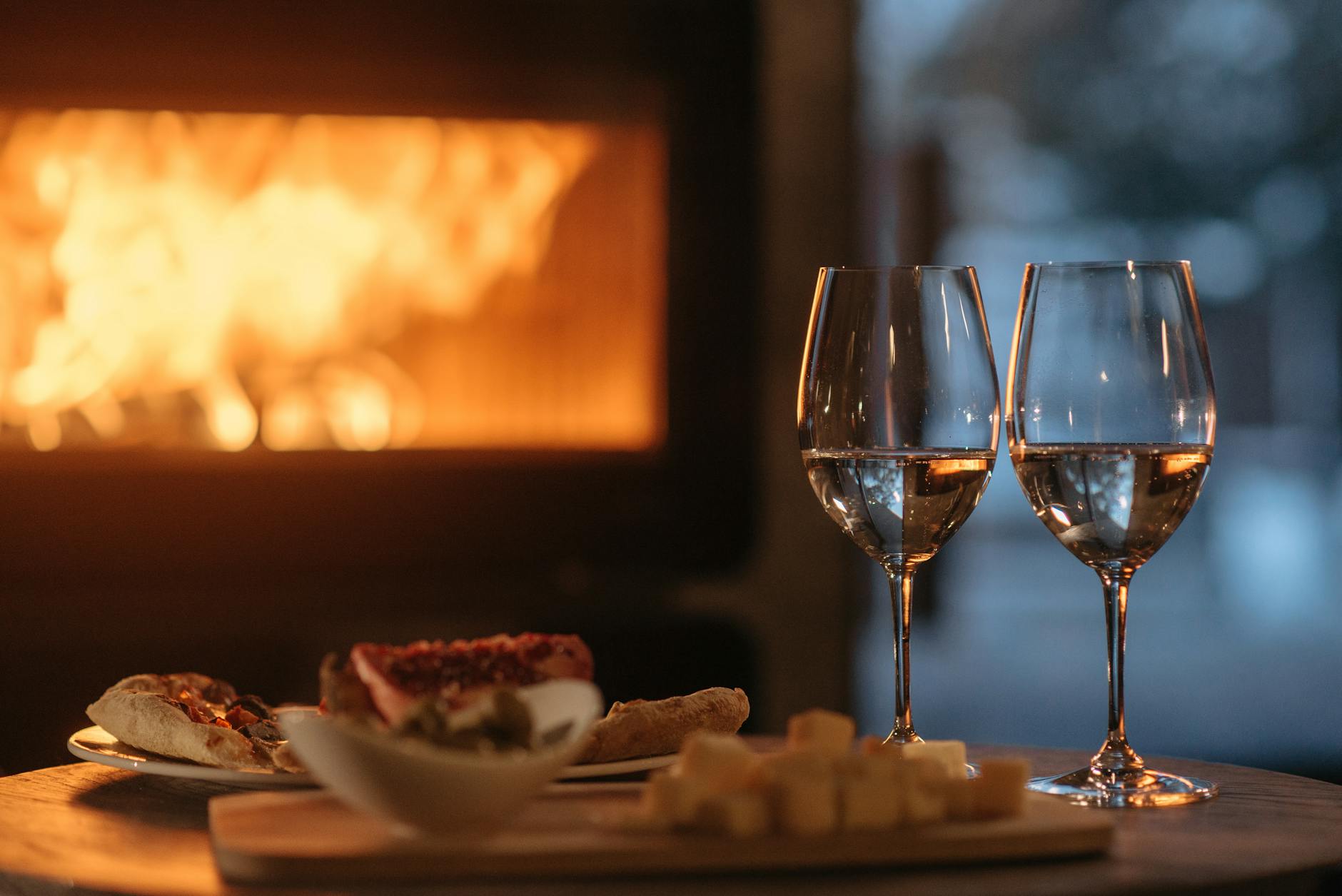
White Wines by the Fireside
Imagine a glass of oaked California Chardonnay or an Alsatian Pinot Gris alongside a crackling fireplace. These wines carry subtle notes of vanilla, baking spice, and roasted nuts—flavors that feel at home in a wool blanket as much as at a dinner table. Unlike summer’s poolside pours, these whites encourage you to linger, sip slowly, and enjoy the warmth of their depth.
Sommelier’s Note: Glassware Swap
Don’t be afraid to serve richer whites in a Burgundy bowl (the same glass you’d use for Pinot Noir). The wide bowl lets the wine breathe and amplifies those toasty, autumnal aromatics.
Holiday Whites Worth Celebrating
From Thanksgiving to New Year’s Eve, white wines bring an elegance to the table that reds sometimes bulldoze. A white Burgundy can dance with turkey and gravy; a sparkling Chenin or Blanc de Blancs can carry a celebration from appetizers through dessert.
The beauty of whites during the holidays is their ability to flex—they’re bright enough to cut through decadent dishes, but sophisticated enough to hold court in a room full of reds.
Sommelier’s Note: A Thanksgiving Trick
Skip the Cabernet with turkey—it’s too tannic and dries out the bird. Instead, reach for Gewürztraminer, Viognier, or Chenin Blanc. Their aromatics and round texture echo the herbs and savory sides, making them symphonic with the meal.
A Toast Beyond the Calendar
So here’s the secret every sommelier knows: white wine doesn’t care what month it is, and neither should you. A glass of Chenin Blanc can be as cozy as a knitted sweater when paired with roasted squash. A golden, honeyed Sauternes can feel like a holiday carol in liquid form. And yes, a crisp Sauvignon Blanc can cut through the richness of Thanksgiving turkey just as neatly as it slices through a summer salad.
If anything, cooler months invite us to lean into whites more deeply—to serve them a little warmer, pair them a little bolder, and let them shine against the hearty, savory dishes of autumn and winter. The next time someone wrinkles their nose at your glass of Riesling in October, just smile and remind them: the old “rules” were made for clothes, not for cellars.
Raise your glass, lean into the season, and enjoy whites all year long. After all, wine is meant to be shared, savored, and celebrated—not shelved with the summer wardrobe.
Cheers 🍷
Sommelier’s Final Note: The best rule in wine is this: drink what you love, when you love it. Pair with heart, pour with joy, and you’ll always be in season.
You might also like this article: Celebrating Labor Day


 SOMM&SOMM
You must be logged in to post a comment.