
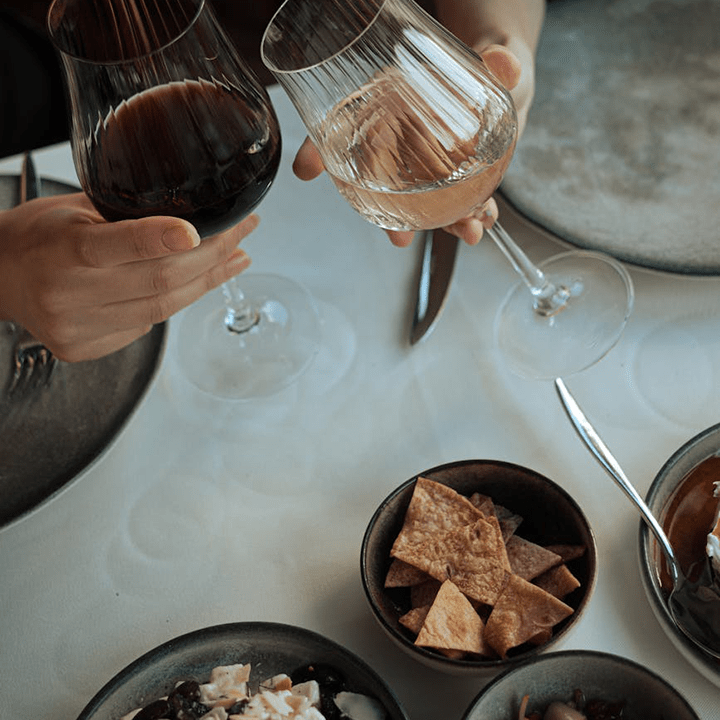
Unconventional Pairings and Expert Tips.
When it comes to pairing wine with food, many people stick to traditional rules: red wine with red meat, white wine with fish, and so on. But the world of wine and food pairing is vast and exciting, with endless possibilities for adventurous pairings that can elevate both the wine and the food. In this article, we’ll explore unconventional pairings, delve into the art of contrasting vs. complementing flavors, and provide practical recommendations for different budgets and scenarios where individuals at a single table are enjoying different dishes (always a challenge).

Understanding the Basics
When pairing wine with food, there are two primary approaches:
- Complementing Pairings: This method involves matching the flavors and textures of the wine and the dish to create harmony. For instance, a buttery Chardonnay complements a creamy lobster bisque because the wine’s texture mirrors the richness of the soup.
- Contrasting Pairings: This approach brings together opposing flavors to create a delightful balance. A classic example is pairing a crisp, acidic Sauvignon Blanc with a rich goat cheese salad. The acidity of the wine cuts through the creaminess of the cheese, creating a refreshing contrast.
Both methods have their merits, and the choice between them often depends on the desired dining experience. Complementing pairings offer a sense of unity, while contrasting pairings provide dynamic tension and complexity.
Unconventional Pairings with Ethnic Cuisines and Comfort Foods
Let’s explore some unexpected pairings that bring out the best in both the wine and the dish.

Sushi and Sake’s Surprising Substitute: Riesling
While sake is often the go-to beverage for sushi, a semi-dry Riesling can offer a delightful twist. The wine’s acidity and hint of sweetness balance the umami flavors of fresh fish, soy sauce, and wasabi. A German Riesling with bright citrus notes and a touch of minerality can enhance the delicate flavors of sashimi, while the slight sweetness can tame the heat of wasabi and ginger.
Budget Tip: Look for a Kabinett or Feinherb Riesling from the Mosel region, which offers excellent quality at a reasonable price.
SOMM&SOMM Recommends (under $20): Selbach Riesling Tradition Kabinett Feinherb 2019
Thai Food and Off-Dry Gewürztraminer
Thai cuisine is known for its complex balance of sweet, sour, salty, and spicy flavors. An off-dry Gewürztraminer with its aromatic profile of lychee, rose petal, and spice can complement the sweetness of coconut milk and counterbalance the spiciness of Thai curries. The slight sweetness in the wine also pairs well with dishes featuring fresh herbs like cilantro and mint.
Budget Tip: Gewürztraminer from Alsace or even from regions like California or New Zealand can offer good value while maintaining the wine’s signature aromatic profile.
SOMM&SOMM Recommends (under $20): Willm Reserve Gewürztraminer 2021
Indian Curries and Sparkling Rosé
Sparkling wine, particularly a Rosé, is an unexpected yet fantastic match for Indian curries. The bubbles help cleanse the palate, while the wine’s acidity cuts through the richness of the curry sauce. A dry or semi-dry sparkling Rosé can complement both mild dishes, like butter chicken, and spicier ones, like vindaloo. The red fruit notes in the Rosé add a layer of flavor that enhances the spices without overpowering them.
Budget Tip: Cava from Spain or a Prosecco Rosé from Italy offers a cost-effective alternative to Champagne, bringing bubbles and acidity that work wonders with curry dishes.
SOMM&SOMM Recommends (under $20): La Marca Prosecco Rose 2023

Pizza and Lambrusco: A Match Made in Italy
Pairing wine with pizza is an adventure in itself, given the endless variety of toppings. A slightly sparkling red wine like Lambrusco is a fantastic partner, especially for pizzas with tomato-based sauces. This brings back great memories of date nights from our younger (ok, much younger) days 🙂 The bubbles and acidity cut through the richness of the cheese while complementing the tomato’s acidity. Lambrusco’s slight sweetness and tannins balance salty cured meats like pepperoni or prosciutto, while its fruitiness complements vegetable toppings like mushrooms and olives.
Budget Tip: Lambrusco from the Emilia-Romagna region is often very affordable and versatile enough for a range of pizzas.
SOMM&SOMM Recommends (under $20): Venturini Baldini Marchese Manodori Lambrusco
Burgers and Zinfandel: Elevating Comfort Food
For those who love a good burger, consider pairing it with a bold Zinfandel. The wine’s juicy, ripe fruit flavors, peppery spice, and medium tannins pair wonderfully with a burger’s charred exterior and savory toppings. The slight sweetness of Zinfandel can complement barbecue sauce, caramelized onions, or even a slice of cheddar cheese.
Budget Tip: Look for Zinfandel from California’s Lodi region, known for offering great wines at reasonable prices.
SOMM&SOMM Recommends (under $20): Zinfandelic Lodi Zinfandel 2021
Pairing Strategies for Diverse Dishes at the Same Table
When diners at a single table are ordering different dishes, finding a wine that complements all of them can be a challenge. Here are a few strategies:
Opt for Versatile Wines
Choose a wine known for its versatility, such as a sparkling wine, rosé, or a medium-bodied white like Chenin Blanc. Sparkling wines’ acidity and bubbles cleanse the palate, making them a good choice for a range of flavors. Rosés, especially those from Provence, offer freshness and a balance of fruit and acidity, which pairs well with various dishes, from seafood to grilled meats. Chenin Blanc, particularly from the Loire Valley, can have a combination of bright acidity, fruit, and minerality that pairs with both lighter fare and richer dishes.
Focus on Flavor Intensity
When selecting a wine to suit different dishes, consider the intensity of flavors. If most dishes are light, like salads or seafood, a light-bodied white wine such as Pinot Grigio or Albariño could work. For heartier dishes, a medium-bodied red like Pinot Noir or Grenache could provide enough structure to pair well without overpowering lighter dishes.

Choose a High-Acidity Wine
High-acidity wines are food-friendly because they cleanse the palate and refresh the senses between bites. A Sauvignon Blanc from New Zealand, with its herbaceous notes, pairs well with salads, seafood, and even dishes with tomato sauce. For red wine lovers, a Barbera from Italy, with its bright acidity and moderate tannins, pairs well with a range of dishes from pizza to poultry.
Navigating Varying Budgets
Not everyone wants or is able to spend a lot on a bottle of wine. Here are a few tips for finding great pairings on a budget:
- Explore Lesser-Known Regions: Wines from lesser-known regions, such as Portuguese Vinho Verde or Chilean Carménère, offer excellent quality at a fraction of the price of more famous regions.
- Look for Young Wines: Younger wines are often more affordable than aged wines and offer bright, fresh flavors that can be great for pairing with various dishes.
- Go for Wine Styles Rather than Specific Labels: Focus on the style of wine rather than the specific label. For example, an unoaked Chardonnay from any region will likely have the crisp acidity needed to pair with lighter dishes.

Finding Common Ground in Wine Pairing
Pairing wine with food should be fun and exploratory, not rigid or intimidating. Whether you choose to complement or contrast flavors, the key is to understand the underlying principles of balance, intensity, and flavor harmony. For mixed tables, versatile and high-acidity wines are your best bet. Always consider the personal preferences of your diners and be willing to experiment. With a little knowledge and creativity, you can turn every meal into a memorable wine and food pairing adventure. Cheers 🍷
Cover photo credit: Photo by Ziu015fan u00d6zdemir on Pexels.com
 SOMM&SOMM
You must be logged in to post a comment.