
Every spring, something predictable happens in the wine world. As the first warm breezes arrive and we start dreaming of patios, gardens, and long lingering dinners outside, wine drinkers begin looking for something new in the glass. Something lively. Something intriguing. Something just a little different.
That’s usually when someone appears at the table holding a bottle of orange wine and announces with great enthusiasm, “You’ve got to try this.”
The room typically responds with polite curiosity and mild suspicion.
“Orange wine?” someone asks. “Is that like a rosé?”
Not quite.
Another brave soul ventures a guess. “Is it made from oranges?”
Definitely not.
Orange wine, despite its recent trendy reputation, is actually one of the oldest styles of wine in the world—and like many old traditions, it has simply taken us a few thousand years to rediscover just how interesting it can be.
Let’s talk about it.
A Wine Style Older Than Most Civilizations
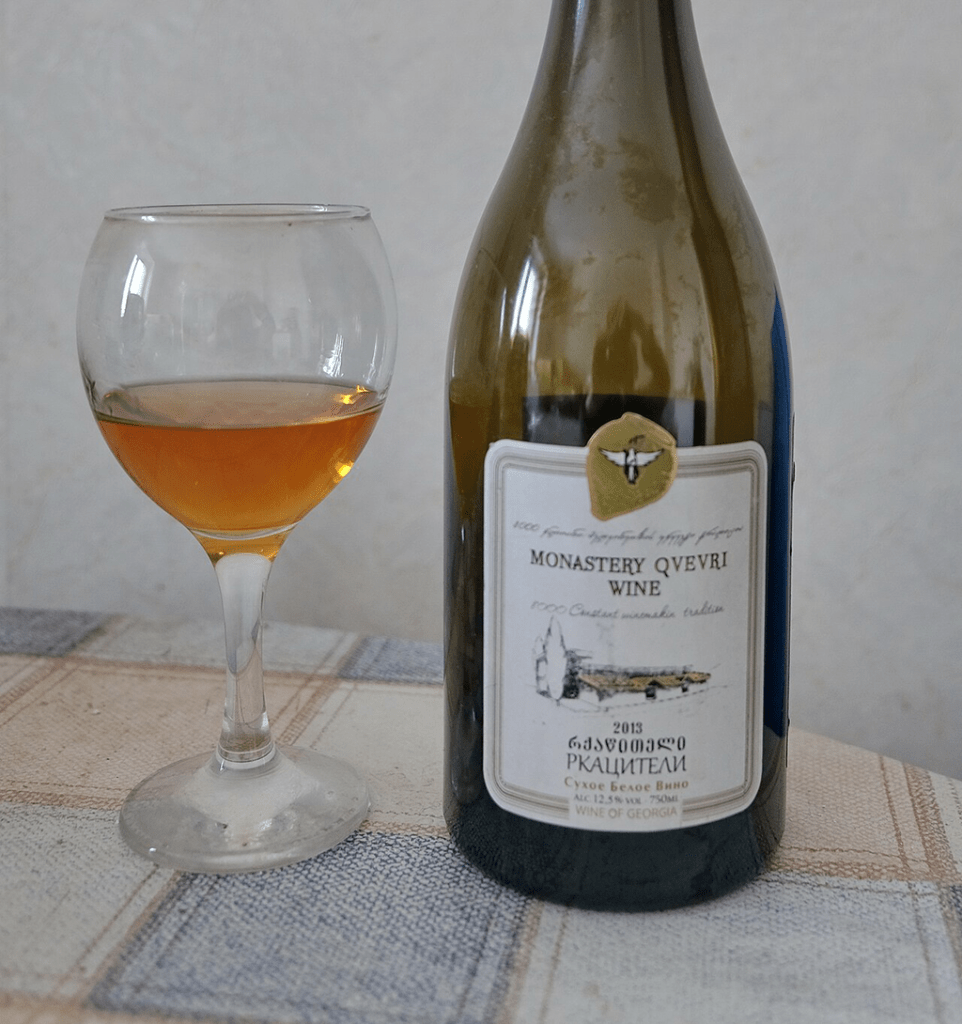
If we were to rewind the story of wine far enough, we would find ourselves in the rugged hills of Georgia, where archaeologists have discovered evidence of winemaking dating back roughly 8,000 years.
Yes—eight thousand.
The Georgians were fermenting grapes long before the Romans, long before the French, and certainly long before Instagram wine influencers began debating the merits of skin contact.
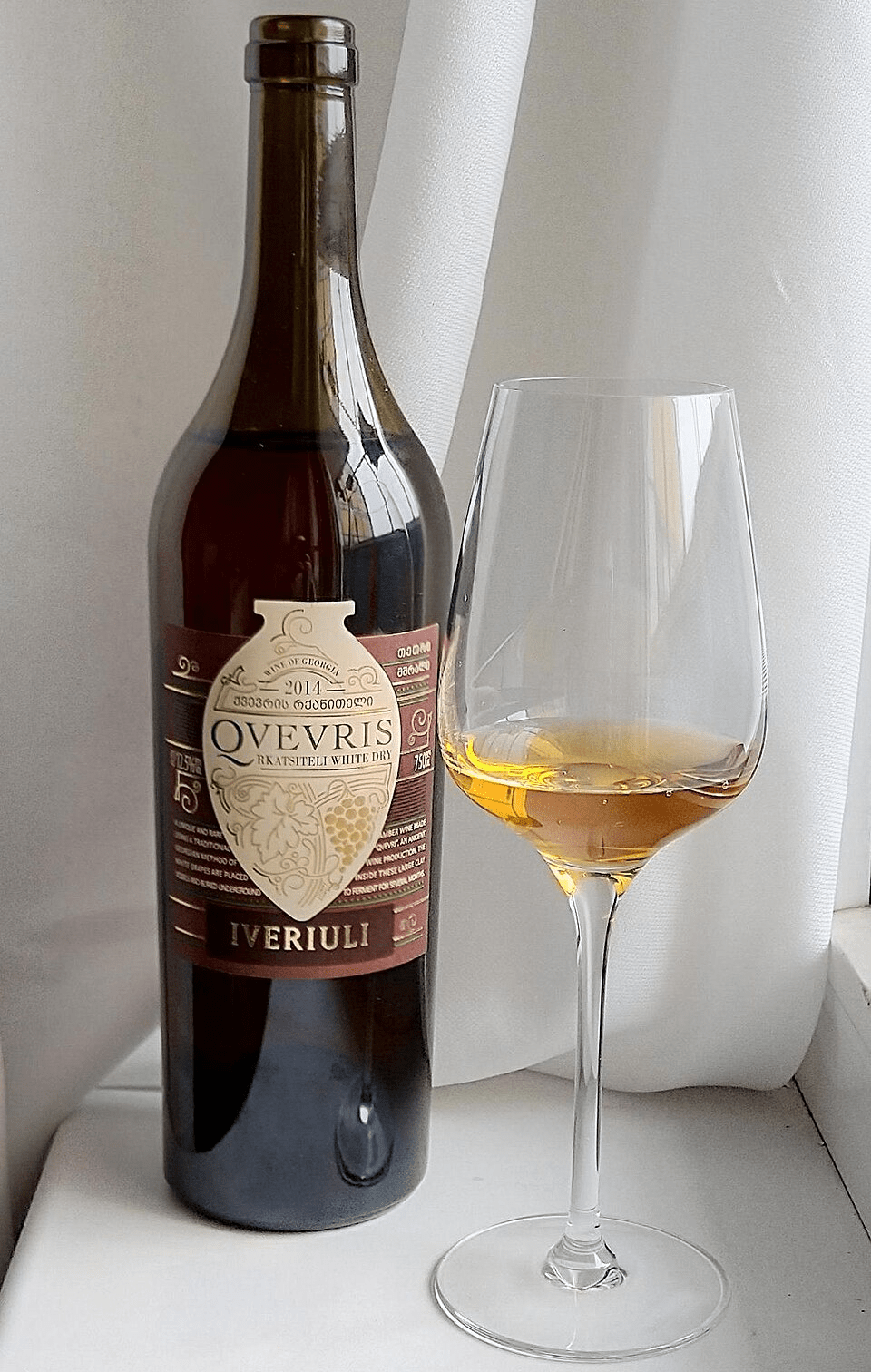
Their technique was simple and brilliant. Grapes were crushed and placed—skins, seeds, stems and all—into large clay vessels called qvevri. These vessels were buried underground to maintain a natural, stable temperature while fermentation took place.
Months later, what emerged from these vessels was a wine unlike the crisp whites most of us know today. The extended contact between the juice and the grape skins created a wine with deeper color, firmer structure, and extraordinary aromatic complexity.
These wines were amber-colored, textured, sometimes slightly rustic, and always deeply expressive of place. The tradition remains so culturally important that the method has been recognized by UNESCO as part of humanity’s intangible cultural heritage.
In other words, orange wine isn’t a modern invention.
It’s history in a glass.
So What Exactly Is Orange Wine?
To understand orange wine, we need to revisit the simple rules most wine drinkers learn early on.
White wine is made from white grapes that are pressed, and the juice is fermented without the skins.
Red wine is made from red grapes that ferment with the skins, which gives the wine its color, tannins, and structure.
Rosé is made from red grapes as well, but the skins stay in contact with the juice only briefly—just long enough to tint the wine pink.
Orange wine breaks the rules in the most delightful way.
It is made from white grapes fermented with their skins, sometimes for days, sometimes for weeks, and occasionally for months.
The skins impart color, texture, and tannin, transforming the wine into something far more complex than the typical crisp white.
The result is a wine that can appear anywhere from deep golden amber to burnished copper—something that looks as though autumn itself melted into a glass.
And the flavors?
That’s where things get fascinating.
Instead of bright citrus and green apple, orange wines often reveal layers of dried apricot, orange peel, tea leaves, honey, nuts, herbs, and spice. Some lean toward savory flavors that remind people of chamomile, hay, or even cider.
The first sip can surprise newcomers. It’s a white wine that behaves a bit like a red wine—structured, textured, and sometimes even slightly grippy on the palate.
It’s the wine equivalent of discovering your quiet neighbor plays jazz trumpet on the weekends.
The Modern Revival
While the tradition never disappeared in Georgia, orange wine faded from much of the Western wine world over the centuries as cleaner, brighter white wines became fashionable.
Then, in the late twentieth century, a handful of curious winemakers began digging back into history.
In the hills of Friuli-Venezia Giulia, along the border with Slovenia, several visionary producers began experimenting with extended skin contact for white grapes.
Among them was the legendary Josko Gravner, who traveled to Georgia, fell in love with the ancient methods, and returned home determined to revive them. He even began fermenting wines in clay vessels modeled after traditional qvevri.
Other winemakers followed his lead, and what began as a quiet experiment slowly grew into a movement.
Today orange wines appear everywhere—from small artisan cellars in Eastern Europe to adventurous producers in California and Australia. What was once an obscure historical curiosity has become one of the most intriguing categories on modern wine lists.
Is Orange Wine Replacing Rosé?
Not even close.
Rosé is sunshine in a glass—fresh, playful, and effortlessly charming. It’s the wine you bring to the beach or open on a warm afternoon without much contemplation.
Orange wine, on the other hand, tends to invite conversation. It asks questions. It makes people tilt their heads slightly and say things like, “Wait… what is that flavor?”
Where rosé is carefree, orange wine is contemplative.
If anything, orange wine occupies the fascinating middle ground between white and red wine. It has the acidity of white wine, the structure of red wine, and the aromatic complexity of something entirely its own.
So rather than replacing rosé, orange wine simply expands the playground.
What Should You Expect in the Glass?
First-time drinkers are often surprised by how textural orange wines can be.
The skin contact introduces tannins—those same structural compounds we associate with red wines like Cabernet Sauvignon. They aren’t usually as powerful, but they add a subtle grip that gives the wine weight and presence.
The aromas tend to be layered and sometimes delightfully unusual. Dried citrus peel, apricot, almond, chamomile, saffron, and black tea often make appearances. Some wines even carry a faint oxidative note reminiscent of sherry or cider.
And because many orange wines are produced using minimal intervention—wild yeast fermentations, little filtration, and modest sulfur additions—they can sometimes display a rustic personality.
That’s not a flaw.
That’s character.
The Joy of Pairing Orange Wine with Food
For sommeliers, orange wine is a secret weapon at the dinner table.
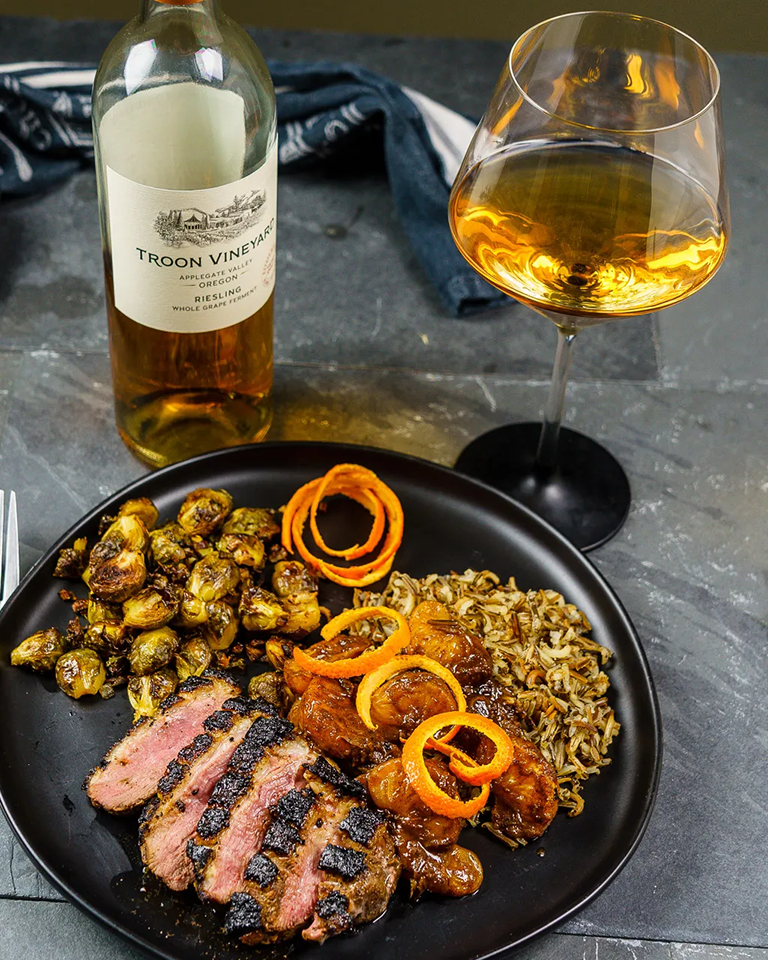
Its combination of acidity, tannin, and aromatic depth allows it to pair with foods that challenge both white and red wines.
Spicy cuisines, for example, often overwhelm delicate whites and clash with heavy reds. Orange wines, with their firm structure and complex flavors, handle spice remarkably well.
They also shine with Mediterranean dishes—roasted vegetables, olives, grilled eggplant, and herb-driven preparations. The savory notes in the wine seem to echo the earthy flavors on the plate.
Fermented foods are another delightful match. Kimchi, miso, and aged cheeses often resonate beautifully with the subtle funk and texture found in many orange wines.
And if you place a bottle of orange wine next to a roast chicken with mushrooms and herbs, you may discover one of those magical pairings where both the food and the wine suddenly seem more complete.
A Wine for Curious Drinkers
Orange wine may be enjoying a moment of fashionable attention, but in truth it represents something deeper than a passing trend.
It is a reminder that wine is not just a beverage—it is a living tradition, shaped by thousands of years of experimentation, culture, and curiosity.
Every bottle carries echoes of ancient cellars, buried clay vessels, and winemakers who believed that sometimes the best way forward is to look back.
So if someone pours you a glass of orange wine this spring, take a moment to appreciate what you’re tasting.
You’re not just sipping a trendy wine.
You’re tasting eight thousand years of winemaking history—and that, my friends, is something worth raising a glass to.
Sorry about that dangling preposition 😉
Cheers. 🍷🍊
Cover photo by Yozh, CC BY-SA 4.0, via Wikimedia Commons
 SOMM&SOMM
You must be logged in to post a comment.