Tag: Left Bank

  • Old World Regions: Bordeaux

    Old World Regions: Bordeaux

    Bordeaux is a timeless elixir of history, terroir, and tradition. It’s a name that resonates with wine enthusiasts worldwide and is synonymous with excellence in winemaking. Nestled along the serene banks of the Garonne River in southwestern France, the Bordeaux wine region is a hallowed ground for cork dorks ;), boasting a rich history, distinct terroirs, and a complex classification system that sets it apart as one of the world’s foremost wine-producing regions.

    A Glimpse into Bordeaux’s Enigmatic Past

    Bordeaux’s history as a wine-producing region dates back to Roman times when the first vineyards were planted. However, it was during the 12th century, under the rule of Eleanor of Aquitaine and her marriage to Henry II of England, that Bordeaux wines gained international recognition. The English became avid consumers of Bordeaux wines, creating a demand that laid the foundation for Bordeaux’s global reputation.

    “…you are not to conclude I am a drinker. My measure is a perfectly sober 3 or 4 glasses at dinner, and not a drop at any other time. But as to those 3 or 4 glasses I am very fond.”

    Thomas Jefferson

    During the 17th century, Dutch engineers drained the marshlands and introduced a more systematic approach to winemaking, paving the way for Bordeaux’s vineyards to thrive. In the 18th century, Thomas Jefferson, the third President of the United States, became an ardent admirer of Bordeaux wines, further elevating their prestige. I had the opportunity several years ago to ogle over (look but don’t touch) two bottles from Jefferson’s collection. The bottles were locked inside a wire cage, covered in dust, each donning a small white price tag–$20,000. 

    Left Bank vs. Right Bank: A Tale of Two Terroirs

    One of the key distinctions in Bordeaux lies in its geographical diversity, which results in two distinct terroirs: the Left Bank and the Right Bank. Here is the breakdown…

    Left Bank

    – Located to the west of the Gironde Estuary and the Garonne River.

    – Predominantly features Cabernet Sauvignon as the dominant grape variety.

    – Famous appellations include the Médoc, Pauillac, Margaux, and Saint-Julien.

    – Produces wines known for their structured, tannic character and aging potential.

    Right Bank

    – Situated to the east of the Gironde Estuary and the Dordogne River.

    – Merlot is the primary grape variety, complemented by Cabernet Franc and sometimes Malbec.

    – Renowned appellations include Saint-Émilion and Pomerol.

    – Produces wines characterized by their elegance, supple texture, and approachability in their youth.

    Bordeaux Region in Southwest France

    Bordeaux’s Classifications: A Pyramid of Prestige

    Bordeaux boasts a complex classification system, which adds an extra layer of intrigue to its wines. The most famous classifications include:

    1. Bordeaux AOC:

       – The base level of classification, offering wines that showcase Bordeaux’s classic characteristics.

       – These wines can come from anywhere within the Bordeaux region and are typically approachable and affordable.

    2. Bordeaux Supérieur AOC:

       – A step above the Bordeaux AOC, with stricter quality control standards.

       – Often produced from older vines, resulting in more concentrated flavors.

    3. Médoc and Graves Classifications:

       – Within the Médoc and Graves regions, several châteaux are classified as Cru Bourgeois or Cru Artisan, signifying wines of consistently high quality.

    4. Saint-Émilion Classification:

       – Saint-Émilion has a unique classification system that is revised periodically.

       – It includes three main categories: Grand Cru Classé, Premier Grand Cru Classé “B,” and Premier Grand Cru Classé “A.”

       – These classifications indicate the quality and prestige of the wineries.

    5. 1855 Classification of the Médoc:

       – Arguably the most famous classification in Bordeaux, it was established for the Exposition Universelle de Paris.

       – Divided into five growths or “crus,” with the Premier Cru being the highest tier.

       – Châteaux such as Château Margaux and Château Latour hold this esteemed title.

    The complete list of all five first growths include:

    1. Château Latour
    2. Château Lafite Rothschild
    3. Château Margaux
    4. Château Haut Brion
    5. Château Mouton Rothschild

    Bordeaux’s intricate classification system reflects the region’s unwavering commitment to maintaining the quality and reputation of its wines.

    Bordeaux’s allure lies in its rich history, diverse terroirs, and complex classification system. Whether you’re sipping a bold Cabernet Sauvignon from the Left Bank or enjoying the velvety embrace of a Merlot-based wine from the Right Bank, Bordeaux offers a wine experience like no other. Its journey from ancient Roman vineyards to its present-day global prestige is a testament to the enduring artistry and craftsmanship of Bordeaux winemakers. With each bottle, Bordeaux encapsulates centuries of tradition, making it an enduring and timeless elixir for wine lovers around the world.

    Cheers 😉

  • Wine Experiences: A Taste of Pauillac

    Wine Experiences: A Taste of Pauillac

    There could not have been a better way to experience the Left Bank of Bordeaux than with a vertical tasting of Pauillac’s Château Haut-Bages Libéral. The highly revered Pauillac region is located between Saint-Estèphe and Saint-Julien on the Médoc peninsula, and boasts three (3) of the five (5) Premiers Crus (first growths) of the 1855 Classification.

    Château Haut-Brion, Pessac, AOC Pessac-Léognan

    Château Lafite-Rothschild, Pauillac, AOC Pauillac

    Château Latour, Pauillac, AOC Pauillac

    Château Margaux, Margaux, AOC Margaux

    Château Mouton Rothschild, Pauillac, AOC Pauillac (added in 1973)

    The estate of Haut-Bages Libéral spans 74 acres growing 70% of cabernet-sauvignon and 30% of merlot varietals. All of the vintages in our two-decade vertical tasting were of similar cabernet-to-merlot blends. The ratios ranged from 65% cabernet-35% merlot of the 2000 vintage, to the 75% cabernet-25% merlot of the 2006 vintage. While this doesn’t seem like much of a variation, the differences in each vintage were not subtle.

    Our very ambitious hosts–Dima and Oksana–planned to share their 2000, 2006, 2011, 2014, 2015, 2016 and 2018 vintages in this epic vertical tasting. Even though we were 6 wine enthusiasts strong (Dima, Oksana, Mike, Patti, Greg, Tammy), our lofty intentions fell short of achieving this 7 vintage tasting. This was due in part to our 2 bottle comparison of dry white Bordeaux wines from the Sauternes region (sticking with the Left Bank theme) at the beginning, but mostly because we had no intention of spitting these amazing Pauillac wines into a spittoon. We did, however, compare and contrast 6 of the 7 vintages 😉

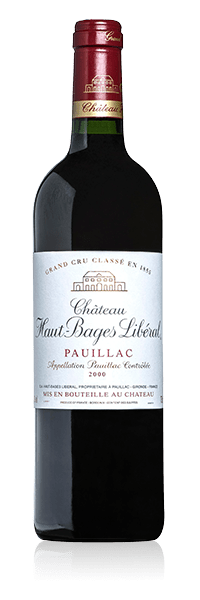
    2000 Château Haut-Bages Libéral

    First up was the 2000 Château Haut-Bages Libéral. This wine was very special. At 21 years young, it was in perfect condition. The taste was soft and elegant. I was very impressed by the vivid color and density of this wine. It would be difficult (for me at least) to identify this as an older wine based only on the color. The aromas included leather, tobacco and pepper as expected. Certainly a wine worthy of its name and reputation.

    Comprised of a blend of 65% cabernet sauvignon and 35% merlot, this wine stood up to the grilled and barbecued meats, flavorful salads and herb infused side dished graciously provided by our hosts.

    We jumped ahead 6 vintage years and tasted a 2006 Château Haut-Bages Libéral. The blend was 75% cabernet sauvignon and 25% merlot. This vintage was more aromatic than the previous wine. It offered less of the characteristic leather, earth and tobacco, and more fruit and spice on the nose. The taste was bold and intense, but very well balanced. It deserved a second glass!

    Third in our journey was a 2011 Château Haut-Bages Libéral. This was the first vintage of the evening that revealed a slight hint of smoke on the nose (and no, the barbecue wasn’t skewing my senses). Perhaps a characteristic more predominate in vintages challenged by poor growing conditions. The 2011 season was unusually dry and hot. Regardless, the wine was amazing, well balanced, and perfect with or without food. The blend was 72% cabernet sauvignon and 28% merlot.

    We continued the process of see, swirl, sniff, sip and savor with the fourth wine in the line-up. The 2014 Château Haut-Bages Libéral is made from a blend of 71% cabernet sauvignon and 29% merlot. It was the first of 3 sequential vintages (2014, 2015, 2016). Convinced by the condition and complexity of the 2000 vintage, I can imagine that these younger wines can only get better (if that’s possible). This wine was very smooth, but exposed more tannin than the older vintages. Nevertheless, it was well rounded yet complex.

    According to the winemaker’s notes, the 2015 Château Haut-Bages Libéral vintage was challenging. The weather conditions resulted in lower yields. The blend was 65% cabernet sauvignon and 35% merlot (same as the 2000 vintage). The tasting notes, however, are uniquely 2015. While this vintage shared some of the same characteristics of the previous wines, there are several more-than-subtle differences. The tobacco aromas were present, but different. Instead of an earthy, rustic tobacco… this vintage expressed a floral-esc tobacco scent. Think: pipe tobacco versus a cigar. The 2015 vintage also seemed slightly more acidic than the others.

    Number six was the 2016 Château Haut-Bages Libéral. This wine is made from a blend of 70% cabernet sauvignon and 30% merlot–aligning perfectly with the vineyard’s planting ratio. The black and red fruit aromas were more pronounced in this vintage. This wine is very special! The flavors are bold and intense, but at the same time soft and balanced (yes, I was surprised too). This is the perfect wine to share with someone who loves California big reds, but not a fan of Bordeaux wines.

    From there we rounded out the evening with an amazing 2012 Château Voigny dessert wine from Sauternes and homemade desserts. The evening was truly epic! Our friends, Dima and Oksana, made this night entertaining, educational and legendary. Who knew learning could be so much fun? The information they provided in support of these wines was very detailed and enlightening. This was the first time we’d had an opportunity to participate in a vertical that spanned over 2 decades. Couldn’t imagine anything better. Thanks Dima and Oksana!