Tag: Introductory Sommelier Course

  • Enthusiast to Sommelier: No End in Sight

    Enthusiast to Sommelier: No End in Sight

    The words of our friends and family are still fresh in our minds. “You should take your love and passion for wine to the next level” one friend suggested at a wine pairing dinner. Another commented, “Yea… you guys really sweat the details and try to understand everything about these wines.” And so we thought… yea, why not. No one could have predicted the extraordinary circumstances that has made this particular journey so unusual. In a year without a pandemic we would have studied for months, attended the Introductory Sommelier Course & Examination as so many others have done. The Court of Master Sommeliers has done an incredible job communicating the ever-changing schedule of their wine education and certification events. Their positive outlook in the most recent announcement, however, doesn’t make it any less frustrating.

    Here we are in month eight (8) of our journey from “enthusiast to sommelier.” There is currently no end in sight. We’ve just received notice of our second cancellation. Unlike the previous cancellation, none of the events have been rescheduled. This means that we do not have a date for our Introductory Sommelier Course & Examination. I completely understand the challenges brought on by the pandemic, and appreciate (and respect) the guidelines necessary to keep everyone healthy and safe. All we can do at this point is to continue reading, re-reading, learning, quizzing and discussing all of the information anticipated for the first-level course and exam.

    More to come!

    Next article in the series: Enthusiast to Sommelier: Aroma Training

    First article in this series: Enthusiast to Sommelier: Getting Started

  • Enthusiast to Sommelier: ‘Tis the Season

    Enthusiast to Sommelier: ‘Tis the Season

    The Holidays are a time for giving. It is also the season for appreciating family, friends, and of course… wine. The holidays seem to bring people closer together–albeit a challenge during this pandemic–to reflect on all the events of the year. We celebrate some new beginnings, and remember those important traditions we’ve adopted along the way. The Holiday Season is an all-encompassing rollercoaster of emotion. While no two holidays are alike, we are all striving for a season of celebration reminiscent of a Norman Rockwell painting.

    We host a few and also attend several holiday-themed events during Holiday Season. Wine and wine knowledge is always shared at these events. There is never a shortage of spirited conversation and debate about varietals, vintage and proper pairing. For us… these conversations are equally as important as the formal book training for the Introductory Sommelier Course & Examination. It also provides the perfect opportunity to take the new wine knowledge out for a spin 😉

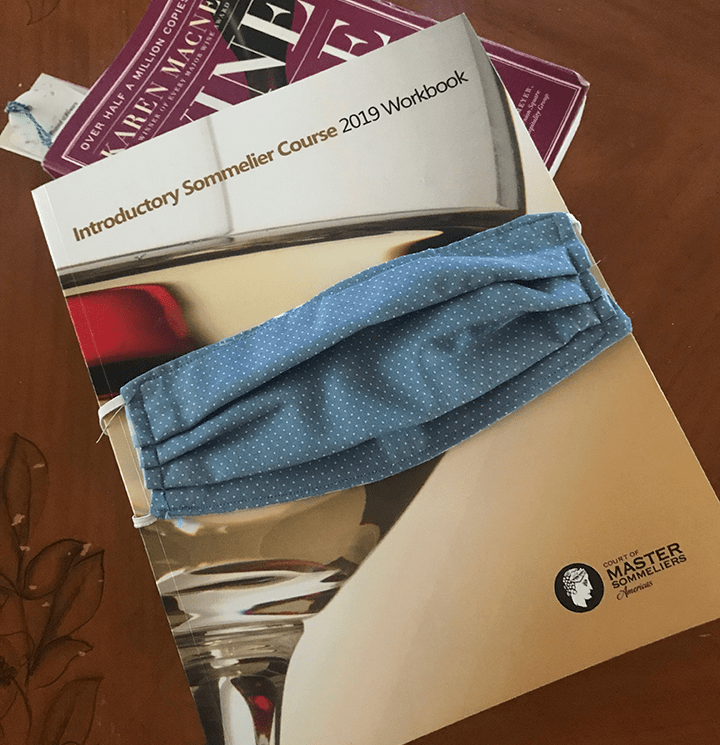
    The two-day Introductory Sommelier Course & Examination, hosted by The Court of Master Sommeliers, recommends advance study of the ‘official’ workbook as well as other prescribed reading material. These materials include:  

    Introductory Sommelier Course 2019 Workbook by the Court of Master Sommeliers

    The Wine Bible by Karen MacNeil

    Windows of the World– Complete Wine Course by Kevin Zraly

    I’ve had discussions with individuals who have taken this first course, and they all agree with the recommendation of knowing the material inside and out before attending the two-day course. Others have reinforced the importance of having an active wine-centric dialog as often as possible. Talking (and listening) in detail about what makes Amarone della Valpolicella so special, for example, provides the opportunity to work on your memory recall while also learning something new. Remember… experience goes far beyond textbooks. And, speaking of textbooks…

    Time to study. February will be here before we know it!

    Next article in the series: Enthusiast to Sommelier: No End in Sight

    First article in this series: Enthusiast to Sommelier: Getting Started

  • Enthusiast to Sommelier: Study Fatigue

    Enthusiast to Sommelier: Study Fatigue

    With the unexpected rescheduling of our Introductory Sommelier Course & Examination event hosted by The Court of Master Sommeliers, we are finding ourselves spending less time in the books and other study materials. And while it is nice to take a break (along with a few deep breaths), it is becoming more and more difficult to stay focused. One thing I’ve noticed, however, is how easily the information we’ve acquired over the past five (5) months is retrieved. Even the most obscure information seems to be available on-demand 😉

    Perhaps it’s because our brains aren’t busy calculating all the ways we could fail. With the new test date moved back four (4) months, we can slowly ingest and mentally absorb the information as opposed to cramming for a final exam. It doesn’t mean that the curriculum is any less difficult. It does prove how pressure and stress can affect learning. Removing pressure, as in this case, relieved our learning and cognition related stress… but also introduced a new challenge. Study fatigue.

    To put it into perspective… imagine running a short sprint that suddenly becomes a marathon. As a result, the finish line (achievable at your current pace) has moved very far away. Would you have the stamina to keep pace and cross the new finish line? Perhaps. Given the fact that you didn’t train for a marathon… would you question your ability? Definitely. So what’s the solution? Since everyone’s approach to learning is different, there isn’t a single remedy for all. For us… we’ve temporarily slowed the pace and intensity of our studying.

    The trick is to not lose focus on the end result or goals, but to become more immersed in the journey. Instead of memorizing all of the necessary facts about viticulture, vinification, the art (and science) of food and wine pairing, and the seamlessly infinite wine regions of the world, dive into the details. Question why oak is used in barriques or how some white grapes along with certain winemaking techniques can produce very dark wines–such as Pedro Ximenez Sherry.

    Above all… stay focused!

    Next article in the series: Enthusiast to Sommelier: ‘Tis the Season

    First article in this series: Enthusiast to Sommelier: Getting Started

  • Enthusiast to Sommelier: Pandemic Impact

    Enthusiast to Sommelier: Pandemic Impact

    As the COVID-19 pandemic continues to wreak havoc on the world, it was simply a matter of time before it impacted our quest for sommelier-hood. The format and schedule of the Introductory Sommelier Course & Examination and other events hosted by The Court of Master Sommeliers have been at risk since the beginning of the pandemic. Recently, we were notified of changes to the scheduled events necessary to ensure everyone’s safety. Our much anticipated course and examination was rescheduled for mid-February 2021.

    I know the decisions made by The Court of Master Sommeliers are well thought out and in everyone’s best interest. They did an amazing job keeping us informed of format changes to the course, and eventually decided to reschedule the event. That being said, our study habits have shifted into a lower gear. With an additional four (4) months to prepare, it is tempting to set the books aside and relax for a while. At the same time, however, we run the risk of losing all of this great momentum gained over the past three (3) months.

    The news of rescheduling our course and exam brought contradicting emotions of relief and frustration. A sigh of relief was unavoidable as the fear of not enough preparation was lifted. Frustration was also apparent as the anticipation for this event was suddenly thwarted. Emotions aside… this was absolutely the right call, and we will continue pursuing our goals. This gives us time to expand into the Sommelier Level 2 curriculum 😉

    Back to the books!

    Next article in the series: Enthusiast to Sommelier: Study Fatigue

    First article in this series: Enthusiast to Sommelier: Getting Started

  • Enthusiast to Sommelier: Take a Pass

    Enthusiast to Sommelier: Take a Pass

    Don’t be fooled by the title of this blog post. While it has crossed our minds on more than one occasion to drop out of the wine knowledge race, we are staying the course. With only three short weeks remaining, it would be easy to succumb to the pressure and throw in the serviette. Instead, we are ‘taking a pass’ (several passes actually) through the various learning materials. Every pass through the materials reveals another piece of information crucial to our success.

    Part of our due diligence includes reading stories and first-hand experiences of others who have made the journey. And while there are a number of similarities in everyone’s account of the Court of Master Sommeliers Introductory Course & Examination, no one (at the time of this blog post) has written about his or her experience during the COVID-19 pandemic. We get a pretty good picture of the format and flow of the 2-day course, but really have no idea what to expect in the classroom.

    The challenge of learning new things coupled with the anticipation of the final exam could be just enough to justify ‘taking a pass.’ With three weeks remaining, however, it seems we’ve come too far to give up. Still much to learn, and revisiting the same information just makes sense. I don’t think you can over prepare. Even if the information you learn is more advanced than the curriculum covered in the level 1 courses, it will definitely be required for the Certified Sommelier Examination. So… go ahead and ‘take a pass.’

    Back to the books 😉

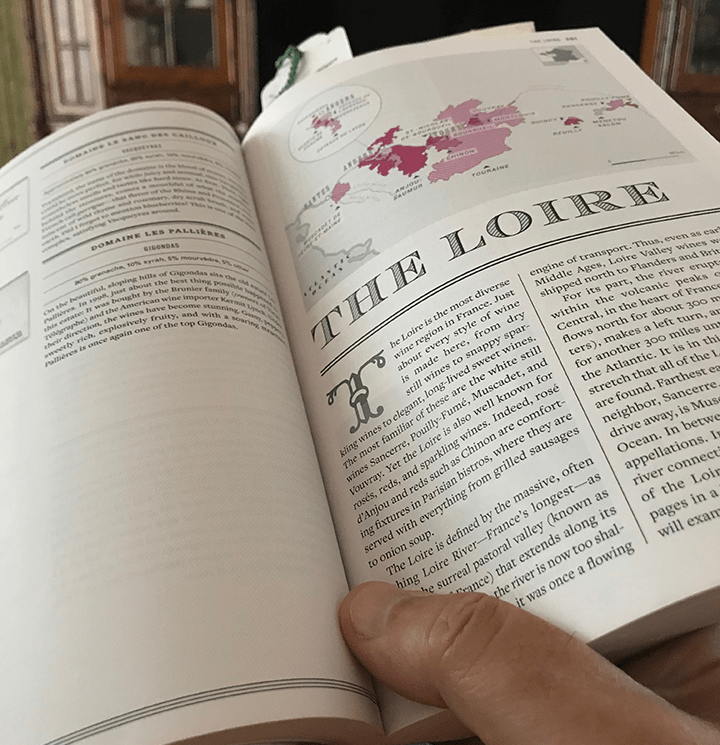
    Note: The image (above) shows me ‘taking a pass’ through The Wine Bible by Karen MacNeil.

    Next article in the series: Enthusiast to Sommelier: Pandemic Impact

    First article in this series: Enthusiast to Sommelier: Getting Started

  • Enthusiast to Sommelier: For the Sake of Learning

    Enthusiast to Sommelier: For the Sake of Learning

    There are a few (ok… many) wines described in the various books and study materials quickly finding their way to the top of my “must try” list. I blame it, among other things, on the alluring descriptions of “Wines to Know” in The Wine Bible by Karen MacNeil. Her words spark a curiosity quenched only by experiencing the wine(s) for yourself. So, we did. After reading her brilliant insight on Chile, we thought the entire experience would be better if we could review the materials while drinking the ‘Wines to Know’–all for the sake of learning.

    Corkscrew-worthy whites from Chile:

    Lapostolle Cuvee Alexandre – Chardonnay (Casablanca Valley, Chile)

    Cousino-Macul Isidora – Sauvignon Gris (Maipo Valley, Chile)

    Karen MacNeil’s insightful book has really helped make sense of lesser-known wine regions, while adding context and detail to the mainstream regions (i.e. France, Italy, Spain, etc.). The other learning materials were no less responsible for inspiring late-night wine purchases. The Introductory Course & Exam Workbook, for example, provides the just enough of a description to peak one’s curiosity. While it’s always fun… err… educational to compare varietals from different regions, the styles and indigenous grape varieties were the ones to try—for the sake of learning 😉

    Corkscrew-worthy reds from Italy:

    Tormaresca Bocca di Lupo – Aglianico (Puglia, Italy)

    Santadi Terre Brune Carignano del Sulcis Superiore – Carignan (Sardinia, Italy)

    Somehow, consuming wine while studying for a wine exam just feels right. Moreover, drinking a Chilean white while being introduced to Chilean culture through the words of Karen MacNeil seems perfect. Kevin Zraly ends each section of his book, Windows of the World – Complete Wine Course, with wine tasting recommendations to compliment (and add context) to the corresponding chapter. So whether you choose to have the real-time experience of the sip-while-studying method or the reward-yourself-at-the-end-of-each-section approach, don’t think twice. It is after all… for the sake of learning.

    Back to the books!

    Next article in the series: Enthusiast to Sommelier: Take a Pass

    First article in this series: Enthusiast to Sommelier: Getting Started

  • Enthusiast to Sommelier: Right on Cue

    Enthusiast to Sommelier: Right on Cue

    Sometime during the last few months of intensive studying, I must have sprung a leak in my brain. The grey-matter between your ears is supposed to be a sponge–right? It’s supposed to be able to absorb terabytes of information. I’ve read the information prescribed by the Court of Master Sommeliers and retained most of it. I am convinced, however, that much of the information leaks while I sleep 😉

    The Court of Master Sommeliers Introductory Course & Examination includes a 70 question test designed to test your general knowledge of all things wine. From the top-producing regions to the lesser-known communes it is important to learn (and understand) geography, weather, grape varietals, laws and regulations, viticulture, and vinification for even the most obscure areas. That’s right… you need to learn hundreds of traits and characteristics in anticipation of the multiple-choice questions on the exam.

    Read. Retain. Repeat. Every pass through the learning materials reveals information missed (or not retained) from previous reads. The information is extremely detailed, diverse and sometimes–intimidating. From the beginning, Tammy and I have looked for ways to help retain the copious amounts of wine-related information. Here are the three (3) things that have contributed to better success at memorizing and retaining these vinifacts:

    Become Wine-centric

    That’s right. Not only drink it, but also live it. Read wine blogs (like this one), watch YouTube videos, and scour through every wine-related publication you can find. Grab the truffle-salted popcorn and watch wine documentaries and feature-length films centered around wine and life in the vineyard.

    Have Wine Conversations

    Nothing seems to help with memory recall better than having a conversation. As the conversation expands, you will find yourself speaking intelligently (and in great depth) about things you’ve learned in previous weeks or months. Starting a conversation about an obscure wine-related topic also forces you to recall details in support of carrying the conversation forward.

    Use Cue Cards

    Most of the learning materials include short quizzes after each section or category. The questions are very high-level and are designed to give some insight into the style, format and complexity of the upcoming exam. I believe these short quizzes are written to build confidence and encourage you to continue learning. I also believe the particular questions in the textbook could, in fact, lead to a false sense of security… and give some individuals cause to ease back on the study throttle.

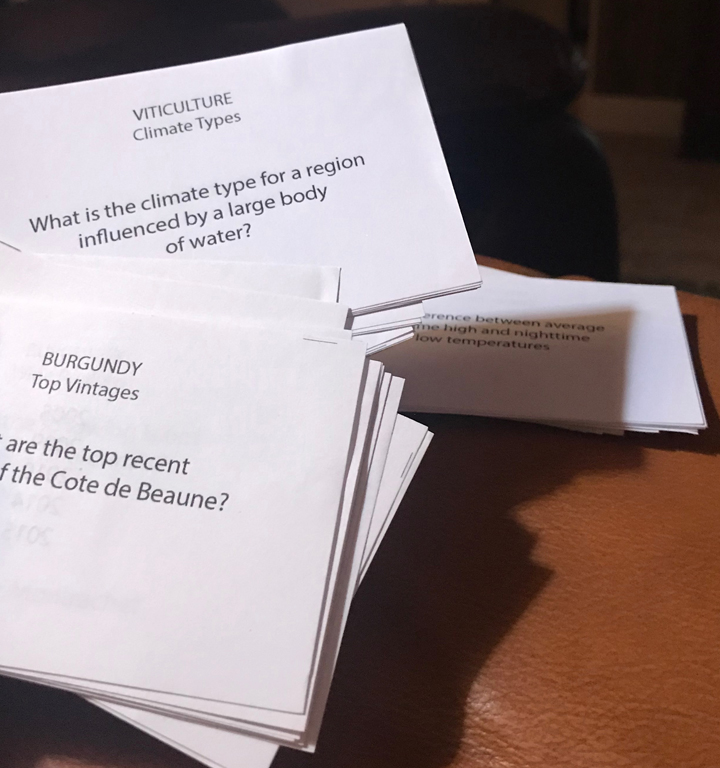
    Cue cards are the best way to test your knowledge across all topics simultaneously. Whether asking questions back and forth (think: Trivial Pursuit), or flipping through the questions on your own, the cue cards help in all cognitive areas critical to passing the exam–memory, retention and recall. I created physical cards using information from the end-of-chapter quizzes and other information from other study materials. After a little research I discovered several online sources and apps for hosting cue cards. I recommend StudyBlue.com because of the ease of use, success tracking, and number of existing wine-related flash cards.

    While the pass rate on the Court of Master Sommeliers Introductory Course & Examination is high, many have failed. The common theme among people who have failed the final exam is “lack of preparation.” The 2-day seminar is a review of everything you’ve learned from the required reading materials over the months leading up to the course and examination. Make sure to use every tool and methodology available.

    Back to the books 😉

    Next article in the series: Enthusiast to Sommelier: For the Sake of Learning

    First article in this series: Enthusiast to Sommelier: Getting Started
  • Enthusiast to Sommelier: Sip, Sip Hurrah

    Enthusiast to Sommelier: Sip, Sip Hurrah

    The Court of Master Sommelier Deductive Tasting Method is at the heart of the two-day course and final exam. For level one certification, the curriculum in 2020 includes six (6) individual wine tastings designed to teach this very effective process for identifying wines. I’ve been preparing for this all of my adult life (ok… maybe even a little before), so how difficult can it be?

    Swirl, sip, swish and spit. Repeat. Using the correct terminology, describe the color. Is it purple, ruby or garnet? Neither… it is red (as indicated on the bottle). Specifically, it is the color of a horse barn I remember from my childhood. Slightly faded, a little weathered, but still… red. Do I notice any secondary colors? That depends. Does adding an adjective to my description qualify as a ‘secondary color?’ No. So… bright red or intense red isn’t considered secondary colors? No. Secondary colors to look for in red wine are ruby, garnet, orange, brown and blue.

    While we all have our unique–almost Shakespearean–ways to describe the characteristics of wine. It is important to learn the universal terminology. In fact, it’s a requirement. Instead of describing the smell of certain Bordeaux wines in the tasting rotation as something I remember from that horse barn, I need to call-out the presence of brettanomyces.

    The entire premise of the Deductive Tasting Method is to use all of the information gathered from sight, smell and taste to determine a wine’s origin. This includes everything from varietal to vintage. It is a structured (and proven) process to quickly and accurately analyze wine. If nothing else, it adds another reason–albeit scientific–to open more wine. I might need another corkscrew 😉

    Back to the books.

    Next article in the series: Enthusiast to Sommelier: Right on Cue

    First article in this series: Enthusiast to Sommelier: Getting Started
  • Enthusiast to Sommelier: Wine Happens

    Enthusiast to Sommelier: Wine Happens

    As I’m learning the basics of vinification–in preparation for the first Court of Sommelier exam–it became evident that winemaking is as much an art as it is a science. Specifically, wine does not ‘happen.’ The Merriam-Webster dictionary defines vinification as “the conversion of fruit juices (such as grape juice) into wine by fermentation.” This definition, however, doesn’t even come close to describing the real-world of vinification. It just makes it seem as if somehow… wine happens.

    I am sure there are a few winemakers who simply pick-and-ferment, with little interest in leveraging the techniques of top-tier producers. In most cases, however, winemaking stems from deep pride and tradition. Reputable wine producers strive for consistency and quality, while working within the boundaries defined by local and regional wine laws. Certain regions’ laws are strict and highly regulated. The wine region of Bordeaux has some of the most complicated wine laws in the world, and the reputation of the entire region is affected by adherence to these laws.

    For wine to “happen,” there needs to be a clear vision of the desired outcome. There are many steps (and processes) along way that contribute to the style and quality of finished wines. The three main pre-fermentation processes of sorting, de-stemming and crushing have a huge impact on flavor and style of the finished wine (i.e. Two Buck Chuck). Unwanted bitterness and tannins can be introduced if care isn’t taken during this early stage of winemaking.

    The first few steps of winemaking are similar for a mainstream white, rose or red wine. From harvest through crushing, the process is consistent–with adjustments in support of a specific style. Approaches to fermentation, aging and maceration are in pursuit of a particular style, but are artfully altered to align with the vision of the winemaker. The result is a world of wines–varying in style–for us to enjoy 😉

    So much to learn (and appreciate). Back to the books!

    Next article in the series: Enthusiast to Sommelier: Sip, Sip Hurrah

    First article in this series: Enthusiast to Sommelier: Getting Started
  • Enthusiast to Sommelier: A New Appreciation

    Enthusiast to Sommelier: A New Appreciation

    I have always been all about California wine. But hey, that is what is most readily available and at least I have a little knowledge about the Napa and Sonoma areas. Faced with a challenge of choosing a wine off a menu in a restaurant, I could at least spot something I was familiar with or at least recognize the name of the vineyard. Now that I am reading and studying wine from around the world, I am getting excited by the effort of producing those wines, the climate, the different grapes and classifications.

    While studying Burgundy, I told Greg I wanted to try a Grand Cru, a Premier Cru, and a Village wine from the same area side by side. He set out to find the perfect combination. I have to say, previously I was not much of a Burgundy fan so I was excited to see if it was that I had just not had the right Burgundy wine. Sure enough, that was the case. I really enjoyed our little experiment. With the help of some wine loving friends, we polished off all three… and what a treat.

    Next article in the series: Enthusiast to Sommelier: Wine Happens

    First article in this series: Enthusiast to Sommelier: Getting Started