Tag: Gregory Dean

  • Perfect Pairings: Thanksgiving Traditions and Wine

    Perfect Pairings: Thanksgiving Traditions and Wine

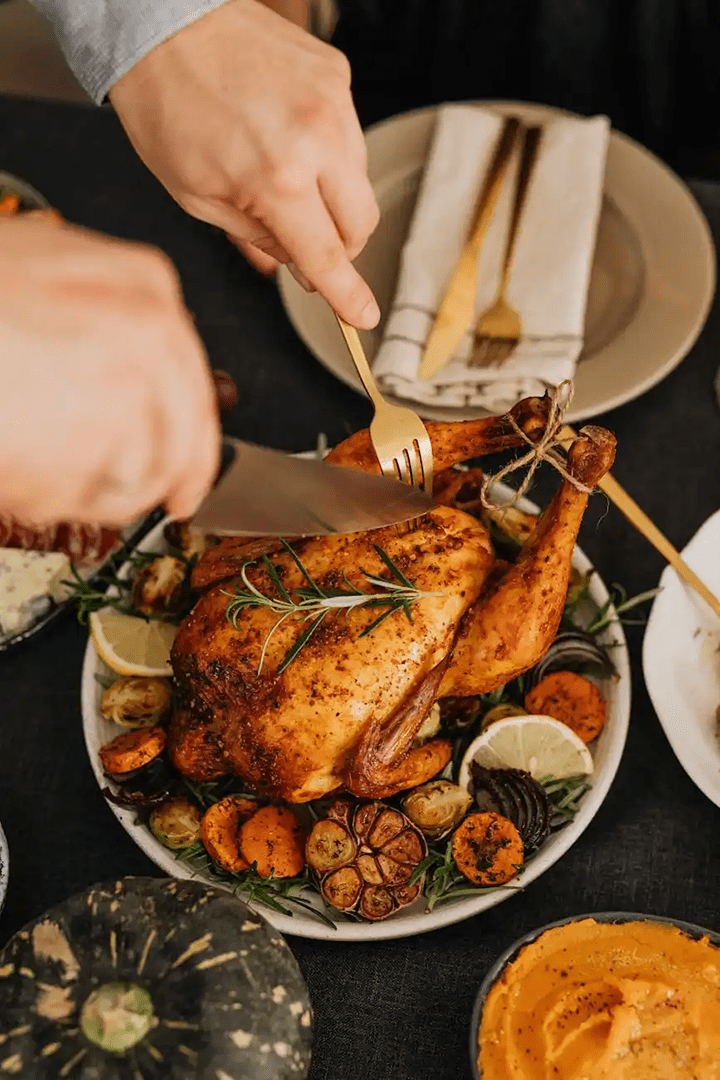
    As the holiday season approaches, it’s time to gather around the table for the quintessential Thanksgiving feast. From roast turkey to sweet potato casserole, each dish brings its own unique flavors to the celebration. Elevate your Thanksgiving experience this year by exploring both traditional and unconventional wine pairings that will delight your palate and impress your guests. Read on as we journey through classic Thanksgiving dishes, guided by our passion as sommeliers (SOMM&SOMM), as we explore the perfect symphony of tastes.

    Classic Turkey and Stuffing

    The star of the Thanksgiving show is undoubtedly the roast turkey. Its savory, succulent meat pairs beautifully with a variety of wines. For a traditional choice, consider a medium to full-bodied white wine like a classic Chardonnay or a Viognier. These wines complement the turkey’s texture and enhance the subtle flavors of the bird.

    For a twist, try a Pinot Noir or a Grenache. These red wines bring out the earthy notes in the stuffing and create a harmonious balance with the turkey’s richness. SOMM&SOMM recommends choosing a Pinot Noir with a hint of spice to add complexity to the pairing.

    Recommended wines:

    Chateau Montelena Napa Valley Chardonnay (Classic)

    Machard Gramont Pommard 1er Cru ‘Clos Blanc’ (SOMM&SOMM)
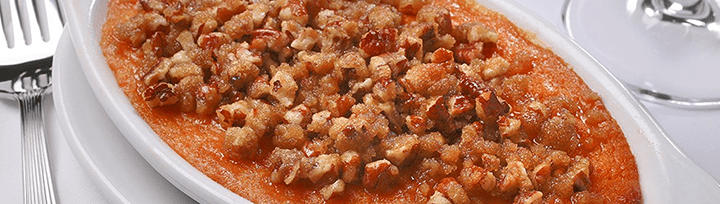
    Ruths Chris Sweet Potato Casserole

    Sweet Potato Casserole

    Sweet potato casserole, adorned with a layer of gooey marshmallows or crunchy pecans (Ruth’s Chris Sweet Potato Casserole Recipe), dances on the palate with a combination of sweet and savory notes. To complement this dish, opt for a white wine with a touch of sweetness, such as a Riesling or a Gewürztraminer. These wines balance the sweetness of the dish without overpowering it.

    For a more unconventional choice, consider a rosé or a light-bodied red wine like Gamay. SOMM&SOMM suggests selecting a wine with bright acidity to cut through the sweetness of the casserole, creating a delightful contrast that will leave your taste buds wanting more.

    Recommended wines:

    Pierre Sparr Mambourg Grand Cru Gewurztraminer (Classic)

    Debeaune Morgon Belles Grives (SOMM&SOMM)

    Mashed Potatoes and Gravy

    Creamy mashed potatoes and rich gravy are the comforting soul of any Thanksgiving meal. A classic Chardonnay with buttery notes is a safe and satisfying choice. Its smooth texture complements the creamy potatoes and enhances the richness of the gravy.

    For a bolder pairing, go for a sparkling wine or a Champagne. The effervescence cuts through the heaviness of the potatoes and cleanses the palate, preparing it for the next delicious bite. SOMM&SOMM recommends selecting a brut or extra brut style for a clean and refreshing experience.

    Recommended wines:

    Rombauer Carneros Chardonnay (Classic)

    De Saint-Gall Blanc De Blancs Grand Cru Vintage Champagne (SOMM&SOMM)

    Pumpkin Pie

    No Thanksgiving feast is complete without a slice of pumpkin pie. The warm spices and creamy pumpkin filling call for a wine that can stand up to its bold flavors. A late-harvest Riesling or a Moscato d’Asti perfectly complements the sweetness of the pie.

    For an unexpected pairing, try a tawny port or a sweet sherry. These fortified wines add depth and complexity, creating a memorable finale to your Thanksgiving meal. SOMM&SOMM suggests opting for a tawny port with notes of caramel and nuts to enhance the nutty crust of the pie.

    Recommended wines:

    Michele Chiarlo Nivole Moscato d’Asti (Classic)

    Graham’s 20 Yr Tawny (SOMM&SOMM)

    This Thanksgiving, let your taste buds embark on a culinary adventure by exploring diverse wine pairings that elevate the classic flavors of the holiday. Whether you stick to tradition or venture into the realm of unconventional pairings, the expert guidance of a sommelier ensures a symphony of tastes that will make your Thanksgiving feast truly extraordinary.

    Photo by fauxels on Pexels.com

    Cheers to a holiday filled with good food, great company, and the perfect glass of wine! 🍷

  • Old World Regions: Bordeaux

    Old World Regions: Bordeaux

    Bordeaux is a timeless elixir of history, terroir, and tradition. It’s a name that resonates with wine enthusiasts worldwide and is synonymous with excellence in winemaking. Nestled along the serene banks of the Garonne River in southwestern France, the Bordeaux wine region is a hallowed ground for cork dorks ;), boasting a rich history, distinct terroirs, and a complex classification system that sets it apart as one of the world’s foremost wine-producing regions.

    A Glimpse into Bordeaux’s Enigmatic Past

    Bordeaux’s history as a wine-producing region dates back to Roman times when the first vineyards were planted. However, it was during the 12th century, under the rule of Eleanor of Aquitaine and her marriage to Henry II of England, that Bordeaux wines gained international recognition. The English became avid consumers of Bordeaux wines, creating a demand that laid the foundation for Bordeaux’s global reputation.

    “…you are not to conclude I am a drinker. My measure is a perfectly sober 3 or 4 glasses at dinner, and not a drop at any other time. But as to those 3 or 4 glasses I am very fond.”

    Thomas Jefferson

    During the 17th century, Dutch engineers drained the marshlands and introduced a more systematic approach to winemaking, paving the way for Bordeaux’s vineyards to thrive. In the 18th century, Thomas Jefferson, the third President of the United States, became an ardent admirer of Bordeaux wines, further elevating their prestige. I had the opportunity several years ago to ogle over (look but don’t touch) two bottles from Jefferson’s collection. The bottles were locked inside a wire cage, covered in dust, each donning a small white price tag–$20,000. 

    Left Bank vs. Right Bank: A Tale of Two Terroirs

    One of the key distinctions in Bordeaux lies in its geographical diversity, which results in two distinct terroirs: the Left Bank and the Right Bank. Here is the breakdown…

    Left Bank

    – Located to the west of the Gironde Estuary and the Garonne River.

    – Predominantly features Cabernet Sauvignon as the dominant grape variety.

    – Famous appellations include the Médoc, Pauillac, Margaux, and Saint-Julien.

    – Produces wines known for their structured, tannic character and aging potential.

    Right Bank

    – Situated to the east of the Gironde Estuary and the Dordogne River.

    – Merlot is the primary grape variety, complemented by Cabernet Franc and sometimes Malbec.

    – Renowned appellations include Saint-Émilion and Pomerol.

    – Produces wines characterized by their elegance, supple texture, and approachability in their youth.

    Bordeaux Region in Southwest France

    Bordeaux’s Classifications: A Pyramid of Prestige

    Bordeaux boasts a complex classification system, which adds an extra layer of intrigue to its wines. The most famous classifications include:

    1. Bordeaux AOC:

       – The base level of classification, offering wines that showcase Bordeaux’s classic characteristics.

       – These wines can come from anywhere within the Bordeaux region and are typically approachable and affordable.

    2. Bordeaux Supérieur AOC:

       – A step above the Bordeaux AOC, with stricter quality control standards.

       – Often produced from older vines, resulting in more concentrated flavors.

    3. Médoc and Graves Classifications:

       – Within the Médoc and Graves regions, several châteaux are classified as Cru Bourgeois or Cru Artisan, signifying wines of consistently high quality.

    4. Saint-Émilion Classification:

       – Saint-Émilion has a unique classification system that is revised periodically.

       – It includes three main categories: Grand Cru Classé, Premier Grand Cru Classé “B,” and Premier Grand Cru Classé “A.”

       – These classifications indicate the quality and prestige of the wineries.

    5. 1855 Classification of the Médoc:

       – Arguably the most famous classification in Bordeaux, it was established for the Exposition Universelle de Paris.

       – Divided into five growths or “crus,” with the Premier Cru being the highest tier.

       – Châteaux such as Château Margaux and Château Latour hold this esteemed title.

    The complete list of all five first growths include:

    1. Château Latour
    2. Château Lafite Rothschild
    3. Château Margaux
    4. Château Haut Brion
    5. Château Mouton Rothschild

    Bordeaux’s intricate classification system reflects the region’s unwavering commitment to maintaining the quality and reputation of its wines.

    Bordeaux’s allure lies in its rich history, diverse terroirs, and complex classification system. Whether you’re sipping a bold Cabernet Sauvignon from the Left Bank or enjoying the velvety embrace of a Merlot-based wine from the Right Bank, Bordeaux offers a wine experience like no other. Its journey from ancient Roman vineyards to its present-day global prestige is a testament to the enduring artistry and craftsmanship of Bordeaux winemakers. With each bottle, Bordeaux encapsulates centuries of tradition, making it an enduring and timeless elixir for wine lovers around the world.

    Cheers 😉

  • Varietal Spotlight: Chardonnay

    Varietal Spotlight: Chardonnay

    The Canvas of the Winemaker.

    Few grape varieties offer as much versatility and expressive potential as Chardonnay. Within the Vitis vinifera family, it stands as one of the most adaptable varietals—capable of producing everything from zesty, mineral-driven wines to rich, barrel-aged expressions. Winemakers often call it the “blank canvas” grape, not because it lacks character, but because it reflects the sum of choices made in the cellar: oak or stainless steel, malolactic conversion or crisp acidity, extended lees aging or youthful freshness. Chardonnay mirrors technique—and that is precisely why professionals revere it.

    Photo by Nadin Sh on Pexels.com

    A Brief History of a Global Classic

    The name Chardonnay originates from a small village in the Mâconnais subregion of Burgundy, France. While legends once traced its ancestry to medieval crusades or poetic tales from Cyprus, modern science has provided a far clearer understanding.

    Thanks to genetic research—most notably by Dr. Carole Meredith of the University of California—we now know that Chardonnay is a natural cross between Pinot Noir and Gouais Blanc. That lineage is meaningful: Pinot Noir has long been considered the noble grape of Burgundy, while Gouais Blanc was historically grown for everyday table wine. Their close proximity in vineyards centuries ago allowed for cross-pollination that ultimately produced the varietal we recognize today.

    Interestingly, Gouais Blanc has been known by more than 140 different names—proof of its widespread cultivation—and yet it has all but disappeared today. Chardonnay, on the other hand, has become one of the most celebrated and widely planted grapes in the world.

    Chardonnay and Terroir: A Natural Translator

    Chardonnay is uniquely sensitive to terroir—the combination of soil, climate, altitude, water access, and topography that shape a wine’s character. For this reason, many Old World labels emphasize geographic origin more than grape variety.

    Photo by Kate Filatova on Pexels.com

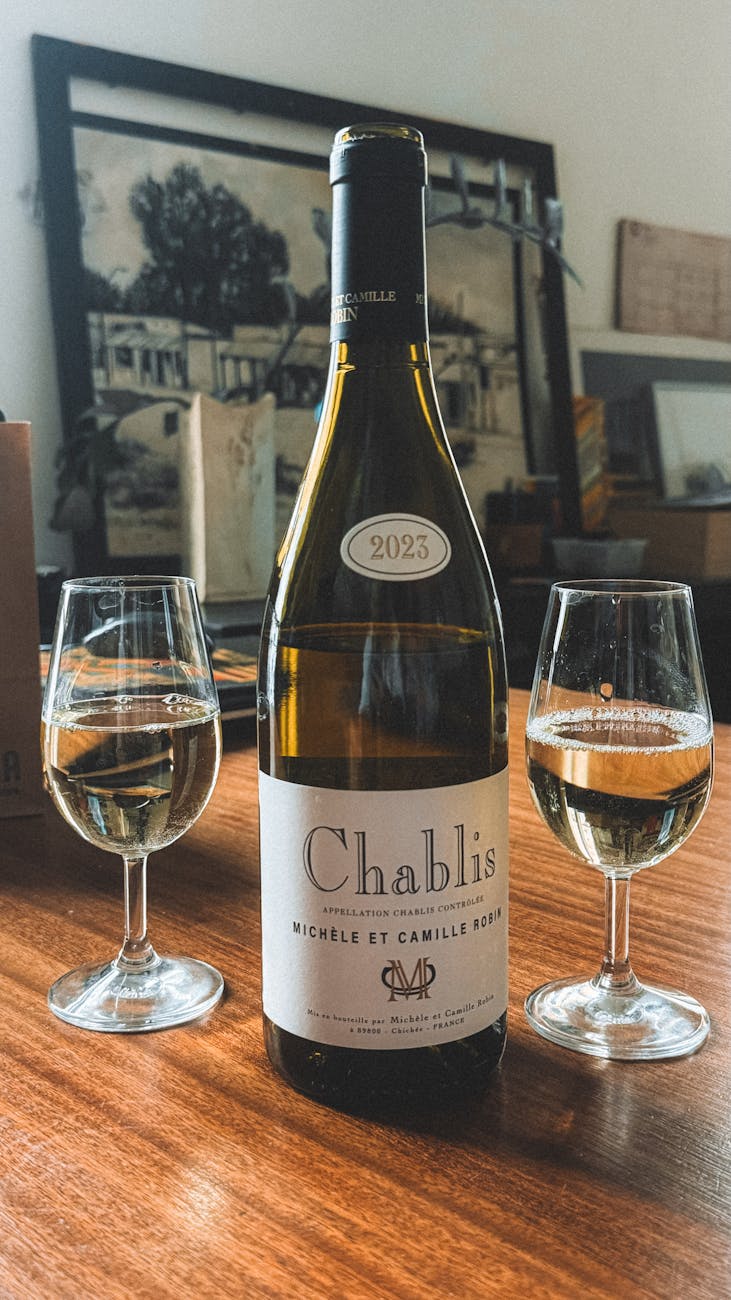
    Take Chablis, for example. It is not a synonym for Chardonnay, yet every wine labeled Chablis must be made from Chardonnay. The region’s cool climate and Kimmeridgian limestone soils produce wines that are lean, flinty, and mineral-driven—quite different from the fuller styles of, say, Sonoma or Margaret River. Thus:

    All Chablis are Chardonnay, but not all Chardonnays are Chablis.

    Gregory Dean, SOMM&SOMM

    In Burgundy’s Côte de Beaune, names like Montrachet (pronounced “Mon-ra-shay”) represent some of the most prestigious—and expensive—Chardonnays on earth. Further south, Pouilly-Fuissé in the Mâconnais region is known for producing ripe, elegant Chardonnays that balance fruit with structure. Nearly every Old World country—France, Italy, Spain, Germany, Austria, Portugal, Greece, Hungary, Croatia, and others—produces unique expressions shaped by specific terroir.

    Old World generally refers to European, Middle Eastern, and North African wine-producing countries.

    New World Chardonnay: Sunshine in the Glass

    In contrast, New World regions such as California, Australia, South Africa, Chile, and Argentina typically experience warmer growing conditions. More sunlight means longer hang time, which increases sugar levels in the grapes. Higher sugar translates into higher alcohol during fermentation—one reason New World Chardonnays tend to be richer, fuller-bodied, and more fruit-forward.

    Photo by Manuel Muu00f1oz on Pexels.com

    Serving temperature matters:

    • Unoaked, youthful styles: 48–50°F (9–10°C)
    • Oaked or older vintages: 52–54°F (11–12°C)

    These subtle temperature differences allow either the fruit or the influence of oak and lees to take the spotlight.

    What About ‘Buttery’ Chardonnay?

    The often-discussed buttery texture comes from malolactic conversion—a natural process where sharper malic acid (like that in green apples) is transformed into softer lactic acid (found in milk and cream). This adds texture and roundness while reducing acidity. Not all winemakers choose this technique; some prefer the crisp purity of a non-malo Chardonnay. Again—the grape simply mirrors the choice.

    Photo by Heather Smith on Pexels.com

    Chardonnay in Champagne

    Chardonnay is also one of only three permitted grapes in Champagne—the sole white varietal allowed. In fact, when you see Blanc de Blancs on a Champagne label, it indicates the wine is made from 100% Chardonnay. Its elegance and aging potential make it highly prized in sparkling wine production around the world.

    Stylistic Tools of the Winemaker

    Chardonnay can express a wide range of styles depending on the methods used:

    • Stainless steel fermentation – preserves freshness and acidity
    • Oak aging – adds spice, texture, and complexity
    • Concrete eggs – enhance mouthfeel without imparting flavor
    • Malolactic conversion – softens acidity and adds creaminess
    • Lees stirring (bâtonnage) – contributes body and aromatic depth

    Chardonnay, perhaps more than any other grape, tells the story of the cellar.

    SOMM&SOMM Recommendations

    A few standout examples worth exploring:

    Too many to list—but each one showcases a different voice of the same grape.

    A Final Thought

    The best way to understand Chardonnay is to taste it across regions, styles, and techniques. In a gallery, we use our eyes to interpret a painting. With wine, we have the luxury of using three senses instead of one—sight, smell, and taste. Each glass reveals the winemaker’s intention and the land’s identity.

    Next time you pour a Chardonnay, ask yourself:
    What story is the winemaker telling… and what is the vineyard whispering in the background? Cheers ❤️

    Edited: Original post was written and published 2/18/2023. Refreshed and updated 11/29/2025