
There’s a particular look people give when you recommend something unexpected.
It’s subtle. Polite. A small pause before they respond. Maybe a nod that says, “I trust you… but I’m not entirely convinced.”
Suggesting a structured Cabernet with a reverse-seared steak rarely gets that reaction—that pairing feels safe, almost pre-approved. But recommend a Spätlese Riesling with Korean BBQ, and suddenly you’ve introduced uncertainty into the room.
And yet, more often than not, those are the pairings people come back to talk about.
Not because they were surprising—but because they worked better than expected.
That’s the quiet truth about wine pairing: the best combinations aren’t built on rules. They’re built on understanding.
Related article: Why Cabernet Sauvignon Pairs Perfectly with Steak

What We Think Pairing Is (And What It Actually Is)
Most formal wine education—whether through programs like Wine & Spirit Education Trust, Court of Master Sommeliers, or Society of Wine Educators—teaches pairing through structure. And for good reason. Structure is predictable. Teachable. Repeatable.
But somewhere along the way, structure gets flattened into rules.
Red with meat. White with fish. Sweet with dessert.
Clean. Memorable. And just incomplete enough to get people into trouble.
Because pairing isn’t about categories—it’s about components.
A dish isn’t “meat.” It’s salt, fat, acid, heat, sweetness, and texture. A wine isn’t “red” or “white.” It’s acidity, tannin, alcohol, and flavor intensity.
When those elements interact thoughtfully, something interesting happens: both the food and the wine become more expressive than they were on their own.

The First Truth: Intensity Is Everything
Before anything else, there’s a simple but non-negotiable principle: balance the weight of what’s on the plate with what’s in the glass.
A delicate dish can’t carry a powerful wine. It disappears.
A bold dish will steamroll something too subtle. It dominates.
This is why certain pairings feel effortless. Not because they follow tradition, but because they occupy the same space in terms of presence.
It’s less like matching colors and more like matching volume.
Acidity: The Invisible Hand
If there’s a single element that quietly does the most work in pairing, it’s acidity.
It behaves like a squeeze of citrus over food—lifting flavors, cutting through richness, resetting the palate. Without it, heavy dishes feel heavier. With it, they feel composed.
This is where unexpected pairings often find their footing.
Take that off-dry Riesling with Korean BBQ. On paper, it looks like a mismatch. In practice, it’s almost surgical. The acidity slices through the richness, the touch of sweetness softens the heat, and the aromatics weave through the spice rather than fighting it.
It’s not unconventional—it’s just not obvious.
Tannin: Friend or Foe
Tannin has a reputation for being a mark of “serious” wine, but in pairing, it’s more conditional than that.
When it meets fat and protein, it softens, rounds out, and becomes almost luxurious. This is why a well-marbled steak can transform a firm, structured red into something seamless.
But remove that fat—lean cuts, lighter dishes—and tannin loses its anchor. What once felt structured now feels drying, even aggressive.
The wine didn’t change. The context did.
Sweetness: The Misunderstood Advantage
There’s a quiet bias against sweetness in wine, especially at the table. Many assume it belongs at the end of the meal, if at all.
That assumption leaves one of the most effective pairing tools underused.
A touch of residual sugar can calm spice, balance salt, and soften bitterness in ways dry wines simply can’t. It doesn’t make the pairing “sweet”—it makes it stable.
This is why certain cuisines—especially those built on heat, fermentation, or layered seasoning—come alive with wines that carry just a hint of sweetness.
Not enough to dominate. Just enough to mediate.
Complement and Contrast: Not Opposites, But Partners
Pairing is often framed as a choice between complementing flavors or contrasting them. In reality, the most compelling pairings tend to do both.
A rich, buttery dish alongside a similarly textured wine creates harmony—it feels seamless, almost continuous.
But introduce contrast—acidity against fat, sweetness against spice—and suddenly there’s movement. Energy. The palate wakes up.
The real artistry lies in knowing when to mirror and when to counterbalance—and more importantly, how to let both exist in the same pairing.

The Myth That Won’t Go Away
“Red wine with red meat, white wine with fish.”
It persists because it’s easy to remember. Not because it’s consistently correct.
A fatty piece of fish can handle a light red beautifully. A lean cut of beef might struggle with a heavily tannic wine. The preparation, the sauce, the seasoning—all of it matters more than the color of the protein.
In fact, the protein itself is often the least interesting part of the equation.
The sauce—the acidity, the sweetness, the fat, the spice—that’s where the real pairing decisions are made.
Why Great Pairings Feel So Rare
It’s not that they’re difficult. It’s that they require intention.
Most people either follow rules too closely or abandon them entirely. The sweet spot is somewhere in between—understanding the “why” well enough to bend the “what.”
That’s when pairings stop being predictable and start being memorable.
If you’re looking to surprise your guests—or just yourself—start here…
Brilliant Pairings Hiding Just Outside Your Comfort Zone
| Dish | Wine | Reasoning |
|---|---|---|
| Korean BBQ | Spätlese Riesling | Sweetness tames heat, acidity cuts fat, aromatics mirror spice |
| Fried Chicken | Dry Rosé | Crisp acidity slices through fat; subtle fruit keeps it lively |
| Grilled Salmon | Pinot Noir | Light tannin + richness create balance; earthiness complements char |
| Spicy Thai Curry | Off-Dry Chenin Blanc | Residual sugar softens spice; acidity lifts coconut richness |
| Salty Snacks / Fried Apps | Fino or Manzanilla Sherry | Briny, bone-dry profile amplifies savory flavors and refreshes palate |
| Pizza (Tomato-Based) | Gamay | Bright acidity matches tomato; low tannin avoids clash |
| Roasted Veggies / Herb-Forward Dishes | Cabernet Franc | Herbal notes in wine echo green, savory flavors in dish |
| Popcorn | Sparkling Wine | High acid + bubbles cleanse salt and fat instantly |
| Washed-Rind Cheese | Gewürztraminer | Aromatic intensity balances pungency; slight sweetness softens funk |
| Dark Chocolate (Bittersweet) | Syrah | Pepper, smoke, and dark fruit align with chocolate’s bitterness |
A Final Thought, Somewhere Between Instinct and Experience
The goal isn’t to impress anyone at the table. It’s to create a moment—brief, almost unnoticed at first—when everything aligns.
Conversation pauses. Someone takes another bite, then another sip. There’s a shift, subtle but unmistakable.
Not surprise. Not novelty.
Just the quiet realization that something works.
And once you understand the mechanics behind that moment, it stops being rare.
It becomes something you can create—deliberately, confidently, and with just enough mischief to keep things interesting.
It’s your wine… pair it well 🍷
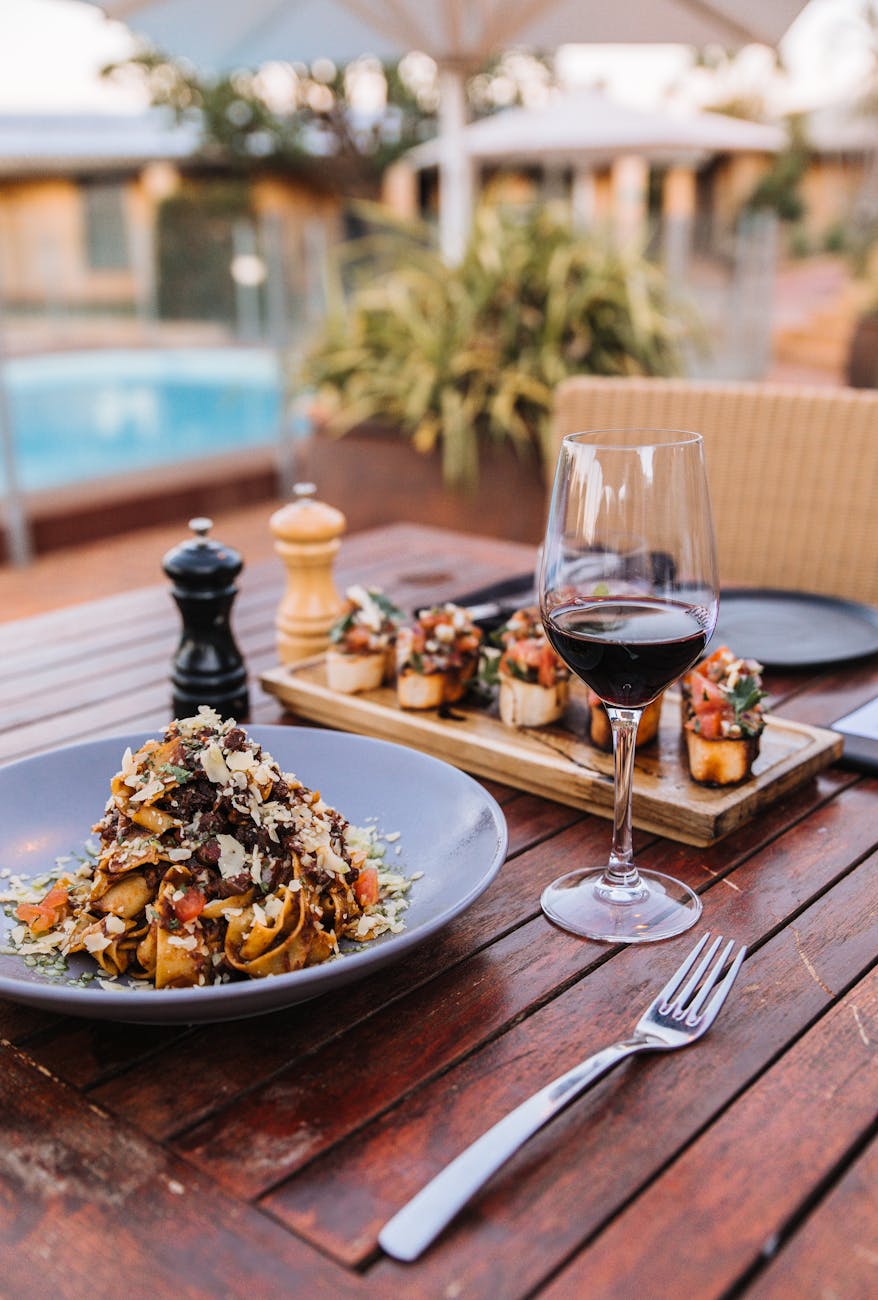
Cover photo by Rachel Claire on Pexels.com


You must be logged in to post a comment.