
Category: Wine Experiences

  • Part I: Giving Thanks (and Maybe a Little Grace)

    Part I: Giving Thanks (and Maybe a Little Grace)

    This three-part SOMM&SOMM Thanksgiving series is a celebration of gratitude, gathering, and the glass — designed to unfold just as the season does.

    There’s a quiet beauty to early November. The Halloween decorations are packed away, the first cool fronts roll in, and suddenly the house feels like it’s waiting for something. For some, it’s the countdown to Christmas lights and shopping lists. But for many of us — those who live for the smell of roasting herbs, clinking glasses, and family stories that spill across the table — it’s the beginning of something more grounded: Thanksgiving season.

    Somewhere along the way, this holiday has been tucked between the commercial fanfare of Halloween and Christmas, like the forgotten middle child of the holidays. But Thanksgiving deserves more. It’s a celebration of connection, of gratitude, of food shared and stories retold. It’s not about grand gestures or elaborate centerpieces — it’s about the simple act of gathering.

    The Spirit of Thanksgiving

    Before there were supermarkets and double ovens, Thanksgiving was born from gratitude — people giving thanks for harvest, survival, and community. It wasn’t a feast for show; it was a moment of pause. Somewhere amid our modern rush, that sense of quiet appreciation still exists — we just have to slow down enough to notice it.

    Thanksgiving asks us to step away from our screens and schedules and gather with the people who make our world whole. Whether it’s family, friends, or the neighbors you only see once a year, it’s the one day when conversation, food, and drink matter more than the clock.

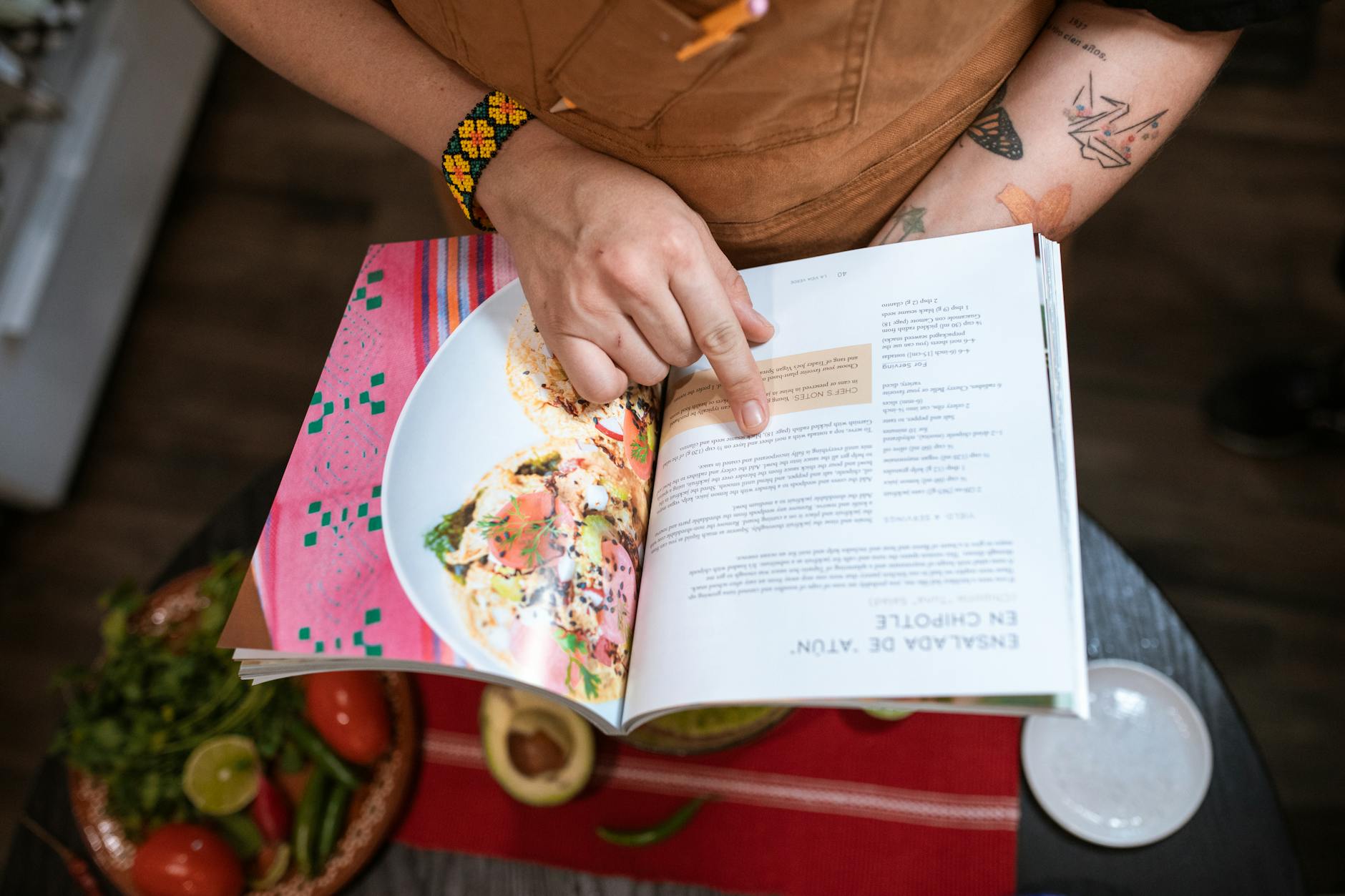
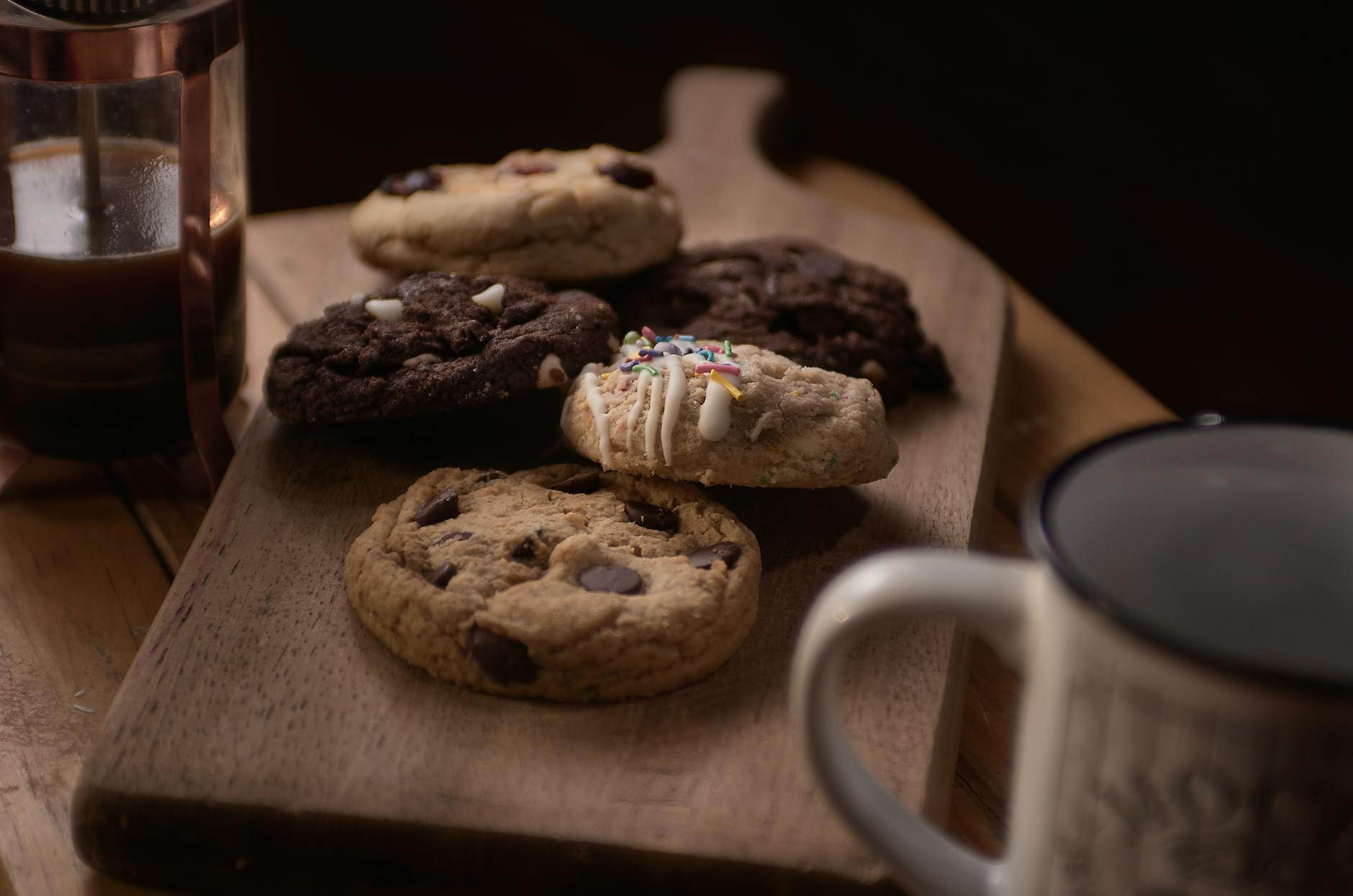
    Photo by Wendy Wei on Pexels.com

    Warming Up for the Season

    The weeks leading up to Thanksgiving are a perfect time to get back into the rhythm of the kitchen — and the cellar. Farmers’ markets are alive with squash, apples, and sweet potatoes. The first casseroles reappear, and “test runs” of favorite recipes start filling the air with familiar aromas.

    It’s also the season to enjoy wines that ease us into the warmth of late autumn. Think of it as tuning your palate for what’s to come.

    Try these cozy pre-holiday pairings:

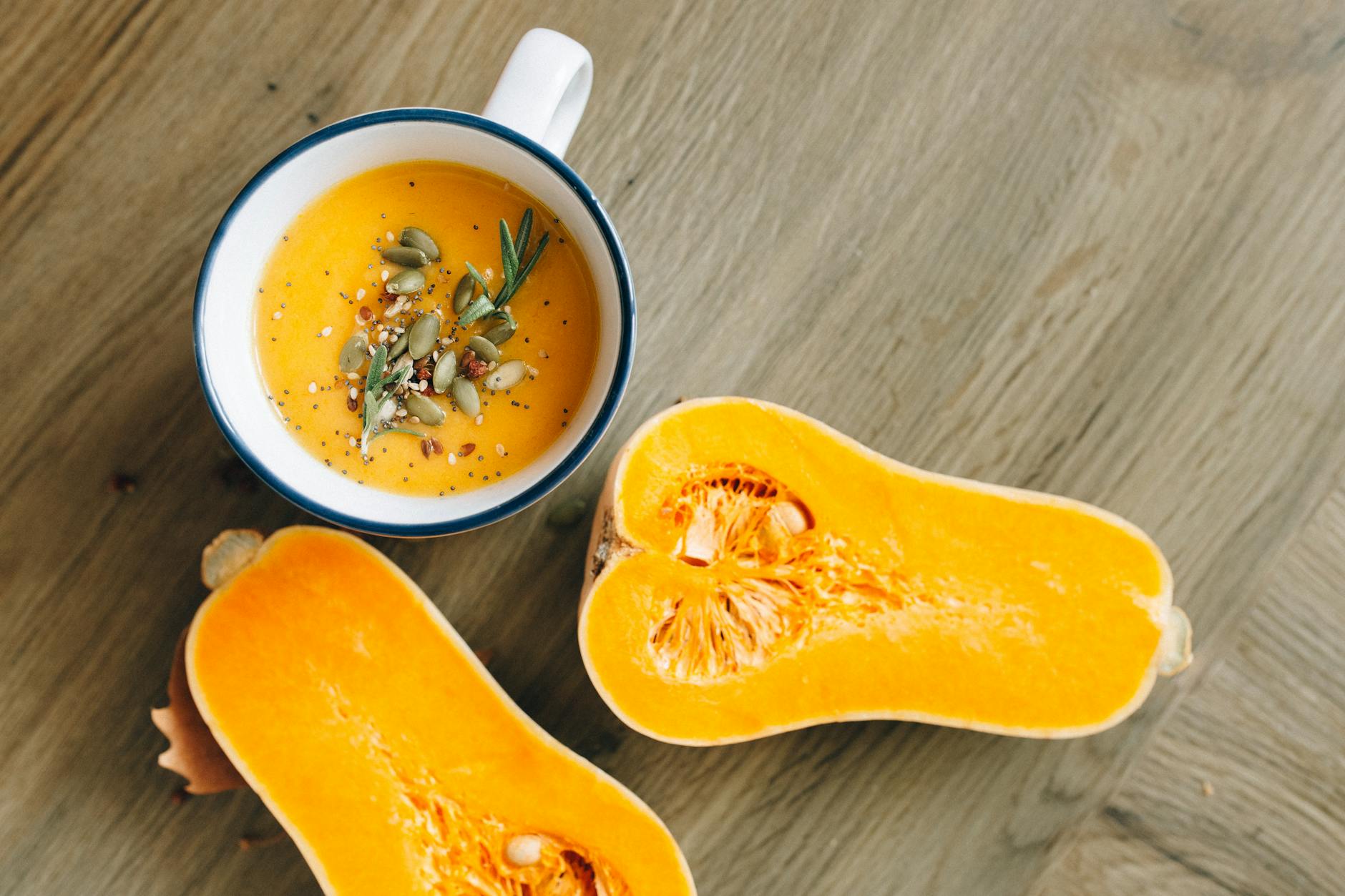
    • Roasted Butternut Squash Soup with Viognier: A rich, silky soup meets a wine with soft apricot and floral notes.
    • Mushroom Tartlets with Pinot Noir: Earthy and elegant, this combo practically defines autumn.
    • Apple and Brie Crostini with Sparkling Wine: Crisp, celebratory, and simple — ideal for impromptu gatherings.

    These aren’t the wines you reserve for the main event — they’re for the small, beautiful in-between moments.

    Photo by cottonbro studio on Pexels.com

    Perfectly Imperfect Gatherings

    Let’s be honest — Thanksgiving can be a circus. There’s always a forgotten dish, a heated debate over football or politics, and that one relative who insists on bringing a “healthy” version of mashed potatoes. But these moments are part of the charm.

    Every family has its quirks, just like every bottle has its surprises. The laughter, the noise, the imperfect timing — that’s the real flavor of the season. The best wines aren’t the most expensive; they’re the ones that taste better when shared.

    So dust off the good glasses (or don’t), open something that makes you smile, and toast to the mess and magic of it all.

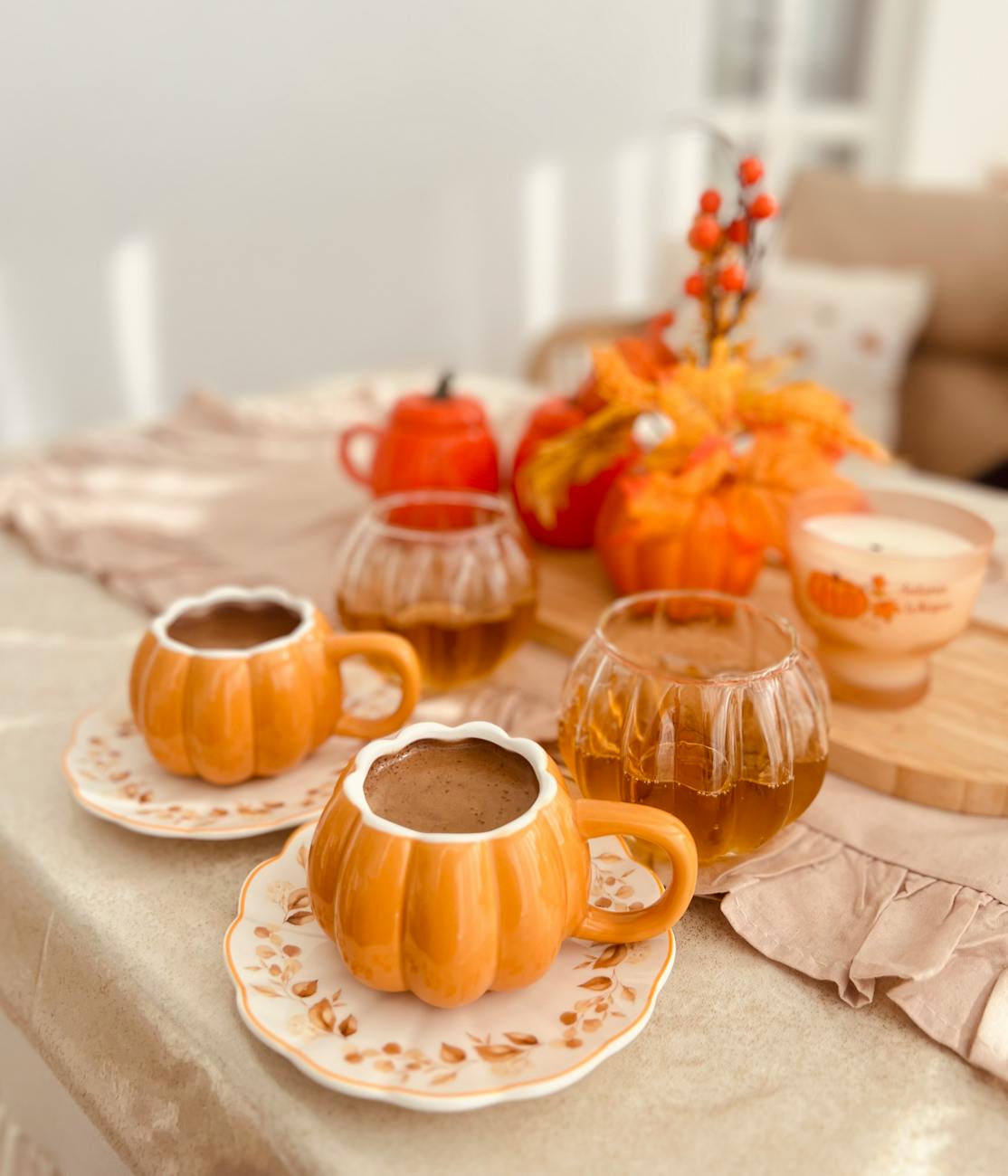
    Photo by Andrea Piacquadio on Pexels.com

    What’s Next

    Over the next few weeks, we’ll take a deeper dive into the Thanksgiving experience — from the prep and planning to the meal itself. Each article will offer fresh pairing ideas, stories, and maybe a few borrowed family recipes.

    For now, pour something seasonal, light a candle, and enjoy the calm before the carving. Thanksgiving isn’t just a day on the calendar — it’s a whole mood 🍷

    Cover Photo by Anna Tukhfatullina Food Photographer/Stylist on Pexels.com

  • Wickedly Good Pairings

    Wickedly Good Pairings

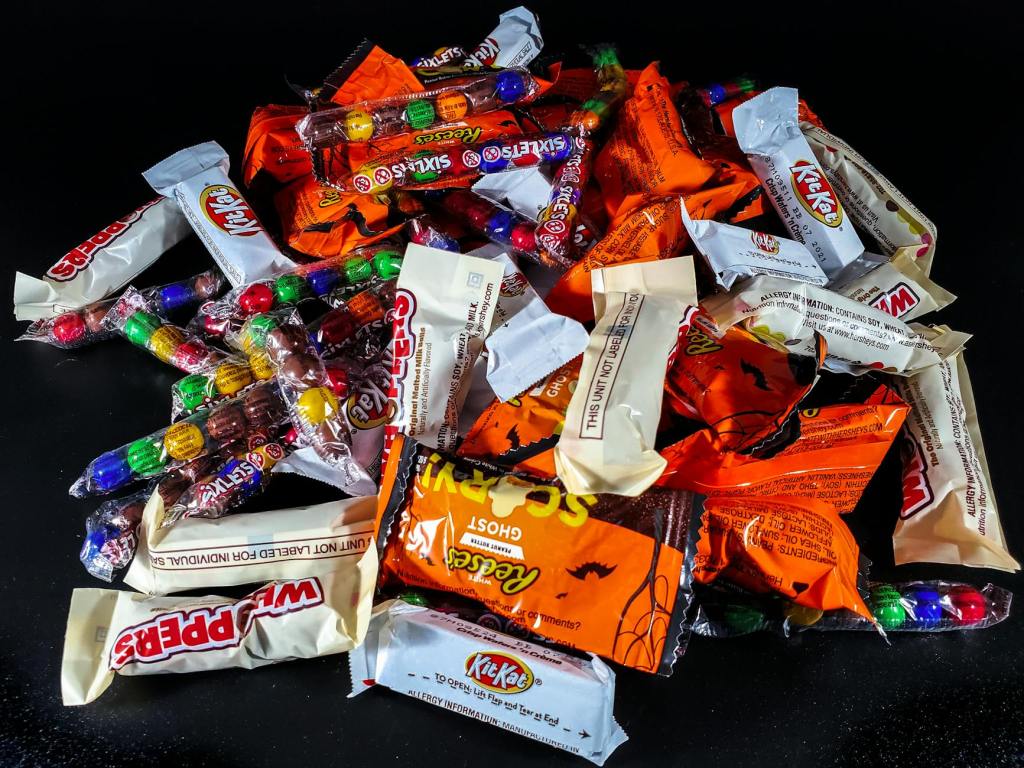
    Wines that Haunt Halloween Candy.

    Halloween night: kids crash into sugar comas, the porch lights click off, and suddenly you’re left staring at a bowl of leftover candy… or the irresistible temptation of “parent tax” from your child’s trick-or-treat bag. (They’ll never notice three missing Snickers, right?)

    While most people reach for milk or maybe a cold beer to tame the sweetness, sommeliers know the secret: wine can turn that guilty nibble into a pairing that’s equal parts science and sorcery. Here’s your ultimate grown-up guide to Halloween candy and wine—no costumes required.

    Photo by Pixabay on Pexels.com

    Chocolate-Based Treats

    Reese’s Peanut Butter Cups

    Pairing: Tawny Port
    Why: Tawny’s caramelized nutty flavors mirror roasted peanuts, while its richness smooths out the chocolate. Think of it as peanut brittle with a PhD.

    Snickers

    Pairing: Banyuls (Fortified Grenache from Roussillon)
    Why: Chocolate, caramel, nougat, and peanuts are basically begging for a dessert wine with body. Banyuls checks every box, making Snickers feel Michelin-star worthy.

    Twix

    Pairing: Madeira (Bual style)
    Why: Biscuit crunch plus caramel is Madeira’s happy place. Bual Madeira’s nutty, oxidative character latches onto the cookie layer, while its acidity slices through caramel. Midnight snackers: prepare for joy.

    Milky Way

    Pairing: Demi-Sec Vouvray (Chenin Blanc, Loire)
    Why: Chenin’s baked apple and honey tones cozy up to the nougat while acidity keeps everything lively. Pairing magic in fun-size form.

    Kit Kat

    Pairing: Brut Rosé Champagne
    Why: Snap, fizz, pop. The bubbles cleanse, the rosé fruit lifts chocolate, and suddenly a humble Kit Kat feels like Paris Fashion Week.

    M&Ms (Plain or Peanut)

    Pairing: Ruby Port
    Why: Primary berry fruit for plain; roasted nut harmony for peanut. Both combos are dangerously addictive—consider hiding the bag from yourself.

    Butterfinger

    Pairing: Tokaji Aszú (Hungary)
    Why: Flaky, crunchy peanut butter layers demand complexity. Tokaji brings apricot, honey, and botrytis richness, elevating Butterfinger into haute cuisine. Yes, really.

    Tootsie Rolls

    Pairing: Lambrusco (Semi-Secco)
    Why: A little playful fizz balances chewy “chocolate-adjacent” flavor. Lambrusco is the trickster wine, turning this humble candy into a carnival.

    Photo by Photo By: Kaboompics.com on Pexels.com

    Fruity, Sour, and Chewy Treats

    Skittles

    Pairing: Moscato d’Asti
    Why: Low ABV, effervescent sweetness, and tropical notes let you “taste the rainbow” without collapsing under sugar overload.

    Starburst

    Pairing: Rosé of Provence (off-dry)
    Why: Strawberry, watermelon, citrus—these flavors practically scream rosé. Bonus: the wine’s slight dryness balances Starburst’s neon-sugar pop.

    Sour Patch Kids

    Pairing: Mosel Riesling Kabinett
    Why: Riesling thrives on high acidity + residual sugar. The sour hit is tamed by Riesling’s sweetness, and the fruit flavors harmonize like a well-tuned string quartet.

    Nerds

    Pairing: Sparkling Brachetto d’Acqui (Italy)
    Why: Nerds are crunchy, tangy, and slightly chaotic. Brachetto, with its strawberry-soda vibes, makes this feel like a dessert cocktail at a Halloween carnival.

    Gummy Bears (or Worms, if you’re ghoulish)

    Pairing: Off-dry Rosé Sekt (Germany)
    Why: Juicy, bouncy gummies love a bright, berry-driven sparkling rosé. The bubbles bounce along with the gummy chew.

    Photo by Terrance Barksdale on Pexels.com

    Classic Chocolate Bars

    Hershey’s Kisses

    Pairing: Tawny Port (again) or Maury Sec (Southern France)
    Why: Simple milk chocolate meets oxidized nutty sweetness = instant upgrade. Pop, sip, repeat until the foil pile gives you away.

    3 Musketeers

    Pairing: Amontillado Sherry
    Why: Light nougat meets Sherry’s caramel and nutty edge. It’s the most “grown-up” this candy will ever feel.

    Photo by Skyler Ewing on Pexels.com

    Hard Candy & Miscellaneous Mischief

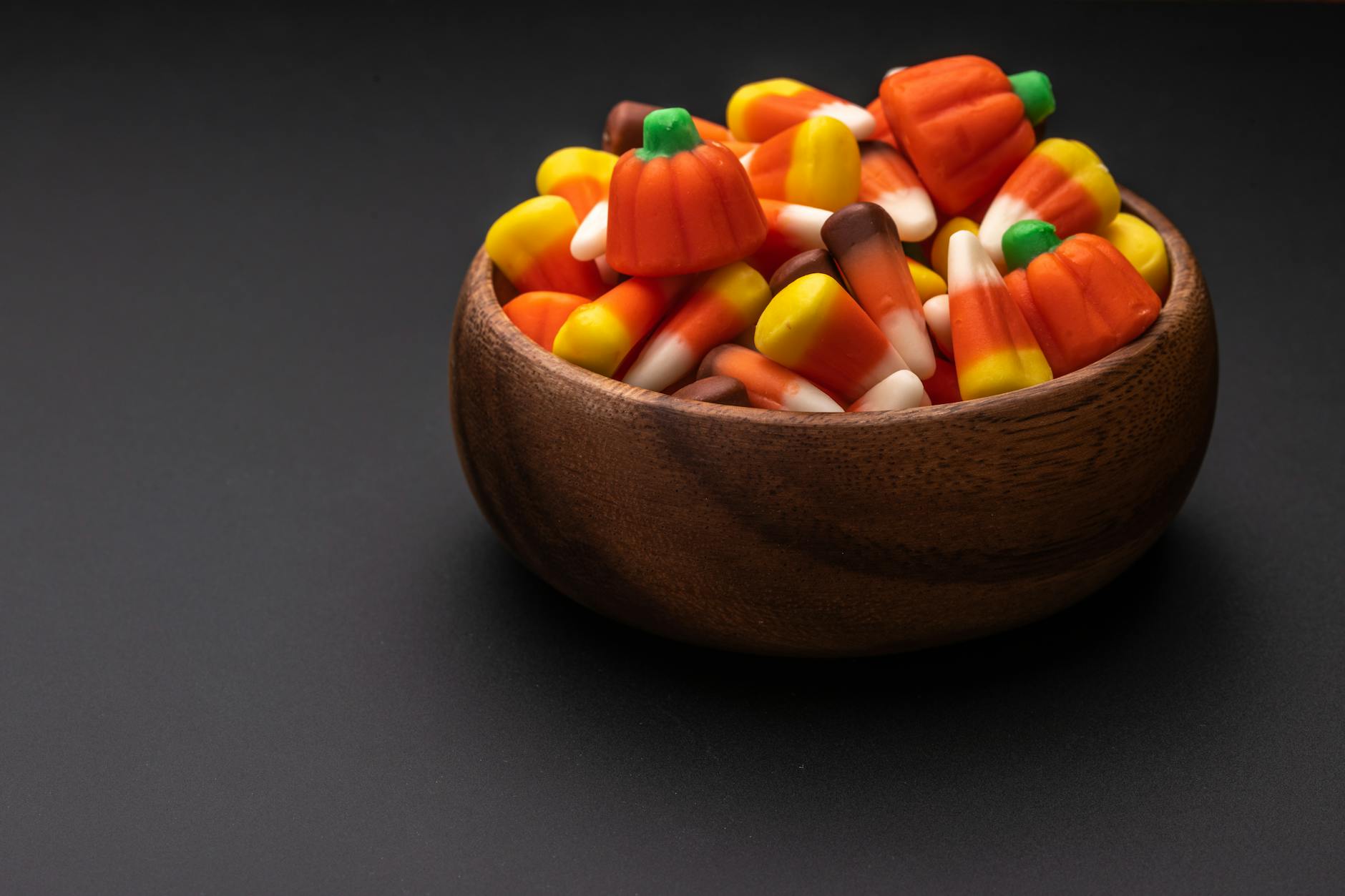
    Candy Corn

    Pairing: Off-dry Gewürztraminer
    Why: Spicy aromatics cut through the waxy sugar bomb. You’ll never look at the triangular sugar pyramid the same way again.

    Lollipops (Dum-Dums, Tootsie Pops, etc.)

    Pairing: Demi-Sec Sparkling Wine (Crémant d’Alsace, Vouvray, or Cava)
    Why: Sucking on sugar wants bubbles. Add wine, and suddenly you’re the sophisticated kid on the block.

    Smarties (U.S. version)

    Pairing: Dry Lambrusco or Frizzante Rosé
    Why: Tart, chalky sweetness pairs with something equally zippy and refreshing. It’s the sommelier-approved palate cleanser of the candy haul.

    When You’ve Really Raided the Bag…

    At some point—maybe after the third glass—you’ll find yourself with a strange handful: a Milky Way, a handful of Skittles, and two rogue Tootsie Rolls. Here’s your move: Vin Santo (Tuscany). With its nutty, honeyed depth, Vin Santo doesn’t care what candy you throw at it—it’ll hold its own like the boss wine it is.

    Photo by Pixabay on Pexels.com

    Final Spellbinding Sip

    Halloween candy and wine might seem like a gimmick, but the rules of pairing don’t vanish when the costumes come out. Match sugar with sugar, balance fat with acidity, and use intensity to meet intensity. Suddenly, you’re not just sneaking candy—you’re hosting a private tasting in the glow of a jack-o’-lantern.

    Photo by Aleksandar Cvetanovic on Pexels.com

    So the next time you “check” your kids’ haul while they sleep, or eye that bowl of leftovers like a haunted treasure chest, remember: it’s not theft, it’s pairing research.

    To guilty pleasures, wickedly good wines, and Halloween indulgence—cheers! 🕸️🍷👻

    Cover Photo by Terrance Barksdale on Pexels.com

  • Game Day Pairings

    Game Day Pairings

    Wine & Cocktails for the Armchair Quarterback.

    There’s something magical about football season. Whether it’s college Saturdays or NFL Sundays, friends and family gather around the big screen, jersey-clad and hungry, ready to cheer (and sometimes yell) at the TV. Beer has long been the default game-day drink of choice — frosty lagers with wings, hoppy IPAs with pizza, and maybe a stout with chili.

    Photo by Vitaly Gariev on Pexels.com

    But what if we took those classic pairings and gave them a sommelier’s twist? Enter wine and cocktails: unexpected, exciting, and surprisingly perfect with your favorite tailgate snacks. Here’s how to substitute your standard pint with a pour that takes game-day cuisine to new levels.

    Photo by Omar Mahmood on Pexels.com

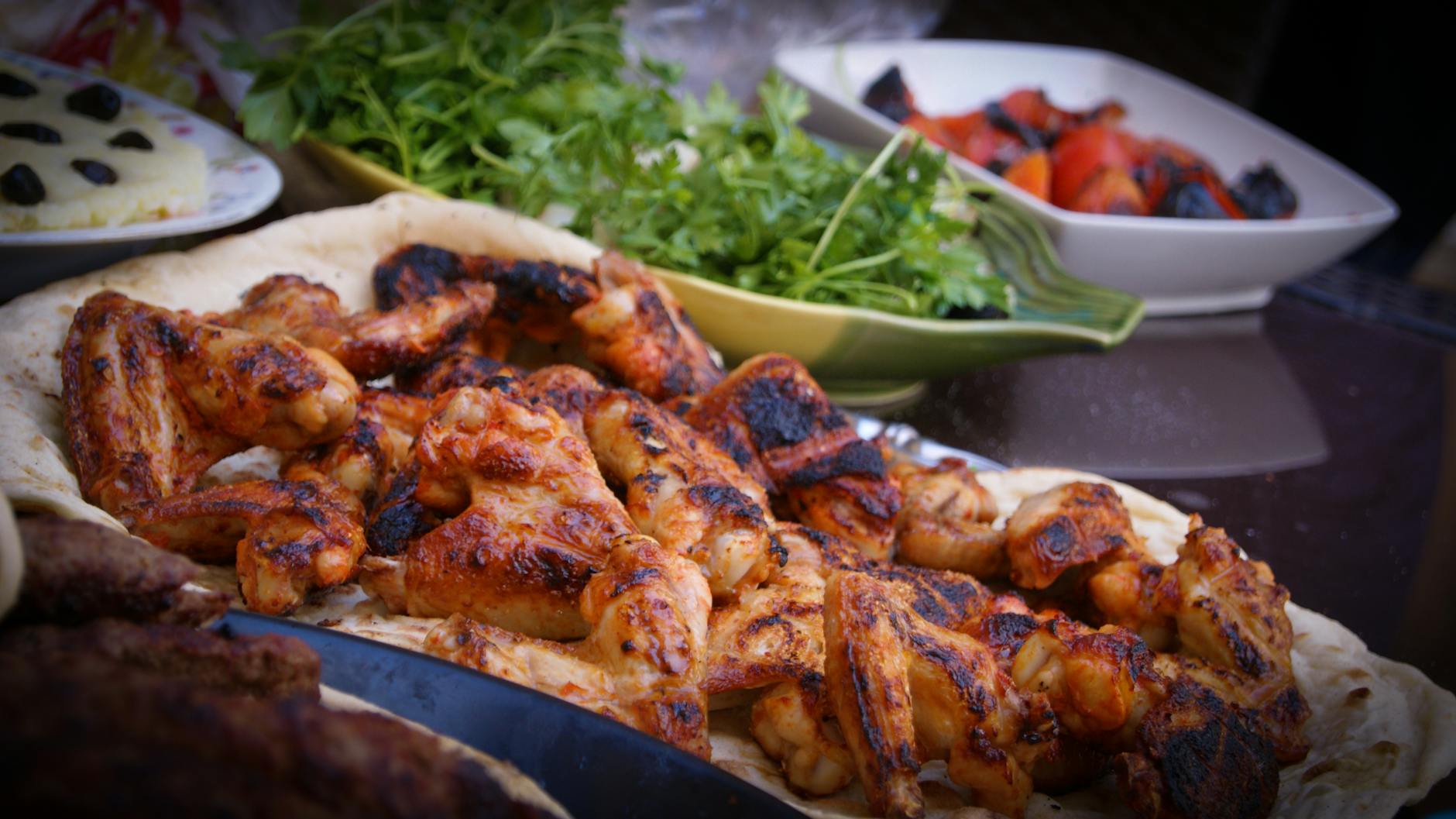
    Wings & Chardonnay (or a Margarita Twist)

    Beer stand-in: Crisp Pilsner
    Upgrade: California Chardonnay or a Smoky Margarita

    Buffalo wings love beer — but they also love balance. A California Chardonnay with just the right oak brings a buttery backbone to tame the spice while citrus and apple notes cut through the richness. If you prefer cocktails, shake up a Smoky Margarita: mezcal for depth, lime for brightness, and a splash of orange liqueur for sweet relief against the heat.

    Smoky Margarita Recipe

    • 2 oz mezcal
    • 1 oz fresh lime juice
    • 0.5 oz Cointreau (or triple sec)
    • 0.5 oz agave nectar
    • Shake with ice, strain into a salt-rimmed glass, garnish with lime.

    Try also: SOMM&SOMM Classic Margarita Recipe

    Photo by cottonbro studio on Pexels.com

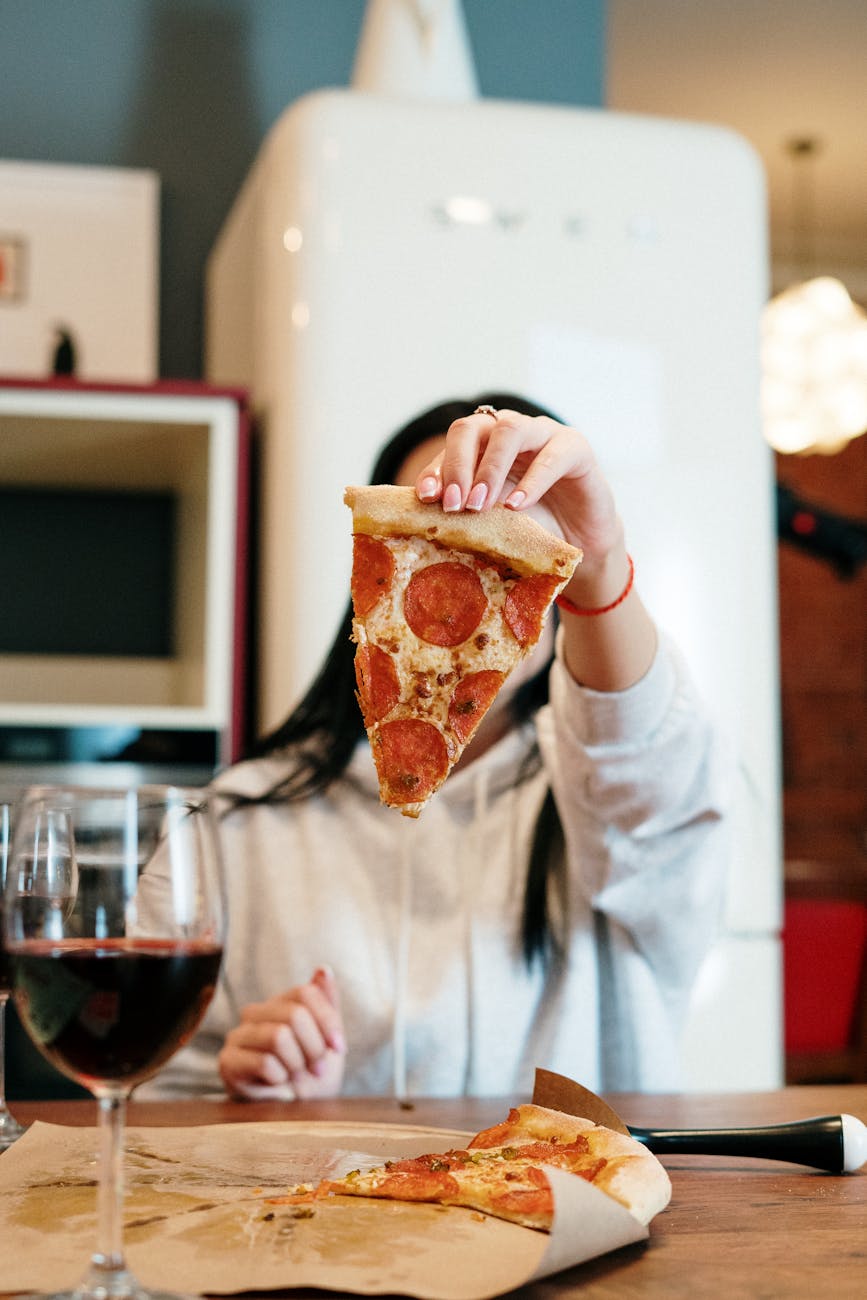
    Pizza & Chianti Classico (or Negroni Sbagliato)

    Beer stand-in: Hoppy IPA
    Upgrade: Chianti Classico or a Sparkling Negroni

    Pizza night is game day royalty. Instead of an IPA, pour a glass of Chianti Classico — the bright acidity of Sangiovese slices through gooey cheese while cherry and herbal notes sing with pepperoni or sausage. Want something more playful? A Negroni Sbagliato (with Prosecco instead of gin) is effervescent, bittersweet, and a nod to Italian flair.

    👉 “Pro tip: it’s pronounced ‘Spah-lee-AH-toh.’ If you fumble it, just smile — after a sip or two, nobody’s keeping score anyway.” 🏈🍹

    Negroni Sbagliato Recipe

    • 1 oz Campari
    • 1 oz sweet vermouth
    • 2 oz Prosecco
    • Build in a glass over ice, stir gently, garnish with an orange slice.
    Photo by Anthony Leong on Pexels.com

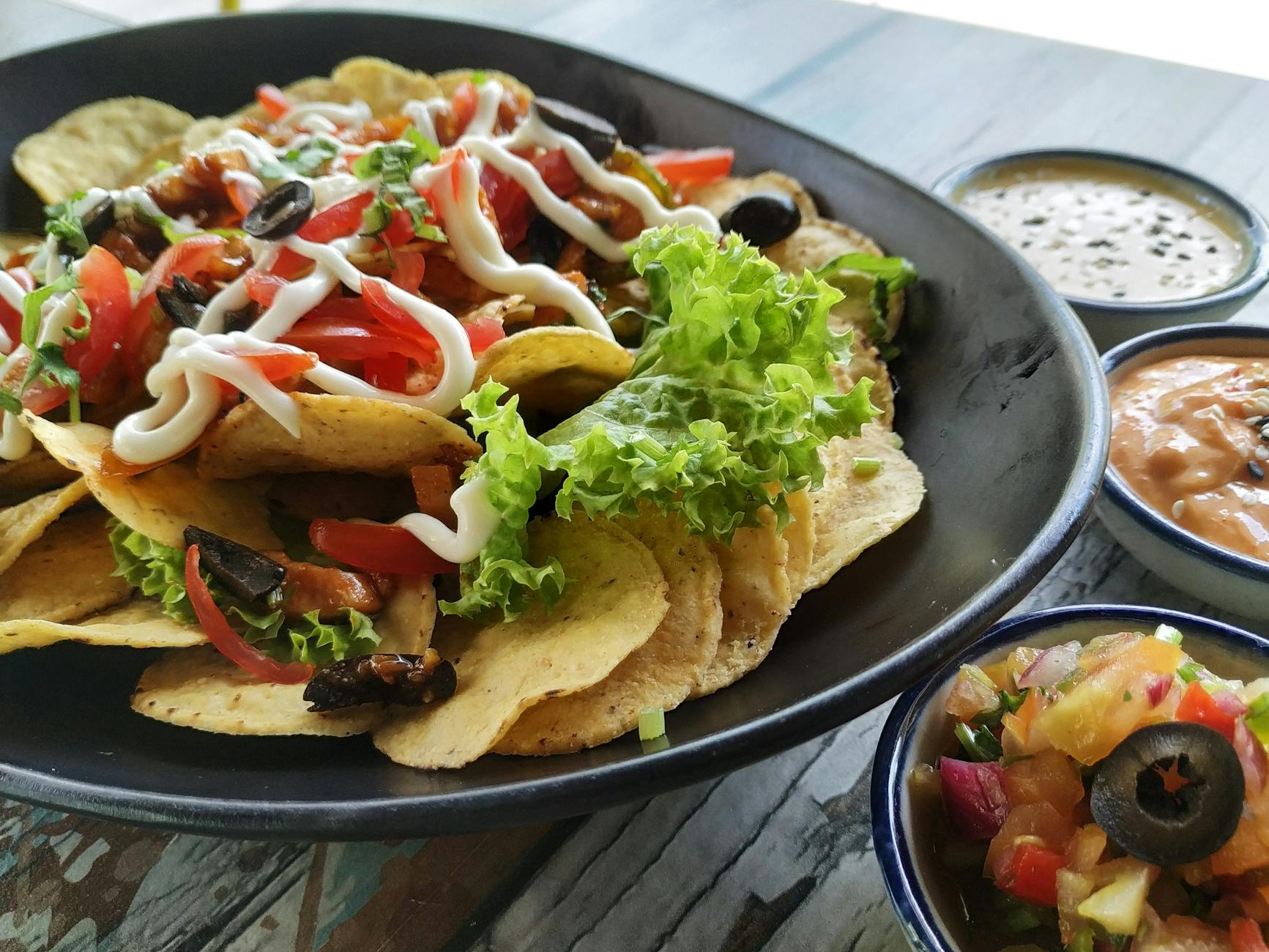
    Nachos & Riesling (or a Paloma)

    Beer stand-in: Mexican Lager
    Upgrade: Off-Dry Riesling or a Grapefruit Paloma

    Nachos are all about layers: salty chips, gooey cheese, spicy jalapeños, and maybe some pulled pork. An off-dry German Riesling brings zesty citrus, floral aromatics, and just enough sweetness to tame the spice. Or shake things up with a Paloma — tequila, grapefruit soda, and lime for a refreshing, citrus-driven counterpoint.

    Paloma Recipe

    • 2 oz tequila blanco
    • 0.5 oz lime juice
    • Top with grapefruit soda (Jarritos or Fresca work)
    • Salt rim optional, garnish with a grapefruit wedge.
    Photo by Piotr Arnoldes on Pexels.com

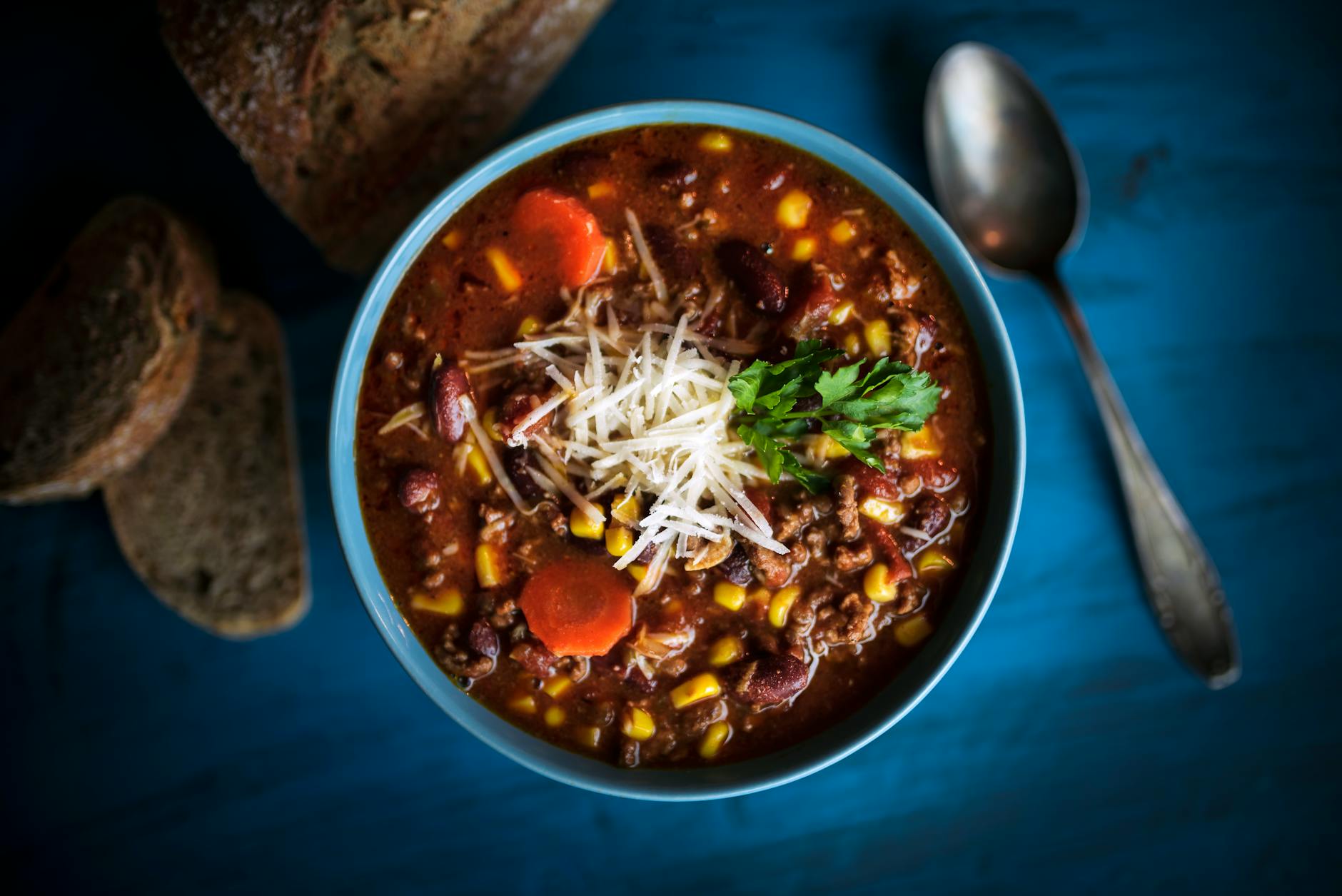
    Chili & Zinfandel (or Old Fashioned)

    Beer stand-in: Stout
    Upgrade: California Zinfandel or a Classic Old Fashioned

    Hearty, spicy chili is a Sunday staple. Instead of a stout, uncork a California Zinfandel — jammy black fruit and spice stand tall against smoky meats and heat. For cocktail fans, nothing beats an Old Fashioned: whiskey, bitters, sugar, and an orange twist. Its richness echoes the depth of the chili while keeping the palate refreshed.

    Old Fashioned Recipe

    • 2 oz bourbon or rye whiskey
    • 1 sugar cube (or 0.25 oz simple syrup)
    • 2 dashes Angostura bitters
    • Stir with ice, strain over a large cube, garnish with orange peel.
    Photo by Juan Santos on Pexels.com

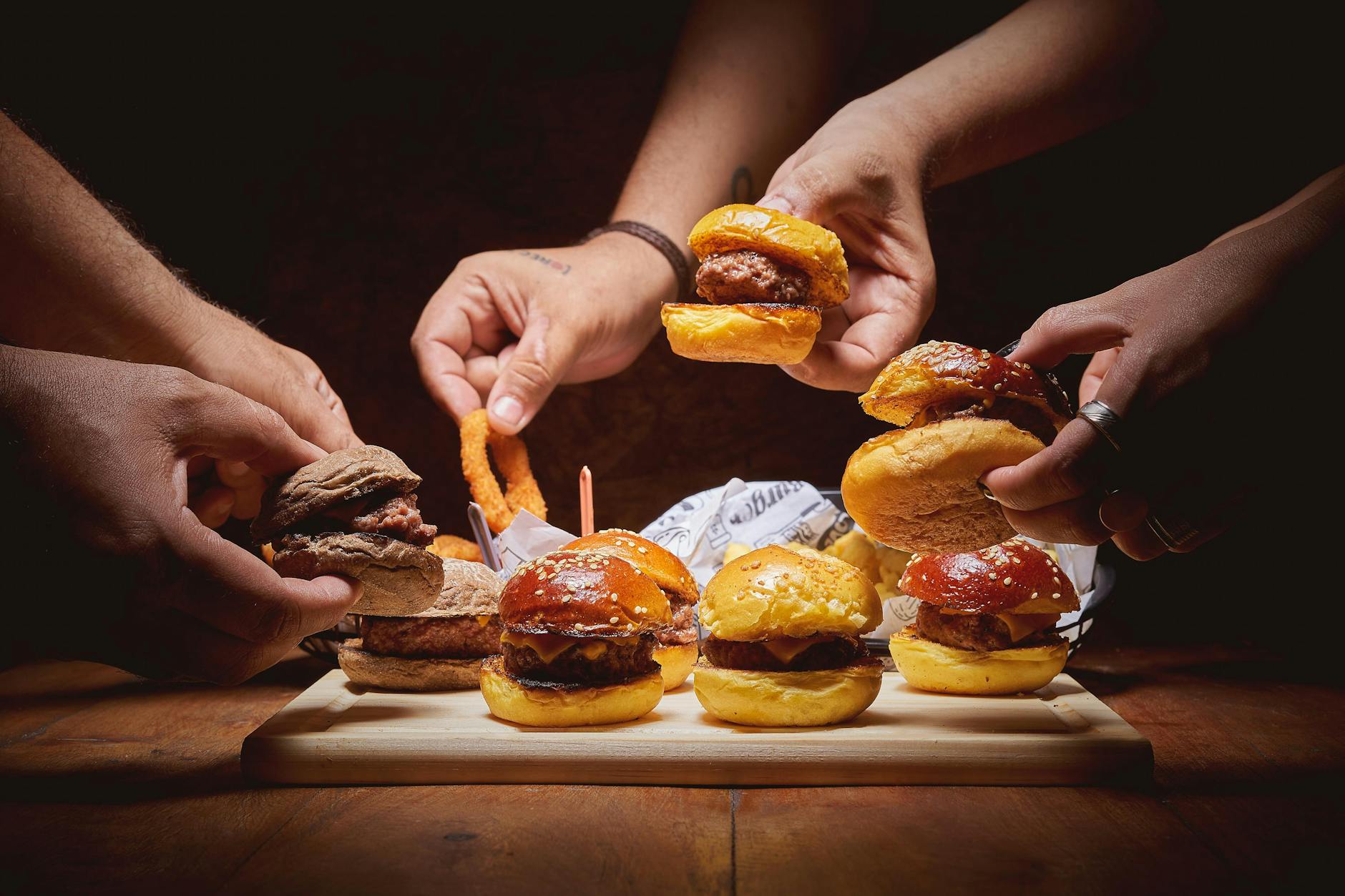
    Sliders & Sparkling Rosé (or French 75)

    Beer stand-in: Amber Ale
    Upgrade: Sparkling Rosé or a French 75

    Sliders may be small, but they’re packed with flavor — especially when piled high with cheese, pickles, and sauce. Sparkling Rosé cuts the richness with bubbles while berry notes match the savory-sweet balance of the burger. For a cocktail play, the French 75 adds gin botanicals and Champagne sparkle to the mix.

    French 75 Recipe

    • 1 oz gin
    • 0.5 oz fresh lemon juice
    • 0.5 oz simple syrup
    • Shake, strain into flute, top with 2 oz Champagne, garnish with lemon twist.
    Photo by Alejandro Aznar on Pexels.com

    Final Play: Dessert & Port (or Espresso Martini)

    Don’t forget the fourth quarter sweet tooth. For brownies or cookies, swap milk stout for Ruby Port — sweet, fruity, and indulgent. Or kick into overtime with an Espresso Martini, a modern classic that blends vodka, coffee liqueur, and espresso — the perfect nightcap after a day of touchdowns.

    Espresso Martini Recipe

    • 2 oz vodka
    • 0.5 oz coffee liqueur (Kahlúa)
    • 1 oz freshly brewed espresso (cooled)
    • Shake hard with ice, strain into coupe, garnish with 3 coffee beans.

    Here’s to touchdowns and tailgates, rivalries and replays, wings and wine, cocktails and camaraderie. May your team win — and may your glass never be empty. 🍷🏈🍸

    Gregory and Tammy Dean, SOMM&SOMM

    Cover Photo by Jean-Daniel Francoeur on Pexels.com

  • The Noble Grapes of Alsace

    The Noble Grapes of Alsace

    A Sommelier’s Love Letter to Strasbourg.

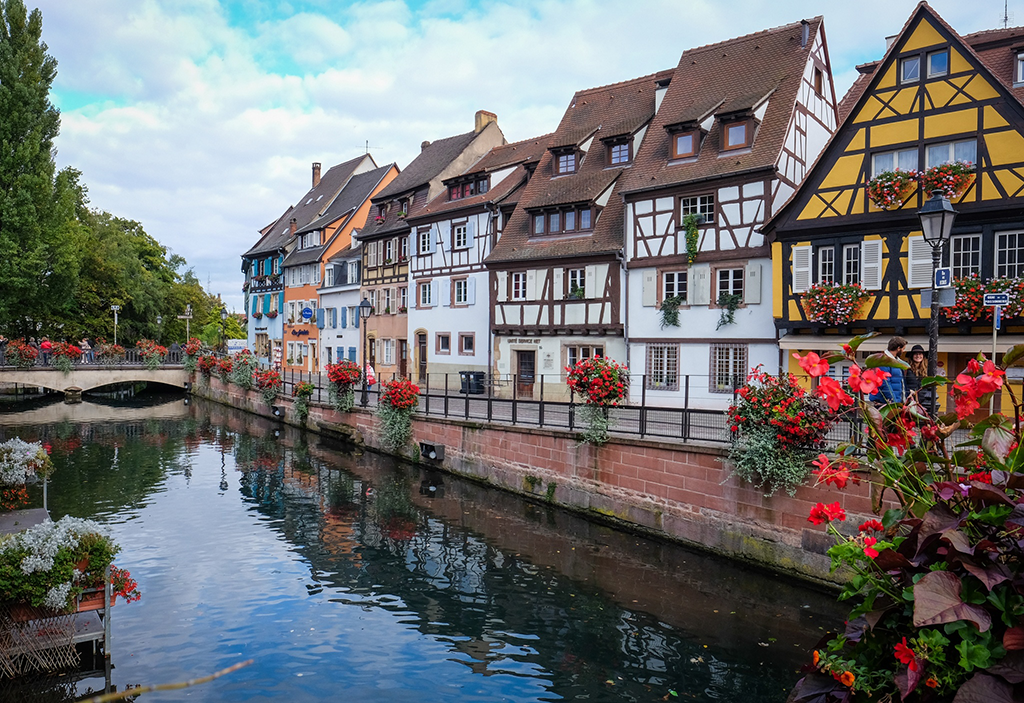
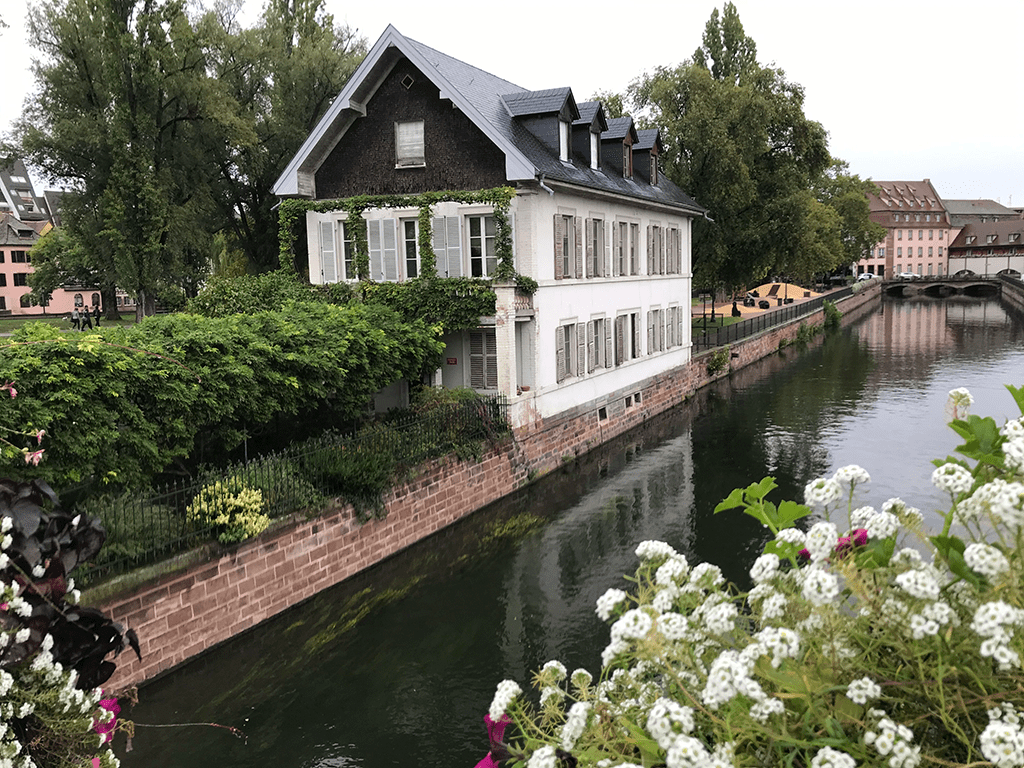
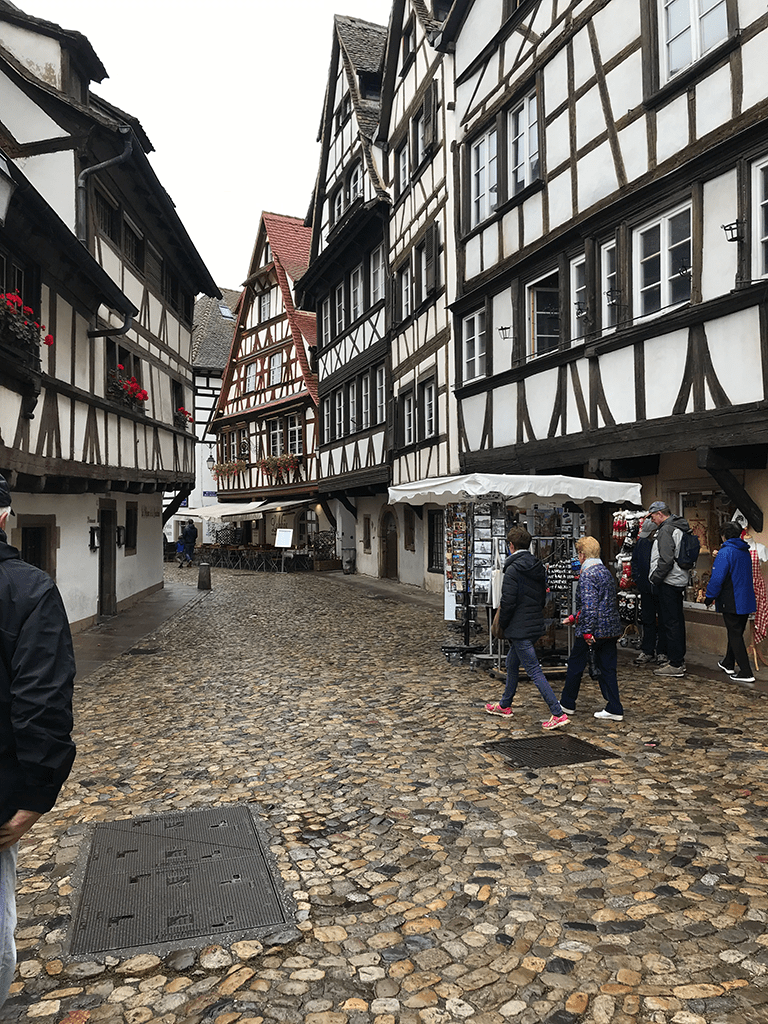
    There are places you visit, and then there are places that live inside you forever. For Tammy and me, Alsace falls firmly into the latter category. Years ago, we wandered the cobblestone streets of Strasbourg, where half-timbered houses leaned like old friends, flower boxes spilled with color, and cathedral bells echoed against the Vosges mountains. We thought we were traveling for pleasure… and wine—and oh, the wine delivered—but what we found was culture, tradition, and flavors so intertwined they seemed inseparable.

    Strasbourg, France (October 2019)

    Alsace is a region where wine is not just agriculture—it’s identity. And at the center of this identity are the four noble grapesRiesling, Gewürztraminer, Pinot Gris, and Muscat. These are not just grape varieties; they are storytellers of the land, each whispering its tale in a glass.

    Photo by Nikola Tomau0161iu0107 on Pexels.com

    Riesling – The King of Alsace

    If Alsace has a crown jewel, it’s Riesling. Unlike its German cousins, Alsatian Riesling is bone-dry, linear, and precise. Think citrus zest, green apple, crushed stone, and a thrilling minerality that seems carved straight from the Vosges slopes.

    Pairing tip: Riesling is your ultimate table diplomat. It shines alongside choucroute garnie (that glorious plate of sauerkraut, sausage, and pork), cutting through richness with refreshing acidity. It also plays beautifully with oysters, grilled fish, or even Thai cuisine if you’re in the mood to experiment.

    Gewürztraminer – The Drama Queen

    If Riesling is the king, Gewürztraminer is the diva of the court. Intensely aromatic and flamboyant, it bursts with rose petals, lychee, ginger, and exotic spice. Tammy once described it as “the perfume counter of the vineyard,” and I can’t think of a better metaphor.

    Pairing tip: Bold wines need bold partners. Try it with Munster cheese, the pungent, washed-rind treasure of Alsace. The match is unforgettable—wine and cheese meeting on equal footing, neither backing down. It’s also superb with spicy Indian curries, Moroccan tagines, or richly spiced duck.

    Try our Perfect Pairing: Gewürztraminer w/Sweet and Sour Chicken

    Pinot Gris – The Quiet Poet

    Many only know Pinot Grigio in its lighter Italian form, but Alsatian Pinot Gris is an entirely different soul—textured, smoky, and lush, with flavors of ripe pear, honey, almond, and sometimes even a whisper of truffle. It has a weight and gravitas that sneaks up on you, like a quiet poet at the edge of the party who suddenly steals the show.

    Pairing tip: This is the wine you want with foie gras, roast duck, or mushroom risotto. Its richness and depth embrace earthy, savory flavors like a long, warm evening by the fire.

    Muscat – The Trickster

    Dry Muscat from Alsace is a delightful surprise. Bursting with fresh grape, floral, and herbal notes, it tastes almost as if you’re biting into a cluster straight off the vine. Unlike Muscats from elsewhere, it’s playful but not sweet—a charming apéritif and a sommelier’s secret weapon.

    Pairing tip: Asparagus, the bane of wine pairings, finds its match in Alsace Muscat. The grape’s freshness and delicate aromatics tame the vegetal bite, making it one of the few wines I confidently pour with spring asparagus dishes.

    Related SOMM&SOMM Article: Demystifying Wine + Food for Real-Life Moments

    Why the Laws Matter in Alsace

    One of the reasons Alsace stands out in France is its unique wine laws. Unlike Burgundy or Bordeaux, where wines are labeled by village or château, Alsace bottles proudly state the grape variety—a refreshing rarity in France. If the label reads Alsace Riesling, you know it’s 100% Riesling.

    The hierarchy builds from there:

    • Alsace AOC: The broad regional designation, covering the majority of wines.
    • Alsace Grand Cru AOC: Reserved for 51 specific vineyards with stricter rules on yields, ripeness, and only noble grapes (with Zotzenberg’s historic exception allowing Sylvaner). The vineyard name is prominently displayed.
    • Vendange Tardive (VT): Late-harvest wines, rich and concentrated, often with honeyed sweetness.
    • Sélection de Grains Nobles (SGN): Botrytized dessert wines of incredible intensity, produced only in the best vintages.

    These classifications don’t just regulate—they protect the integrity of the region’s wines, ensuring that when you pour a glass of Alsace, you’re tasting a true expression of place.

    Related SOMM&SOMM Article: Understanding French Wine Laws

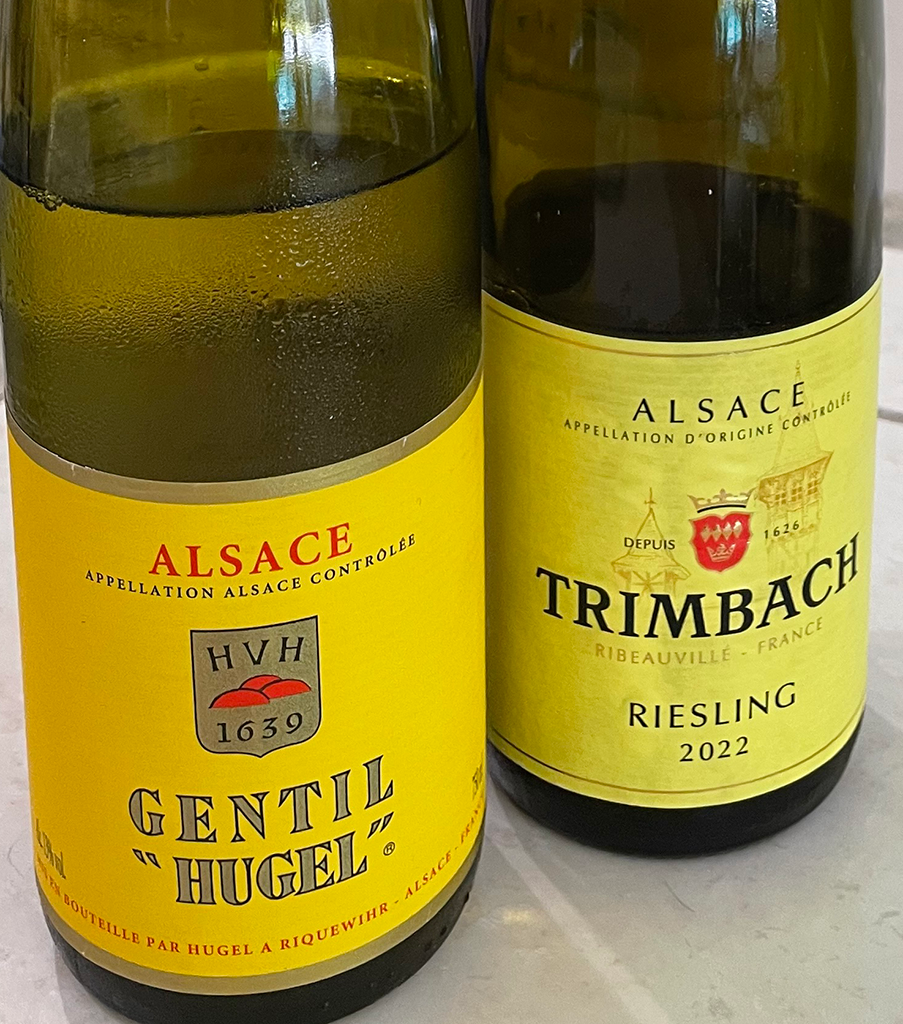
    Still enjoying Alsatian wines while reflecting on our time there

    Producers to Seek Out

    If you want to experience the noble grapes at their best, here are some producers that never fail to impress:

    • Trimbach – Benchmark dry Rieslings (look for Clos Ste. Hune if you want to experience one of the greatest Rieslings in the world). Their Pinot Gris and Gewürztraminer are equally classic.
    • Zind-Humbrecht – Known for intensely aromatic, powerful wines, often with a touch more ripeness and residual sugar. Their Grand Cru bottlings are legendary.
    • Domaine Weinbach – Elegant, precise wines with a poetic touch, particularly Riesling Schlossberg Grand Cru and Gewürztraminer Furstentum.
    • Hugel & Fils – Historic family estate, producing approachable yet serious wines. Their “Grossi Laüe” line highlights Alsace’s grandeur.
    • Albert Mann – A modern, biodynamic producer that balances tradition with innovation. Try their Grand Cru Rieslings and Pinot Gris.
    • Marcel Deiss – Famous for field blends (complantation) that showcase terroir rather than varietal—unique, complex wines outside the norm of Alsace labeling.

    Why Alsace Stays With Us

    When Tammy and I reminisce about Alsace, it’s not just the glasses we lifted but the way each grape embodied a piece of the region itself. Riesling was the sharpness of Strasbourg’s cathedral spire. Gewürztraminer the riot of color in every flower box. Pinot Gris the soft, golden glow of dusk on the Rhine. Muscat the laughter spilling from a tavern where beer and wine happily share the same table.

    Every time we open a bottle of Alsace, it feels like a postcard arriving from Strasbourg. And trust me, these postcards never fade. So here’s to Alsace—where Riesling sharpened our senses, Gewürztraminer stole the spotlight, Pinot Gris wrapped us in quiet warmth, and Muscat made us laugh out loud. To Strasbourg, to cobblestones and cathedral bells, and to every glass that brings us back there again—santé 🥂

    SOMM&SOMM Takeaway: The noble grapes of Alsace aren’t just wines—they’re laws, landscapes, and culture in liquid form. To drink Alsace is to taste a region where identity and glass are inseparable.

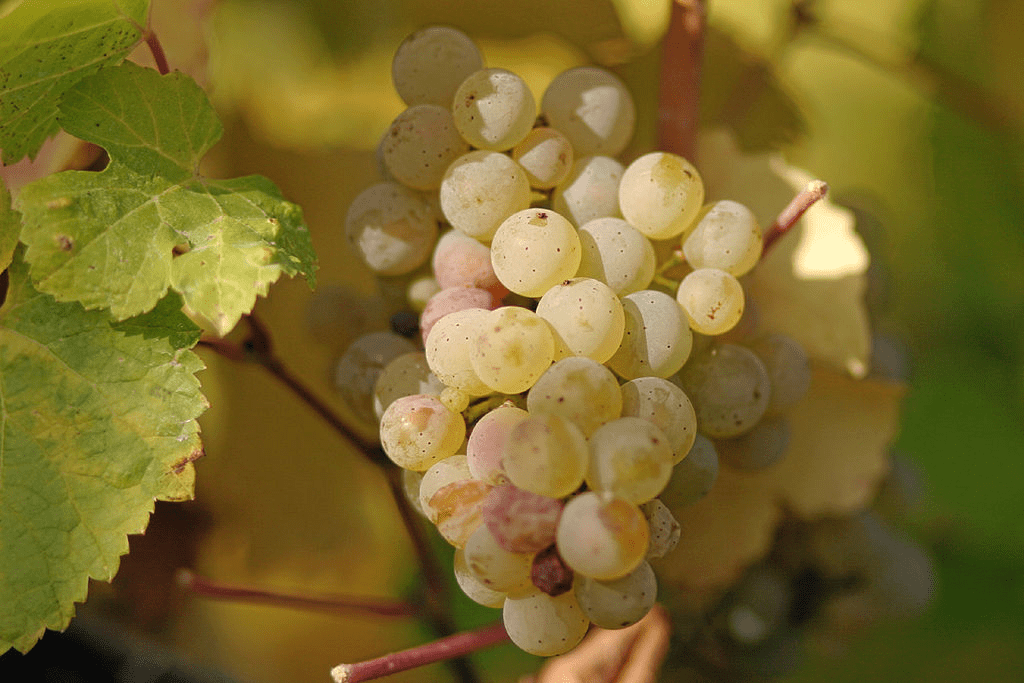
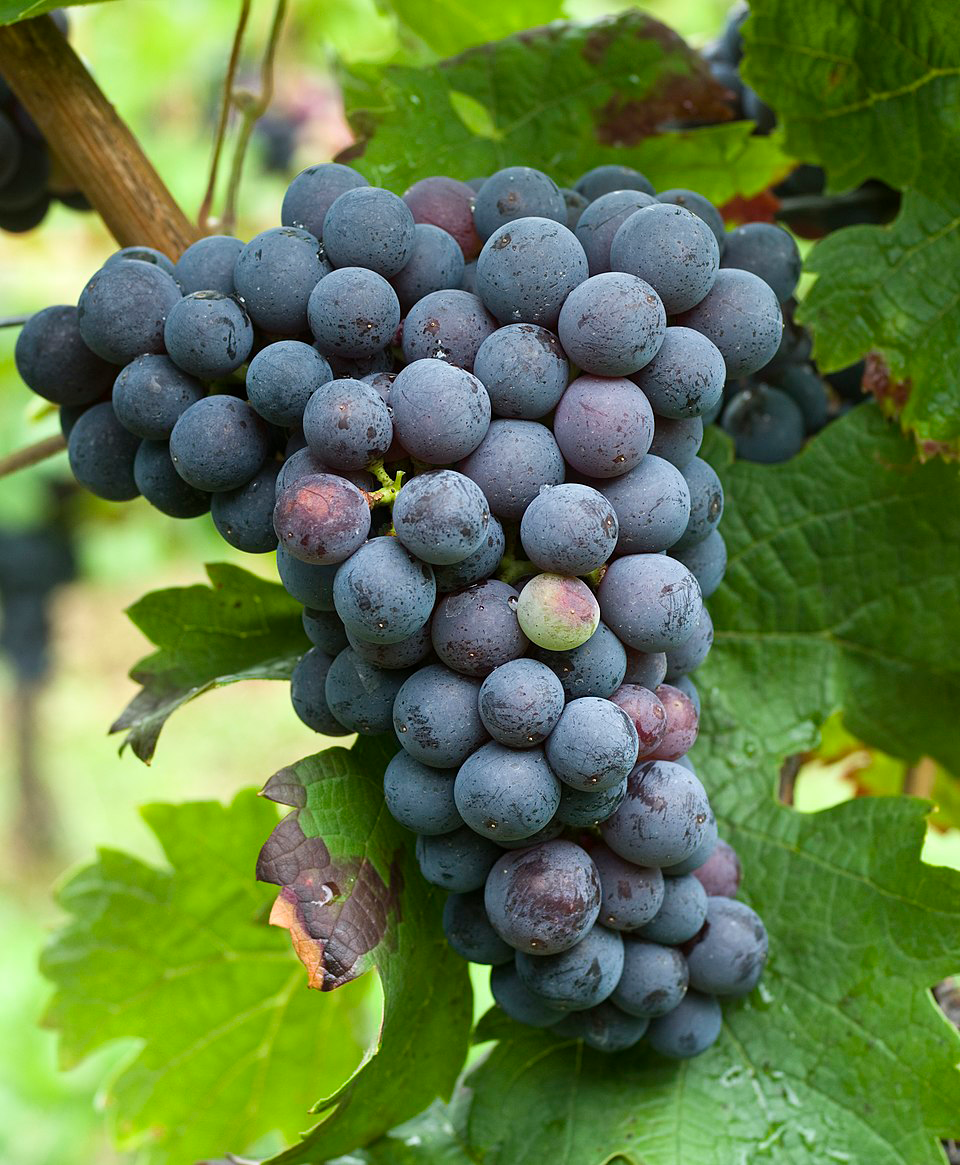
    Information on cover photo: Riesling Grapes and Leaves – No machine-readable author provided. T.o.m.~commonswiki assumed (based on copyright claims)., CC BY-SA 3.0, via Wikimedia Commons

  • Varietal Spotlight: Cabernet Franc

    Varietal Spotlight: Cabernet Franc

    The Unsung Hero of the Vineyard.

    When Cabernet Sauvignon and Merlot take the spotlight, it’s easy to forget the quiet genius standing in the wings: Cabernet Franc. Without this noble grape, the wine world would look very different. It’s the parent of both Cabernet Sauvignon and Merlot, yet it remains one of the most underrated varietals on the shelf.

    Cabernet Franc is the sommelier’s secret weapon—perfumed, versatile, food-friendly, and surprisingly age-worthy. Let’s explore its origins, where it shines, and why it belongs in your glass.

    Photo by Andrew Patrick Photo on Pexels.com

    Origins & History

    Cabernet Franc first appeared in 17th-century France. Cardinal Richelieu is said to have brought cuttings to the Loire Valley, where monks tended it carefully in Bourgueil and Chinon. The grape was affectionately called “Breton”, named after Abbot Breton, one of its earliest champions.

    Modern DNA profiling unlocked its true importance: Cabernet Franc is the parent of Cabernet Sauvignon (crossed with Sauvignon Blanc) and Merlot (crossed with Magdeleine Noire des Charentes). Without it, Bordeaux as we know it would not exist.

    Where Cabernet Franc Shines

    Loire Valley, France – The Spiritual Home

    Agne27, CC BY-SA 3.0, via Wikimedia Commons

    Pairing Tip: Loire Cab Franc is perfection with roast chicken, duck breast, or chèvre (goat cheese).

    Bordeaux, France – The Architect of Blends

    In the Right Bank (Pomerol & St-Émilion), Cabernet Franc adds aromatics and finesse to Merlot-driven blends.

    • Iconic Example: Château Cheval Blanc (St-Émilion), often 60% Cabernet Franc.
    • Flavor Profile: Black cherry, cedar, crushed gravel.
    • Best With: Lamb, venison, or a rich beef bourguignon.

    Italy – Rustic Charm Meets Power

    • Friuli-Venezia Giulia: Savory, herbal, and earthy.
    • Tuscany (Bolgheri): Super Tuscan producers use Cab Franc for power and polish.

    Must-Try Bottles:

    Food Match: Wild boar ragù, porcini risotto, or bistecca alla Fiorentina.

    New World – A Rising Star

    • United States: Napa, Sonoma, Washington, and New York’s Finger Lakes deliver everything from ripe berry-driven Cab Franc to Loire-inspired elegance.
    • Argentina (Uco Valley): Bold and mineral, with vibrant fruit. Try El Enemigo Cabernet Franc.
    • South Africa (Stellenbosch): Spice-driven, earthy examples from producers like Warwick Estate.
    Photo by ROMAN ODINTSOV on Pexels.com

    In the Glass: Tasting Profile

    • Aromas: Violet, graphite, raspberry, redcurrant, pencil shavings, pepper, and sometimes a signature green bell pepper note.
    • Palate: Medium body, moderate tannins, fresh acidity, with a spectrum from juicy red fruit to earthy spice.
    • Aging Potential: Excellent. With time, Cab Franc evolves into flavors of truffle, leather, and tobacco.

    Food Pairing Ideas

    Cabernet Franc’s elegance and acidity make it one of the most food-friendly red wines.

    •  Duck breast with cherry gastrique → Loire Cab Franc
    •  Goat cheese & charcuterie → Chinon
    •  Mushroom & lentil ragù → Saumur-Champigny
    •  Herb-marinated lamb chops → St-Émilion
    •  Stuffed peppers or mushroom stroganoff → Friuli Cab Franc

    Recipes to Try with Cabernet Franc

    Duck Breast with Cherry-Red Wine Sauce

    Pair With: Chinon or St-Émilion

    Ingredients (serves 2):

    • 2 duck breasts, skin scored
    • 1 cup pitted cherries
    • ½ cup Cabernet Franc
    • 1 tbsp balsamic vinegar
    • 1 tbsp butter
    • Salt & pepper
    1. Season duck, sear skin-side down until crisp (8 min). Flip, cook 3–4 more minutes. Rest.
    2. Deglaze pan with Cab Franc, add cherries & balsamic, reduce to syrup.
    3. Whisk in butter, slice duck, serve with sauce.

    Mushroom & Lentil Ragù (Vegetarian Comfort)

    Pair With: Saumur-Champigny or Friuli Cabernet Franc

    Ingredients (serves 4):

    • 1 cup green lentils, cooked
    • 2 tbsp olive oil
    • 1 onion, diced
    • 3 cloves garlic, minced
    • 1 lb mushrooms (mixed), chopped
    • 1 tsp thyme
    • 1 cup vegetable stock
    • ½ cup Cabernet Franc
    • Salt, pepper, parsley

    Method:

    1. Sauté onion & garlic in olive oil until golden. Add mushrooms & thyme, cook until browned.
    2. Deglaze with Cab Franc, reduce. Add lentils & stock, simmer until thick.
    3. Serve over creamy polenta or pasta.

    Fun Facts & Lore

    • Cabernet Franc is sometimes called “the poet’s grape” in the Loire.
    • Without Cab Franc, we wouldn’t have Cabernet Sauvignon, Merlot, or Carmenère.
    • Sommeliers often call it their desert island red—it pairs with nearly everything.
    • Cabernet Franc tends to ripen earlier than Cabernet Sauvignon, making it valuable in cooler climates.

    Final Pour

    Cabernet Franc may never command the fame of Cabernet Sauvignon, but it brings an elegance, fragrance, and food-friendliness all its own. Whether you’re sipping a Loire Valley Chinon (my favorite), a Tuscan Paleo Rosso, or an Argentine El Enemigo, you’re drinking history—and the soul of Bordeaux itself.

    Next time you’re browsing bottles, reach for the unsung hero. Your palate (and dinner table) will thank you. Cheers 🍷

    Cover photo by Ursula Brühl, Julius Kühn-Institut (JKI), Federal Research Centre for Cultivated Plants, Institute for Grapevine Breeding Geilweilerhof – 76833 Siebeldingen, GERMANY, CC BY-SA 4.0, via Wikimedia Commons

  • How One Hotel Restaurant Made Our 44th Anniversary Unforgettable

    How One Hotel Restaurant Made Our 44th Anniversary Unforgettable

    Tammy and I travel for food and drink the way others chase sunsets — with an agenda, a notebook, and an appetite for the unexpected. On a three-day jaunt to St. Augustine to celebrate our 44th wedding anniversary we found plenty to love, but one evening at Castillo Craft Bar + Kitchen quietly rearranged the star chart: this was not simply a nice hotel meal. It was a masterclass in what service, craft cocktails, and properly thought-out cooking can do when they cooperate.

    The Prosecco Welcome — and a Thoughtful Surprise

    Earlier that afternoon, we discovered a chilled bottle of Prosecco waiting in our room’s refrigerator — a quiet gesture from the team that set the tone before we even stepped into the restaurant. When we did arrive (an hour ahead of our reservation), we were greeted with a fresh glass of Prosecco, introduced to the staff, and seated by the window.

    Then came the moment that sealed Castillo’s reputation in our minds: shortly after we were seated, a lively family of 13 or 14 adults and children was placed nearby. The children, understandably, vied for attention while the adults settled into animated conversation. Within minutes, the restaurant manager, Daniel, intervened with effortless class. He moved us to a private dining room with a single table for twelve — effectively giving us the most private, romantic setting in the house. It was an astute and gracious move, and one we will never forget.

    Cocktails with Gravitas

    We decided to begin with classics: Tammy ordered an Aviation, I a Paper Plane. Both were mixed with respect for tradition. The Aviation balanced lemon’s tart brightness with the nutty-cherry note of maraschino and a whisper of crème de violette — floral but never perfumey. The Paper Plane, a test of proportion, was taut and bittersweet, bourbon’s warmth underpinning Aperol’s orange bitterness and amaro’s herbal pull. Two classics rendered with conviction.

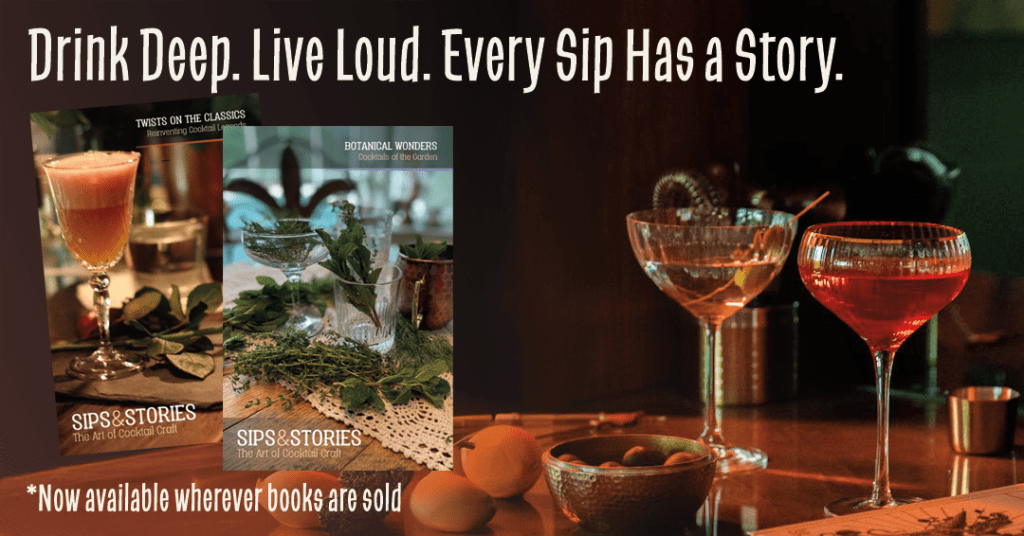
    Quick Sidebar… you know we love craft cocktails! Our books are now available on Amazon

    Amazon: SIPS & STORIES: Twists on the Classics

    Amazon: SIPS & STORIES: Botanical Wonders

    Starters with Intention

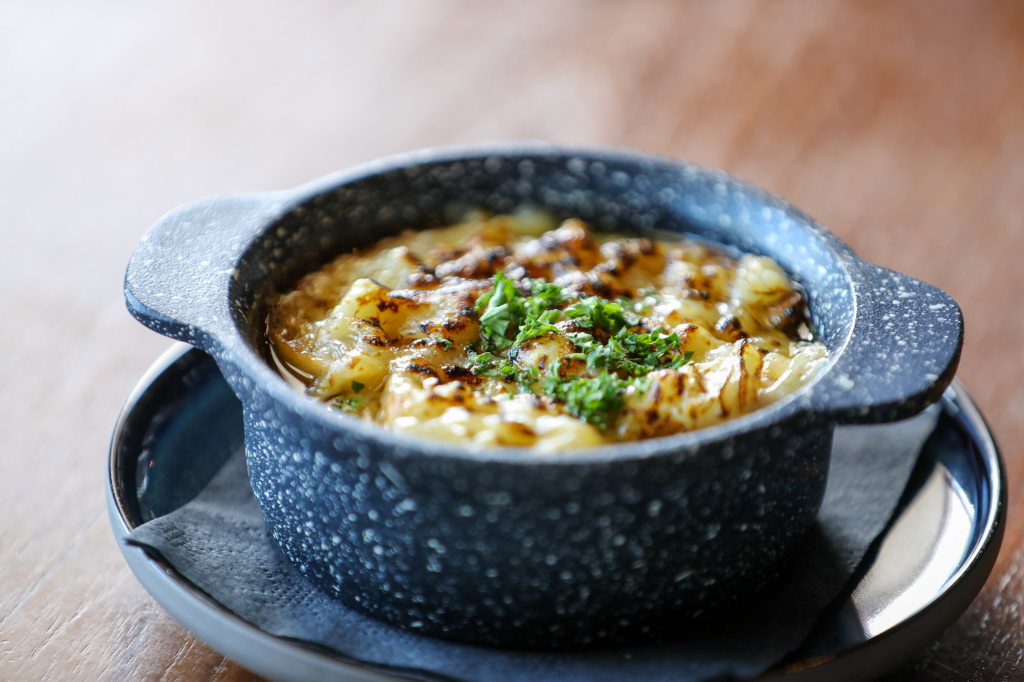
    • Spanish Onion Soup (Castillo’s twist): Dry sherry lifted the base of caramelized onions, Manchego added a salty sheep’s-milk edge, and Gruyère brought nutty depth. The bread held texture rather than sinking into soggy oblivion. Purposeful, not gimmicky.
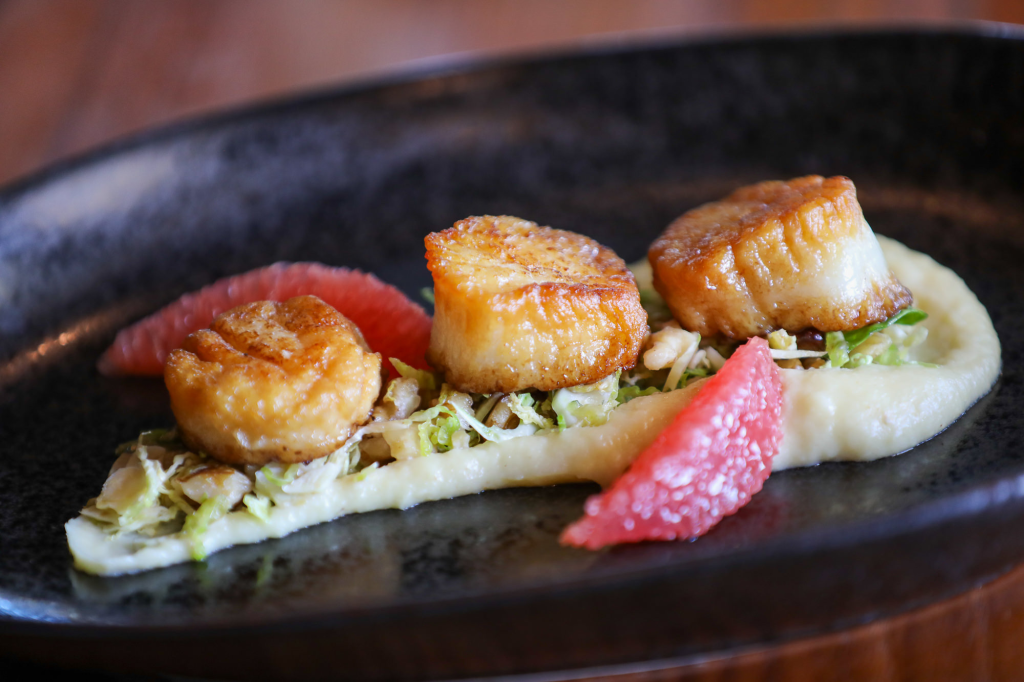
    • Pan-Seared Scallops: Golden exterior, luminous center — textbook scallops. Grapefruit and Brussels slaw delivered acid and bitterness; toasted walnuts brought texture and a subtle caramelized edge; parsnip purée offered a sweet earthiness. A dish of balance and contrast.

    The Mains — Precision and Poise

    We ordered separately and shared:

    • Dry-Aged Duck Breast — with confit, potato purée, seared tomato and mushrooms, and a cherry-coffee demi-glace. The duck was properly seared and the fat rendered cleanly. The demi-glace married classic cherry with a clever roasted coffee bitterness that harmonized with the mushrooms. A modern, inventive take that never felt like a stunt.
    • 6-oz Filet Mignon — with potato purée, root vegetables, charred mushrooms, and a blackberry-port demi. Filet is mild by nature; the demi provided fruit depth without over-reduction. Charred mushrooms contributed savory grounding.

    The Wine Choice

    We chose a Burgundy Pinot Noir. Its red cherry and earthy underbrush notes paired seamlessly with the duck’s cherry-coffee sauce, while its acidity and gentle tannins refreshed each bite of filet and demi. A Cabernet would have bullied the plates; Pinot offered conversation instead of domination.

    Sweet Farewell and Spirited Encore

    Dessert arrived in the form of raspberry-filled chocolate truffles — tartness wrapped in richness, a refined way to close. But the evening wasn’t over. Daniel and his team drew us into conversation about mixology, inviting us to sample cocktails destined for the next menu. To be trusted with in-progress creations, to taste and talk shop with equal enthusiasm, was the rarest gift of all: inclusion.

    A Recommendation from a Picky Pair

    Castillo Craft Bar + Kitchen may technically be a hotel restaurant, but that label undersells it. Here, cocktails are crafted with reverence, dishes are built on contrasts and precision, and service is the invisible framework that allows it all to shine. The thoughtful surprise of Prosecco, Angelica’s professional warmth, Daniel’s extraordinary attentiveness in relocating us to a private space, and the invitation to taste what’s to come all combined to turn our 44th anniversary into a celebration of craft and care.

    For those who care about detail, timing, and the artistry behind both food and drink, Castillo Craft Bar + Kitchen is not just a place to dine — it’s a destination to remember. Cheers 🥂

    Note on images: We were so engaged with the staff and enamored by the experience that we didn’t stop to take photos during our anniversary dinner. Fortunately, the images featured throughout this article are sourced from Castillo Craft Bar + Kitchen’s website, which offers up-to-date visuals that accurately reflect the atmosphere, cuisine, and presentation we enjoyed.

  • Portugal Uncorked

    Portugal Uncorked

    Exploring the Heart and Soul of Portuguese Wines.

    When people hear “Portugal,” their minds often jump to Port—those rich, fortified wines enjoyed by candlelight or at the end of a decadent meal. But to focus solely on Port is to miss the vast and vibrant wine world that Portugal offers. From crisp whites kissed by the Atlantic breeze to sultry reds born from sun-drenched valleys, Portugal is one of Europe’s most exciting, diverse, and underrated wine-producing countries.

    A Glimpse Into Portugal’s Wine Legacy

    Portugal’s winemaking history stretches back over 4,000 years. The Phoenicians, Romans, Moors, and even the Knights Templar played a part in shaping the country’s viticultural heritage. Unlike many European countries that focus heavily on international varietals, Portugal leans proudly into its indigenous grapes—with over 250 native varieties cultivated across a tapestry of microclimates and terroirs.

    The result? Wines that are authentically Portuguese—flavorful, food-friendly, and full of character.

    Key Portuguese Wine Regions & Their Distinctive Wines

    Photo by Olga Shenderova on Pexels.com

    Vinho Verde (Minho) – Crisp, Zesty, Youthful Whites

    Located in the lush, green northwest, Vinho Verde literally means “green wine,” but the name refers to the wine’s youthfulness rather than its color.

    • Signature Grapes: Alvarinho (Albariño in Spain), Loureiro, Arinto
    • Style: Light-bodied, often slightly effervescent with high acidity
    • Tasting Notes: Lime, green apple, melon, fresh herbs
    • Perfect Pairing: Grilled sardines, shrimp ceviche, Vietnamese spring rolls

    Recipe Pairing: Portuguese Shrimp Rice (Arroz de Marisco)
    A tomato-based seafood rice dish brimming with clams, mussels, and prawns. Vinho Verde cuts through the richness with zippy freshness.

    Douro Valley – Rugged Reds & Legendary Ports

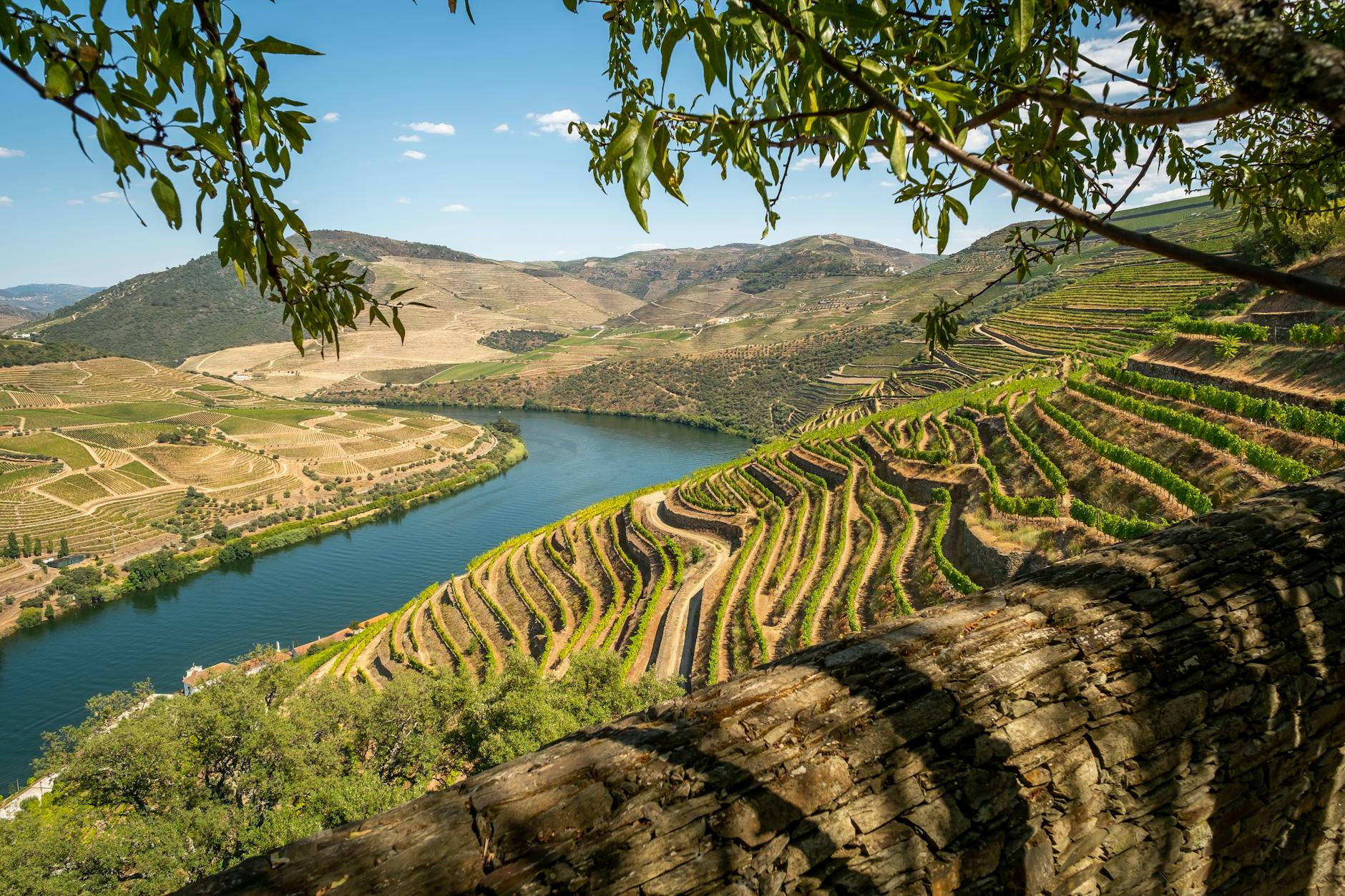
    One of the oldest demarcated wine regions in the world (est. 1756), the Douro is home to breathtaking terraced vineyards carved into steep schist hillsides. Though known for Port, it also produces powerful dry red wines.

    • Signature Grapes: Touriga Nacional, Tinta Roriz (Tempranillo), Touriga Franca
    • Style: Bold, structured reds with dark fruit and floral elegance
    • Tasting Notes: Black cherry, violet, slate, cocoa
    • Perfect Pairing: Lamb stew, grilled ribeye, mushroom risotto
    Photo by Andrew McLeod on Pexels.com

    Recipe Pairing: Portuguese Lamb Stew (Ensopado de Borrego)
    Slow-cooked lamb with garlic, red wine, and bay leaves. A Douro red complements the intensity with grace and power.

    Dão – Elegant, Age-Worthy Reds

    Tucked inland, the Dão region is often dubbed the “Burgundy of Portugal” for its finesse and structure.

    • Signature Grapes: Touriga Nacional, Alfrocheiro, Jaen (Mencía)
    • Style: Earthy, medium- to full-bodied reds with freshness and ageability
    • Tasting Notes: Raspberry, leather, dried herbs, mineral
    • Perfect Pairing: Duck breast, truffle pasta, mushroom-lentil burgers

    Alentejo – Warm, Generous, Sun-Kissed Wines

    Covering nearly a third of the country, Alentejo’s sun-baked plains yield juicy, approachable reds and ripe whites. Often the gateway region for those new to Portuguese wines.

    • Signature Grapes: Antão Vaz, Aragonês (Tempranillo), Trincadeira
    • Style: Plush reds and full-bodied whites
    • Tasting Notes: Baked plum, vanilla, almond, honeysuckle
    • Perfect Pairing: BBQ chicken, pork tenderloin, creamy polenta

    Bairrada – Sparkling Gems and Baga’s Boldness

    Coastal Bairrada is the land of sparkling wines and the quirky red grape Baga, which produces tannic, high-acid reds that age magnificently.

    • Signature Grapes: Baga (red), Maria Gomes, Bical (white)
    • Style: Lean sparkling wines, and tannic, age-worthy reds
    • Tasting Notes: Cranberry, tobacco, tart cherry, wet earth
    • Perfect Pairing: Duck confit, aged Manchego (my favorite), Portuguese suckling pig (Leitão)

    Setúbal Peninsula – Fortified Muscat Magic

    Known for Moscatel de Setúbal, a fortified sweet wine made from Muscat of Alexandria.

    • Tasting Notes: Orange blossom, caramelized fig, spice
    • Pairing Tip: Enjoy with blue cheese, orange tart, or cinnamon custard pastries

    The Undiscovered Whites of Portugal

    Beyond Vinho Verde, Portugal’s white wines are fascinating and food-loving. Look for:

    • Encruzado (Dão): Balanced and age-worthy, similar to white Burgundy.
    • Antão Vaz (Alentejo): Rich, creamy whites with citrus and stone fruit.
    • Arinto (all over): High-acid, lemony whites with aging potential.

    These whites shine with shellfish, creamy cheeses, roast chicken, or herbed pork.

    Photo by Charlotte May on Pexels.com

    Sangria Portuguesa: A Rustic & Robust Red Sangria

    A summer favorite—this recipe puts a Portuguese twist on sangria by using a bold red from the Douro or Alentejo, and infusing it with the flavors of the Iberian countryside.

    Sangria do Douro

    • 1 bottle Douro Red Wine (Touriga Nacional blend)
    • 1/4 cup Aguardente (or brandy)
    • 1/4 cup orange liqueur (like Licor Beirão or Cointreau)
    • 1/4 cup fresh orange juice
    • 2 tablespoons brown sugar
    • 1 cinnamon stick
    • 1 sliced orange
    • 1 sliced apple
    • 1/2 cup sliced red grapes
    • 1/2 cup sparkling water (or tonic) for a refreshing fizz
    • Optional: fresh mint sprigs
    1. In a large pitcher, combine sugar, fruit, cinnamon, and juice. Muddle lightly.
    2. Add red wine, aguardente, and orange liqueur. Stir well.
    3. Chill for 4+ hours or overnight.
    4. Just before serving, add sparkling water and stir gently.
    5. Garnish with mint and serve over ice.

    Pair with:

    • Spicy grilled chorizo
    • Tapas-style cheeses and olives
    • Roast chicken with peri-peri seasoning

    Related Article: Sangria: A Storied Sip Through Time, Terroir, and Tradition

    Portuguese Cheese & Wine: A Match Made in the Douro

    • Queijo da Serra + Dão Red: Creamy, nutty sheep’s milk cheese with earthy reds.
    • Azeitão + Arinto: A rich, buttery cheese offset by citrusy freshness.
    • São Jorge + Alentejo Red: Hard cow’s milk cheese with meaty, bold reds.
    Photo by Maria das Dores on Pexels.com

    Why Portugal Deserves Your Glass

    Portuguese wines offer unmatched value, diversity, and authenticity. They bridge old-world charm with fresh energy, and speak proudly of their roots. Whether you’re sipping a chilled glass of Vinho Verde on the porch or pairing a brooding Douro red with grilled lamb, you’re experiencing centuries of history in a single glass.

    So the next time you’re exploring a wine shop, skip the predictable and say “sim” to Portugal. Saúde! 🍷

    SOMM&SOMM Recommended Wines to Try:

    Cover Photo by Kampus Production on Pexels.com
  • How to Enjoy White Wines After Labor Day

    How to Enjoy White Wines After Labor Day

    There’s an old saying in fashion that you shouldn’t wear white after Labor Day. Somewhere along the line, people got it into their heads that wine followed the same rule. As if a glass of Sauvignon Blanc had to be packed away with the linen pants and straw hats, waiting patiently in the cellar until Memorial Day gave it permission to come back out.

    The truth is far simpler: wine doesn’t read calendars. White wines, in particular, have far too much personality, versatility, and downright charm to be relegated to a single season. If anything, they may be at their most interesting in the cooler months, when the foods on the table get heartier, the evenings stretch longer, and we start looking for comfort in every sip.

    Sidebar: The Origins of the “No White After Labor Day” Rule

    This curious rule wasn’t really about fashion at all. In the late 1800s and early 1900s, America’s old-money elite used it as a sneaky way to separate themselves from the newly wealthy. White clothing was linked to summer vacations and leisure, and the social code dictated that once Labor Day passed, you swapped white linen for darker fabrics. It was less about “style” and more about “status.”

    Fast-forward to today, and nobody cares if you wear white jeans in November—but somehow poor Chardonnay got lumped in with linen suits, as if it too had to go into storage. The good news? Wine never signed that contract.

    Photo by cottonbro studio on Pexels.com

    Whites That Warm the Soul

    The crisp, chilled whites of summer can feel like a plunge into the pool, refreshing but fleeting. After Labor Day, our palates start to crave something more grounding. Enter the fuller-bodied whites—think oaked Chardonnay, Viognier, and white Rhône blends—that carry a little more weight, a little more texture, and just enough richness to match heartier seasonal meals.

    Sommelier’s Note: Temperature Matters

    When the weather cools, let your whites warm up too. Serve that Chardonnay at 50–55°F instead of a frosty 40°F—you’ll notice the texture broadens, the oak shows more finesse, and the wine feels downright cozy.

    Pairing Whites with Fall Flavors

    The real fun of white wines in autumn is discovering how beautifully they play with fall’s pantry: roasted squashes, sage-laced stuffing, buttery mashed potatoes, and slow-braised poultry. While red wines often steal the stage, whites bring a freshness and aromatic lift that can make rich dishes feel balanced instead of heavy.

    Think Gewürztraminer with spiced pumpkin soup, or Riesling with roast pork and apples. A Chenin Blanc’s gentle orchard fruit notes practically beg for roasted root vegetables.

    Sommelier’s Note: Why It Works

    Acidity in white wine is your secret seasoning. Just as a squeeze of lemon brightens roasted chicken, a sip of Riesling or Chenin cuts through richness and lifts the entire dish.

    Related article on wine pairing: Demystifying Wine+Food for Real-Life Moments

    Photo by Pavel Danilyuk on Pexels.com

    White Wines by the Fireside

    Imagine a glass of oaked California Chardonnay or an Alsatian Pinot Gris alongside a crackling fireplace. These wines carry subtle notes of vanilla, baking spice, and roasted nuts—flavors that feel at home in a wool blanket as much as at a dinner table. Unlike summer’s poolside pours, these whites encourage you to linger, sip slowly, and enjoy the warmth of their depth.

    Sommelier’s Note: Glassware Swap

    Don’t be afraid to serve richer whites in a Burgundy bowl (the same glass you’d use for Pinot Noir). The wide bowl lets the wine breathe and amplifies those toasty, autumnal aromatics.

    Holiday Whites Worth Celebrating

    From Thanksgiving to New Year’s Eve, white wines bring an elegance to the table that reds sometimes bulldoze. A white Burgundy can dance with turkey and gravy; a sparkling Chenin or Blanc de Blancs can carry a celebration from appetizers through dessert.

    The beauty of whites during the holidays is their ability to flex—they’re bright enough to cut through decadent dishes, but sophisticated enough to hold court in a room full of reds.

    Sommelier’s Note: A Thanksgiving Trick

    Skip the Cabernet with turkey—it’s too tannic and dries out the bird. Instead, reach for Gewürztraminer, Viognier, or Chenin Blanc. Their aromatics and round texture echo the herbs and savory sides, making them symphonic with the meal.

    Photo by Cup of Couple on Pexels.com

    A Toast Beyond the Calendar

    So here’s the secret every sommelier knows: white wine doesn’t care what month it is, and neither should you. A glass of Chenin Blanc can be as cozy as a knitted sweater when paired with roasted squash. A golden, honeyed Sauternes can feel like a holiday carol in liquid form. And yes, a crisp Sauvignon Blanc can cut through the richness of Thanksgiving turkey just as neatly as it slices through a summer salad.

    If anything, cooler months invite us to lean into whites more deeply—to serve them a little warmer, pair them a little bolder, and let them shine against the hearty, savory dishes of autumn and winter. The next time someone wrinkles their nose at your glass of Riesling in October, just smile and remind them: the old “rules” were made for clothes, not for cellars.

    Raise your glass, lean into the season, and enjoy whites all year long. After all, wine is meant to be shared, savored, and celebrated—not shelved with the summer wardrobe.

    Cheers 🍷

    Sommelier’s Final Note: The best rule in wine is this: drink what you love, when you love it. Pair with heart, pour with joy, and you’ll always be in season.

    You might also like this article: Celebrating Labor Day

  • Beyond Bordeaux

    Beyond Bordeaux

    Emerging Regions and Grapes to Know.

    Bordeaux, Napa, Tuscany—we love them, we know them, we celebrate them. But what if I told you that some of the most exhilarating wines today are coming from volcanic islands, foggy valleys, or vineyards nestled between deserts and ocean? And what if I told you that grapes you’ve barely heard of are producing wines that rival—and in some cases outperform—the greats?

    Welcome to the vinous underworld of Assyrtiko, Chenin Blanc, and a global constellation of rising stars. This isn’t wine snobbery. This is wine discovery. This is beyond Bordeaux.

    Photo by gravity cut on Pexels.com

    Assyrtiko – Greece’s Salty, Sun-Kissed Secret

    Origin: Santorini, Greece
    Style: Bone-dry, citrus-driven white with volcanic minerality and thrilling acidity

    How to Pronounce Assyrtiko (Without Spitting Your Spanakopita):
    It’s Ah-SEER-tee-koh, not “A-sir-tick-oh,” “Ass-er-what-now,” or “A-sushi-taco” (yes, we’ve heard it all).

    Just remember:
    It’s crisp, not cryptic.
    Greek to you? Not anymore!

    Say it right and the bottle just might pour itself. 😄

    The Story

    Born on the sun-drenched, wind-scoured island of Santorini, Assyrtiko is a survivor. These ancient vines, many over 70 years old and ungrafted due to phylloxera-free volcanic soil, are trained in a unique “kouloura” (basket) shape to protect the grapes from fierce Aegean winds.

    In the Glass

    Imagine squeezing a lemon over a pile of wet rocks while standing on a Mediterranean cliffside 😂. That’s Assyrtiko. It’s bracing. Salty. Electric. A wine that doesn’t ask for your opinion—it commands your attention.

    Flavors: Lemon peel, flint, saline, white peach
    Pairings: Grilled octopus (I’m looking at you, Dima), oysters, feta-stuffed peppers, lemon chicken, or sushi with a citrus ponzu

    Where Else to Find It

    • Drama & Macedonia (Northern Greece): Rounder, fruitier expressions
    • Australia (Clare Valley, McLaren Vale): New World spice and texture
    • California (Paso Robles, Lodi): Experimental vineyards are testing the grape’s heat tolerance

    SOMM&SOMM Tip: Want to impress at your next seafood dinner? Bring an Assyrtiko. It’s the Chablis-lover’s Greek cousin.

    Agne27, CC BY-SA 3.0, via Wikimedia Commons

    Chenin Blanc – The Shape-Shifter from the Loire (and Beyond)

    Origin: Loire Valley, France
    Style: Anything from bone-dry to unctuously sweet to méthode traditionnelle sparkling

    The Story

    Once dismissed as a workhorse white in bulk wine, Chenin Blanc is having a renaissance. It’s the ultimate chameleon—able to take on almost any style and terroir. In the Loire, it’s noble and restrained. In South Africa, it’s exuberant and tropical. In California, it’s quietly staking its claim as the “next big thing.”

    In the Glass

    Chenin Blanc offers an orchestra of orchard fruit, flowers, acidity, and a waxy texture that makes sommeliers swoon. Dry or sweet, still or sparkling, there’s a Chenin for every mood.

    Flavors: Green apple, quince, lanolin, honeysuckle, citrus zest
    Pairings: Thai curry, pork chops with apples, roast duck, spicy ramen, goat cheese, or peach cobbler (for off-dry versions)

    Dean Family Recipe 😉

    Where It Shines

    • Loire Valley (Vouvray, Savennières): Regal and layered
    • South Africa (Stellenbosch, Swartland): Zesty, tropical, and textural
    • California (Clarksburg, Mendocino): Bright with honeysuckle and stone fruit
    • India (Nasik Valley): Light-bodied and floral, perfect with spicy dishes

    SOMM&SOMM Tip: Always check the label for sweetness level. A dry Savennières and a demi-sec Vouvray are two very different animals—but equally delicious in their own way.

    Beyond the Grapes – Global Terroirs You Need to Know

    Let’s go even further beyond the usual suspects. Here are four emerging wine regions—and their must-try grapes—that should be on every wine lover’s radar:

    Valle de Guadalupe, Mexico

    Signature Grapes: Nebbiolo, Tempranillo, Chenin Blanc
    Style: Bold reds and zesty whites with desert-meets-ocean personality
    Why It Matters: Baja California’s Valle de Guadalupe is like Napa in the 1970s—experimental, passionate, and still defining itself. Hot days, cool nights, and ocean breezes create a perfect storm of ripeness and elegance.

    Try: Monte Xanic Chenin Colombard blend – refreshing, floral, and great with fish tacos.

    Tokaj, Hungary (but Not Just for Sweet Wines!)

    Signature Grapes: Furmint, Hárslevelű
    Style: Bone-dry, mineral whites that can age for decades
    Why It Matters: While famous for its dessert wines, Tokaj is finally getting recognition for its dry styles—Furmint especially, which offers Riesling-like acidity with the texture of white Burgundy.

    Try: Dry Furmint with roast chicken or miso-glazed cod.

    Uruguay

    Signature Grapes: Tannat, Albariño
    Style: Structured reds, salty whites
    Why It Matters: This small South American country is quietly producing elegant Tannat (yes, the beastly grape from Madiran) with softer tannins, plus gorgeous coastal Albariño that rivals Galicia’s best.

    Try: Garzón Albariño with ceviche or grilled shrimp.

    England

    Signature Grapes: Chardonnay, Pinot Noir (Sparkling Wine)
    Style: Traditional method sparkling with high acidity and chalky minerality
    Why It Matters: English sparkling wine is no longer a joke—it’s a juggernaut. With chalk soils like Champagne and a warming climate, producers in Sussex and Kent are now winning international blind tastings.

    Photo by Petra Ryan on Pexels.com
    Try: Nyetimber or Gusbourne Brut with fish and chips (seriously).

    Why You Should Drink Beyond Bordeaux

    We’re not saying give up your Bordeaux blends, your Brunellos, or your Barolos. We’re saying your palate deserves a passport. There’s never been a better time to explore terroirs that aren’t bound by tradition. These regions and grapes—Assyrtiko, Chenin Blanc, Furmint, Tannat, Albariño, and beyond—are writing a new chapter in the world of wine. One where the map is still being drawn.

    Photo by cottonbro studio on Pexels.com

    So next time you shop or dine, go off the grid. Ask for something weird. Order something unpronounceable. And raise a glass to the next great classic.

    Cheers to the future of wine 🍷

    Gregory and Tammy Dean are sommeliers, wine educators, and co-creators of the SIPS & STORIES book series. When they’re not exploring emerging wine regions or debating whether Assyrtiko is better than Chablis (spoiler: sometimes it is), they’re helping wine lovers drink better, bolder, and beyond the expected.

    Cover photo by ongchinonn, CC0, via Wikimedia Commons

  • The Art of Blending Wine Varietals

    The Art of Blending Wine Varietals

    Blending wine is one of the most romantic and yet technical aspects of winemaking. It’s where science kisses art, and where individual grape varietals—like characters in a novel—bring their own personalities to the glass, playing leading roles or quietly stealing scenes. In the right hands, blending can elevate a good wine into a great one, smoothing rough edges, boosting aroma, balancing acidity, deepening color, and extending the finish.

    But which grapes are the true soulmates? Which ones are better together than they are apart? And are there any surprising flings—say, a red grape that cozies up with a white in the same bottle? Let’s swirl into the world of perfect matches—wine blends that just work.

    Photo by Jep Gambardella on Pexels.com

    Why Blend in the First Place?

    Before we dive into grape couples therapy, let’s clarify why winemakers blend at all:

    • Balance: A soft Merlot might need a tannic backbone from Cabernet Sauvignon. A juicy Grenache may need a splash of Syrah to add color and spice.
    • Complexity: Different grapes contribute layers of flavor, aroma, and mouthfeel.
    • Consistency: Vintage variation happens. A weaker year for one grape might be rescued by another.
    • Structure & Aging Potential: Some grapes age better than others. Adding a more structured variety can extend cellar life.
    • Expression of Terroir: Blending local varietals creates wines that reflect a region’s unique fingerprint.

    The Classic Duos (And Trios, and Quartets…)

    Merlot + Cabernet Franc + Cabernet Sauvignon (Right Bank Bordeaux Style)

    • Why It Works: Merlot brings plush red fruits and a silky texture. Cabernet Franc adds aromatic lift—think violet, sage, and pepper—and acidity. Cabernet Sauvignon lends structure, black fruit, and ageability.
    • Appeal to Winemakers: This is elegance meeting muscle. Each variety contributes something essential: flesh, fragrance, and frame.
    • Where to Find It: Saint-Émilion and Pomerol in Bordeaux, and inspired blends across Napa, Washington State, and South Africa.

    Syrah + Grenache + Mourvèdre (aka GSM Blend)

    • Why It Works: Grenache is juicy and aromatic, Syrah adds dark fruit and smoky spice, and Mourvèdre contributes tannin, earthy depth, and longevity.
    • Appeal to Winemakers: It’s a harmonious triangle. Grenache can lack color and tannin, which Syrah and Mourvèdre correct beautifully.
    • Where to Find It: Southern Rhône (like Châteauneuf-du-Pape), Languedoc, Australia (especially Barossa), and increasingly in Paso Robles, California.

    🍷 Cabernet Sauvignon + Merlot (Left Bank Bordeaux Style)

    • Why It Works: Cabernet’s rigid tannins and dark fruit meet Merlot’s soft texture and plummy roundness.
    • Appeal to Winemakers: Like an arranged marriage that becomes a love story, Merlot tames Cabernet’s austerity and makes it more accessible.
    • Bonus: Add a little Petit Verdot or Malbec for color and spice, or Cabernet Franc for elegance.

    Tempranillo + Garnacha (Spain’s Dynamic Duo)

    • Why It Works: Tempranillo is savory, structured, and elegant, while Garnacha is ripe, sweet-fruited, and juicy.
    • Appeal to Winemakers: Garnacha makes Tempranillo more generous and fruit-forward, particularly in Rioja and Navarra.
    • Flavor Profile: Think cherries, leather, spice, and sunbaked earth.
    Photo by Nadin Sh on Pexels.com

    Obscure but Magical Blends

    Sagrantino + Sangiovese (Italy, Umbria)

    • Why It Works: Sagrantino is brutally tannic and powerful. Sangiovese softens it with cherry brightness and acidity.
    • Appeal to Winemakers: It’s like turning down the volume without losing the melody.
    • Where to Find It: Montefalco Rosso DOC.

    Touriga Nacional + Tinta Roriz + Touriga Franca (Portugal)

    • Why It Works: These are the powerhouse grapes of Port, but also make incredible dry reds.
    • Touriga Nacional brings floral aromas and concentration, Tinta Roriz (Tempranillo) adds spice and structure, and Touriga Franca offers softness and elegance.
    • Appeal to Winemakers: They allow for complex, bold wines with excellent aging potential—Port or not.
    Négrette Leaves – Marianne Casamance, CC BY-SA 4.0, via Wikimedia Commons

    Négrette + Malbec + Fer Servadou (Southwest France)

    • Why It Works: Négrette is floral and lush, Malbec adds depth and meatiness, and Fer Servadou (aka Braucol) brings pepper and rustic tannins.
    • Where to Find It: Fronton and Gaillac, where winemakers blend local heritage grapes to craft expressive, terroir-driven wines.

    Wait… Red and White Grapes Together? Oh Yes.

    Côte-Rôtie’s Secret Ingredient: Viognier

    • Why Add a White to Red? In Côte-Rôtie (Northern Rhône), up to 20% Viognier can be co-fermented with Syrah. The Viognier stabilizes color, lifts the aromatics, and adds an exotic perfume of apricot and florals.
    • Flavor Bonus: The result is a hauntingly elegant red with ethereal aromatics and surprising finesse.

    Chianti’s Old School White Grapes

    • Did You Know? Until recently, traditional Chianti recipes included white grapes like Trebbiano and Malvasia. While now largely phased out, they helped soften the wine and add brightness.
    • Modern Take: Many winemakers now skip this for purity of Sangiovese, but a few holdouts cherish the old way.
    Petit Verdot – Eric 先魁 Hwang, CC BY 2.0, via Wikimedia Commons

    Petit Verdot: The Spice Cabinet Grape

    • Why Winemakers Use It: Petit Verdot is the saffron of the blend world—a little goes a long way. It adds inky colortannic structureblack fruit, and violet aromas.
    • When It’s Added: Usually less than 10%, it’s used to boost a blend’s aging potential or fill out a mid-palate that feels hollow.
    • Hidden Superpower: In warm vintages or climates, it can step into a leading role (see: Australia or Napa Valley).

    Cabernet Franc: The Unsung Hero

    • Why Add It to Merlot? Cabernet Franc is often added to lift aromatics (herb, floral, pencil shavings) and acidity. Merlot can be plush but flabby on its own; Franc provides a frame.
    • Appeal to Winemakers: It “brightens the room” without overpowering the other guests.
    • Where to See It Shine: Pomerol and Saint-Émilion blends; also a solo star in Loire (Chinon, Saumur-Champigny).
    Photo by Grape Things on Pexels.com
    Some Grapes Just Prefer Company

    These varietals are often better together than alone:

    VarietalOften Blended WithWhy
    GrenacheSyrah, MourvèdreLacks tannin & color but brings ripe fruit
    MalbecCabernet Sauvignon, MerlotAdds color and juicy plum fruit
    CarignanGrenache, SyrahRustic alone, but boosts acidity and color
    CinsaultGrenache, SyrahDelicate, floral, and fruity—great supporting actor
    ZinfandelPetite Sirah, Alicante BouschetAdds color, depth, and longevity
    RoussanneMarsanne, ViognierComplex, waxy texture balanced by fruit and lift

    The Winemaker’s Palette

    Blending is like composing music or painting a landscape. The goal is harmony—but not homogeneity. Each grape is chosen for its role:

    • The Bass Line (Structure): Cabernet Sauvignon, Tannat, Sagrantino
    • The Melody (Fruit & Brightness): Merlot, Tempranillo, Grenache
    • The Harmony (Aromatics): Cabernet Franc, Viognier, Touriga Franca
    • The Spice (Accent & Complexity): Petit Verdot, Mourvèdre, Malbec

    Try This at Home!

    Want to explore blends for yourself?

    Host a blending party:

    1. Taste each alone.
    2. Buy three single-varietal wines (like Merlot, Cabernet Sauvignon, and Petit Verdot).
    3. Start blending! Try 60/30/10 or 70/20/10 splits and taste the difference.
    4. Have fun naming your creations!
    Photo by ROMAN ODINTSOV on Pexels.com
    Final Pour

    In the end, blending is about more than just grape chemistry—it’s about telling a story. Some grapes sing solo arias, but others form choirs. When blended thoughtfully, they become greater than the sum of their parts. Whether classic or obscure, structured or aromatic, red or white, the world of wine blends is a symphony waiting to be sipped.

    So next time you swirl a glass of Bordeaux, Rhône, Rioja—or something more exotic—raise a toast to the perfect matches inside.

    Cheers to the blend! 🍷

    Cover photo by yashima, CC BY-SA 2.0, via Wikimedia Commons