A Guide to Sipping Through the Season.
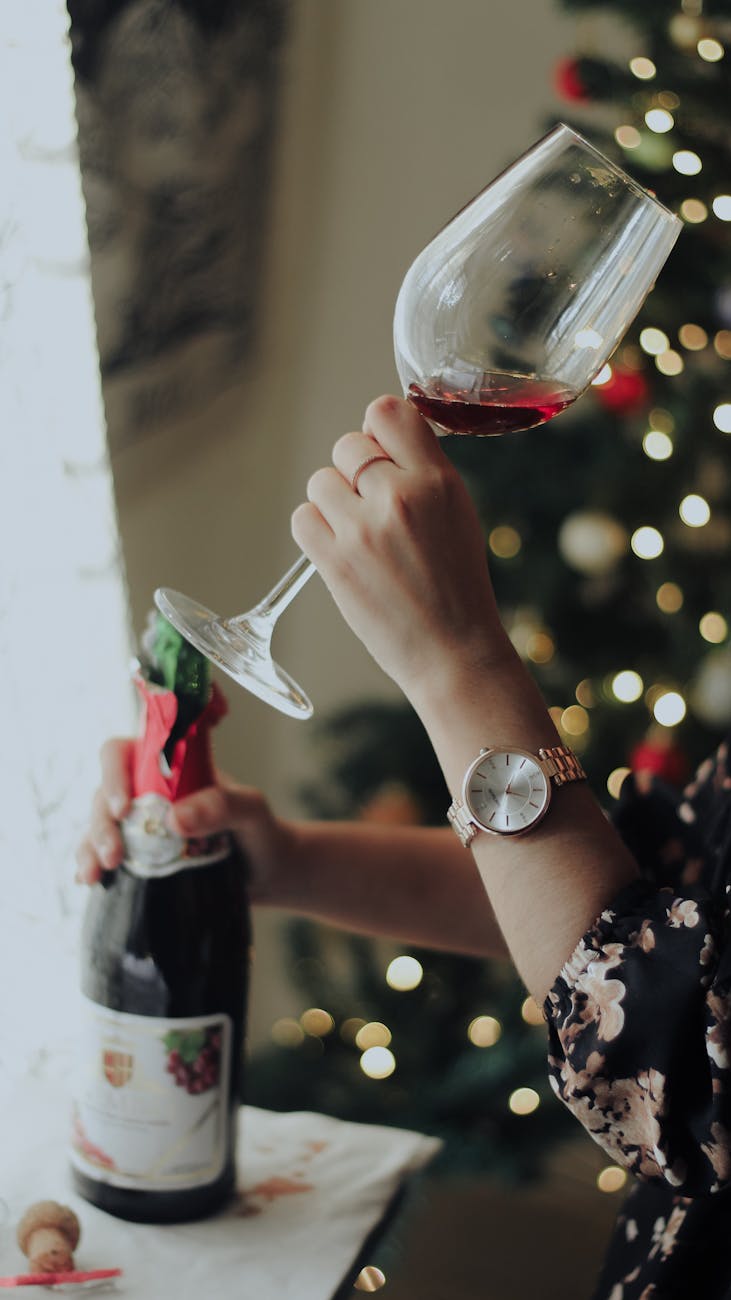
The air is crisp, the carols are floating through grocery store speakers with unmistakable cheer, and your inner wine geek is itching for a holiday-themed deep dive. And right in the heart of December, there’s no better time to revisit one of the season’s most enduring traditions: The Twelve Days of Christmas.
But where did this curious list of gifts—from partridges to leaping lords—actually come from? And how did it inspire our very own 12 Wines of Christmas, a tasting journey designed to guide your holiday sips from the first day straight through Epiphany?
These traditions get mixed up like holiday ribbons, so let’s untangle them.

Where Did the 12 Days of Christmas Come From?
Long before it was a catchy (and increasingly absurd) carol, The Twelve Days of Christmas was a meaningful Christian observance marking the timeframe between the birth of Christ (December 25th) and the arrival of the Magi (January 6th).
These were days of celebration—feasts, merriment, reflection, and in some regions, gift-giving. The number twelve wasn’t random; it symbolized completeness, renewal, and spiritual wholeness. Each day carried its own significance, depending on cultural and religious tradition, and it all culminated with Epiphany, often considered the true finale of the holiday season.
The song itself?
It first appeared in print in England in 1780 as part of a children’s memory-and-forfeit game. No music. Just a chant-like verse meant to test how well you could recall the list in order. Over time, composers set it to the tune we know today—building a festive crescendo of gifts that get stranger and more lavish with each passing day.
12 Days of Christmas vs. the Advent Calendar
Before we pour ahead, let’s clear up a classic Christmas confusion.
Advent is the period before Christmas—a countdown of preparation, beginning on the fourth Sunday before December 25th. Advent calendars, whether filled with chocolates, toys, skincare samples, or tiny bottles of spirits (a favorite around here), are meant to help you anticipate the big day.
The 12 Days of Christmas, on the other hand, begin on Christmas Day. It’s not a countdown. It’s a celebration.
Think of Advent as the slow build-up…
…and the Twelve Days as the extended after-party.
Introducing the 12 Wines of Christmas
A Sommelier’s Day-by-Day Guide to Sipping Through the Season
🎁 Day 1 (Dec 25) – A Partridge in a Pear Tree
Wine: Vouvray Demi-Sec (Chenin Blanc)
Why: Orchard fruit, honey, and that holiday-friendly acidity.
Optional Cocktail: Pear French 75 – gin, lemon, pear liqueur, topped with sparkling Vouvray.
🎁 Day 2 – Two Turtle Doves
Wine: Côtes du Rhône Rouge
Why: A blend built on harmony—two grapes (Grenache + Syrah) leading the dance.
Optional Cocktail: Winter Kir Royale with crème de cassis and Rhône rosé bubbles.
🎁 Day 3 – Three French Hens
Wine: Beaujolais Cru (Morgon or Moulin-à-Vent)
Why: French, festive, and an ideal pairing for leftover turkey sandwiches.
🎁 Day 4 – Four Calling Birds
Wine: Oaked Chardonnay from Sonoma or Burgundy
Why: A nod to the “calling”—big flavors, toasty oak, buttered brioche vibes.
Optional Cocktail: Chardonnay Hot Toddy (trust me, it works—gentle heat + spice).
Chardonnay Hot Toddy
- 4 oz lightly oaked Chardonnay (Sonoma Coast, Mâconnais, or similar)
- ½ oz honey syrup (1:1 honey + water)
- ½ oz fresh lemon juice
- 1 cinnamon stick
- 1 clove
- Thin lemon wheel
Instructions
- Warm the Chardonnay on low heat with the cinnamon stick and clove—do not boil.
- Remove from heat and stir in honey syrup and lemon juice.
- Pour into a heatproof mug.
- Garnish with a lemon wheel and the cinnamon stick.
Flavor Profile: Gentle spice, soft oak, plush citrus, and comforting warmth.
🎁 Day 5 – Five Golden Rings
Wine: Champagne
Why: Golden bubbles for the most iconic line in the song.
Optional Cocktail: Gold Rush Royale – bourbon, lemon, honey, topped with brut Champagne.
Gold Rush Royale
- 1 oz bourbon
- ¾ oz fresh lemon juice
- ¾ oz honey syrup
- 3 oz brut Champagne (or dry sparkling wine)
- Lemon twist for garnish
Instructions
- Shake bourbon, lemon juice, and honey syrup with ice.
- Strain into a chilled coupe.
- Top with Champagne.
- Express a lemon twist over the glass and drop it in.
Flavor Profile: Bright, honeyed, gently herbal, and celebration-ready.
🎁 Day 6 – Six Geese a-Laying
Wine: Gewürztraminer
Why: A playful nod to the aromas—rose, lychee, spice—perfect with rich holiday brunches.
🎁 Day 7 – Seven Swans a-Swimming
Wine: Albariño
Why: Aquatic theme + saline, refreshing acidity = a perfect mid-festivity reset.
🎁 Day 8 – Eight Maids a-Milking
Wine: Cream Sherry (Amontillado or Medium)
Why: Nutty, silky, slightly creamy—holiday perfection.
Optional Cocktail: Sherry Flip – elegant, old-school, and oh-so-seasonal.
🎁 Day 9 – Nine Ladies Dancing
Wine: Lambrusco (Dry)
Why: Effervescence + vibrant fruit = a wine that practically twirls in your glass.
🎁 Day 10 – Ten Lords a-Leaping
Wine: Brunello di Montalcino
Why: Structured, noble, full of energy—this wine leaps with aristocratic swagger.
🎁 Day 11 – Eleven Pipers Piping
Wine: Islay Scotch-Cask Finished Red Wine (or simply: enjoy the Scotch!)
Why: Smoky, spicy, bold—perfect for the pipers’ dramatic flair.
Optional Cocktail: Smoked New York Sour – red wine float + peated whisky.
Smoked New York Sour
- 2 oz peated Scotch (lightly peated works best)
- 1 oz fresh lemon juice
- ¾ oz simple syrup
- ½ oz dry red wine (Malbec or Syrah works beautifully)
- Lemon peel
Instructions
- Shake Scotch, lemon juice, and simple syrup with ice.
- Strain into a rocks glass over fresh ice.
- Gently float the red wine over the back of a spoon.
- Garnish with lemon peel.
Flavor Profile: Smoky, tart, layered, and visually stunning.
🎁 Day 12 – Twelve Drummers Drumming
Wine: Port (Vintage or LBV)
Why: Big, bold, booming flavor—an appropriate finale to the holiday symphony.
Optional Cocktail: Ruby Port Espresso Martini – a surprisingly spectacular twist.
Ruby Port Espresso Martini
- 1 oz Ruby Port
- 1 oz vodka
- 1 oz fresh espresso (or cold brew concentrate)
- ½ oz coffee liqueur
- Optional: ¼ oz simple syrup for sweetness
- Coffee beans for garnish
Instructions
- Shake all liquid ingredients vigorously with ice.
- Strain into a chilled martini glass.
- Garnish with three coffee beans.
Flavor Profile: Balanced between fruity and roasty, with a velvety richness

A Festive Finale
As the last notes of the carol fade and the final drops in each glass give way to a new year, the 12 Wines of Christmas remind us that the joy of the season isn’t found in extravagance—it’s found in the small, thoughtful rituals we savor along the way.
Whether you follow the list sip by sip, swap in your own favorites, or shake up a festive cocktail instead, each day offers a moment to pause, celebrate, and connect.
Here’s to raising a glass to tradition, to curiosity, and to the simple magic that happens when wine, story, and season all come together.
May your holidays be bright, your cellar well-stocked, and your spirit joyfully lifted—one delicious day at a time. Cheers 🍷
Cover Photo by Arjunn. la on Pexels.com
You may also like these holiday articles from SOMM&SOMM:
Perfect Pairings: Exploring Holiday Traditions and Wine
The Festive Twilight – A Week in Limbo Between Christmas and New Year







 SOMM&SOMM
You must be logged in to post a comment.