Category: Cocktails

  • More Than Umbrellas and Rum

    More Than Umbrellas and Rum

    Discovering the Art, History, and Magic of Tropical Cocktails.

    Summer has a rhythm all its own.

    The days grow longer, backyard pools become gathering places, and weekends seem to stretch effortlessly into evenings filled with laughter, good food, and something refreshing in the glass. For many people, summer cocktails begin and end with margaritas, frozen daiquiris, or whatever happens to be cold and convenient.

    Yet there is an entire world of tropical cocktails waiting beyond the blender.

    A world built upon craftsmanship, creativity, hospitality, and perhaps a touch of escapism.

    That world is tiki.

    Related SOMM&SOMM article: The Art of Island Cocktails

    Mention tiki cocktails and most people immediately picture paper umbrellas, carved mugs, and brightly colored drinks overflowing with fruit. While those elements certainly have their place, they tell only a small part of the story. Beneath the playful presentation lies one of the most sophisticated traditions in cocktail culture—a tradition built upon carefully blended rums, fresh citrus, exotic spices, and recipes that often rival culinary creations in complexity.

    Like great wine, great tiki cocktails are about balance. The garnish may capture your attention, but it is the harmony of flavors that earns your respect.

    brown wooden house on beach
    Photo by Darren Lawrence on Pexels.com

    The Birth of an American Fantasy

    The story of tiki begins not in the South Pacific, but in America.

    Following the repeal of Prohibition in 1933, an adventurous entrepreneur named Ernest Raymond Beaumont Gantt opened a small Hollywood bar inspired by his travels throughout the Caribbean and Pacific regions. Reinventing himself as Donn Beach, he created an environment unlike anything Americans had experienced before.

    Guests stepped through the doors and entered another world.

    Bamboo walls replaced city streets. Exotic artifacts decorated the room. Rum flowed freely. The outside world faded into the background.

    interior of a cafe with a tropical interior design
    Photo by Edouard G on Pexels.com

    The timing could not have been better. America was emerging from the Great Depression, and people were eager for experiences that offered a temporary escape from everyday life. Donn Beach understood something that remains true today: hospitality is not simply about serving food and beverages. It is about creating moments.

    Soon another visionary entered the scene. Victor Bergeron, better known as Trader Vic, expanded the concept and helped introduce tropical cocktails to a broader audience. Friendly rivalry between the two pioneers led to innovation, experimentation, and the creation of many cocktails still enjoyed today.

    The result was not a faithful recreation of Polynesian culture, but rather an American interpretation of tropical paradise—a fantasy destination where worries disappeared and every drink felt like a vacation.

    Vincent Navarro, CC BY-SA 4.0, via Wikimedia Commons

    What Makes a Cocktail “Tiki”?

    Many drinkers assume tiki cocktails are simply rum mixed with fruit juice.

    In reality, authentic tiki drinks are among the most carefully constructed cocktails ever developed.

    A classic tiki recipe may include multiple styles of rum, fresh citrus juices, syrups, bitters, spices, and specialty liqueurs. Each ingredient serves a purpose. Remove one element and the entire balance shifts.

    Consider the role of rum.

    Just as a winemaker might blend Cabernet Sauvignon, Merlot, and Petit Verdot to create a more complete wine, tiki bartenders often blend multiple rums within a single cocktail. A Jamaican rum may contribute ripe tropical fruit notes, while a Barbados rum provides structure and elegance. A Demerara rum adds richness and depth.

    The goal is not to showcase a single ingredient.

    The goal is harmony.

    This philosophy separates authentic tiki from the overly sweet tropical drinks that became popular during the latter half of the twentieth century. True tiki cocktails are not intended to taste like fruit punch. They are designed to deliver layers of flavor that evolve from first sip to last.

    photo of a brown cocktail drink
    Photo by Dasha Klimova on Pexels.com

    The Classics Every Cocktail Enthusiast Should Know

    The Mai Tai

    No tiki cocktail has suffered more misunderstanding than the Mai Tai.

    Order one at many beachside bars and you may receive a neon-colored concoction filled with pineapple juice, orange juice, grenadine, and enough sugar to power a small city.

    The original recipe is remarkably elegant.

    A traditional Mai Tai combines aged rum, orange curaçao, fresh lime juice, orgeat, and a touch of sweetness. The result is bright, nutty, aromatic, and beautifully balanced.

    Classic Mai Tai

    • 2 oz aged Jamaican rum
    • ½ oz orange curaçao
    • ¾ oz fresh lime juice
    • ½ oz orgeat syrup
    • ¼ oz simple syrup

    Shake with ice and serve over crushed ice. Garnish with fresh mint and a spent lime shell.

    More than eighty years after its creation, it remains one of the finest rum cocktails ever conceived.

    The Zombie

    If the Mai Tai represents elegance, the Zombie represents excess.

    Created by Donn Beach in the 1930s, the Zombie became famous for its potency. Early versions combined multiple rums, citrus juices, cinnamon syrup, falernum, and bitters into a deceptively smooth cocktail capable of surprising even experienced drinkers.

    Legend suggests that some tiki bars limited guests to one or two Zombies per evening. Whether entirely true or slightly embellished over time, the reputation remains well deserved.

    The Navy Grog

    Inspired by the rum rations once enjoyed by sailors, the Navy Grog demonstrates tiki’s ability to transform humble ingredients into something extraordinary.

    Combining multiple rums with grapefruit, lime, and honey syrup, the cocktail delivers remarkable complexity while maintaining refreshing simplicity.

    The Painkiller

    Perhaps no tiki-inspired cocktail is better suited to a summer afternoon.

    Painkiller

    • 2 oz dark rum
    • 4 oz pineapple juice
    • 1 oz orange juice
    • 1 oz cream of coconut

    Shake thoroughly and serve over ice. Finish with freshly grated nutmeg.

    The nutmeg is not optional. It provides an aromatic layer that transforms the entire drinking experience.

    tropical fruit cocktail with pineapple garnish
    Photo by Nano Erdozain on Pexels.com

    Why Garnishes Matter More Than You Think

    One of the most overlooked aspects of tiki culture is the role of garnish.

    Too often, garnishes are dismissed as decoration. In reality, they are an essential component of the cocktail.

    Fresh mint contributes aroma before the glass reaches your lips. Citrus peels release fragrant oils. Grated spices introduce warmth and complexity. Pineapple fronds, edible flowers, and creative presentations enhance anticipation and elevate the guest experience.

    Wine professionals understand that aroma significantly influences flavor perception. The same principle applies to cocktails.

    A well-executed tiki garnish is not an accessory.

    It is part of the recipe.

    The Danger of Judging a Cocktail by Its Reputation

    Few cocktail categories suffer from more misconceptions than tiki.

    Mention tropical cocktails and many drinkers immediately think of overly sweet drinks served in giant glasses, loaded with artificial flavors, fluorescent colors, and enough sugar to guarantee a headache before sunset. For some, those impressions come from experiences decades ago when powdered drink mixes, bottled sour mix, and canned juices became common shortcuts behind the bar. Others have simply accepted someone else’s opinion that tiki drinks are unserious, unsophisticated, or designed primarily to mask alcohol.

    Unfortunately, those assumptions cause many cocktail enthusiasts to overlook one of the most fascinating categories in mixology.

    beverages in a clear glass with straw
    Photo by FOX ^.ᆽ.^= ∫ on Pexels.com

    The reality is that authentic tiki cocktails have far more in common with fine culinary traditions than they do with frozen drink machines. The classic recipes developed by Donn Beach, Trader Vic, and other pioneers relied upon fresh citrus, carefully balanced syrups, multiple rum blends, spices, bitters, and techniques that remain influential among today’s top bartenders.

    In many ways, tiki suffers from the same challenge as sweet wines, boxed wines, rosé, or even certain spirit categories. Public perception is often shaped by the least impressive examples rather than the best ones.

    A poorly made tiki cocktail can certainly be cloying and forgettable. Then again, a poorly made Manhattan, Margarita, or Old Fashioned can be equally disappointing. The category is rarely the problem. Execution usually is.

    One of the great joys of exploring food and beverage culture is discovering how often conventional wisdom gets it wrong. The drink style you dismiss today may ultimately become one of your favorites tomorrow.

    The next time someone tells you they don’t enjoy tiki cocktails, it may be worth asking a simple question:

    “Have you ever had a real one?”

    The answer is often more revealing than expected.

    The Modern Tiki Renaissance

    Today’s bartenders are rediscovering tiki and elevating it in exciting ways.

    Rum programs have become increasingly sophisticated, showcasing expressions from Jamaica, Barbados, Martinique, Guyana, and beyond. Ingredients once considered obscure have entered the mainstream, including pandan, tamarind, black sesame, ube, and house-made spice syrups.

    Many cocktail bars are also exploring lower-alcohol tropical drinks featuring sherry, vermouth, amaro, and sparkling wine. These cocktails maintain tiki’s signature complexity while remaining ideal for long afternoons by the pool.

    Perhaps most encouraging is the growing emphasis on authenticity. Bartenders are studying historical recipes, researching rum production methods, and reviving techniques that helped define tiki’s golden age.

    The result is a category experiencing renewed respect from both professionals and enthusiasts.

    From the SOMM&SOMM Art of Island Cocktails Class (April 2024)

    Elevating Tiki at Home

    Creating exceptional tiki cocktails at home requires less equipment than many people assume.

    The biggest improvements often come from three simple changes.

    First, use fresh citrus juice. Bottled lime juice has no place in serious tiki cocktails.

    Second, invest in quality ice. Crushed ice influences texture, temperature, and dilution in ways that dramatically affect the finished drink.

    Third, experiment with rum blending. Combining different styles of rum introduces complexity that no single bottle can achieve on its own.

    Small adjustments often produce remarkable results.

    A Signature Summer Cocktail

    For readers looking to explore beyond the classics, consider this original creation.

    Sunset Cannonball

    • 1 oz aged Jamaican rum
    • 1 oz Barbados rum
    • 1 oz passion fruit puree
    • ¾ oz fresh lime juice
    • ½ oz cinnamon syrup
    • ¼ oz allspice dram

    Shake vigorously and pour over crushed ice.

    Garnish with a bouquet of mint, a pineapple frond, and freshly grated nutmeg.

    The combination of tropical fruit, warm spice, and layered rum character creates a cocktail perfectly suited to long summer evenings.

    The Stories Behind the Sips

    The greatest tiki cocktails have never been solely about ingredients.

    People rarely remember the exact recipe years later. They remember who shared the drink. They remember the laughter that echoed across the pool deck. They remember the sunset, the stories, and the feeling that for a few brief hours life slowed down.

    Perhaps that is the enduring appeal of tiki.

    At its heart, tiki culture celebrates hospitality. It encourages creativity, conversation, and community. It invites us to transform ordinary afternoons into memorable experiences.

    In a world that often feels rushed, there is something wonderfully refreshing about that philosophy.

    So this summer, dust off the shaker. Stock up on fresh limes. Experiment with rum. Build an extravagant garnish. Invite a few friends over.

    Because somewhere between the first cocktail and the last glimpse of sunlight reflecting across the water, you may discover what Donn Beach understood nearly a century ago:

    The finest tropical cocktails do more than quench thirst.

    They create memories.

    And those are always worth raising a glass to.

    Until next time, keep exploring, keep pairing, and keep sharing stories—one sip at a time 🍹

    Gregory Dean, SOMM&SOMM

    Cover Photo by © Stefan Giesbert (www.cocktailpodcast.de)
  • Vodka: Crystal Clear, Deeply Complex

    Vodka: Crystal Clear, Deeply Complex

    From Frozen Traditions and Rustic Rye Fields to Iconic Cocktails, Cultural Rituals, and the Spirit That Quietly Conquered the World.

    Vodka has an image problem.

    For some drinkers, vodka is little more than “neutral alcohol” — a spirit chosen specifically because it doesn’t taste like much. It is the default mixer at crowded parties, the backbone of countless cocktails, and the spirit people order when they “don’t really like liquor.”

    Yet that reputation ignores thousands of years of history, culture, craftsmanship, and tradition.

    Because vodka, at its best, is not bland at all.

    It is one of the oldest and most culturally important spirits in the world. It has fueled royal courts, inspired political revolutions, anchored family traditions, comforted fishermen through brutal winters, and helped define the social fabric of entire nations. In many cultures, vodka is not simply alcohol. It is hospitality. Ceremony. Celebration. Storytelling.

    And like wine, whiskey, or tequila, vodka can absolutely express place, ingredient, texture, and craftsmanship — if you know what to look for.

    The irony is that vodka became so globally successful that many people stopped paying attention to it.

    That is a shame.

    Because beneath the icy clarity lies one of the most fascinating spirits on Earth.

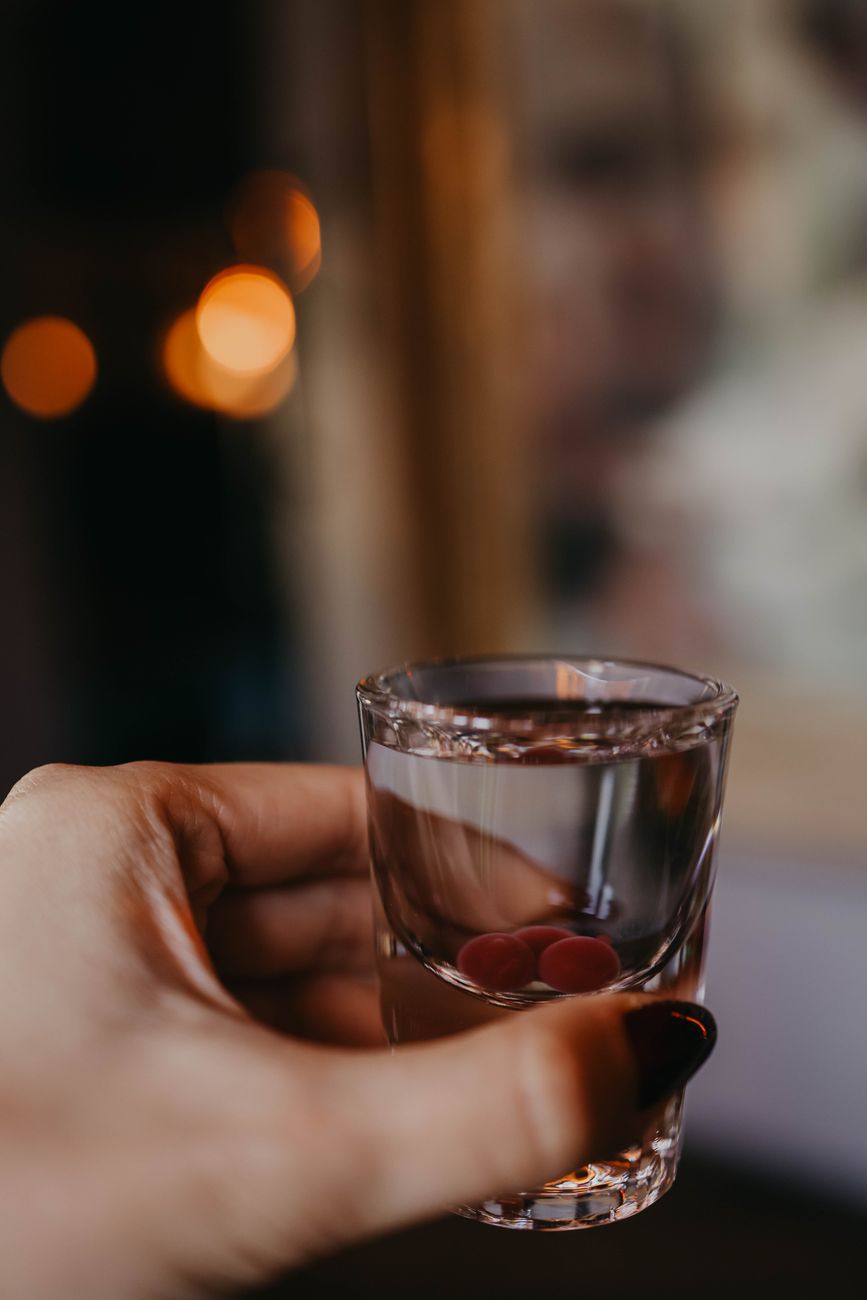
    vodka glasses in hands
    Photo by wan fat on Pexels.com

    A Spirit Born Everywhere

    Vodka’s origins are famously disputed, particularly between Poland and Russia, both of which passionately claim to be vodka’s birthplace. Historical references to distilled grain spirits appear throughout Eastern Europe as early as the Middle Ages, though those early versions would be almost unrecognizable compared to many modern vodkas.

    They were not ultra-filtered, endlessly distilled luxury spirits in glowing bottles.

    They were rustic.

    Peppery. Earthy. Grain-driven. Sometimes oily. Often fiery.

    The word “vodka” itself derives from the Slavic word voda, meaning “water,” or more affectionately, “little water.” It sounds harmless enough until one realizes entire governments once depended heavily on vodka taxation to survive.

    And honestly, humans discovering distillation was almost inevitable. Nearly every culture with access to starch or sugar eventually created some form of clear distilled spirit. Rye, wheat, potatoes, corn, grapes, rice, honey, sugar beets — if it could ferment, somebody somewhere eventually decided to distill it.

    That flexibility remains one of vodka’s defining traits.

    Unlike tequila, which must come from blue agave, or bourbon, which must contain mostly corn, vodka can emerge from almost anything. This adaptability helped vodka spread globally, but it also created one of the spirit’s greatest myths:

    “All vodka tastes the same.”

    Spend five minutes with a serious vodka producer and you will quickly discover how wrong that statement really is.

    alcohol in a glass
    Photo by Valeria Klys on Pexels.com

    The Different Styles of Vodka

    Vodka may not shout like peaty Scotch or funky rum, but it absolutely has personality. The differences are often more about texture, weight, spice, minerality, and finish than explosive flavor.

    Traditional rye vodka, particularly from Poland, tends to be dry, peppery, and subtly bready. It often carries a spicy warmth that pairs beautifully with smoked fish, cured meats, and mustard-heavy dishes. Many vodka purists consider rye the classic expression of the spirit.

    Potato vodka is entirely different. Richer and creamier, it often has a luxurious texture that surprises whiskey drinkers encountering it for the first time. There is weight to it — a subtle earthy density that makes it wonderfully satisfying in colder weather.

    Wheat vodka became enormously popular because of its softer profile. Smooth, slightly sweet, and approachable, wheat vodkas helped shape the modern cocktail boom, especially in the United States and France.

    Corn vodka, particularly common in North America, often leans clean and gentle, while grape-based vodkas can carry delicate floral and silky characteristics that feel almost elegant enough to confuse blind tasters.

    Vodka speaks quietly compared to whiskey.

    But it still speaks.

    The Great Vodka Marketing Machine

    Modern vodka branding spent decades convincing consumers that the “best” vodka was the one with the least flavor.

    Five times distilled.
    Ten times filtered.
    Diamond filtered.
    Glacier water.
    Oxygen infused.

    At some point, vodka labels began sounding less like spirits and more like luxury appliance advertisements.

    Of course, filtration and precision matter. Poorly made vodka can be harsh, bitter, and unpleasant. But many traditional distillers believe modern vodka became too neutral. Excessive filtration strips away not only impurities, but also texture and character.

    Historically, vodka was never meant to taste like absolutely nothing.

    A good rye vodka should still whisper rye.
    A potato vodka should still feel substantial.
    Otherwise, what exactly is left besides alcohol?

    This divide between “neutral purity” and “expressive craftsmanship” remains one of the most fascinating conversations in modern spirits.

    person pouring water on clear drinking glass
    Photo by cottonbro studio on Pexels.com

    When Vodka Isn’t Really Vodka

    Vodka’s cousins around the world reveal just how broad the category can become.

    In Japan, shochu is often distilled from rice, barley, or sweet potatoes, but unlike vodka, it is typically distilled to lower proof specifically to preserve flavor and aroma.

    In South Korea, soju occupies a fascinating middle ground — softer, slightly sweeter, and lower in alcohol, making it dangerously easy to drink.

    Scandinavian aquavit begins with a vodka-like base before embracing herbs and spices like dill and caraway, while Balkan rakia proudly leans into fruit character and rustic tradition.

    All of these spirits share vodka’s basic DNA.

    But they also reveal something important:

    Neutrality was never historically the goal.

    Character was.

    traditional russian cuisine on restaurant table
    Photo by Van Mailian on Pexels.com

    The Proper Way to Drink Vodka

    Forget neon shots and whipped cream-flavored gimmicks for a moment.

    Traditional vodka service is one of the great culinary experiences in the spirits world.

    In Eastern Europe, vodka is rarely consumed alone. It arrives ice cold — often straight from the freezer — alongside smoked fish, pickled vegetables, dark rye bread, sausages, mushrooms, caviar, or salty cheeses. The food, known broadly in some regions as zakuski, is essential to the experience.

    A sip of icy rye vodka followed by smoked salmon and mustard is revelatory. The vodka cuts through richness while amplifying texture and spice. Pickles brighten the palate. Dark bread grounds everything with earthy depth.

    The rhythm becomes almost ceremonial:

    Toast. Sip. Eat. Laugh. Repeat 😉

    That communal element is central to vodka culture. In many traditions, refusing a toast can even be considered rude. Vodka is meant to gather people together around the table.

    And yes — vodka absolutely belongs in the freezer.

    The cold thickens the texture, softens alcohol harshness, and creates a velvety mouthfeel that makes quality vodka feel almost luxurious. Good vodka from the freezer becomes silky and elegant.

    Cheap vodka simply becomes cold.

    classic martini with olives in elegant bar setting
    Photo by Eddie O. on Pexels.com

    Vodka’s Greatest Cocktails

    Vodka conquered the cocktail world because it is endlessly adaptable. It can support, soften, brighten, or disappear entirely depending on the drink.

    And sometimes that versatility creates magic.

    The Vodka Martini

    The Vodka Martini helped define postwar cocktail culture. Cleaner and softer than gin, it appealed to drinkers seeking sophistication without aggressive botanicals.

    Classic Vodka Martini Recipe

    • 2½ oz vodka
    • ½ oz dry vermouth
    • Lemon twist or olives

    Stir with ice until brutally cold, then strain into a chilled martini glass.

    Simple drinks leave nowhere to hide. Use quality vodka.

    The Moscow Mule

    Ironically, one of vodka’s most famous cocktails became popular largely because of brilliant marketing involving copper mugs in the 1940s.

    Thankfully, the drink is genuinely excellent.

    Moscow Mule Recipe

    • 2 oz vodka
    • ½ oz fresh lime juice
    • Ginger beer

    Build over ice in a copper mug or Collins glass.

    Bright, spicy, refreshing, and endlessly drinkable.

    a dark cocktail in a glass
    Photo by Mark von Arb on Pexels.com

    The Espresso Martini

    Created by legendary bartender Dick Bradsell in the 1980s, the Espresso Martini remains one of the defining modern cocktails.

    Espresso Martini Recipe

    • 2 oz vodka
    • 1 oz fresh espresso
    • ¾ oz coffee liqueur
    • ¼ oz simple syrup

    Shake aggressively with ice and strain into a coupe glass.

    The foam on top should look almost like crema on a fine espresso.

    The Forgotten Vodka Classic: The Gypsy Queen

    Before vodka became associated primarily with ultra-clean martinis and sugary nightclub drinks, bartenders often used it in cocktails that allowed subtle herbal and spice notes to shine.

    One of the best forgotten examples is the Gypsy Queen.

    Elegant, aromatic, and surprisingly sophisticated, the cocktail combines vodka with the French herbal liqueur Bénédictine. The result is silky, lightly spiced, and layered with honeyed herbal complexity.

    It feels almost like the bridge between a Martini and an old-world digestif.

    Gypsy Queen Recipe

    • 2 oz vodka
    • 1 oz Bénédictine
    • Dash of bitters

    Stir with ice until thoroughly chilled and strain into a coupe glass.

    Simple on paper, but deeply nuanced in the glass.

    This is the kind of cocktail that reminds people vodka does not always need to disappear into a drink. Sometimes its restraint is precisely what allows other ingredients to shine gracefully without overwhelming the palate.

    The Pairing Nobody Talks About

    Vodka may actually be one of the world’s great food spirits.

    Because it lacks heavy oak, sugar, or aggressive botanicals, vodka interacts beautifully with salty, smoky, acidic, and briny foods. It cleanses the palate without overpowering dishes.

    Some classic pairings include:

    • Smoked salmon with dill
    • Caviar and crème fraîche
    • Pickled mushrooms
    • Potato pancakes
    • Kielbasa and mustard
    • Oysters
    • Herring
    • Sharp cheeses
    • Dark rye bread

    A freezer-cold rye vodka beside smoked fish may convert even dedicated whiskey drinkers.

    Vodka Vault at the Red Square in MGM Grand Las Vegas – May 10, 2015

    Vodka Deserves Better

    Vodka’s greatest strength may also be its greatest curse.

    It is so familiar that many drinkers stopped paying attention to it.

    But vodka is not merely “neutral spirit.” It is agriculture, chemistry, tradition, ritual, and hospitality distilled into crystal clarity. It reflects the cultures that produce it — from the rye fields of Poland to the frozen traditions of Russia, from Scandinavian precision to modern American experimentation.

    At its best, vodka is subtle rather than loud.

    And subtlety is often misunderstood.

    The next time someone insists vodka has no flavor, pour them a proper rye vodka straight from the freezer beside smoked fish, dark bread, sharp mustard, and pickles.

    Then watch their expression after the first sip.

    Preferably after the second toast.

    Cover Photo by Valeria Boltneva on Pexels.com

  • From Curiosity to Certification

    From Curiosity to Certification

    A Bourbon Birthday in St. Augustine.

    There are birthdays… and then there are experiences. This year, for Tammy—my wife, my partner in every sense, and the center of my world—I wanted to give her something that felt worthy of the life we’ve built together. Something beyond a bottle, beyond a dinner—something we could experience side by side. For a bourbon girl at heart, the answer revealed itself easily: dive headfirst into the spirit she loves.

    So we packed our curiosity (and a healthy respect for oak) and made our way to the storied streets of St. Augustine—a place where history lingers in the air as tangibly as the sea breeze. Our destination? The remarkable St. Augustine Distillery. Our mission? To earn the coveted Certified Bourbon Steward designation through the Stave & Thief Society.

    Sunday morning, just before the class started at St. Augustine Distillery

    A Sunday Morning Worth Savoring

    At precisely 10:00 AM on a Sunday—yes, Sunday—we began our journey. Now, before anyone raises an eyebrow, let’s be clear: this wasn’t about indulgence. This was about education, discipline, and a deep reverence for one of America’s most iconic spirits.

    The course, led by Executive Bourbon Steward Brian (a man whose passion for whiskey is matched only by his ability to make it approachable), immediately set the tone. No pretension. No gatekeeping. Just storytelling, science, and sensory exploration.

    And for the next five hours… we were all in.

    Breaking Down Bourbon (Without Breaking the Magic)

    The beauty of the Certified Bourbon Steward program lies in its balance. It respects bourbon’s rich legacy while demystifying it for enthusiasts at every level.

    We explored:

    • The legal framework that defines bourbon (more nuanced than most realize)
    • The importance of mash bills and grain composition
    • Fermentation and distillation techniques
    • Barrel aging—arguably where bourbon earns its soul
    • Flavor identification using the Stave & Thief sensory framework

    Brian didn’t just teach—he connected dots. Suddenly, caramel wasn’t just caramel. It was the result of char levels, lignin breakdown, and time. Vanilla wasn’t just a note—it was a story.

    And yes… there were tastings.

    Strategically placed. Purpose-driven. Eye-opening.

    Where Craft Meets Community

    There’s something undeniably special about learning bourbon inside a working distillery. The St. Augustine Distillery isn’t just a backdrop—it’s part of the curriculum.

    The aroma of grain, the quiet hum of production, the visual poetry of barrels resting in anticipation—it all reinforces what you’re learning in real time. You’re not just hearing about process—you’re standing inside it.

    It’s immersive in a way that no classroom could ever replicate.

    Earning the Title

    After five hours of deep diving, note-taking, nosing, and tasting, it all came down to the final exam.

    There’s a moment—right before you begin—where the weight of what you’ve just learned settles in. Not in a stressful way, but in a “this actually matters” kind of way.

    Because it does.

    This certification isn’t about memorization. It’s about understanding.

    And when we completed that exam and earned the title of Certified Bourbon Stewards through the Stave & Thief Society… it felt exactly right.

    A fitting end to an unforgettable day.

    Certified Bourbon Stewards

    Why This Experience Matters

    In the world of wine and spirits, it’s easy to fall into patterns—regions we know, styles we trust, bottles we reach for without thinking.

    This experience challenged that.

    It reminded us that:

    • There is always more to learn
    • Every spirit has a story worth understanding
    • Education deepens appreciation in ways consumption alone never can

    And perhaps most importantly—it gave us a shared experience. One that we’ll carry into every future pour of bourbon, every conversation, every recommendation.

    Gratitude Where It’s Due

    A heartfelt thank you to:

    • Brian, our instructor, for his authenticity, patience, and undeniable passion
    • The incredible team at the St. Augustine Distillery for creating a space where education and craftsmanship thrive
    • The Stave & Thief Society for elevating bourbon education and making it accessible, structured, and meaningful
    The bourbon girl with a bottle to commemorate (and celebrate) the accomplishment

    Final Pour

    Would we recommend this experience?

    Without hesitation. Without qualification.

    Whether you’re a seasoned enthusiast, an industry professional, or someone just beginning to explore the world of bourbon—this course delivers something rare: clarity, confidence, and a deeper connection to the spirit in your glass.

    And for Tammy—this bourbon birthday wasn’t just a celebration.

    It was a milestone 🥃

  • The Martini is Having Another Moment (Again… But Differently)

    The Martini is Having Another Moment (Again… But Differently)

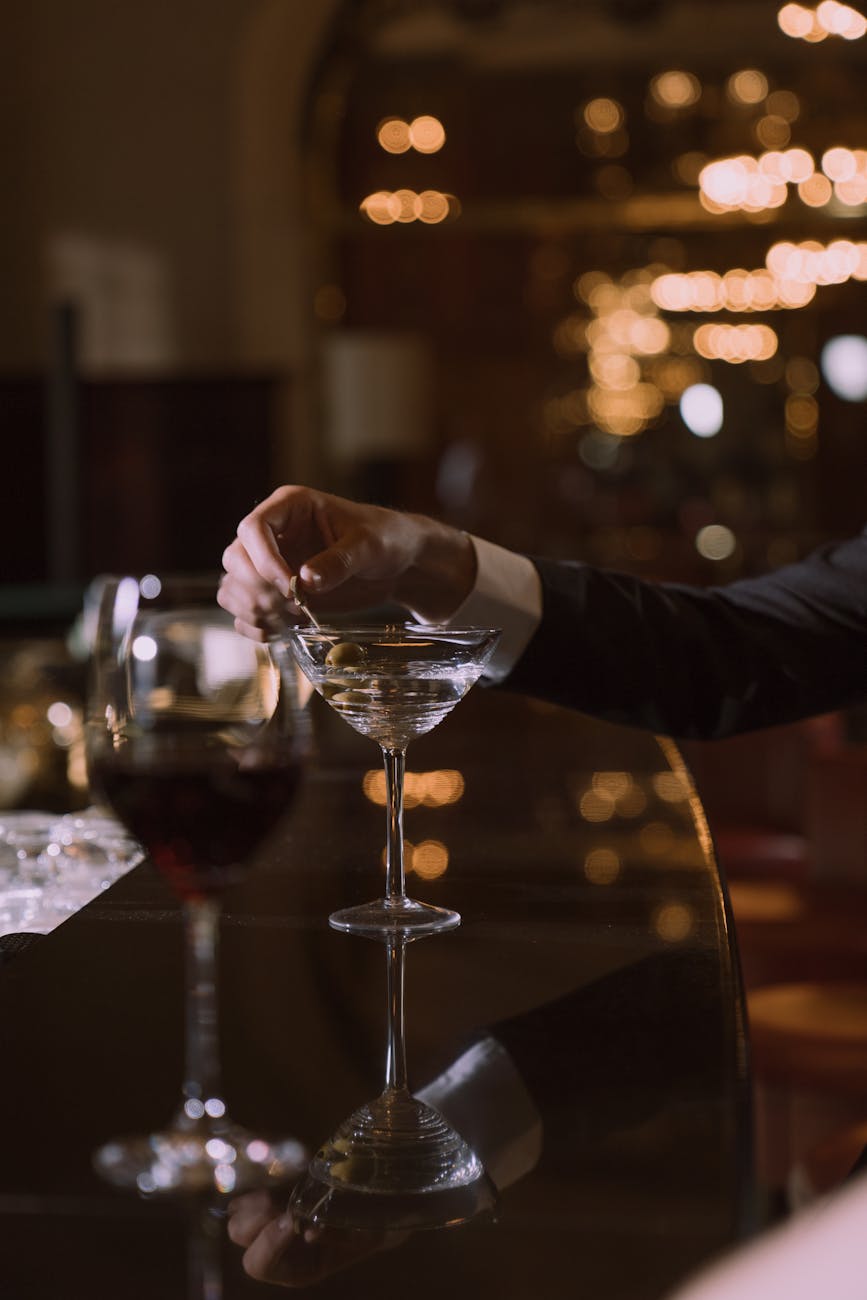
    The Martini never really disappears. It fades. It softens at the edges. It gets misunderstood, overbuilt, sweetened, dirtied, stripped down, and occasionally disrespected. But it never leaves. And then—quietly at first—it returns.

    A colder glass. A cleaner line. A more intentional pour.

    Another moment.

    But this time feels different.

    Because this Martini revival isn’t about rebellion or reinvention alone. It’s about reconciliation—between generations, between philosophies, and between what the Martini was… and what we now want it to be.

    Photo by Taryn Elliott on Pexels.com

    The Illusion of Simplicity

    The Martini is often described as simple: gin (or vodka), vermouth, and maybe a garnish.

    But simplicity, in this case, is a trap.

    Because every decision—spirit, ratio, temperature, dilution, garnish—is a statement. And right now, drinkers aren’t just ordering Martinis.

    They’re curating them.

    A 3:1 gin Martini with a lemon twist is not the same drink as a 50/50 with bianco vermouth and an olive.

    Not philosophically. Not culturally.

    And certainly not generationally.

    The Ghost of Martinis Past

    To understand why the Martini is having another moment, you have to understand the echoes behind it.

    The mid-century Martini—carried into cultural mythology by figures like James Bond—became a symbol of precision and control. Cold, dry, and decisive. Often vodka. Frequently shaken. Always intentional.

    Then came the unraveling.

    By the time Generation X took hold of cocktail culture, the Martini had loosened its definition entirely. It became a glass, not a recipe. Anything served “up” could wear the name: appletinis, chocolatetinis, espresso Martinis that leaned more dessert than discipline.

    And somewhere along the way, vermouth—the quiet architect of balance—was nearly erased.

    This is the version many Millennials inherited: a cocktail with a famous name and an identity crisis.

    Photo by Mary White-Cornell on Pexels.com

    The Return of the Ratio

    Here’s where things get interesting.

    The current Martini revival isn’t about going back to one “correct” version. It’s about rediscovering the importance of ratio.

    And that’s where generational influence quietly reshapes the glass.

    The Baby Boomers Influence: Less Is More (Until It Isn’t)

    Boomers still cast a long shadow over Martini culture. Their preference for ultra-dry builds—barely a trace of vermouth—created a lasting association between “serious” Martinis and restraint.

    You still see it today:

    • “Just rinse the glass with vermouth.”
    • “In and out.”
    • “Make it dry.”

    That instinct hasn’t disappeared. It’s just being questioned.

    Because modern drinkers are starting to ask: What happens when we stop subtracting?

    The Generation X Influence: It’s Your Martini, Make It That Way

    Gen X didn’t just bend the rules—they normalized the idea that there are no rules.

    That ethos lives on in today’s Martini variations:

    • Dirty Martinis with precisely measured olive brine
    • Vodka Martinis built for texture rather than neutrality
    • Savory riffs with saline, pickled elements, or even umami-driven garnishes

    The difference now? The chaos has been refined.

    What was once excess is now intentional customization.

    The Millennials Influence: Balance, But Make It Thoughtful

    Millennials are the ones driving the current Martini moment—and they’re doing it by asking better questions.

    Not:
    How strong can this be?
    But:
    How balanced can this become?

    This is the era of:

    • The 2:1 Martini
    • The 50/50 Martini
    • The reverse Martini

    Vermouth is no longer an afterthought—it’s a co-star. Styles matter. Oxidation matters. Storage matters.

    There’s also a renewed focus on gin—its botanicals, its origin, its structure—and how it interacts with different vermouths.

    The Martini has become… studied again.

    Photo by Szymon Shields on Pexels.com

    The Rise of the “Modern Classic”

    So what does a “modern” Martini actually look like?

    It depends who’s holding the glass.

    But a few trends are impossible to ignore:

    1. Lower Proof, Higher Longevity

    The rise of the 50/50 Martini isn’t just stylistic—it’s cultural. People want to drink longer, not harder.

    A Martini that evolves over a conversation, not one that ends it.

    2. Savory Is the New Sexy

    The Dirty Martini has matured.

    No longer a brine bomb, it’s now calibrated:

    • Measured saline solutions
    • High-quality olives
    • Even subtle infusions (think herbs, coastal notes, mineral edges)

    This is where culinary thinking meets cocktail structure.

    3. Vermouth Is Back (And It Brought Friends)

    Dry vermouth is no longer the only option.

    Bianco vermouth. Blanc vermouth. Even light amari are finding their way into the glass.

    The Martini is expanding again—but this time with purpose.

    4. Temperature and Texture Matter More Than Ever

    Freezer Martinis. Pre-batched precision. Glassware that actually enhances the experience.

    This isn’t about flair—it’s about control.

    So… Why Now?

    Why is the Martini having another moment right now?

    Because we’ve reached a point where all the previous versions coexist.

    • The Boomer Martini still exists—cold, dry, unwavering.
    • The Gen X Martini still exists—flexible, expressive, personal.
    • The Millennial Martini is rising—balanced, intentional, studied.

    And instead of competing, they’re blending.

    What we’re seeing isn’t a takeover.

    It’s a synthesis.

    Photo by cottonbro studio on Pexels.com

    The Martini as a Mirror

    The Martini has always reflected the person ordering it.

    But today, it does something more.

    It reflects how we think about drinking itself.

    Not as excess. Not as performance.

    But as experience.

    So the next time someone orders a Martini, listen closely.

    Are they chasing strength?
    Are they chasing flavor?
    Are they chasing balance?

    Or are they, like the Martini itself, trying to find a version that finally feels complete?

    Because this moment—this version of the Martini—isn’t about getting it right.

    It’s about finally understanding the question.

    Let’s head to the bar…

    Two Martinis, One Philosophy: Classic vs. Modern

    If the Martini is a conversation across generations, then the best way to understand it is to taste both sides of the dialogue.

    One honors where we’ve been.
    The other explores where we’re going.

    Both, of course, begin with gin.

    The Classic Gin Martini (The Standard Bearer)

    This is the Martini that built the reputation—clean, structured, and unapologetically direct. No tricks. No distractions. Just precision.

    Ingredients:

    • 2.5 oz London Dry Gin
    • 0.5 oz Dry Vermouth
    • Lemon twist (or olive, but let’s not start a debate… yet)

    Method:

    1. Chill a coupe or Nick & Nora glass thoroughly.
    2. In a mixing glass, add gin and dry vermouth over plenty of cold ice.
    3. Stir deliberately for 20–30 seconds until properly chilled and diluted.
    4. Strain into the chilled glass.
    5. Express a lemon twist over the surface and discard or garnish.

    Why It Works:
    The 5:1 ratio leans into the Baby Boomers philosophy of spirit-forward structure, but keeps just enough vermouth to maintain balance. The lemon twist sharpens the edges, adding aromatic lift without softening the core.

    This is clarity in a glass.

    The Modern SOMM&SOMM Martini (The Thoughtful Riff)

    This is not a rejection of the classic—it’s a reinterpretation. A Martini that embraces balance, texture, and just a hint of savory intrigue without losing its identity.

    Ingredients:

    • 2 oz Contemporary or Botanical-Forward Gin
    • 1 oz Blanc (or Bianco) Vermouth
    • 1 barspoon olive brine (measured, not poured)
    • 1 dash orange bitters
    • Expressed lemon twist + high-quality olive garnish

    Method:

    1. Pre-chill your glass (or keep it in the freezer for extra precision).
    2. Add all ingredients to a mixing glass with ice.
    3. Stir gently but thoroughly—this drink benefits from slightly more dilution to integrate the savory and citrus elements.
    4. Strain into the chilled glass.
    5. Express a lemon twist over the top, then garnish with a single olive.

    Why It Works:
    This Martini sits firmly in the world shaped by Millennials—balanced, intentional, and just a little curious.

    • The 2:1 ratio restores vermouth to its rightful place.
    • Blanc vermouth adds subtle sweetness and texture.
    • A measured touch of brine introduces savory depth without overwhelming.
    • Orange bitters bridge citrus and botanical notes, quietly tying everything together.

    It’s layered, but still unmistakably a Martini.

    Photo by Ata Ebem on Pexels.com

    Final Thought

    The beauty here isn’t choosing one over the other.

    It’s recognizing that both are correct—just answers to different questions.

    The classic asks: How pure can this be?
    The modern asks: How complete can this become?

    And somewhere between those two… is your Martini 🍸

    Cover Photo by cottonbro studio on Pexels.com

  • The Season of the Spritz

    The Season of the Spritz

    There is something unmistakable about April light. It stretches a little longer across the table, lingers just enough on the rim of a glass to catch the sparkle, and invites us—quietly but persistently—back outdoors. It is not yet summer’s bold declaration, nor winter’s final whisper. It is a transition. A becoming.

    And there is no better companion to this moment than the spritz.

    To call the spritz a “cocktail” feels almost too narrow. It is, more accurately, a ritual of restraint and expression. A balance of bitterness and brightness, of bubbles and botanicals, where nothing dominates and everything contributes. It is the kind of drink that encourages conversation rather than interrupting it, the kind that turns a casual afternoon into something just a touch more intentional.

    Photo by Augustin Mazaud on Pexels.com

    From Necessity to Nuance

    The spritz, like many of the world’s most enduring pleasures, began not as indulgence, but as practicality. In the 19th century, when soldiers of the Austro-Hungarian Empire occupied parts of northern Italy, they found the local wines—particularly those of the Veneto—too intense for their tastes. Their solution was simple: ask for a spritz, a splash of water to soften the wine.

    There was nothing glamorous about it. No garnish. No ceremony. Just dilution.

    But Italy has a way of transforming the ordinary into the extraordinary.

    Over time, still water gave way to sparkling. Local bitters—bright, herbal, and often vividly colored—found their way into the glass. And eventually, Prosecco joined the composition, bringing lift, elegance, and a celebratory note that elevated the drink from functional to fashionable. What began as a soldier’s compromise became, quite beautifully, a cultural signature.

    The Modern Expression

    Today’s spritz is less about watering something down and more about building something up. It is a study in composition, where each ingredient plays a deliberate role. The sparkling wine provides structure and effervescence. The liqueur—whether bitter, floral, or herbal—introduces personality. Soda adds lightness. And the garnish, often overlooked, becomes the aromatic bridge between the drink and the drinker.

    Photo by Anna McDonald on Pexels.com

    The most recognizable expression, of course, is the Aperol Spritz. Its signature hue—somewhere between a Venetian sunset and a ripe blood orange—has become synonymous with the category itself. It is approachable, gently bitter, slightly sweet, and endlessly drinkable. It does not challenge; it invites.

    And yet, just beside it sits the Hugo Spritz, quieter but no less captivating. Where Aperol leans into citrus and bitterness, Hugo drifts into florals—elderflower, mint, lime—like a garden just beginning to bloom. It is the kind of drink that doesn’t announce itself, but once noticed, becomes difficult to forget.

    Together, they represent two ends of a spectrum: bold and delicate, bitter and aromatic. Between them lies an entire world waiting to be explored.

    The Aperol Spritz

    The most recognizable of them all—sunset in a glass. Bright orange, gently bitter, lightly sweet, and endlessly drinkable.

    Classic Build:

    • 3 oz Prosecco
    • 2 oz Aperol
    • 1 oz soda water
    • Orange slice

    It’s the gateway spritz—the one that invites curiosity without intimidation.

    The Hugo Spritz

    If Aperol is sunset, Hugo is spring morning. Elderflower liqueur, mint, lime—this is the garden in bloom.

    Classic Build:

    • 3 oz Prosecco
    • 1.5 oz elderflower liqueur
    • Soda water
    • Fresh mint, lime wheel

    Elegant, aromatic, and quietly enchanting.

    Where Curiosity Begins

    If the Aperol Spritz is the introduction, the true joy of the spritz lies in what comes next.

    There is a particular delight in watching someone take their first sip of a Cynar Spritz. There is often a pause—just a moment—where expectation meets reality. Artichoke, after all, is not an ingredient most associate with cocktails. And yet, in the hands of an amaro like Cynar, it becomes something earthy, bittersweet, and unexpectedly compelling. It is a spritz that sparks conversation, not just because of its flavor, but because of its audacity.

    This is where the philosophy of Sips & Stories comes to life. The classics are not endpoints; they are starting points. A foundation upon which to build, to riff, to reinterpret.

    Photo by Nasim Didar on Pexels.com

    A splash of limoncello can turn a spritz into a sunlit stroll along the Amalfi Coast. A touch of dry vermouth can introduce structure and subtle herbal complexity. Fresh basil, thyme, or even rosemary can transform aroma into memory. The spritz, perhaps more than any other cocktail, invites personalization without pretension.

    The Experience in the Glass

    Part of what makes the spritz so captivating is its visual and aromatic presence. This is not a drink meant to be confined. It belongs in a generous glass—ideally a large wine bowl—where ice can settle comfortably and aromatics can rise freely. The shape matters. It allows the botanicals to bloom, the citrus oils to express, and the bubbles to carry those scents upward with each sip.

    There is also a quiet elegance in how a spritz is built. No shaking. No aggressive stirring. Just a gentle layering—sparkling wine first, then liqueur, then a lift of soda. A soft stir, almost a whisper, and the drink is complete. It is a process that mirrors the drink itself: unhurried, balanced, and intentional.

    Photo by Irving Joaquin Gutierrez on Pexels.com

    At the Table

    The spritz finds its natural home at the table, particularly in the company of foods that echo its lightness or contrast its bitterness. There is a reason it thrives in the Italian aperitivo tradition. Salty bites—prosciutto, olives, lightly dressed seafood—play beautifully against its refreshing lift. Creamy textures, like burrata or ricotta, soften its edges. Citrus and herbs create harmony, reinforcing the very notes that define the drink.

    Imagine, for a moment, a simple crostini—grilled bread topped with whipped ricotta, a touch of lemon zest, a drizzle of honey, and a scattering of fresh thyme. Paired with a floral, elderflower-driven spritz, the experience becomes something more than food and drink. It becomes a conversation between them.

    Lemon Ricotta Crostini with Honey & Thyme

    • Fresh ricotta
    • Lemon zest
    • Honey
    • Fresh thyme
    • Grilled baguette slices

    Whip ricotta with lemon zest until airy. Spread over warm crostini, drizzle with honey, and finish with thyme.

    Pair with a Hugo Spritz or Limoncello Spritz—where citrus and florals echo the dish.

    A Story in Every Glass

    In Venice, there is an unspoken understanding that a spritz is never just a spritz. It is a reflection of the moment, the mood, and the person holding the glass. Ratios shift. Garnishes change. Preferences evolve. No two are ever exactly alike.

    There is even a quiet bit of lore among locals—that the way one builds their spritz reveals something deeper. A heavier pour of bitter suggests boldness. A lighter, more floral touch hints at subtlety. Whether or not this is true is almost beside the point. What matters is the idea that the drink is expressive.

    And perhaps that is why the spritz feels so perfectly suited to April. It exists in that same space of transition and possibility. Not fully one thing, not yet another. Open to interpretation.

    The Invitation

    As we continue to explore the world through Sips & Stories, the spritz stands as a reminder that the best experiences are rarely about strict adherence to tradition. They are about understanding the foundation—and then having the confidence to step beyond it.

    So this season, let the classics guide you, but not define you. Reach for something unfamiliar. Add an herb you’ve never used. Swap a liqueur. Change the balance. Tell your own story in the glass.

    Because the true beauty of the spritz is not in how it began, but in how it continues to evolve—one pour, one evening, one conversation at a time.

    And in April, under that soft, lingering light, there may be no better story to tell 🥂

    The April Awakening Spritz

    A SOMM&SOMM original—crafted for that first evening you dine outdoors.

    • 3 oz Prosecco
    • 1 oz St-Germain (elderflower liqueur)
    • 0.5 oz Lillet Blanc
    • Soda water
    • Grapefruit twist
    • Fresh basil leaf

    Construct in a large wine glass over ice. Garnish with intention.

    Tasting Note:
    Floral, gently bitter, with a citrus backbone and herbal lift—like spring itself, finding its voice.

    Cover Photo by ginPhotos on Pexels.com

  • The Space Between the Seasons

    The Space Between the Seasons

    What to Drink in Late Winter, When Spring is Still a Promise.

    Late February is a quiet moment.

    The holidays are behind us. Valentine’s Day has packed up its chocolate and expectations. Winter is still very much present, but something has shifted. The light lingers. The cold feels less aggressive. You open the window for a minute, not because it’s warm, but because you want to remember what warm feels like.

    This is not the season for showstoppers. It’s a time for balance. For wines and cocktails that know how to sit comfortably between comfort and freshness, warmth and lift. The space between the seasons rewards subtlety.

    Photo by Polina Tankilevitch on Pexels.com

    Wines That Feel at Home Right Now

    Some bottles just make sense in late winter. They still work with roasted dishes and cool evenings, but they don’t feel like they’re clinging to the season on the way out.

    A good Chenin Blanc from the Loire is a perfect place to start. Dry styles from Vouvray, Savennieres, or Montlouis carry bright acidity and minerality, but there’s often a quiet honeyed depth underneath. It feels refreshing without being sharp, textured without being heavy. Pour it with roasted chicken finished with lemon and thyme, pork with apples, or a wedge of soft, slightly funky cheese, and it feels exactly right for this moment.

    Northern Rhône Syrah is another late-winter staple. Not the plush, fruit-driven versions you find in warmer climates, but the peppery, savory expressions from places like Crozes-Hermitage or Saint-Joseph. These wines lean into olive, smoke, and black pepper, giving you structure and warmth without weight. They are especially good with roasted mushrooms, duck breast, or pork seasoned with herbs rather than spice.

    Rioja also shines this time of year, particularly Crianza or Reserva. There’s something comforting about a wine that has already done a bit of waiting. The fruit feels settled, the oak is integrated, and everything moves a little slower in the glass. Rioja pairs beautifully with sausages, paprika-spiced dishes, or a tray of roasted root vegetables pulled straight from the oven (Tammy’s favorite).

    And then there’s dry Riesling. Late winter is when Riesling reminds you how versatile it really is. High acid keeps things lively, but there’s enough texture to stand up to richer dishes. German Trocken styles, Alsace bottlings, or dry examples from Washington or the Finger Lakes work effortlessly with pork, roasted carrots with cumin, or dishes that bring ginger and citrus into the mix.

    Related SOMM&SOMM Article: The Noble Grapes of Alsace

    If winter wines had a sweet spot, this would be it. Nothing too heavy. Nothing too lean. Just bottles that know how to meet you where you are.

    Photo by cottonbro studio on Pexels.com

    Cocktails for Evenings That Still Get Dark Early

    Cocktails in late February should feel like a gentle exhale. Warming, yes, but not overwhelming. Structured, but open enough to hint at what’s ahead.

    An Armagnac highball is a perfect example. Armagnac tends to be a little more rustic and expressive than Cognac, and when stretched with soda and citrus, it becomes surprisingly elegant. It keeps its warmth, but gains lift and freshness.

    Armagnac Citrus Highball

    • 2 oz Armagnac
    • 4 to 5 oz chilled soda water
    • Lemon or orange peel

    Build over ice in a tall glass, stir gently, and finish with expressed citrus peel.

    A rosemary Old Fashioned still nods to winter, but the herbal note starts pulling the drink forward. It’s familiar, but greener, softer, and less about sweetness.

    Rosemary Old Fashioned

    • 2 oz bourbon or rye
    • 0.25 oz rosemary simple syrup (recipe below)
    • 2 dashes aromatic bitters

    Stir with ice, strain over a large cube, and garnish with a rosemary sprig.

    Rosemary Simple Syrup (Keep This One Around)

    Fresh rosemary brings a soft piney note that feels right at home in late winter. To make the syrup, combine equal parts sugar and water in a small saucepan, add a few sprigs of fresh rosemary, and bring it just to a gentle simmer. Turn off the heat, let it steep until fragrant, then strain and cool.

    It keeps in the refrigerator for about two weeks and works just as well in a whiskey sour, a gin cocktail, or even stirred into hot tea on a cold night.

    For nights when you want something lighter altogether, a sherry and tonic is hard to beat. Dry Fino or Manzanilla sherry brings salinity and brightness, tonic adds lift, and the whole drink feels refreshingly grown-up without demanding commitment.

    Sherry and Tonic

    • 3 oz dry sherry
    • 3 oz tonic water
    • Lemon twist or green olive

    Build over ice and stir gently.

    This is the kind of drink you reach for when winter fatigue sets in, but you are not quite ready to let go of structure.

    Photo by AnimGraph Lab on Pexels.com

    Food That Knows the Season Is Changing

    Late winter cooking doesn’t abandon comfort, it just lightens its grip.

    Roasted vegetables finished with citrus. Braised dishes brightened with herbs. Creamy sauces traded for olive oil and stock. These small shifts make meals feel fresher without losing their grounding.

    Think roasted cauliflower with lemon and tahini, herb-marinated chicken thighs, lentils dressed with good olive oil and vinegar, or charred greens with garlic and anchovy. These dishes live happily alongside the wines and cocktails that define this in-between moment.

    Photo by Breakingpic on Pexels.com

    The Final Pour

    Late February doesn’t need a reason to drink well.

    It’s a season without a headline, and that’s exactly the point. Winter is still here. Spring is close enough to feel. The best pours right now don’t rush either one.

    Open something thoughtful. Pour something balanced. Let the season unfold at its own pace 🍷

    Cover Photo by Nothing Ahead on Pexels.com

  • Love, Legends, and a Proper Glass of Wine

    Love, Legends, and a Proper Glass of Wine

    Valentine’s Day has somehow become a collision of romance, chocolate, prix-fixe menus, and mild panic. But long before heart-shaped boxes and awkward reservations at 7:15 pm, this holiday had a much stranger and more interesting backstory.

    A Brief and Slightly Unhinged History of Valentine’s Day

    The origins of Valentine’s Day are tangled, like a box of old love letters tied with questionable ribbon.

    Some trace it back to Lupercalia, an ancient Roman fertility festival involving feasting, matchmaking lotteries, and rituals best left in history books. Later, the Church attempted to clean things up by honoring St. Valentine, or possibly several Valentines, because history couldn’t settle on just one.

    The most romantic legend? Valentine secretly married couples against the wishes of Emperor Claudius II, who believed single men made better soldiers. When Valentine was imprisoned, he allegedly sent a note signed, “From your Valentine.” That line stuck. The beheadings, thankfully, did not.

    Photo by Lisa from Pexels on Pexels.com

    By the Middle Ages, Valentine’s Day was associated with courtly love, handwritten poetry, and exchanging small tokens of affection. Somewhere along the way, wine became involved, which may be the most important evolution of all.

    Wine Pairings for Love in All Its Forms

    Valentine’s Day wine should be romantic without trying too hard. No one wants a wine that feels like it’s wearing too much cologne.

    Photo by Anna Galimova on Pexels.com

    Oysters and Sparkling Wine

    Classic for a reason. Oysters have long been considered an aphrodisiac, likely because they pair so beautifully with sparkling wine.

    In the glass: Champagne, Crémant, or a Brut sparkling wine
    Why it sings: Bright acidity, saline minerality, and bubbles that keep things lively

    If oysters feel intimidating, shrimp cocktail or scallop crudo works just as well. Romance should never feel like homework.

    Steak, Mushroom Risotto, or Truffle Pasta

    This is where Valentine’s dinners usually land, and honestly, it’s a good place to be.

    What to drink: Pinot Noir, Nebbiolo, or a softer style of Syrah
    Why it’s magic: These wines balance earthiness and elegance without overpowering the dish or the moment

    Cabernet Sauvignon can work, but only if it’s not trying to dominate the conversation.

    Chocolate and Berries

    Chocolate is a trap for wine if you choose poorly. Dry reds rarely survive it.

    Reach for: Ruby Port, Brachetto d’Acqui, Banyuls, or a lightly sweet Lambrusco
    Why it fits: Sweetness meets sweetness, fruit stays vibrant, and no one feels betrayed

    If you insist on dark chocolate, fortified wines are your safest love language.

    The Cozy Night In

    Sometimes Valentine’s Day is pajamas, takeout, and not leaving the couch.

    Pour this: Off-dry Riesling, Beaujolais, or a chillable red
    Why it makes sense: Low pressure, high comfort, and endlessly food-friendly

    This is the wine equivalent of saying, “I like you exactly as you are.”

    A Valentine’s Day Cocktail: Love Letters at Dusk

    This cocktail is floral, lightly bitter, gently sweet, and just complex enough to feel intentional without being overwrought.

    Love Letters at Dusk

    1.5 oz gin
    0.75 oz Aperol
    0.5 oz elderflower liqueur
    0.75 oz fresh lemon juice
    2 dashes rose water
    Sparkling wine to top

    Add gin, Aperol, elderflower liqueur, lemon juice, and rose water to a shaker with ice. Shake briefly. Strain into a chilled coupe or wine glass. Top with sparkling wine.

    Garnish with a lemon twist or an edible flower if you’re feeling poetic.

    Tasting note: The gin brings structure, Aperol adds a gentle bitterness, elderflower softens the edges, and the bubbles keep things playful. It’s romantic without being cloying, much like a good relationship.

    Photo by Anna Tarazevich on Pexels.com

    Final Thoughts on Love, Wine, and Not Overthinking It

    Valentine’s Day doesn’t need to be perfect. It just needs to be thoughtful. A good bottle of wine, a shared meal, and a moment of genuine connection will always outshine fixed menus and forced romance.

    Whether you’re celebrating decades together, a brand-new spark, or simply your love of good food and drink, raise a glass to love in all its forms.

    Because at the end of the day, wine has always been about bringing people closer. And if that isn’t romantic, nothing is. 🍷❤️

    Cover Photo by Katerina Holmes on Pexels.com

  • A Fireside Pour

    A Fireside Pour

    Introducing: The Snow Day–A Winter Cocktail for Quiet Nights.

    Winter has always been my favorite season.

    As a kid, it meant snow days. The kind where the world went silent overnight and the rules changed by morning. School canceled. Boots by the door. Gloves that never stayed dry. Snowball fights that ended only when fingers went numb and moms started calling names from porches.

    Everything slowed down, whether you wanted it to or not.

    That quiet stuck with me.

    Photo by u015eeyhmus Kino on Pexels.com

    As adults, winter doesn’t give us snow days anymore, but it still offers permission to pause. The air is crisp. Firepits are finally lit with intention. Conversations get shorter. Silences get longer. And drinks change. Bright, refreshing, patio pours fade away, replaced by something deeper, warmer, and meant to be held instead of hurried.

    Winter is when brown spirits earn their keep.

    Photo by Zeynep Sude Emek on Pexels.com

    Why Brown Spirits Belong to Winter

    Cold air softens alcohol. Literally.

    Lower temperatures reduce volatility, meaning higher-proof spirits feel rounder and less aggressive. Oak-driven flavors like vanilla, caramel, leather, and spice register as comforting rather than heavy. What might feel overpowering in July feels intentional in February.

    There is also psychology at play. Winter drinks are not about refreshment. They are about reflection. You sip slower. You listen more. You stop checking your phone quite so often.

    A good fireside drink doesn’t ask for attention. It keeps you company.

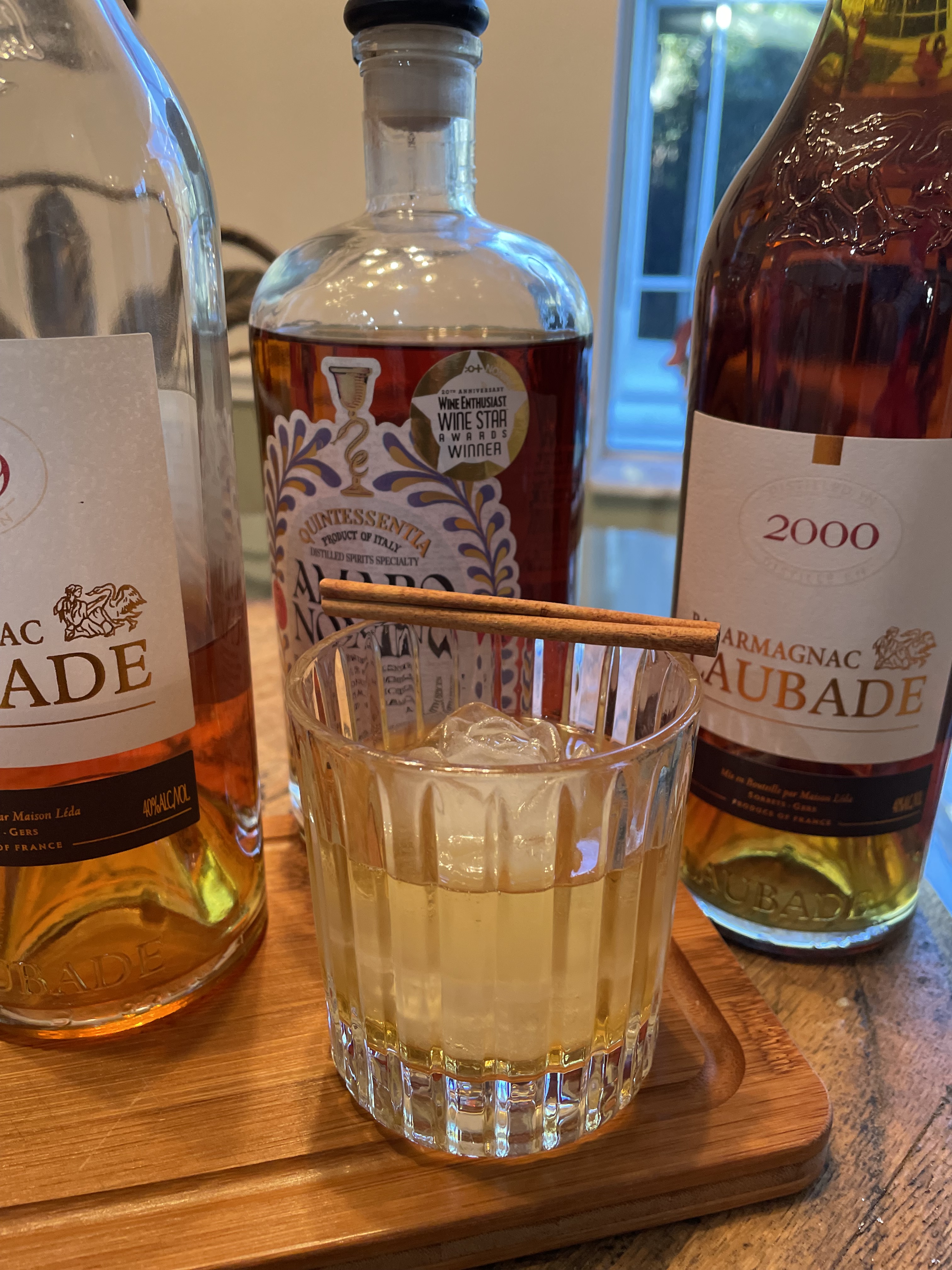
    The Snow Day Cocktail (Inspired by the Boulevardier Cocktail)

    A Fireside Cocktail

    This is a spirit-forward cocktail built for quiet nights, crackling wood, and the kind of calm that only winter delivers. No citrus. No theatrics. Just warmth, depth, and balance.

    The Snow Day (Inspired by the Boulevardier cocktail)

    • 1 1/2 oz rye whiskey
    • 3/4 oz Armagnac
    • 1/4 oz amaro (something bittersweet, not aggressively herbal)
    • 1 barspoon demerara syrup (2:1)
    • 2 dashes aromatic bitters

    Stir with ice until well chilled.
    Strain over a single large cube in a double old fashioned glass.

    Express an orange peel over the glass and discard.
    Finish with a lightly toasted cinnamon stick resting across the rim.

    Tasting notes: Rye brings structure and spice, the backbone.
    Armagnac adds warmth, fruit, and a rustic softness that feels like wool instead of silk. Amaro bridges sweetness and bitterness, keeping the drink from drifting into dessert territory. Demerara adds weight without stickiness.

    This is not a cocktail you tweak endlessly. It is meant to be trusted.

    Armagnac Belongs by the Fire

    Armagnac is less polished than Cognac and that is its strength. Fewer large houses, more family estates, and a rustic warmth that feels right in winter. If Cognac wears a tuxedo, Armagnac wears a wool coat.

    Fireside Pairings

    Small bites. Slow snacks. Nothing that steals the spotlight.

    • Smoked almonds with rosemary
    • Dark chocolate with sea salt
    • Aged gouda or alpine-style cheese
    • Charred sausage with coarse mustard
    • Blue cheese drizzled with a touch of honey

    These work because they mirror the drink’s themes: smoke, fat, salt, and depth. Each bite resets the palate without pulling you out of the moment.

    A few vintages of Armagnac

    And, Finally…

    Winter doesn’t need to be loud to be memorable.

    Some of the best moments happen when the world gets quiet. When snow muffles sound. When firelight replaces overhead lighting. When a glass is poured not to celebrate something, but simply to sit with it.

    The fireside pour isn’t about chasing flavors or impressing guests. It is about warmth, patience, and the luxury of nowhere else to be.

    Just like those snow days. 🥃

    Photo by Andris Bergmanis on Pexels.com
  • Tawny vs. Ruby Port

    Tawny vs. Ruby Port

    Winter’s Warmest Debate (and How to Drink Them Both Like a Pro).

    When winter settles in and the thermostat drops a few degrees lower than comfort would prefer, fortified wines step confidently into the spotlight. They don’t whisper; they glow. And among them, Port is having another well-deserved moment. Again.

    But as bottles come off shelves and into glasses, one question reliably resurfaces fireside and at tasting tables alike:
    What’s the real difference between Ruby Port and Tawny Port—and how should I be enjoying each?

    Croft Port Wine Cellar – Ricardo Martins, CC BY 2.0, via Wikimedia Commons

    A Shared Origin, Two Very Different Journeys

    All true Port comes from Portugal’s Douro Valley and begins life much the same way:

    • Indigenous grapes
    • Fermentation halted early by the addition of grape spirit (aguardente)
    • Residual sugar preserved
    • Alcohol boosted to roughly 19–20%

    From there, aging choices—not grapes—define Ruby versus Tawny.

    Ruby Port: Youth, Power, and Primary Fruit

    Think: fireplace crackle, dark berries, and velvet curtains.

    Ruby Port is all about freshness and intensity. After fermentation, it’s aged briefly—usually 2–3 years—in large stainless steel tanks or concrete vats. These vessels limit oxygen exposure, preserving the wine’s deep color and fruit-forward personality.

    What’s in the glass?

    • Color: Deep ruby to purple-black
    • Aromas: Blackberry compote, black cherry, cassis, plum
    • Palate: Lush, sweet, bold, youthful
    • Finish: Rich, direct, fruit-driven

    Ruby Port is unapologetically exuberant. It doesn’t want to evolve quietly—it wants to perform.

    Best ways to enjoy Ruby Port

    • Slightly cool (60–65°F) to balance sweetness
    • In a classic Port glass or small wine glass
    • As a dessert wine or a decadent after-dinner sipper

    Ruby Port pairings (winter-approved)

    • Flourless chocolate cake
    • Dark chocolate truffles
    • Blue cheese (especially Stilton or Gorgonzola)
    • Chocolate-dipped dried figs
    • Black forest–style desserts

    Why it works: Sugar and fruit tame bitterness, while alcohol lifts richness off the palate.

    Tawny Port – pedrik, CC BY 2.0, via Wikimedia Commons

    Tawny Port: Time, Oxidation, and Graceful Complexity

    Think: leather-bound books, toasted nuts, and candlelight.

    Tawny Port takes a slower, more contemplative path. It’s aged in small oak barrels, where gentle oxidation transforms both color and flavor. Over time, ruby hues fade to amber, mahogany, and tawny—hence the name.

    You’ll often see age indications: 10, 20, 30, or 40 Year Tawny. These aren’t exact ages, but stylistic averages representing increasing complexity.

    Related article: The Organoleptic Process

    What’s in the glass?

    • Color: Amber, copper, tawny
    • Aromas: Toasted almond, hazelnut, caramel, dried fig, orange peel
    • Palate: Silky, layered, less sweet-seeming
    • Finish: Long, nutty, contemplative

    Tawny Port doesn’t shout. It invites you closer.

    Best ways to enjoy Tawny Port

    • Lightly chilled (55–60°F)—especially higher-aged Tawny
    • In smaller pours; complexity rewards patience
    • As a standalone meditation wine or paired thoughtfully

    Tawny Port pairings (cold-weather classics)

    • Pecan pie or walnut tart
    • Crème brûlée
    • Aged cheeses (Comté, aged Gouda, Manchego)
    • Roasted nuts with rosemary
    • Apple or pear desserts with caramel

    Why it works: Oxidative notes mirror toasted, nutty flavors while acidity keeps sweetness in check.

    Ruby vs. Tawny: The Quick Take

    Ruby PortTawny Port
    Fruit-forwardNutty & oxidative
    Aged brieflyBarrel-aged for years
    Bold & youthfulElegant & complex
    Chocolate pairingsNut, caramel & cheese pairings
    Great in cocktailsExceptional chilled or neat

    Winter-Worthy Port Cocktails (Yes, Really)

    Port is a fortified wine—but don’t underestimate its versatility behind the bar. These cocktails are cozy, refined, and dangerously easy to love.

    The Winter Port Old Fashioned (Ruby)

    • 2 oz Ruby Port
    • ¼ oz bourbon or aged rum
    • 1 barspoon maple syrup
    • 2 dashes aromatic bitters

    Stir with ice, strain over a large cube.
    Garnish with an orange peel and brandied cherry.

    Ruby Port brings fruit and sweetness; the spirit adds structure without overpowering.

    Tawny Port Manhattan (Low-Proof Elegance)

    • 2 oz Tawny Port
    • 1 oz rye whiskey
    • 2 dashes orange bitters

    Stir with ice, strain into a coupe.
    Garnish with expressed orange peel.

    Tawny’s nutty oxidation mimics aged vermouth, making this cocktail plush yet balanced.

    Photo by TomBen on Pexels.com

    Which Port Should You Choose?

    • Choose Ruby Port when you want bold fruit, indulgent desserts, or a cocktail-friendly fortified wine.
    • Choose Tawny Port when you crave nuance, quiet warmth, and something that feels like winter slowing down.

    Better yet—keep both on hand. Winter is long, evenings are cold, and Port was designed for exactly this moment 😉

    To warming what’s inside while the season cools what’s out. May your glass be small, your Port be generous, and winter feel just a little shorter. 🍷

    Gregory Dean, SOMM&SOMM

    Cover photo credit: Jon Sullivan, Public domain, via Wikimedia Commons

  • The 12 Wines of Christmas

    The 12 Wines of Christmas

    A Guide to Sipping Through the Season.

    The air is crisp, the carols are floating through grocery store speakers with unmistakable cheer, and your inner wine geek is itching for a holiday-themed deep dive. And right in the heart of December, there’s no better time to revisit one of the season’s most enduring traditions: The Twelve Days of Christmas.

    But where did this curious list of gifts—from partridges to leaping lords—actually come from? And how did it inspire our very own 12 Wines of Christmas, a tasting journey designed to guide your holiday sips from the first day straight through Epiphany?

    These traditions get mixed up like holiday ribbons, so let’s untangle them.

    Photo by Douglas Mendes on Pexels.com

    Where Did the 12 Days of Christmas Come From?

    Long before it was a catchy (and increasingly absurd) carol, The Twelve Days of Christmas was a meaningful Christian observance marking the timeframe between the birth of Christ (December 25th) and the arrival of the Magi (January 6th).

    These were days of celebration—feasts, merriment, reflection, and in some regions, gift-giving. The number twelve wasn’t random; it symbolized completeness, renewal, and spiritual wholeness. Each day carried its own significance, depending on cultural and religious tradition, and it all culminated with Epiphany, often considered the true finale of the holiday season.

    The song itself?
    It first appeared in print in England in 1780 as part of a children’s memory-and-forfeit game. No music. Just a chant-like verse meant to test how well you could recall the list in order. Over time, composers set it to the tune we know today—building a festive crescendo of gifts that get stranger and more lavish with each passing day.

    Photo by Pavel Danilyuk on Pexels.com

    12 Days of Christmas vs. the Advent Calendar

    Before we pour ahead, let’s clear up a classic Christmas confusion.

    Advent is the period before Christmas—a countdown of preparation, beginning on the fourth Sunday before December 25th. Advent calendars, whether filled with chocolates, toys, skincare samples, or tiny bottles of spirits (a favorite around here), are meant to help you anticipate the big day.

    The 12 Days of Christmas, on the other hand, begin on Christmas Day. It’s not a countdown. It’s a celebration.

    Think of Advent as the slow build-up…
    …and the Twelve Days as the extended after-party.

    Photo by Vladimir Konoplev on Pexels.com

    Introducing the 12 Wines of Christmas

    A Sommelier’s Day-by-Day Guide to Sipping Through the Season

    🎁 Day 1 (Dec 25) – A Partridge in a Pear Tree

    Wine: Vouvray Demi-Sec (Chenin Blanc)
    Why: Orchard fruit, honey, and that holiday-friendly acidity.
    Optional Cocktail: Pear French 75 – gin, lemon, pear liqueur, topped with sparkling Vouvray.

    🎁 Day 2 – Two Turtle Doves

    Wine: Côtes du Rhône Rouge
    Why: A blend built on harmony—two grapes (Grenache + Syrah) leading the dance.
    Optional Cocktail: Winter Kir Royale with crème de cassis and Rhône rosé bubbles.

    🎁 Day 3 – Three French Hens

    Wine: Beaujolais Cru (Morgon or Moulin-à-Vent)
    Why: French, festive, and an ideal pairing for leftover turkey sandwiches.

    🎁 Day 4 – Four Calling Birds

    Wine: Oaked Chardonnay from Sonoma or Burgundy
    Why: A nod to the “calling”—big flavors, toasty oak, buttered brioche vibes.
    Optional Cocktail: Chardonnay Hot Toddy (trust me, it works—gentle heat + spice).

    Chardonnay Hot Toddy

    • 4 oz lightly oaked Chardonnay (Sonoma Coast, Mâconnais, or similar)
    • ½ oz honey syrup (1:1 honey + water)
    • ½ oz fresh lemon juice
    • 1 cinnamon stick
    • 1 clove
    • Thin lemon wheel

    Instructions

    1. Warm the Chardonnay on low heat with the cinnamon stick and clove—do not boil.
    2. Remove from heat and stir in honey syrup and lemon juice.
    3. Pour into a heatproof mug.
    4. Garnish with a lemon wheel and the cinnamon stick.

    Flavor Profile: Gentle spice, soft oak, plush citrus, and comforting warmth.

    🎁 Day 5 – Five Golden Rings

    Wine: Champagne
    Why: Golden bubbles for the most iconic line in the song.
    Optional Cocktail: Gold Rush Royale – bourbon, lemon, honey, topped with brut Champagne.

    Gold Rush Royale

    • 1 oz bourbon
    • ¾ oz fresh lemon juice
    • ¾ oz honey syrup
    • 3 oz brut Champagne (or dry sparkling wine)
    • Lemon twist for garnish

    Instructions

    1. Shake bourbon, lemon juice, and honey syrup with ice.
    2. Strain into a chilled coupe.
    3. Top with Champagne.
    4. Express a lemon twist over the glass and drop it in.

    Flavor Profile: Bright, honeyed, gently herbal, and celebration-ready.

    🎁 Day 6 – Six Geese a-Laying

    Wine: Gewürztraminer
    Why: A playful nod to the aromas—rose, lychee, spice—perfect with rich holiday brunches.

    🎁 Day 7 – Seven Swans a-Swimming

    Wine: Albariño
    Why: Aquatic theme + saline, refreshing acidity = a perfect mid-festivity reset.

    🎁 Day 8 – Eight Maids a-Milking

    Wine: Cream Sherry (Amontillado or Medium)
    Why: Nutty, silky, slightly creamy—holiday perfection.
    Optional Cocktail: Sherry Flip – elegant, old-school, and oh-so-seasonal.

    🎁 Day 9 – Nine Ladies Dancing

    Wine: Lambrusco (Dry)
    Why: Effervescence + vibrant fruit = a wine that practically twirls in your glass.

    🎁 Day 10 – Ten Lords a-Leaping

    Wine: Brunello di Montalcino
    Why: Structured, noble, full of energy—this wine leaps with aristocratic swagger.

    🎁 Day 11 – Eleven Pipers Piping

    Wine: Islay Scotch-Cask Finished Red Wine (or simply: enjoy the Scotch!)
    Why: Smoky, spicy, bold—perfect for the pipers’ dramatic flair.
    Optional Cocktail: Smoked New York Sour – red wine float + peated whisky.

    Smoked New York Sour

    • 2 oz peated Scotch (lightly peated works best)
    • 1 oz fresh lemon juice
    • ¾ oz simple syrup
    • ½ oz dry red wine (Malbec or Syrah works beautifully)
    • Lemon peel

    Instructions

    1. Shake Scotch, lemon juice, and simple syrup with ice.
    2. Strain into a rocks glass over fresh ice.
    3. Gently float the red wine over the back of a spoon.
    4. Garnish with lemon peel.

    Flavor Profile: Smoky, tart, layered, and visually stunning.

    🎁 Day 12 – Twelve Drummers Drumming

    Wine: Port (Vintage or LBV)
    Why: Big, bold, booming flavor—an appropriate finale to the holiday symphony.
    Optional Cocktail: Ruby Port Espresso Martini – a surprisingly spectacular twist.

    Ruby Port Espresso Martini

    • 1 oz Ruby Port
    • 1 oz vodka
    • 1 oz fresh espresso (or cold brew concentrate)
    • ½ oz coffee liqueur
    • Optional: ¼ oz simple syrup for sweetness
    • Coffee beans for garnish

    Instructions

    1. Shake all liquid ingredients vigorously with ice.
    2. Strain into a chilled martini glass.
    3. Garnish with three coffee beans.

    Flavor Profile: Balanced between fruity and roasty, with a velvety richness

    Photo by Nadin Sh on Pexels.com

    A Festive Finale

    As the last notes of the carol fade and the final drops in each glass give way to a new year, the 12 Wines of Christmas remind us that the joy of the season isn’t found in extravagance—it’s found in the small, thoughtful rituals we savor along the way.

    Whether you follow the list sip by sip, swap in your own favorites, or shake up a festive cocktail instead, each day offers a moment to pause, celebrate, and connect.

    Here’s to raising a glass to tradition, to curiosity, and to the simple magic that happens when wine, story, and season all come together.

    May your holidays be bright, your cellar well-stocked, and your spirit joyfully lifted—one delicious day at a time. Cheers 🍷

    Cover Photo by Arjunn. la on Pexels.com