Who knew that our sprint to sommelier-hood would eventually become a marathon filled with rescheduled classes, delayed exams and overall uncertainty. We are now just over ten months deep into the curriculum for the Introductory Sommelier Course & Examination without an end in sight. Due to unforeseen challenges caused by the COVID-19 pandemic, our scheduled course and examination has been postponed–indefinitely.
The Court of Master Sommeliers has been completely transparent in communicating changes to their programs and plans to adopt safety protocols once the in-person courses resume. As of now (mid-March 2021), all brick-and-mortar courses have been postponed through the end of June 2021. This gauntlet of challenges has inspired CMS to develop and launch a suite of online courses. The first is slated for release in April 2021.
I am a fan of online learning, and I’m anxious to see how CMS curriculum developers handle teaching the Deductive Tasting Method in an online environment. Regardless, we are ready to resume our quest. Meanwhile… keep studying 😉
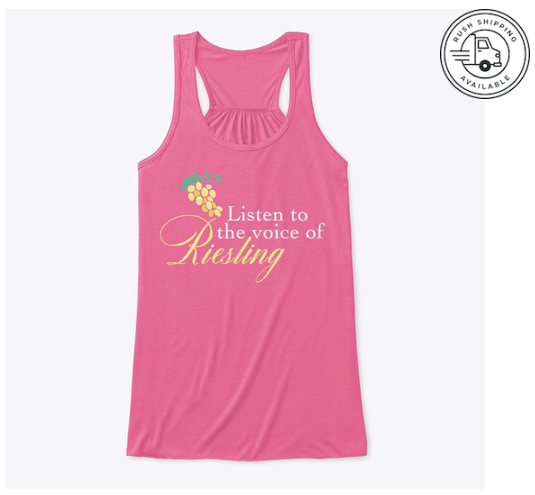
Head on over to the SOMM&SOMM online store to get the latest wine-inspired accessories and apparel to pair perfectly with any occasion 😉 We are constantly adding new trend-setting designs. Check out the latest.
Our quest to join the ranks of sommelier-hood has certainly been riddled with challenges. We became serious with our studies in the early summer of 2020. As you probably know–because you were also affected by the pandemic–most public events were either scaled back, made virtual, or cancelled. The Introductory Sommelier Course & Examination was no exception. At first, it was rescheduled to a later date. Then cancelled. We are in a holding pattern while we wait for the in-person courses to resume (or go virtual).
Meanwhile… to keep the momentum, we’ve toyed with the idea of parallel studies. And, why not? After multiple passes through the study materials prescribed by The Court of Master Sommeliers, information is beginning to stick. So, why not study curriculum from another reputable wine education and professional advancement organization–such as the Wine & Spirit Education Trust (WSET)? Is too much knowledge really a concern? I don’t think so 😉
At first glance it looks as if the knowledge and skills required to pass each level of The Court of Master Sommeliers tests and certifications are not aligned with WSET levels. The biggest difference is with the service-centric aspects of the highly regarded Court of Master Sommeliers program. Specifically, it is imperative to understand (and be able to perform) the proper techniques for serving wine. This includes the ritualistic approach to decanting, as well as the formal serving of Champagne (to name a few). The WSET programs do not focus on service, but instead allows students the opportunity to specialize in a specific area.
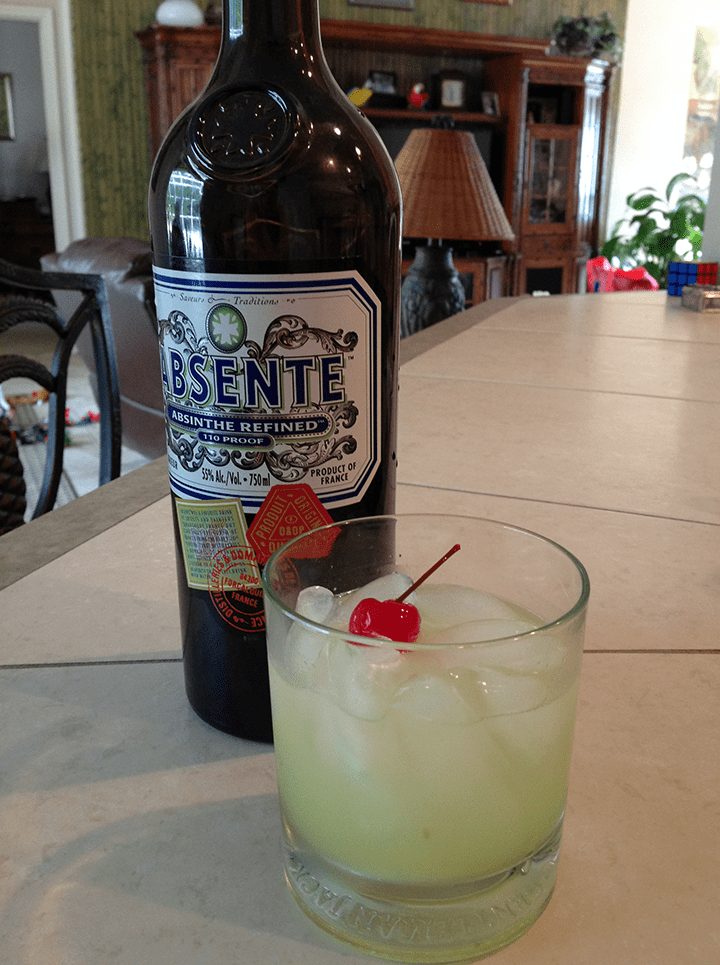
The origins of this mysterious high-proof spirt may the subject of many discussions, but it’s the early misconceptions and legal challenges that make Absinthe so modish. Since its inception–sometime in the 1700s–distillers have been macerating Grande Wormwood, Green Anise and Florence Fennel (often called the ‘Holy Trinity’) as the base elixir for Absinthe. Other herbs and spices–such as coriander, Angelica root, nutmeg, Melissa and Dittany Leaves–are some of the ingredients included in closely-guarded recipes of the most famous producers.
Purists prefer to release the ‘Green Fairy’ through the traditional method(s) of serving Absinthe. This process involves a special spoon, flaming sugar cube, and slow steady drips of cold water (love it!). You can get the entire ‘Heure Verte’ set from the World of Absinthe. As for Absinthe in cocktails, it has an important role as both a simple faint compliment, and the main ingredient. The Absinthe Sour cocktail highlights this controversial spirit by creating a wonderful contrast between sour citrus and intense herbal flavors. Yes, please!
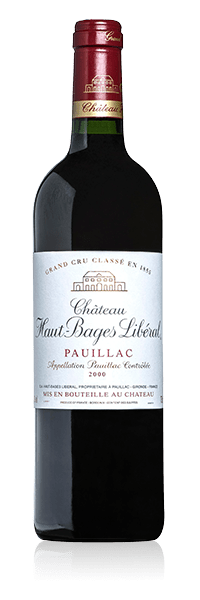
There could not have been a better way to experience the Left Bank of Bordeaux than with a vertical tasting of Pauillac’s Château Haut-Bages Libéral. The highly revered Pauillac region is located between Saint-Estèphe and Saint-Julien on the Médoc peninsula, and boasts three (3) of the five (5) Premiers Crus (first growths) of the 1855 Classification.
Château Haut-Brion, Pessac, AOC Pessac-Léognan
Château Lafite-Rothschild, Pauillac, AOC Pauillac
Château Latour, Pauillac, AOC Pauillac
Château Margaux, Margaux, AOC Margaux
Château Mouton Rothschild, Pauillac, AOC Pauillac(added in 1973)
The estate of Haut-Bages Libéral spans 74 acres growing 70% of cabernet-sauvignon and 30% of merlot varietals. All of the vintages in our two-decade vertical tasting were of similar cabernet-to-merlot blends. The ratios ranged from 65% cabernet-35% merlot of the 2000 vintage, to the 75% cabernet-25% merlot of the 2006 vintage. While this doesn’t seem like much of a variation, the differences in each vintage were not subtle.
Our very ambitious hosts–Dima and Oksana–planned to share their 2000, 2006, 2011, 2014, 2015, 2016 and 2018 vintages in this epic vertical tasting. Even though we were 6 wine enthusiasts strong (Dima, Oksana, Mike, Patti, Greg, Tammy), our lofty intentions fell short of achieving this 7 vintage tasting. This was due in part to our 2 bottle comparison of dry white Bordeaux wines from the Sauternes region (sticking with the Left Bank theme) at the beginning, but mostly because we had no intention of spitting these amazing Pauillac wines into a spittoon. We did, however, compare and contrast 6 of the 7 vintages 😉
2000 Château Haut-Bages Libéral
First up was the 2000 Château Haut-Bages Libéral. This wine was very special. At 21 years young, it was in perfect condition. The taste was soft and elegant. I was very impressed by the vivid color and density of this wine. It would be difficult (for me at least) to identify this as an older wine based only on the color. The aromas included leather, tobacco and pepper as expected. Certainly a wine worthy of its name and reputation.
Comprised of a blend of 65% cabernet sauvignon and 35% merlot, this wine stood up to the grilled and barbecued meats, flavorful salads and herb infused side dished graciously provided by our hosts.
We jumped ahead 6 vintage years and tasted a 2006 Château Haut-Bages Libéral. The blend was 75% cabernet sauvignon and 25% merlot. This vintage was more aromatic than the previous wine. It offered less of the characteristic leather, earth and tobacco, and more fruit and spice on the nose. The taste was bold and intense, but very well balanced. It deserved a second glass!
Third in our journey was a 2011 Château Haut-Bages Libéral. This was the first vintage of the evening that revealed a slight hint of smoke on the nose (and no, the barbecue wasn’t skewing my senses). Perhaps a characteristic more predominate in vintages challenged by poor growing conditions. The 2011 season was unusually dry and hot. Regardless, the wine was amazing, well balanced, and perfect with or without food. The blend was 72% cabernet sauvignon and 28% merlot.
We continued the process of see, swirl, sniff, sip and savor with the fourth wine in the line-up. The 2014 Château Haut-Bages Libéral is made from a blend of 71% cabernet sauvignon and 29% merlot. It was the first of 3 sequential vintages (2014, 2015, 2016). Convinced by the condition and complexity of the 2000 vintage, I can imagine that these younger wines can only get better (if that’s possible). This wine was very smooth, but exposed more tannin than the older vintages. Nevertheless, it was well rounded yet complex.
According to the winemaker’s notes, the 2015 Château Haut-Bages Libéral vintage was challenging. The weather conditions resulted in lower yields. The blend was 65% cabernet sauvignon and 35% merlot (same as the 2000 vintage). The tasting notes, however, are uniquely 2015. While this vintage shared some of the same characteristics of the previous wines, there are several more-than-subtle differences. The tobacco aromas were present, but different. Instead of an earthy, rustic tobacco… this vintage expressed a floral-esc tobacco scent. Think: pipe tobacco versus a cigar. The 2015 vintage also seemed slightly more acidic than the others.
Number six was the 2016 Château Haut-Bages Libéral. This wine is made from a blend of 70% cabernet sauvignon and 30% merlot–aligning perfectly with the vineyard’s planting ratio. The black and red fruit aromas were more pronounced in this vintage. This wine is very special! The flavors are bold and intense, but at the same time soft and balanced (yes, I was surprised too). This is the perfect wine to share with someone who loves California big reds, but not a fan of Bordeaux wines.
From there we rounded out the evening with an amazing 2012 Château Voigny dessert wine from Sauternes and homemade desserts. The evening was truly epic! Our friends, Dima and Oksana, made this night entertaining, educational and legendary. Who knew learning could be so much fun? The information they provided in support of these wines was very detailed and enlightening. This was the first time we’d had an opportunity to participate in a vertical that spanned over 2 decades. Couldn’t imagine anything better. Thanks Dima and Oksana!
The pandemic has certainly created additional challenges no one could have predicted. We are wrapping up our eighth month of study and preparation for the Introductory Sommelier Course & Examination., with no scheduled testing date(s). The Education and Examination Committees are working diligently to keep everyone informed of new program changes and schedules. In the most recent communication, there was mention of an online classroom and testing option being developed. This news provides the much needed glimmer of hope to help us stay focused on achieving our goals.
We first started our journey to #sommlife with much enthusiasm, no idea what to expect, and excited to participate in the program(s) developed by The Court of Master Sommeliers. There are a few articles and blogs from individuals who have participated in the various programs, but most information simply describes the overall experience. The details surrounding each program is a well-kept secret–and rightly so. Not knowing exactly what’s ahead makes it even more important to study all of the materials in depth. At this point, we have made multiple passes through the Introductory Sommelier Course 2019 Workbook by the Court of Master Sommeliers. There is always something that becomes more clear every time it is read and discussed.
Given the challenges of 2020-2021, we are very happy with the responsiveness transparency of The Court of Master Sommeliers. Can’t wait to put this first challenge behind us and continue our journey.
Our sense of smell is probably one of the most important tools for studying, analyzing, and ultimately enjoying wine. The Court of Master Sommeliers teaches the importance of smell as part of their Deductive Tasting methodology. Throughout the Introductory Sommelier Course & Examination journey, we have been inundated with wine-centric terminology. This includes a plethora of words used to describe the color, smell, taste, and other characteristics of wine. Terminology used to describe the color and density of wine seems less obscure and subjective than describing aroma. Why is that?
We each have a lifetime of references to color. Aromas are different. Aromas can be difficult. One issue that I have noticed is the varying differences of an aromatic characteristic across wines with different alcohol levels. In other words, the black cherry aroma in a Primitivo will not smell the same as in an Amarone. Your brain along with your entire olfactory system needs to be calibrated to isolate these pure scents from the alcohol–and of course, the other scents. How do you do that?
With an unlimited supply of wine, you could taste and hopefully remember every varietal and vintage. For the rest of us, I recommend investing in a wine aroma kit. Thanks to a very thoughtful Santa, I am in possession of the Wine Aroma Kit from the Aroma Academy. I can’t speak to the quality and accuracy of other aroma kits, but this one has far exceeded my expectations. The idea is to coat the special paper strips with the various scents and start a regiment of smell-and-remember. This is something that takes time. Your goal is to become familiar with the individual aromas that are present in wine. [warning: music reference ahead] Your nose is an important instrument, and this is the process of keeping your instrument calibrated and in tune 😉
Probably one of the most popular cocktails in existence, the margarita cocktail comes in many varieties. From classic to frozen, fruit-infused to layered, salted rim to sugar-crusted, this cocktail is extremely versatile. At the same time, however, it can be as unique as the individual drinking it. There isn’t much better than a pitcher of these tart-n-trendy cocktails with a plate of nachos 😉
While we could debate the ‘perfect’ margarita, I truly believe that simple is better. Start with a simple three-ingredient cocktail–tequila, agave nectar, and fresh lime juice. From there, you can add other ingredients such as Cointreau, Gran Gala, and fruit juices (mango, pineapple, …). Makes me thirsty just thinking about the possibilities.
We can all agree that the ‘perfect’ margarita is the one you are currently drinking 😉
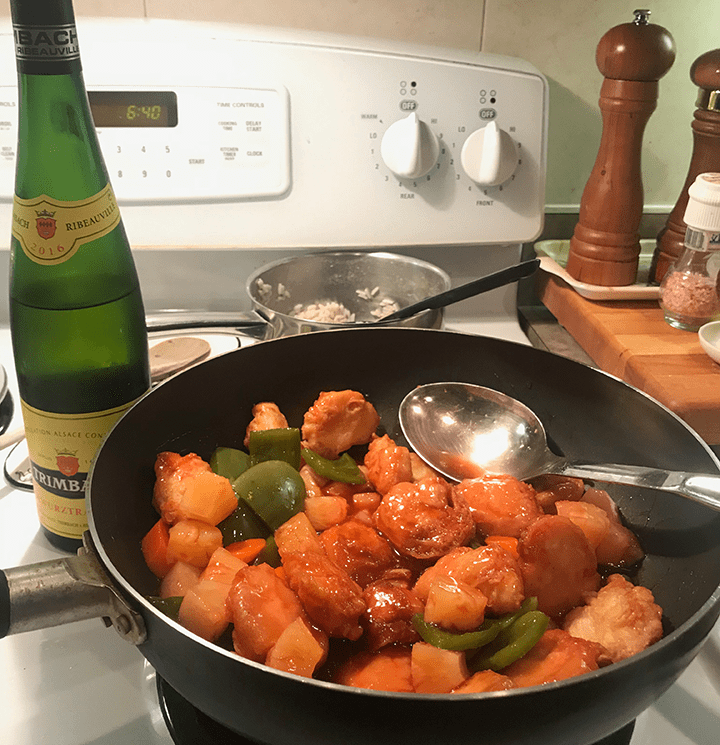
With so many variations of Asian cuisine, there isn’t a one-glass-fits-all wine. In fact, there are several perfect pairings within this gastro-genre. Alsace Gewürztraminer and the westernized Cantonese Sweet and Sour Chicken dish breaks the “if it grows together, it goes together” basic rule of food and wine pairing. It is important to note that not all Gewürztraminer wines will work in this scenario.
Gewürztraminer from Alsace, France
The Gewürztraminer wines of Alsace tend to be off-dry. Gewürztraminer from other regions can be sweeter with Riesling-like characteristics.
No, I am not really comparing Riesling to Gewürztraminer 😉 There are, however, certain characteristics unique to Alsace Gewürztraminer making it the right choice for this dish.
So… why does this pairing work so well? Dry, fruity and spicy version of this varietal stand up perfectly to the bold intense flavors of this dish.
Heat up the wok, chill the wine, and lets get started…
Tammy’s Sweet and Sour Chicken
2 Green Peppers
2 Tomatoes
2 Carrots
Chicken Breasts (1 per person)
3-4 Green Onions
1 Small Can of Pineapple Chunks
Prepare the batter (ingredients and instructions below). Cut the chicken breasts into small bite-size pieces. Cut vegetables and tomatoes (technically not a vegetable) into bite-size chunks. Blanch the carrots and green peppers and set aside for later. Batter the chicken pieces and deep fry in hot oil until golden brown. Prepare the sauce (ingredients and instructions below).
Add blanched vegetables, tomatoes, and golden-fried chicken to the thickened sauce (make sure to add the chicken last). Heat thoroughly and serve.
Open the wine and enjoy!
Batter
1 Egg
1 Cup Flour
1/2 Cup Cornstarch
6 tbsp Cooking Oil
1 Cup + 2 tbsp Very Cold Water
1 tsp Baking Powder
1/2 tsp Salt
Dash of Pepper
Mix all of the dry ingredients, and add the liquids. Optional: Add a few drops of yellow food coloring.
Sauce
3/4 Cup Water
1/4 Cup Pineapple Juice
5 tbsp Sugar
3 tbsp Vinegar
1 tbsp Soy Sauce
1 tbsp Ketchup
3 tsp Cornstarch + 2 tbsp Water (Mixed into a Paste)
In a saucepan, whisk all of the ingredients together except the cornstarch paste. Bring to a boil. Add cornstarch paste to thicken.
The words of our friends and family are still fresh in our minds. “You should take your love and passion for wine to the next level” one friend suggested at a wine pairing dinner. Another commented, “Yea… you guys really sweat the details and try to understand everything about these wines.” And so we thought… yea, why not. No one could have predicted the extraordinary circumstances that has made this particular journey so unusual. In a year without a pandemic we would have studied for months, attended the Introductory Sommelier Course & Examination as so many others have done. The Court of Master Sommeliers has done an incredible job communicating the ever-changing schedule of their wine education and certification events. Their positive outlook in the most recent announcement, however, doesn’t make it any less frustrating.
Here we are in month eight (8) of our journey from “enthusiast to sommelier.” There is currently no end in sight. We’ve just received notice of our second cancellation. Unlike the previous cancellation, none of the events have been rescheduled. This means that we do not have a date for our Introductory Sommelier Course & Examination. I completely understand the challenges brought on by the pandemic, and appreciate (and respect) the guidelines necessary to keep everyone healthy and safe. All we can do at this point is to continue reading, re-reading, learning, quizzing and discussing all of the information anticipated for the first-level course and exam.







 SOMM&SOMM
You must be logged in to post a comment.