
A Sommelier’s Perspective on a Misunderstood Masterpiece.
Few grapes embody both precision and passion like Riesling. For centuries, it has served as a mirror of its environment—expressing soil, slope, and sunlight with crystal clarity. Yet despite its reputation among sommeliers as one of the world’s most noble white varietals, Riesling has often been misjudged by casual drinkers. Too many still believe it’s synonymous with “sweet,” or worse—“simple.” Nothing could be further from the truth.
In reality, Riesling is among the most transparent and terroir-driven wines on the planet, capable of expressing everything from bone-dry austerity to honeyed decadence. It’s a grape that thrives on extremes—of climate, of acidity, of patience. And to truly appreciate Riesling, one must first understand the precision of German wine law and the beauty of its Prädikat system.
Germany’s Quality Classifications
German wine law is among the most intricate in the world, and for Riesling lovers, it’s a roadmap to flavor. The system divides wines into quality levels based primarily on must weight—the sugar content of the grape juice before fermentation—rather than the sweetness of the finished wine.
Deutscher Wein
The most basic level—table wine, simple and typically not indicative of terroir. Rarely exported.
Landwein
Similar to France’s Vin de Pays, these are regional wines, often dry (trocken) or off-dry (halbtrocken), but still unassuming in style.
Qualitätswein (QbA) – “Quality Wine”
This is where Riesling begins to show its true colors. Qualitätswein must come from one of Germany’s 13 designated wine regions (Anbaugebiete) and meet strict standards for ripeness and quality. Chaptalization (adding sugar before fermentation to boost alcohol) is permitted at this level, but only to achieve balance—not sweetness.
Many of the crisp, mineral-driven Rieslings labeled as Trocken (dry) or Feinherb (off-dry) fall into this category. Think of it as Germany’s everyday elegance—structured, refreshing, and food-friendly.
Prädikatswein – “Wine with Distinction”
This is where the artistry truly begins. These wines are produced from grapes that reach specific natural sugar levels at harvest, with no chaptalization allowed. Within this elite category lies the Prädikat system, a six-tier hierarchy that captures the ripeness—and potential style—of the grapes.
The Six Prädikat Levels
Each level offers a glimpse into what nature and timing can achieve with the Riesling grape.
Kabinett
Light, elegant, and vibrant. Typically off-dry or dry with brisk acidity and low alcohol (8–11%). Expect green apple, lime zest, white peach, and slate minerality.
Perfect Pairing: Fresh oysters, sushi, or a goat cheese salad. Think springtime in a glass.
Spätlese (Late Harvest)
Richer and riper, often with a delicate sweetness balanced by electric acidity. Aromas of ripe pear, nectarine, and honeyed citrus leap from the glass.
Perfect Pairing: Spicy Thai dishes, seared scallops, or roast pork with apple chutney.
Auslese (Select Harvest)
Made from individually hand-selected grapes at peak ripeness, sometimes affected by noble rot (Botrytis cinerea). Lush and opulent with flavors of apricot, baked apple, and wildflower honey.
Perfect Pairing: Foie gras, blue cheese, or simply enjoyed as dessert on its own.
Beerenauslese (Berry Select Harvest)
Botrytized berries concentrated by dehydration. Rich, viscous, and profoundly aromatic with candied pineapple, orange marmalade, and saffron.
Perfect Pairing: Crème brûlée, Roquefort, or a quiet moment of indulgence.
Trockenbeerenauslese (Dry Berry Select Harvest)
The pinnacle of sweetness and rarity. Made from individually shriveled grapes that yield mere drops of nectar. Honey, fig, caramelized citrus, and beeswax define this elixir.
Perfect Pairing: Patience. These wines are often cellared for decades, evolving like amber treasures.
Eiswein (Ice Wine)
Harvested from grapes naturally frozen on the vine, creating intense sweetness balanced by racing acidity. Notes of lemon curd, candied apple, and frozen peach.
Perfect Pairing: Lemon tart, panna cotta, or a first snowfall.
From Law to Landscape
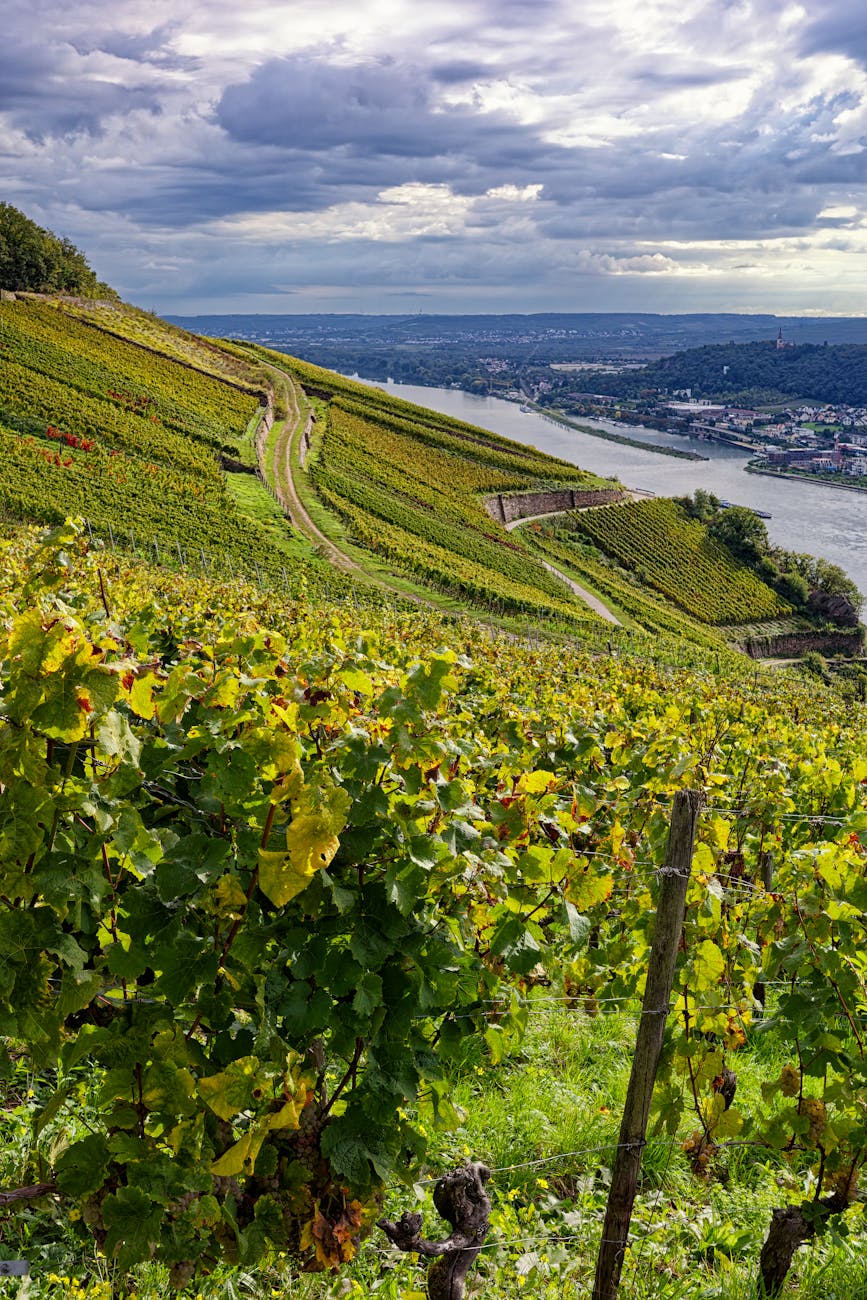
Germany’s strict wine laws set the framework for quality, but it’s the land itself that gives Riesling its unmistakable character. The country’s 13 Qualitätswein regions—Ahr, Baden, Franconia (Franken), Hessische Bergstraße, Mittelrhein, Mosel, Nahe, Pfalz, Rheingau, Rheinhessen, Saale-Unstrut, Saxony (Sachsen), and Württemberg—each tell a different story of climate, soil, and slope.
This time of year, as autumn deepens, vineyards in these regions are bustling with harvest activity. Grapes destined for Spätlese wines are often being picked now—left on the vine a bit longer to capture extra ripeness, flavor, and texture without sacrificing Riesling’s trademark acidity. These late-harvest wines offer notes of honeyed apple, ripe pear, and citrus zest, balanced by a refreshing spine of minerality that keeps the palate alive.
From the slate-rich soils of the Mosel to the sun-warmed terraces of the Pfalz, the combination of terroir and timing defines the magic of Riesling. Each bottle becomes a reflection not only of its region, but of the season itself—bright, crisp, and golden as the October leaves.
Germany’s 13 Qualitätswein Regions at a Glance
| Region | Primary Style & Characteristics | Notable for Riesling |
|---|---|---|
| Ahr | One of the northernmost wine regions; steep slate slopes. | Elegant, mineral-driven whites (though better known for Pinot Noir). |
| Baden | Warmest region; diverse soils and microclimates. | Fuller-bodied, ripe Rieslings with lower acidity. |
| Franken (Franconia) | Limestone and gypsum soils; distinct bottle shape (Bocksbeutel). | Dry, earthy Rieslings with herbal notes and firm minerality. |
| Hessische Bergstraße | Smallest region, near Rheingau; early-ripening vineyards. | Fragrant Rieslings with floral aromatics and bright citrus. |
| Mittelrhein | Steep vineyards along the Rhine gorge. | Crisp, delicate Rieslings with lively acidity and stone fruit notes. |
| Mosel | Iconic slate slopes along the Mosel River. | Light-bodied, ethereal Rieslings with racy acidity and green apple zest. |
| Nahe | Diverse geology and microclimates. | Balanced Rieslings showing spice, fruit, and finesse. |
| Pfalz | Second largest; sunny and dry climate. | Riper, more fruit-forward Rieslings with hints of peach and apricot. |
| Rheingau | Historic and prestigious region along the Rhine. | Structured, age-worthy Rieslings with floral notes and fine acidity. |
| Rheinhessen | Largest region; rolling hills and fertile soils. | Versatile styles—from crisp dry to opulent sweet expressions. |
| Saale-Unstrut | Northern, cooler climate. | Delicate, high-acid Rieslings with subtle fruit. |
| Sachsen (Saxony) | Easternmost region, limited production. | Rare, refined Rieslings with citrus and mineral character. |
| Württemberg | Known for reds, but Riesling thrives in select sites. | Fresh, lightly floral Rieslings with moderate acidity. |
Shattering the Riesling Misconception
The assumption that “Riesling = Sweet” stems from the flood of low-quality exports in the 1970s—often labeled Liebfraumilch—which were indeed sugary and simplistic. But true Riesling, particularly from regions like the Mosel, Rheingau, and Pfalz, demonstrates astonishing range.
A dry Mosel Riesling can rival a Chablis in its minerality, while a Spätlese or Auslese balances its sweetness with laser-like acidity that prevents any cloying sensation. In the hands of a skilled winemaker, sweetness is not a flaw—it’s a design choice, as deliberate and balanced as the brushstroke of an artist.
In fact, no other grape handles residual sugar with such grace. Riesling’s high natural acidity acts as a counterweight, giving even its sweetest expressions an exhilarating freshness.

The Sommelier’s Secret Weapon
Riesling is a sommelier’s dream because its versatility defies rules. Its acidity slices through fat, its aromatics complement spice, and its structure dances gracefully with difficult ingredients.
Pair Dry or Trocken Rieslings with:
- Grilled seafood, lemon chicken, sushi, or vegetable tempura.
Pair Off-Dry or Spätlese Rieslings with:
- Thai curry, barbecue pork, glazed ham, or spicy tuna tartare.
Pair Sweet Rieslings (Auslese and above) with:
- Blue cheese, apple tart, foie gras, or simply conversation at sunset.
A Varietal Worth Rediscovering
Riesling is not just a grape—it’s a conversation between nature, time, and precision. It’s the sommelier’s paradox: capable of expressing both clarity and complexity, power and restraint, sweetness and structure.
For those who think they “don’t like Riesling,” I challenge you to explore its full spectrum. Start with a dry Kabinett Trocken from the Mosel, then move toward the honeyed glow of an Auslese or Eiswein. Each bottle tells a story of patience, craftsmanship, and devotion to balance.
Riesling is not for the unsophisticated—it’s for the curious, the attentive, and those willing to taste with both intellect and heart.
And once you do, you’ll understand why sommeliers around the world whisper what Germany has known for centuries:
“Riesling isn’t just a wine—it’s the soul of a vineyard in a glass.” Cheers 🥂
Cover Photo by Peulle, CC0, via Wikimedia Commons


We welcome feedback…